Community & Events
Getting a Haircut Social Story
A social story that tells the truth about haircuts in a calm voice: the comb comes first, clippers buzz near the ears, cut hair cannot feel anything, and the little hairs that fall are itchy until they are brushed away. Your child learns they can wear ear defenders, ask for a break, and ask to hear each step before it happens.
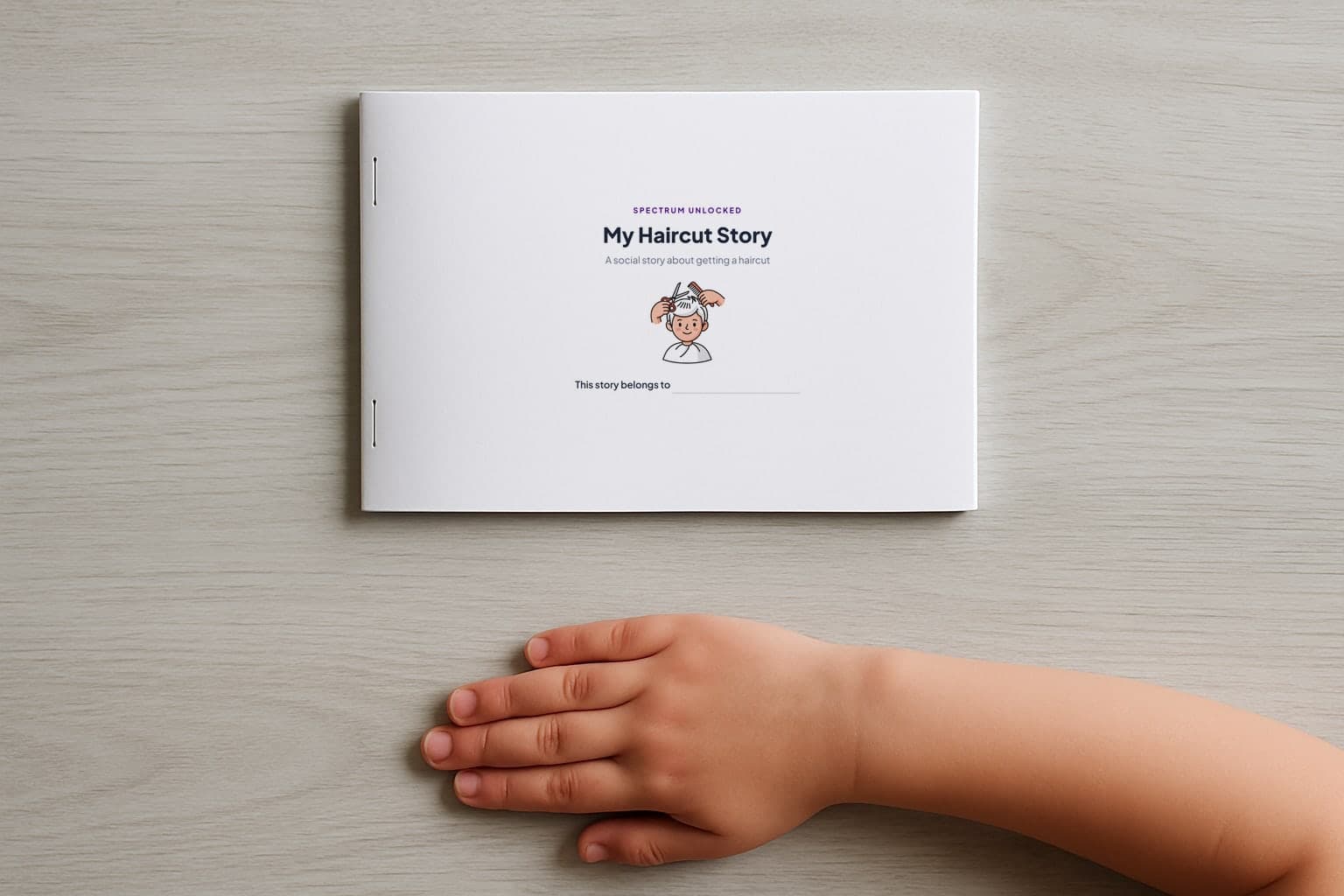
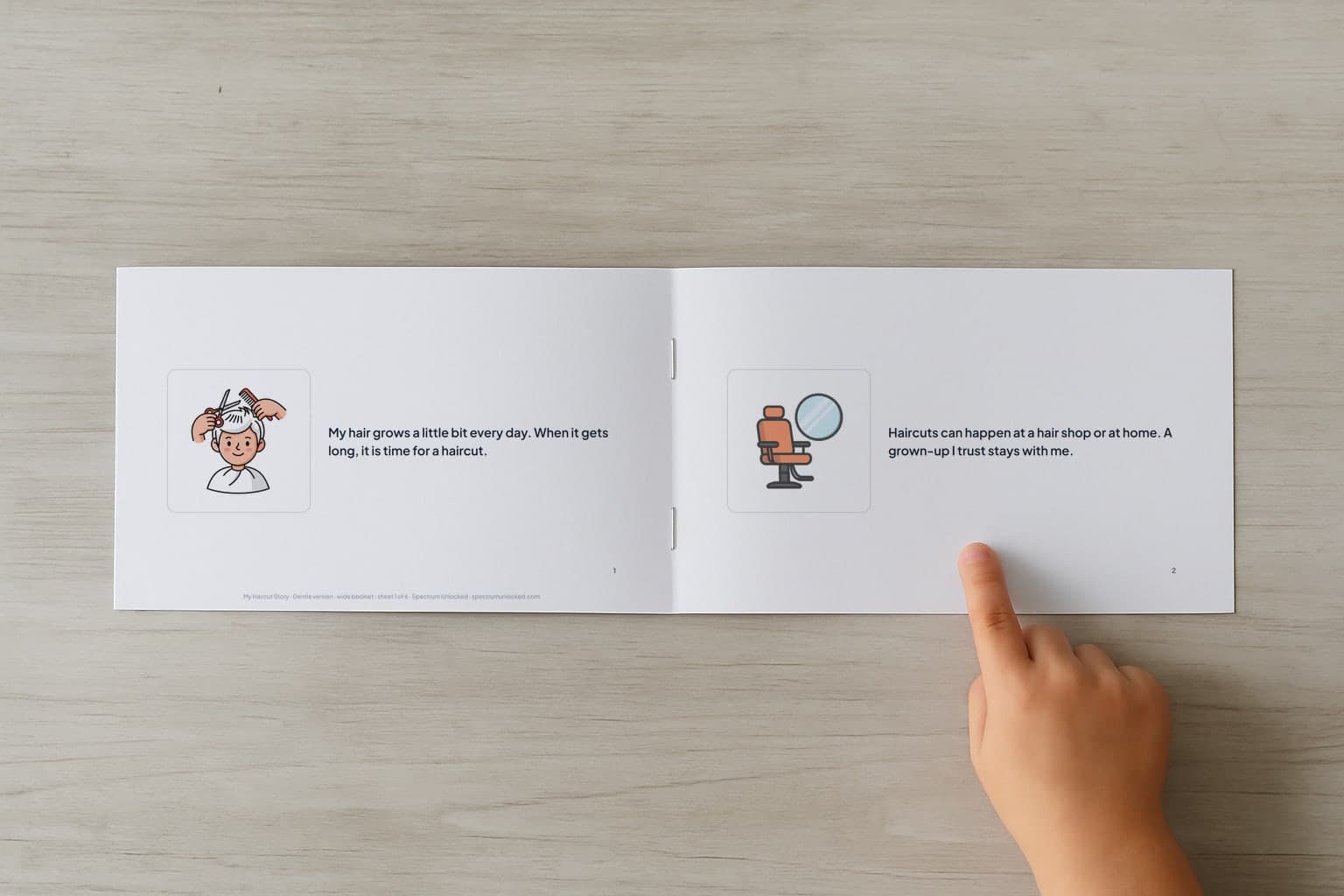
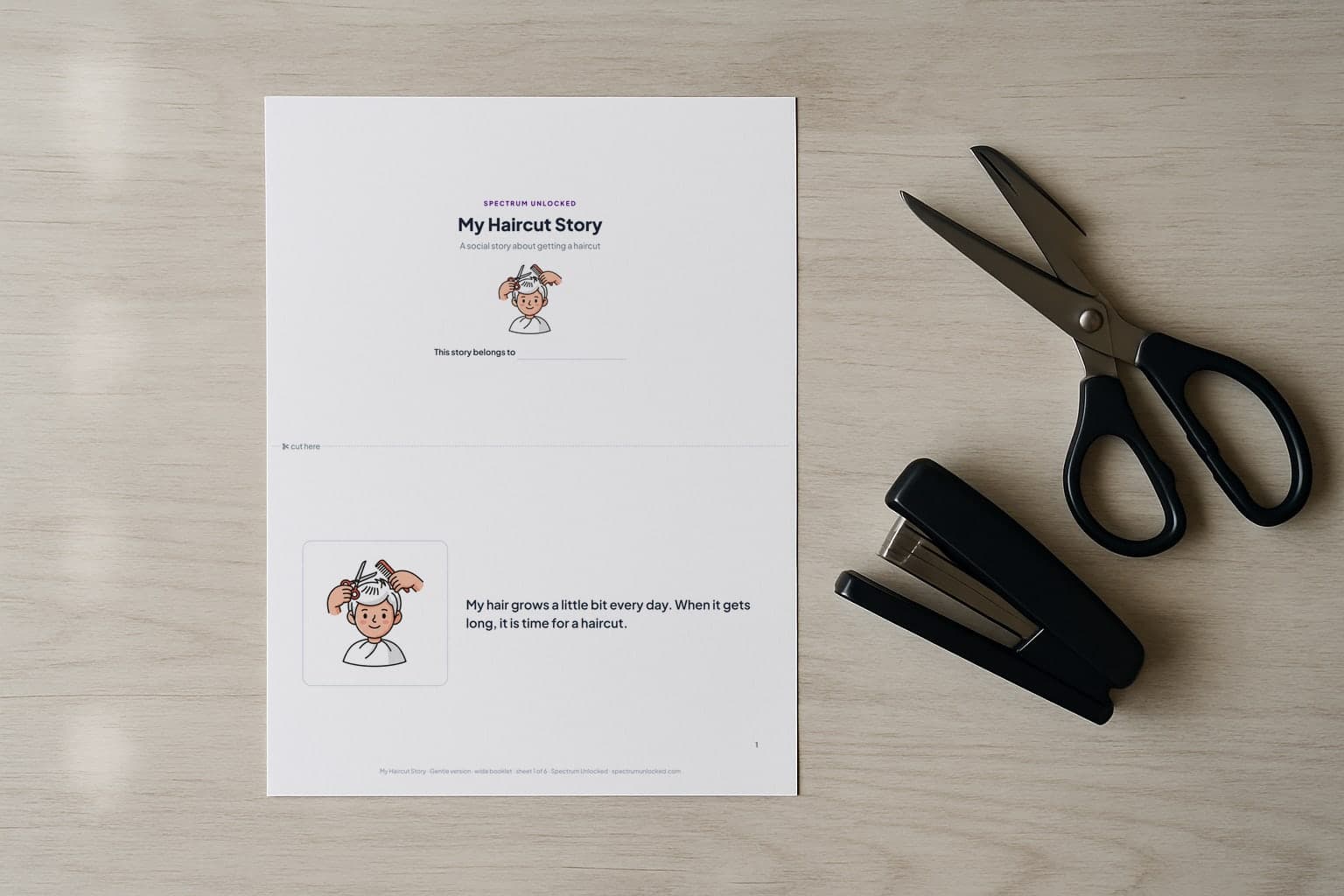
Download the printable PDF
Print the story as-is, no email required. Match the pictures to your child and pick your page layout, then download.
The story
Read the full story below. In the maker you can add your child's name, swap pictures, and print it as a booklet.
My Haircut Story
A social story about getting a haircut
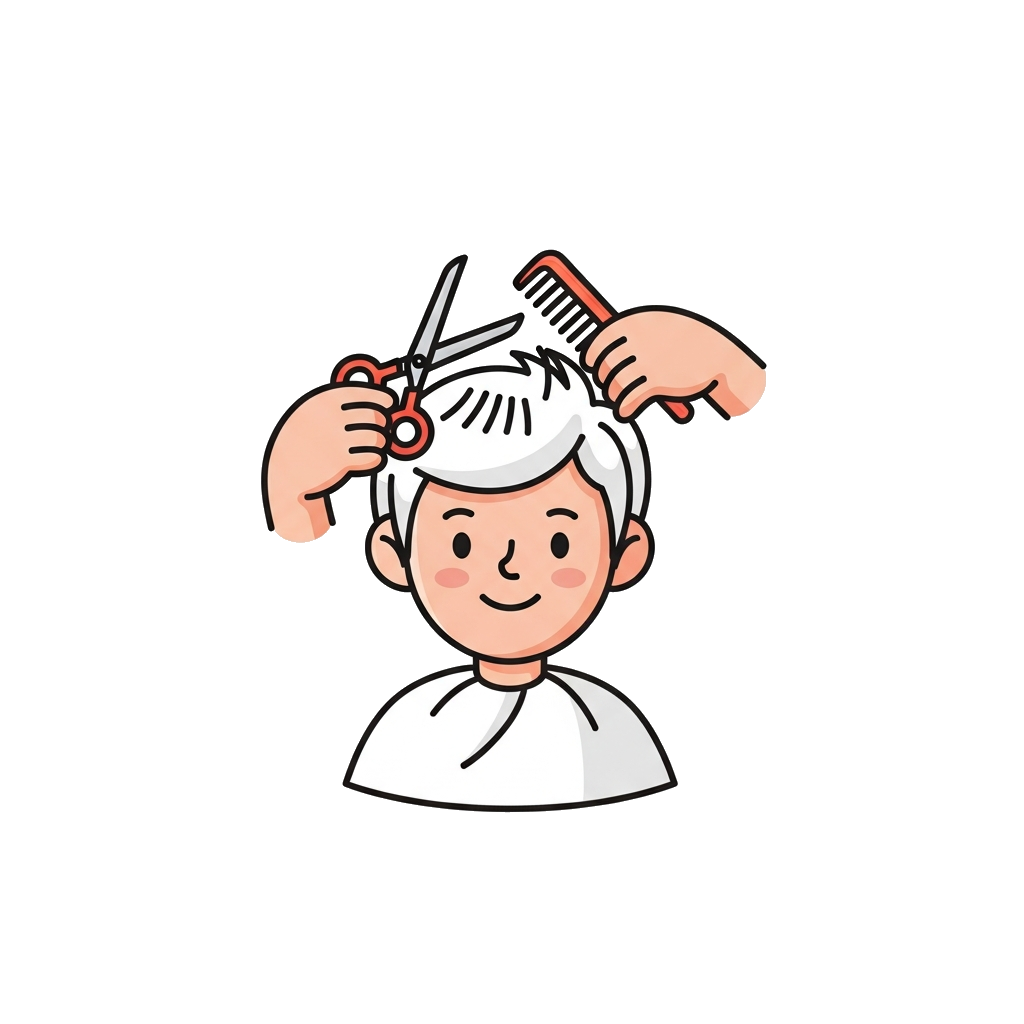
- 1My hair grows a little bit every day. When it gets long, it is time for a haircut.Describes
- 2
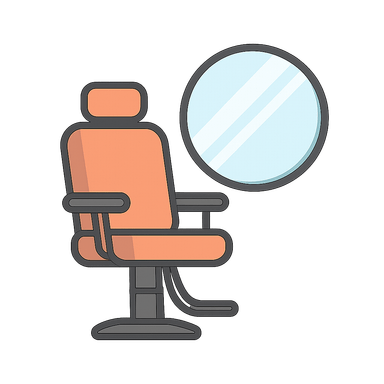 Haircuts can happen at a hair shop or at home. A grown-up I trust stays with me.Describes
 - 3
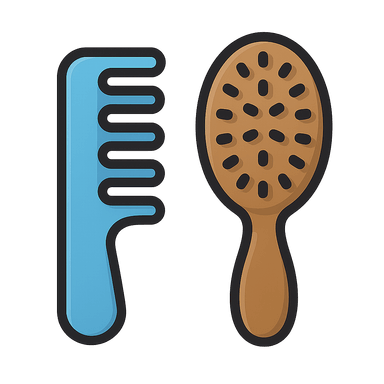 I sit in the chair, and the hair cutter combs my hair first.Describes
 - 4
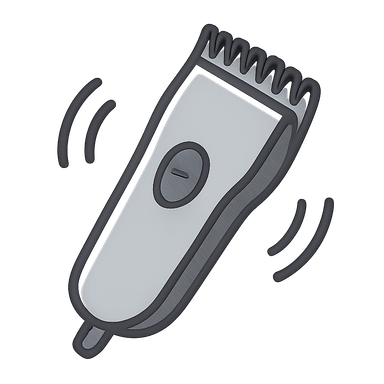 The hair cutter may use scissors or clippers. Clippers make a buzzing sound near my ears.Describes
 - 5Cutting hair does not hurt. Hair is not like skin, so it cannot feel the scissors.Describes
- 6
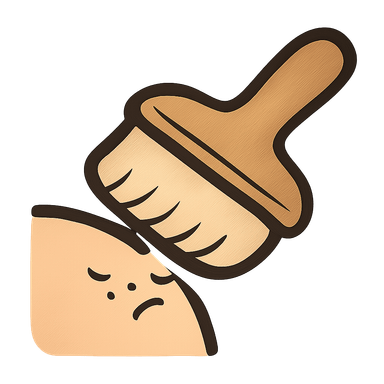 Little hairs may fall on my face and neck. They can feel itchy until they are brushed away.Describes
 - 7
 If the buzzing feels too loud, I can wear ear defenders or ask for a break.Coaches
 - 8
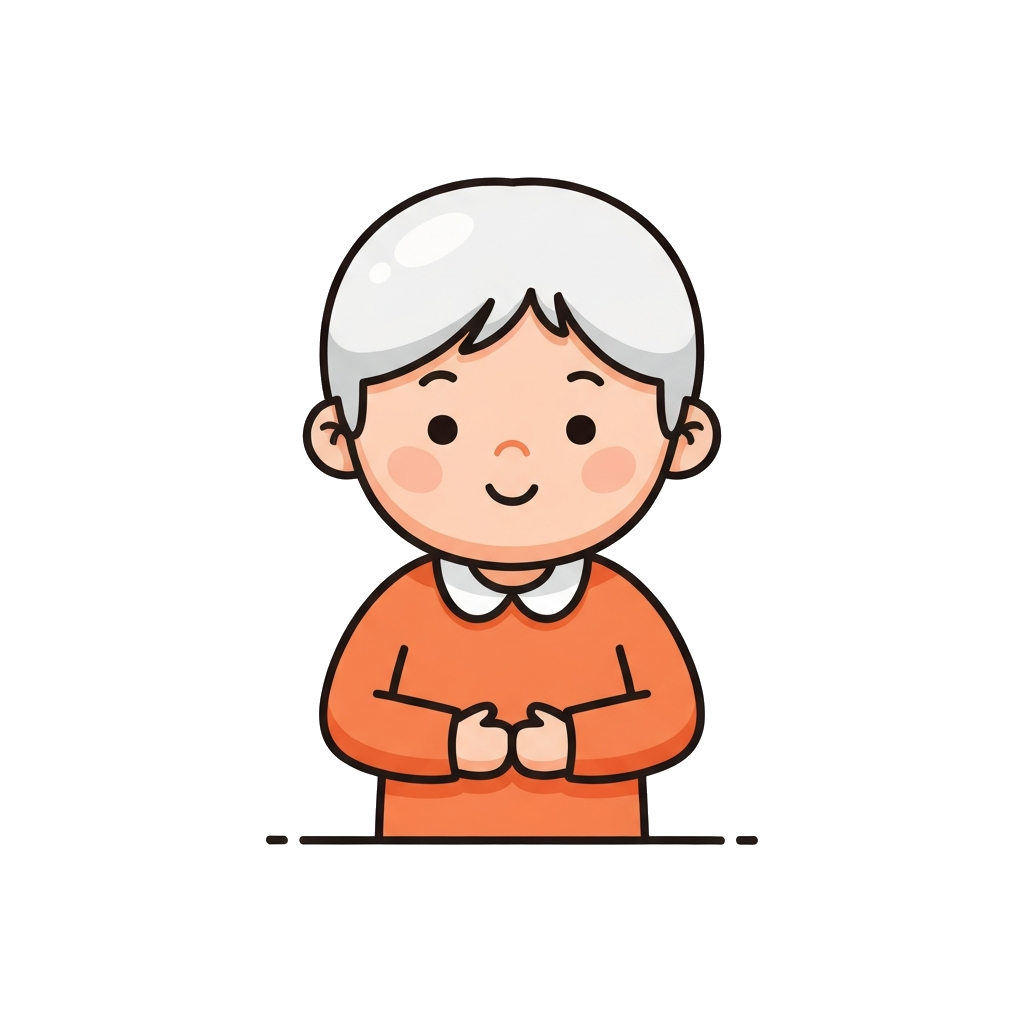 While I sit, I can watch a show, hold a toy, or count slowly in my head.Coaches
 - 9
 I can ask my grown-up to tell me each step before it happens.Coaches
 - 10
 When the haircut is done, the itchy hairs get brushed off, and I can see my new haircut in the mirror.Describes
 - 11
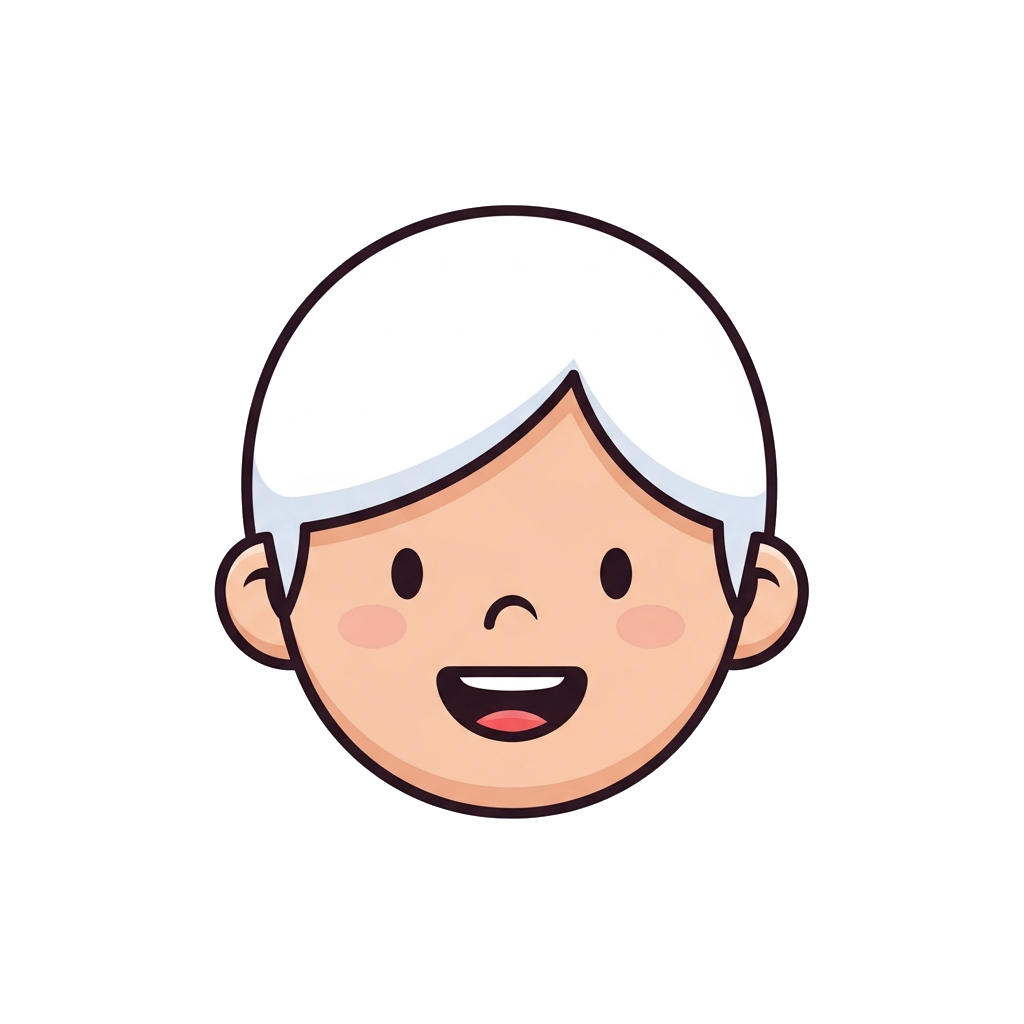 My hair never stops growing, and a haircut keeps it feeling just the way I like it.Describes
Single stories, $3 each
When one situation is the whole problem, take just that story. A gentle and a firmer wording, four child looks, booklet pages in US Letter and A4, and a link to edit it free.
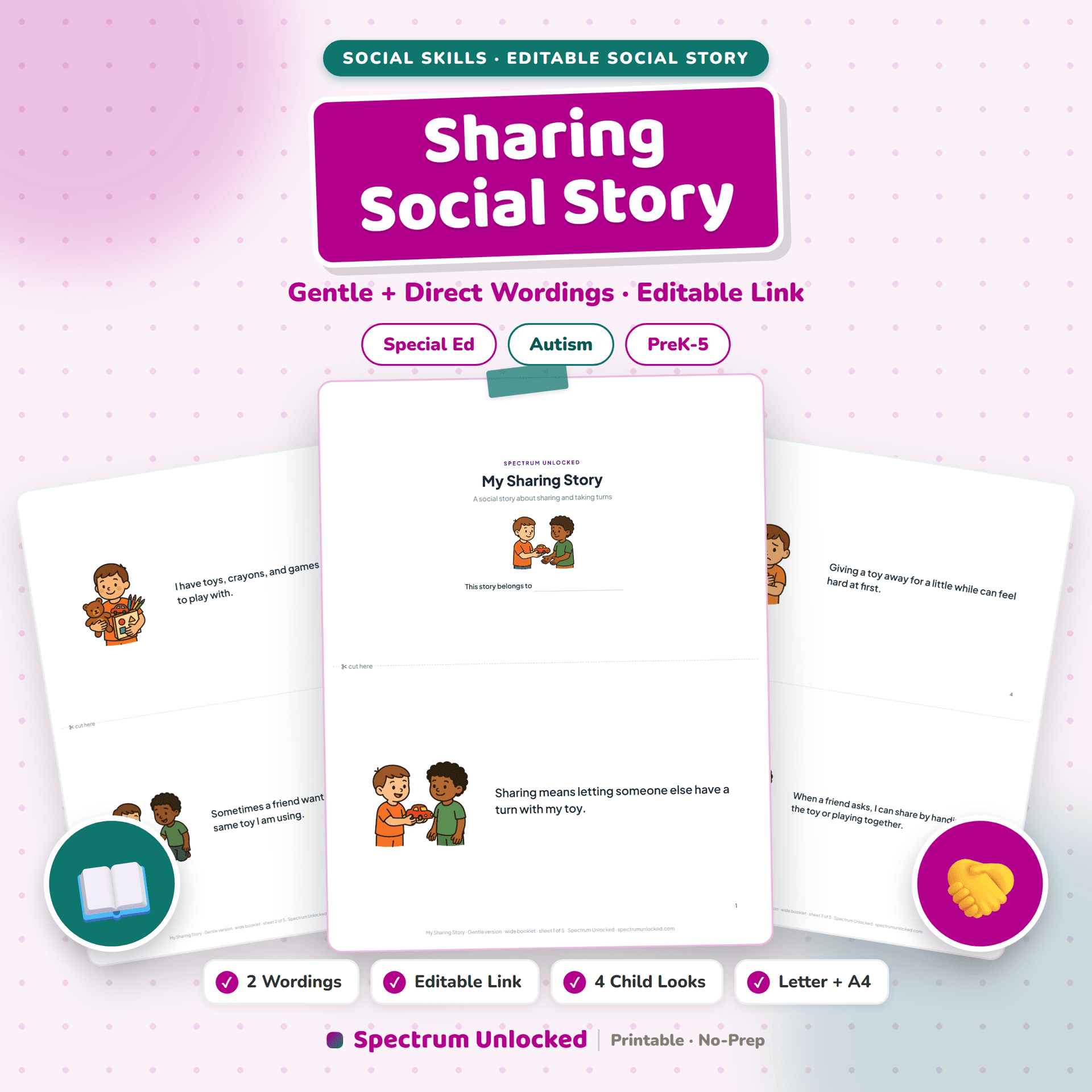
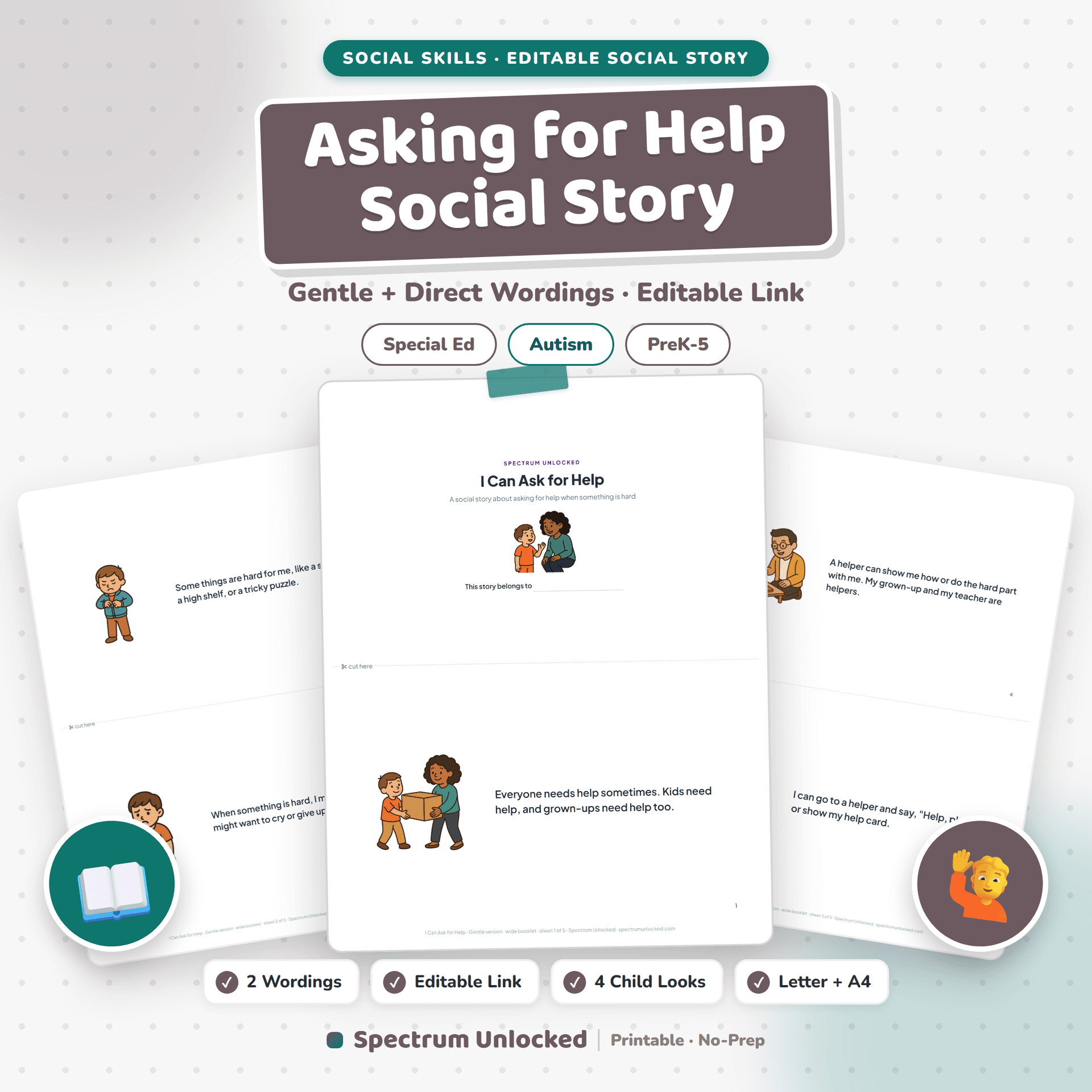
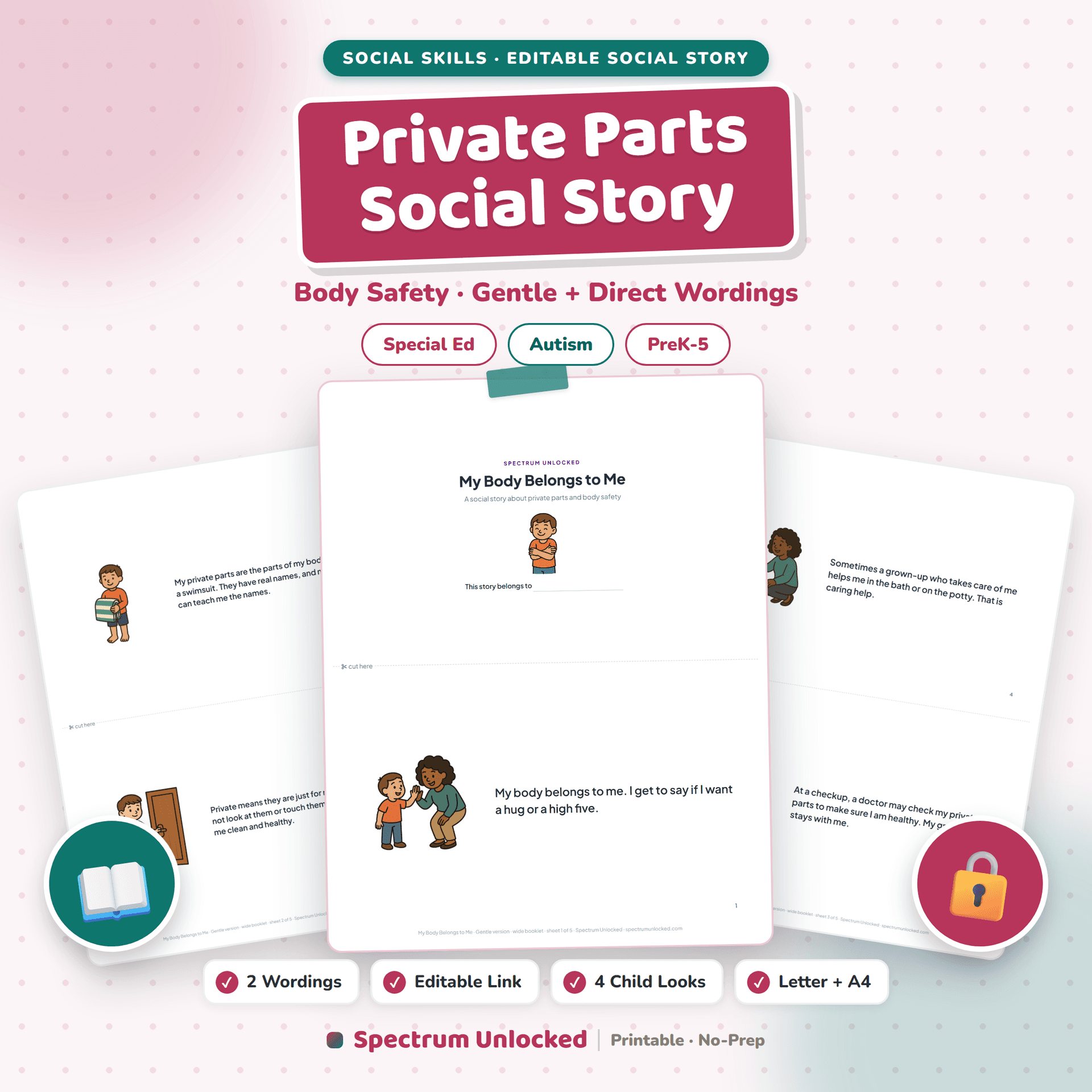
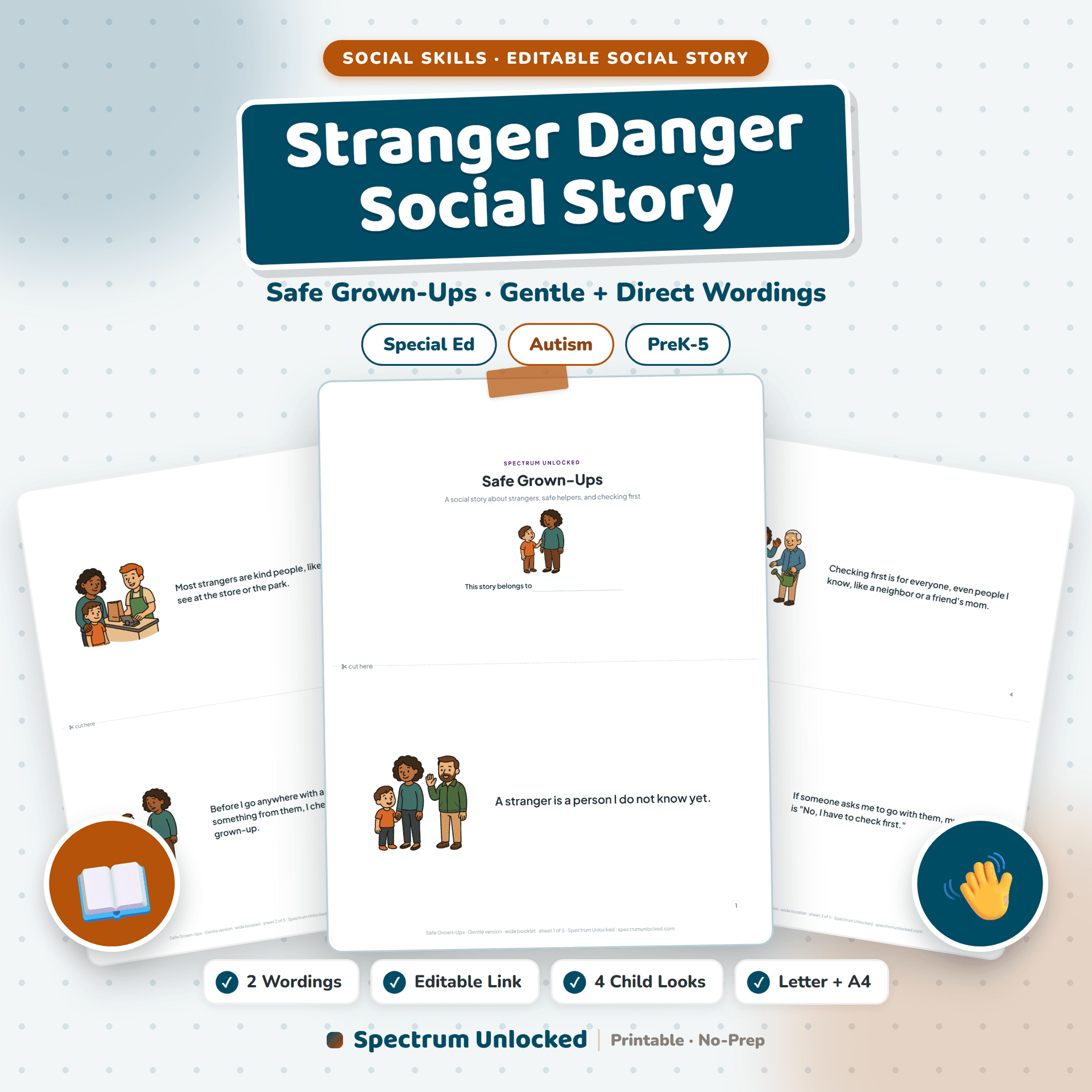
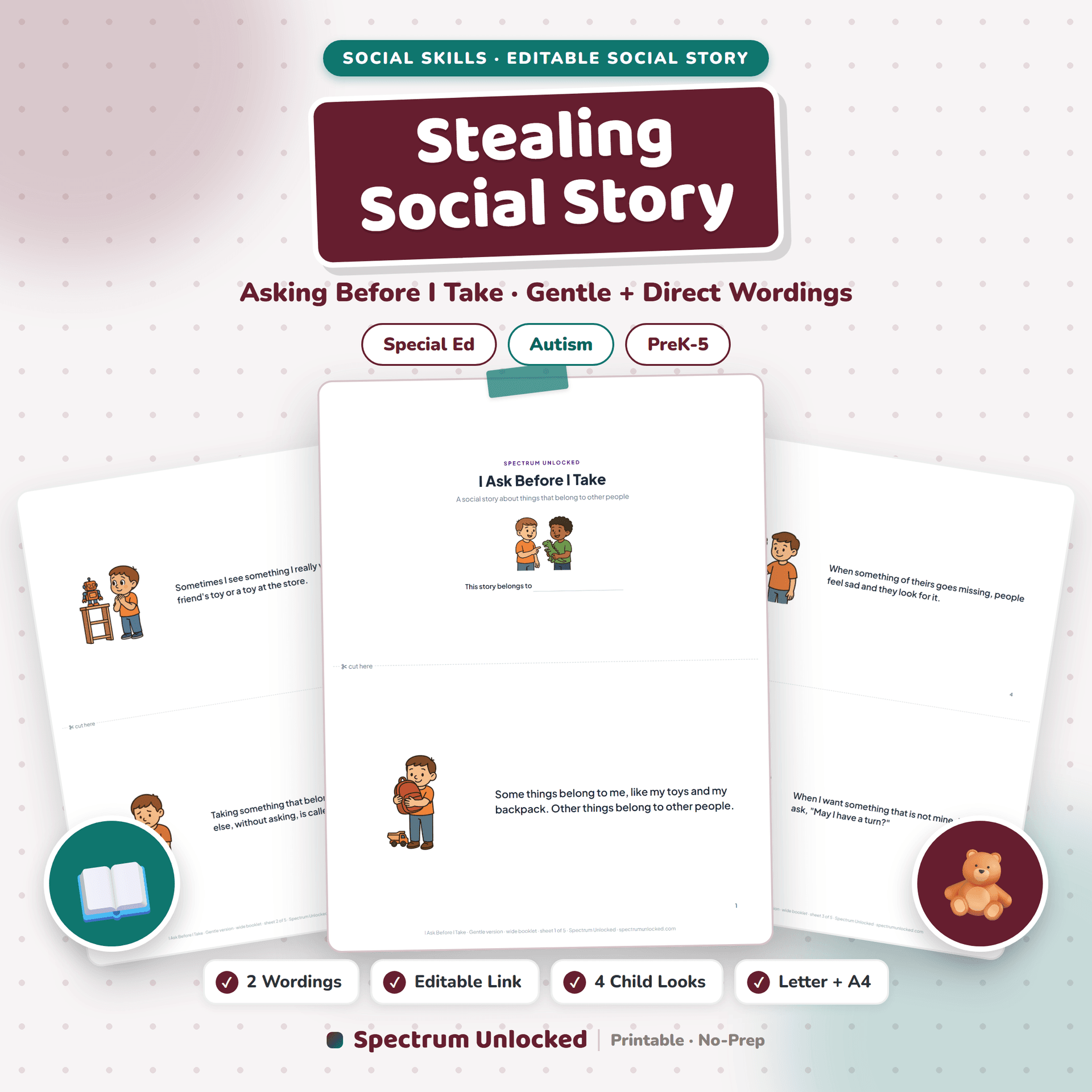
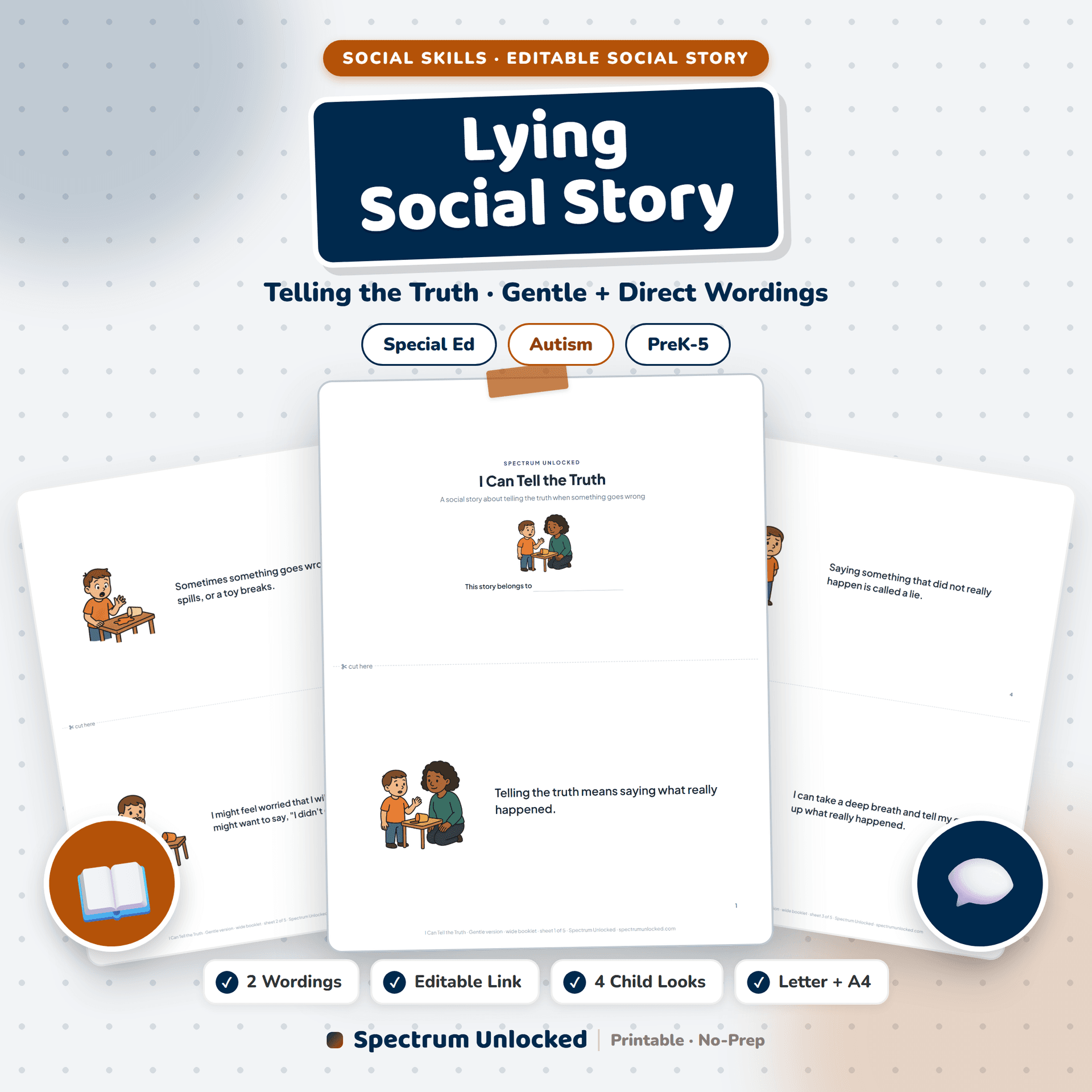
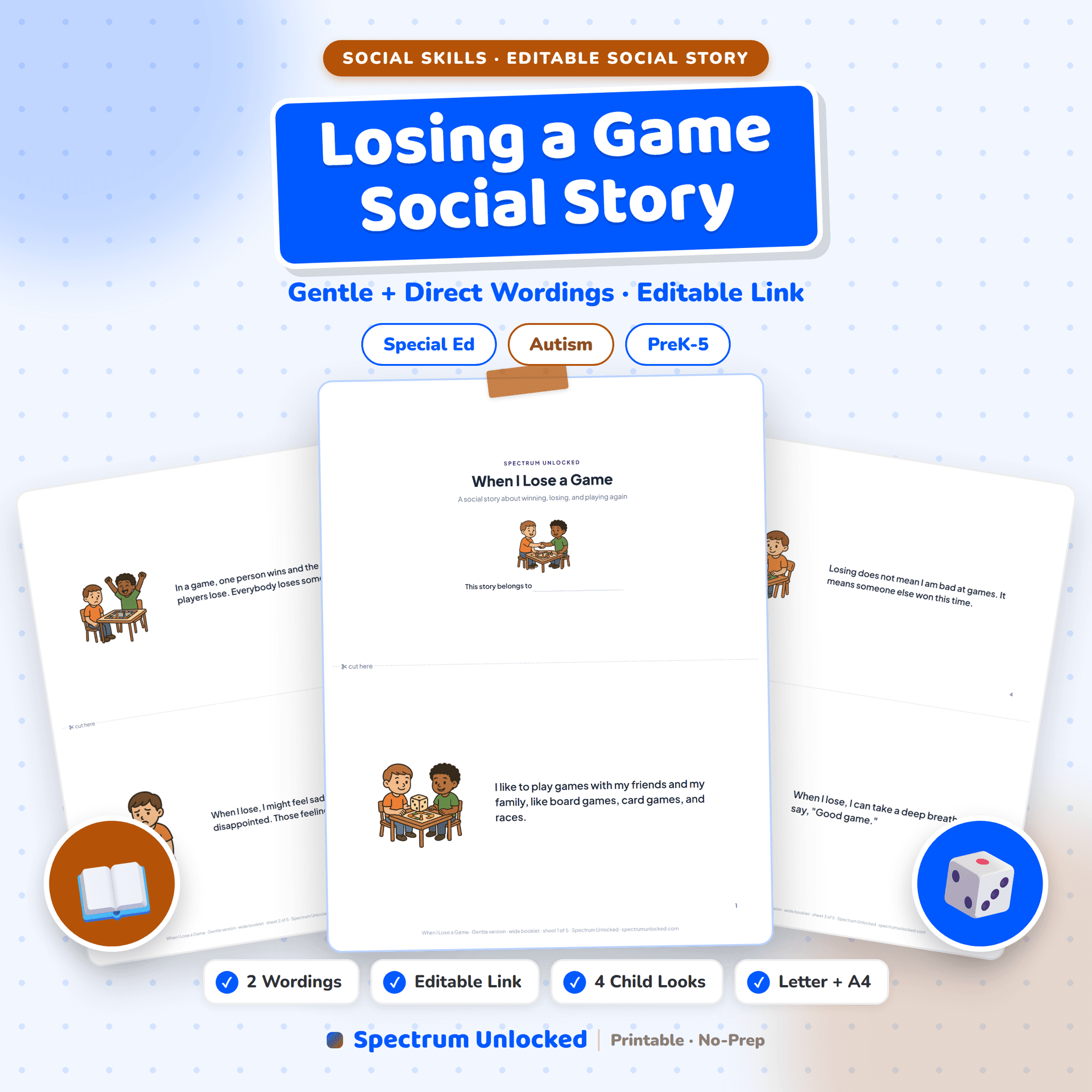
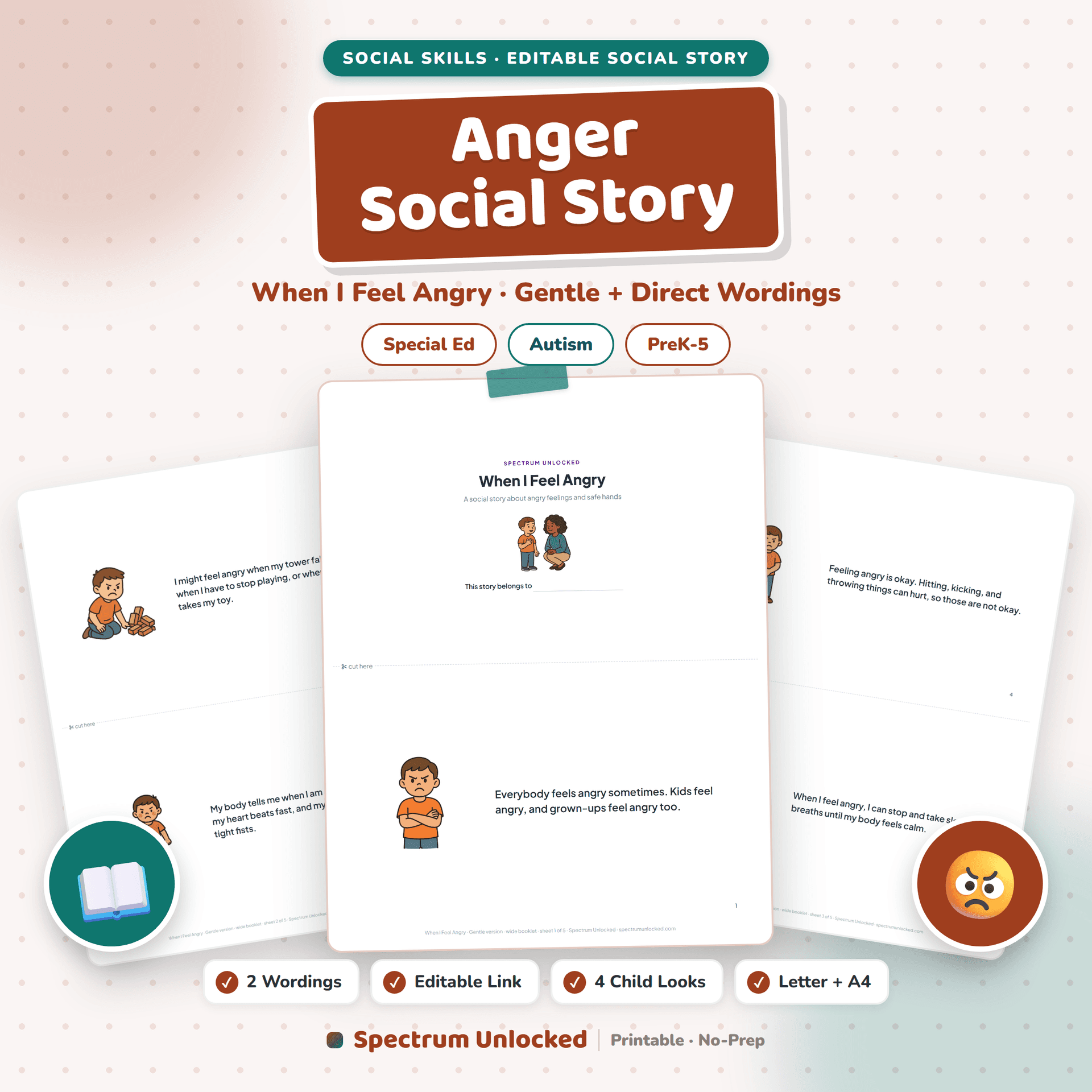
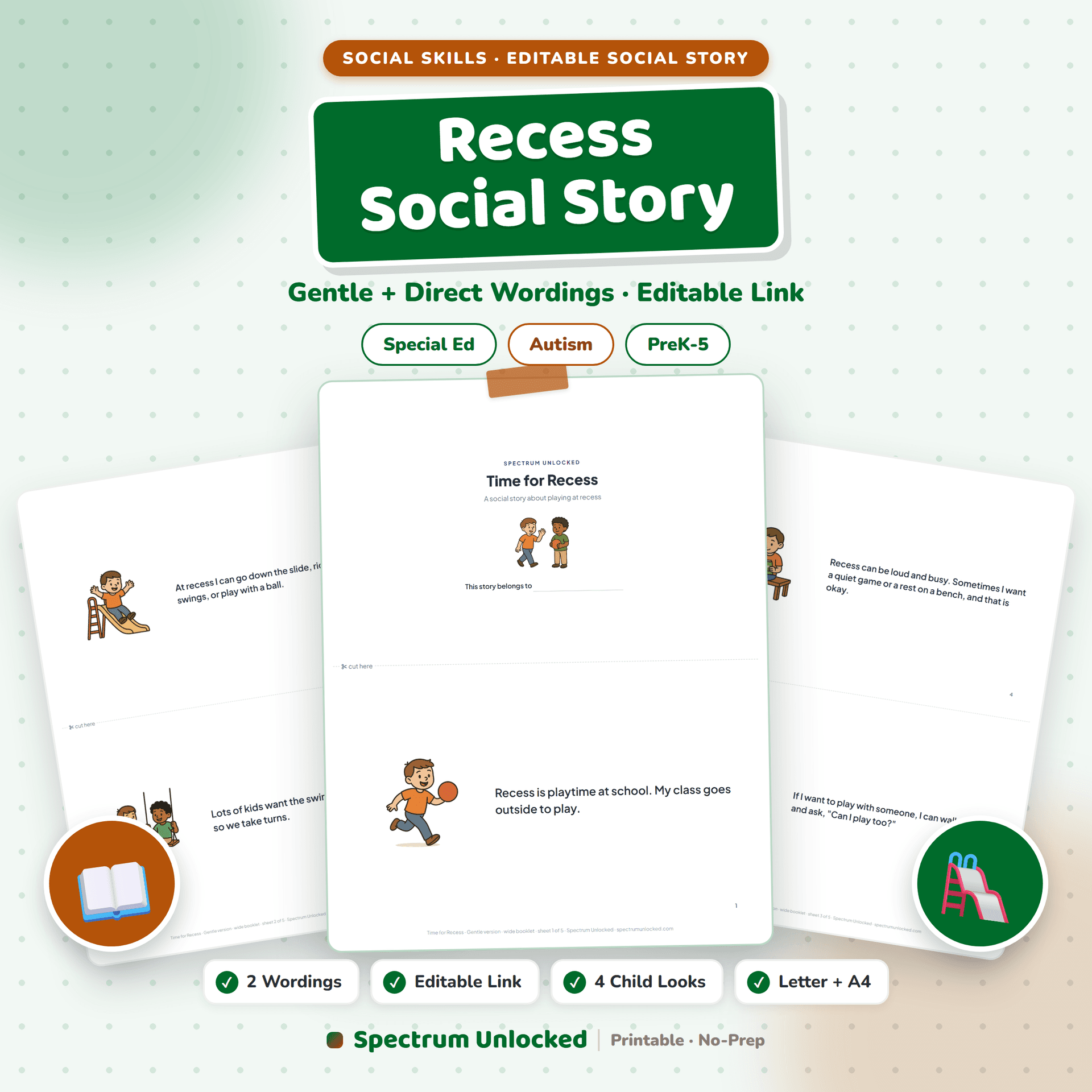
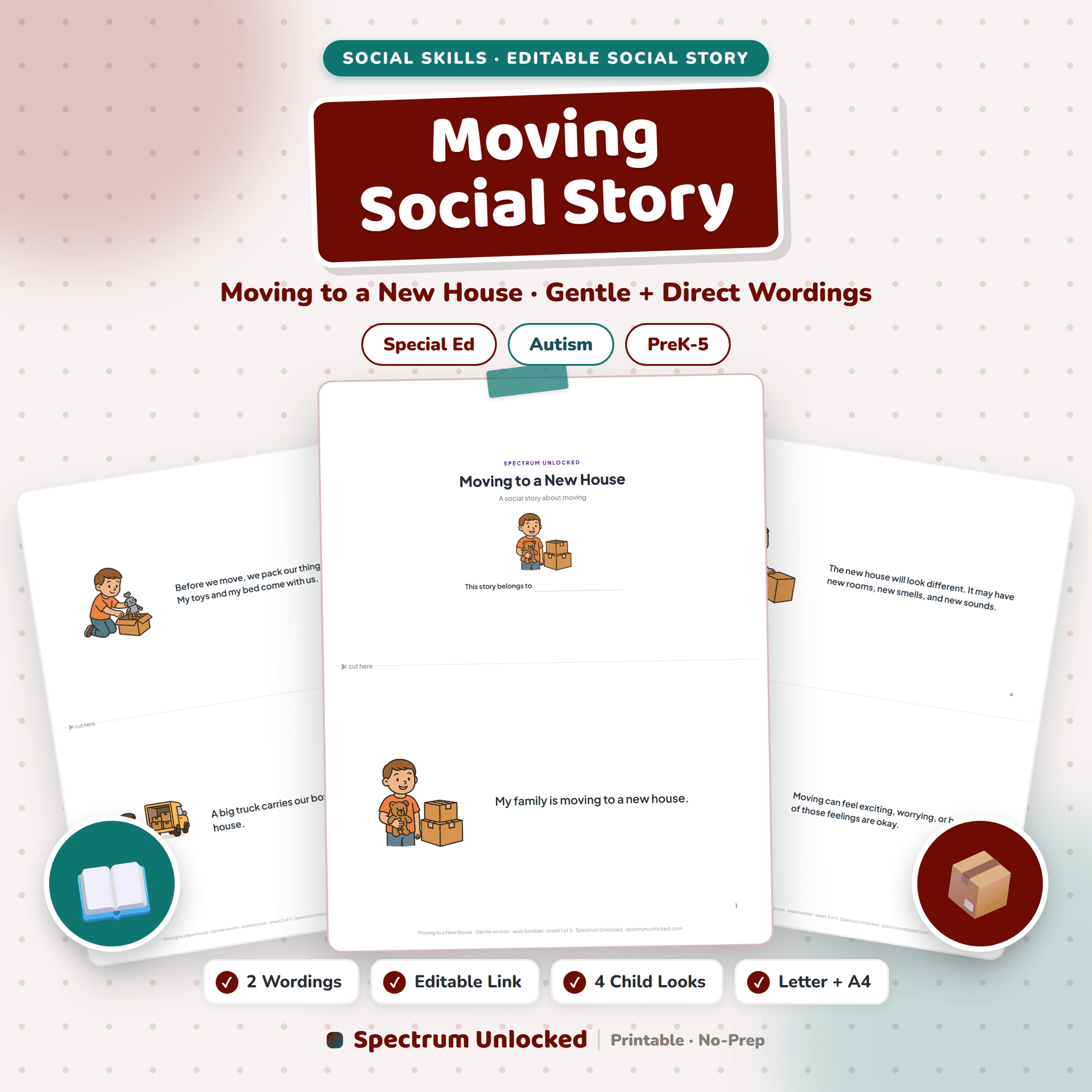
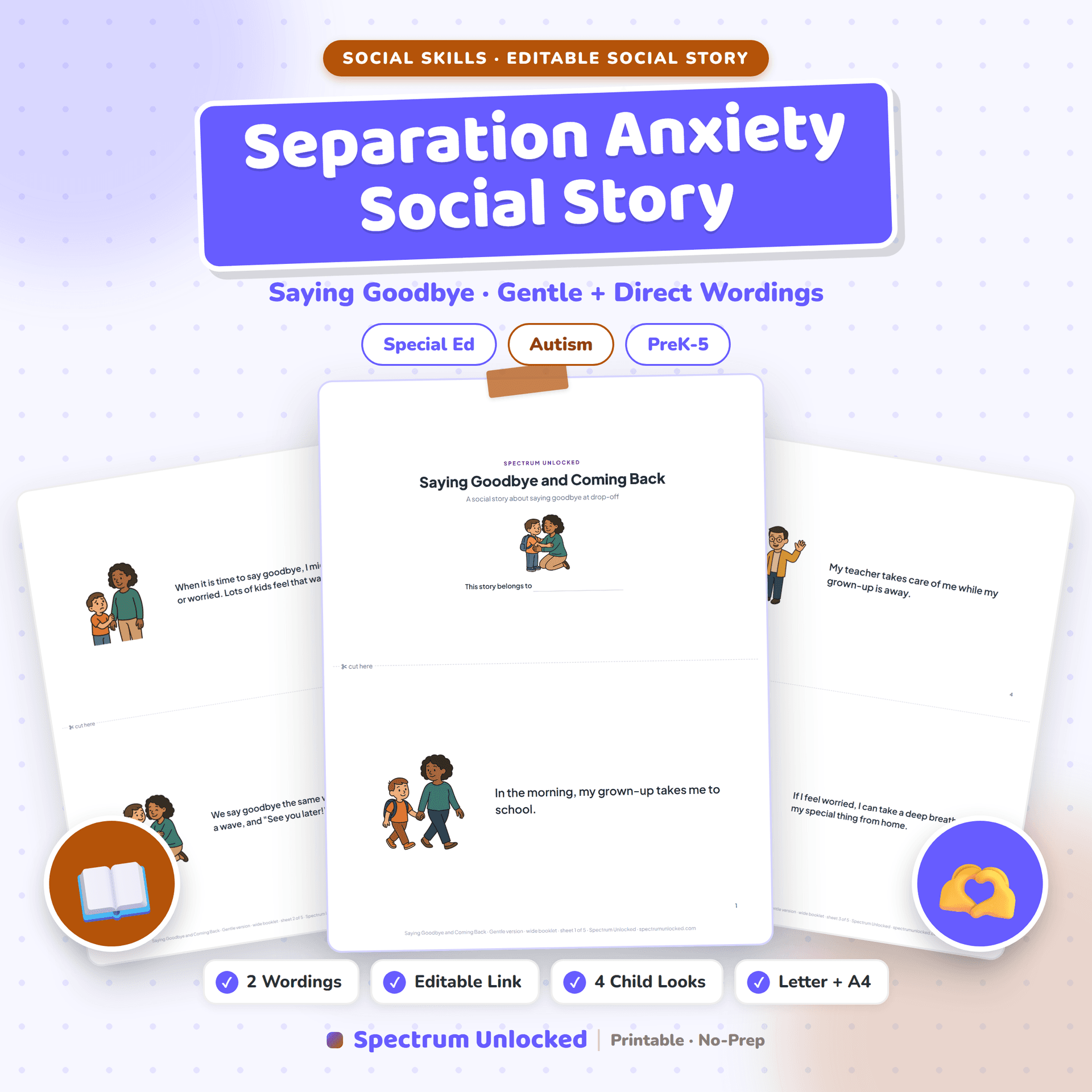
Nothing left to prepare. 25 finished sets, from $3, and every page prints exactly as it is.
When to use this story
Use this story in the days before a haircut, not in the chair. Read it at calm moments until the steps are familiar, then once more the morning of the cut. It also works as a repair tool after a haircut that went badly, rebuilding the script while the pressure is off.
Partway through the story comes the fact that surprises children most: cutting hair does not hurt, because hair is not like skin and cannot feel the scissors. For a child bracing for pain, that page can lower the stakes of the whole appointment. The itch from fallen clippings is named honestly too, along with its fix, because pretending the itch away only costs you credibility.
The coaching pages map to the accommodations that actually work in a chair: ear defenders for the clipper buzz, a show or a toy for the long sit, and asking a grown-up to talk through each step before it happens. If you brief the barber or stylist in advance, the story and the adult end up telling your child the same thing.
Personalize the setting when you edit. If haircuts happen in your kitchen, swap the hair shop page. If clippers are the flashpoint, keep that page and pair the story with a gradual desensitization plan between cuts, letting your child see and handle the tools at home with no cutting attached.
Frequently asked questions
- What is a haircut social story?
- It is a short story, told in the first person or with your child's name, that walks through a haircut step by step: the chair, the comb, the scissors or clippers, the falling hair, and the finished look in the mirror. This one follows Carol Gray's describe-first approach, so most pages explain what happens rather than telling your child what to do.
- Why are haircuts so hard for autistic kids?
- A haircut stacks touch on the scalp and ears, clipper buzz at the ear canal, itchy clippings down the collar, and a long still sit under bright lights, all delivered by a relative stranger. The refusal is usually sensory self-protection, not misbehavior, which is why the story explains each sensation before it happens.
- Does the story promise the haircut will not hurt?
- It says cutting hair does not hurt, which is true because the hair shaft has no nerves, and it separately admits that fallen clippings feel itchy until brushed off. It makes no promises about the buzz or the wait, and instead gives your child tools for both.
- Do I have to pay to print the haircut story?
- No. The complete story is on this page, and the maker builds the printable booklet without charge. You can add your child's name and photos before you download it.
- Can I match the story to our barber or salon?
- Yes. Open it in the maker to edit any page, swap pictures, or switch between I and your child's name. Naming the real place and the real hair cutter makes the rehearsal feel like a plan instead of a lesson.
- Who developed social stories?
- Social Stories were developed by Carol Gray in the early 1990s. The gentle version of this template follows her published guidance, including describing more than coaching, but Spectrum Unlocked is not affiliated with or endorsed by Carol Gray.
Related stories
Going to the Dentist Social Story
A free printable social story that walks through the dental visit: the moving chair, bright light, tickly tools, and how to ask for a break.
Brushing Teeth Social Story
Two minutes at the sink can be a battle. This free printable social story breaks tooth brushing into small steps and names the tricky sensory parts.
Social Stories were developed by Carol Gray. Spectrum Unlocked is not affiliated with or endorsed by Carol Gray; the gentle version of this template follows her published describe-more-than-coach guidance.