Routines & Transitions
Getting Dressed Social Story
A social story that turns getting dressed into a fixed, learnable order: underwear and shirt, then pants and socks, shoes last. It builds in choice, names the genuinely tricky parts, buttons, zippers, and tags, and gives permission to go slowly. The full story is below, ready to personalize.
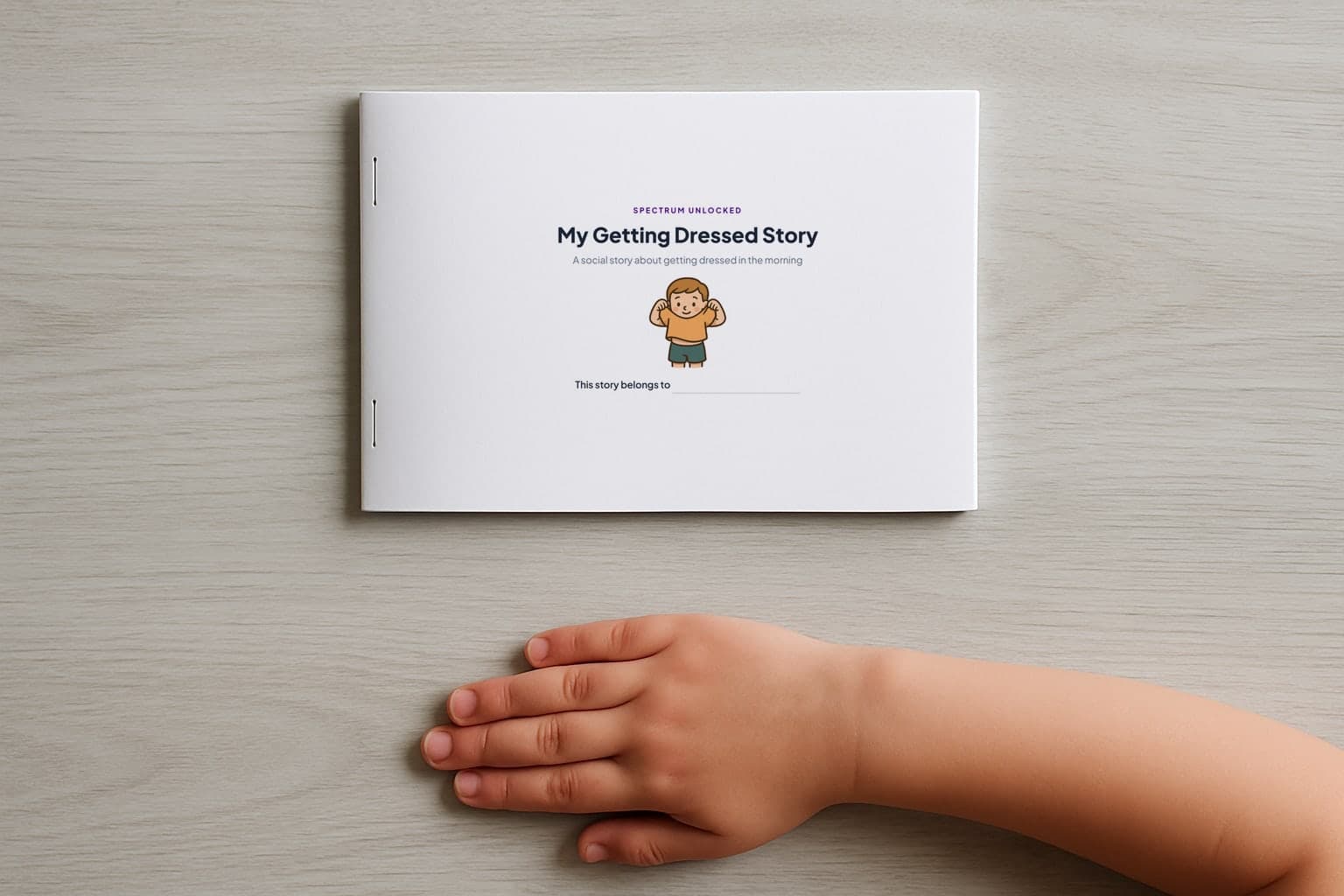
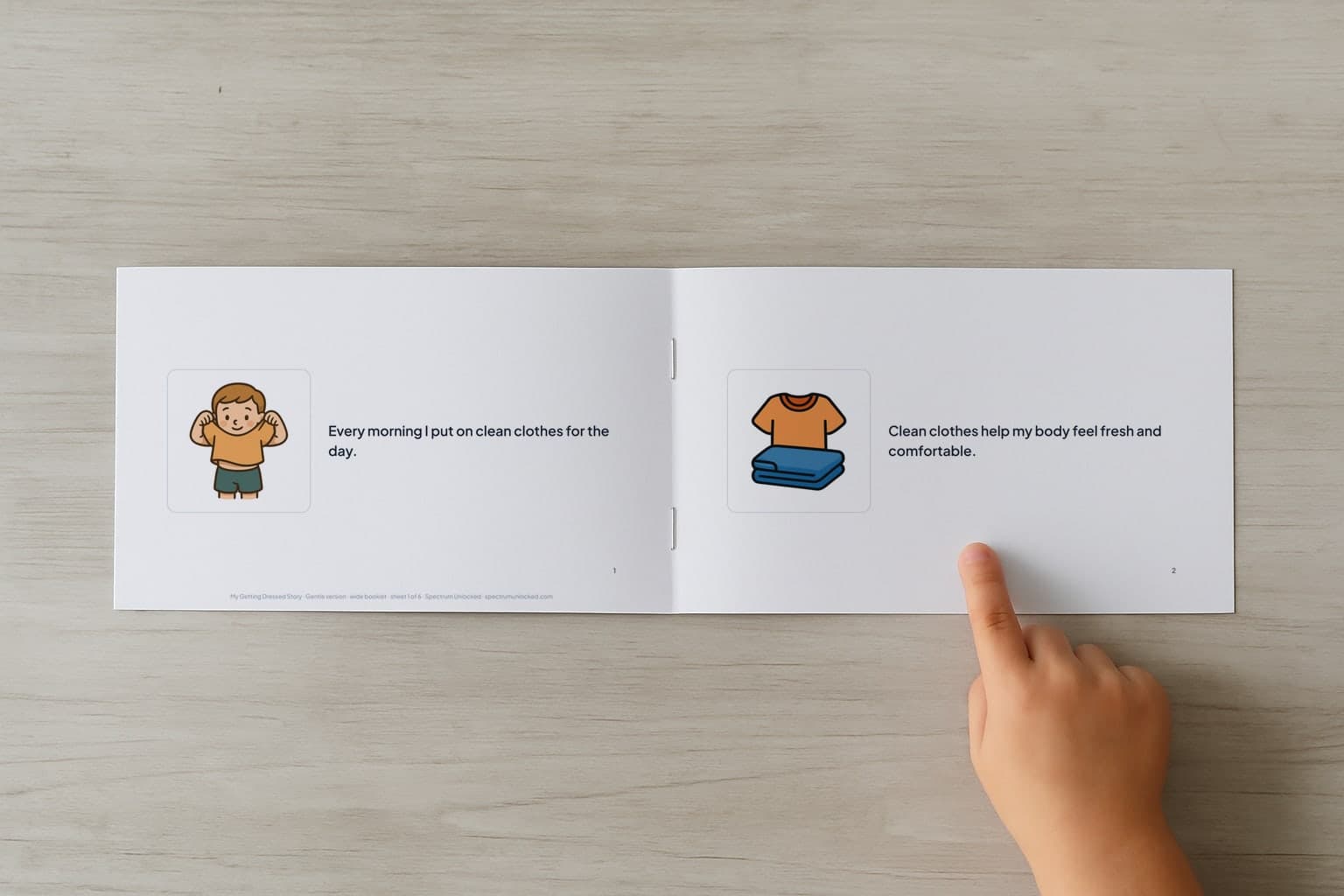
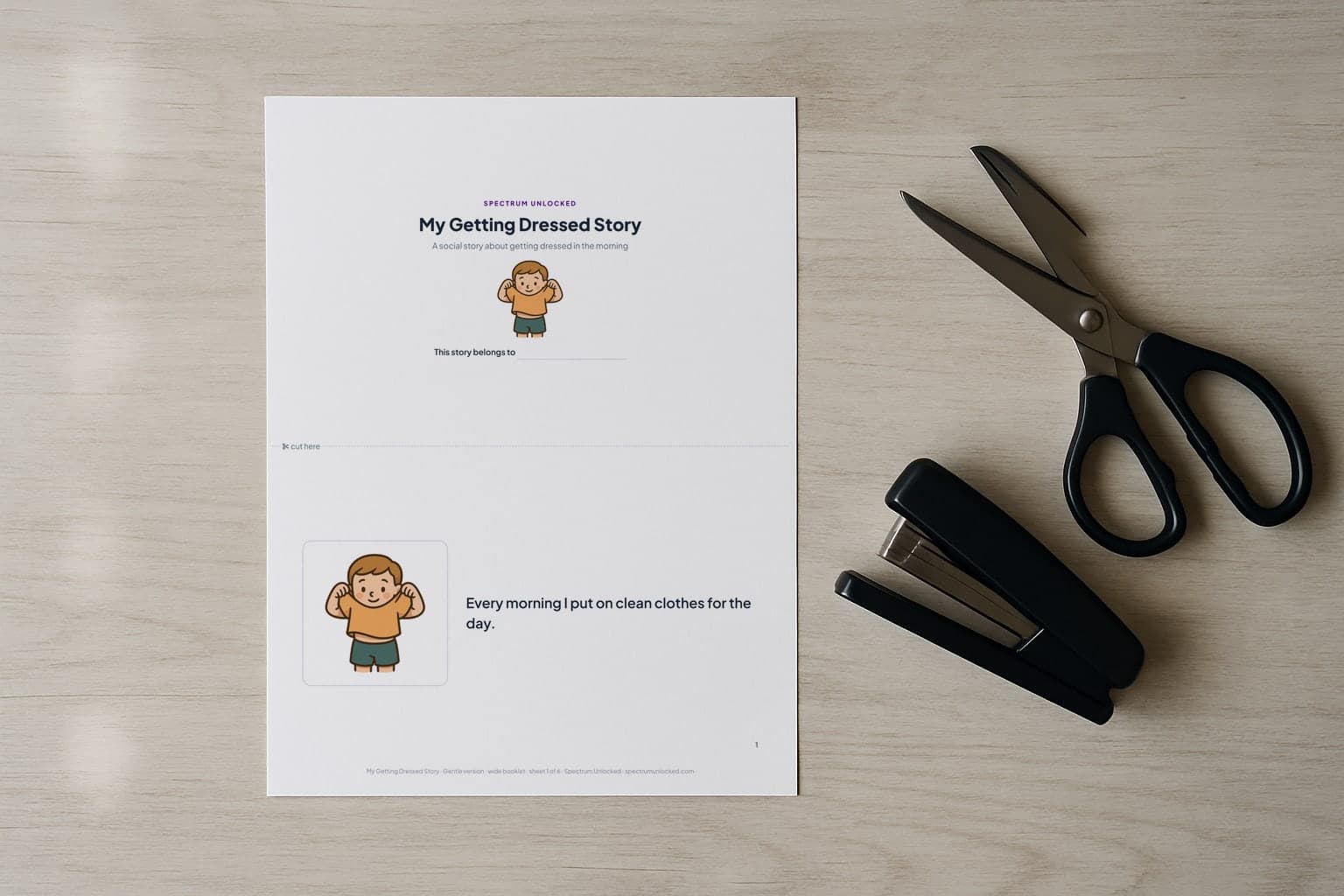
Download the printable PDF
Print the story as-is, no email required. Match the pictures to your child and pick your page layout, then download.
The story
Read the full story below. In the maker you can add your child's name, swap pictures, and print it as a booklet.
My Getting Dressed Story
A social story about getting dressed in the morning
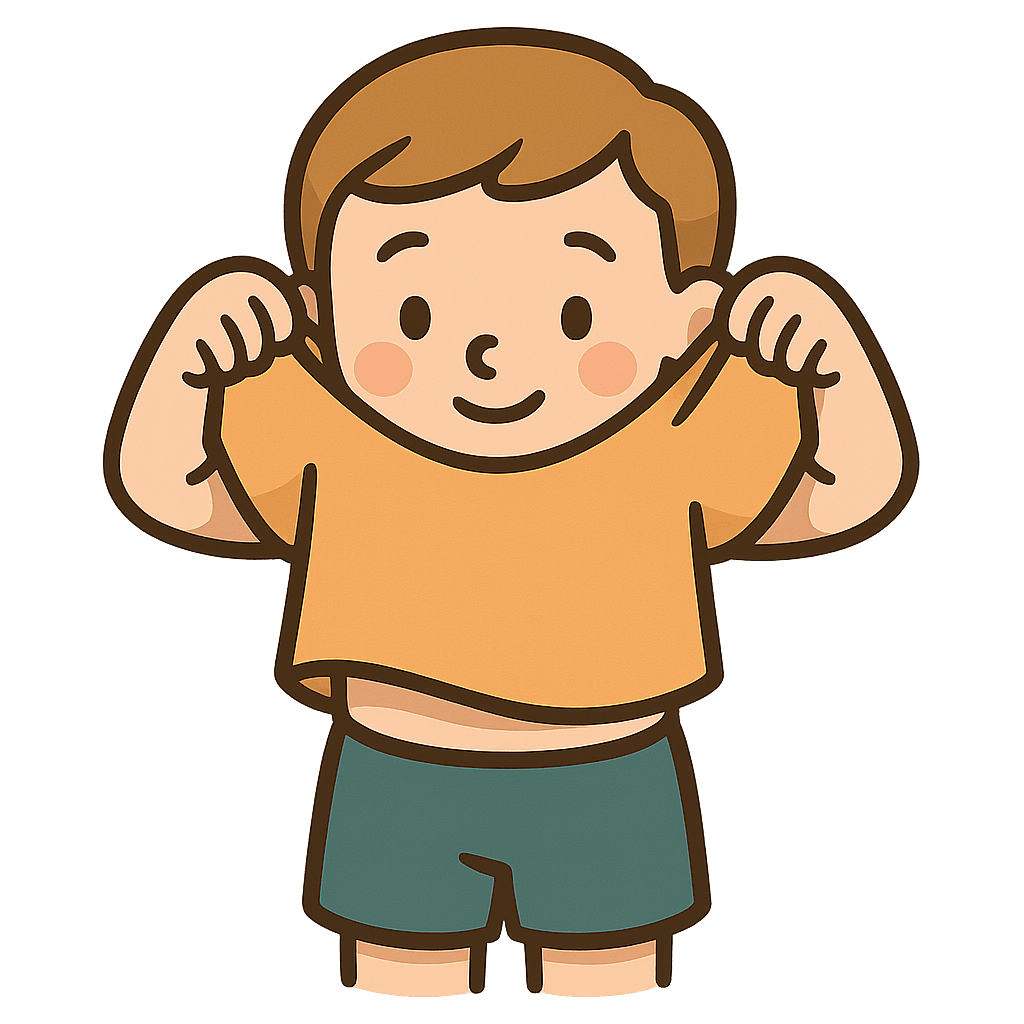
- 1Every morning I put on clean clothes for the day.Describes
- 2
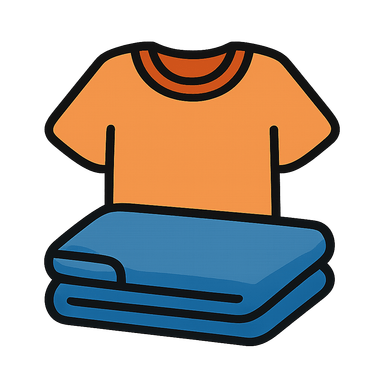 Clean clothes help my body feel fresh and comfortable.Describes
 - 3
 I can pick my clothes, or a grown-up can help me choose.Coaches
 - 4
 First I put on my underwear and my shirt.Describes
 - 5
 Next I put on my pants and my socks.Describes
 - 6
 Shoes go on last, after my socks.Describes
 - 7
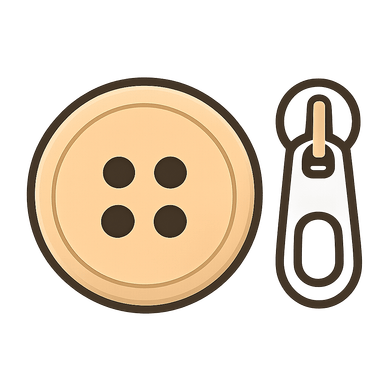 Some clothes feel tricky. Buttons, zippers, and tags can take extra time.Describes
 - 8
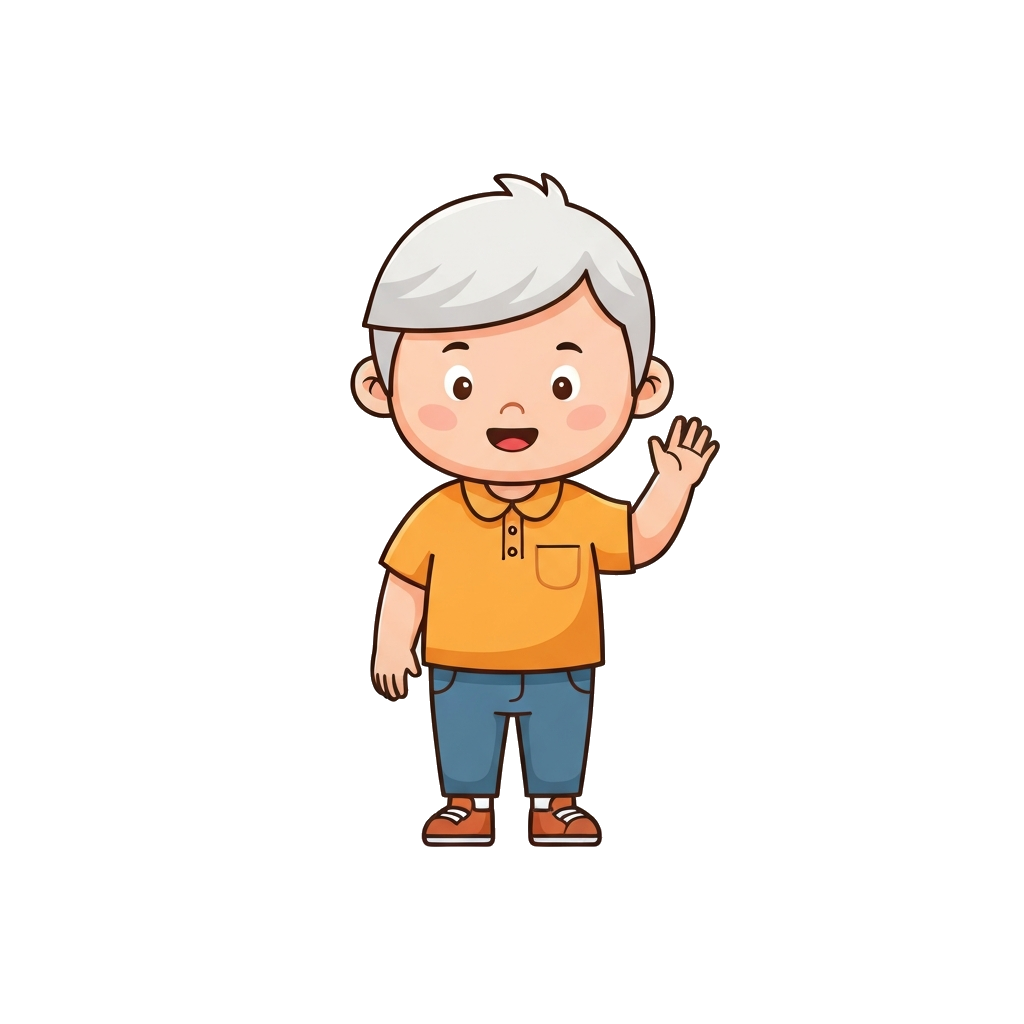 If something is stuck or feels scratchy, I can ask a grown-up for help.Coaches
 - 9
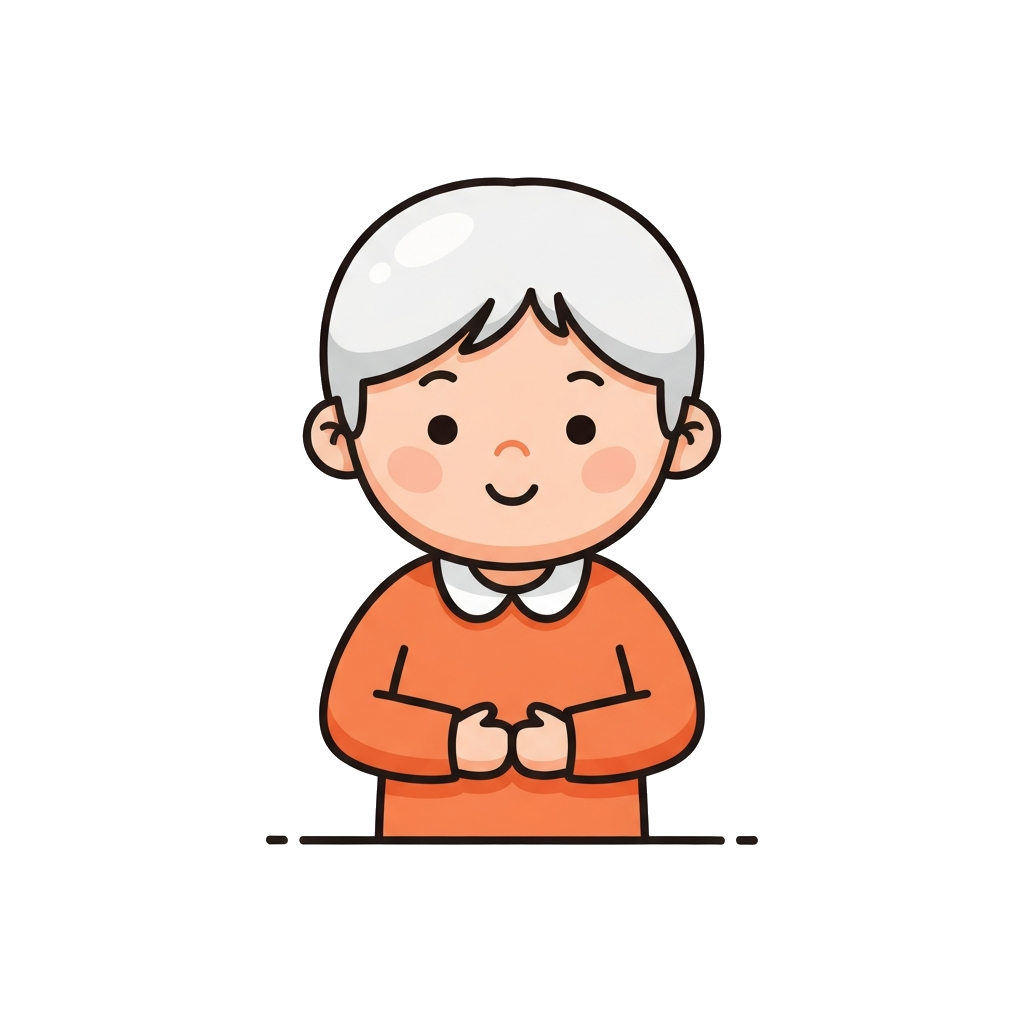 I can take my time. It is okay to go slowly.Coaches
 - 10
 When my clothes are on, I am ready for breakfast and my day.Describes
Single stories, $3 each
When one situation is the whole problem, take just that story. A gentle and a firmer wording, four child looks, booklet pages in US Letter and A4, and a link to edit it free.
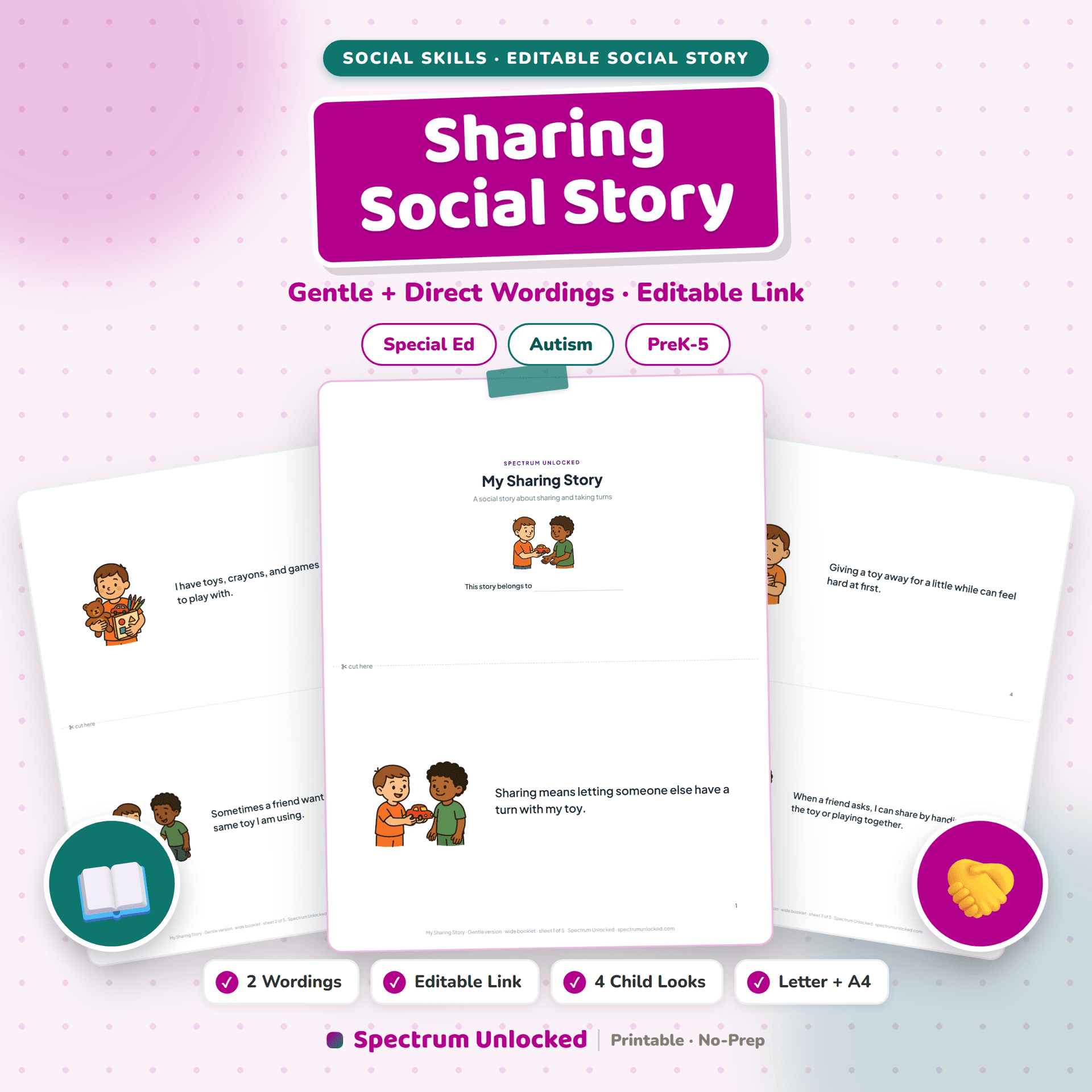
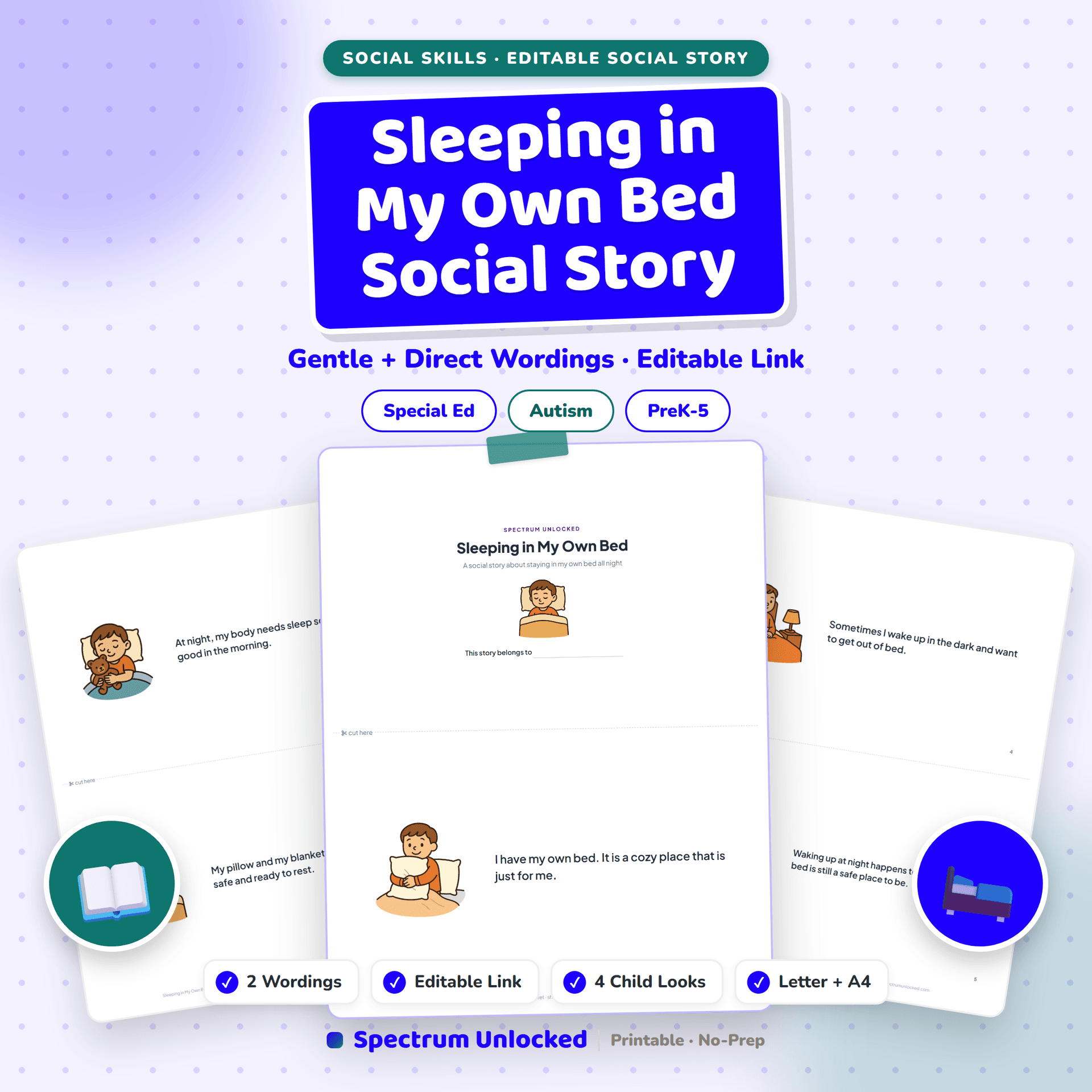
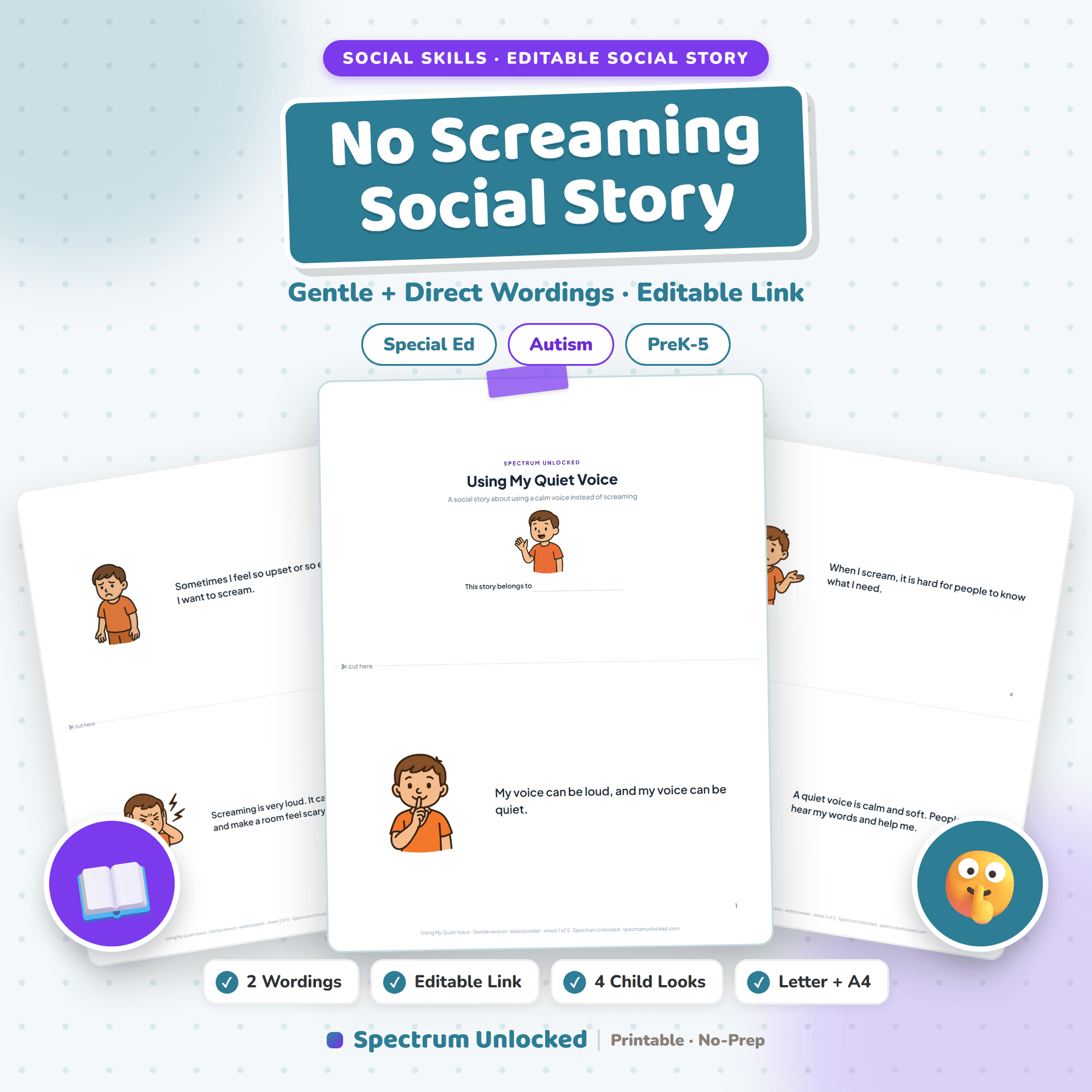
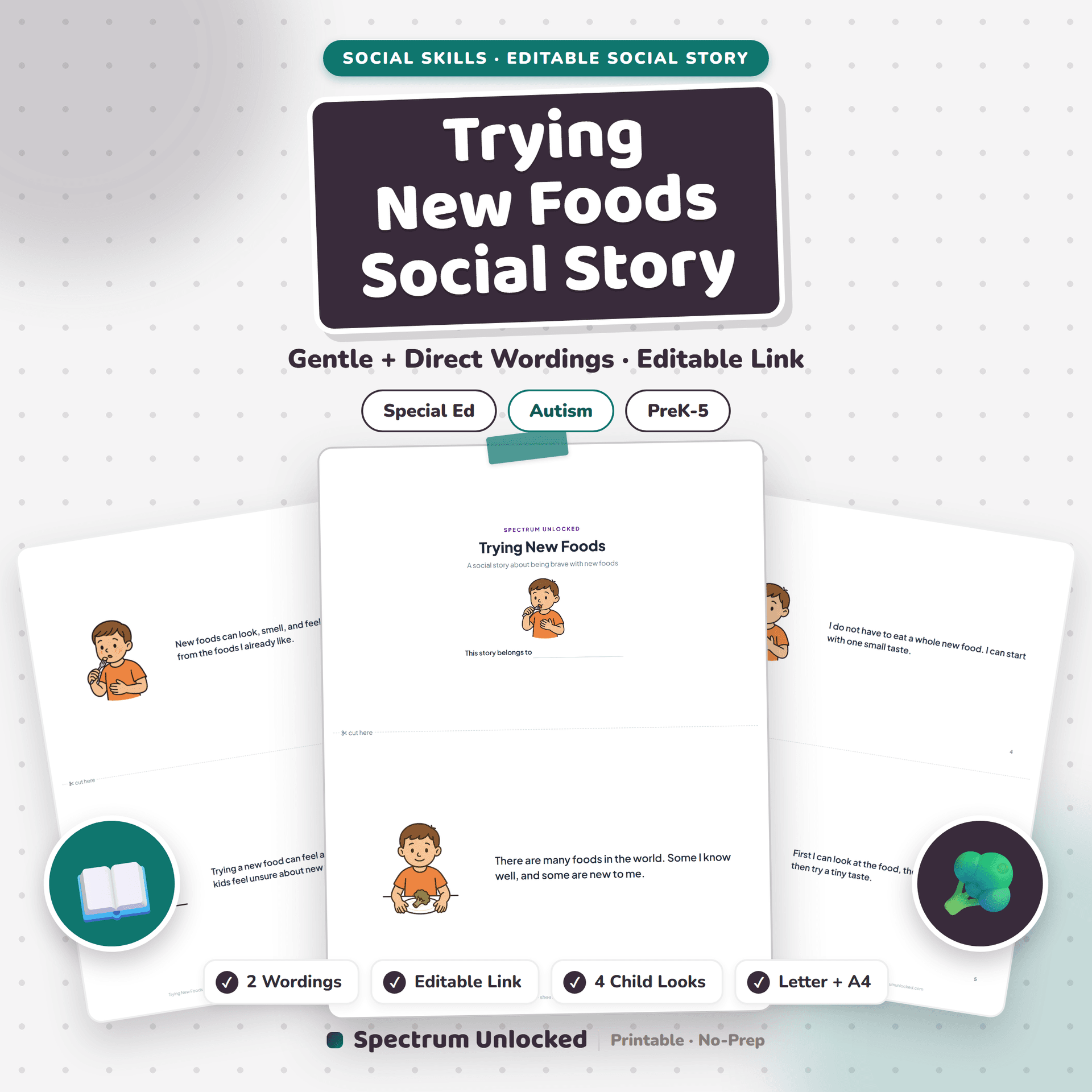
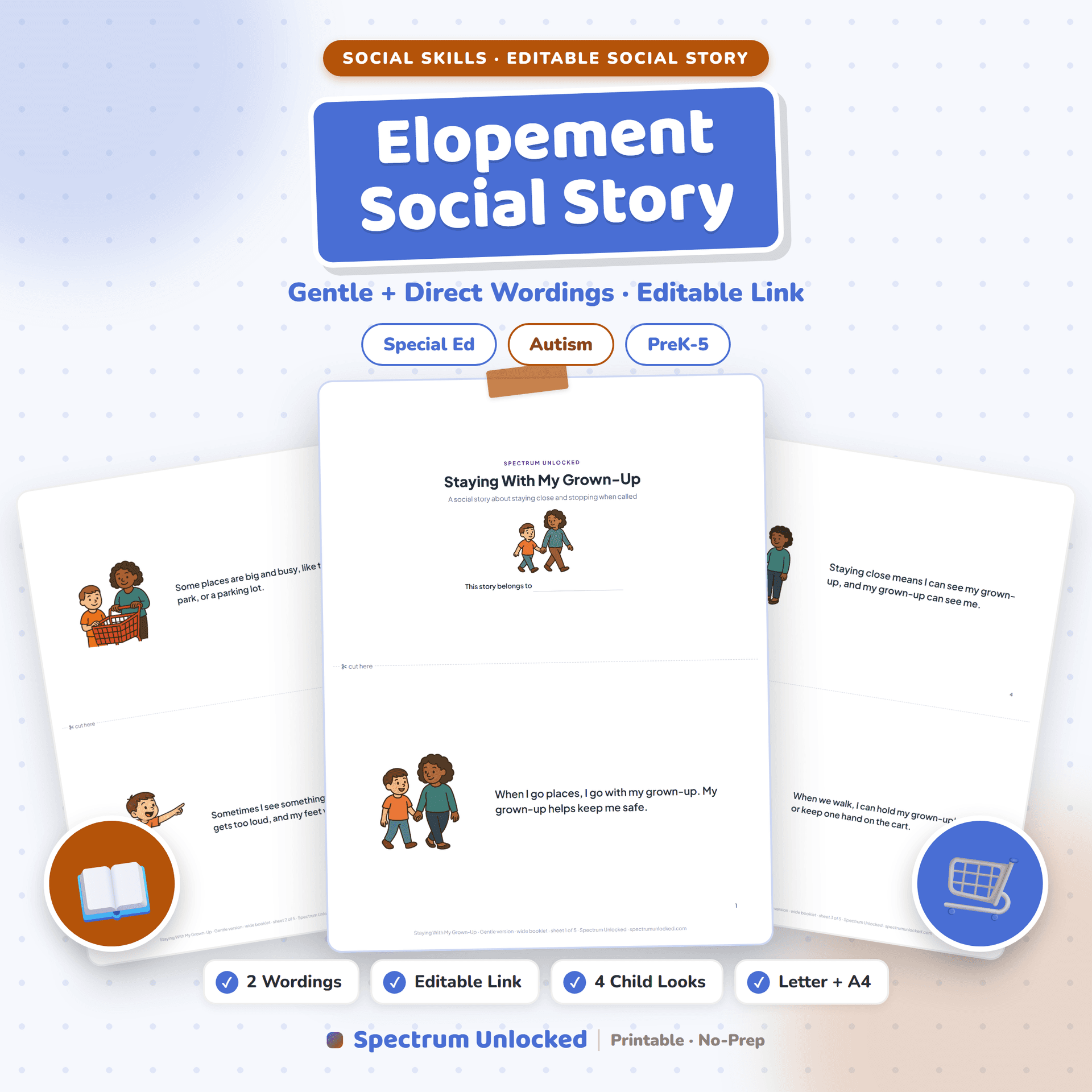
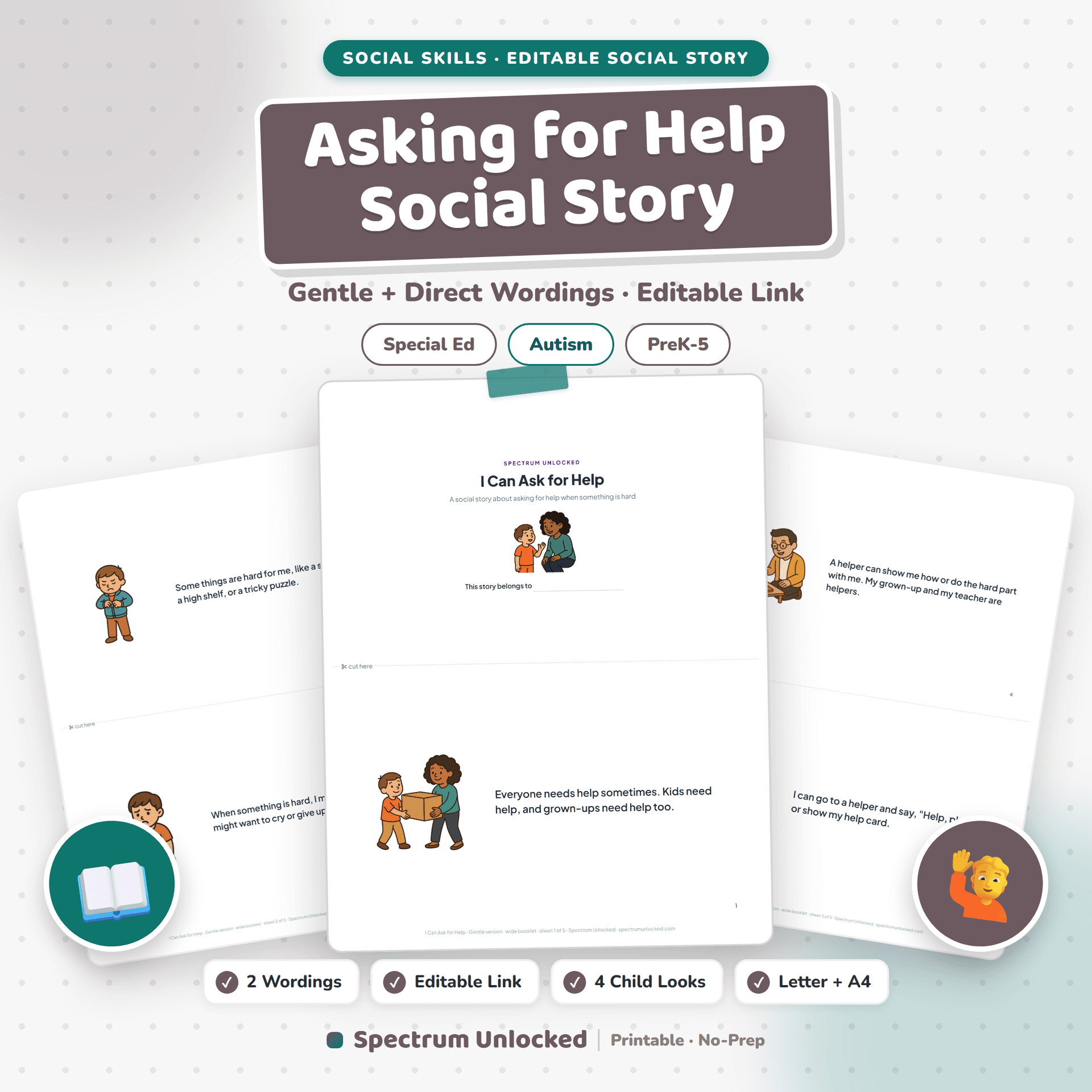
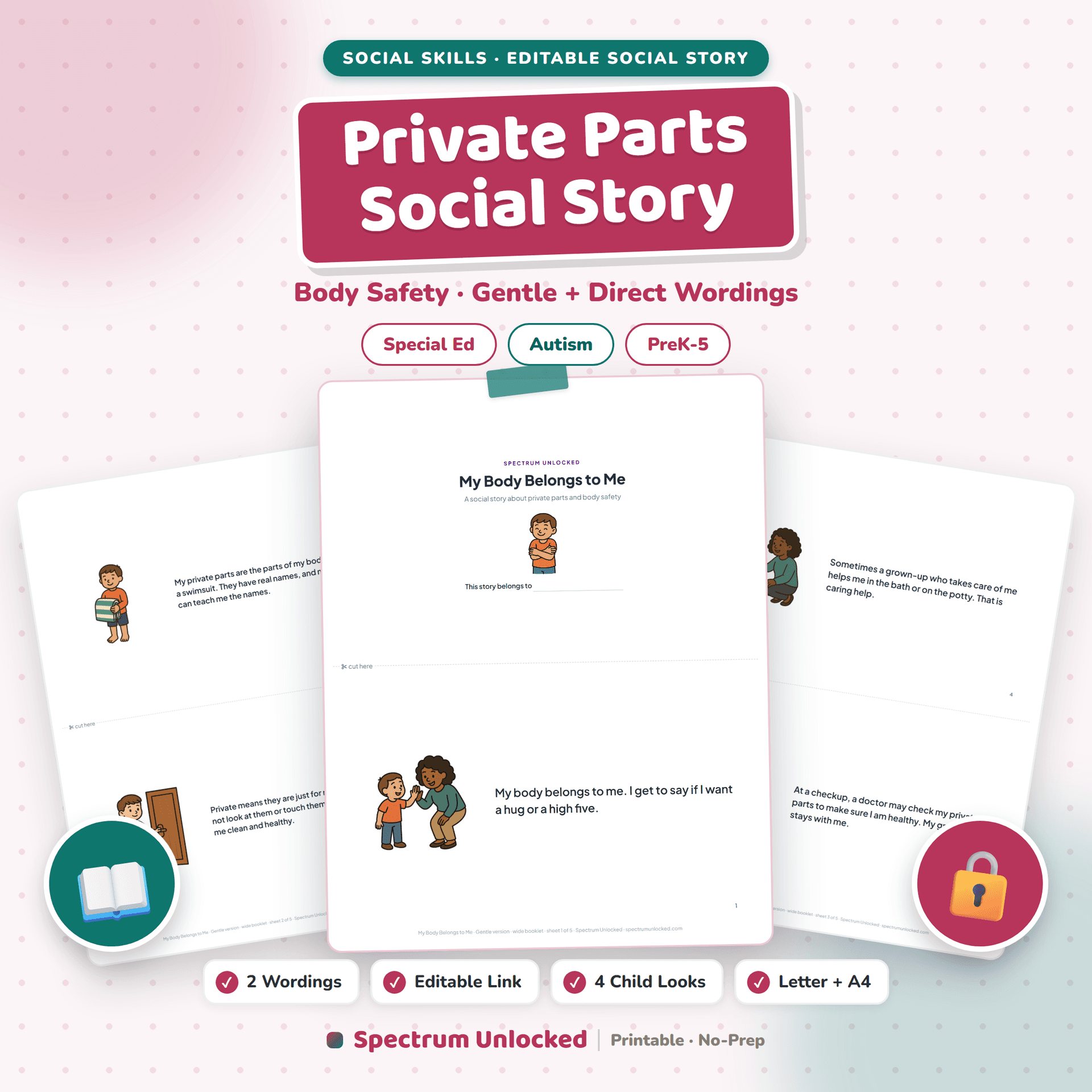
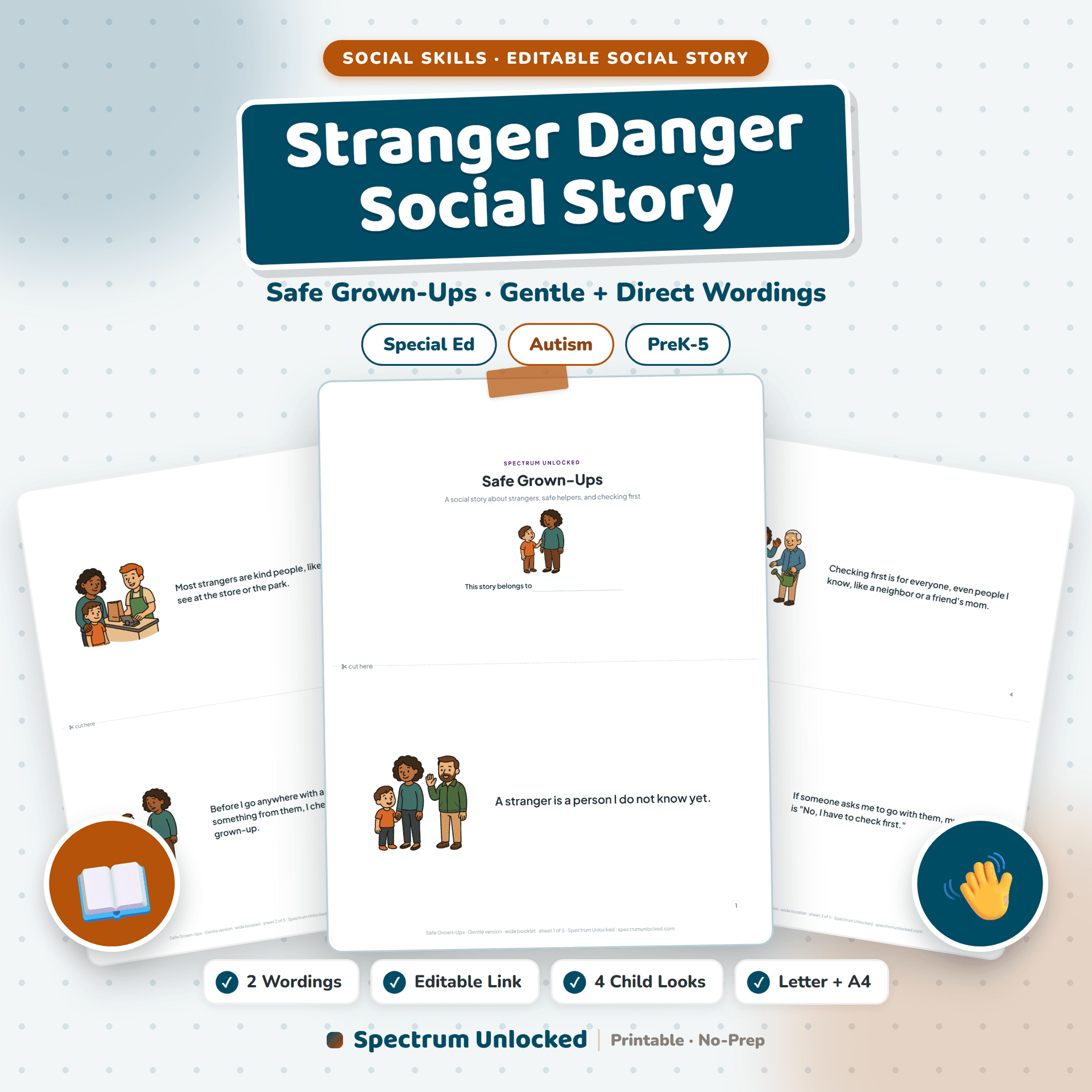
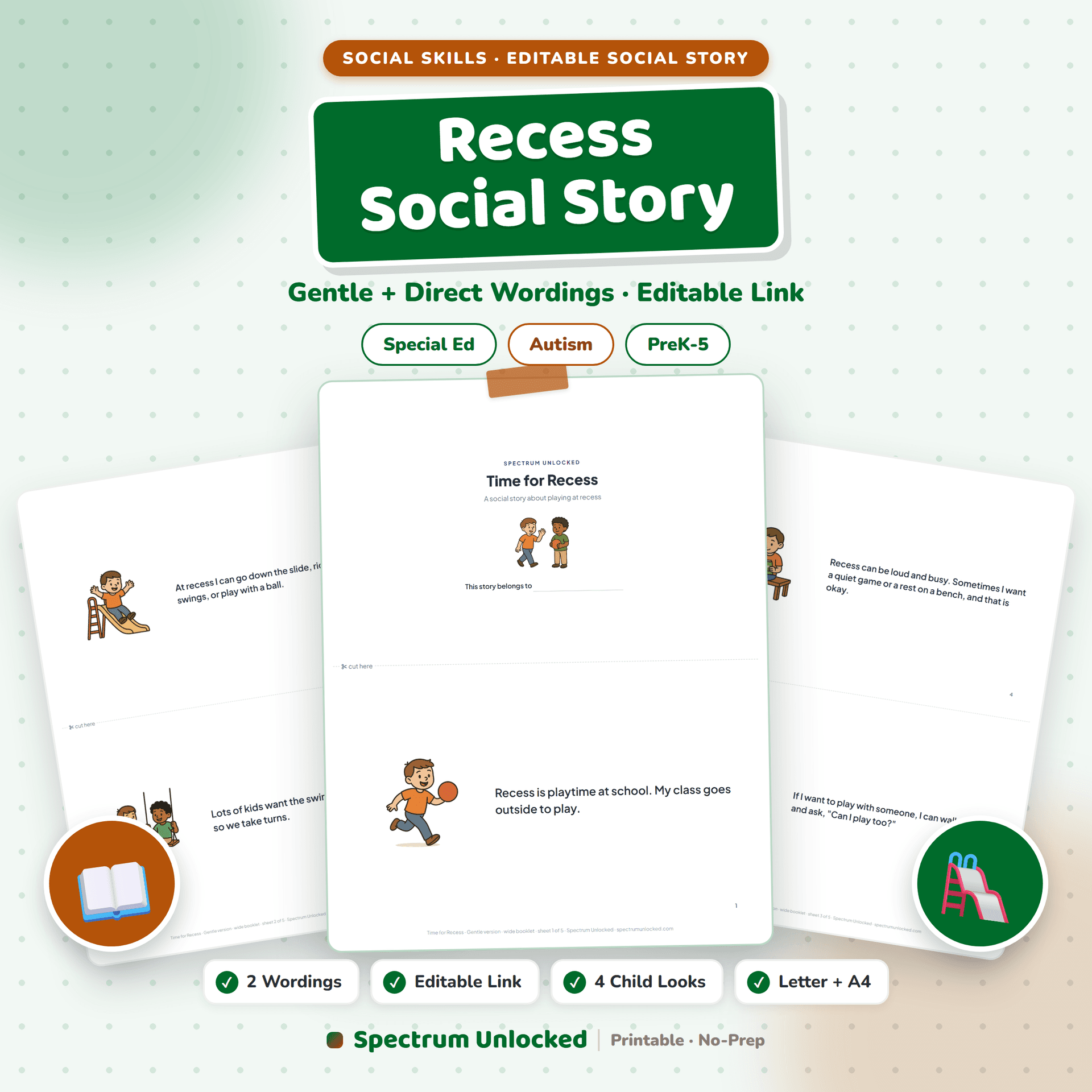
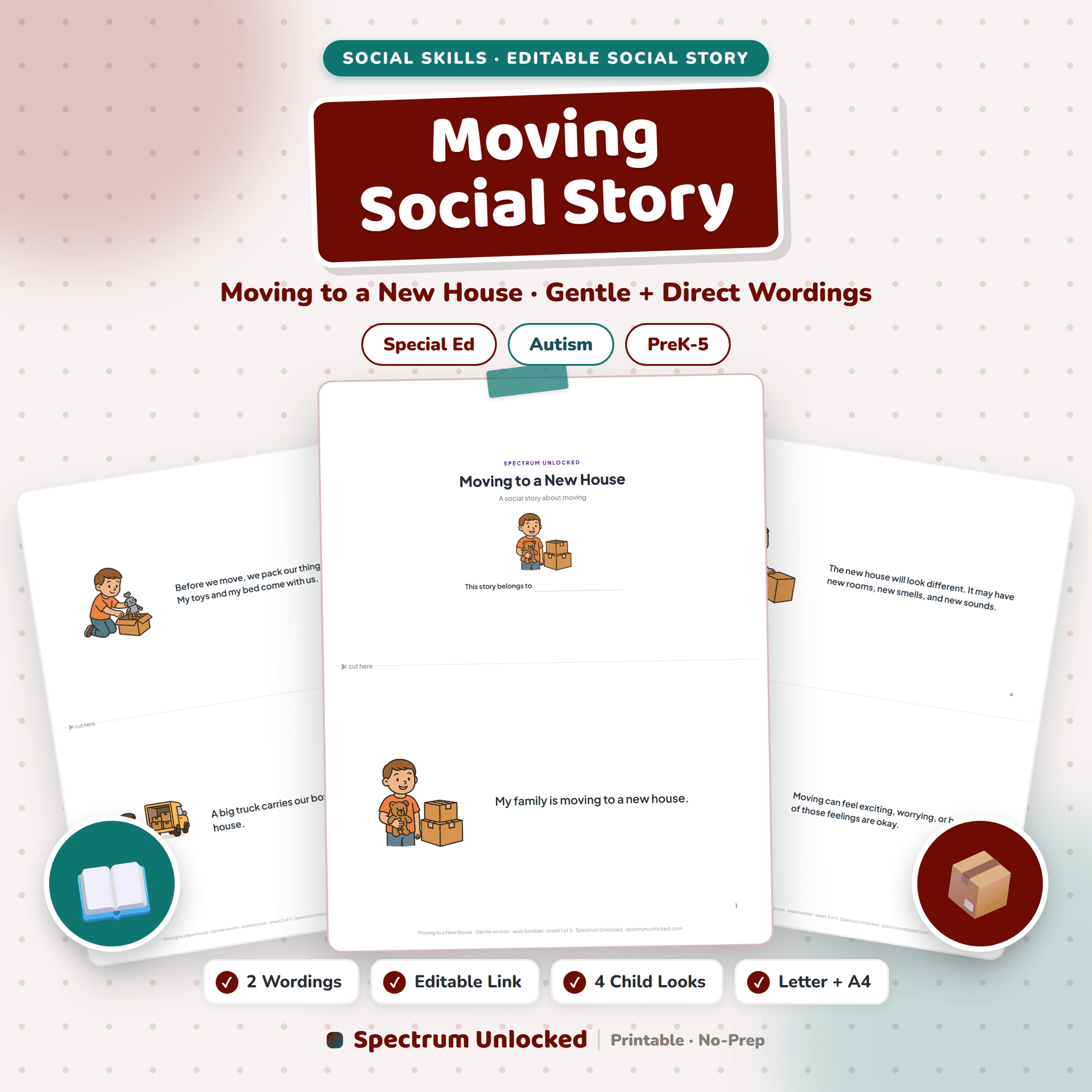
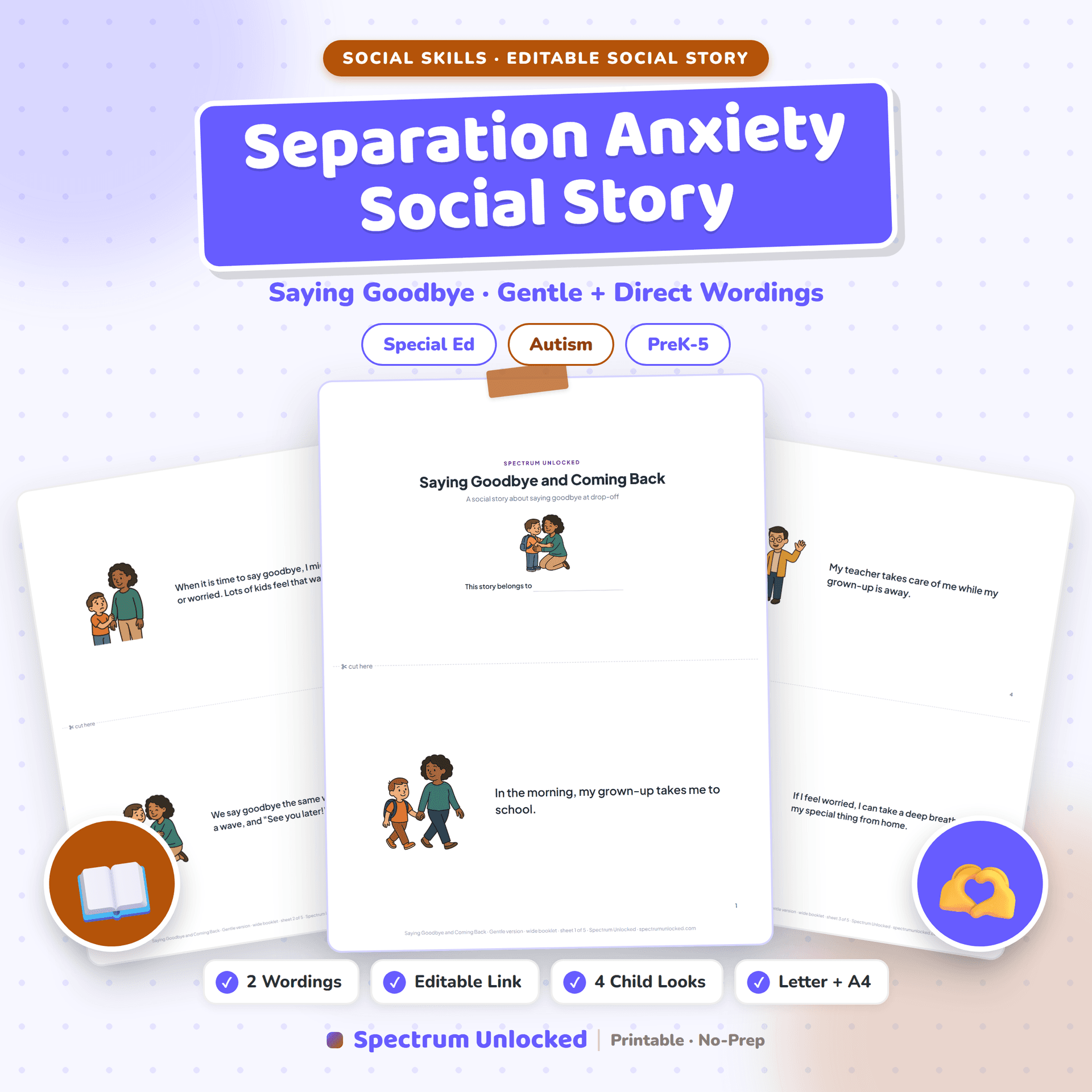
Nothing left to prepare. 25 finished sets, from $3, and every page prints exactly as it is.
When to use this story
Use this story when mornings stall at the dresser, when clothes go on in an order that does not work, or when buttons, zippers, and scratchy tags end in tears. Read it the evening before or at breakfast rather than mid-struggle, and keep a printed copy where dressing actually happens.
The fixed order is the point. Underwear and shirt, then pants and socks, then shoes last removes a decision from every step, and children who get stuck mid-dressing are usually stuck on the deciding, not the doing. If your child's order differs, edit the pages so the story matches the real sequence.
The story builds in agency early, I can pick my clothes, or a grown-up can help me choose, which heads off the power struggle before the first sleeve. Later pages give explicit permission to go slowly and to ask for help when something is stuck or feels scratchy, so speed pressure never becomes the fight.
The tricky-parts page, buttons, zippers, and tags can take extra time, is where personalization pays off. Name the exact snag your child hits, and if tags or seams are a daily battle, the story works best alongside practical fixes like tag-free shirts.
Frequently asked questions
- How does a getting dressed social story help my child?
- It converts a multi-step task with hidden decisions into a visible, repeatable sequence. Your child learns what comes first, what comes next, and what to do when something goes wrong, ask for help, go slowly. Read regularly, the story makes the routine predictable enough to do with less prompting.
- What order does the story teach?
- Underwear and shirt first, then pants and socks, with shoes always last after socks. It also covers picking clothes, with help if needed, and ends with being ready for breakfast and the day, so dressing connects to something your child looks forward to.
- My child melts down over tags and seams. Does the story address that?
- It names the problem honestly, some clothes feel tricky, and scratchy feelings are a reason to ask for help, not a failing. The story sets expectations, and practical steps like tag-free shirts or pre-chosen soft outfits remove the trigger itself. The two together work better than either alone.
- Is there any charge to print this story?
- No. The complete story is on this page, and the maker generates the printable booklet at no cost. You can add your child's name and even photos of their own clothes before downloading.
- Can I reorder the steps to match how my child dresses?
- Yes. Every page is editable in the maker, so you can change the sequence, add a coat-and-backpack page for school mornings, swap pictures, or switch the whole story into your child's name. The story should describe your mornings, not a generic one.
- Who developed social stories?
- Social Stories were developed by Carol Gray in the early 1990s. The gentle version of this template follows her published guidance, including describing more than coaching, but Spectrum Unlocked is not affiliated with or endorsed by Carol Gray.
Related stories
Brushing Teeth Social Story
Two minutes at the sink can be a battle. This free printable social story breaks tooth brushing into small steps and names the tricky sensory parts.
Bedtime Social Story
A calm, predictable bedtime story your child can follow page by page, from pajamas to lights out. Printable and free, with room for your child's name.
Related guides
Social Stories were developed by Carol Gray. Spectrum Unlocked is not affiliated with or endorsed by Carol Gray; the gentle version of this template follows her published describe-more-than-coach guidance.