Free Full-Day Visual Schedule for Autism
When you don't know where to start, start here. This nine-block full-day template covers the whole day from wake-up to bedtime at a glance, perfect for kids who benefit from seeing the entire shape of the day on one page.
Make the schedule look like your child: show a boy or girl in a light or dark skin tone, then print or download the matching PDF.
- 9 activities
- Free printable PDF
- Editable in browser
Editor preview
All 9 steps with picture symbols, ready to customize before you print.
- Step 1
 Wake up
 - Step 2
 Breakfast
 - Step 3
 School
 - Step 4
 Lunch
Lunch - Step 5
 Snack
Snack - Step 6
 Play
Play - Step 7
 Dinner
 - Step 8
 Bath
Bath - Step 9
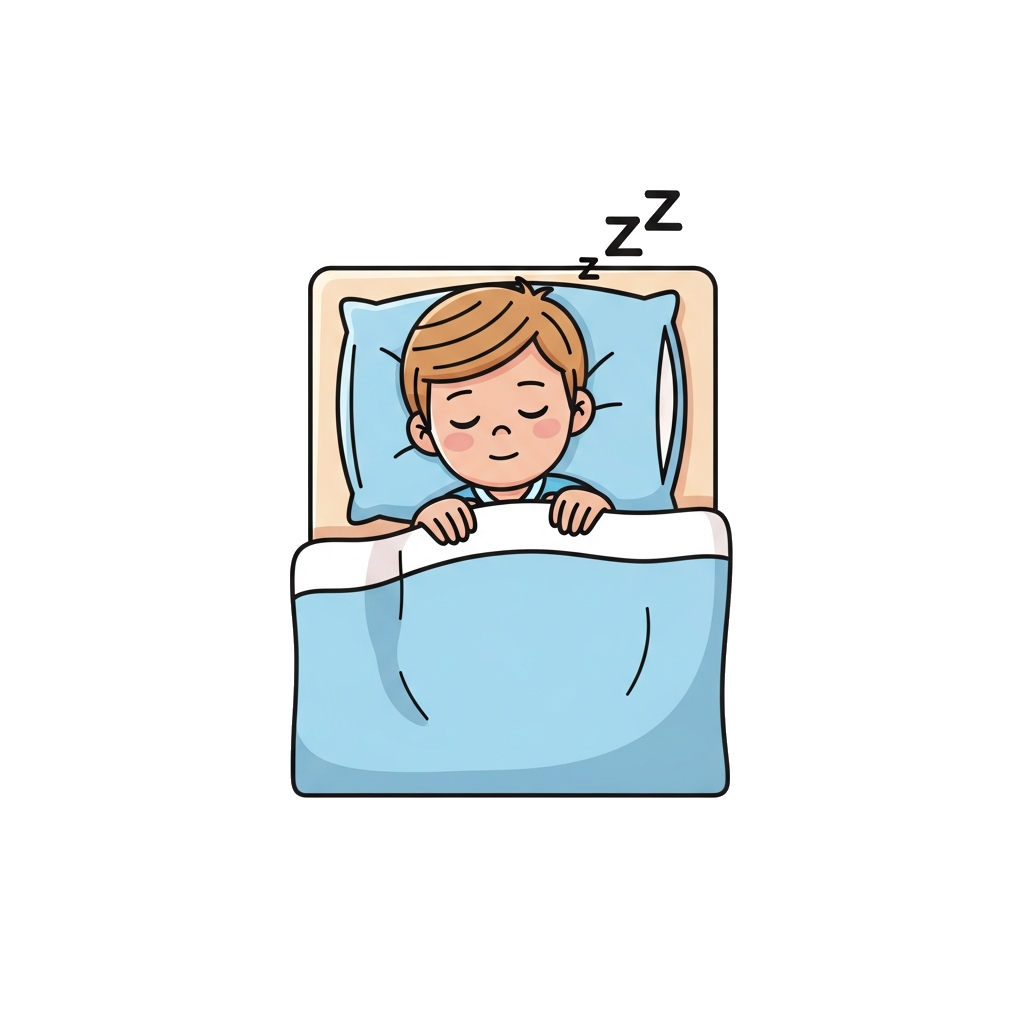 Bedtime
Printable preview
What the free PDF looks like once you download or print it. Every toggle above updates it.
Show a boy or girl in a light or dark skin tone to match your child, and pick your layout, card size, page size, and orientation. On the checklist layout you can also turn numbers, times, checkboxes, and icons on or off. The preview and PDF follow your choice.
The full-day schedule is the wide-angle view. Where the morning, bedtime, and after-school routines zoom into one part of the day in detail, this template shows the entire arc from wake-up to lights-out in a single glance. For kids who feel anxious about "how the day will go," the wide view is more reassuring than detailed sub-routines.
Nine blocks is the right size for most kids. Fewer and the schedule loses meaning; more and it overwhelms. The blocks here are intentionally broad: "school" is one block, not six. Once your child is comfortable with the full-day view, you can introduce more detailed routines for the parts of the day that are hardest. Most families end up with one full-day schedule plus one or two zoomed-in routines (often morning and bedtime).
Use this template as a starter if you have never used a visual schedule with your child. Introduce it on a weekend morning, walk through it together, and refer to it through the day. After a few days, your child will be the one pointing to the next block. Within a week or two, the schedule becomes background infrastructure your child references without being prompted.
This template also helps on irregular days: school holidays, weekends, days when the usual structure is gone. On those days, the absence of school shows up as an empty spot on the schedule and signals to your child that something different is happening. You can fill the gap with a specific replacement activity ("family outing" or "art project") so the day still has a visible shape.
For non-school-age kids, swap the school block for daycare, preschool, therapy, or whatever fills the largest segment of the day. For homeschooling families, replace school with the homeschool block and add more granularity within it as a separate sub-schedule. The full-day template adapts to nearly any family rhythm.
Ready-made daily and routine visual schedules to print and post, in US Letter and A4 with a setup guide.
When to use this template
Best for families introducing visual schedules for the first time, kids who benefit from seeing the whole day shape, or non-school days when the routine is less predictable. Also useful as a foundation to discuss "more detail here" with your child.
How to customize this template
- Swap school for daycare, preschool, therapy, or homeschool block depending on your family.
- Add a specific replacement block for unstructured days (weekends, holidays) so the schedule still has shape.
- If your child eats more meals or has specific snack times, add or modify the eating blocks.
- Pair this with a zoomed-in routine (morning, bedtime) for the hardest part of your day.
- If your child has therapies during the after-school window, replace play with the therapy block.
Frequently asked questions
- Should I use a full-day schedule or a routine-specific one?
- Start with full-day if your child is new to visual schedules. It is less detailed and easier to grasp. Move to routine-specific schedules once the full-day view is working and you have identified which transitions are hardest. Many families end up using both: full-day for orientation, plus a detailed schedule for morning or bedtime.
- What about weekends?
- Print a separate weekend schedule with weekend-specific blocks. Many families find their kids do better with a weekend schedule because weekend structure is less obvious than weekday structure. Keep the same blocks where possible (wake, breakfast, snacks, dinner, bath, bedtime) so the day still feels familiar.
- How granular should the blocks be?
- Coarse enough that the schedule has 5 to 12 blocks total. "School" as one block is fine even though it contains many activities; "morning routine" as one block is fine even though it contains 8 steps. The full-day view is the wide angle. Detail belongs in zoomed-in schedules.
- What if our day genuinely is unpredictable?
- Build the predictable parts (meals, bedtime, wake-up) and leave the unpredictable middle as one open block labeled "plans for today" with a small whiteboard space. Some structure is always better than none, and a visible "this is the unpredictable part" beats a schedule that lies about what will happen.
- My child resists the whole concept. Where do I start?
- Start with a first-then board instead, or with just two blocks of the day ("wake up, breakfast"). Build up gradually. The goal is for your child to find the schedule useful, not for you to enforce it. If they actively dislike the schedule, you are probably moving too fast or using it as a control tool rather than a support tool.
- Can I make the visual schedule for a Black boy or girl, or match my child's skin tone?
- Yes. Use the Boy / Girl and Skin tone toggles at the top of the template to switch the whole schedule at once. You can show the schedule with a Black boy or girl, or a white boy or girl, in a light or dark skin tone, and the on-screen preview, the printable, and the downloaded PDF all match. In the editor you can also swap any individual symbol or upload your own photos.
Related templates
Classroom Schedule
A whole-class daily schedule for the wall or pocket chart, twelve blocks from arrival to dismissal.
Written Schedule
A text-first daily schedule for kids who read: times, check-off boxes, and plain written steps instead of picture cards.
Morning Routine
Eight steps from wake-up through walking out the door, designed for autistic kids who melt down during the morning rush.
Bedtime Routine
Eight steps from dinner through lights-out, designed for autistic kids who fight bedtime or can't transition to sleep.
After-School Routine
Seven steps from arrival home through dinner, built for the after-school restraint-collapse window.