Community & Events
Going to the Doctor Social Story
A social story that walks through a well-child checkup in order: checking in, measuring height and weight, the cold stethoscope, the small light in ears and eyes, and the possibility of a shot, told honestly in one calm sentence. Your child learns two scripts, asking what comes next and telling the doctor how their body feels.
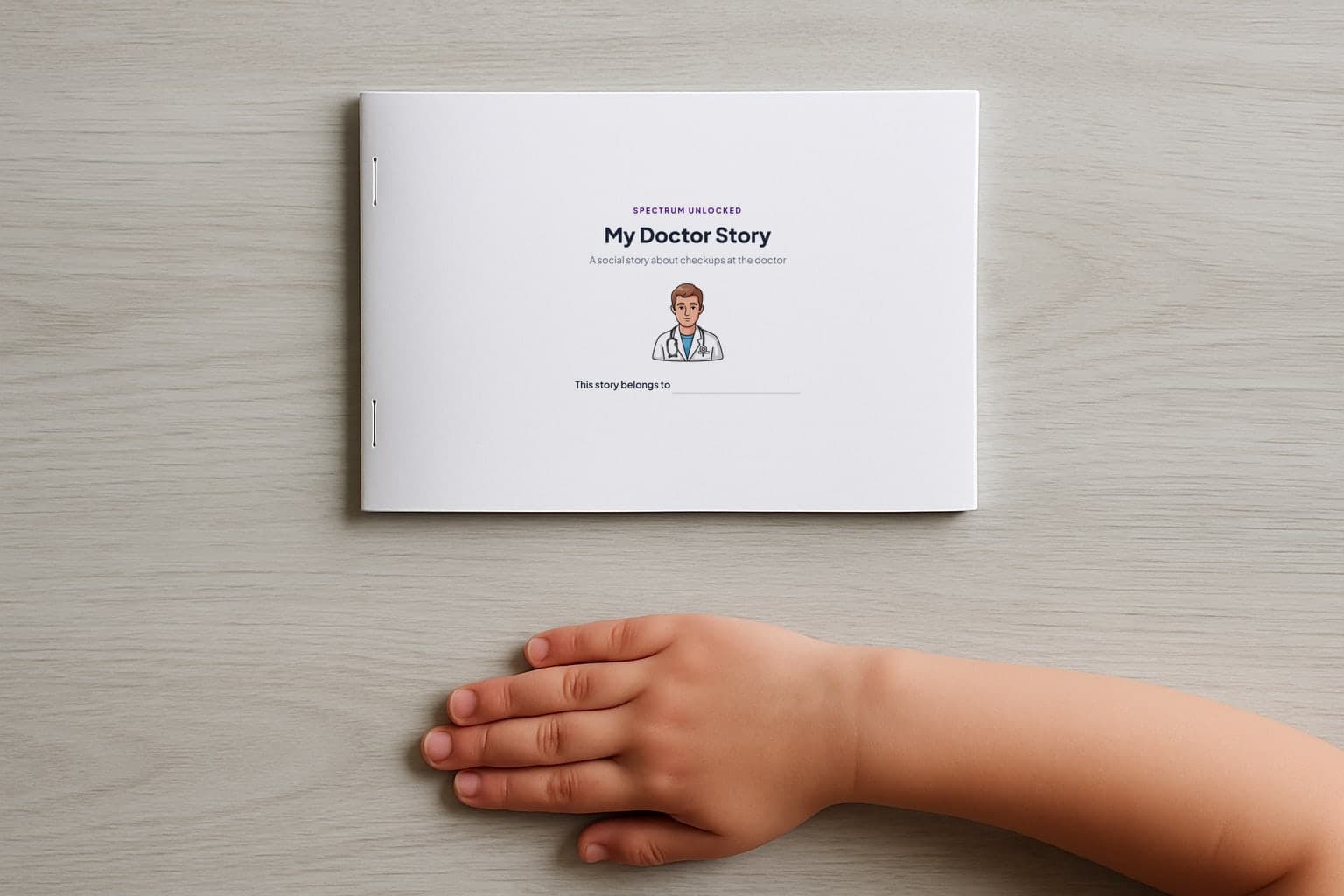
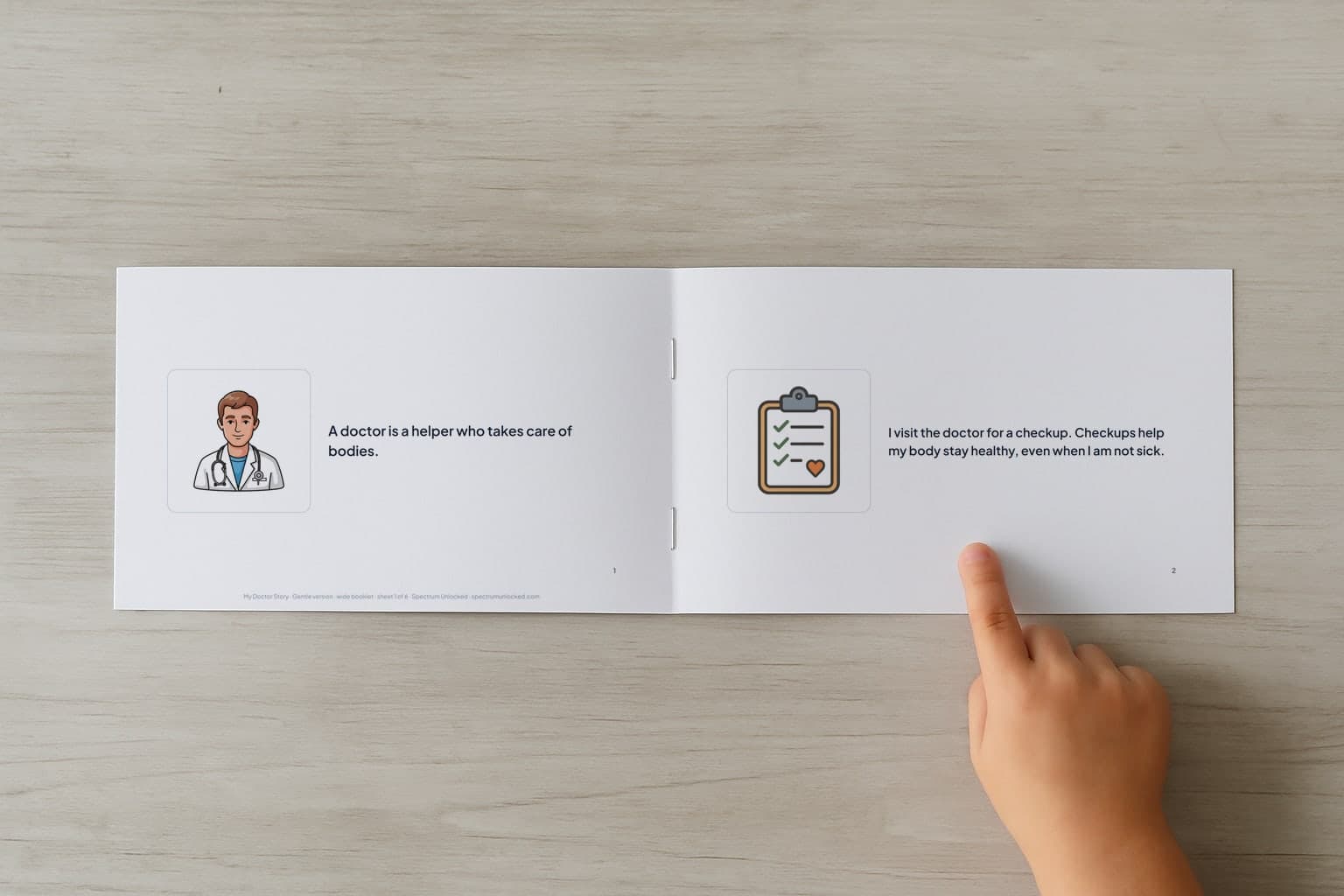
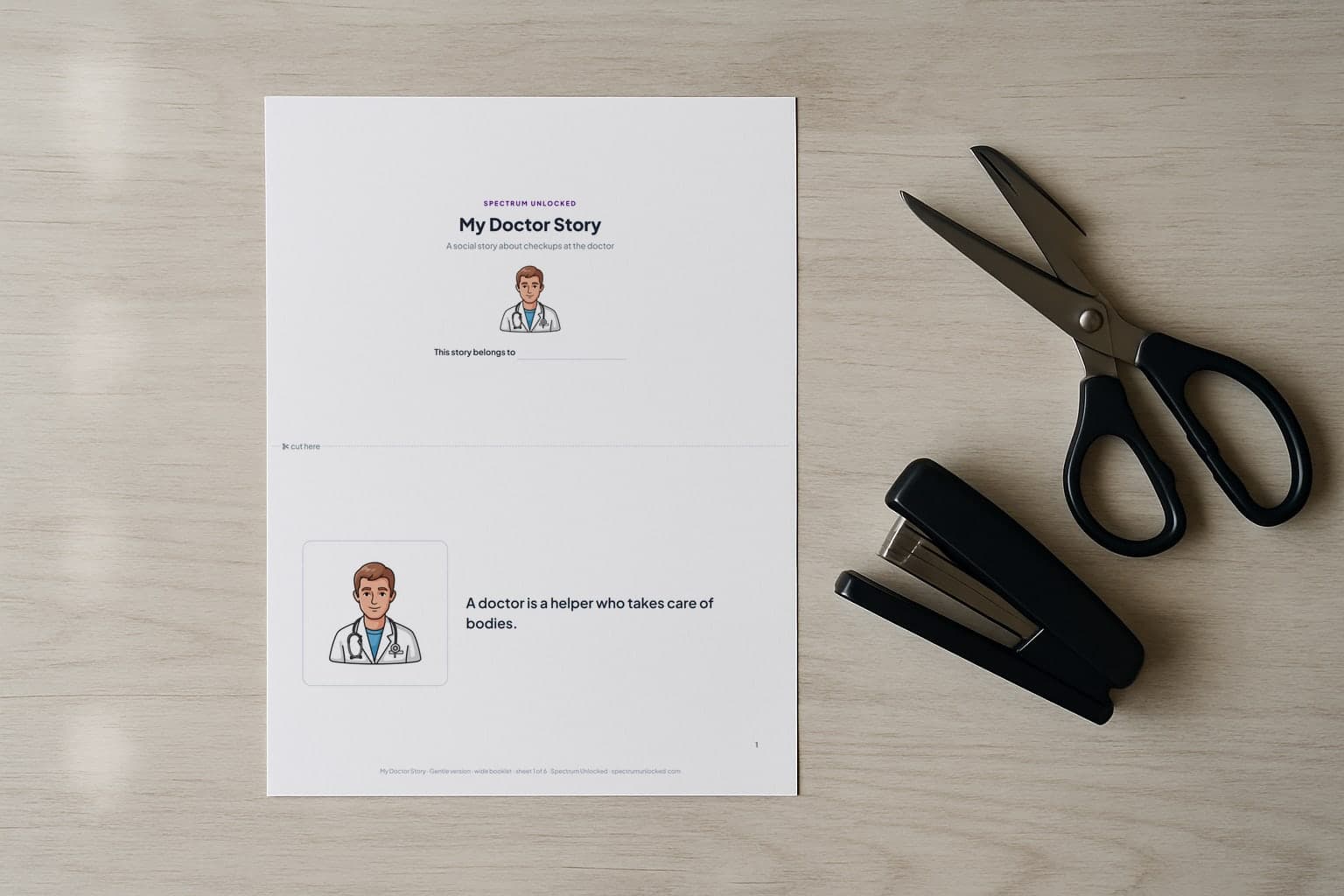
Download the printable PDF
Print the story as-is, no email required. Match the pictures to your child and pick your page layout, then download.

The story
Read the full story below. In the maker you can add your child's name, swap pictures, and print it as a booklet.
My Doctor Story
A social story about checkups at the doctor
- 1A doctor is a helper who takes care of bodies.Describes
- 2
 I visit the doctor for a checkup. Checkups help my body stay healthy, even when I am not sick.Describes
 - 3
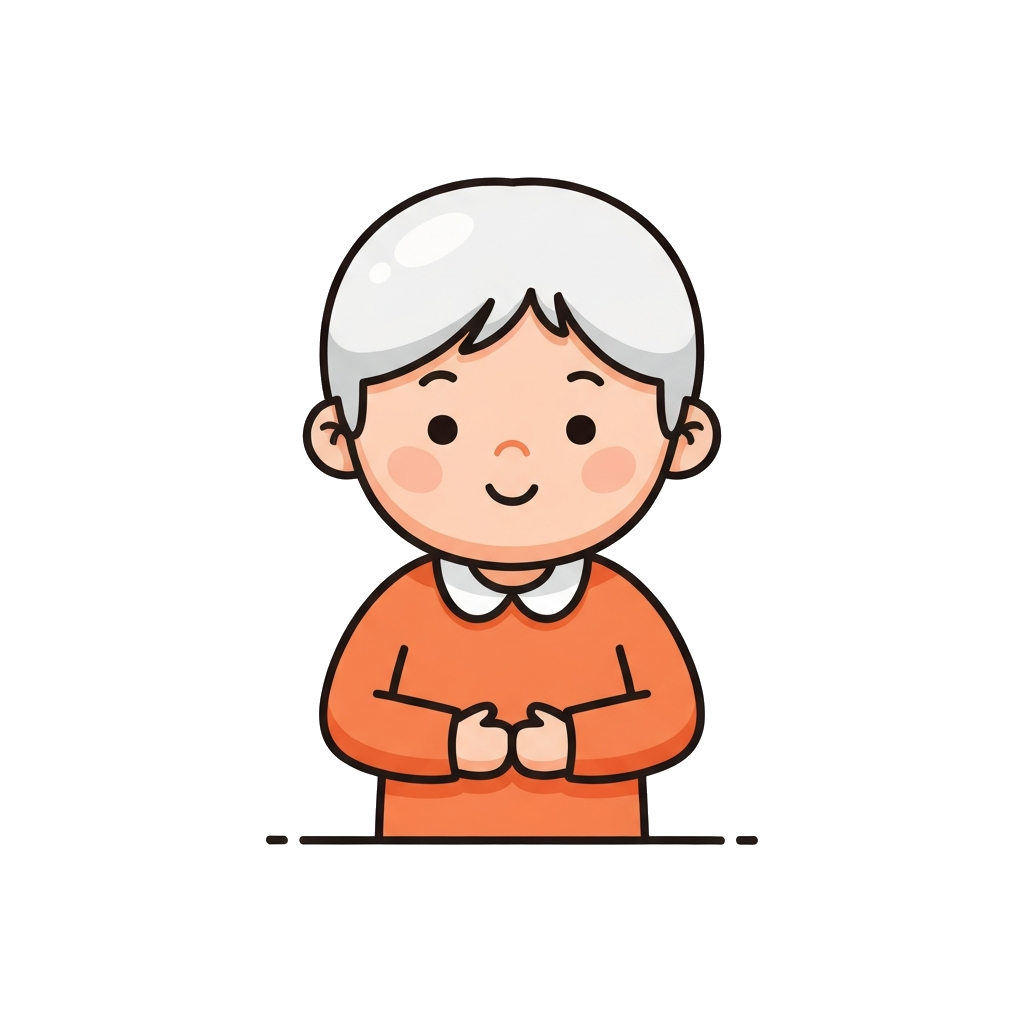 At the doctor's office, we check in and wait for my name to be called.Describes
 - 4
 A nurse may measure how tall I am and how much I weigh. Measuring is quick, and it does not hurt.Describes
 - 5
 The doctor listens to my heart with a stethoscope. It can feel a little cold on my skin for a moment.Describes
 - 6
 The doctor looks in my ears, my eyes, and my mouth with a small light.Describes
 - 7
 If I want to know what comes next, I can ask, "What will you do now?"Coaches
 - 8
 Sometimes a checkup has a shot that protects my body from germs, and a shot is one quick pinch.Describes
 - 9
 If I feel nervous, I can take slow breaths or hold my grown-up's hand.Coaches
 - 10I can tell the doctor how my body feels. My words help the doctor take care of me.Coaches
- 11When my checkup is done, the doctor says, "See you next time," and I know my body is well cared for.Describes
Single stories, $3 each
When one situation is the whole problem, take just that story. A gentle and a firmer wording, four child looks, booklet pages in US Letter and A4, and a link to edit it free.
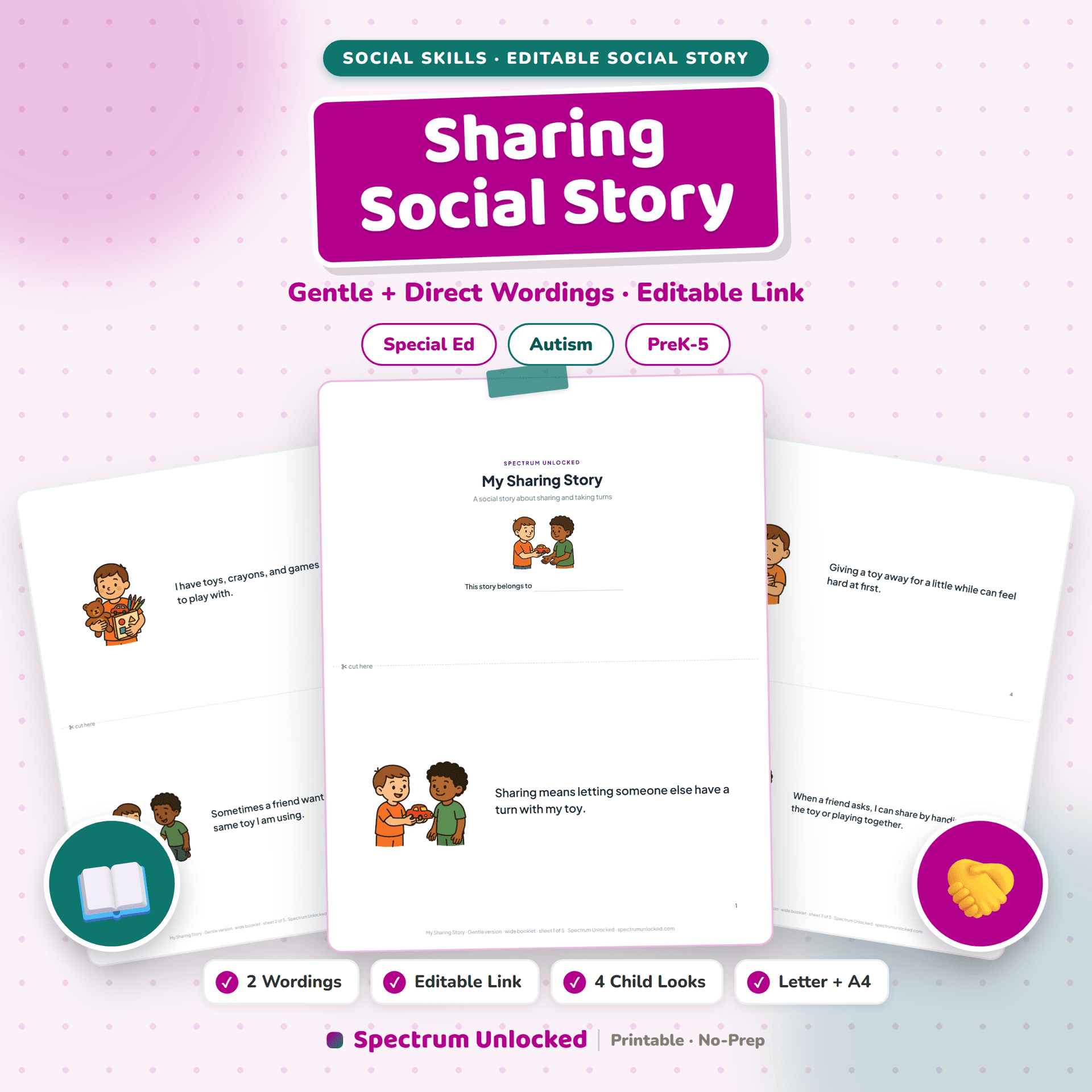
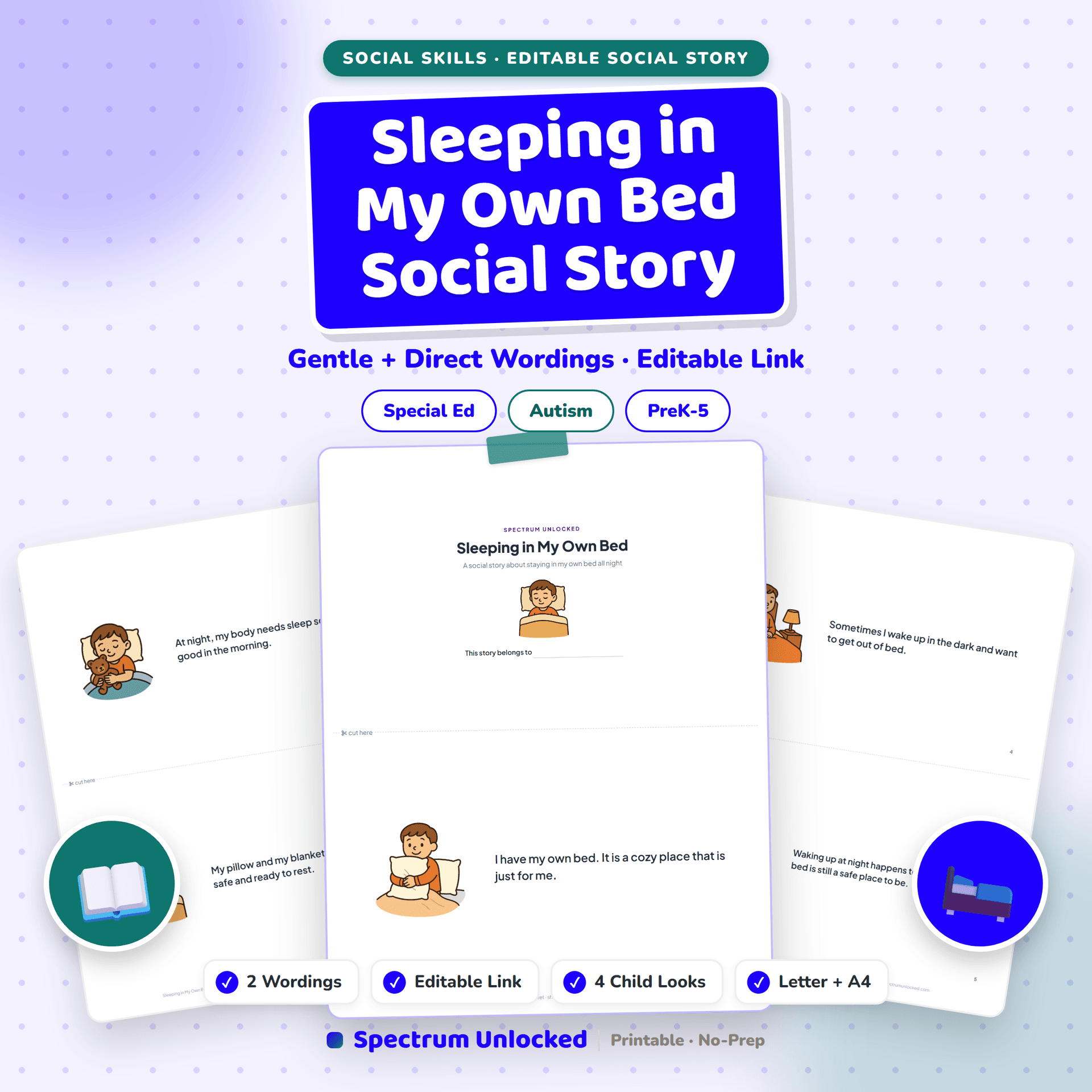
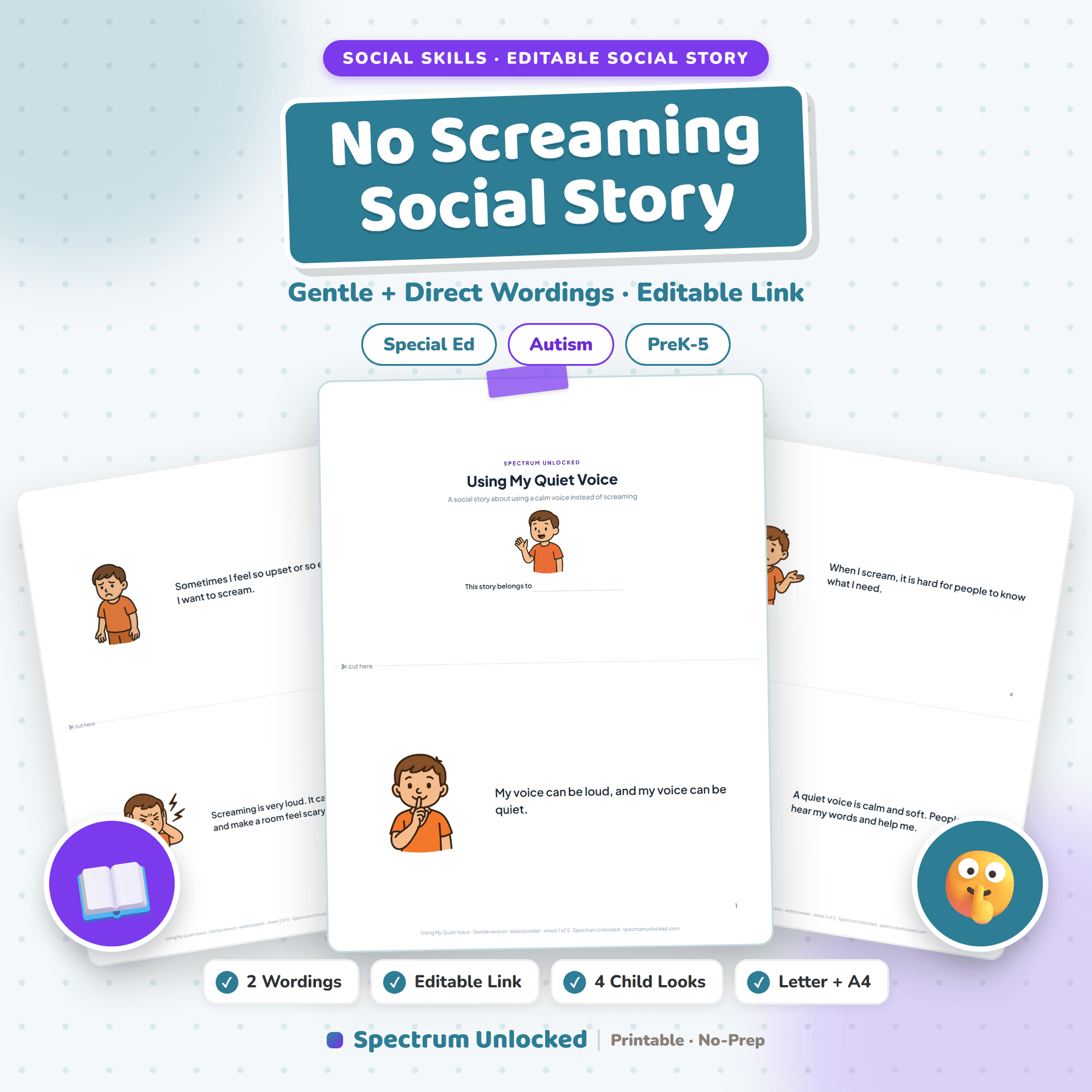

Nothing left to prepare. 25 finished sets, from $3, and every page prints exactly as it is.
When to use this story
Use this story before annual checkups, a new pediatrician, or any visit where the last one ended in tears. Read it several times in the days before the appointment. It describes a routine checkup, so if the visit will include something specific like a blood draw, edit a page to say so.
The story handles shots the way trust requires: one honest, calm sentence saying a shot may happen and that it is one quick pinch. It never promises there will be no shot and never claims a shot cannot hurt, because a child lied to about a needle remembers it at every appointment after. If you know for certain there is no shot this visit, you can remove that page in the maker.
Two coaching pages hand your child real agency. Asking what will you do now gets the doctor narrating, which most pediatricians do gladly once prompted, and telling the doctor how their body feels reframes the visit as something your child participates in rather than endures.
The sensory notes are small but deliberate: the stethoscope is a little cold for a moment, the measuring is quick, the light is small. Reading these in advance turns each sensation into a checkpoint your child can tick off, and the visit becomes a sequence instead of an ambush.
Frequently asked questions
- What is a doctor social story?
- It is a short story that previews a checkup step by step, from the waiting room to the goodbye, written in the first person or with your child's name. This one follows Carol Gray's gentle structure, describing what happens at each station of the visit and coaching only a little.
- How does the story handle shots?
- With one honest sentence: sometimes a checkup has a shot that protects the body from germs, and it is one quick pinch. No promises that it will not hurt, and no pretending shots never happen. If your visit definitely has no shot, or definitely has one, edit the page to match and your credibility stays intact.
- How do I prepare my autistic child for a doctor visit?
- Read the story daily in the run-up, let your child play doctor at home with a toy stethoscope so the tools are familiar, and book the first slot of the day when the waiting room is quietest. Tell the front desk what helps; many offices will room you immediately instead of making you wait.
- My child fights the scale and height chart. Any tips?
- Practice at home first, standing against a wall for a pencil mark and stepping on the bathroom scale, so the office version is a repeat instead of a first. The story's measuring page says it is quick and does not hurt, which is the truth, and pairing the words with rehearsal usually gets it done.
- How much does it cost to print this story?
- Nothing. The entire story is on this page, and turning it into a printable booklet in the maker does not cost anything; add your child's name and photos too if you like.
- Can I change the pages to match our doctor visits?
- Yes. Open the story in the maker to edit sentences, swap symbols, or switch perspectives. Using your pediatrician's real name and adding or removing the shot page to match the actual plan makes the story land as truth.
- Who developed social stories?
- Social Stories were developed by Carol Gray in the early 1990s. The gentle version of this template follows her published guidance, including describing more than coaching, but Spectrum Unlocked is not affiliated with or endorsed by Carol Gray.
Related stories
Going to the Dentist Social Story
A free printable social story that walks through the dental visit: the moving chair, bright light, tickly tools, and how to ask for a break.
When Plans Change Social Story
When rain or a closed store wrecks the plan, this free printable social story helps autistic kids handle the change with a deep breath and one simple question.
Related guides
Social Stories were developed by Carol Gray. Spectrum Unlocked is not affiliated with or endorsed by Carol Gray; the gentle version of this template follows her published describe-more-than-coach guidance.