Routines & Transitions
When Plans Change Social Story
A social story for the moment the plan falls through. It defines what a plan is in concrete terms, going to the park after lunch, explains the ordinary reasons plans change, validates the feelings that follow, and hands your child one powerful script: asking a grown-up, what happens next?
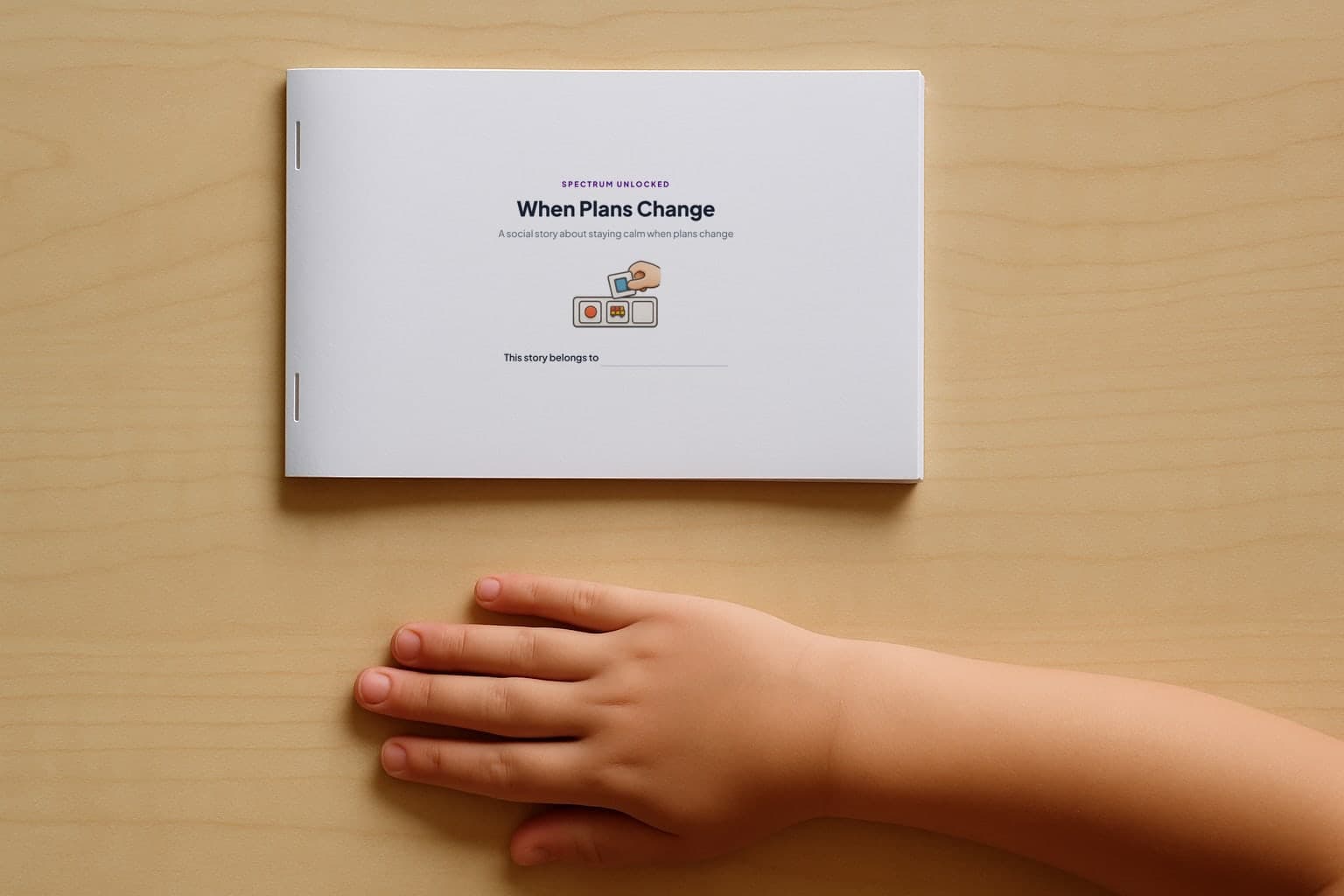
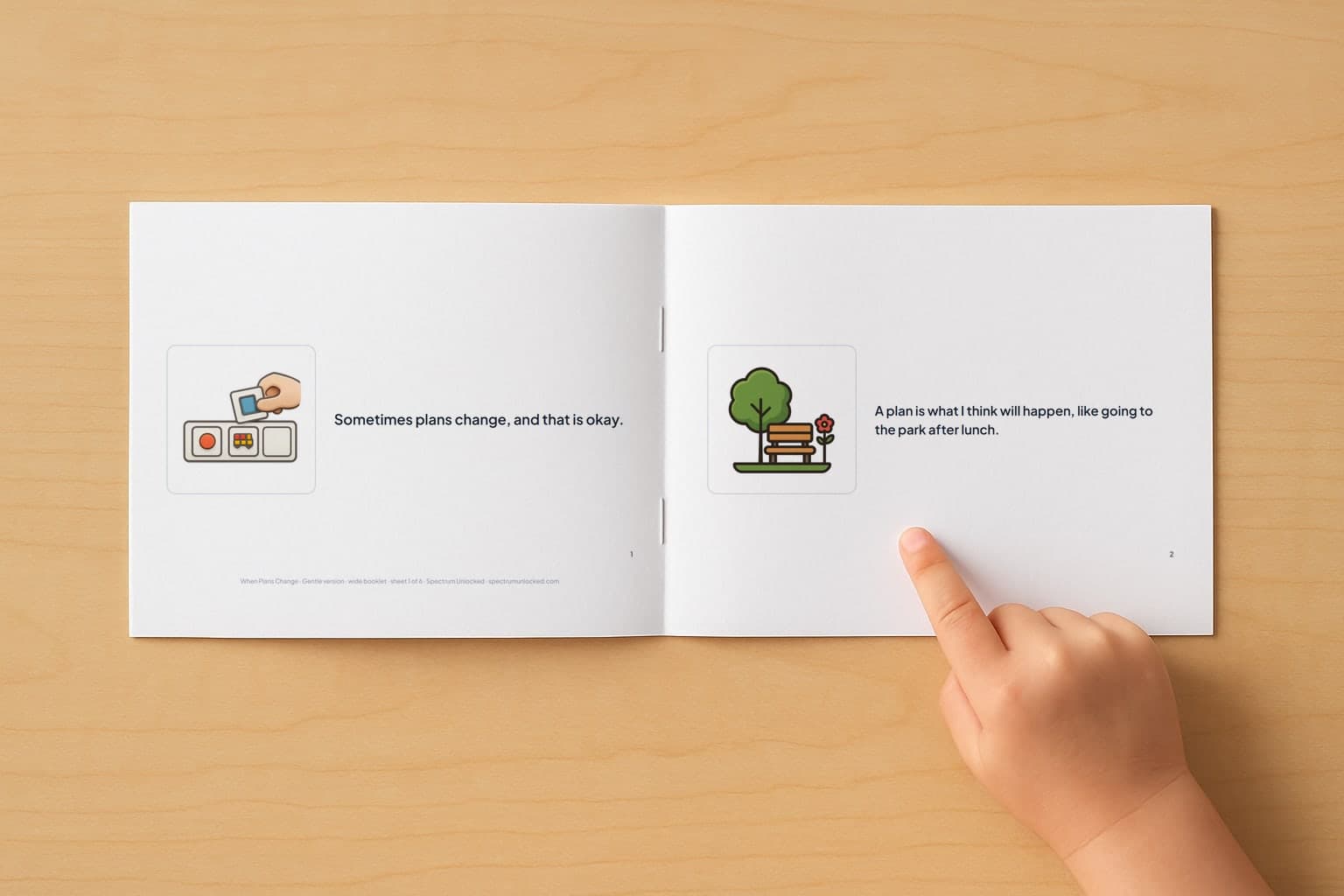
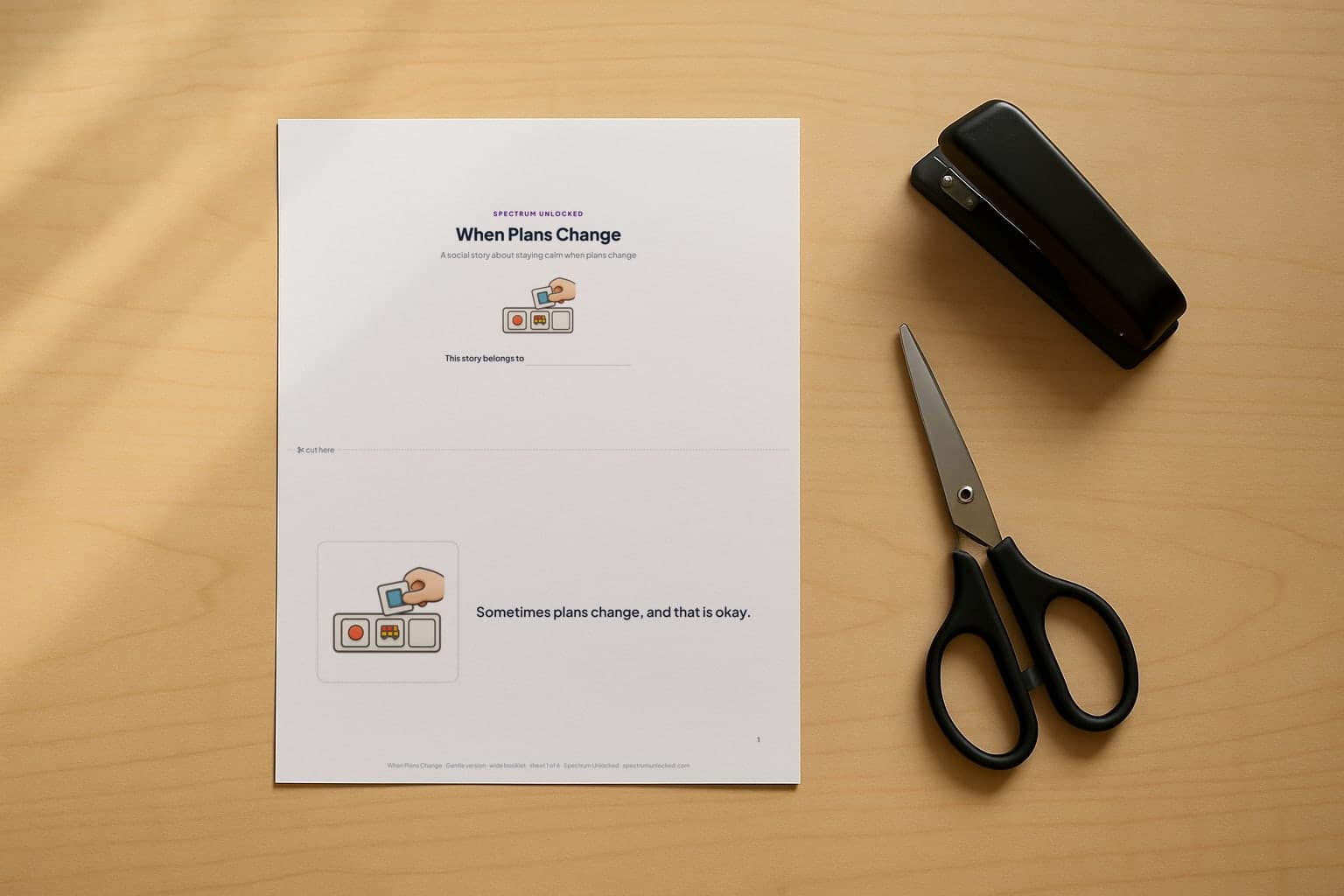
Download the printable PDF
Print the story as-is, no email required. Match the pictures to your child and pick your page layout, then download.
The story
Read the full story below. In the maker you can add your child's name, swap pictures, and print it as a booklet.
When Plans Change
A social story about staying calm when plans change
- 1Sometimes plans change, and that is okay.Describes
- 2
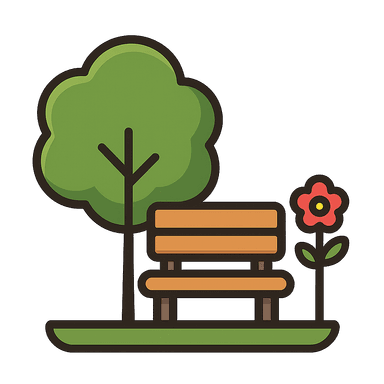 A plan is what I think will happen, like going to the park after lunch.Describes
 - 3
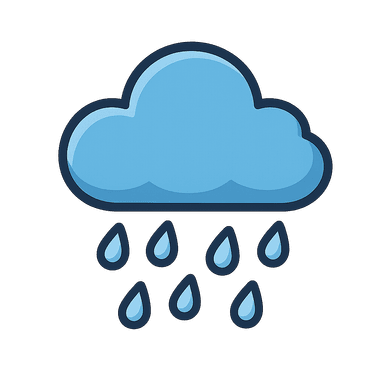 A plan can change when it rains, when a store is closed, or when someone feels sick.Describes
 - 4
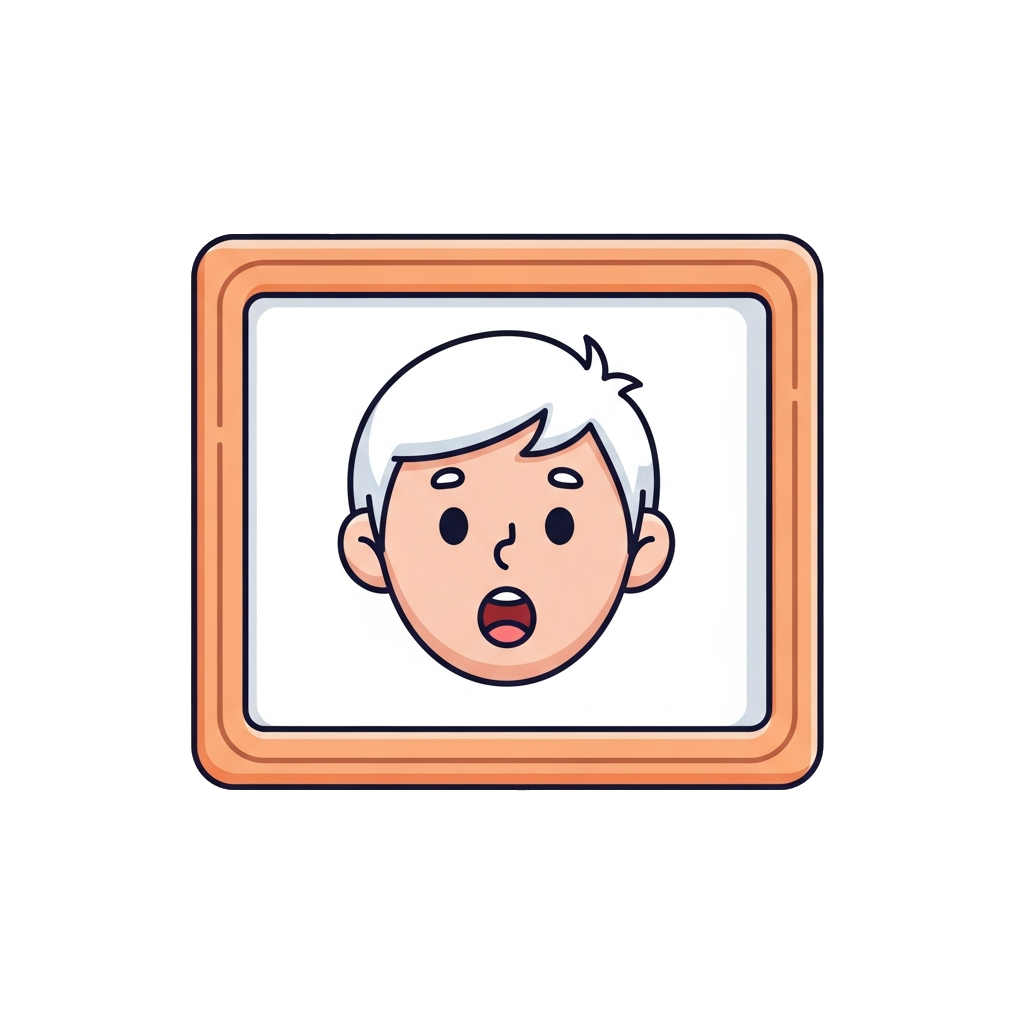 When a plan changes, I might feel surprised, sad, or upset. Those feelings are okay.Describes
 - 5
 A changed plan means something different will happen. Different can still be good.Describes
 - 6
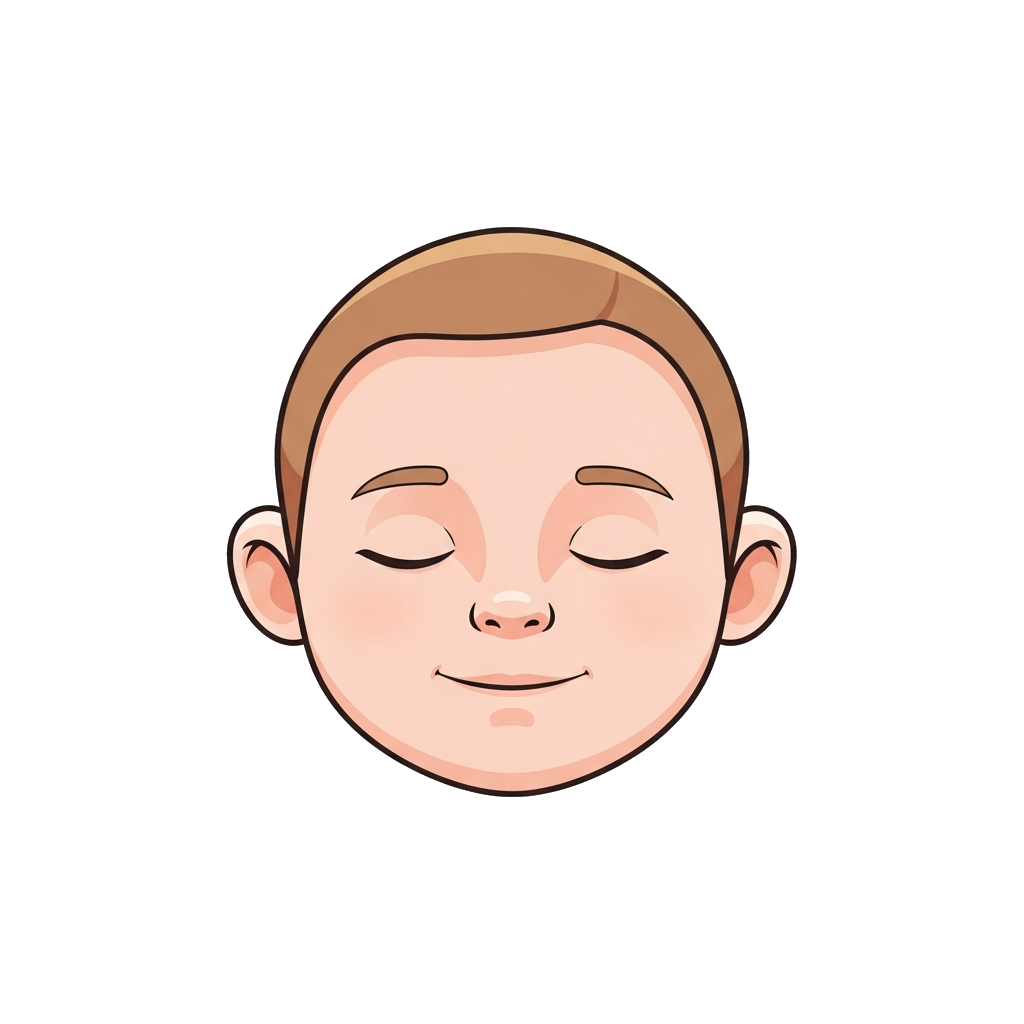 When a plan changes, I can stop and take a deep breath.Coaches
 - 7
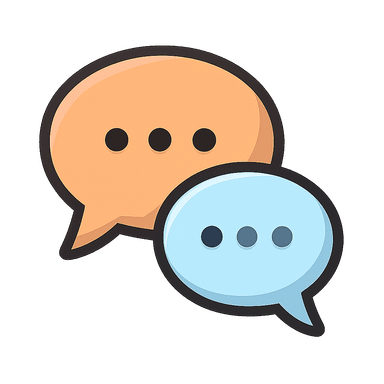 I can ask a grown-up, "What happens next?"Coaches
 - 8Knowing the new plan helps my body feel calm again.Describes
- 9
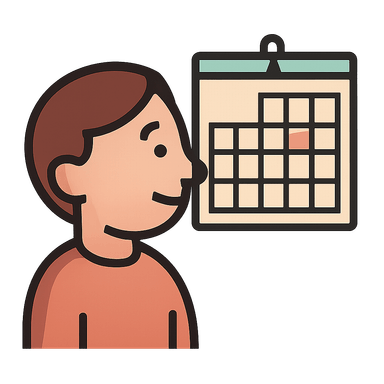 Plans change for grown-ups too. Everyone gets practice with changes.Describes
 - 10
 Each time I handle a change, it gets a little easier.Describes
Single stories, $3 each
When one situation is the whole problem, take just that story. A gentle and a firmer wording, four child looks, booklet pages in US Letter and A4, and a link to edit it free.
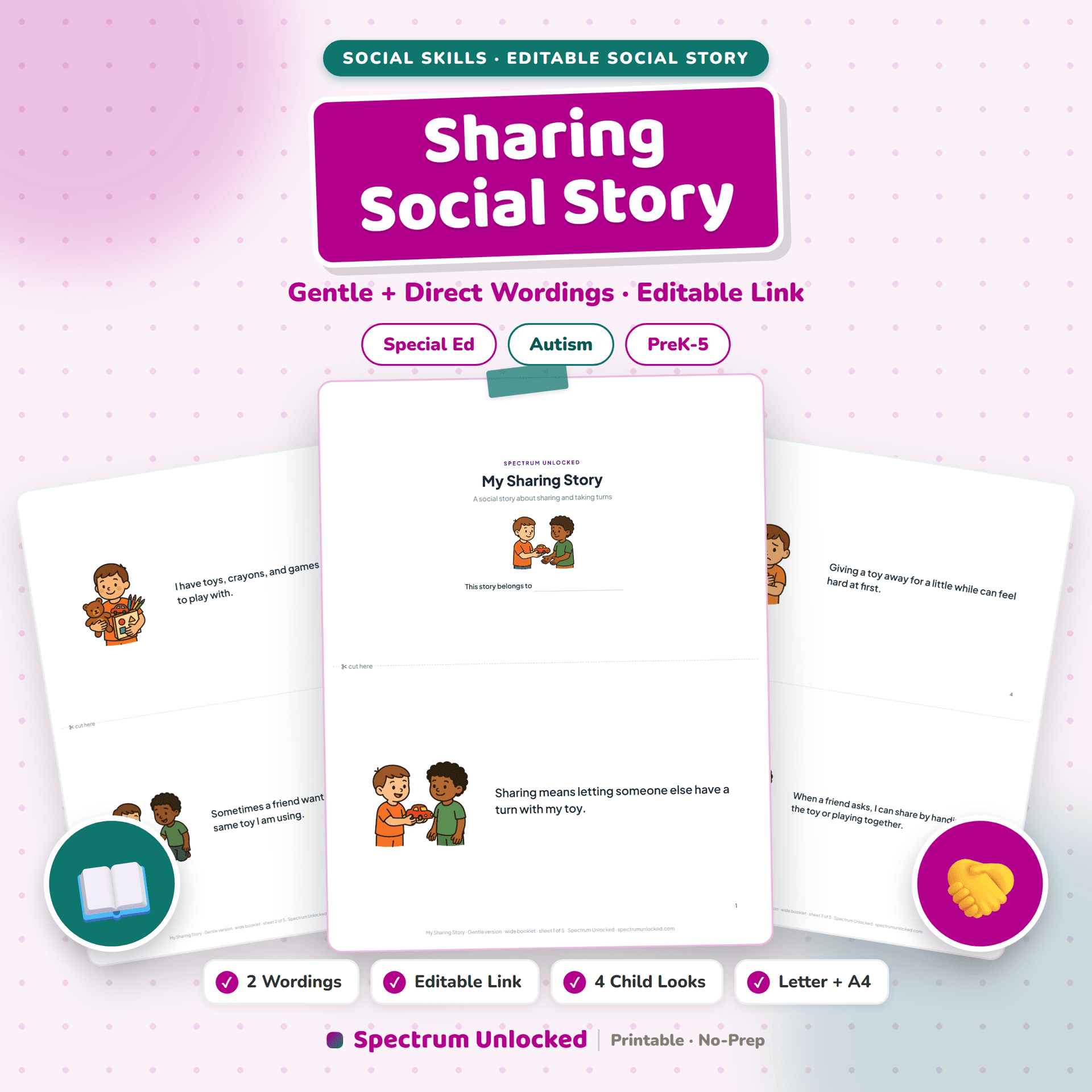
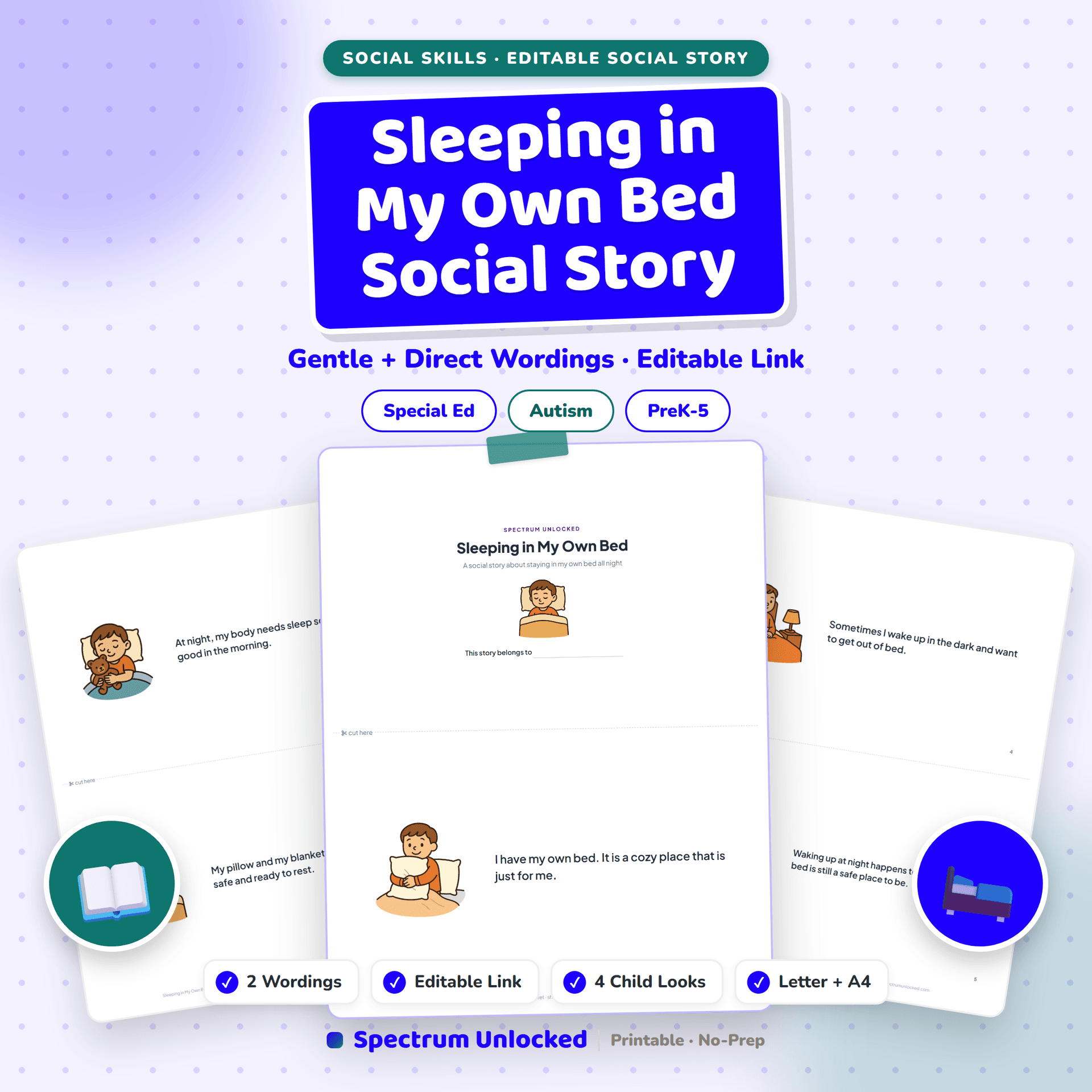
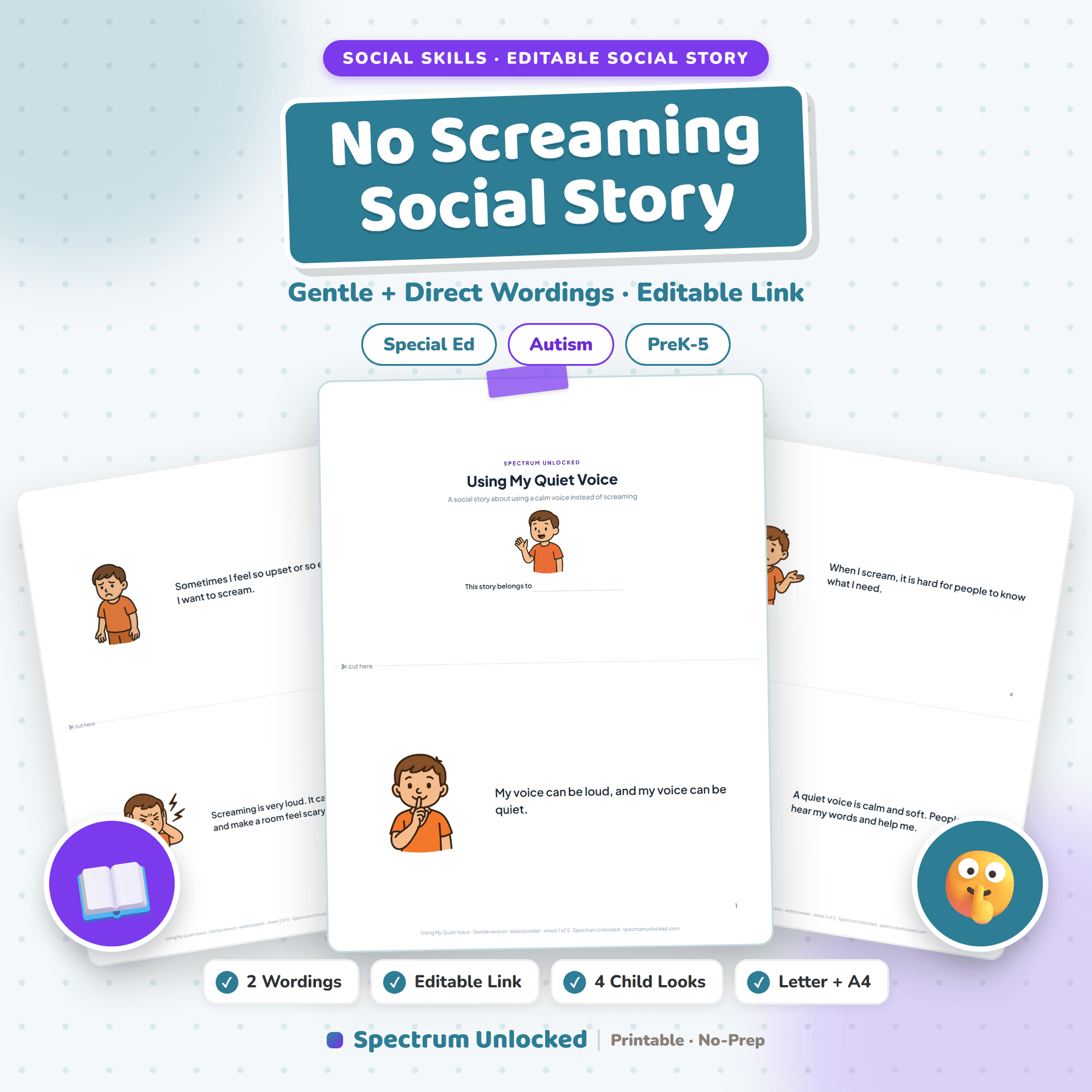
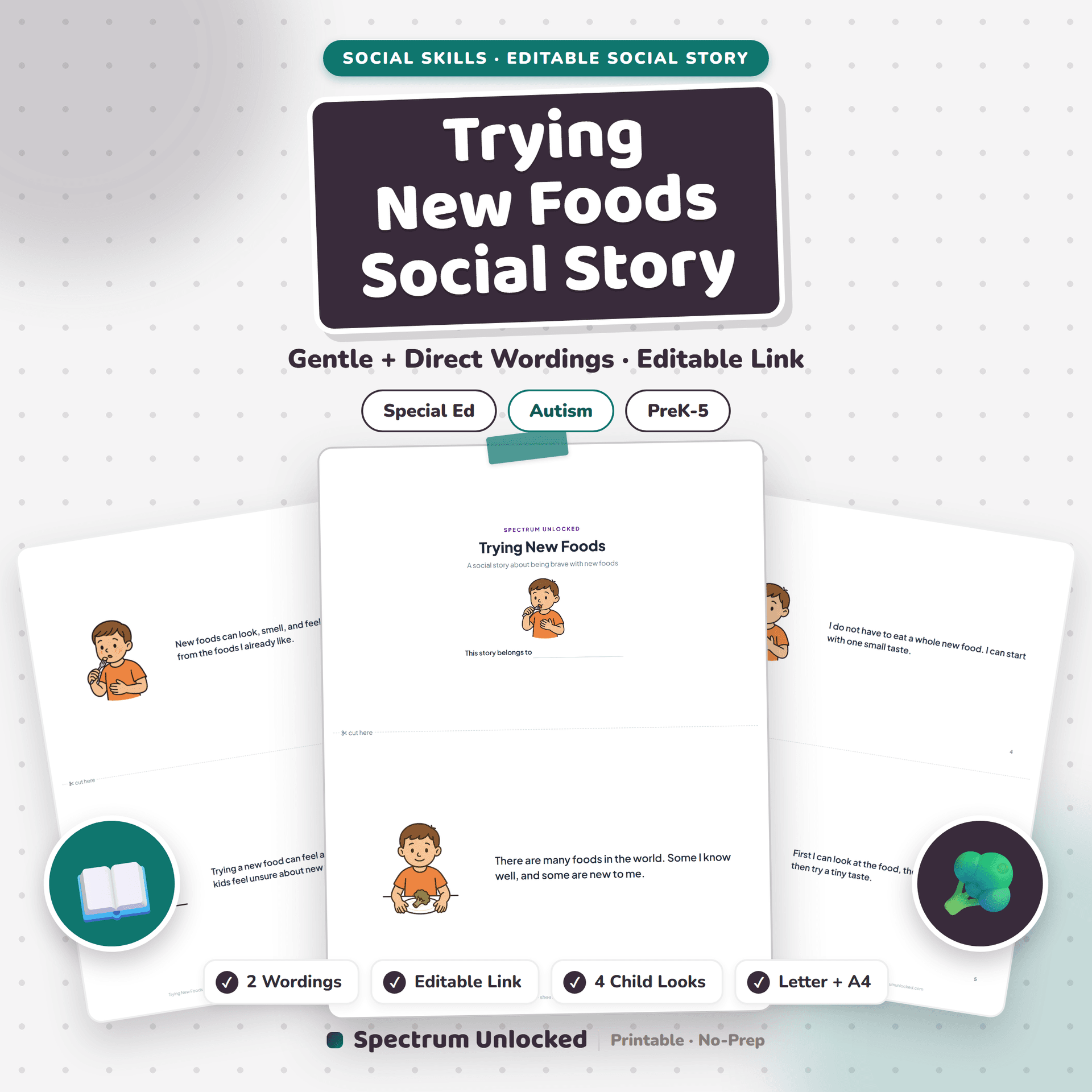
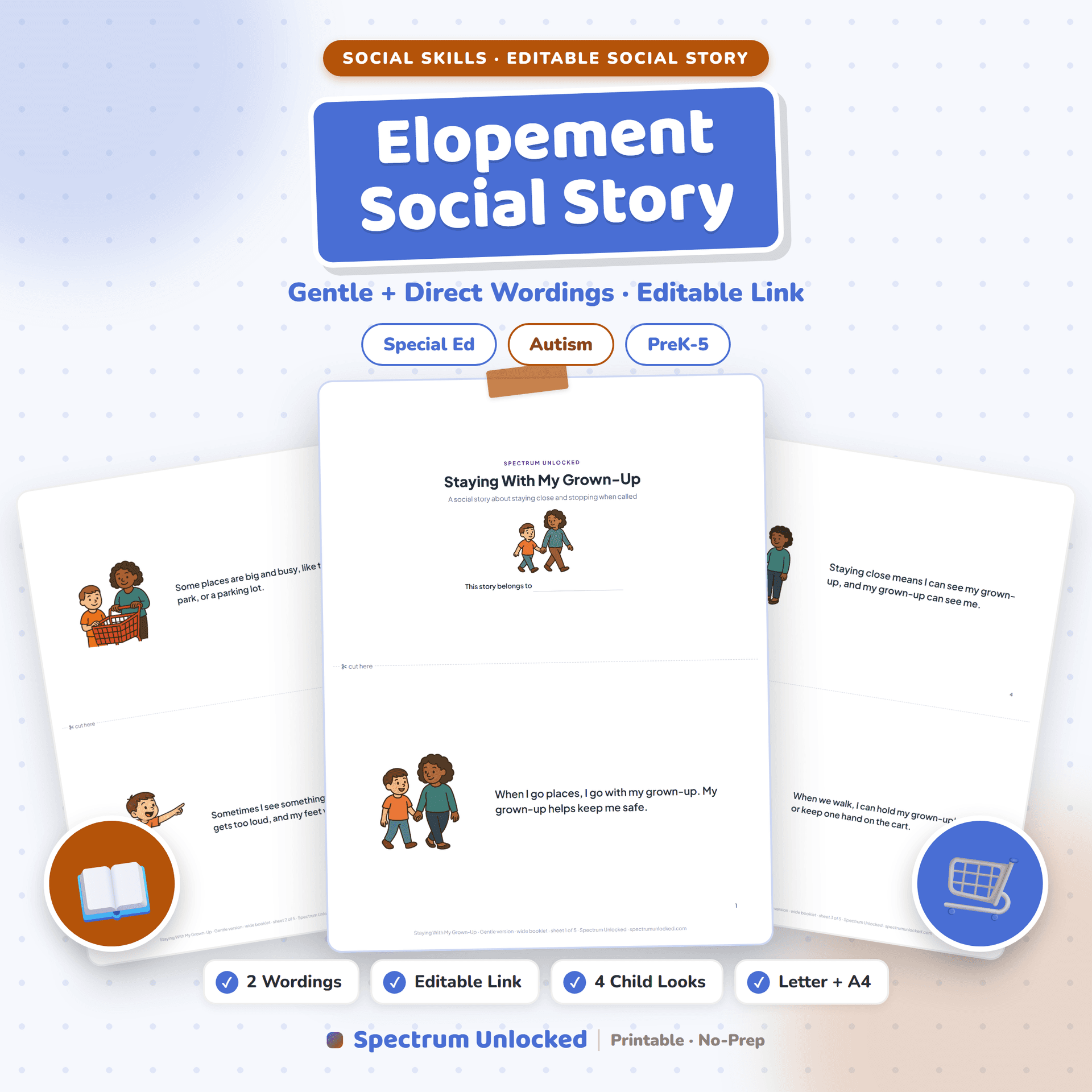
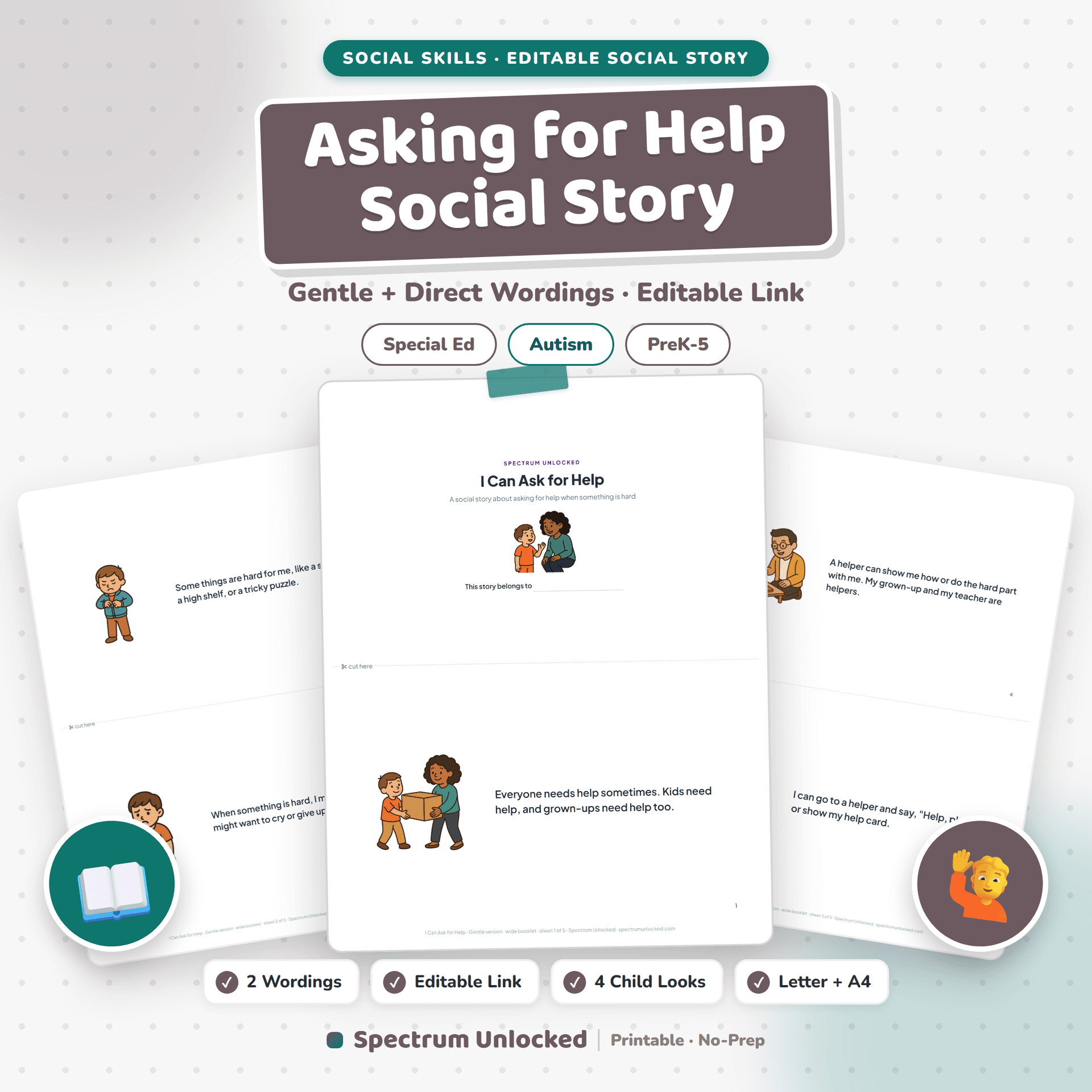
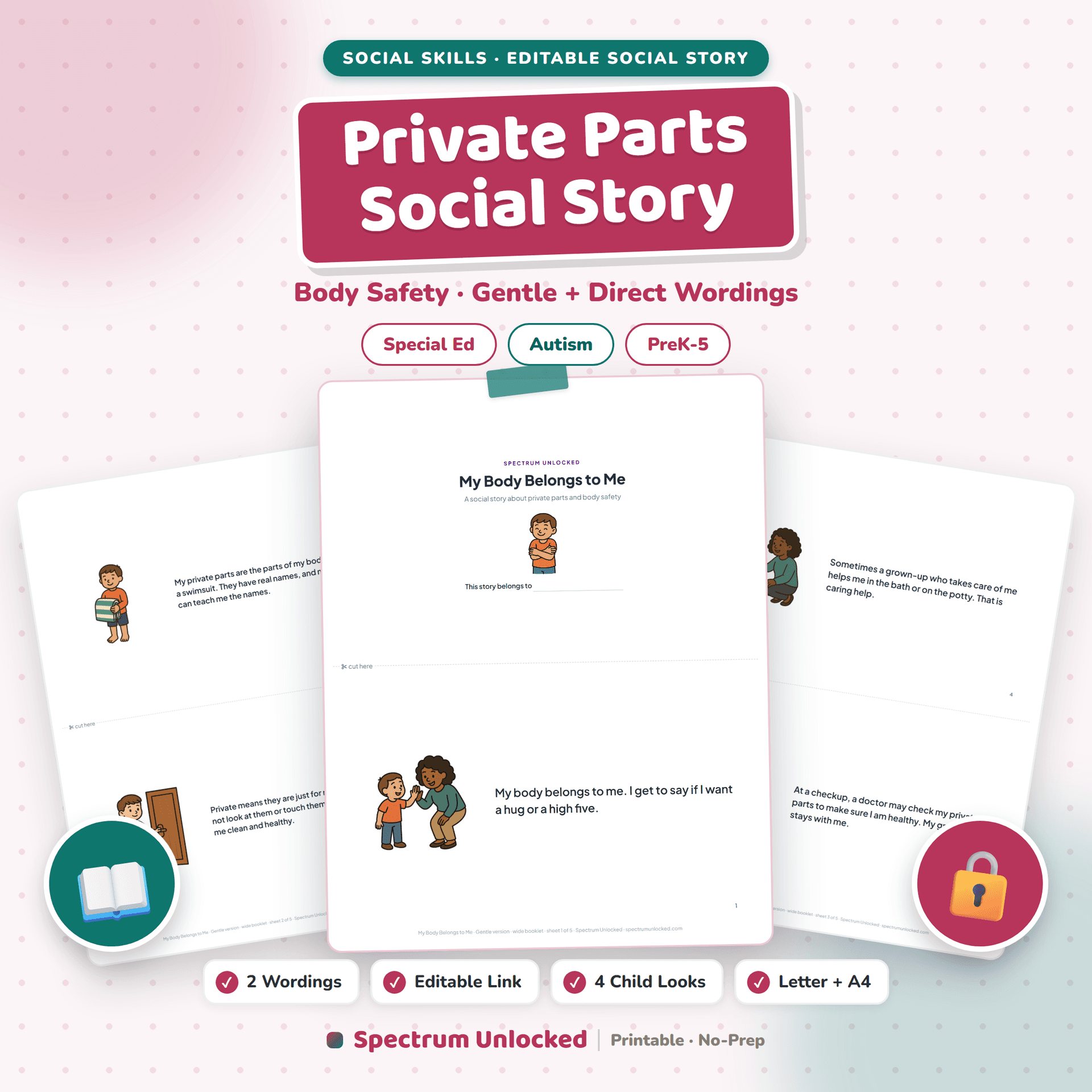
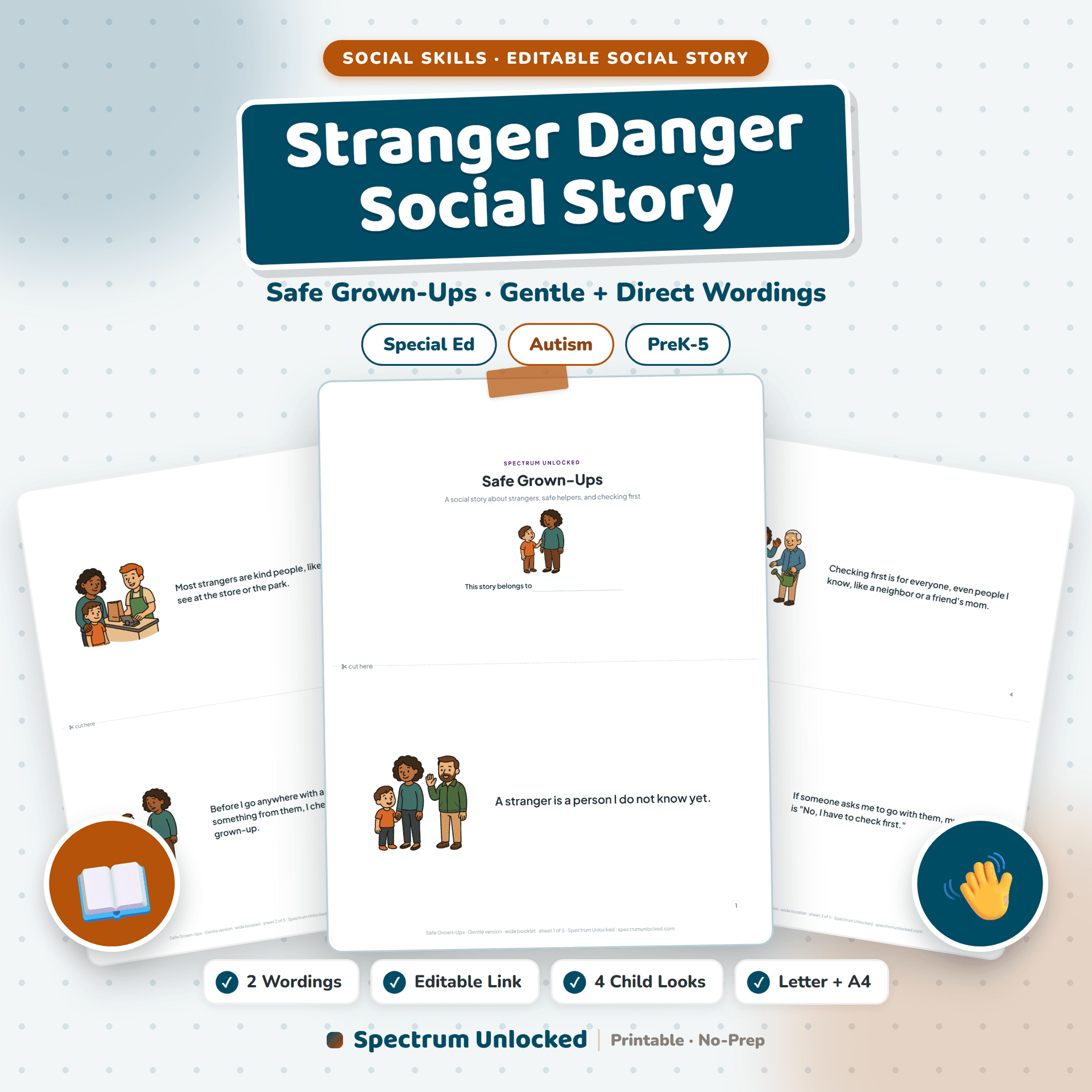
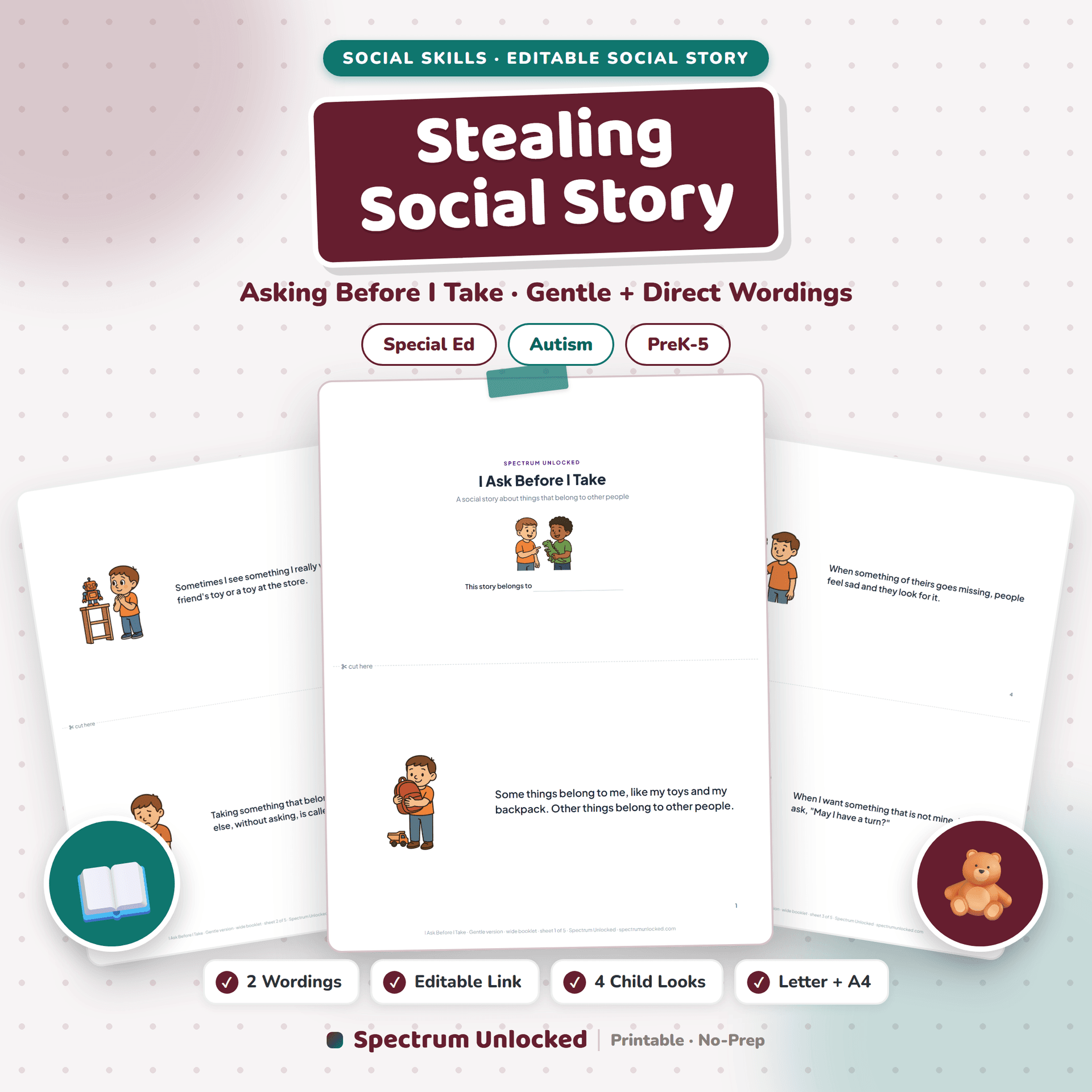
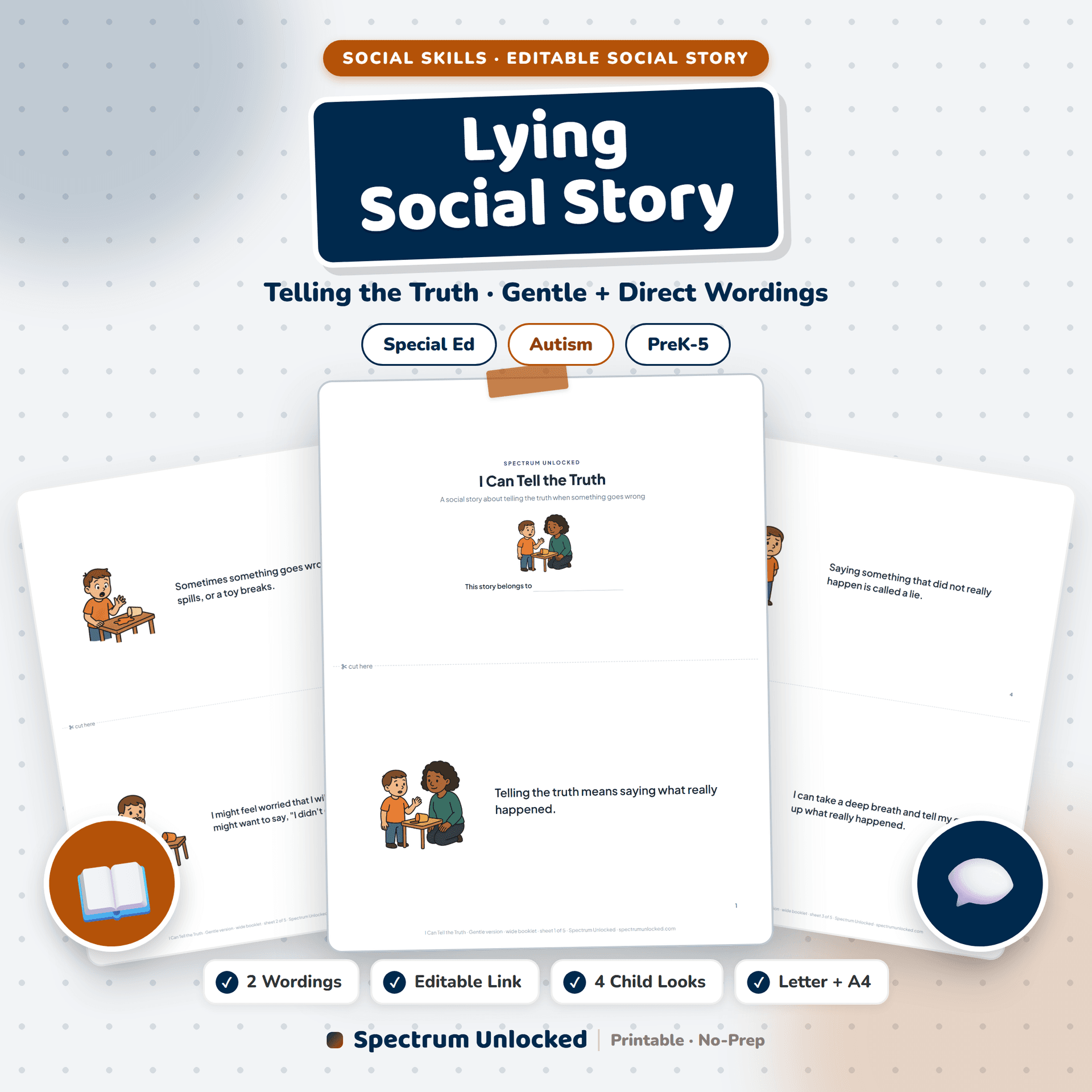
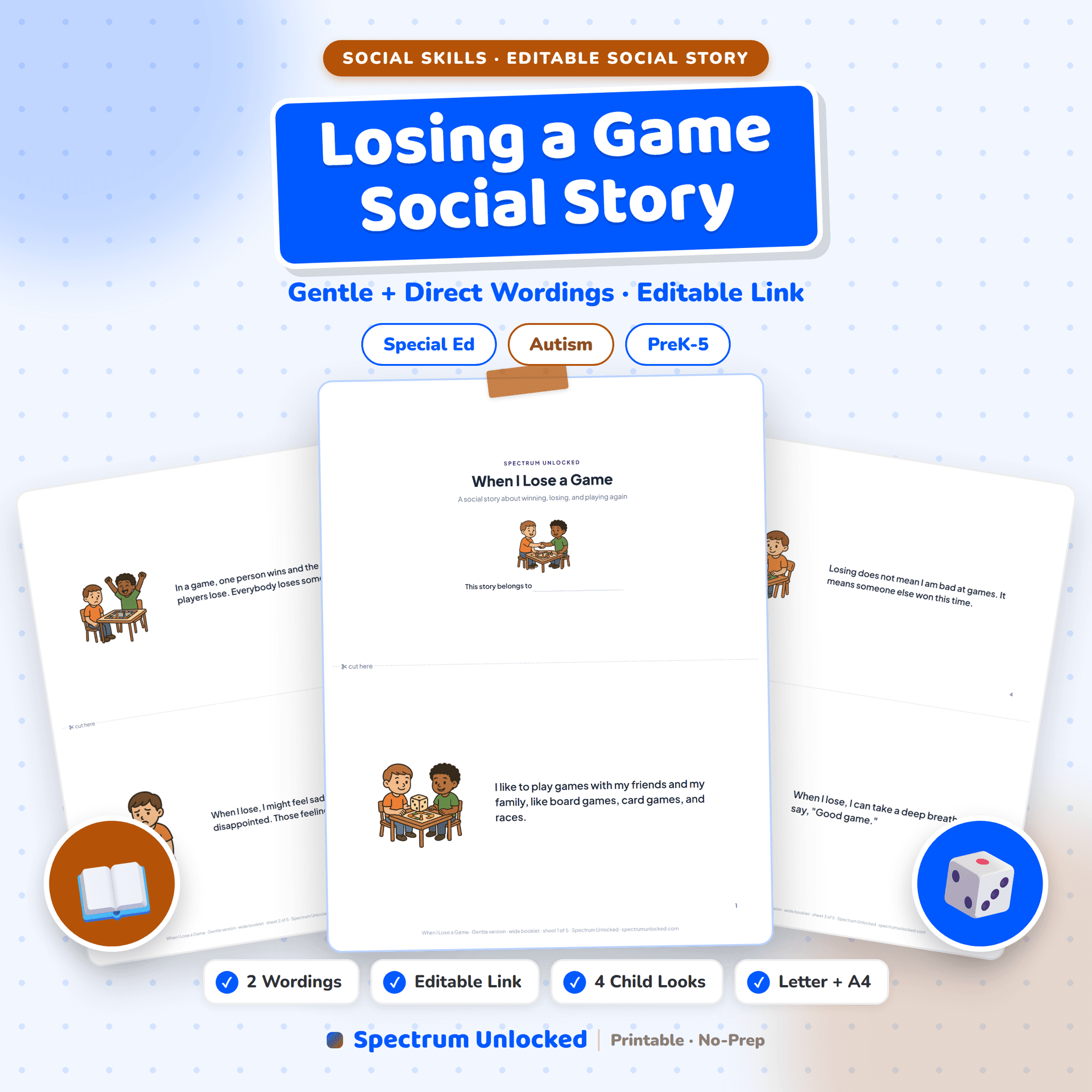
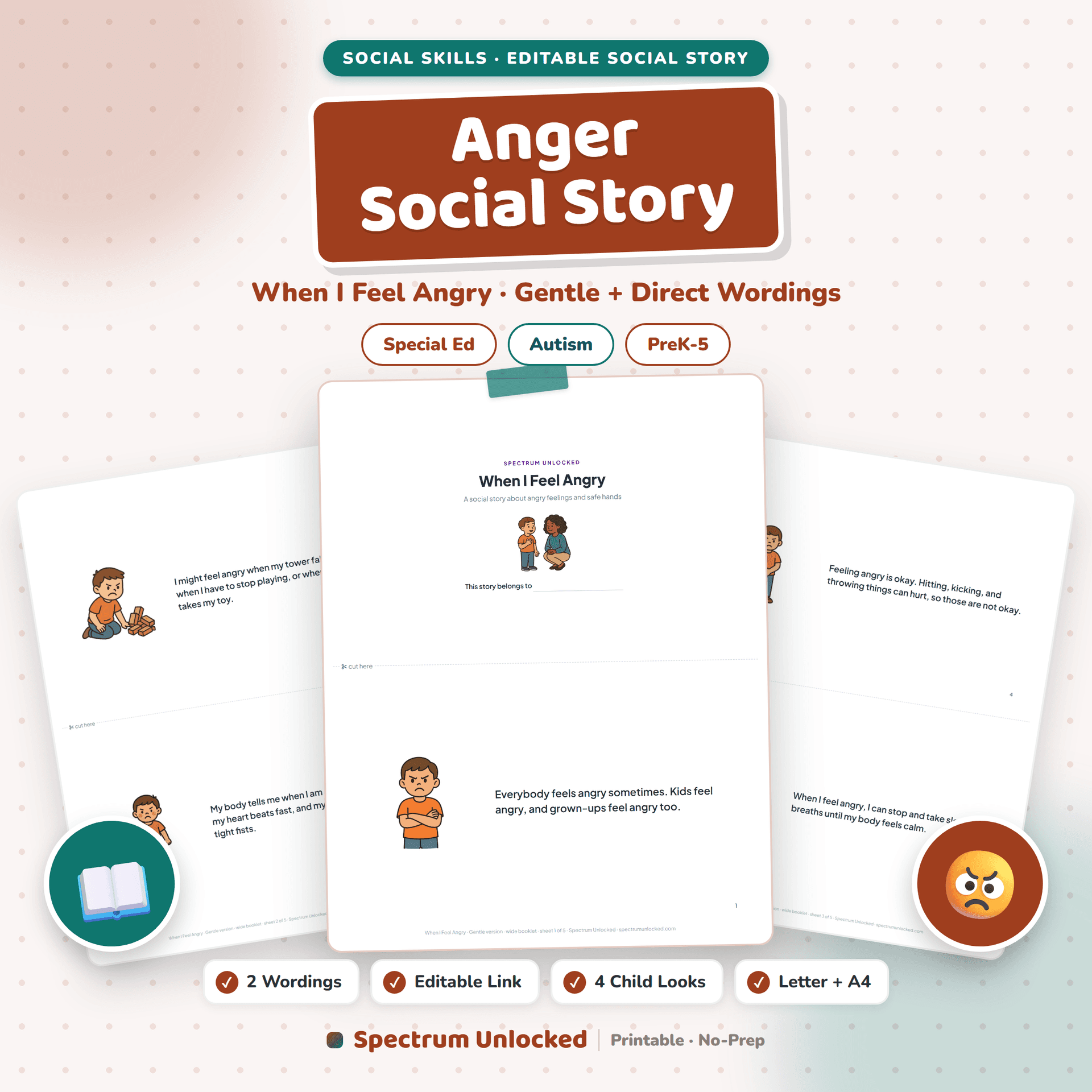
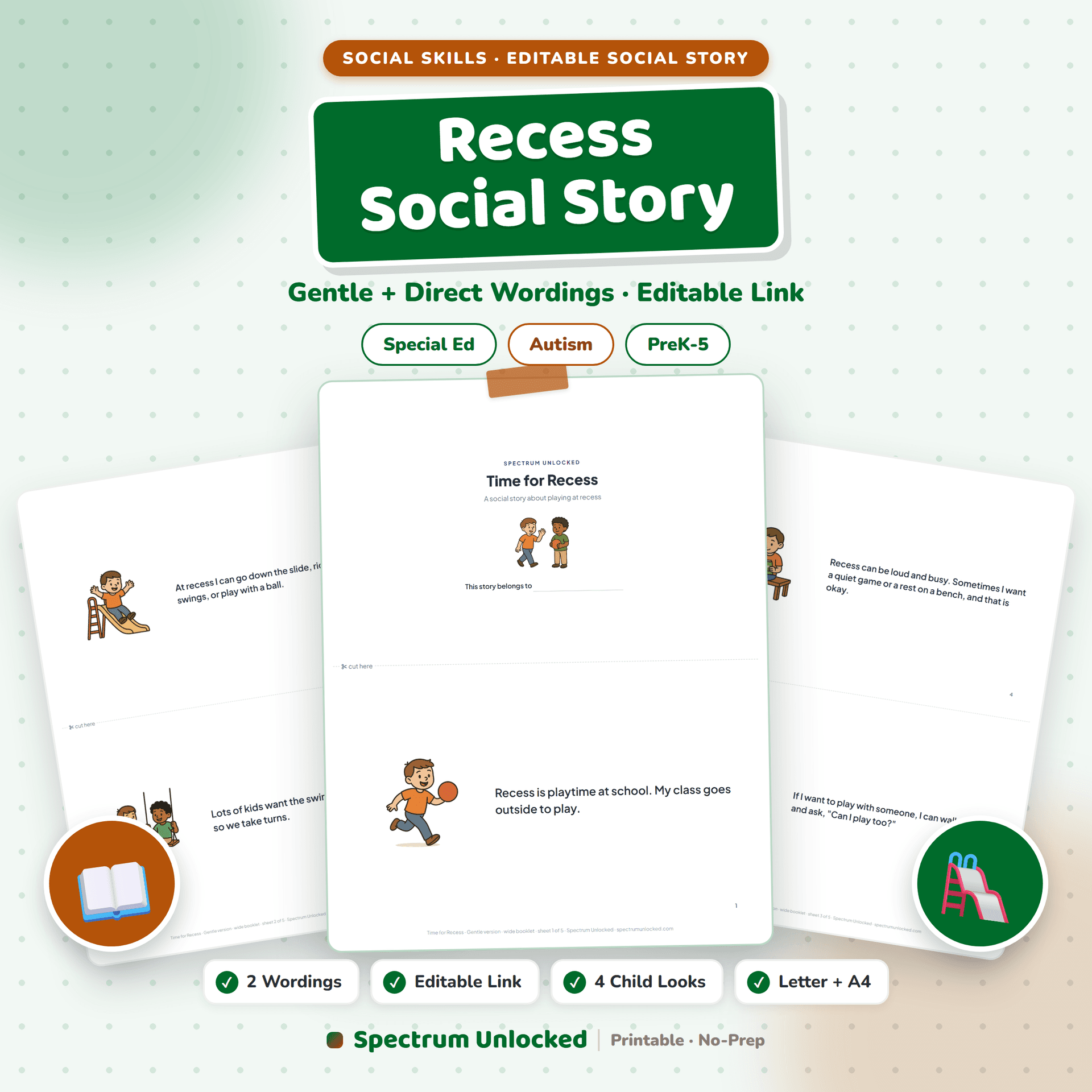
Nothing left to prepare. 25 finished sets, from $3, and every page prints exactly as it is.
When to use this story
Use this story when canceled outings, substitute teachers, or a different route to school reliably cause distress. Read it regularly during calm, ordinary weeks, not only when a change is coming, so the ideas are in place before they are needed. A quick reread before a known change, like a school break, also helps.
The story starts by defining its own terms. A plan is what I think will happen, like going to the park after lunch, gives an abstract idea a concrete anchor before the story ever mentions change. The reasons that follow, rain, a closed store, someone feeling sick, are ordinary and blameless, which keeps changes from feeling like punishments.
The working script is the question, what happens next? It converts the panic of an open, unknown future into a request for information, and the story closes the loop by explaining that knowing the new plan helps the body feel calm again. Answer the question with specifics every time it gets asked.
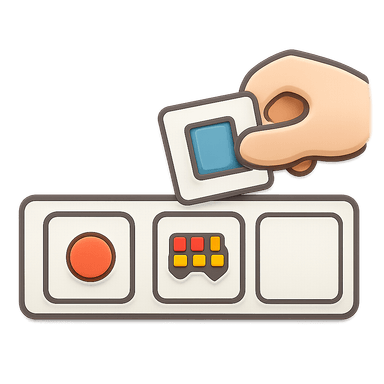
This story pairs naturally with a visual schedule, and its opening image is literally a schedule card being swapped. If your child uses one, practice the swap together: remove the old card, place the new one, and read the story's breath-and-question pages as you go.
Frequently asked questions
- How do I use a when plans change social story?
- Read it during calm times as routine practice, the way you would practice a fire drill, rather than saving it for the moment a plan collapses. When a real change comes, use the story's own moves as short cues: stop, take a deep breath, then tell your child exactly what happens next.
- Should I warn my child before a plan changes?
- When you can, yes, advance notice plus the new plan works better than a surprise. This story covers the many times you cannot give notice, rain, closures, sudden illness, by teaching that changes are ordinary, feelings about them are okay, and the new plan is findable by asking.
- What feelings does the story validate?
- Surprised, sad, and upset, all named directly, with the reassurance that those feelings are okay. It also offers a genuinely hopeful reframe, different can still be good, and notes that grown-ups face changed plans too, so your child is not being singled out for practice.
- Is this story free and printable?
- Yes. The full story is on this page, and the maker turns it into a printable booklet for free. Personalize it first with your child's name, or with photos of the places your family's plans usually involve.
- Can I add our own examples of changed plans?
- Yes, and specific examples help. In the maker you can rewrite any page, so swap the park and the store for your child's real disappointments, a rained-out practice, a favorite pool closed, and keep the breath-and-question pages exactly as they are.
- Who developed social stories?
- Social Stories were developed by Carol Gray in the early 1990s. The gentle version of this template follows her published guidance, including describing more than coaching, but Spectrum Unlocked is not affiliated with or endorsed by Carol Gray.
Related stories
Accepting No Social Story
Hearing no is hard for many kids. This social story explains why grown-ups say no and rehearses calm responses. Print it free or personalize it first.
When I Feel Frustrated Social Story
Frustration hits when the tower falls or the zipper sticks. A free printable social story that names the feeling and walks through calming down, step by step.
Related guides
Social Stories were developed by Carol Gray. Spectrum Unlocked is not affiliated with or endorsed by Carol Gray; the gentle version of this template follows her published describe-more-than-coach guidance.