Routines & Transitions
Using the Potty Social Story
A gentle potty training social story that walks through the potty routine from the first tummy signal to washing hands, with plain reassurance that accidents are part of learning. Read the whole story on this page, then add your child's name before you print.
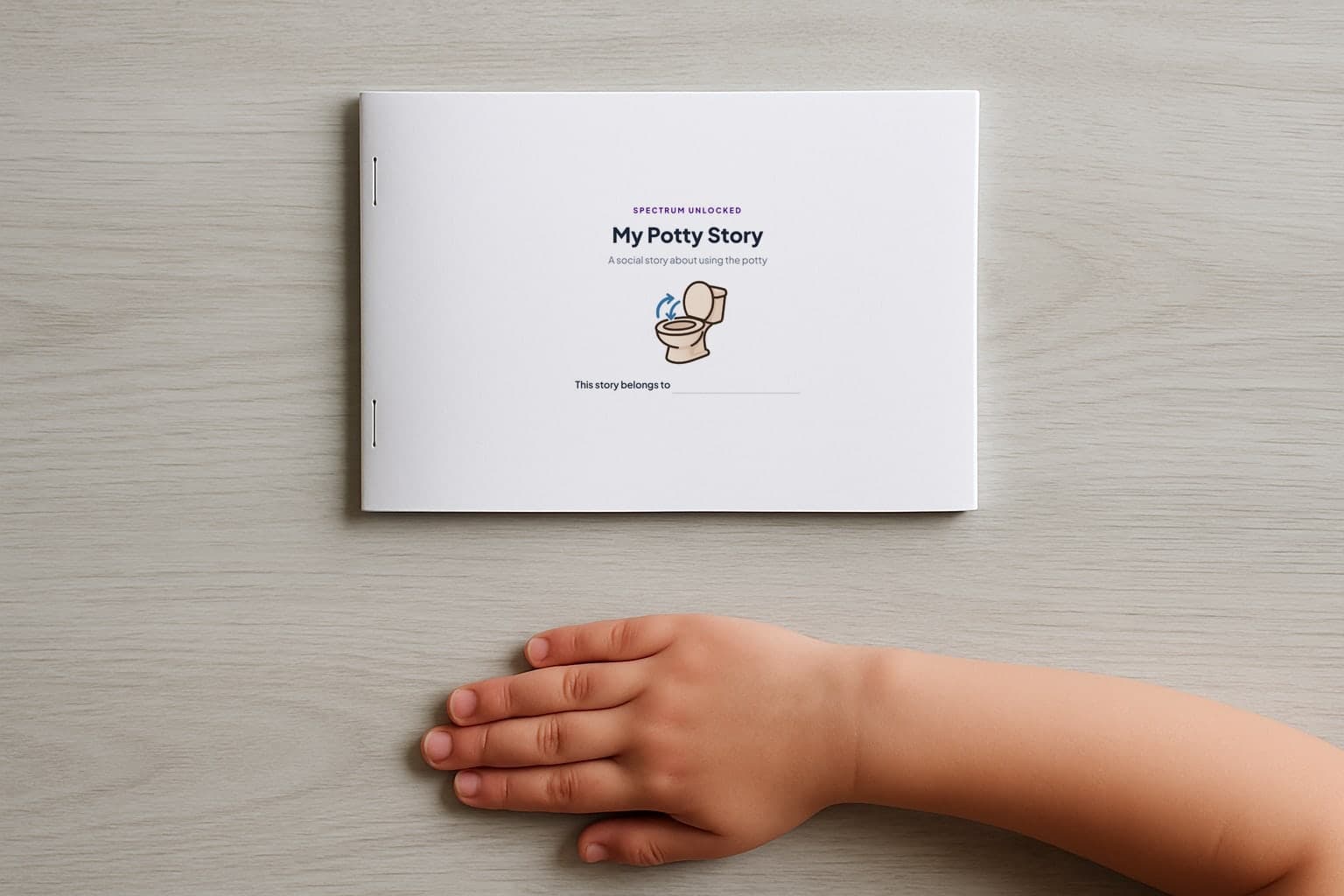
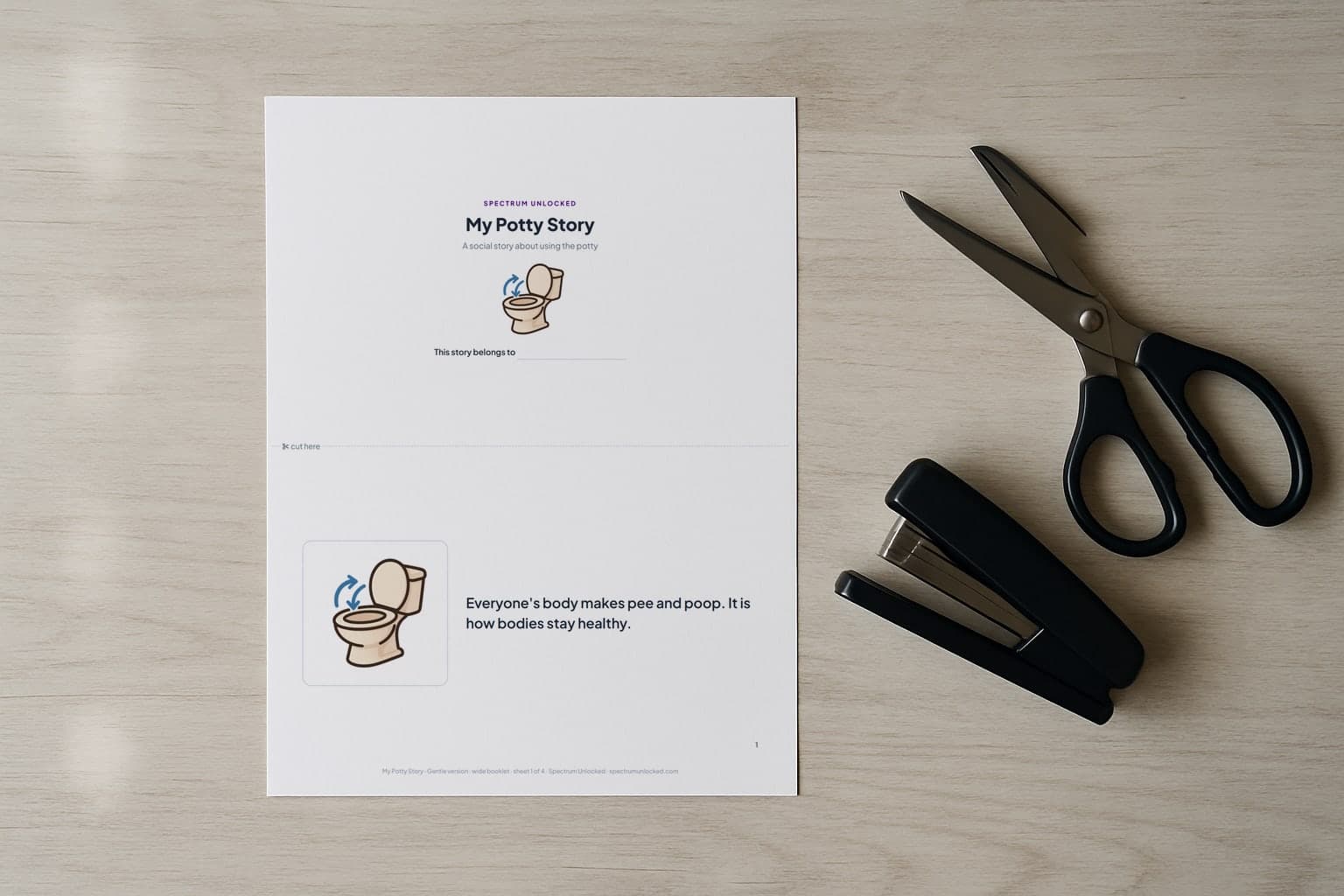
Download the printable PDF
Print the story as-is, no email required. Match the pictures to your child and pick your page layout, then download.

The story
Read the full story below. In the maker you can add your child's name, swap pictures, and print it as a booklet.
My Potty Story
A social story about using the potty
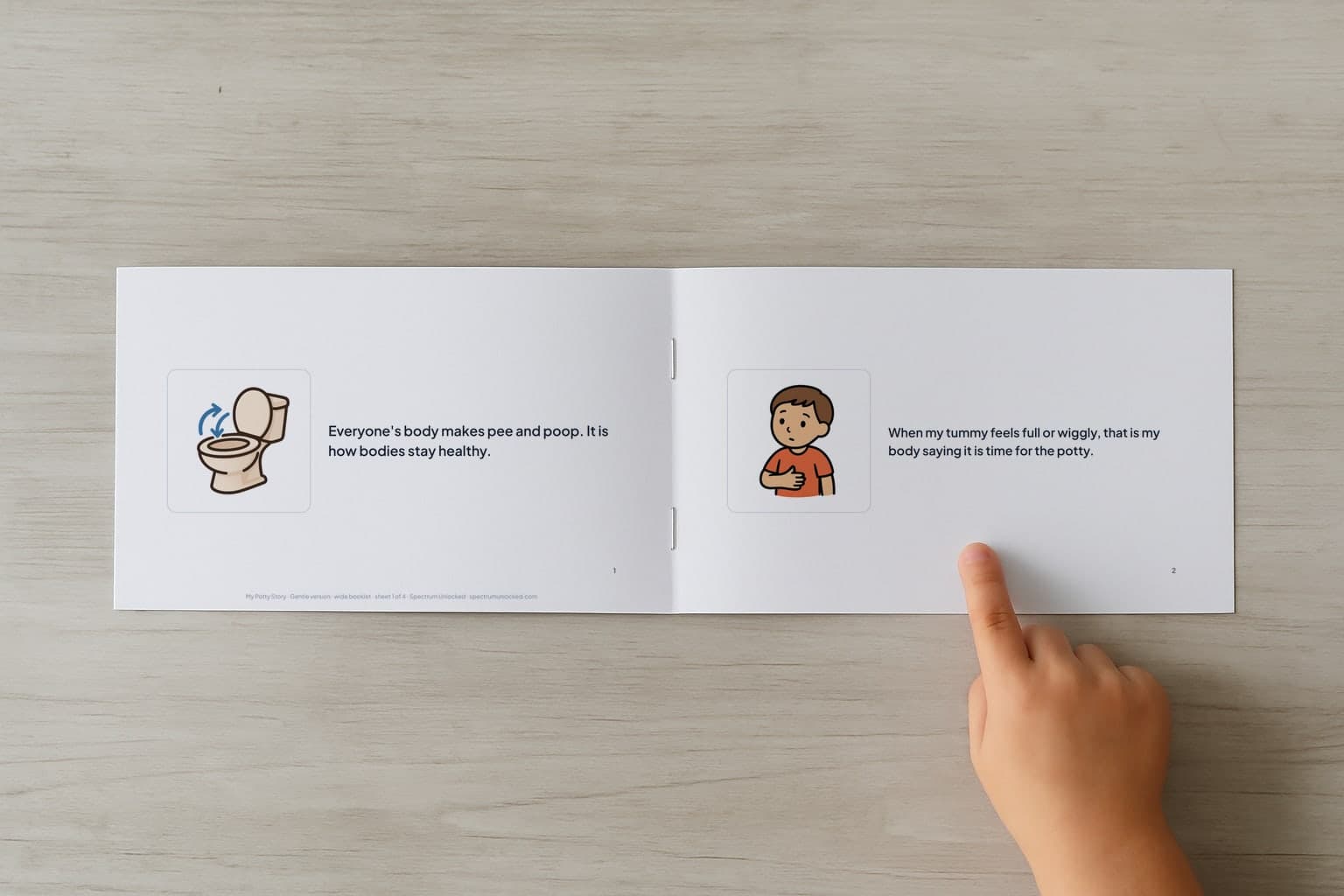
- 1Everyone's body makes pee and poop. It is how bodies stay healthy.Describes
- 2
 When my tummy feels full or wiggly, that is my body saying it is time for the potty.Describes
 - 3
 I can tell a grown-up or walk to the potty when my body gives me the signal.Coaches
 - 4
 Sitting on the potty takes practice. Sometimes pee or poop comes, and sometimes it does not. Both are okay.Describes
 - 5
 After the potty, I wipe, flush, and wash my hands with soap.Describes
 - 6
 If I have an accident, that is okay. I can ask for help and try again next time.Coaches
 - 7
 Every time I try the potty, my family is proud of me.Describes
Single stories, $3 each
When one situation is the whole problem, take just that story. A gentle and a firmer wording, four child looks, booklet pages in US Letter and A4, and a link to edit it free.
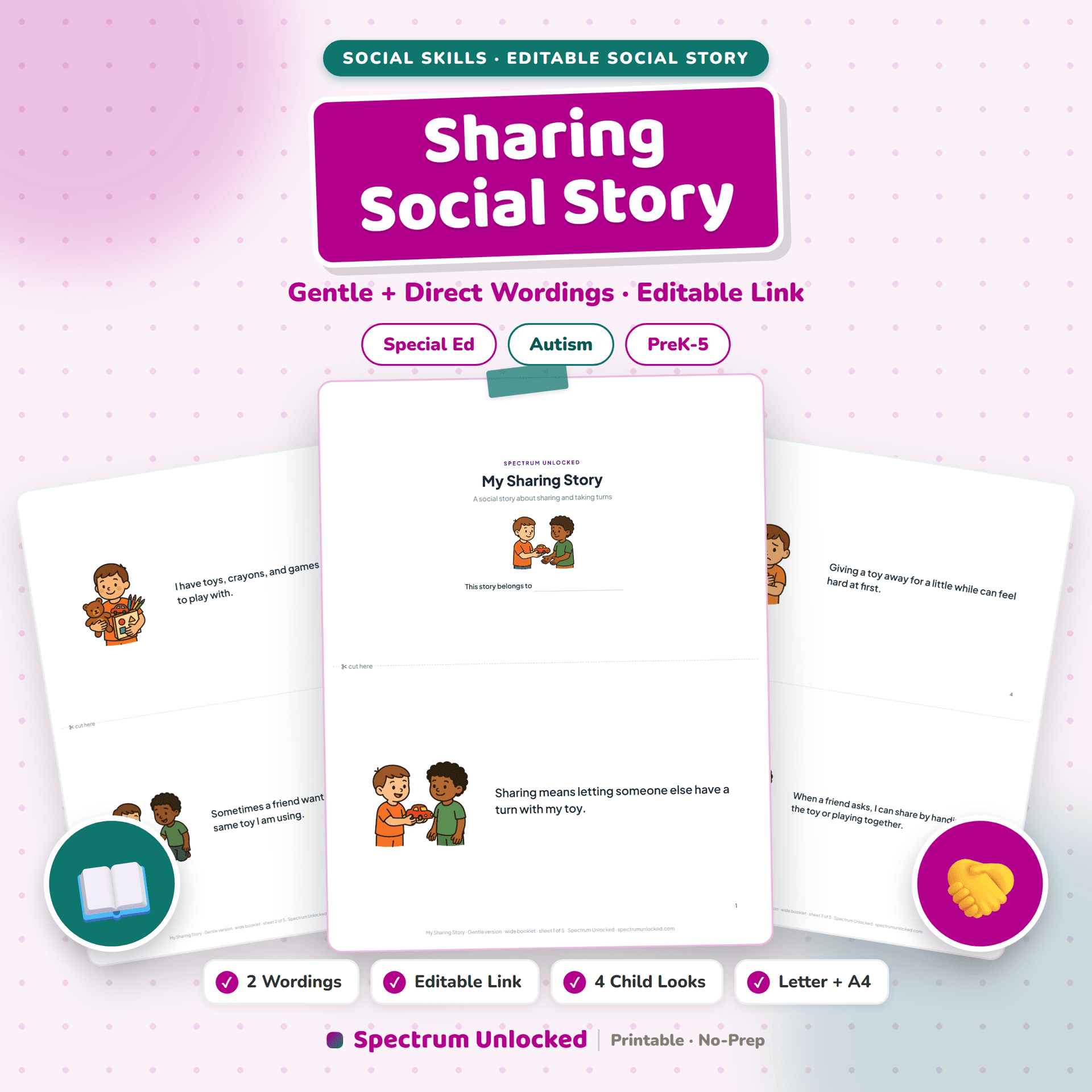
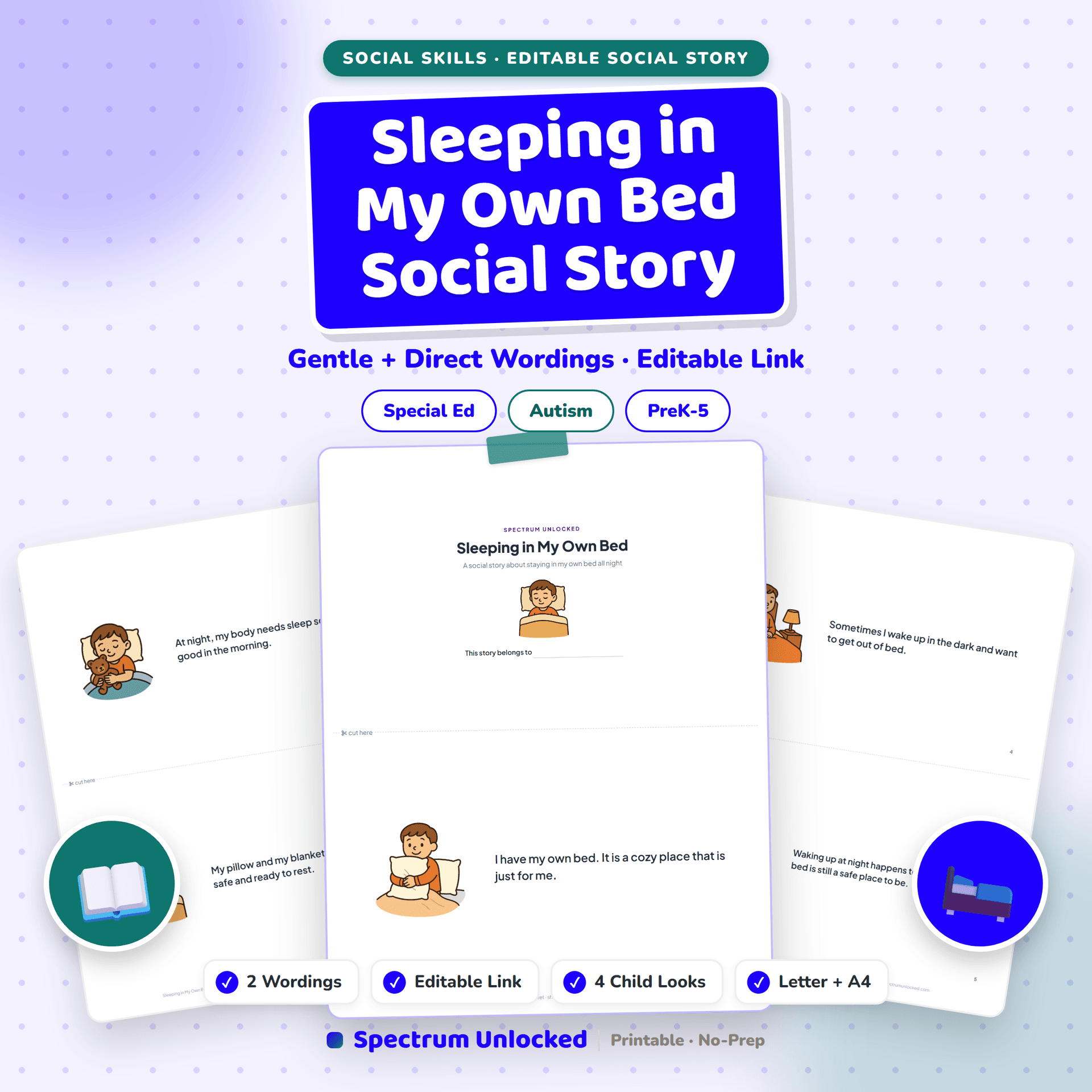
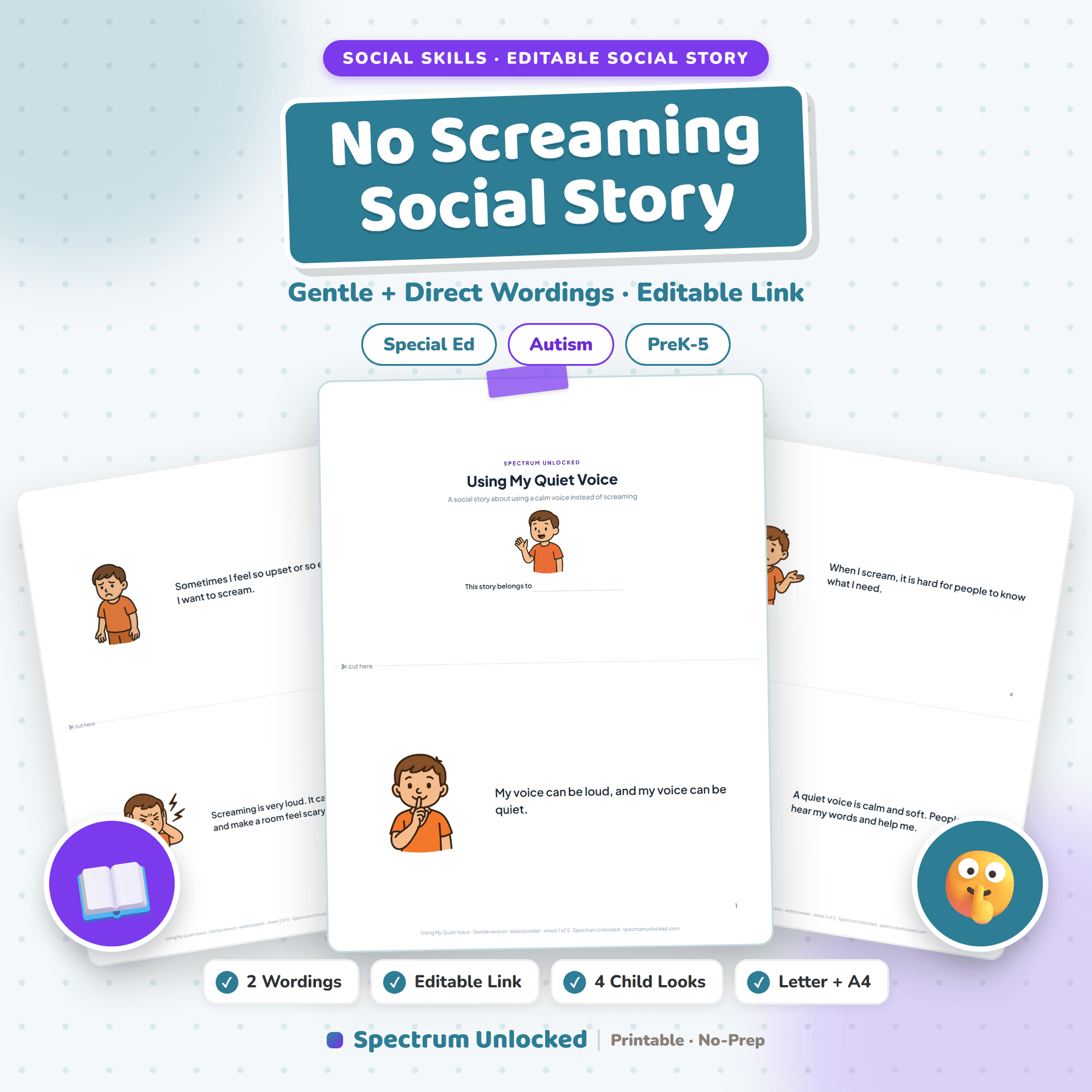
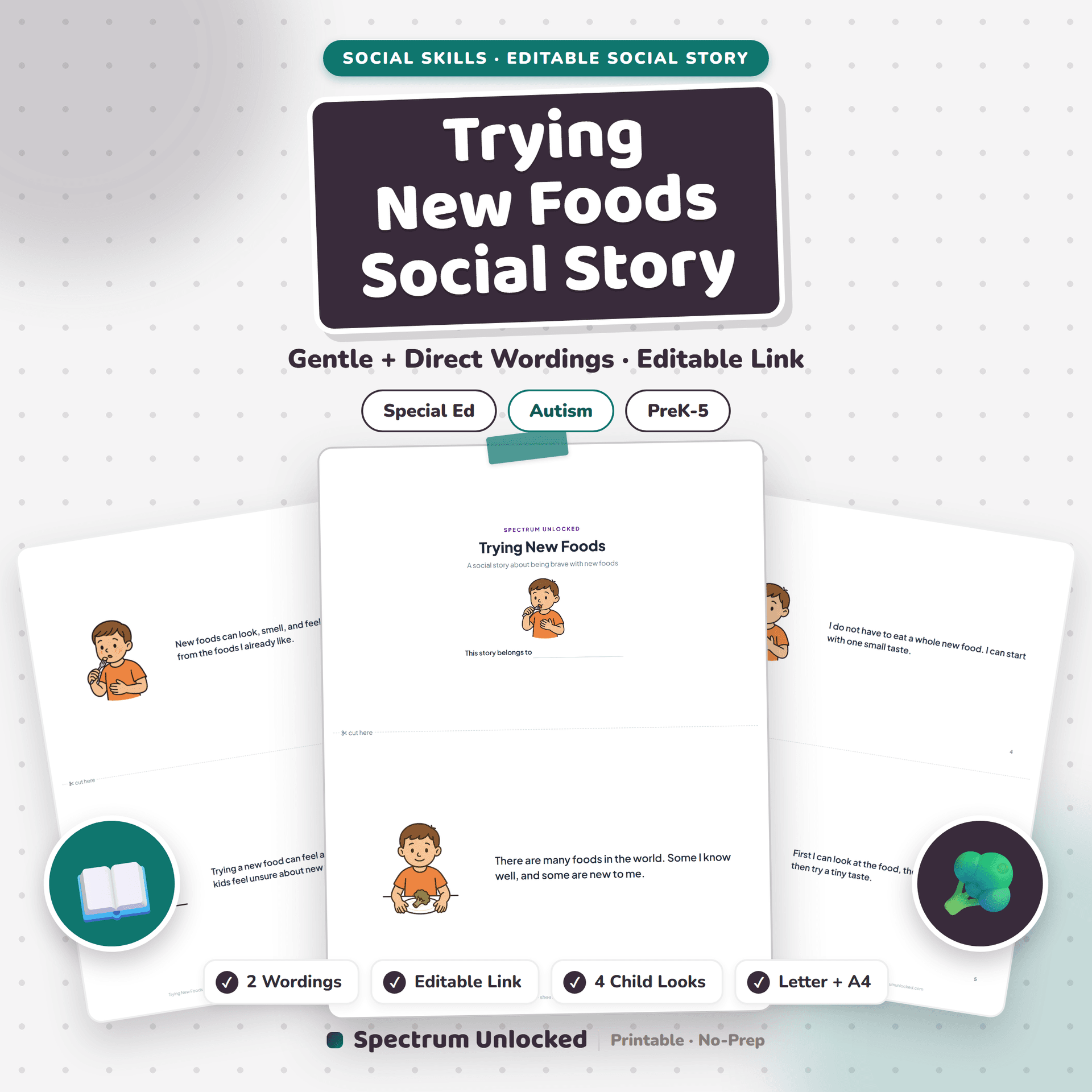
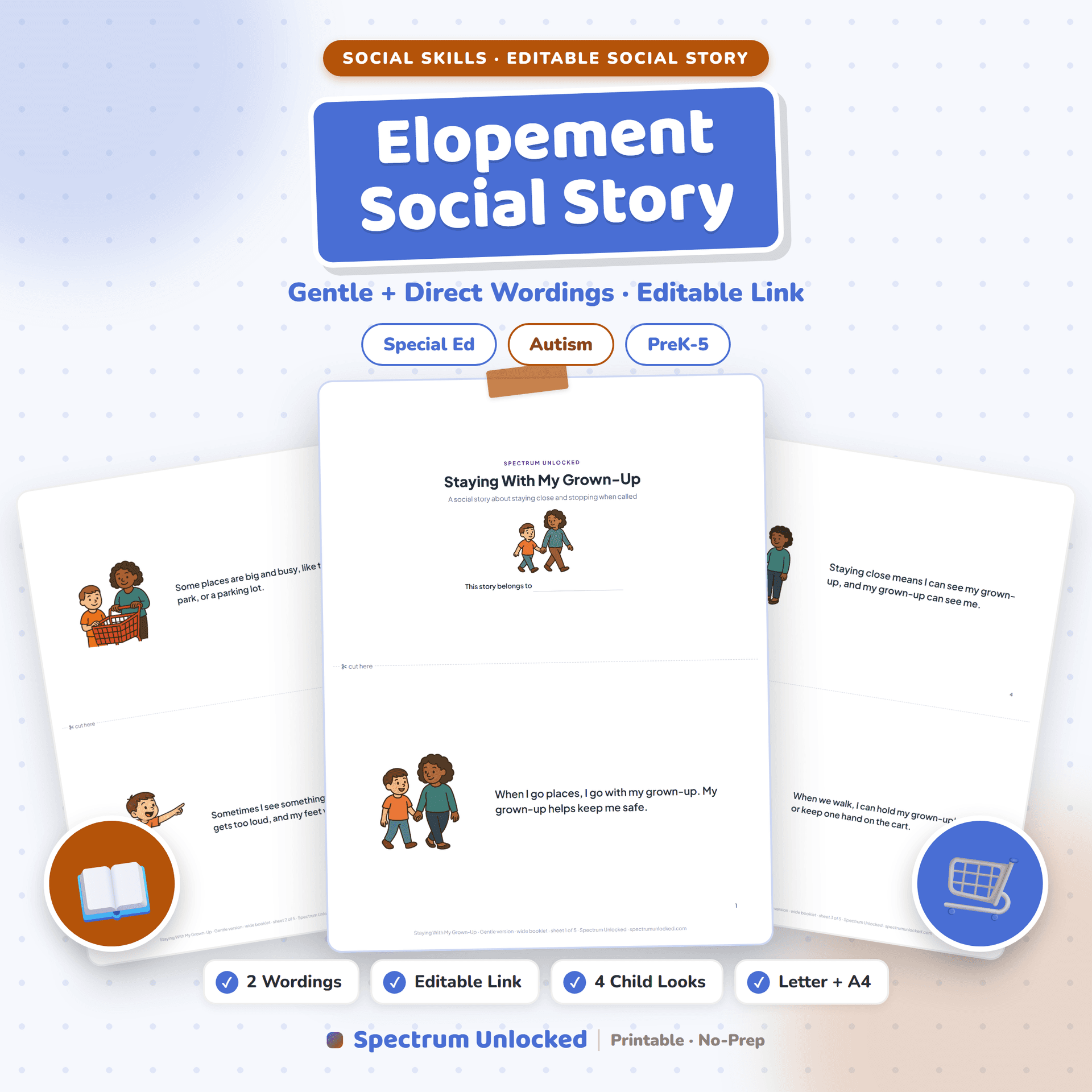
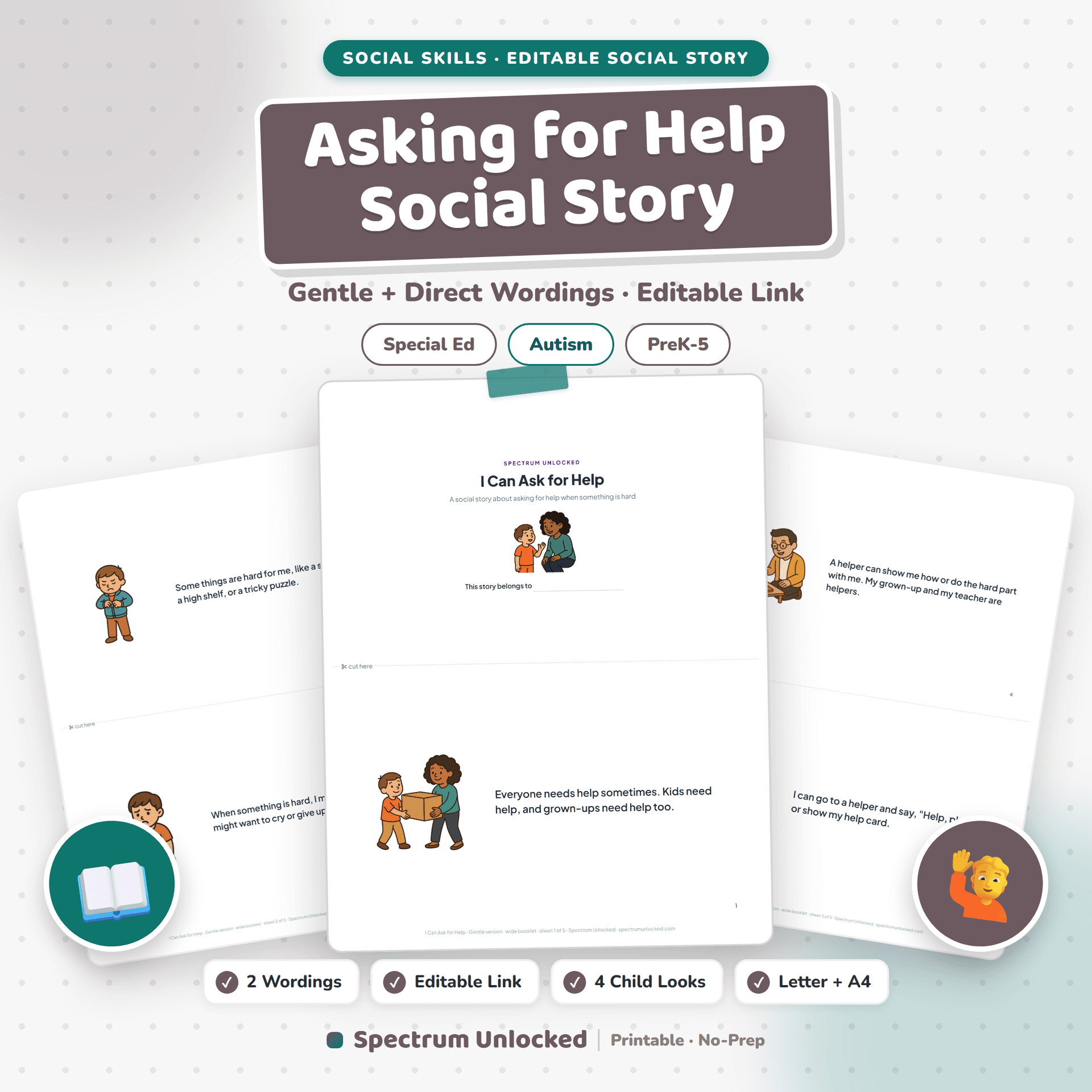
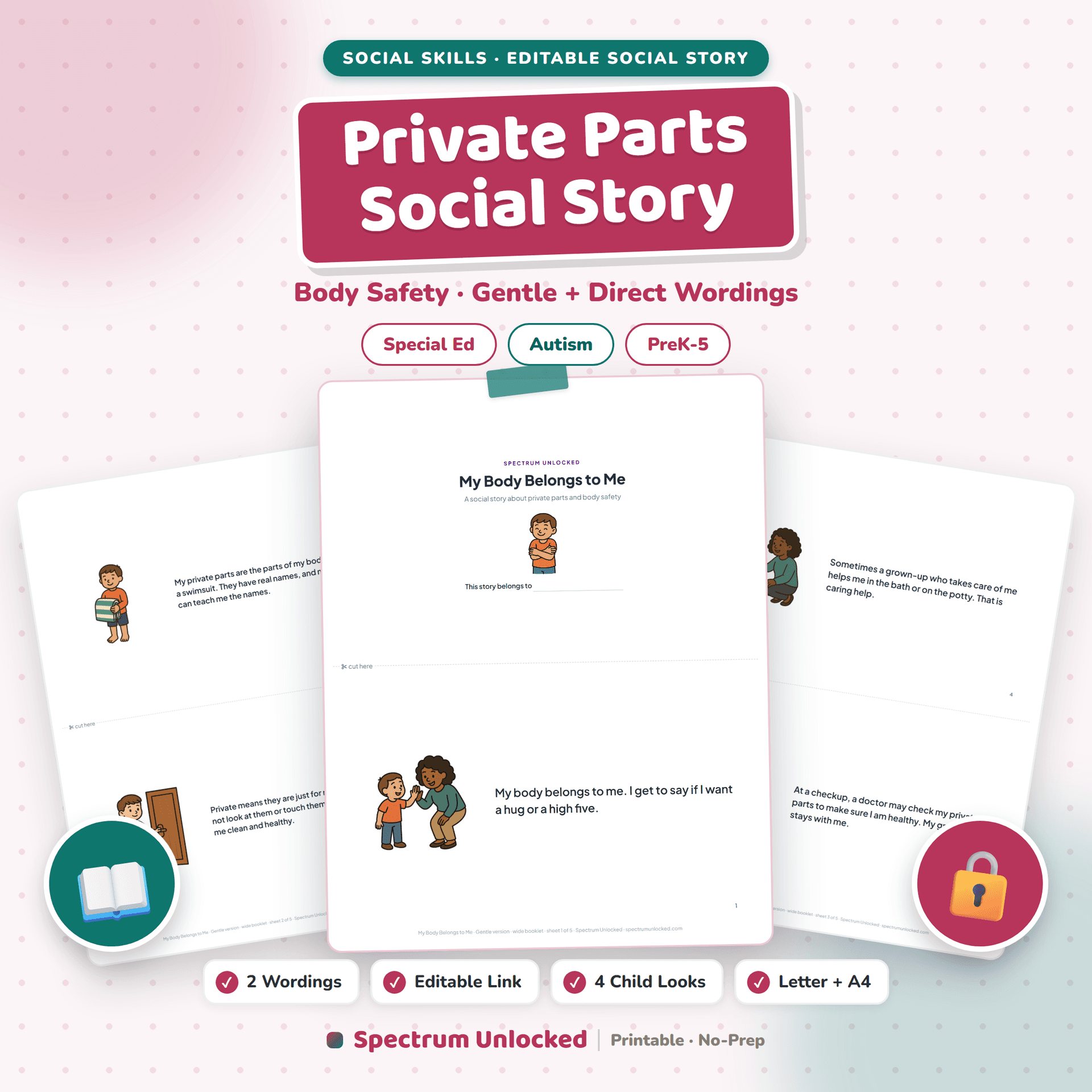
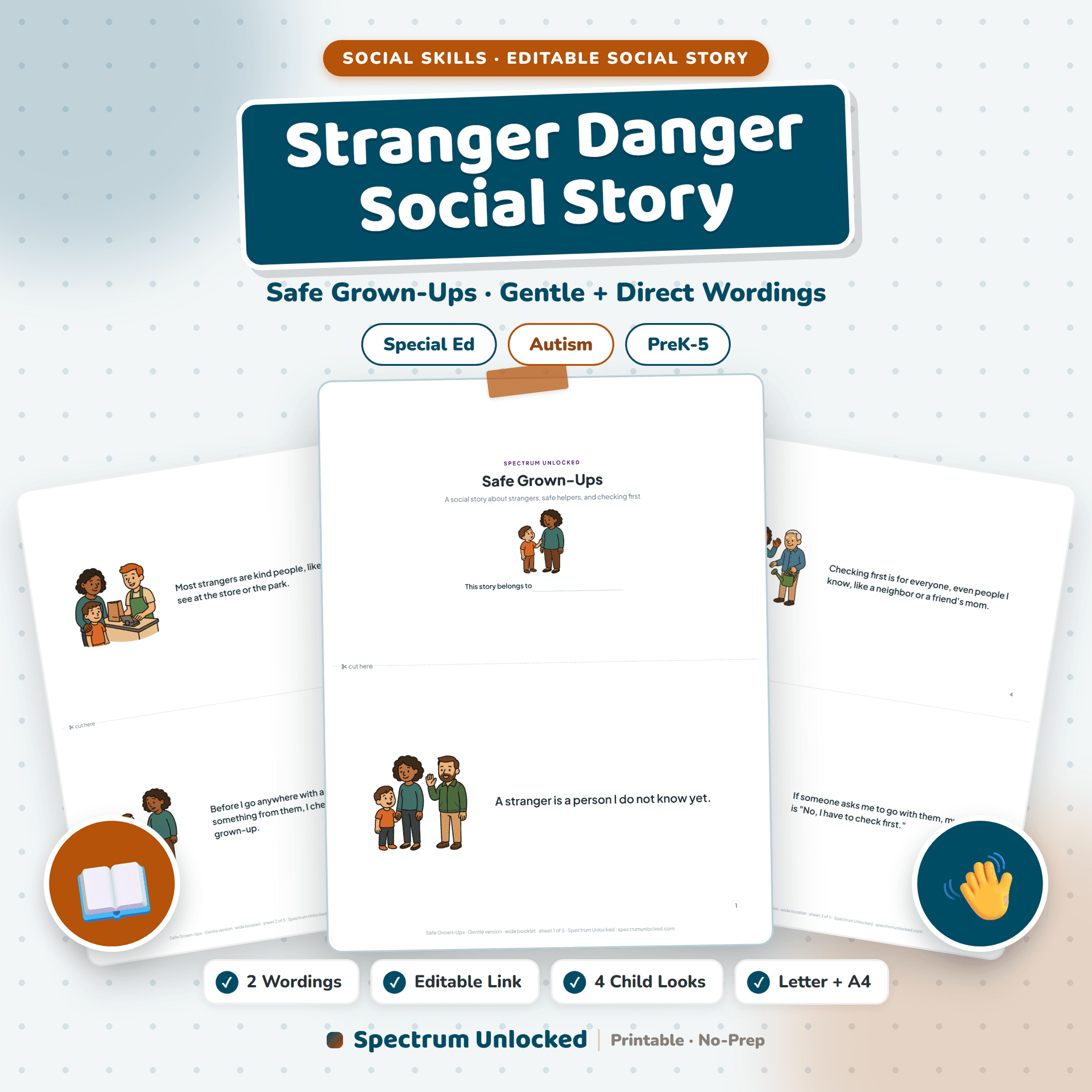
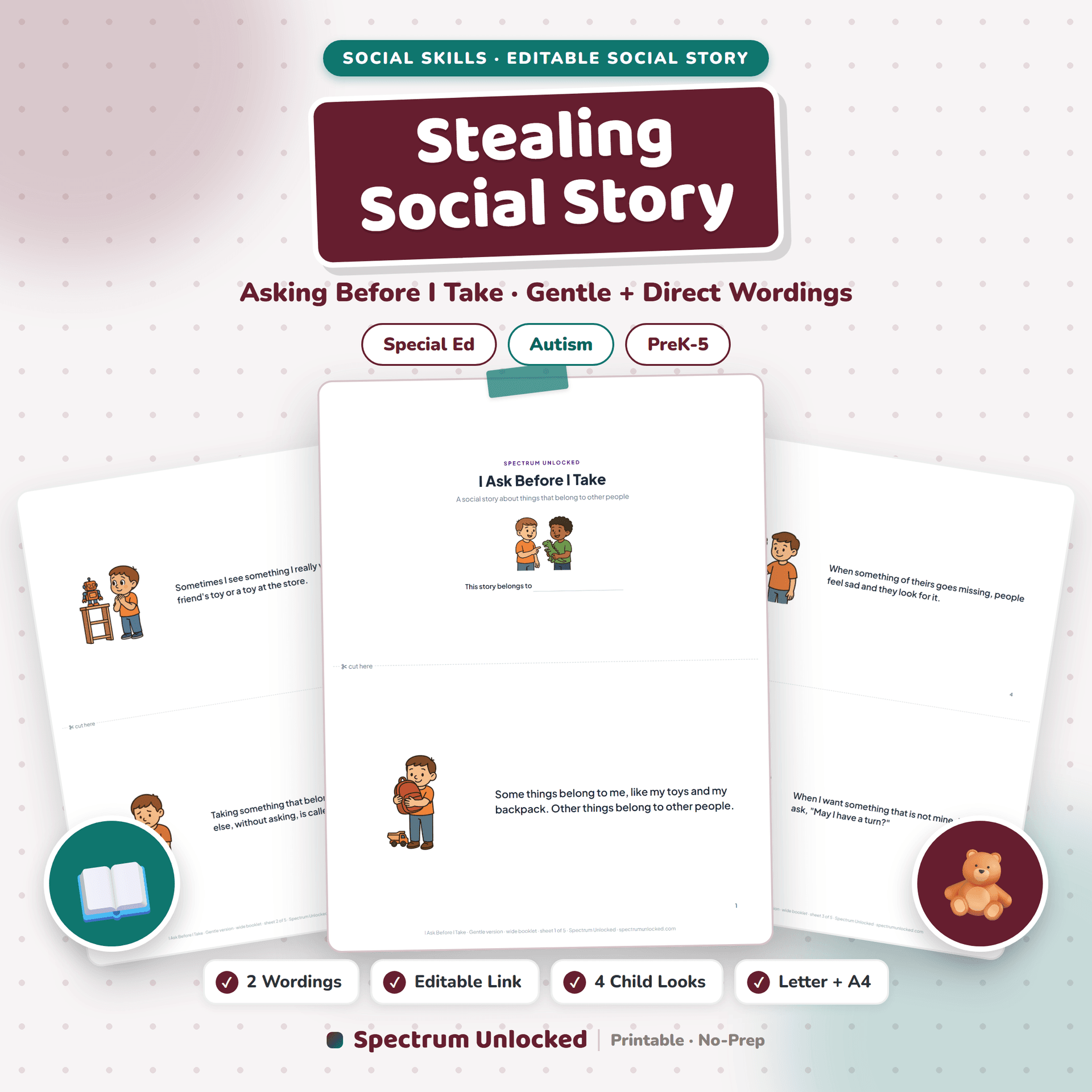
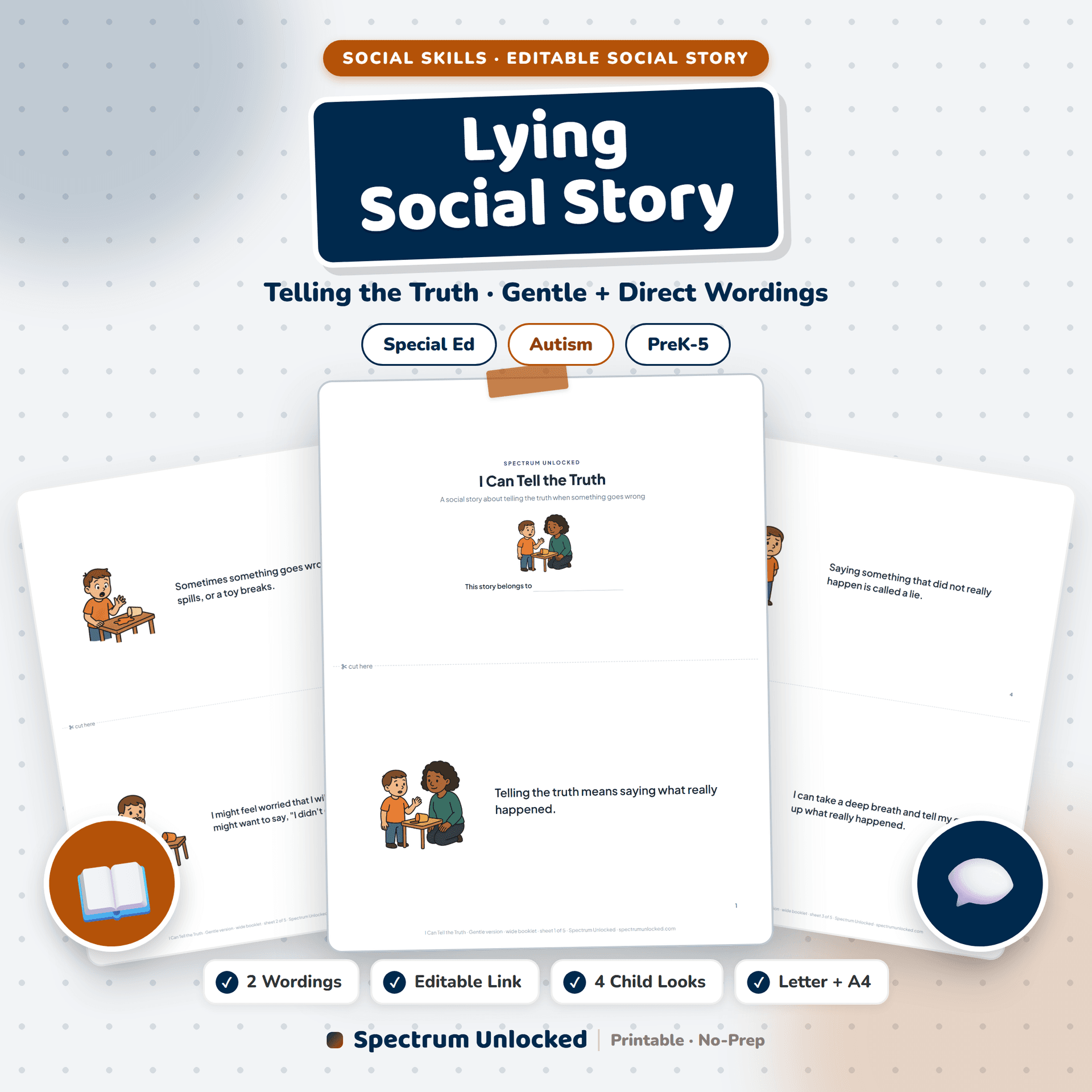
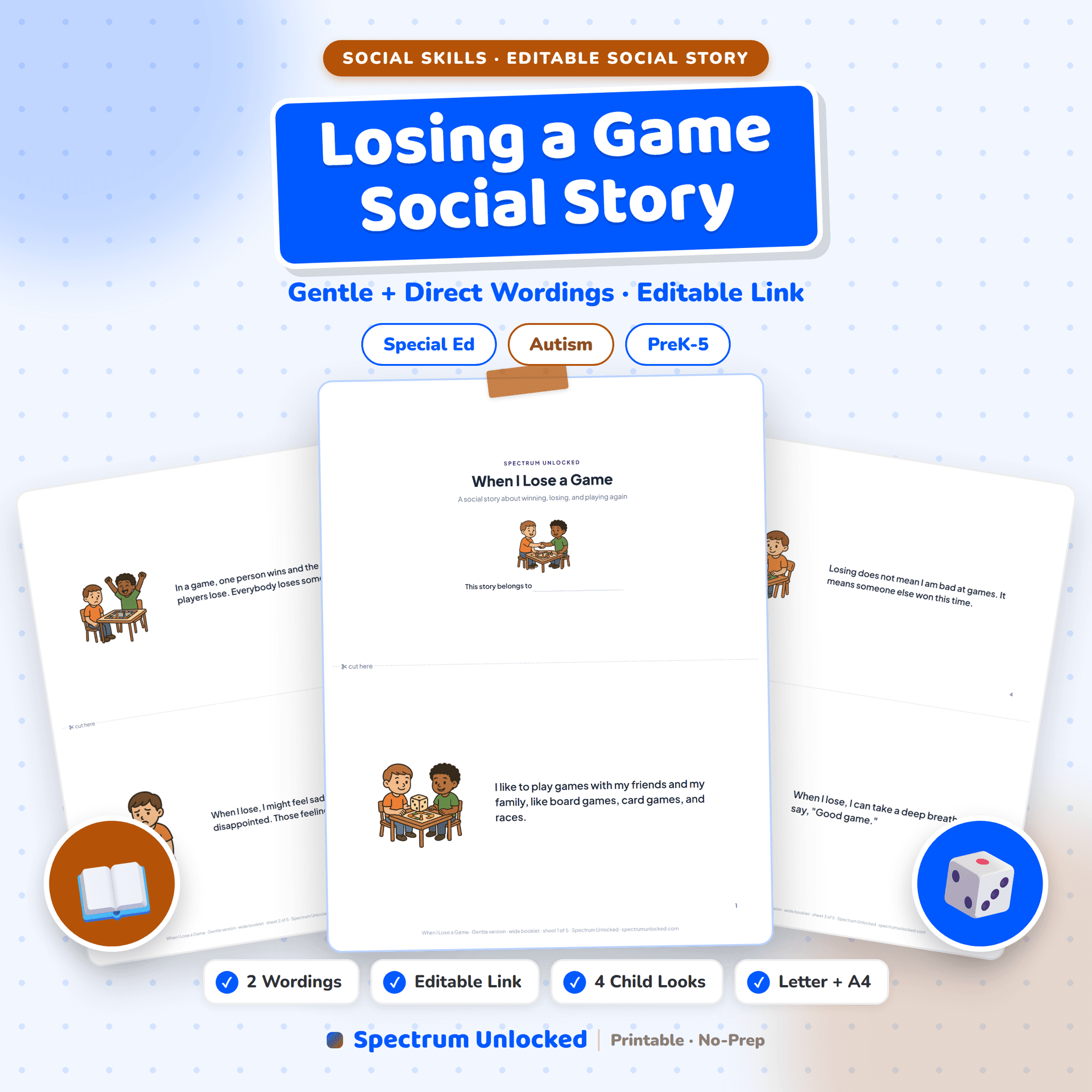
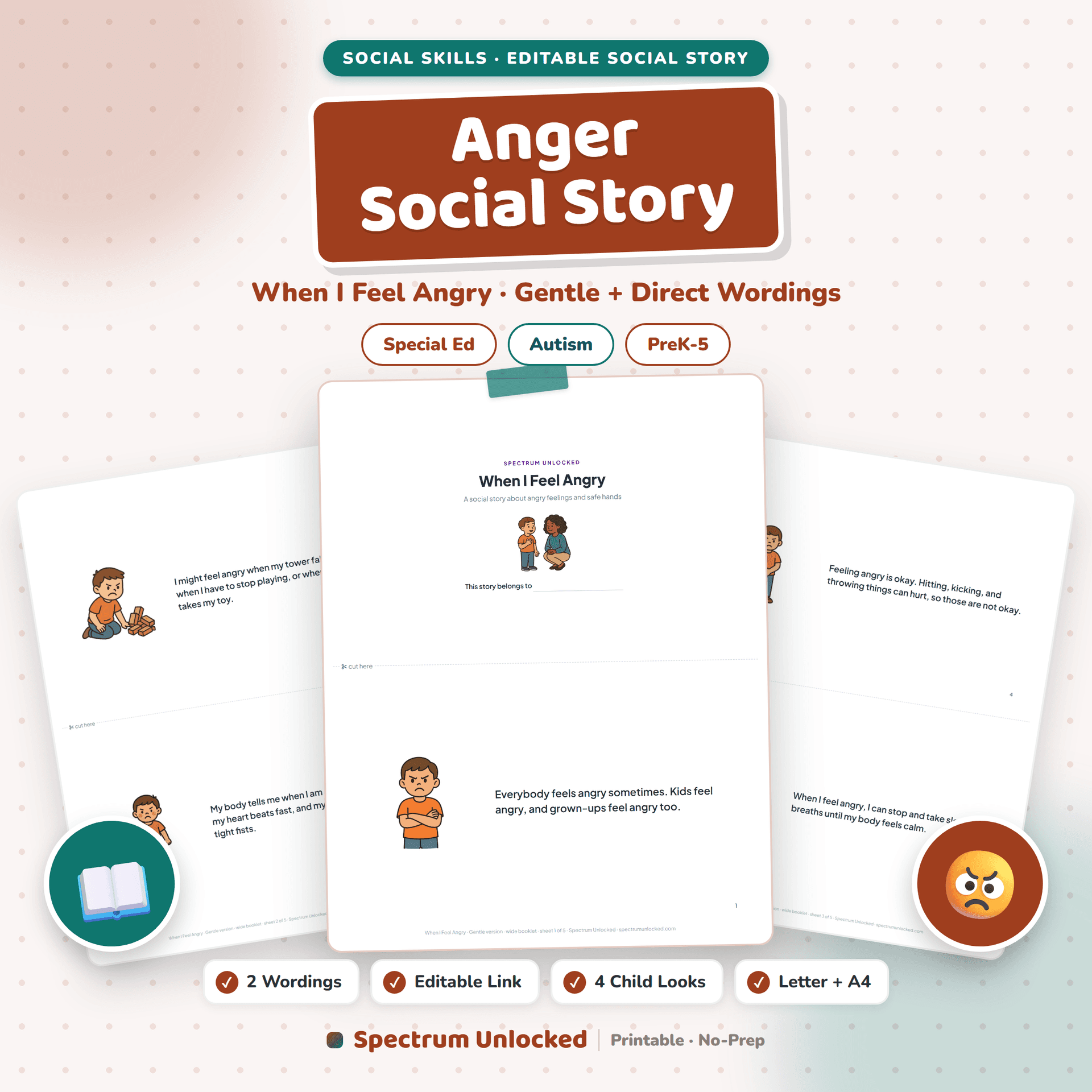
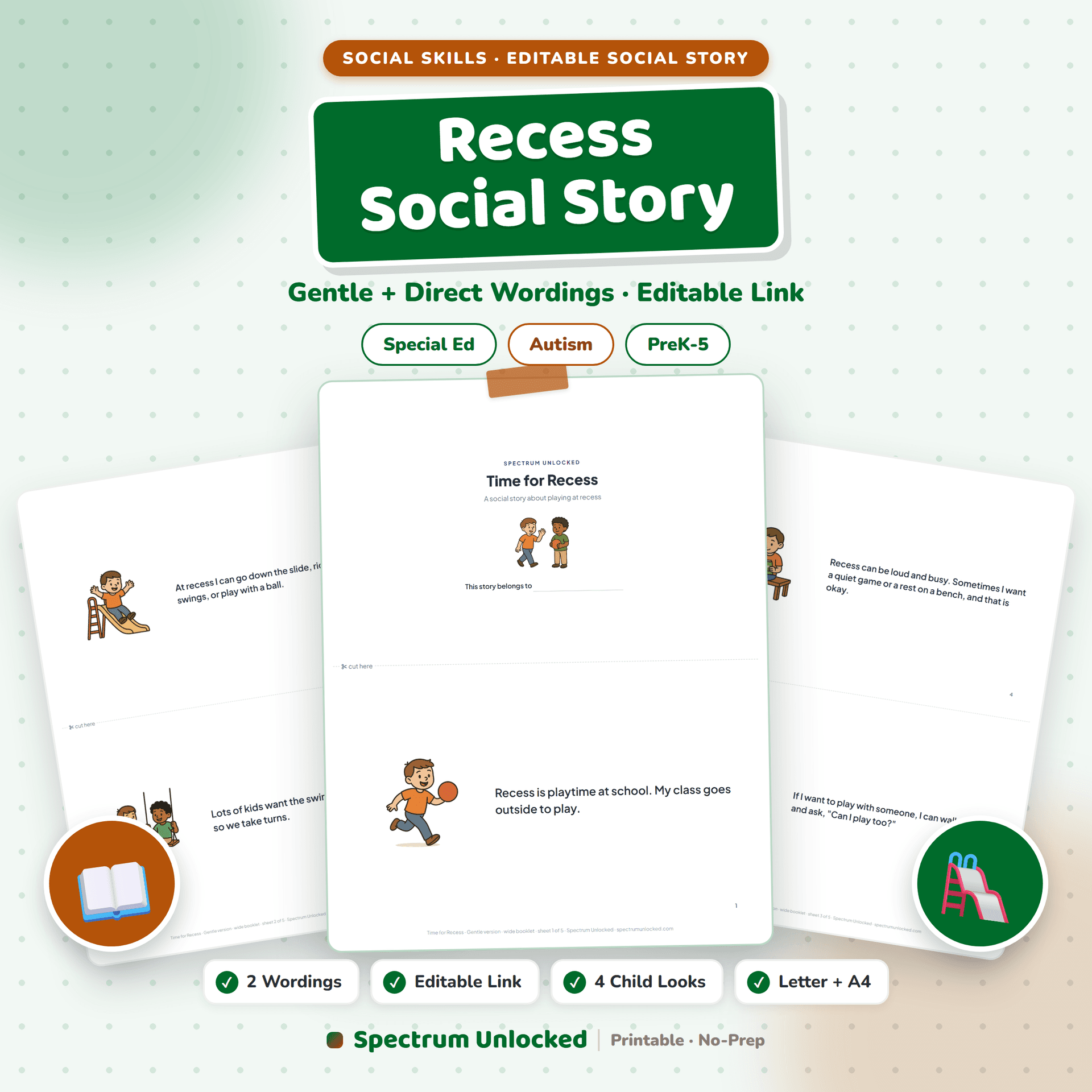
Nothing left to prepare. 25 finished sets, from $3, and every page prints exactly as it is.
When to use this story
Use this story when you are starting potty training or restarting after a pause. Read it once or twice a day at relaxed moments, like after breakfast, rather than while your child is on the potty. Many families keep a printed copy in the bathroom so the familiar pages are right there when the routine happens for real.
The story spends most of its pages describing what happens rather than issuing instructions. It names the full or wiggly tummy feeling that signals it is time, walks through wiping, flushing, and hand washing, and says plainly that some sits produce nothing and both outcomes are okay. That low-pressure framing matters, because potty training stalls fastest when a child feels tested.
The accident page deserves a slow read. Telling a child ahead of time that accidents are okay, and that asking for help is the right next move, takes shame out of the routine before it has a chance to build.
If your family uses specific words for pee, poop, or the bathroom, swap them in when you personalize the story. Familiar vocabulary makes the pages feel like your child's own routine instead of a script.
Frequently asked questions
- How do I use a social story for toilet training?
- Read it at calm times, not during an accident or while your child sits on the potty. Once or twice a day is plenty. The goal is for your child to know each step before the moment arrives, so the real routine feels familiar instead of new. Many parents pair the story with a consistent potty schedule.
- What does this potty story actually cover?
- It starts with the body signal, a full or wiggly tummy, then moves through telling a grown-up, sitting and practicing, wiping, flushing, and washing hands with soap. It also says directly that accidents are okay and that trying is what earns pride, not a perfect result.
- Is this potty training story free to print?
- Yes. The complete story text is on this page, and downloading the printable booklet from the maker costs nothing. You can add your child's name and photos first if you want a personalized copy.
- Can I edit the story to match our routine?
- You can. Open it in the maker to change any sentence, add or remove pages, swap in your own photos, and switch between first person and your child's name. If your family uses different potty words, put those words in.
- Who developed social stories?
- Social Stories were developed by Carol Gray in the early 1990s. The gentle version of this template follows her published guidance, including describing more than coaching, but Spectrum Unlocked is not affiliated with or endorsed by Carol Gray.
Related stories
Brushing Teeth Social Story
Two minutes at the sink can be a battle. This free printable social story breaks tooth brushing into small steps and names the tricky sensory parts.
Getting Dressed Social Story
From underwear to shoes, this free printable social story puts the morning routine in a fixed order for kids who get stuck. Print or personalize free.
Related guides
Social Stories were developed by Carol Gray. Spectrum Unlocked is not affiliated with or endorsed by Carol Gray; the gentle version of this template follows her published describe-more-than-coach guidance.