Behavior & Big Feelings
Biting Social Story
A social story that treats biting as a body urge rather than badness. The gentle version explains that teeth are for chewing food and points to a chewy necklace or crunchy snack instead; a firmer No Biting version states the rule outright. Read both, then make either one your child's own.
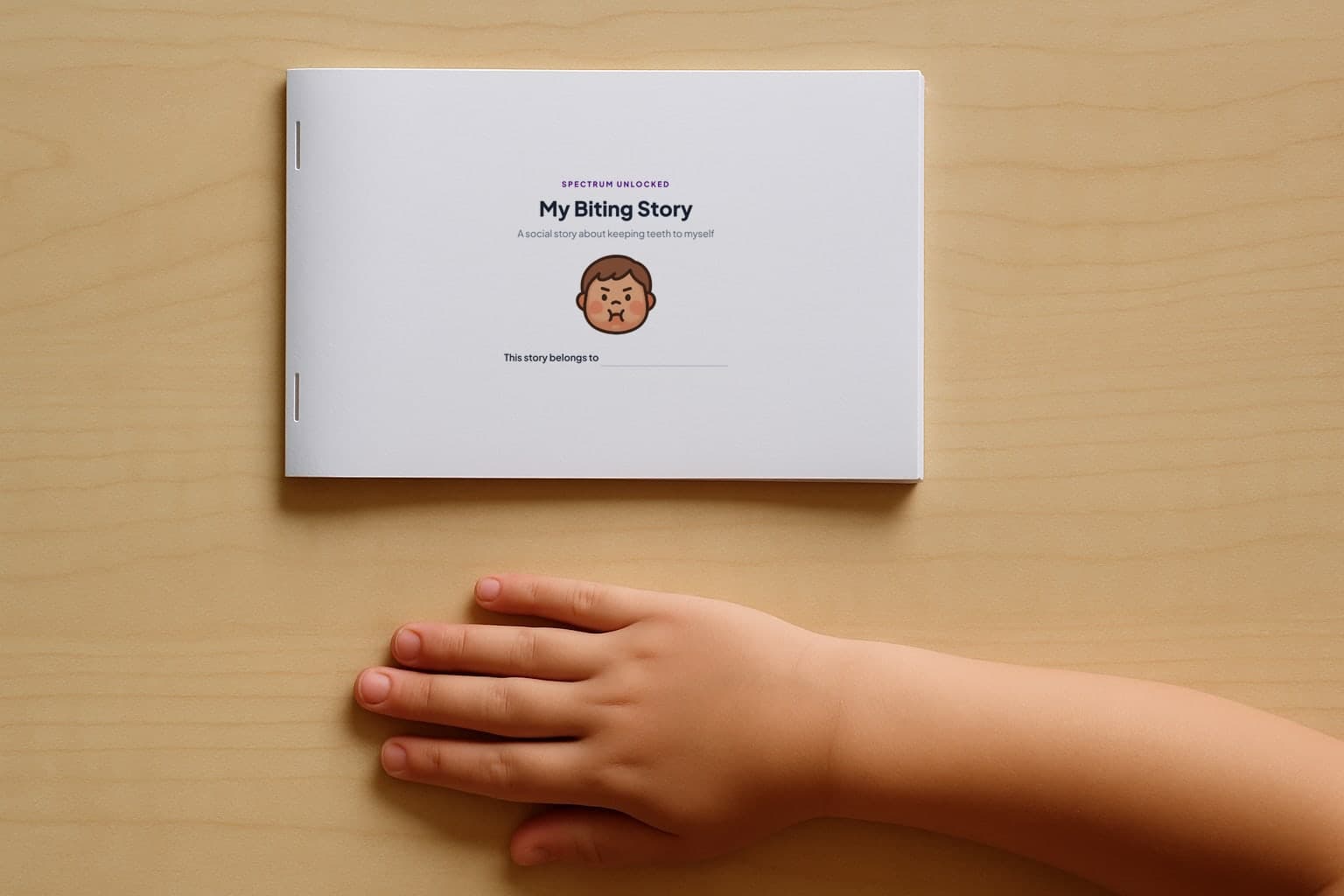
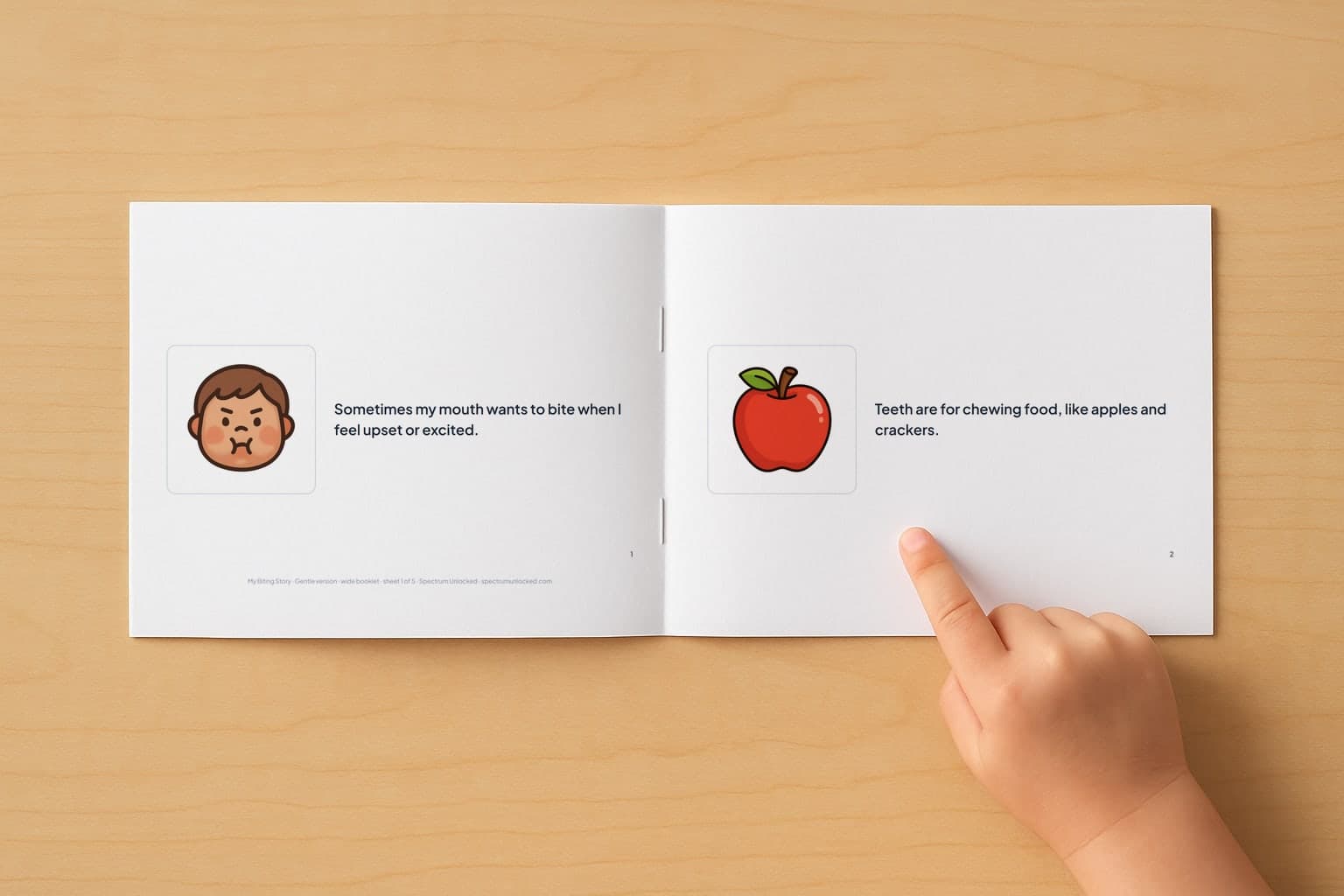
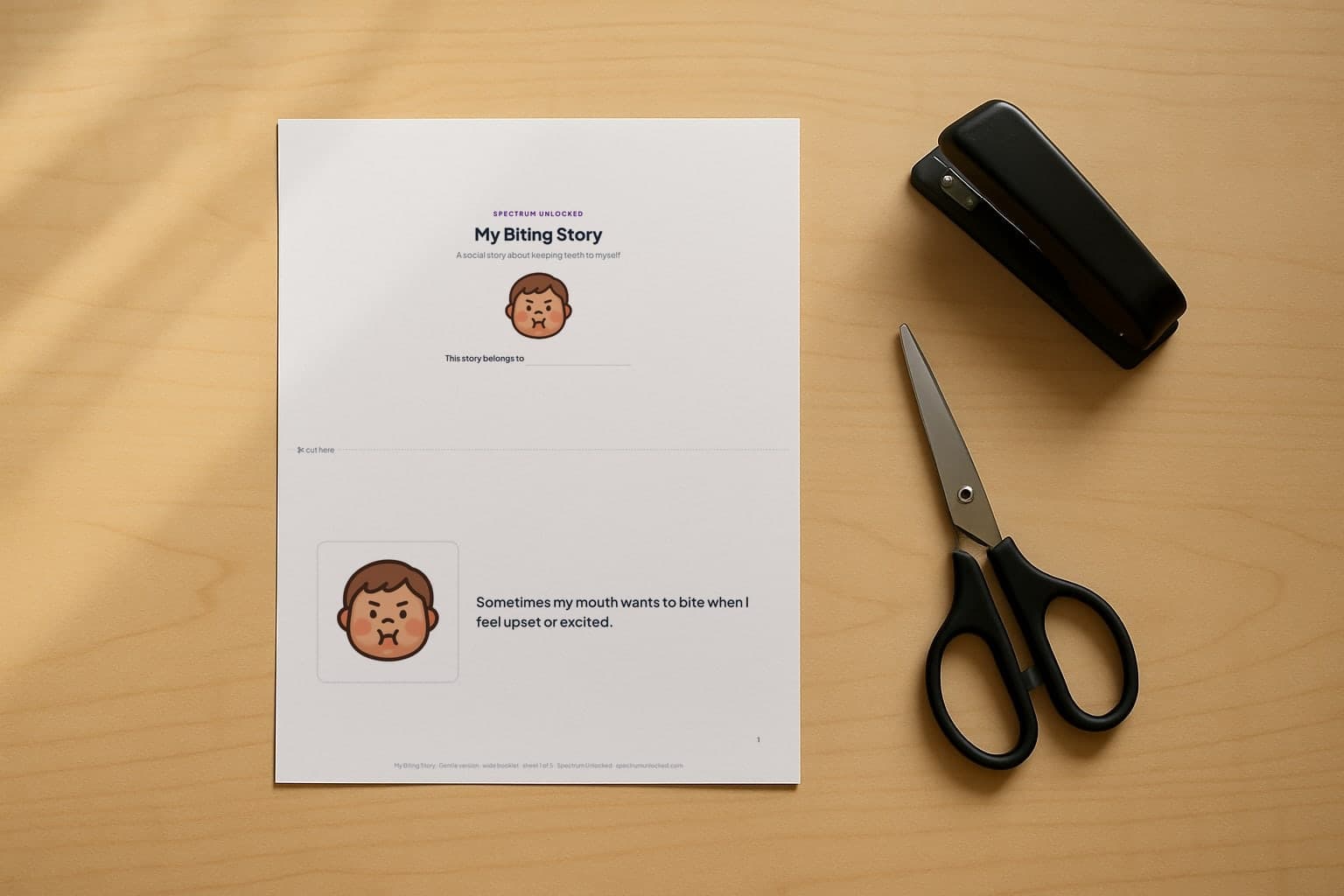
Download the printable PDF
Print the story as-is, no email required. Match the pictures to your child and pick your page layout, then download.
The story
Read the full story below. In the maker you can add your child's name, swap pictures, and print it as a booklet.
My Biting Story
A social story about keeping teeth to myself
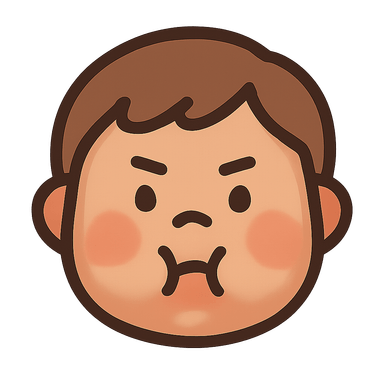
- 1Sometimes my mouth wants to bite when I feel upset or excited.Describes
- 2
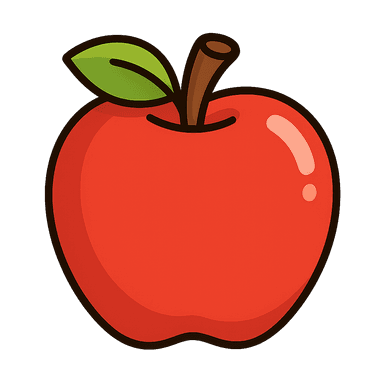 Teeth are for chewing food, like apples and crackers.Describes
 - 3
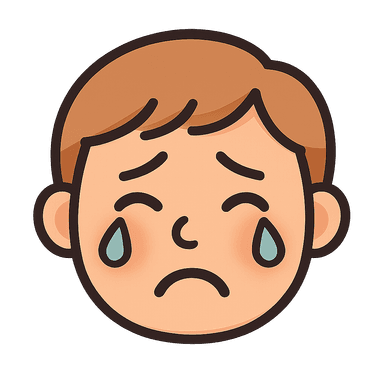 Biting people hurts. A bite can leave a mark and make someone cry.Describes
 - 4
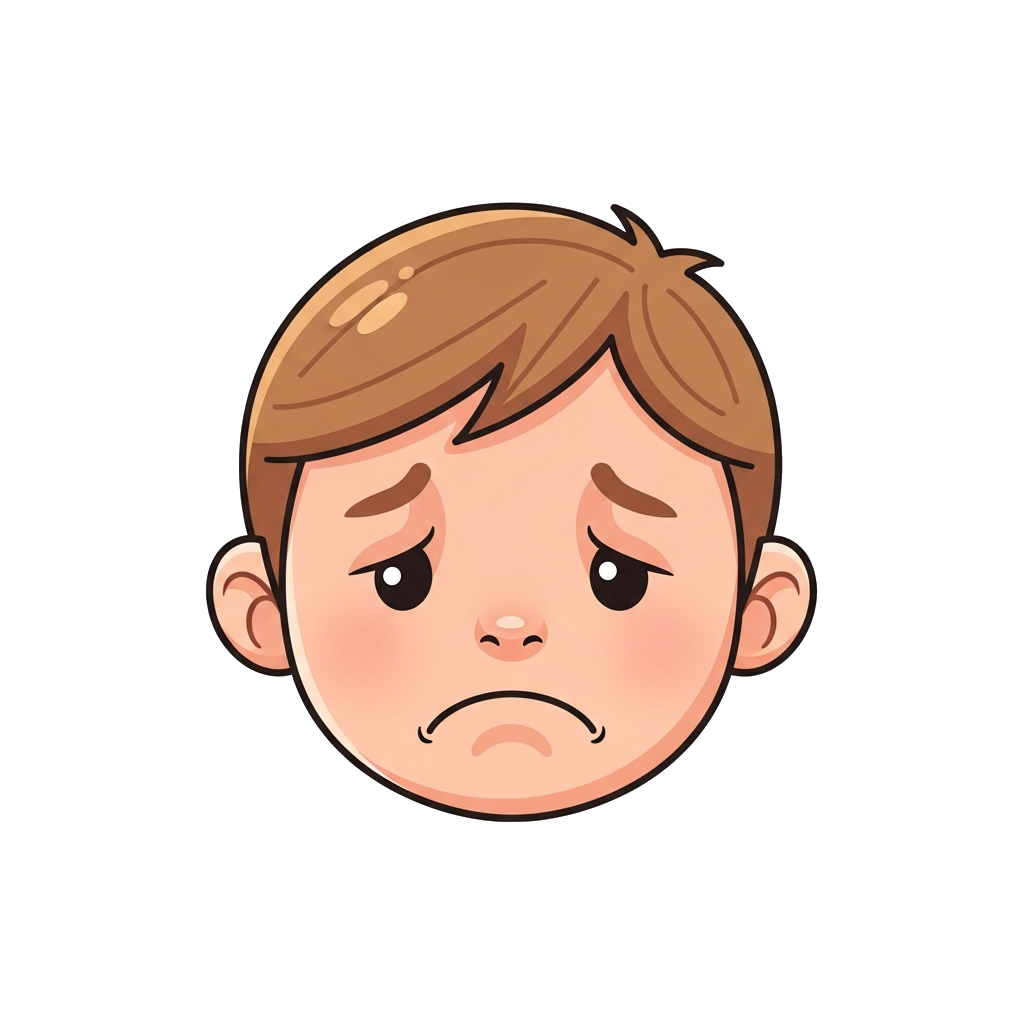 If I bite, my friends may feel scared to play near me.Describes
 - 5
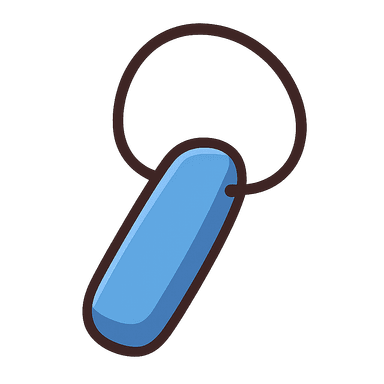 When my mouth wants to bite, I can chew my chewy necklace or take a bite of a crunchy snack instead.Coaches
 - 6
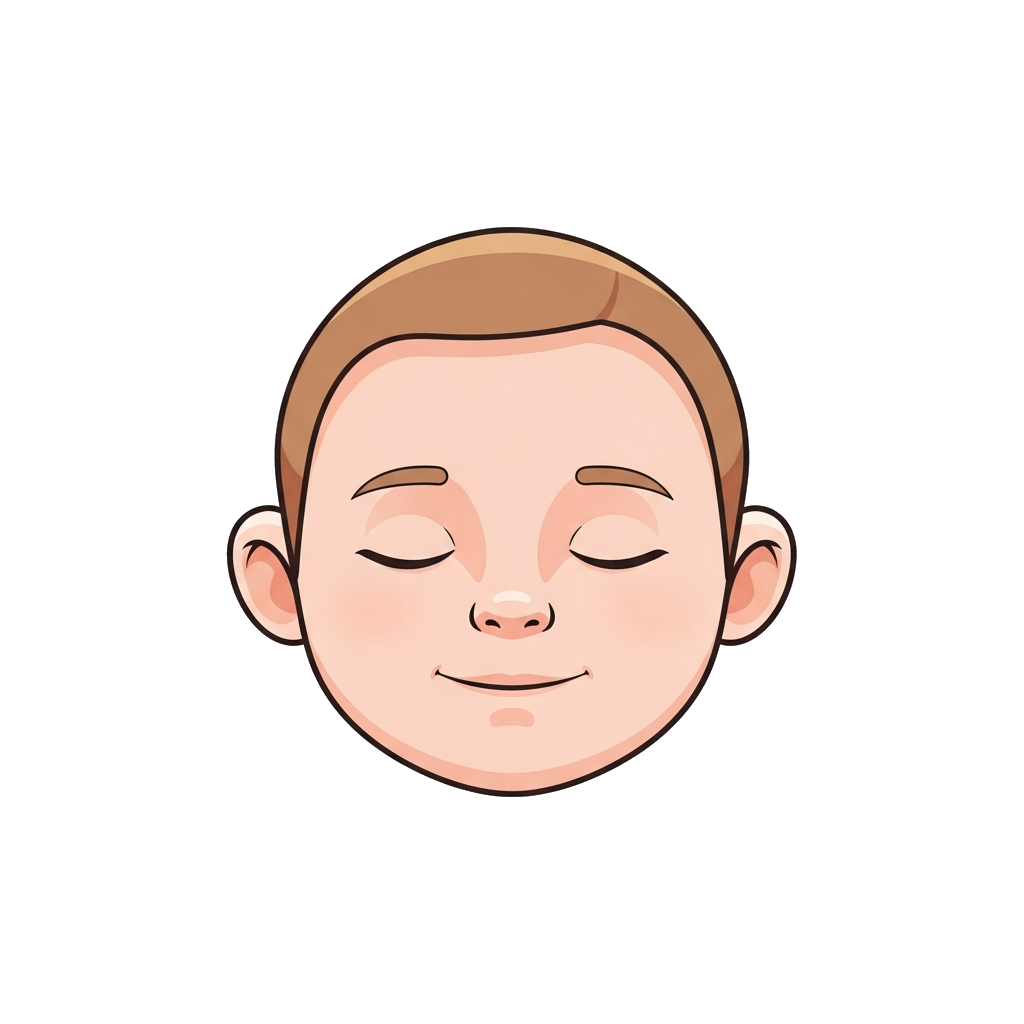 I can also take a deep breath and tell a grown-up how I feel.Coaches
 - 7It is okay to feel upset or excited. Big feelings come, and then they go.Describes
- 8
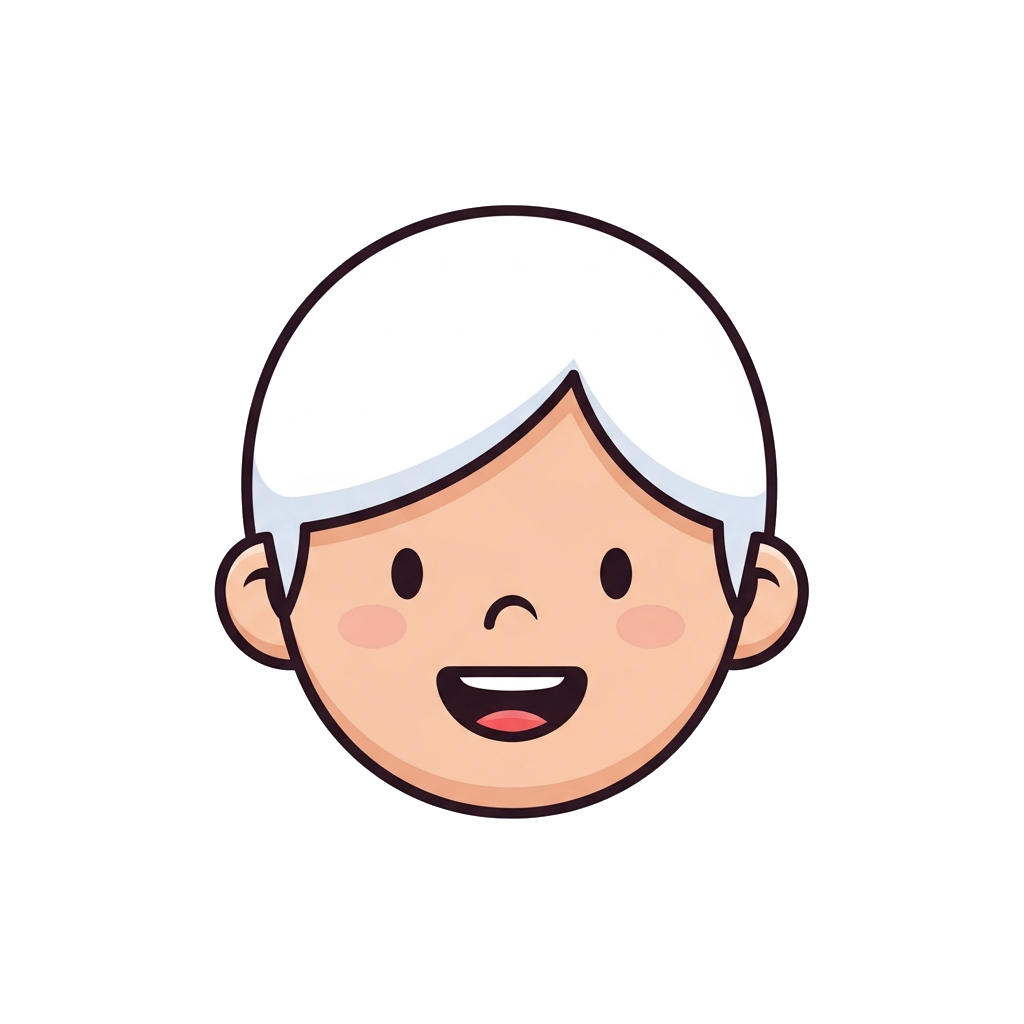 When I keep my teeth to myself, everyone stays safe and happy.Describes
 - 9
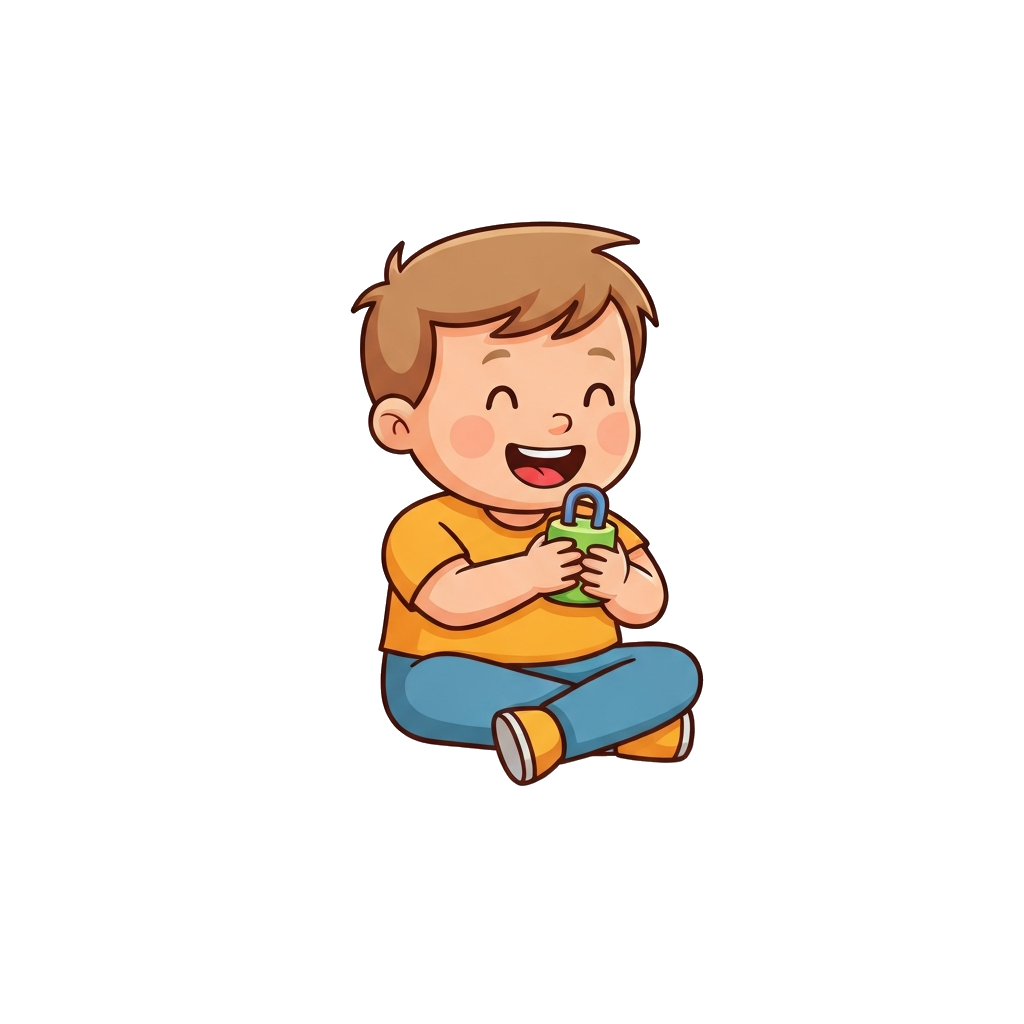 When I use safe teeth, my friends feel safe playing near me.Describes
No Biting: the direct version
No Biting
A social story about why we do not bite
- 1
 Sometimes I want to bite when I feel upset.Describes
 - 2
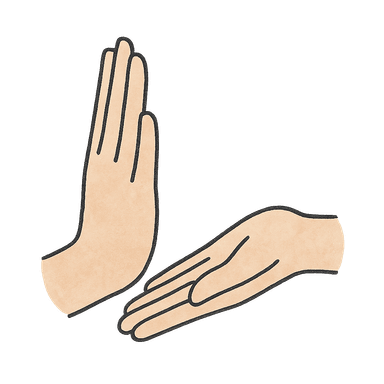 We do not bite. Biting hurts people.Coaches
 - 3Teeth are strong. A bite can really hurt skin and make someone cry.Describes
- 4
 If I bite, playtime might stop, and my friend may need to move away from me.Describes
 - 5Instead, I can chew my chewy necklace or take a deep breath.Coaches
- 6
 I can tell a grown-up, "I need help."Coaches
The direct version uses firmer wording. Many families start gentle and switch only if the gentle version is not landing.
Single stories, $3 each
When one situation is the whole problem, take just that story. A gentle and a firmer wording, four child looks, booklet pages in US Letter and A4, and a link to edit it free.
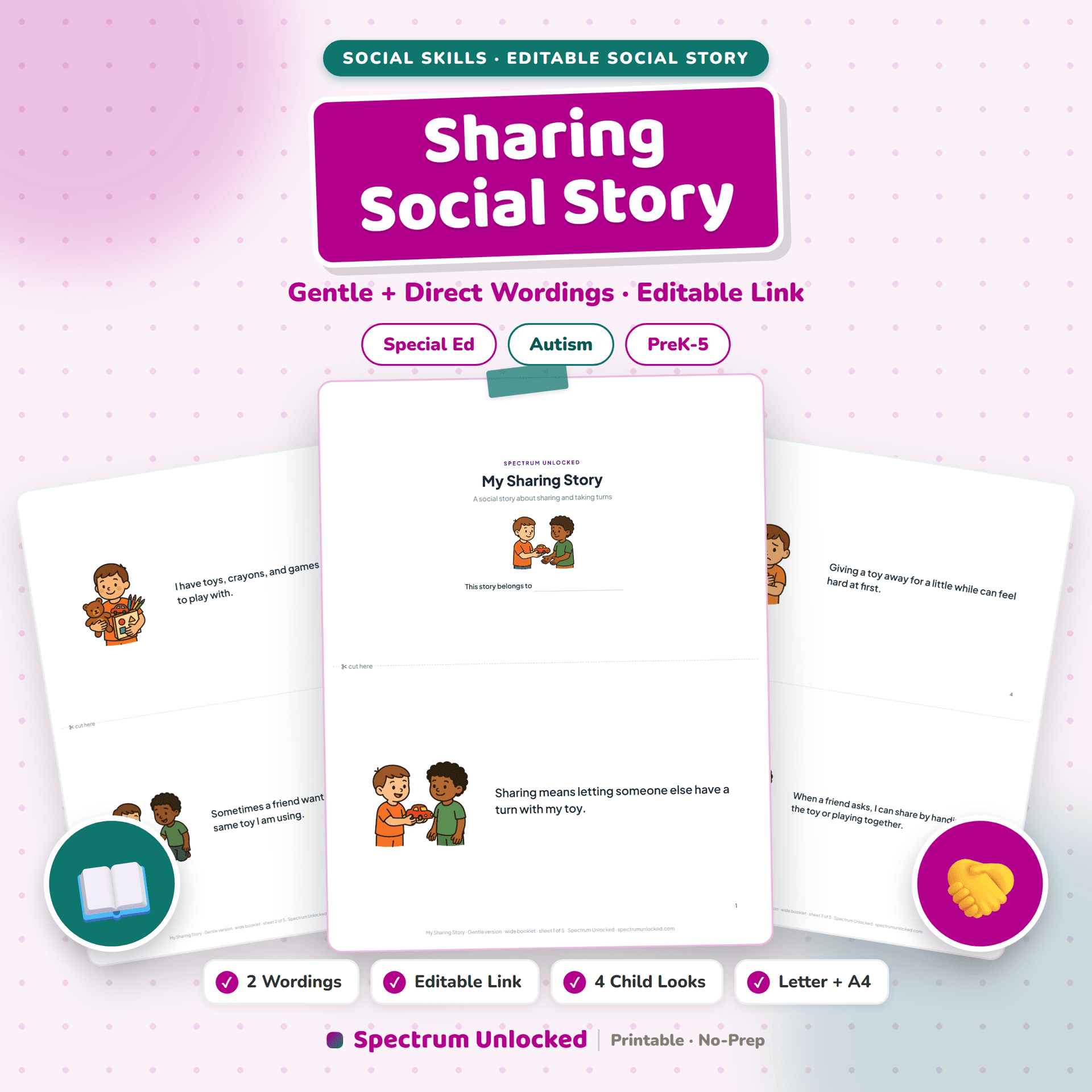
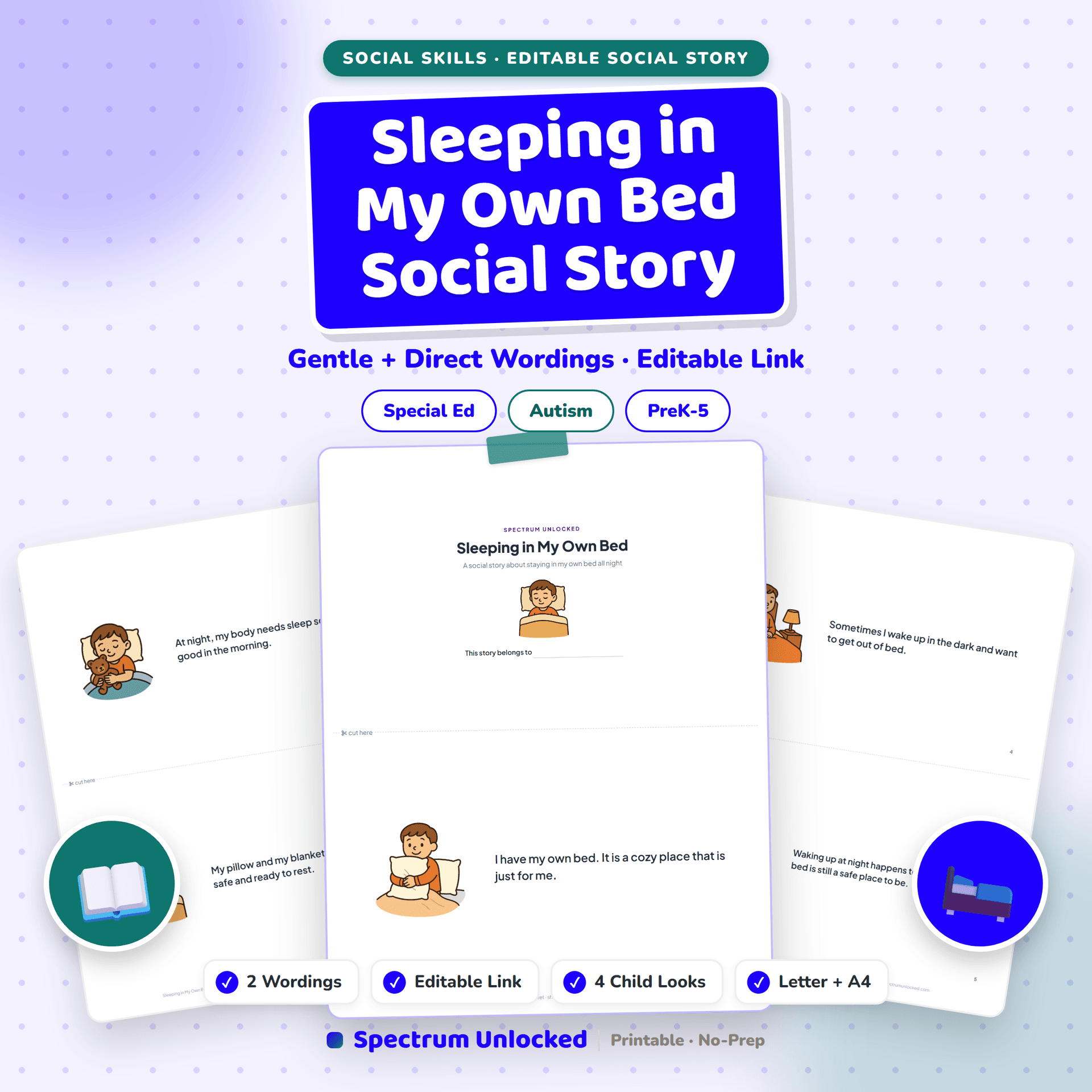
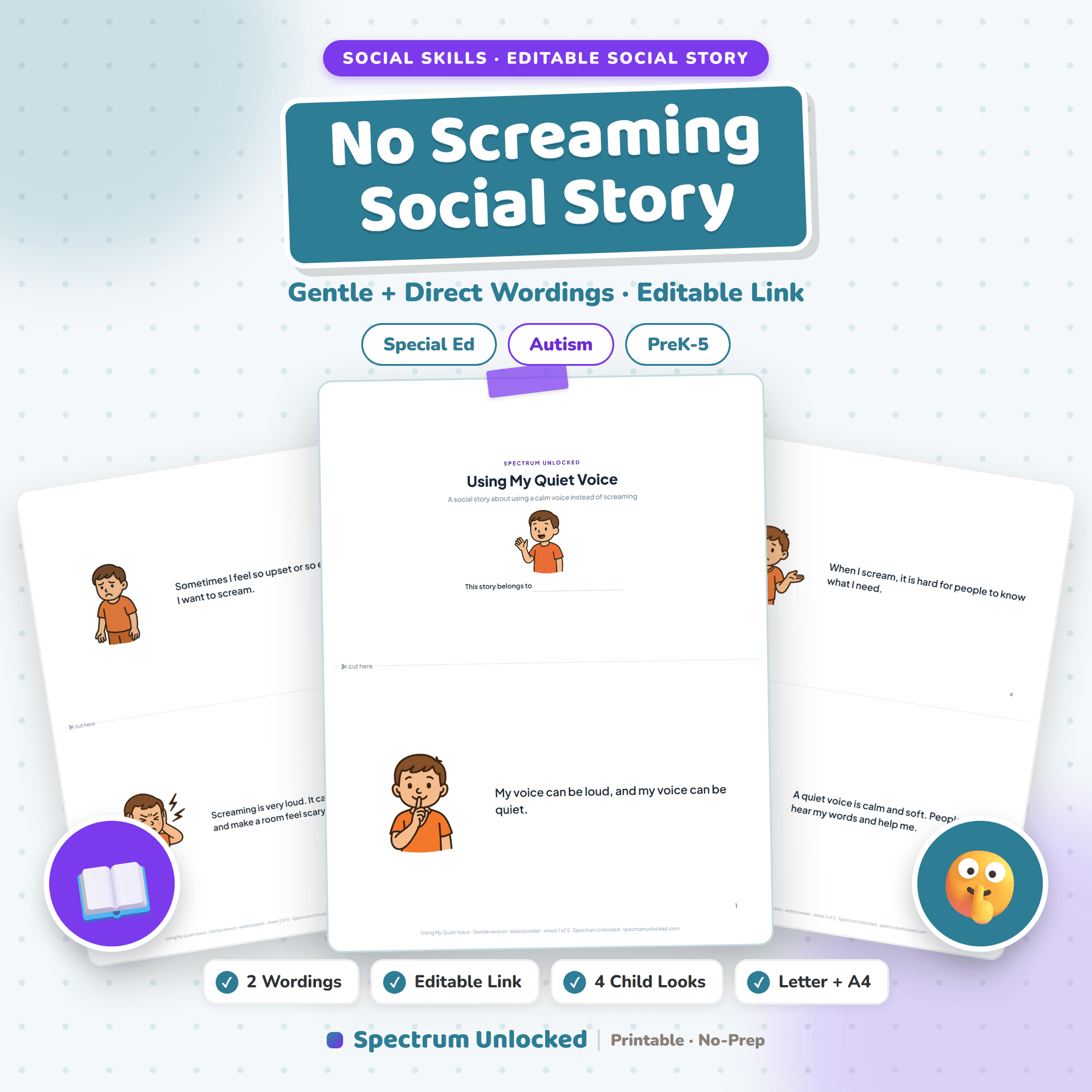
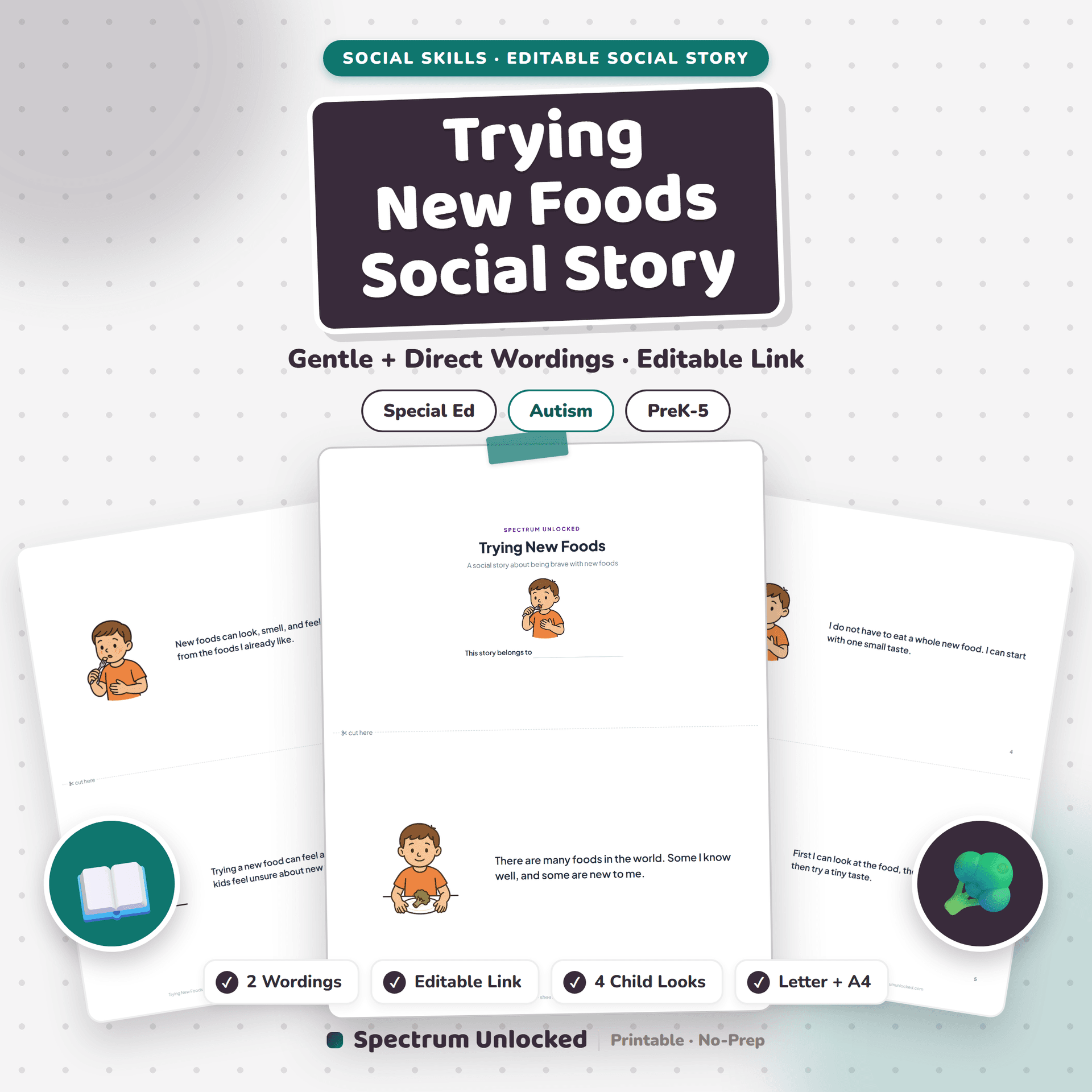
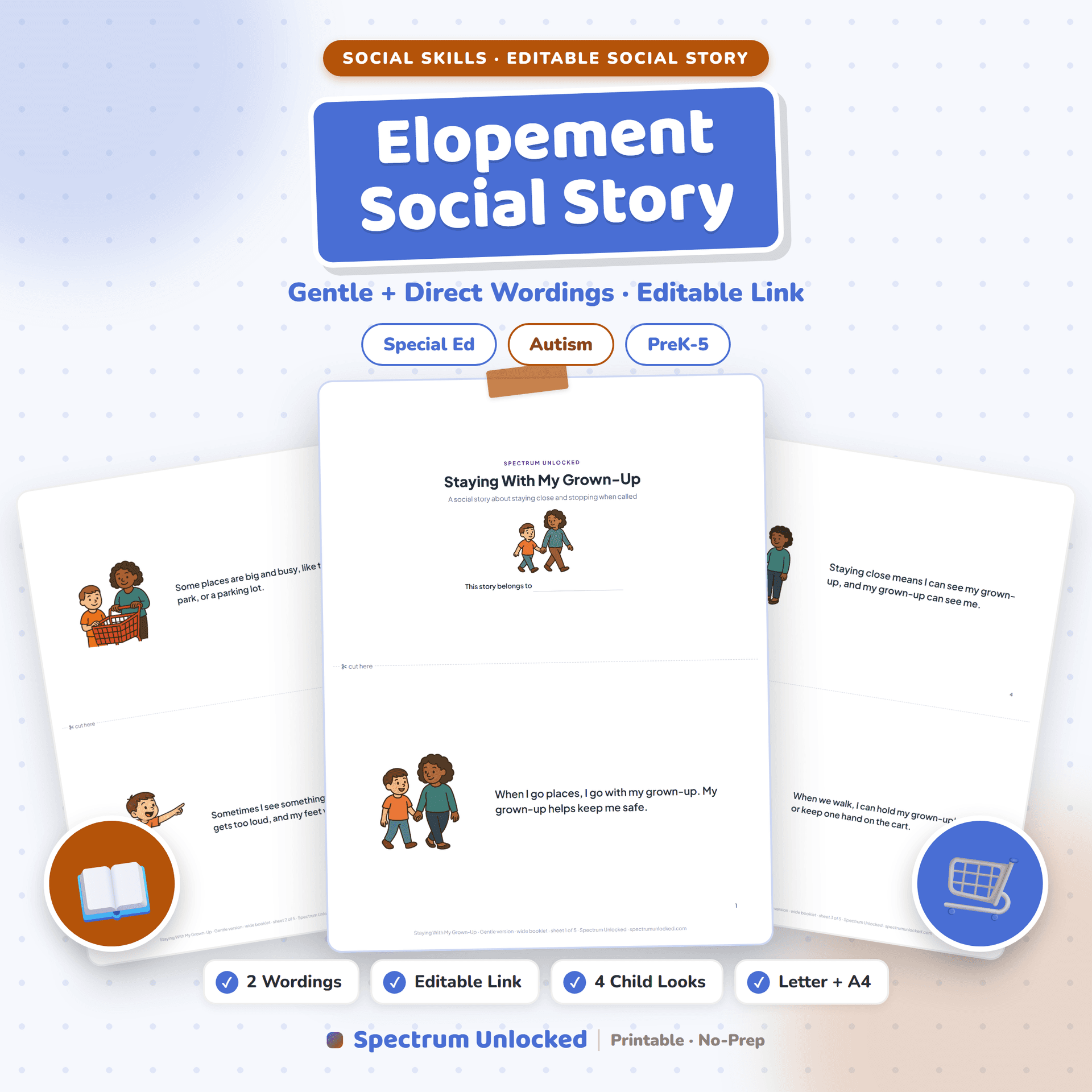
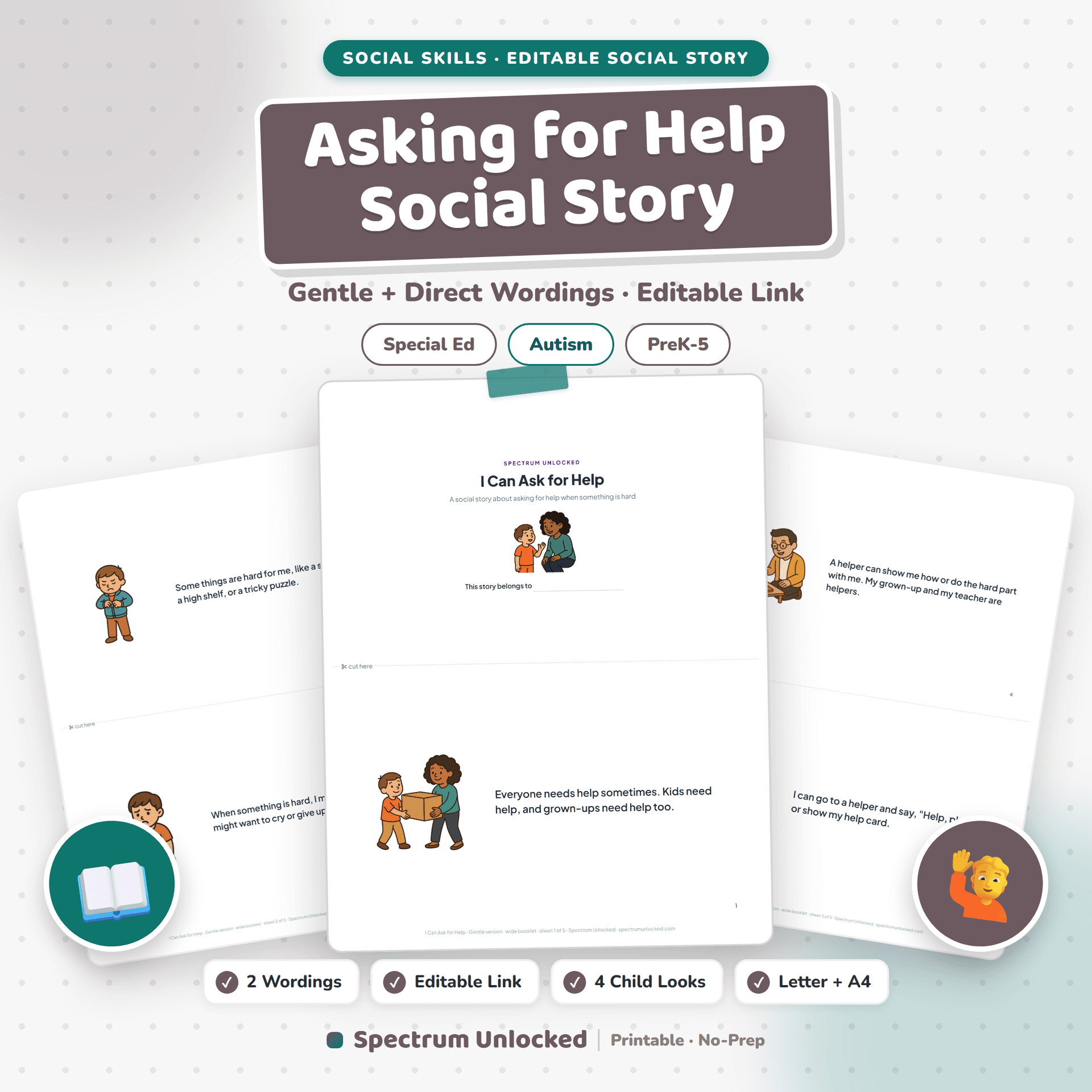
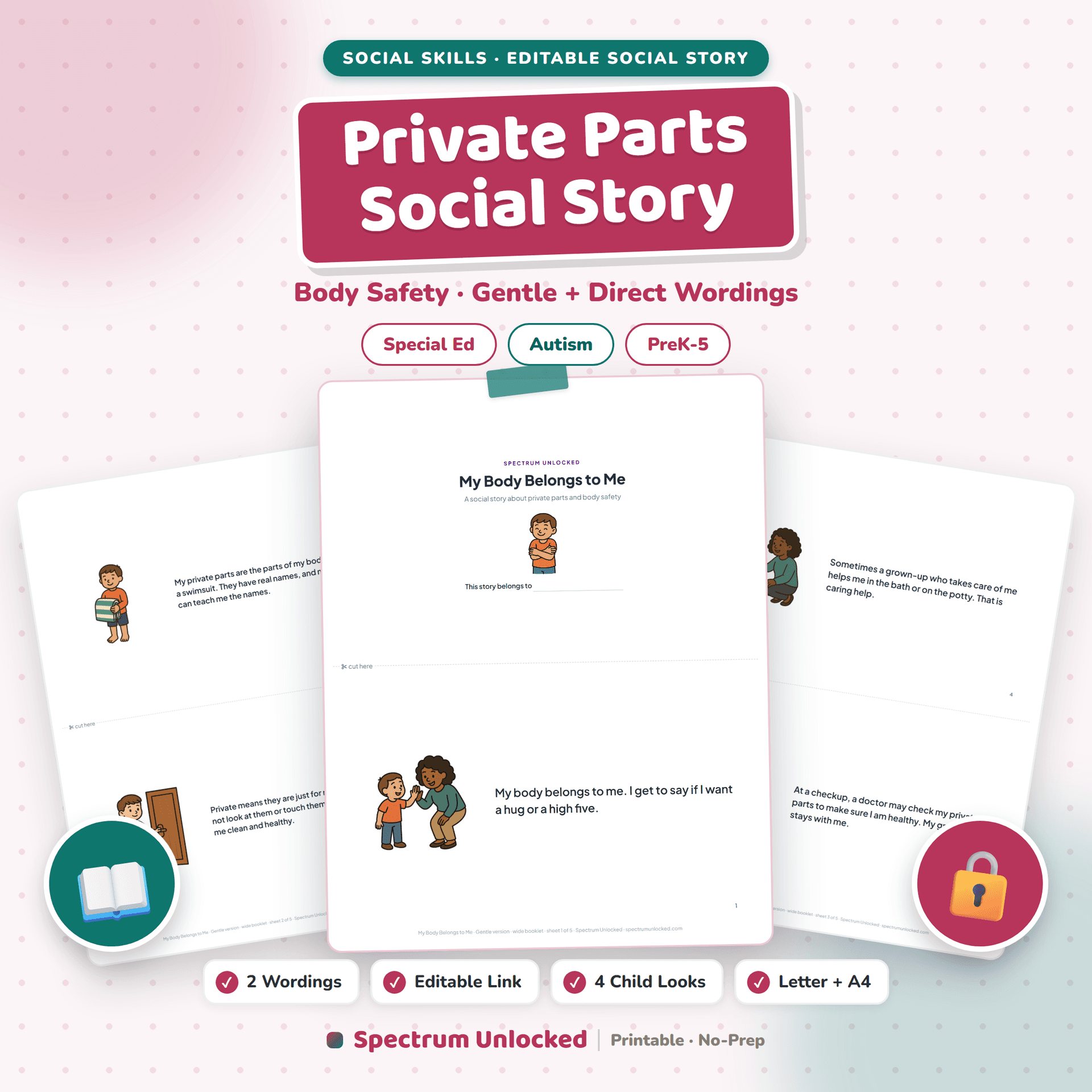
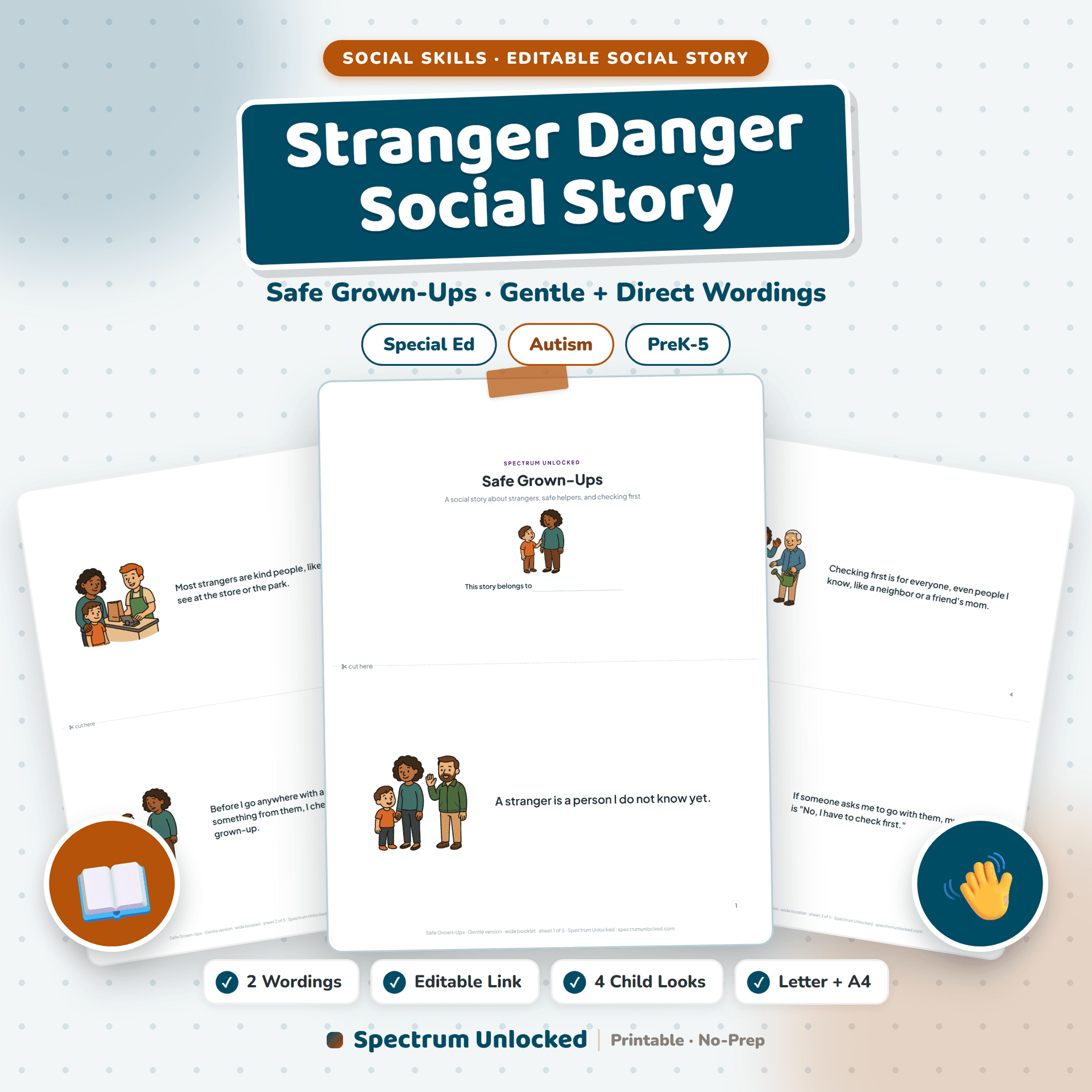
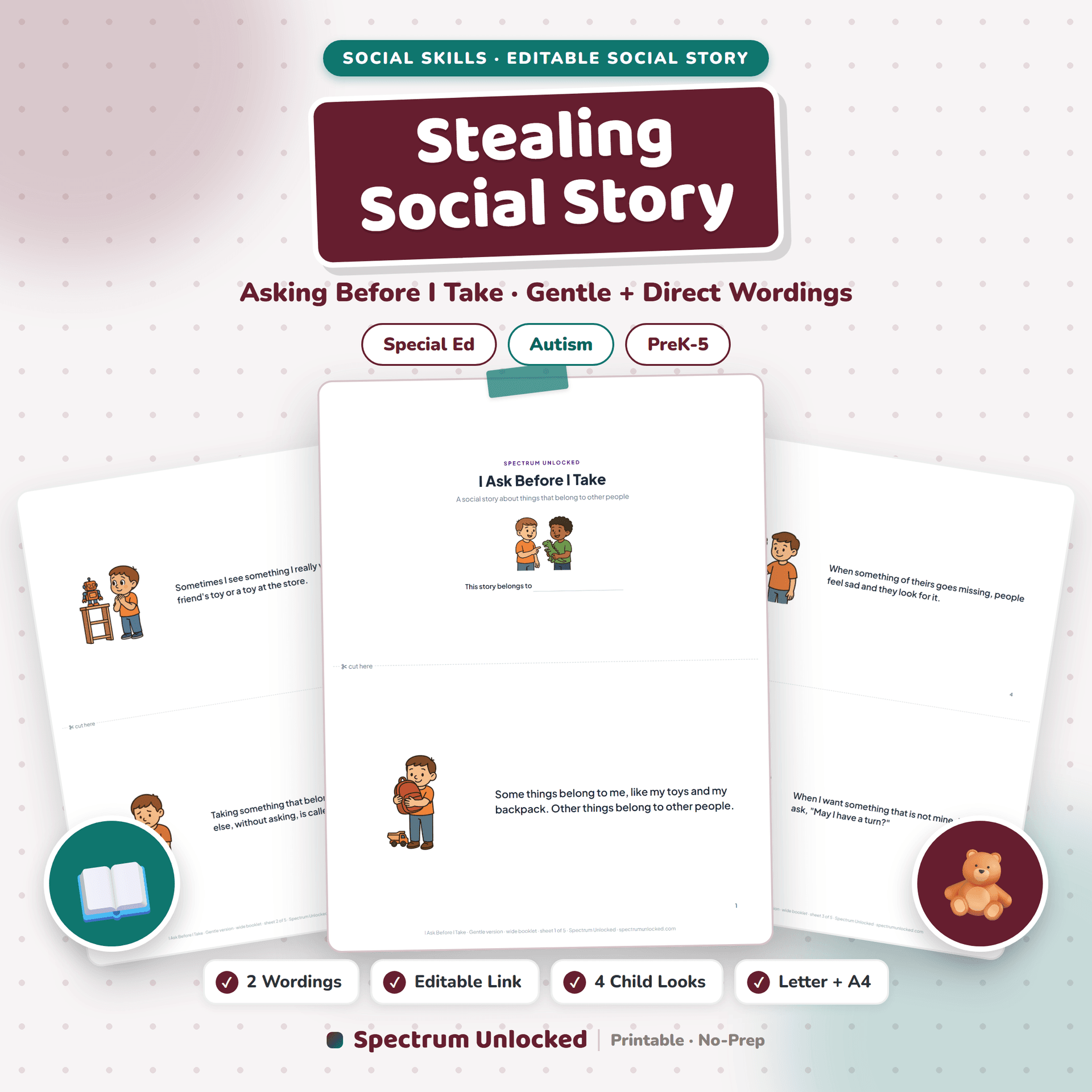
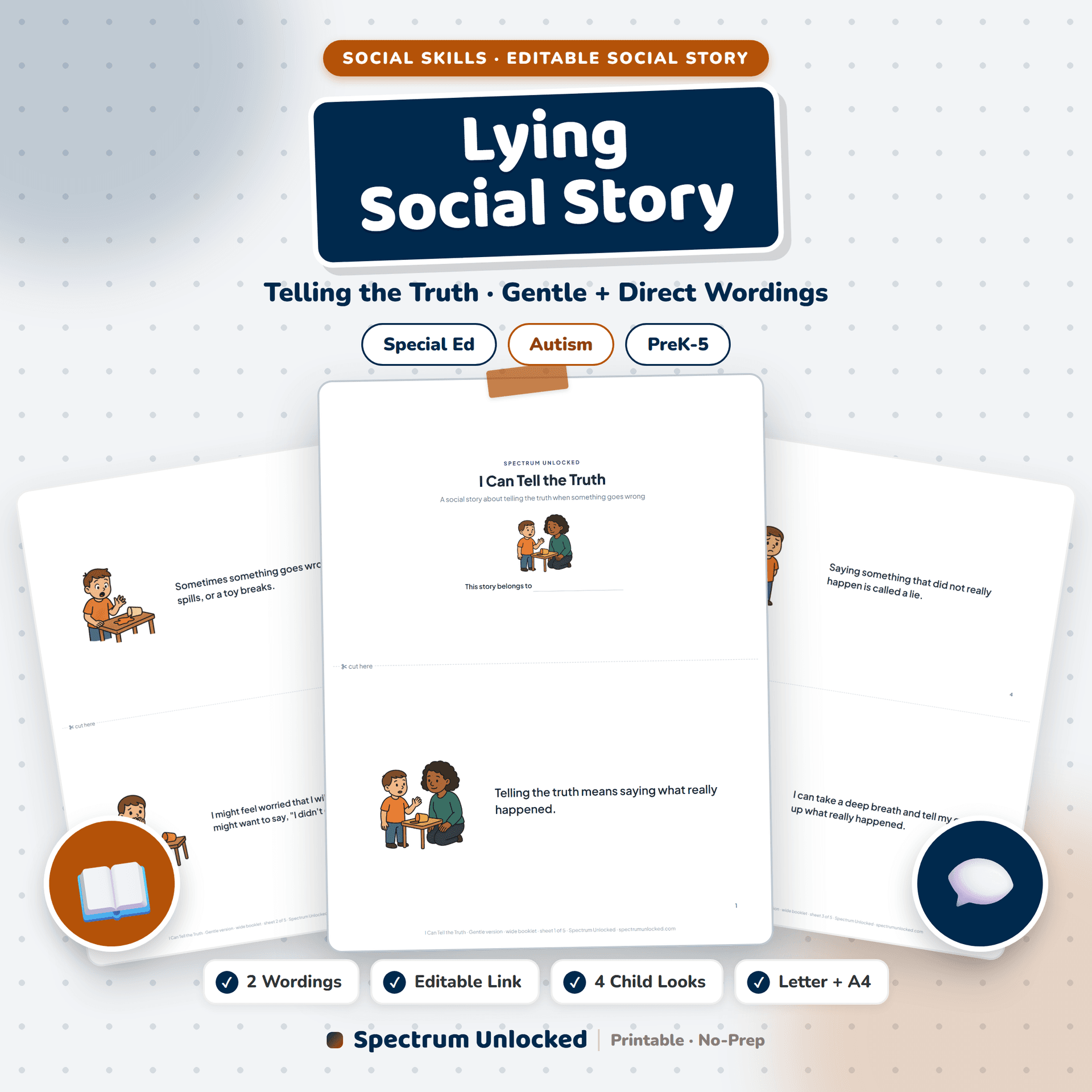
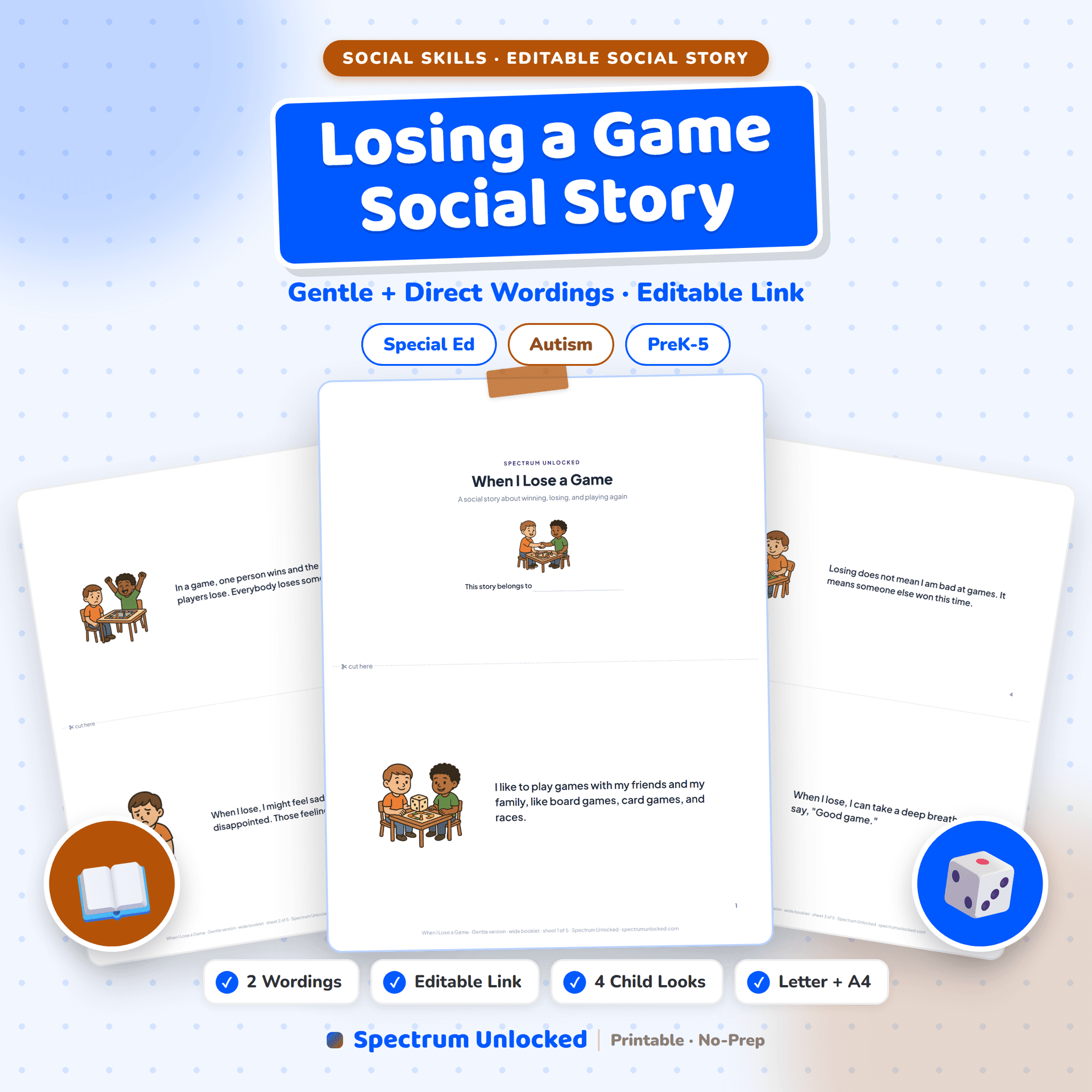
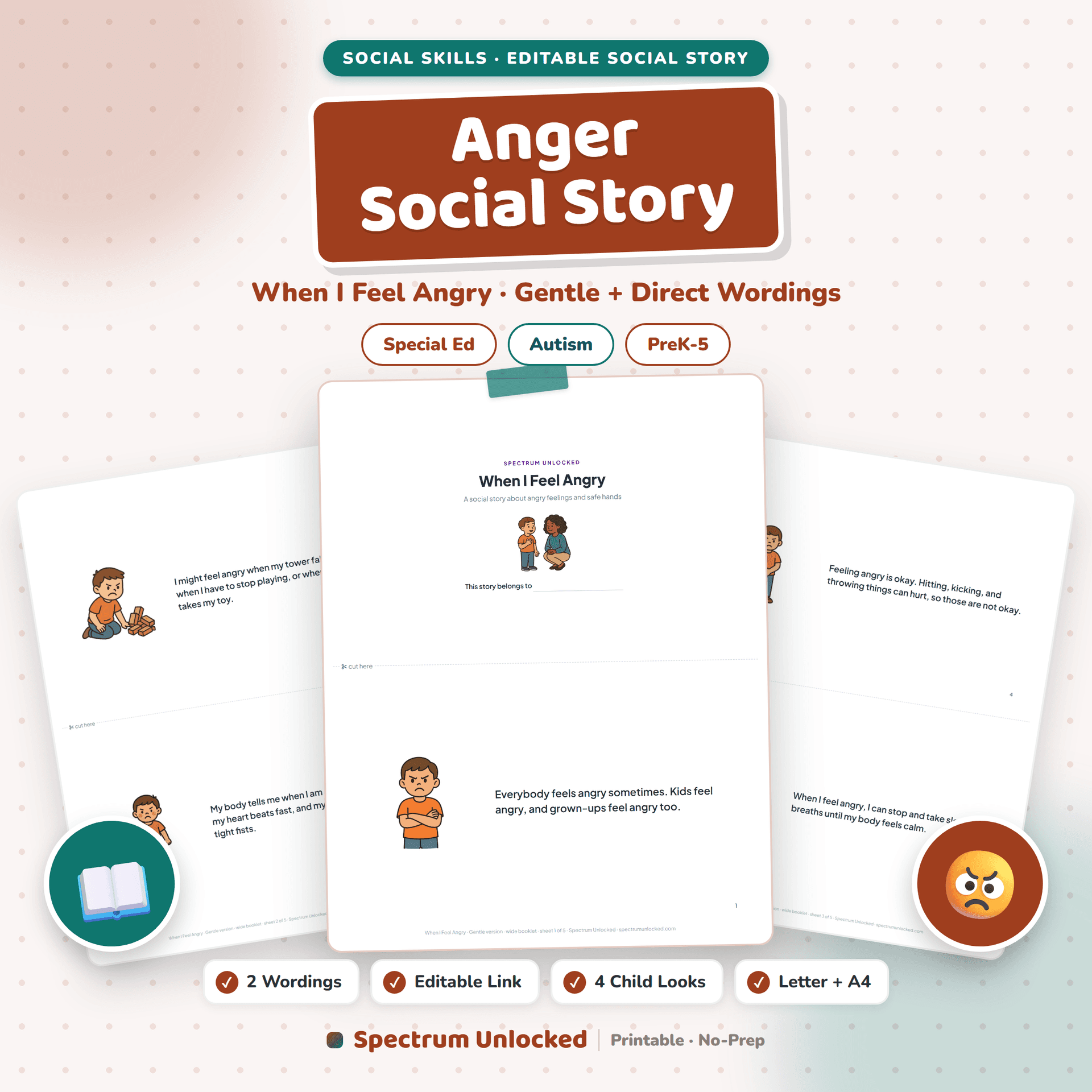
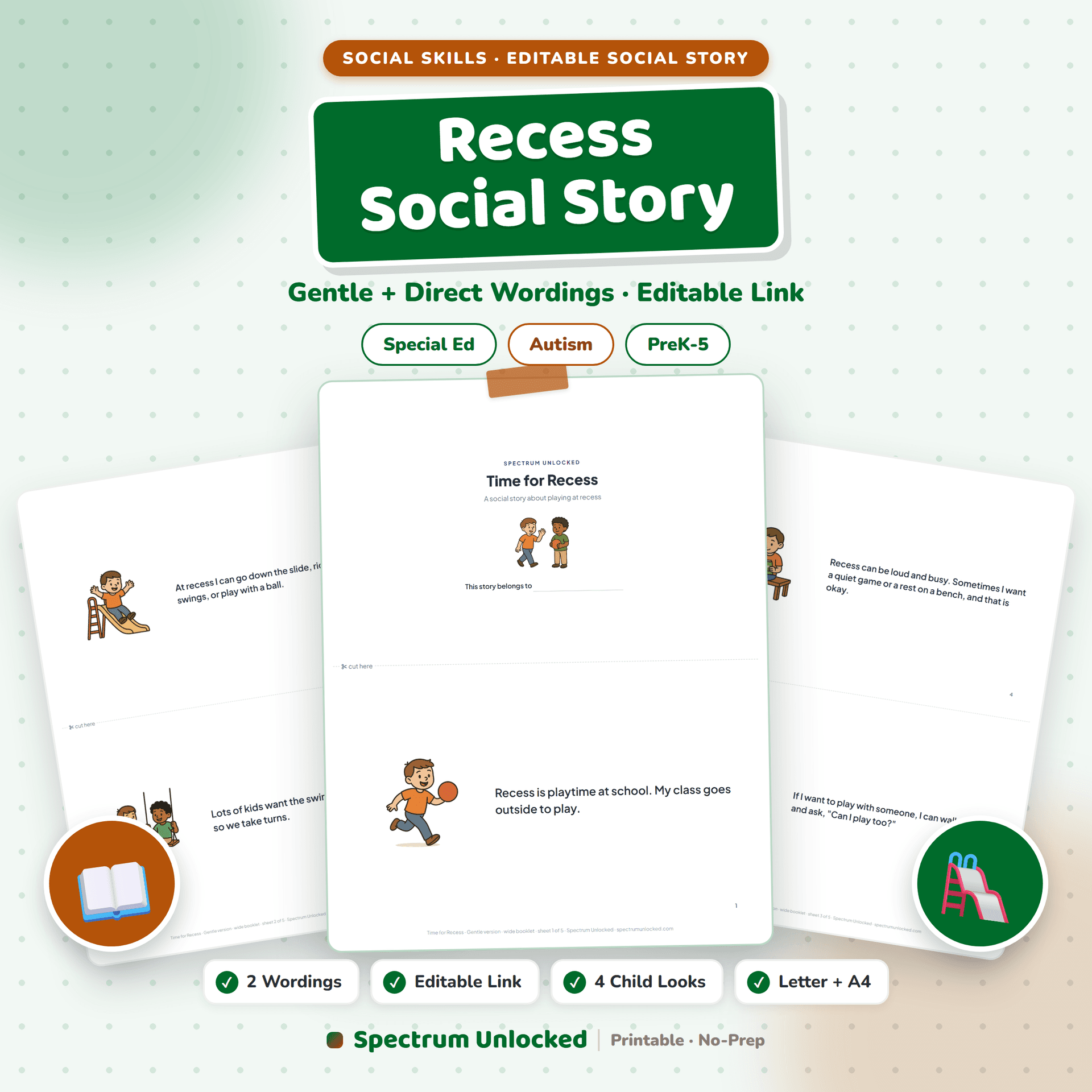
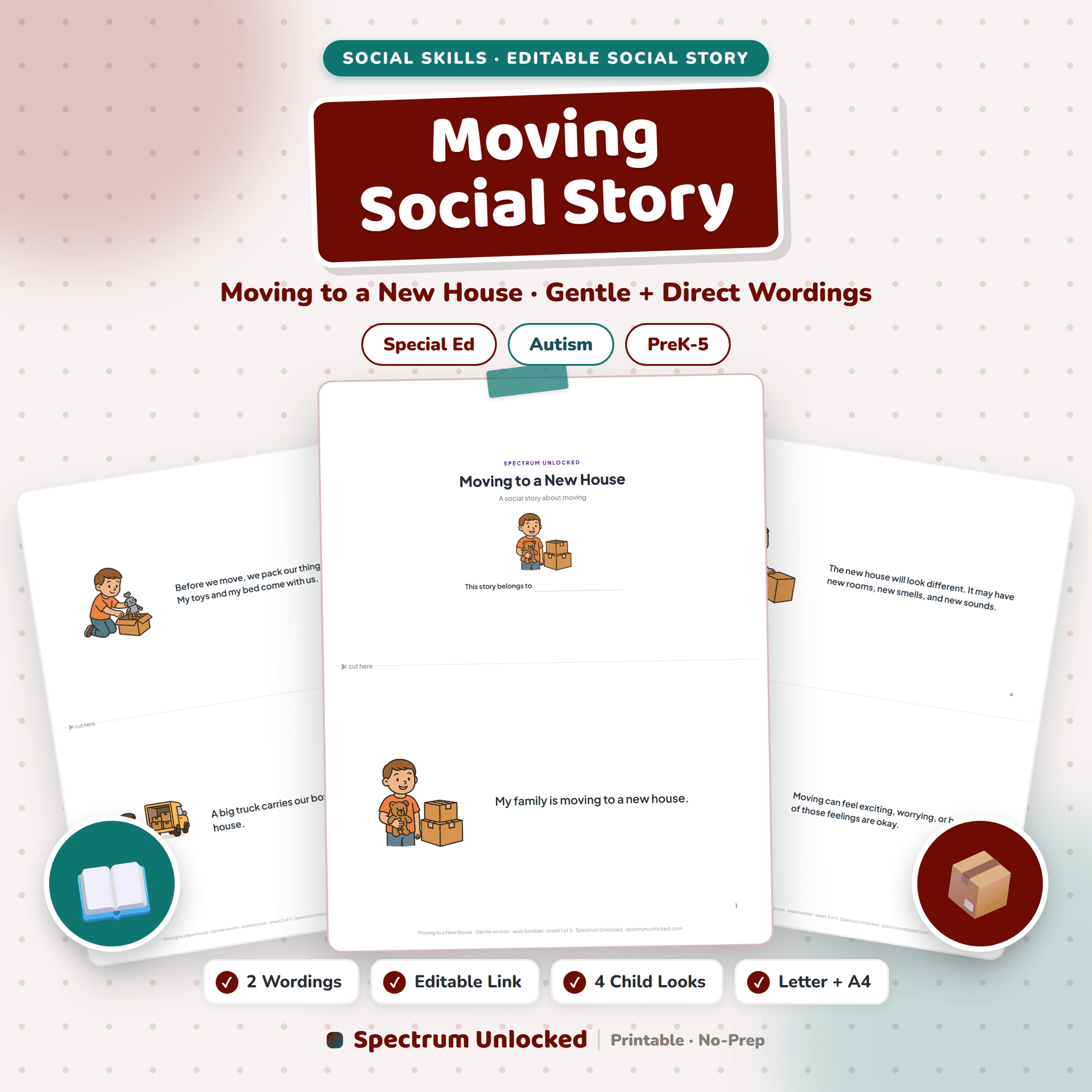
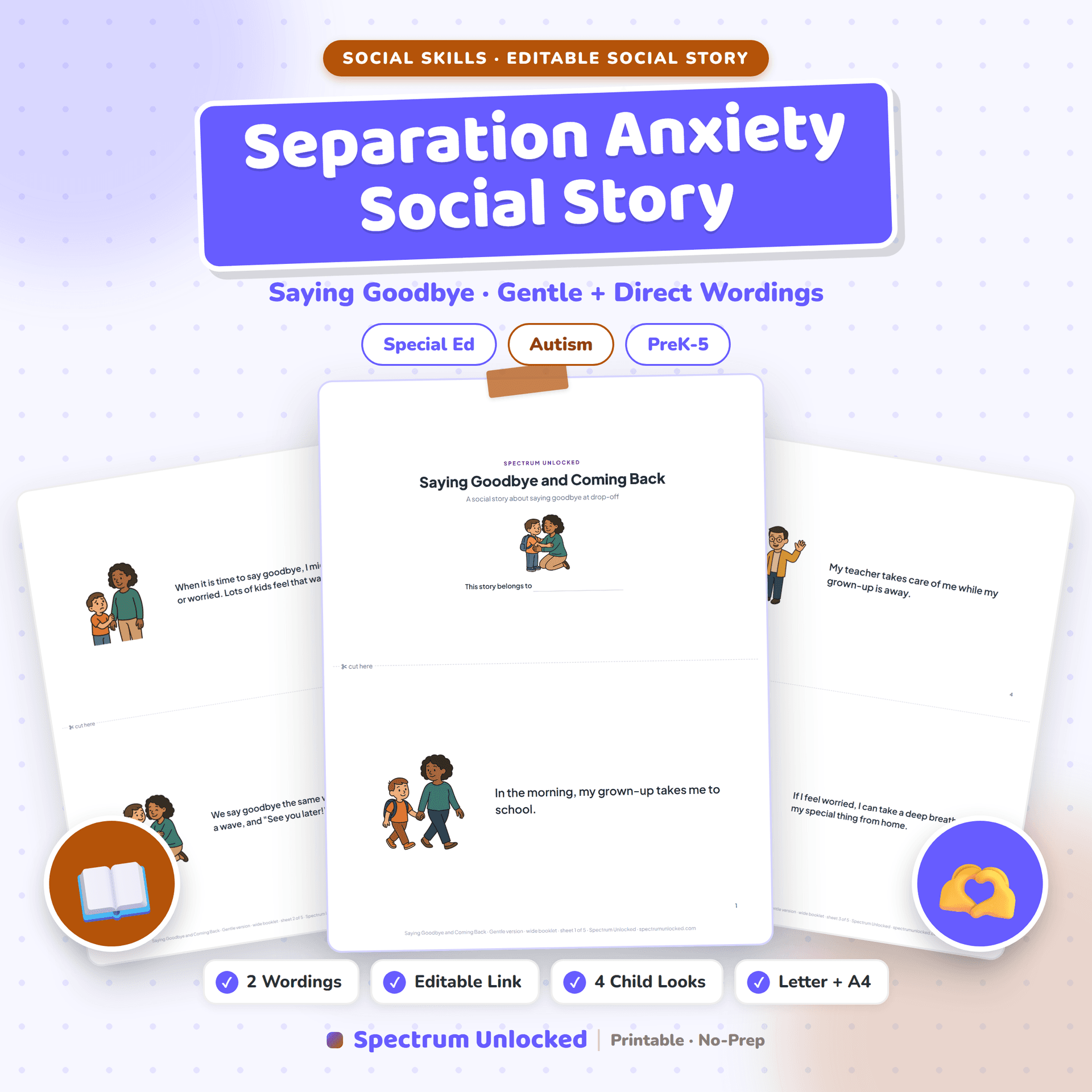
Nothing left to prepare. 25 finished sets, from $3, and every page prints exactly as it is.
When to use this story
Use this story when your child bites during big feelings, wild excitement, or moments that call for oral input. Read it together when everyone is calm, and again before high-risk settings like playdates, daycare drop-off, or busy family gatherings where biting has happened before.
The story starts from the urge itself: sometimes a mouth wants to bite when feelings get big. That framing keeps shame low while the pages explain the real consequences, a bite hurts, can leave a mark, and can make friends afraid to play close.
The replacement pages matter most. Chewing a chewy necklace or taking a bite of a crunchy snack redirects the same oral urge somewhere safe. If your child bites for sensory input, having the chewable actually within reach counts as much as the story does.
The direct No Biting version adds a concrete outcome, playtime might stop and a friend may need to move away, and scripts asking a grown-up for help. Use it if your child responds better to short, rule-first language.
Frequently asked questions
- How do I use a social story for biting?
- Read it at calm times, once a day or so, and shortly before situations where biting has happened. Keep a chewy necklace or crunchy snack handy so the alternative the story teaches is actually available in the moment. Praise every time you see your child chew the safe thing instead.
- Why does my child bite?
- Children bite for different reasons: big feelings, overflowing excitement, teething discomfort, or a need for oral sensory input. This story covers the feelings side and points to safe chewing alternatives. If biting happens often, noting when and where it happens usually reveals the pattern.
- What is the difference between the two versions?
- The gentle version describes the urge, explains why biting hurts, and rehearses alternatives before anything else. The direct version is blunter: No Biting comes first, and the pages that follow spell out what a bite costs, including play stopping until everyone is safe. Pick the register your child responds to.
- Is the biting story free and printable?
- Yes. You will find the complete text of each version right on this page, and turning either one into a printable booklet through the maker costs nothing. Add your child's name or photos first if you want a personalized copy.
- Can I change the story's words or pictures?
- Yes. The maker lets you edit any sentence, swap symbols or photos, add or delete pages, and switch between first person and your child's name. If your child uses a specific chewy, name it in the story.
- Who developed social stories?
- Social Stories were developed by Carol Gray in the early 1990s. The gentle version of this template follows her published guidance, including describing more than coaching, but Spectrum Unlocked is not affiliated with or endorsed by Carol Gray.
Related stories
Hitting Social Story
A social story for kids who hit when big feelings take over. Choose the gentle version or the firmer We Do Not Hit version, then print either one free.
Spitting Social Story
Spit belongs in the sink. This free printable social story explains why in plain, kid-friendly words and shows what to do with the urge to spit instead.
Related guides
Social Stories were developed by Carol Gray. Spectrum Unlocked is not affiliated with or endorsed by Carol Gray; the gentle version of this template follows her published describe-more-than-coach guidance.