Behavior & Big Feelings
Spitting Social Story
A matter-of-fact social story about where spit belongs. The gentle version explains that spit is normal and useful, it helps with chewing and swallowing, and simply has places it goes: the mouth, the sink, or a tissue. A firmer No Spitting version states the rule and the cleanup that follows.
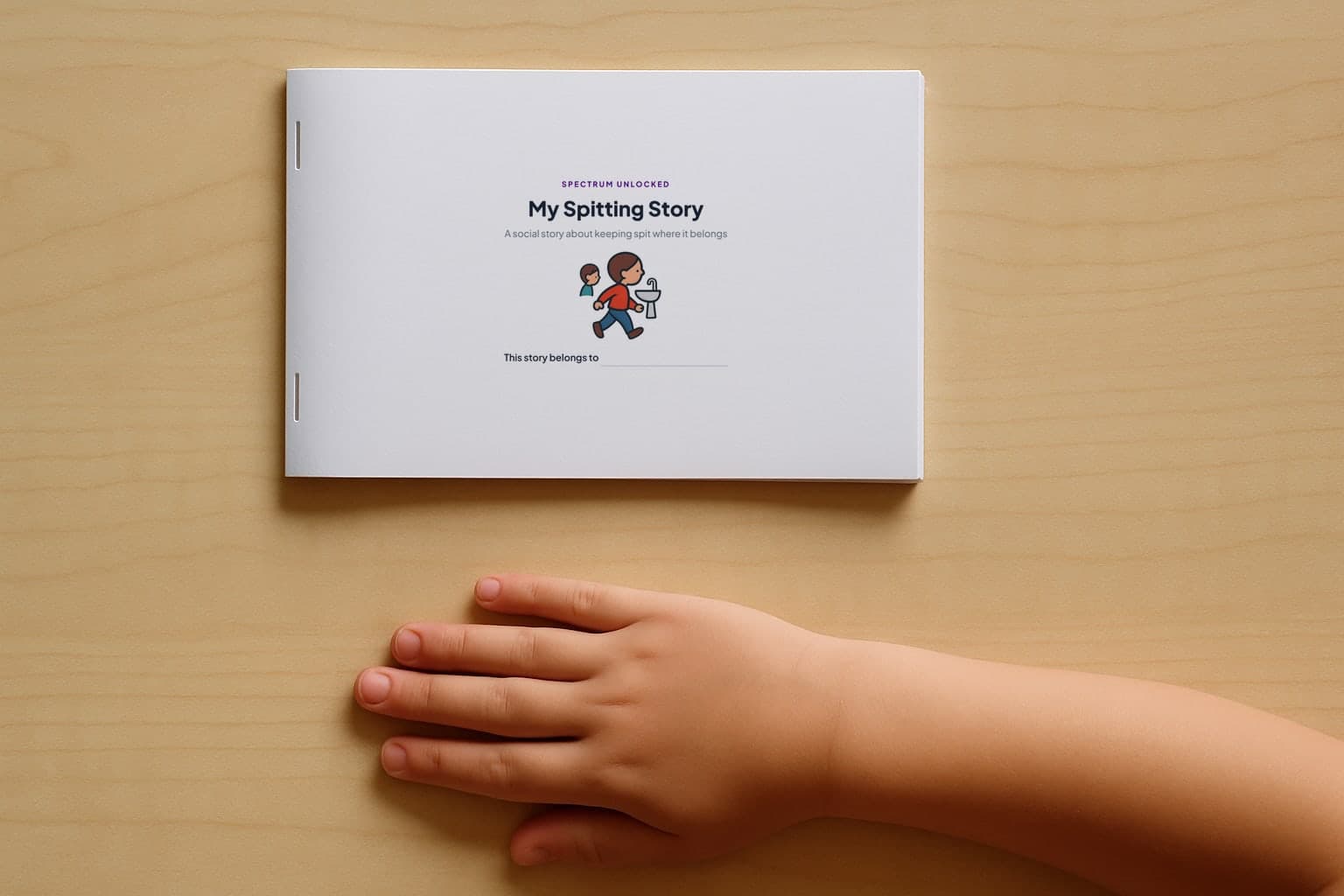
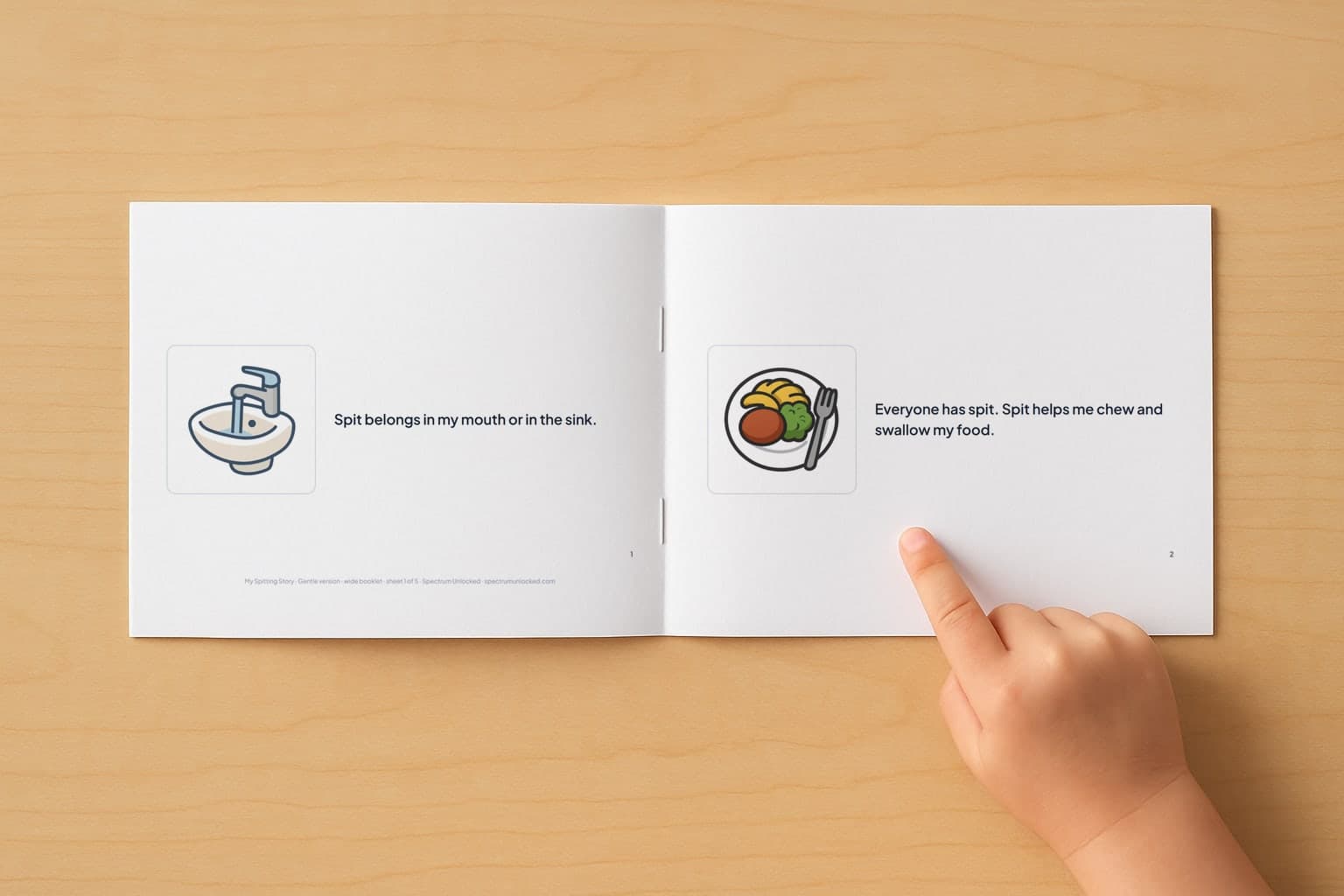
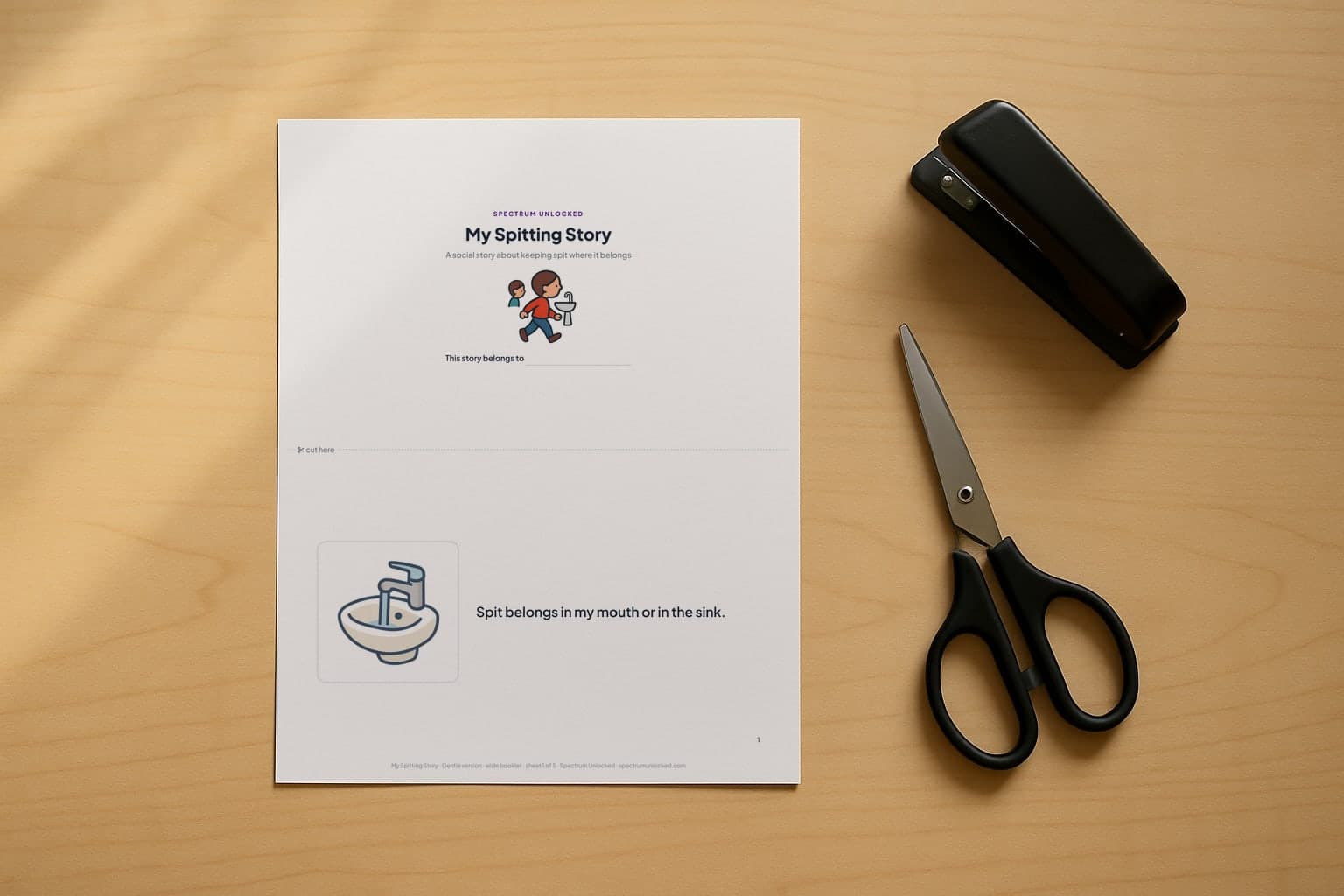
Download the printable PDF
Print the story as-is, no email required. Match the pictures to your child and pick your page layout, then download.
The story
Read the full story below. In the maker you can add your child's name, swap pictures, and print it as a booklet.
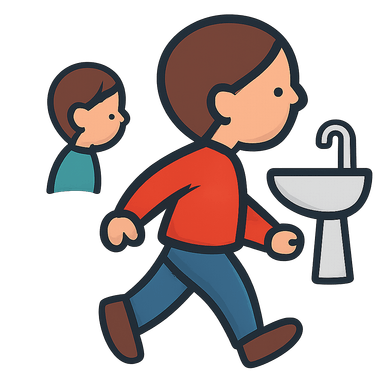
My Spitting Story
A social story about keeping spit where it belongs
- 1
 Spit belongs in my mouth or in the sink.Describes
 - 2
 Everyone has spit. Spit helps me chew and swallow my food.Describes
 - 3
 Sometimes I feel like spitting when I am upset or being silly.Describes
 - 4
 Spitting on people or on the floor can spread germs.Describes
 - 5
 When spit lands on someone, they may feel sad or upset.Describes
 - 6
 If I need to spit, I can walk to the sink or ask for a tissue.Coaches
 - 7
 When I feel upset, I can take a deep breath and use my words instead of spitting.Coaches
 - 8
 When I keep spit in my mouth, my friends like sitting next to me at snack time.Describes
 - 9Keeping spit where it belongs helps everyone stay healthy.Describes
No Spitting: the direct version
No Spitting
A social story about why we do not spit
- 1Sometimes I want to spit when I am upset or playing.Describes
- 2
 We do not spit on people or things. Spit spreads germs.Coaches
 - 3
 Spitting can make people sick, and it makes a mess.Describes
 - 4
 If I spit, I help clean it up.Describes
 - 5
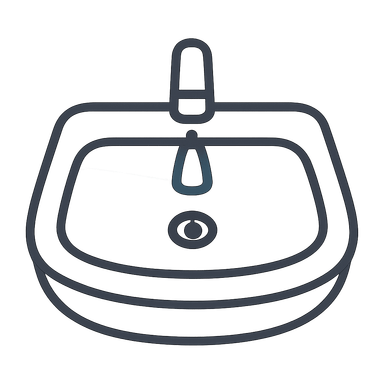 Spit belongs in the sink. I can walk to the sink if I need to spit.Coaches
 - 6
 I can use my words and say, "I am upset."Coaches
The direct version uses firmer wording. Many families start gentle and switch only if the gentle version is not landing.
Single stories, $3 each
When one situation is the whole problem, take just that story. A gentle and a firmer wording, four child looks, booklet pages in US Letter and A4, and a link to edit it free.
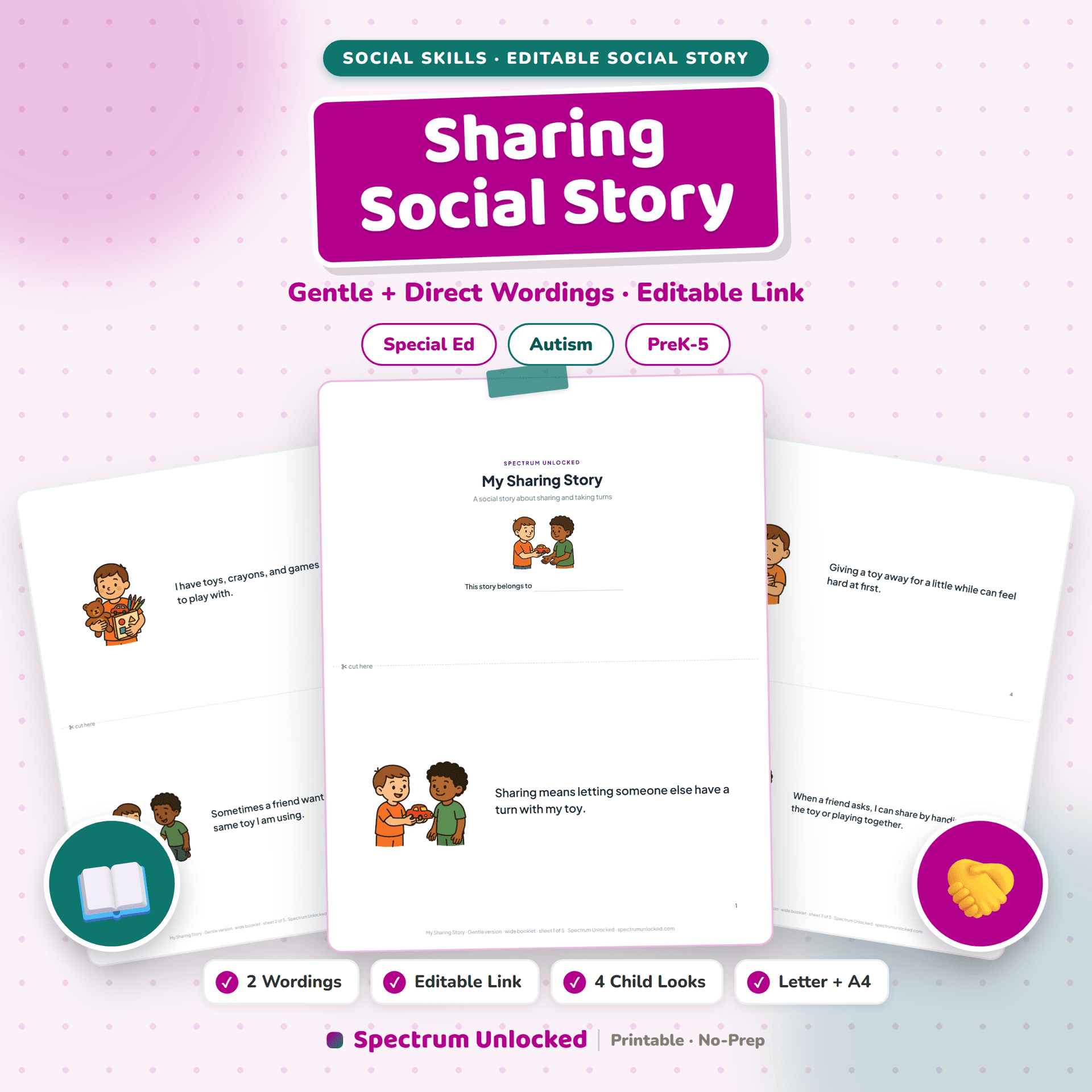
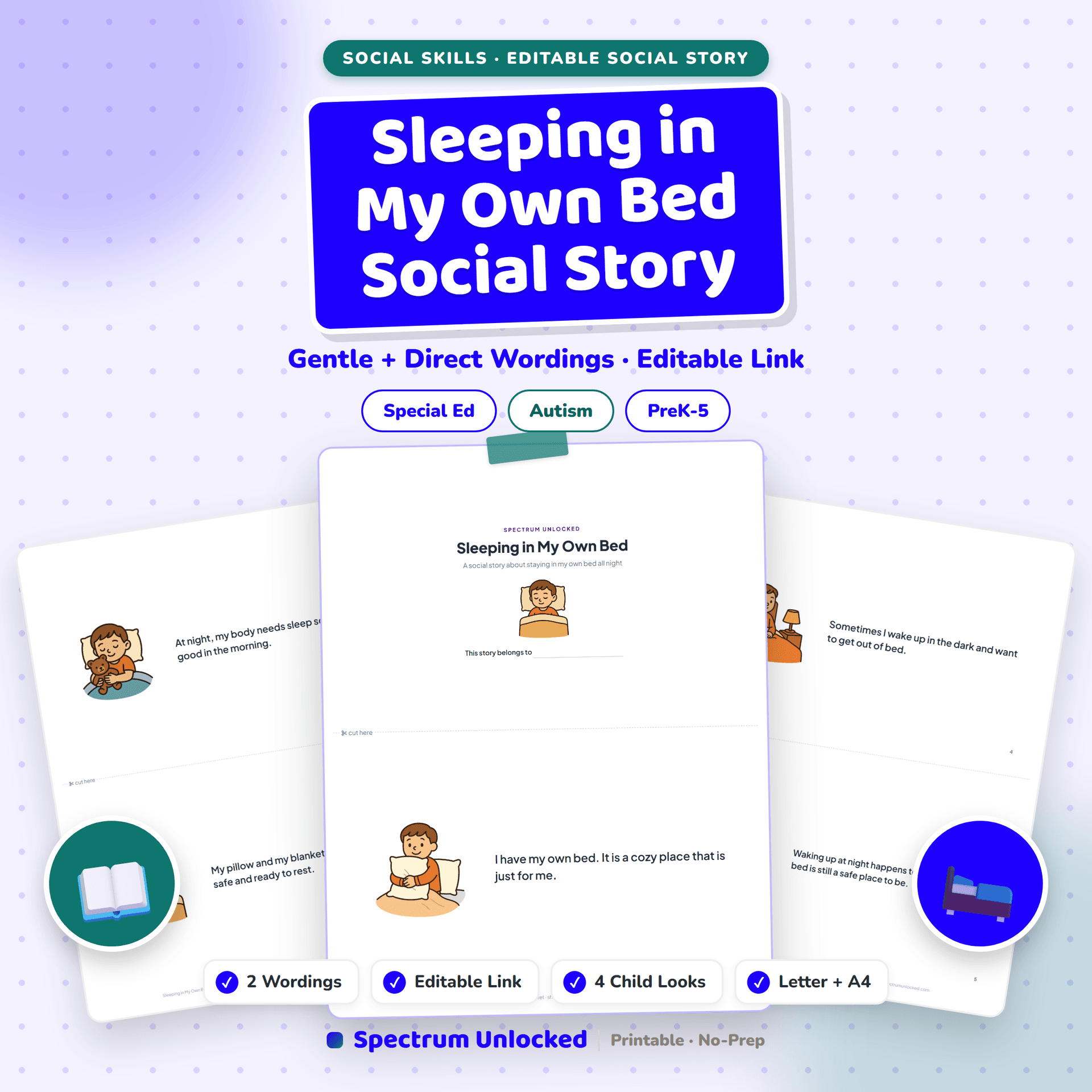
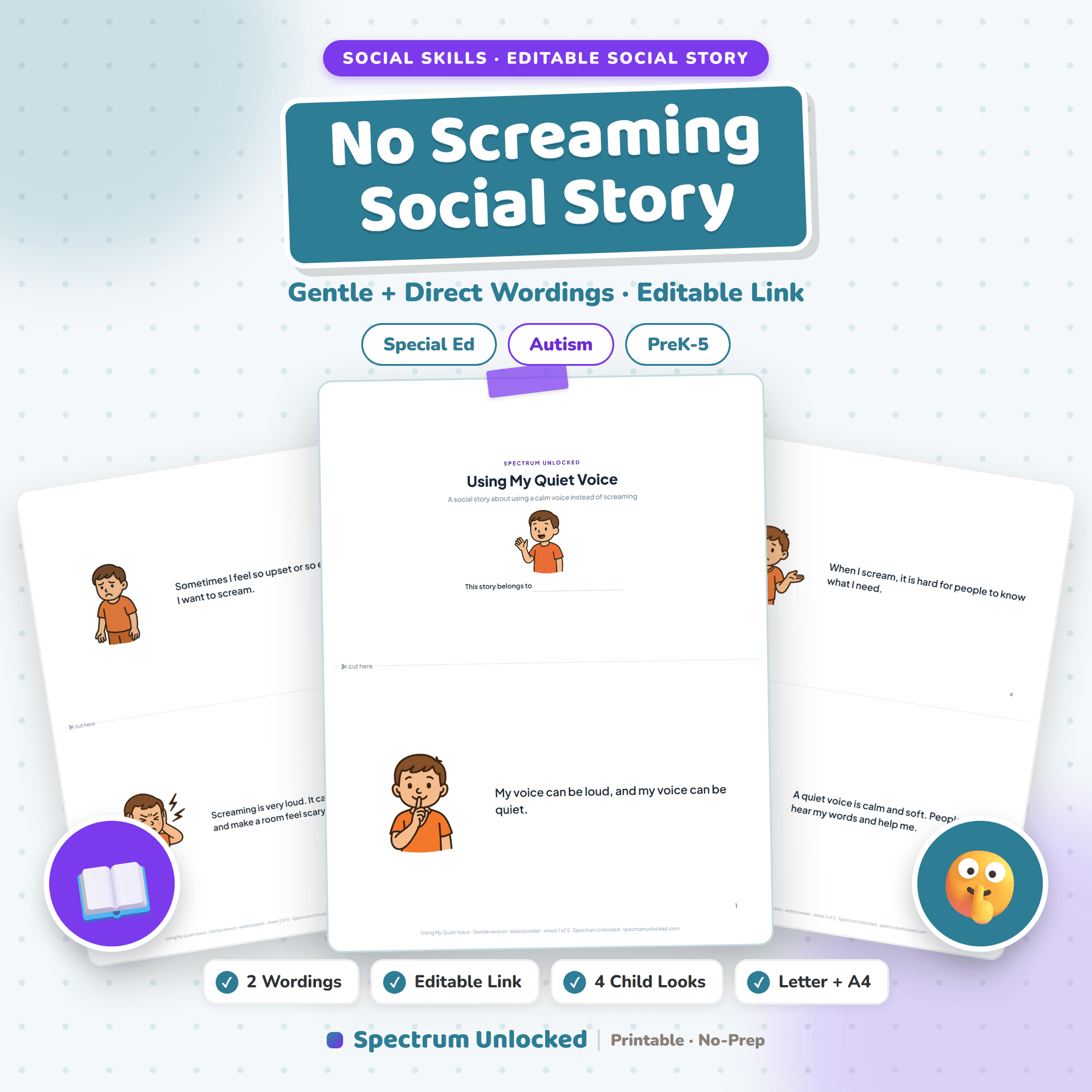
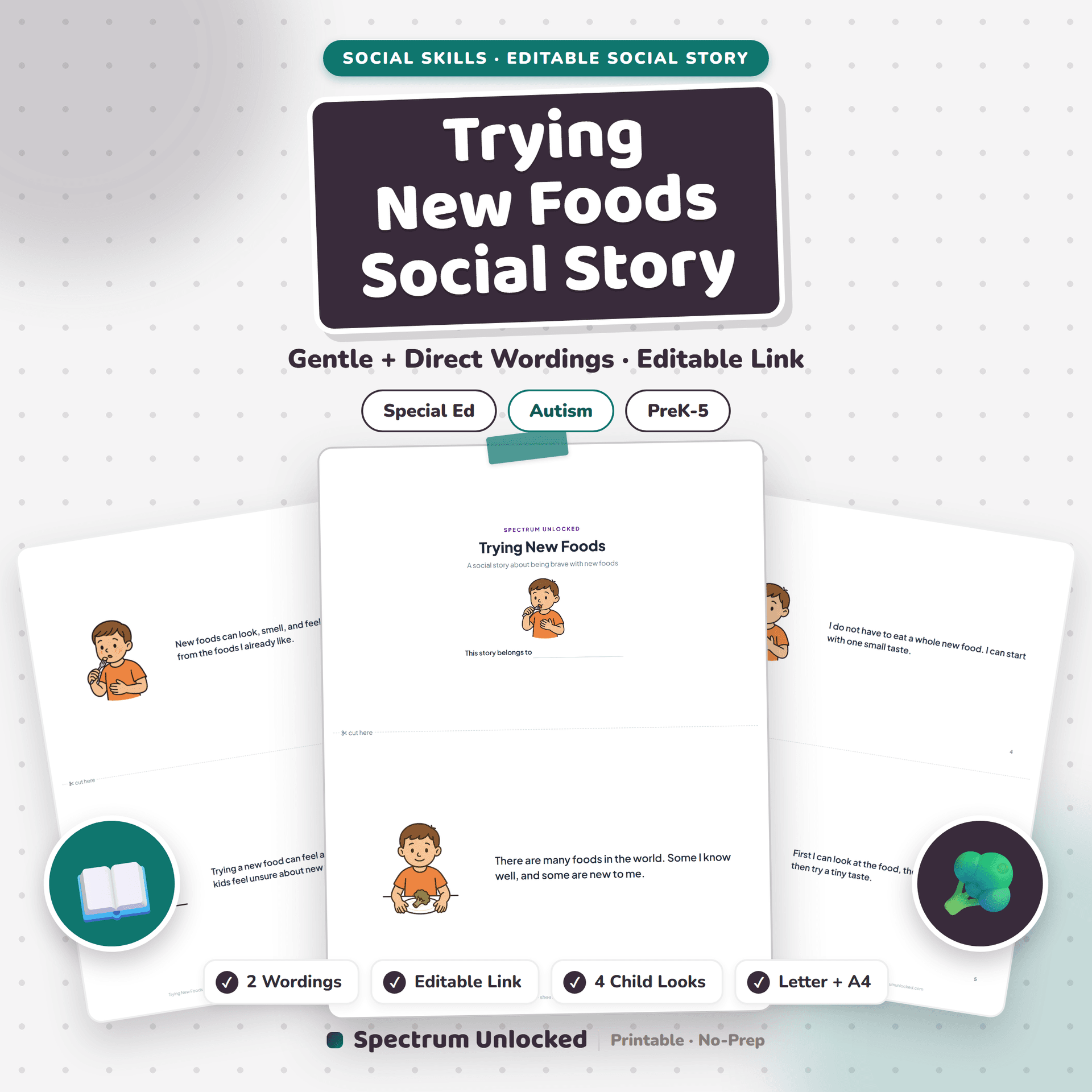
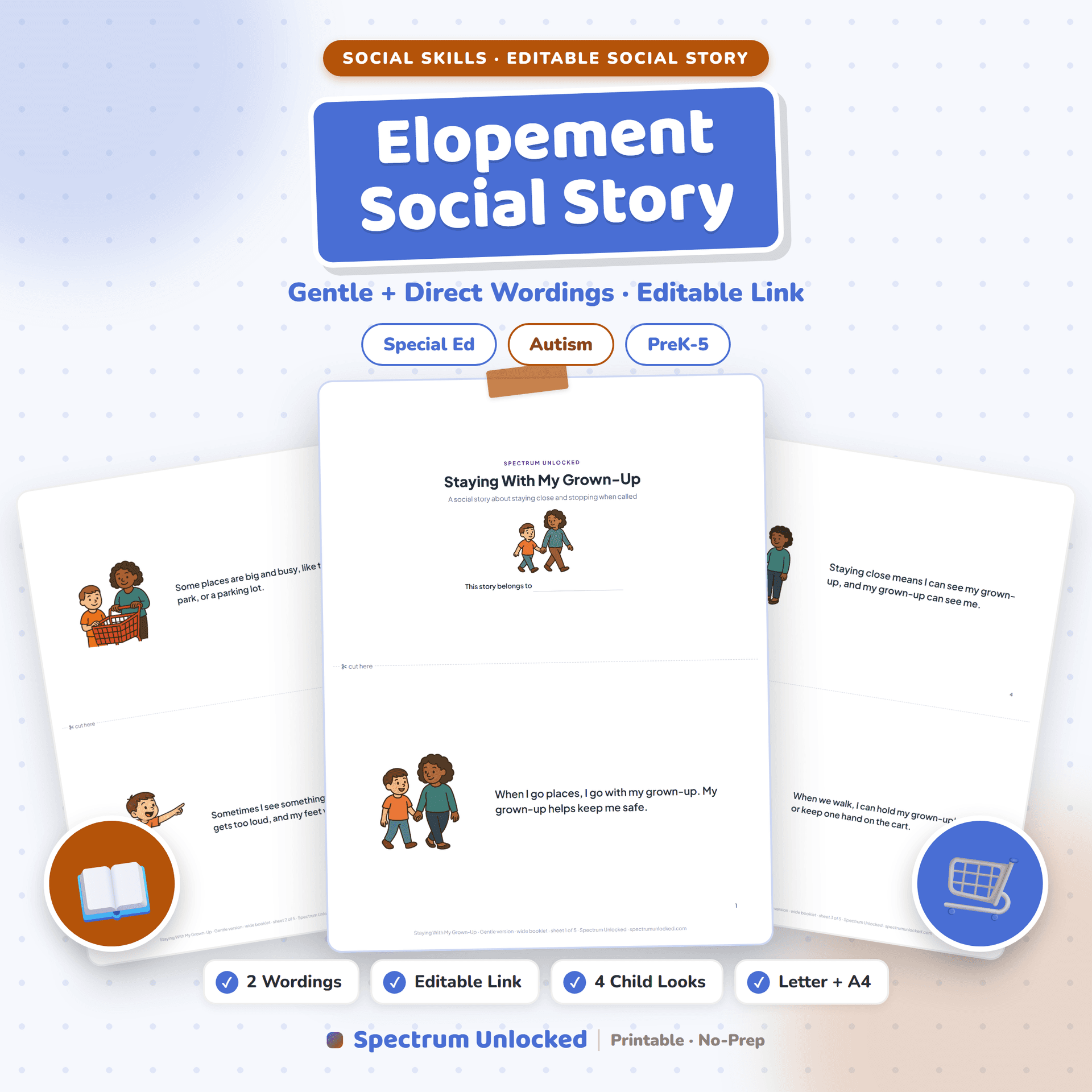
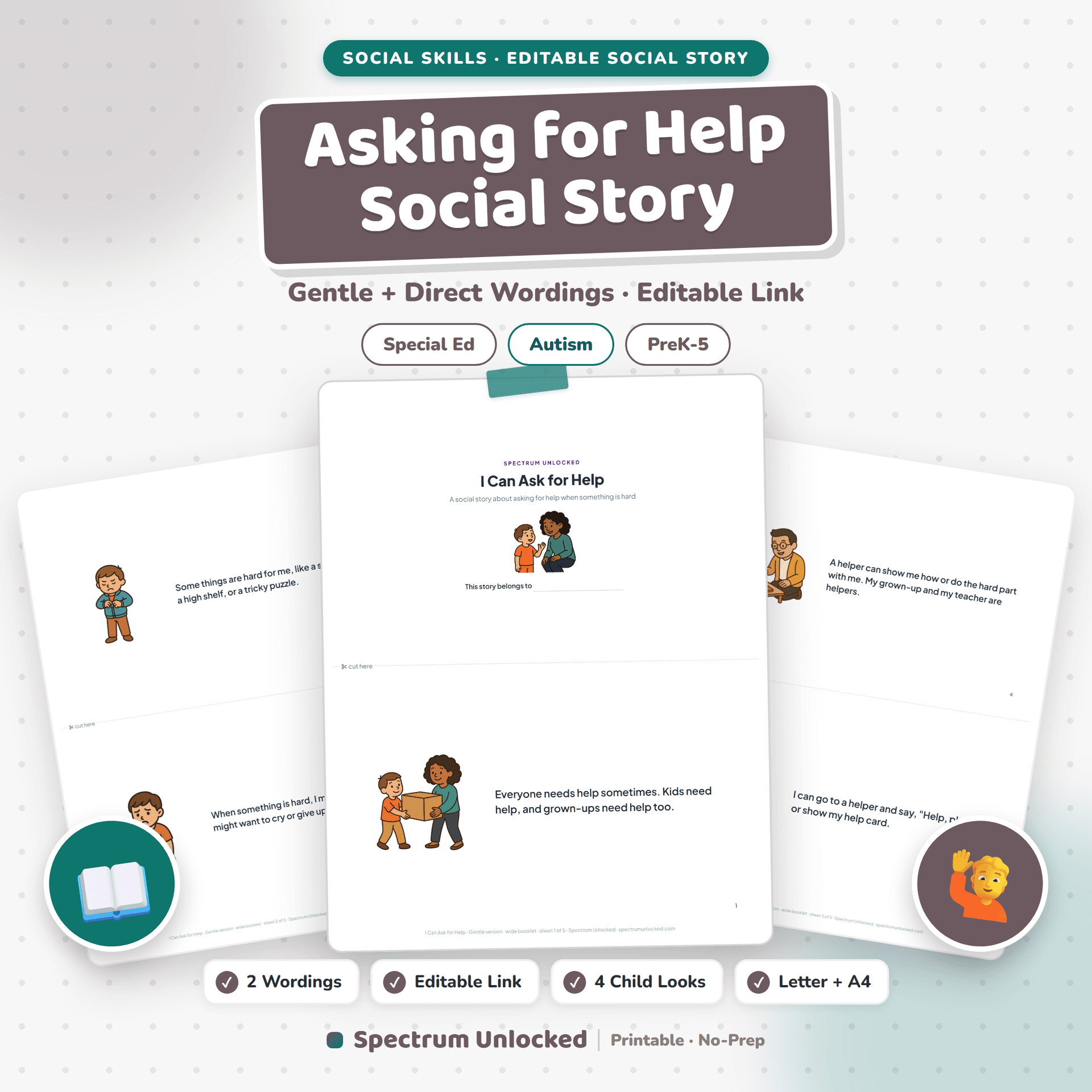
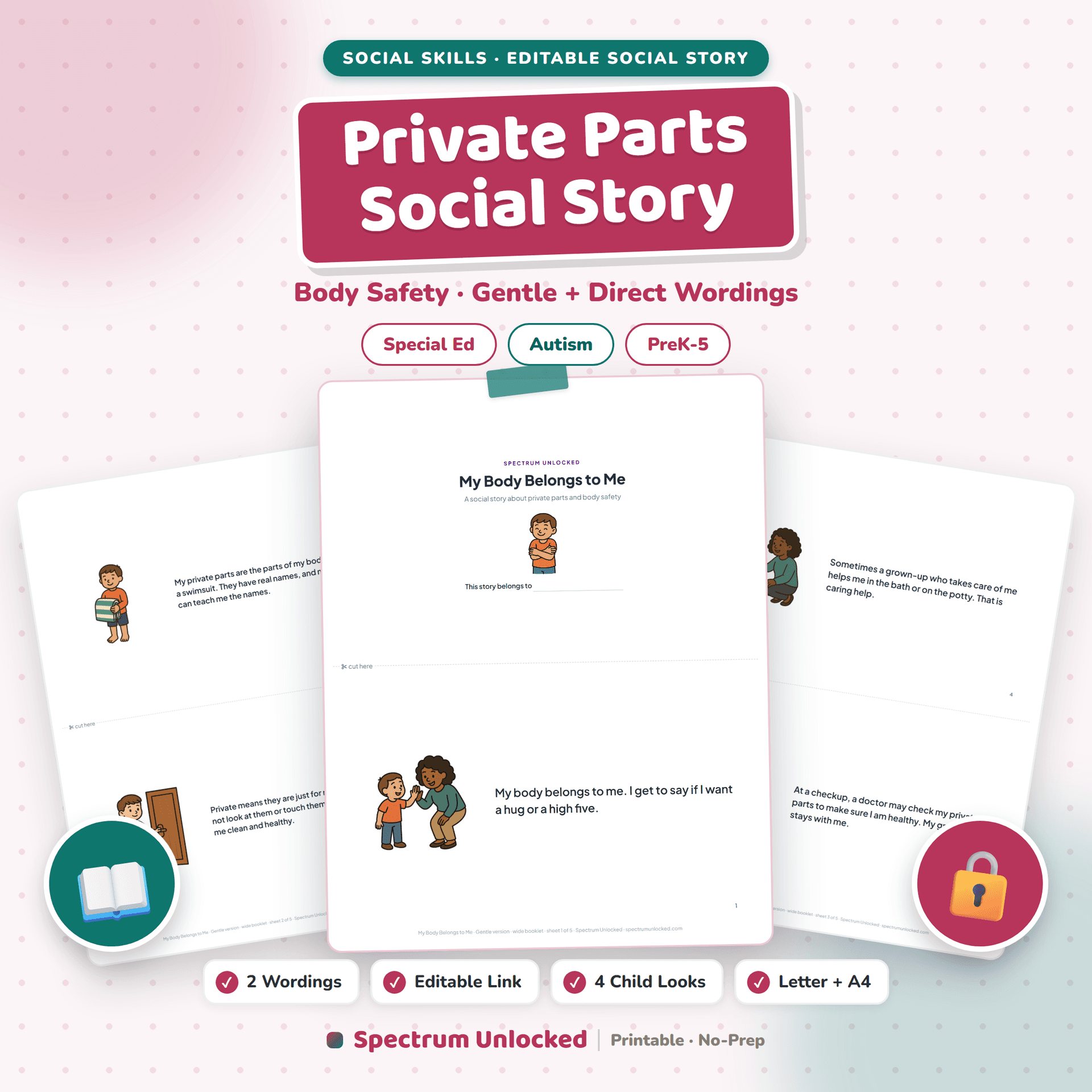
Nothing left to prepare. 25 finished sets, from $3, and every page prints exactly as it is.
When to use this story
Use this story when your child spits at people, on the floor, or during silly moods that tip over the line. Read it in calm moments, and refresh it before settings where spitting causes the most trouble, like the classroom, the lunch table, or time with other kids.
The story deliberately avoids treating spit as gross or shameful. It opens by explaining that everyone has spit and that it does a real job, helping us chew and swallow. From there the germ pages and the feelings page, spit landing on someone can make them sad, carry the why without moralizing.
Crucially, the story gives spit somewhere to go instead of only somewhere not to go. Walking to the sink or asking for a tissue is a genuine replacement behavior, and the upset-feelings page adds a deep breath and words as the alternative when spitting is about frustration rather than silliness.
The direct version compresses this into rule-first language, We do not spit on people or things, and adds that whoever spits helps clean up. Reserve it for children who do best with short, explicit expectations.
Frequently asked questions
- How do I use a social story about spitting?
- Read it when your child is calm, not right after a spitting incident, and reread it before the settings where spitting happens most. Then make the alternatives easy: point out where the sink is, keep tissues reachable, and praise the walk to the sink when you see it.
- My child spits when being silly, not upset. Does the story cover that?
- Yes. The story names both moods directly: sometimes I feel like spitting when I am upset or being silly. The sink and tissue pages apply either way, and the words page gives an option for the upset case specifically.
- Why does the story talk about germs?
- Because germs are the concrete, checkable reason spitting matters. Saying spit can spread germs and make people sick gives a literal thinker a real mechanism, which tends to work better than an unexplained rule about being polite.
- Is the spitting story printable for free?
- It is. Read either version in full right here, then let the maker turn it into a printable booklet at no cost, adding your child's name and photos before you download if you like.
- Can I rewrite parts of the story?
- Yes. Every sentence, picture, and page is editable in the maker, and you can flip the whole story from I to your child's name. If spitting mostly happens in one spot, like the bus line, add a page that names it.
- Who developed social stories?
- Social Stories were developed by Carol Gray in the early 1990s. The gentle version of this template follows her published guidance, including describing more than coaching, but Spectrum Unlocked is not affiliated with or endorsed by Carol Gray.
Related stories
Biting Social Story
When a child bites, everyone needs a plan. This printable social story explains that teeth are for food and offers safe things to chew instead. Free to edit.
Hitting Social Story
A social story for kids who hit when big feelings take over. Choose the gentle version or the firmer We Do Not Hit version, then print either one free.
Related guides
Social Stories were developed by Carol Gray. Spectrum Unlocked is not affiliated with or endorsed by Carol Gray; the gentle version of this template follows her published describe-more-than-coach guidance.