Community & Events
Going to the Grocery Store Social Story
A social story that maps the whole grocery trip: riding there, the lights and beeps and crowds named for what they are, filling the cart, passing the treats that stay on the shelf, the slow line, paying, and eating the food you chose together. Helping jobs like holding the list give your child a role instead of just a wait.
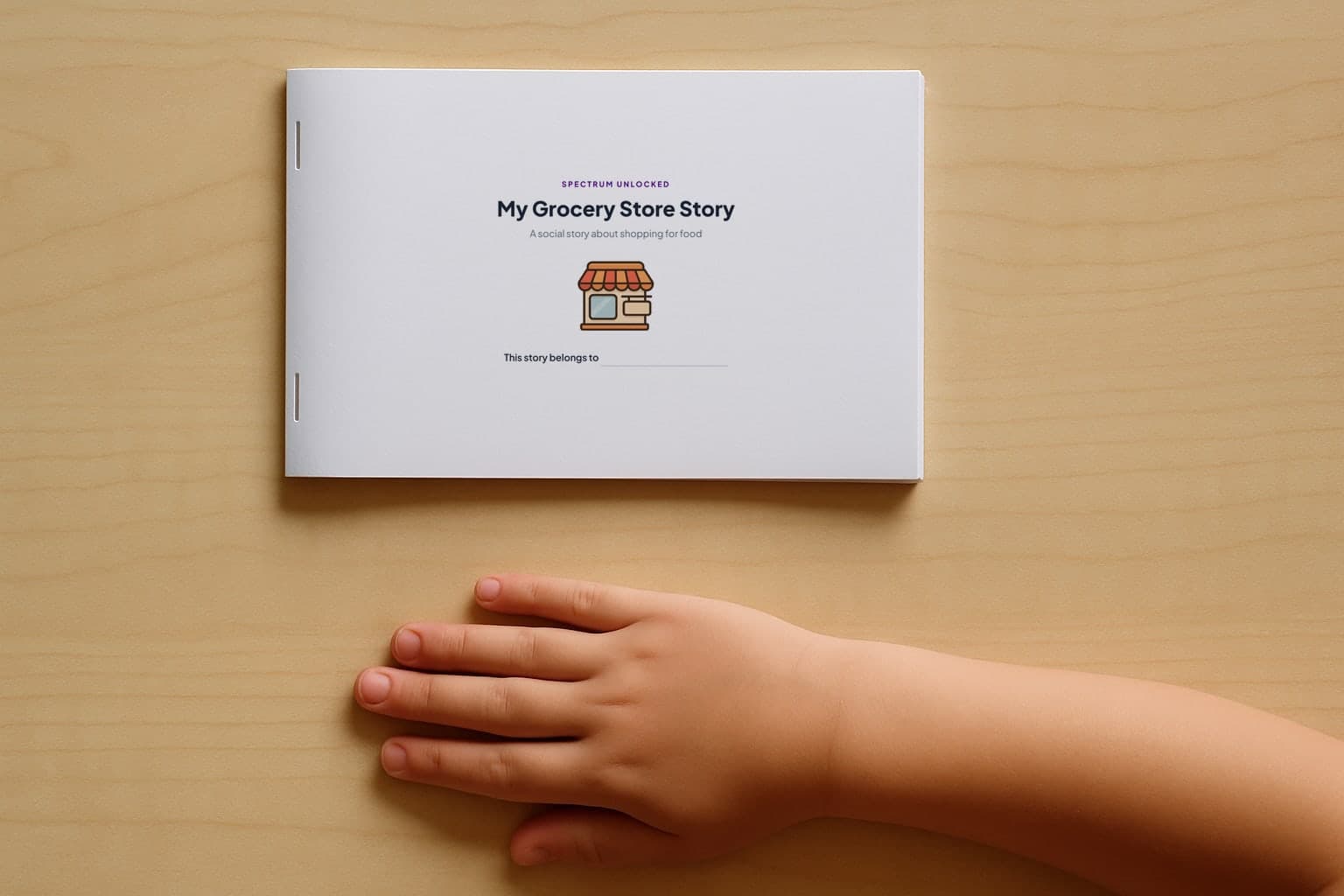
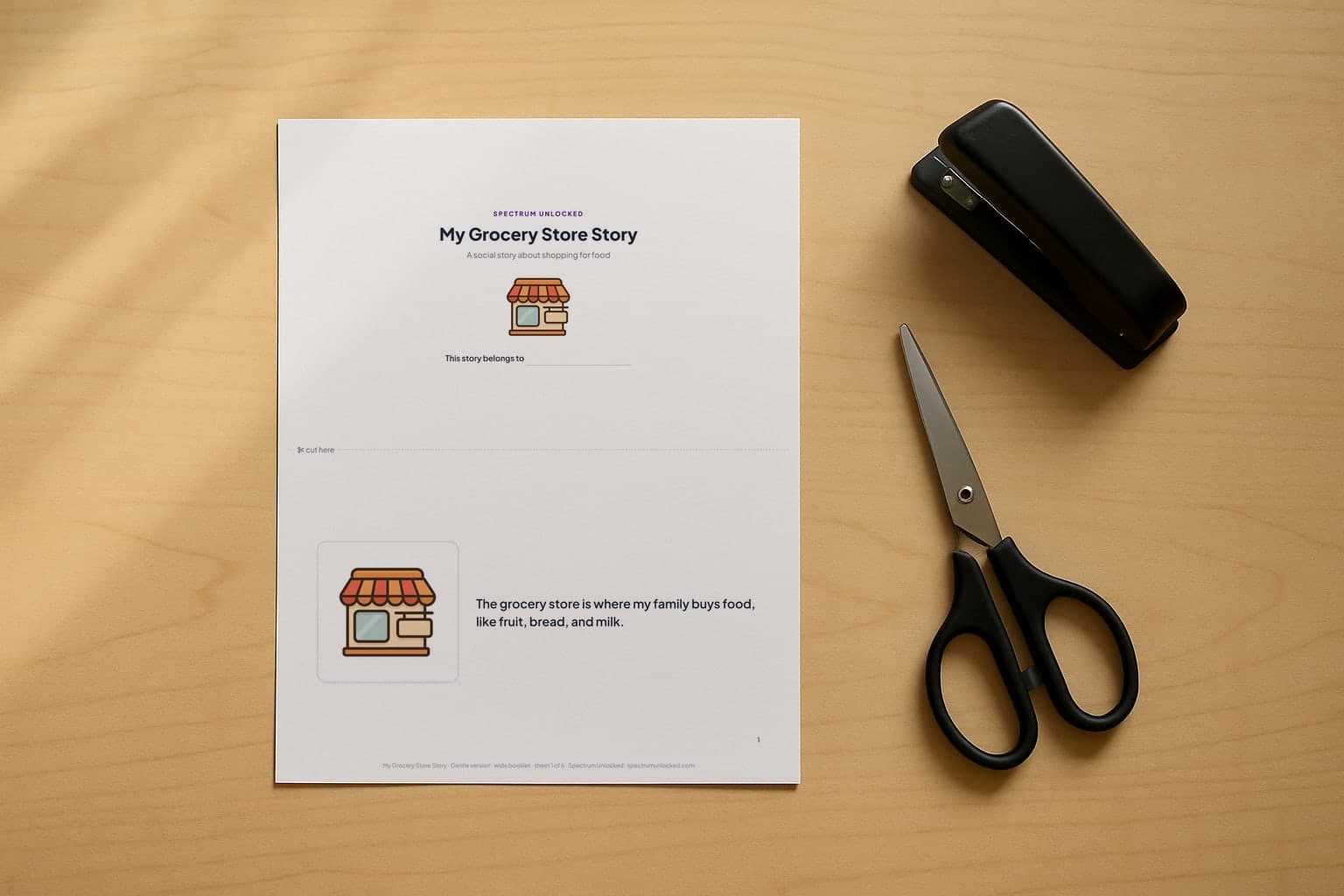
Download the printable PDF
Print the story as-is, no email required. Match the pictures to your child and pick your page layout, then download.

The story
Read the full story below. In the maker you can add your child's name, swap pictures, and print it as a booklet.
My Grocery Store Story
A social story about shopping for food
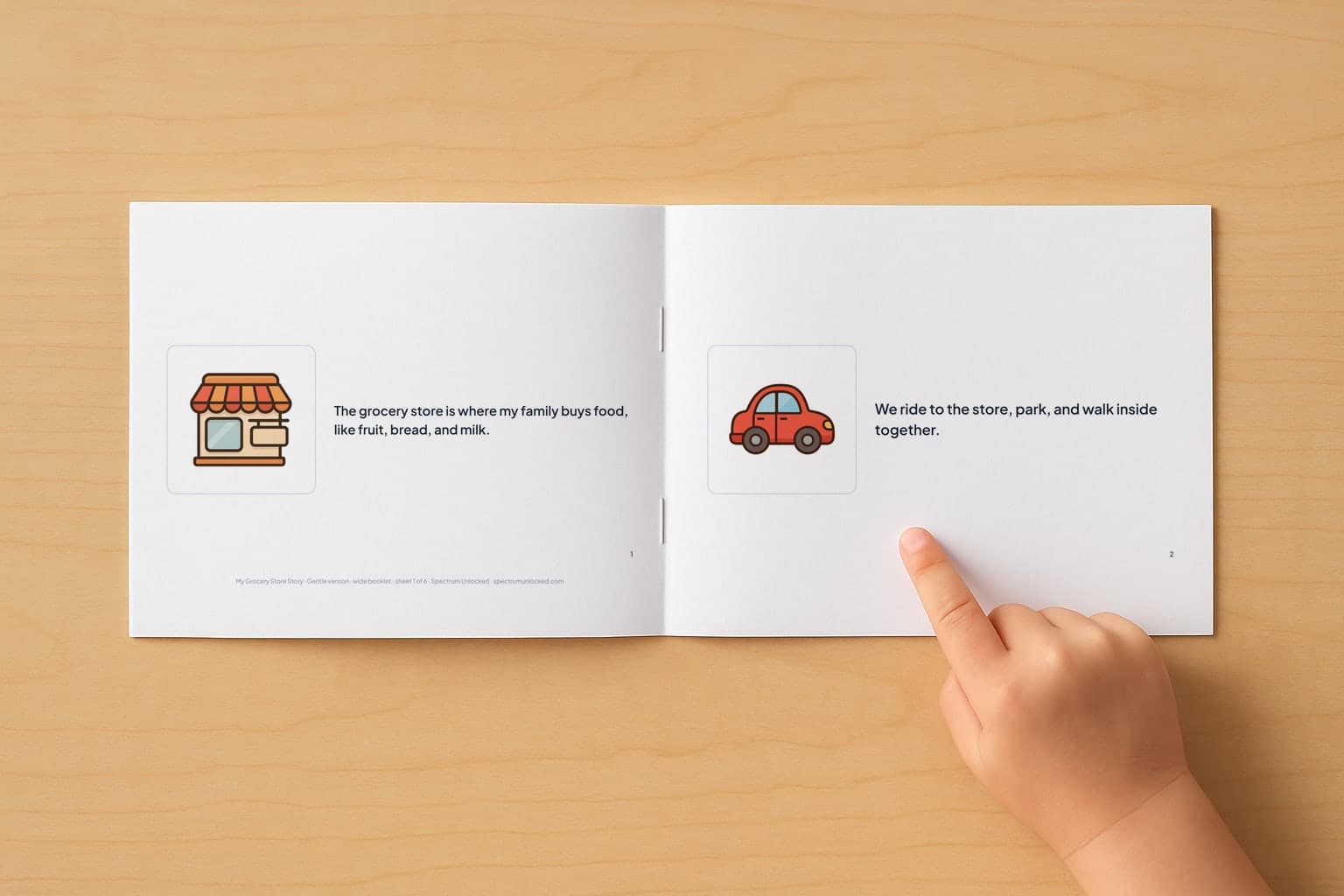
- 1The grocery store is where my family buys food, like fruit, bread, and milk.Describes
- 2
 We ride to the store, park, and walk inside together.Describes
 - 3
 Inside, there are bright lights, music, beeping sounds, and lots of people. That can be a lot for my eyes and ears.Describes
 - 4
 We push a cart up and down the aisles and put our food inside.Describes
 - 5
 I can help by holding the list, finding the apples, or putting food in the cart.Coaches
 - 6
 Sometimes we pass treats and toys that we are not buying today. Leaving things on the shelf is part of shopping.Describes
 - 7
 When our cart is full, we wait in line to pay. Lines can move slowly, and waiting is part of the trip.Describes
 - 8
 If the store feels too loud or busy, I can wear ear defenders or hold my grown-up's hand.Coaches
 - 9
 While we wait in line, I can count the food in our cart or look for something round, then something red.Coaches
 - 10
 We pay at the checkout, and the food goes into bags to come home with us.Describes
 - 11
 At home, we unpack the bags, and soon I get to eat the food we picked together.Describes
Single stories, $3 each
When one situation is the whole problem, take just that story. A gentle and a firmer wording, four child looks, booklet pages in US Letter and A4, and a link to edit it free.
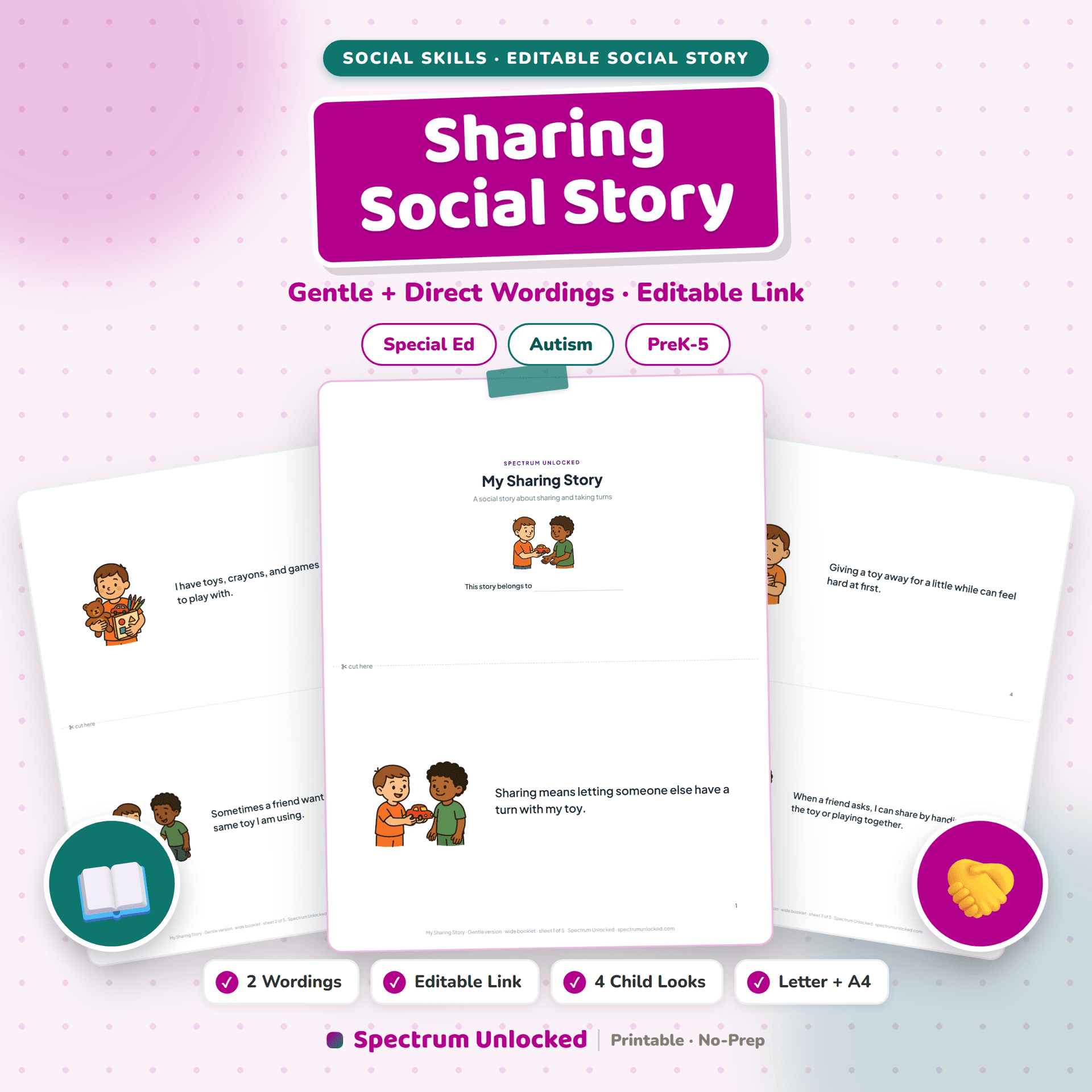
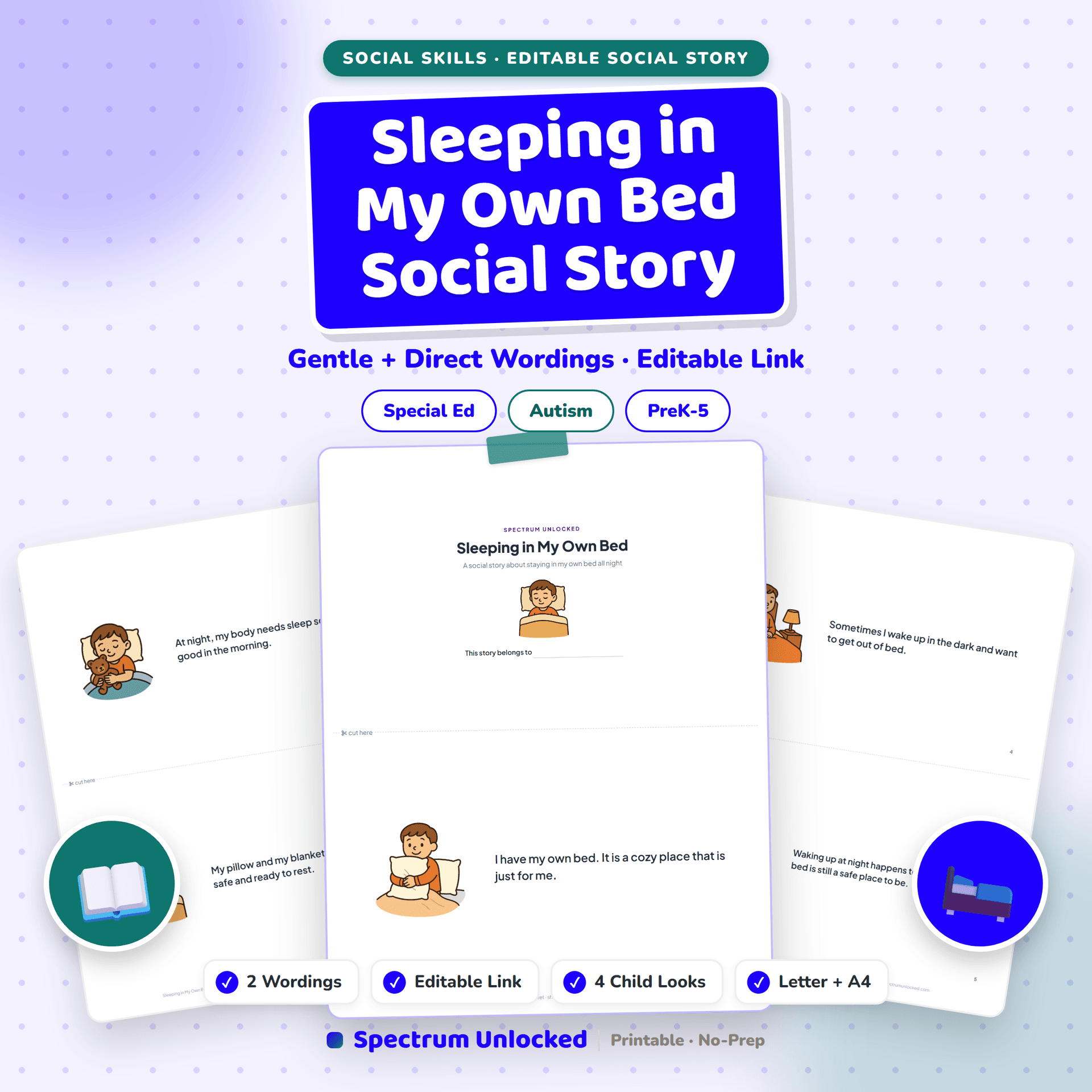
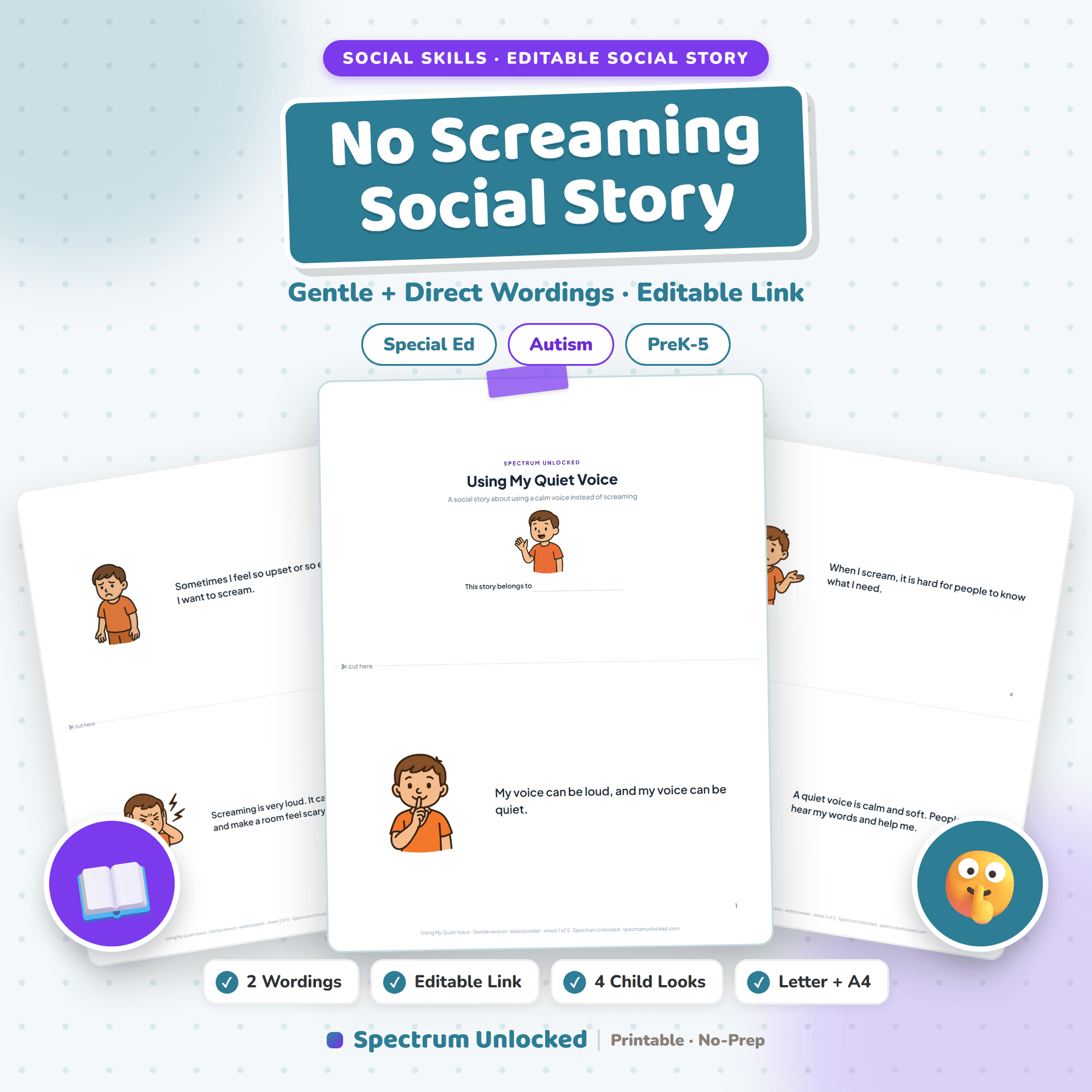
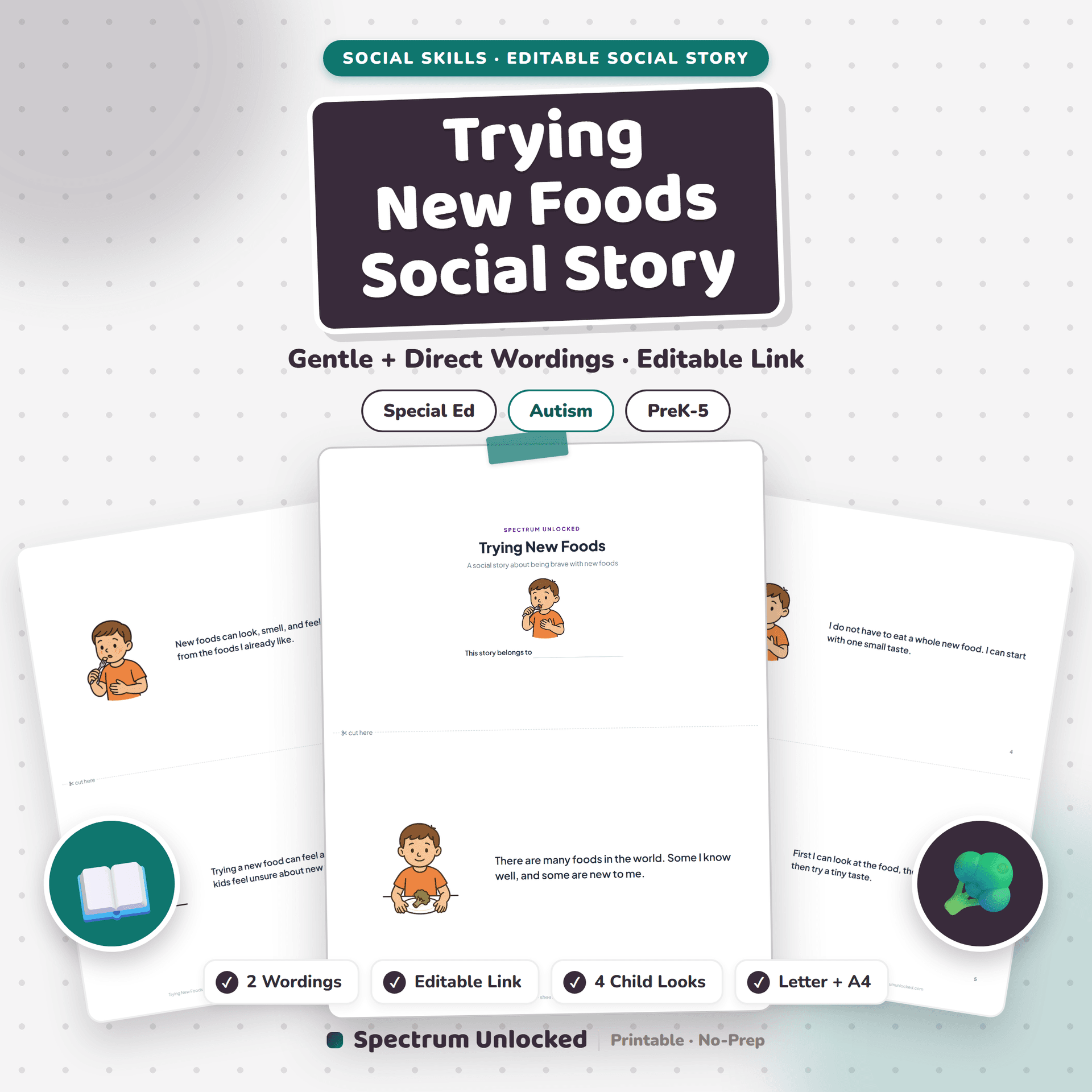
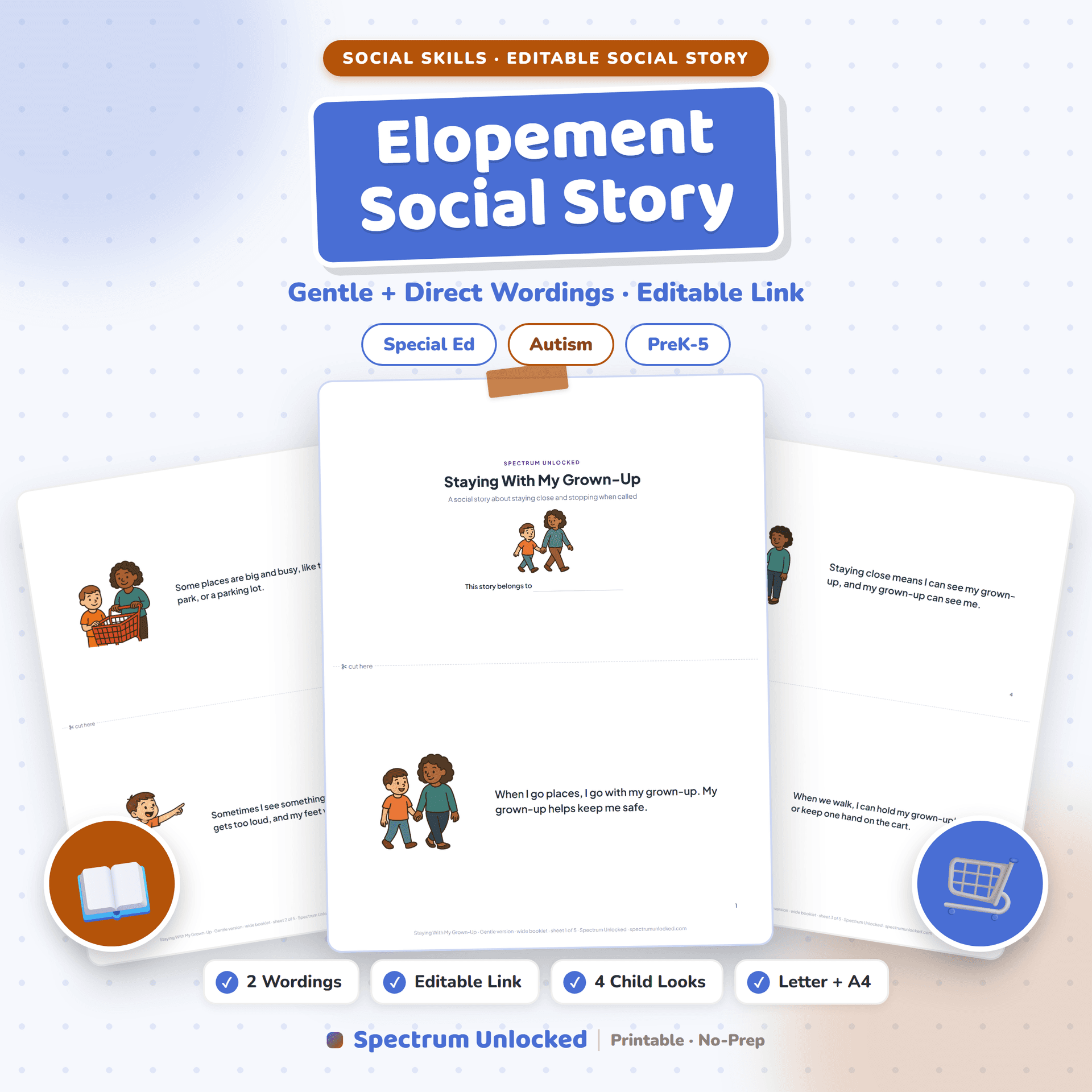
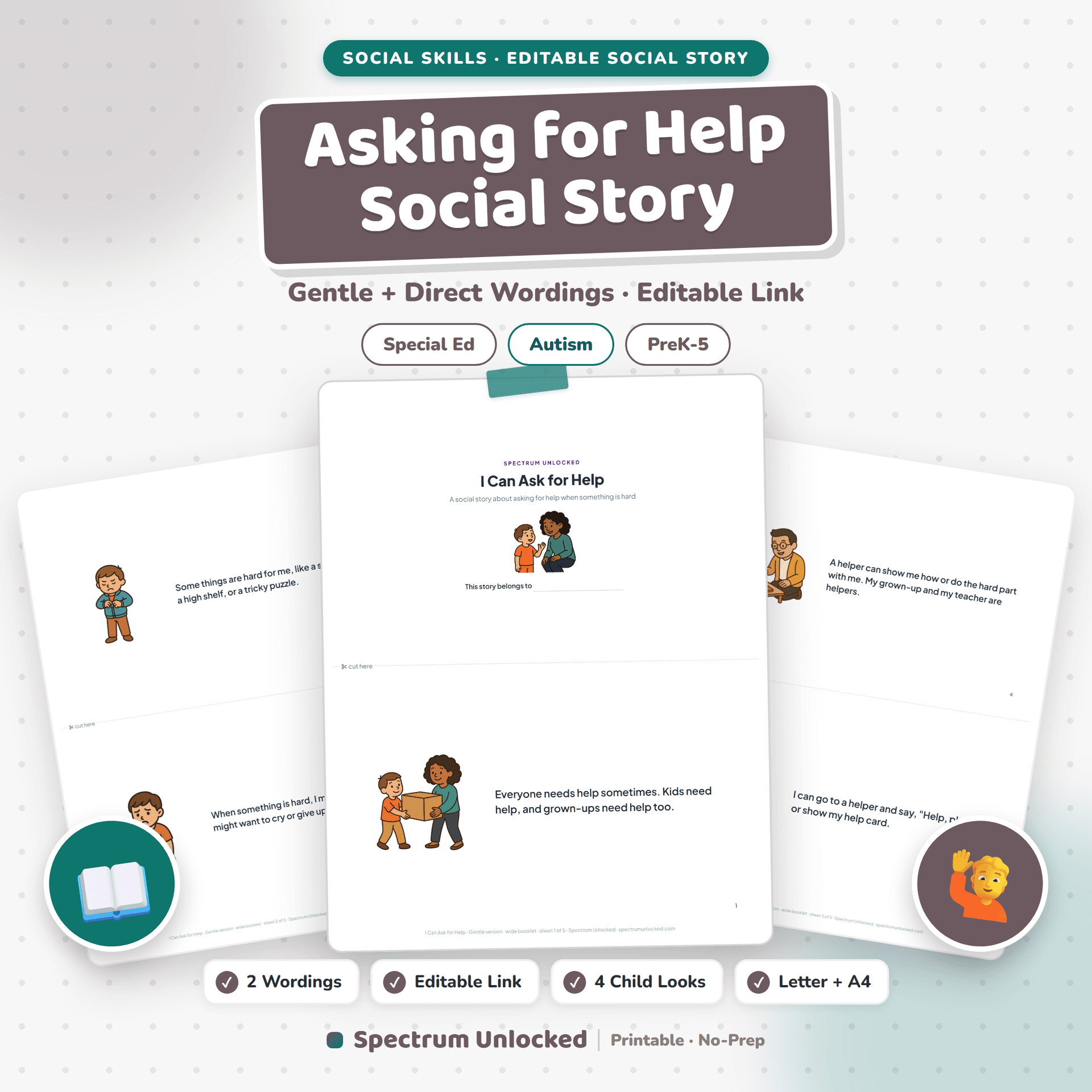
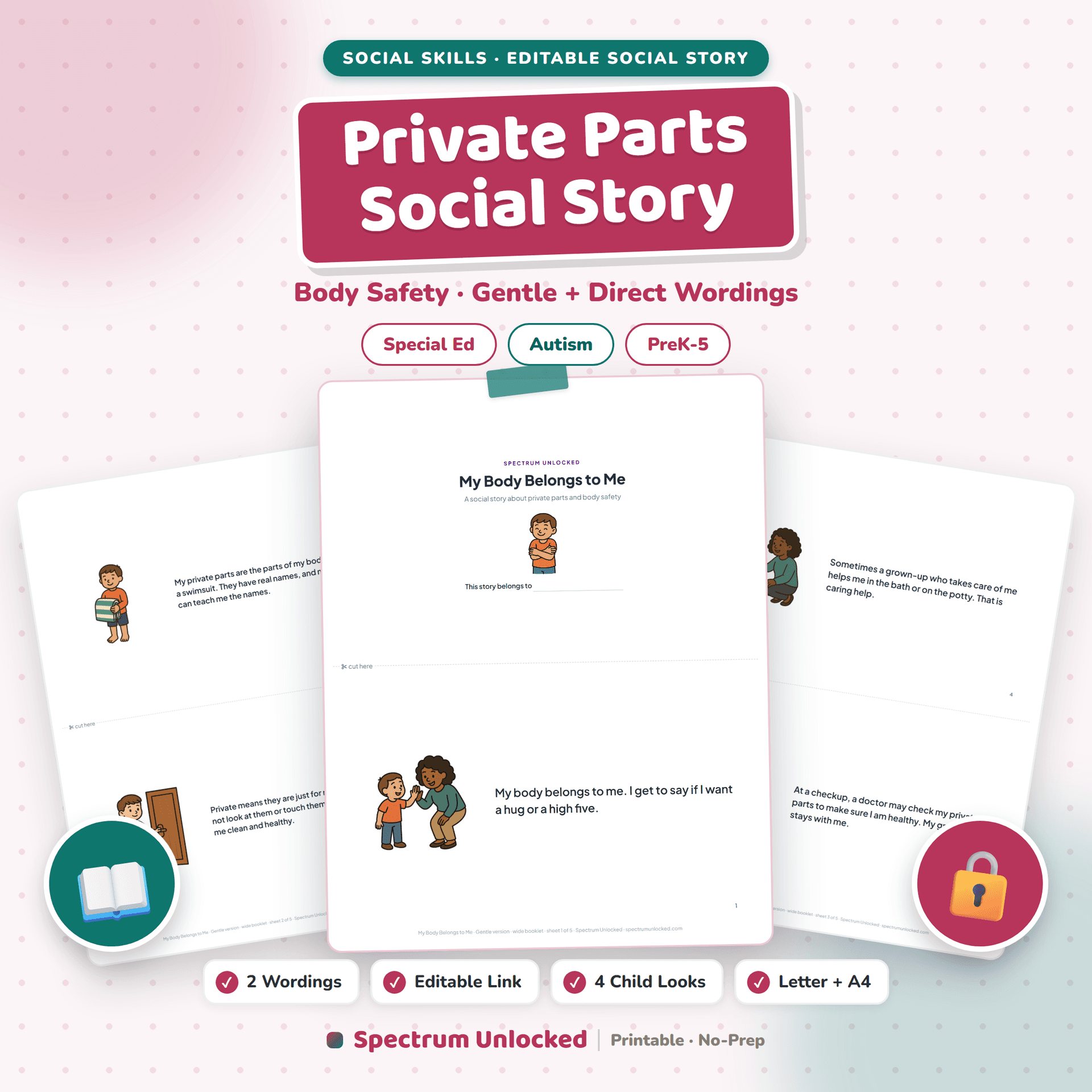
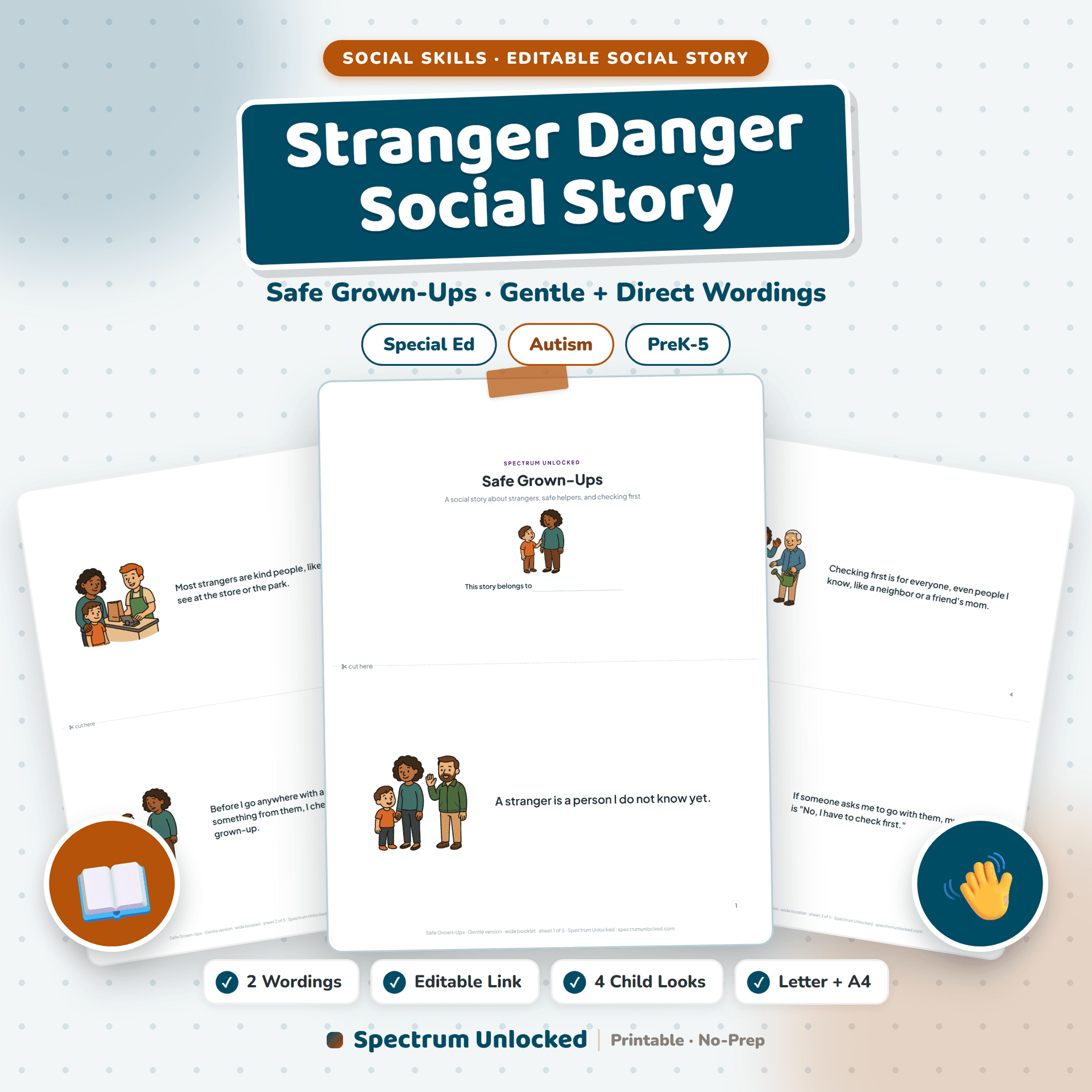
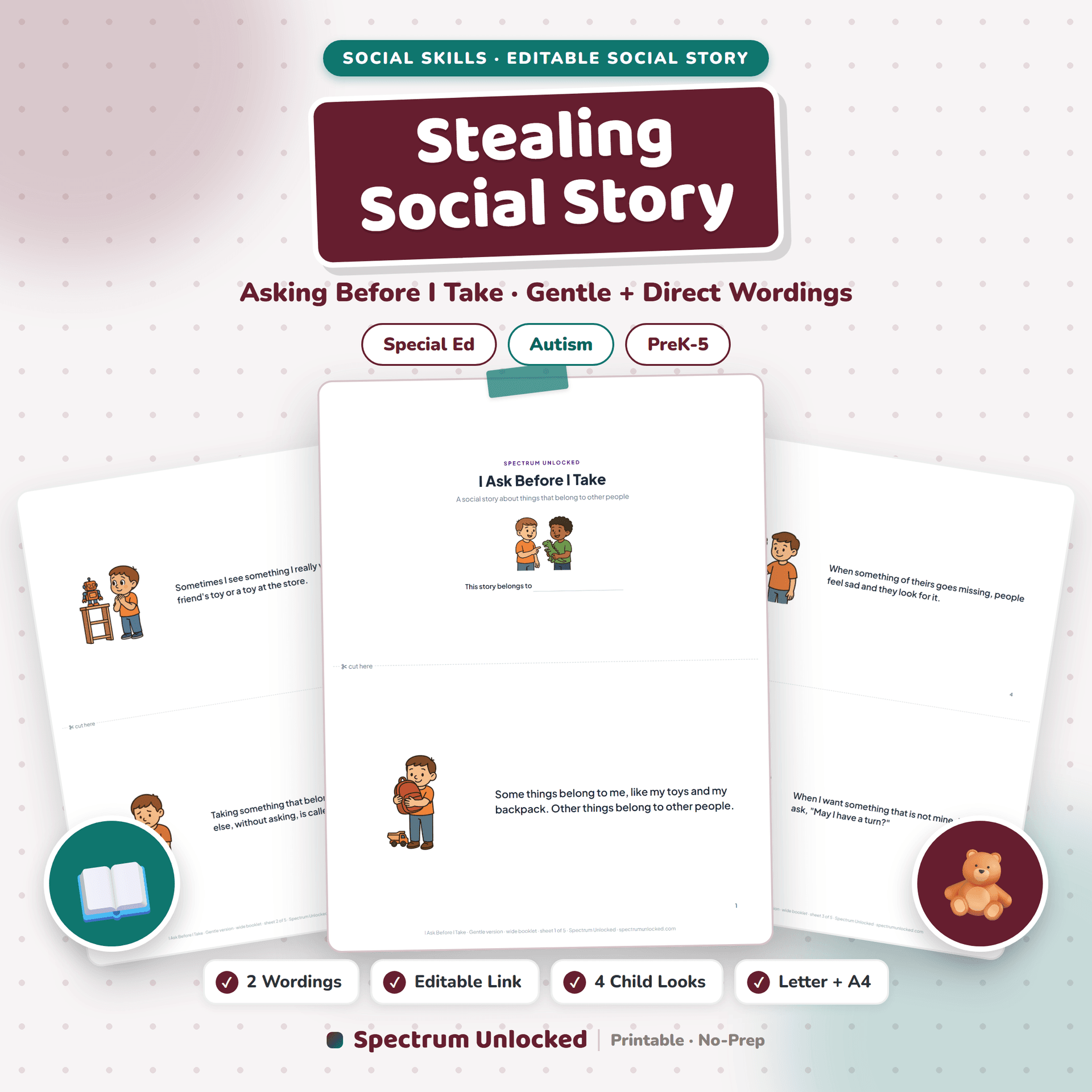
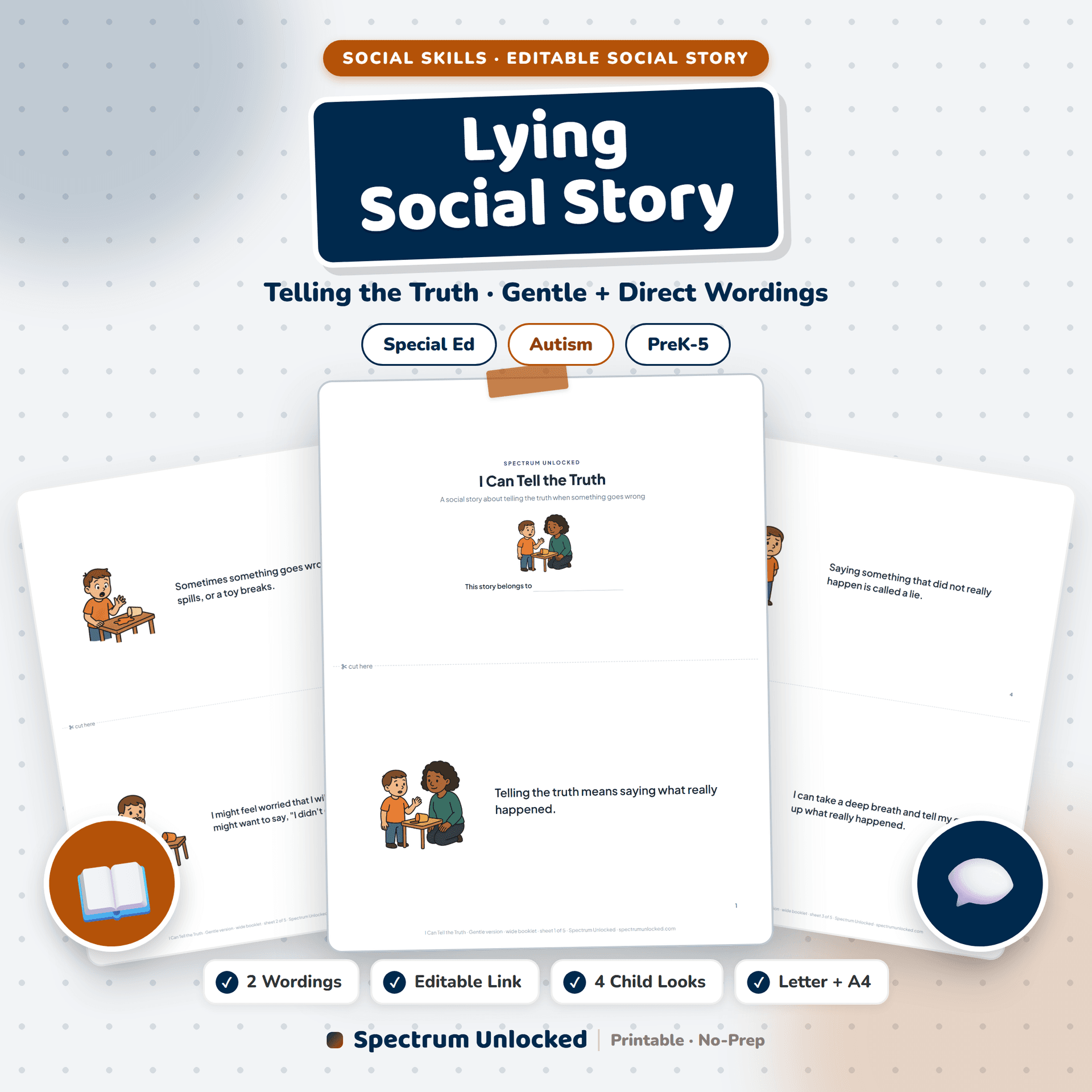
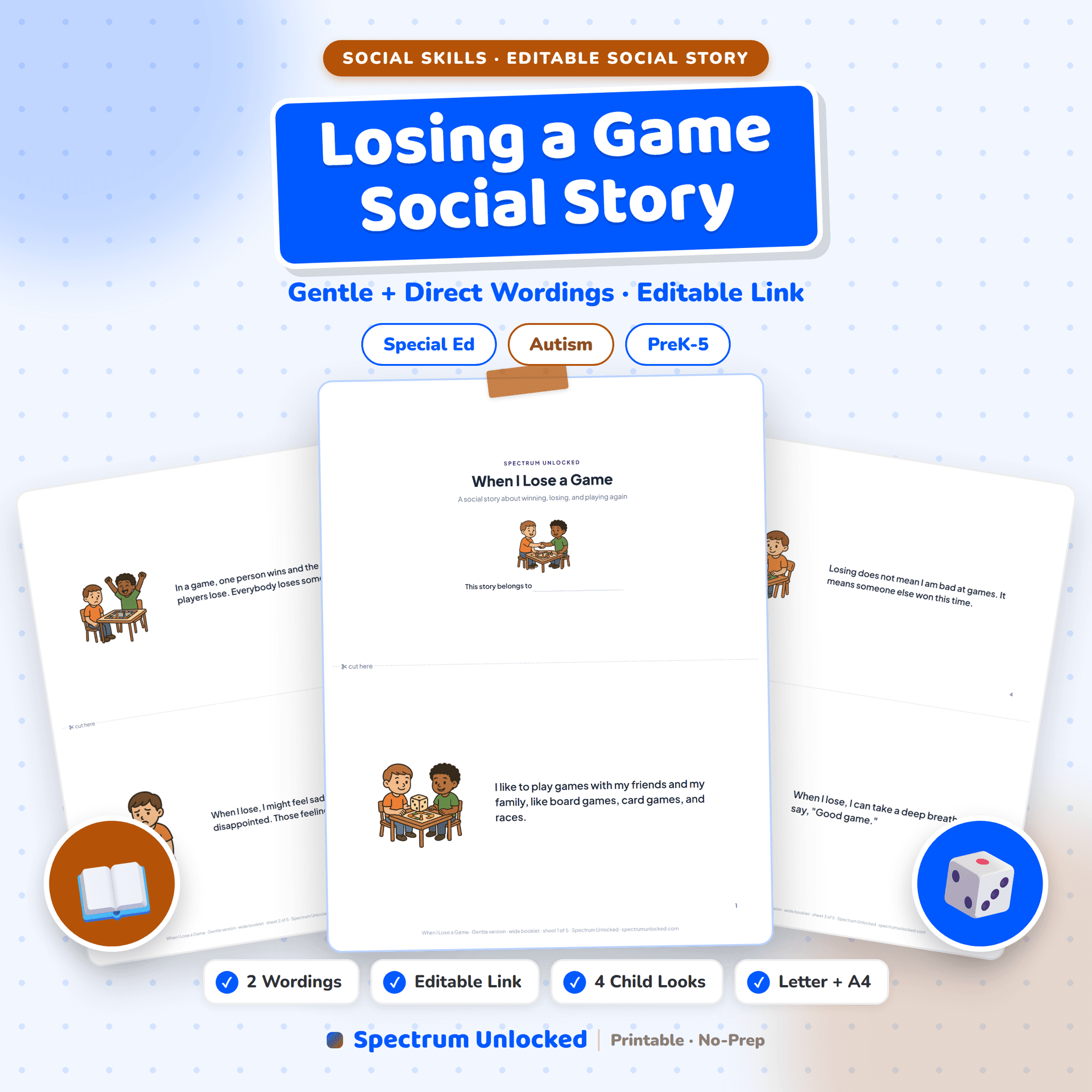
Nothing left to prepare. 25 finished sets, from $3, and every page prints exactly as it is.
When to use this story
Use this story before reintroducing grocery trips that have been going badly, before a first trip to a new store, or as a weekly reread if shopping is a recurring flashpoint. Start with short, low-stakes trips for a few items so the story's sequence gets confirmed by quick wins.
The story gives the store's sensory load its own page: bright lights, music, beeping sounds, lots of people, and the plain acknowledgment that this is a lot for eyes and ears. Naming the overload ahead of time tells your child their reaction makes sense, and the ear defenders page turns that acknowledgment into a plan.
The treats page does quiet prevention. Passing things we are not buying today is described as a normal part of shopping, not a rule being enforced, which takes some of the charge out of the candy aisle before you reach it. If one specific display always causes the battle, name it when you personalize the story.
Helping jobs are the story's engine: holding the list, finding the apples, loading the cart, counting items in the line. A child with a job is a shopper, not a passenger, and most of the waiting problems shrink when the wait has something in it. Keep the jobs consistent from trip to trip so they become ritual.
Frequently asked questions
- How does a grocery store social story help?
- It turns an unpredictable, sensory-heavy errand into a fixed sequence your child has already rehearsed: drive, cart, aisles, line, pay, home, eat. Knowing what comes next is the single biggest lever for store behavior, and the story adds jobs and coping moves on top. It follows Carol Gray's describe-more-than-coach structure throughout.
- My child melts down in the store. Will a story fix it?
- A story is one leg of the plan, not the whole plan. Pair it with short trips at quiet hours, ear defenders within reach, a job to do, and a snack and nap schedule that does not set the trip up to fail. The story makes the trip predictable; the logistics make it survivable.
- What about the candy aisle and checkout displays?
- The story has a page for exactly this: sometimes we pass treats and toys that we are not buying today, and leaving things on the shelf is part of shopping. Read it before the trip, then keep the response boring and consistent in the moment. Pairing it with the accepting no story helps if buying battles happen everywhere, not just at the store.
- How can my child help during the shopping trip?
- The story names three jobs: holding the list, finding items like the apples, and putting food in the cart, plus counting the cart's contents while waiting in line. Pick jobs that match your child's age and keep them the same every trip so the role becomes part of the routine.
- Is the grocery store story free?
- Yes. The whole story sits on this page, and the maker turns it into a printable booklet at no charge. Your child's name and photos can go in before you download.
- Can I personalize the story for our store?
- Yes. Open it in the maker to edit any page, and consider using your actual store's name and your child's real jobs. A story about the store you really shop at reads as a plan for Saturday, not a lesson about stores in general.
- Who developed social stories?
- Social Stories were developed by Carol Gray in the early 1990s. The gentle version of this template follows her published guidance, including describing more than coaching, but Spectrum Unlocked is not affiliated with or endorsed by Carol Gray.
Related stories
Accepting No Social Story
Hearing no is hard for many kids. This social story explains why grown-ups say no and rehearses calm responses. Print it free or personalize it first.
Flying on a Plane Social Story
A first flight brings security lines, engine noise, and popping ears. This free printable social story walks through the trip so every step is expected.
Related guides
Social Stories were developed by Carol Gray. Spectrum Unlocked is not affiliated with or endorsed by Carol Gray; the gentle version of this template follows her published describe-more-than-coach guidance.