Best Ear Defenders, Ear Muffs and Headphones for an Autistic Child
The ear defenders, earplugs, and noise-cancelling headphones that actually help an autistic child in loud places, plus the one thing audiologists want you to know before your child wears them all day.
Key Takeaways
- For loud, unavoidable places (assemblies, fireworks, busy cafeterias, hand dryers), ear protection is a kind tool that can keep a sensory-sensitive child regulated. The right pick depends mostly on your child's age and whether they will tolerate over-ear muffs or prefer something discreet.
- Passive earmuffs (ear defenders) simply block sound and are the everyday workhorse. Noise-cancelling headphones do more and can play calming audio, but cost more. Reusable earplugs are the discreet option older kids tend to keep on.
- The single most important thing, and the one most parents are never told: ear protection is for specific loud situations, not all day. Audiologists warn that constant use can slowly make sound sensitivity worse, because the brain turns up its own volume to compensate.
- Match the noise reduction rating (NRR or SNR) to the need. Most kid ear defenders sit around 22 to 27 dB, which is plenty for daily life. You do not need the highest number on the shelf.
- Fit is everything. A muff that pinches gets pulled off; an earplug that does not seat right does nothing. Buy for your child's actual head and ear size, not their age, and let them help choose the color.
A hand dryer fires in a public bathroom, a fire drill goes off, the cafeteria hits full volume, clippers buzz at the barbershop (the haircut guide covers that whole battle, and the quiet hair clippers for autism roundup covers the clipper itself), and for a sound-sensitive autistic child the world goes from manageable to unbearable in a second. For the drill specifically, a social story about the fire drill explains ahead of time that the alarm means practice, which takes some of the fear out of the noise itself. Ear protection is one of the simplest, kindest tools you can keep in a bag for exactly those moments. It does not fix sound sensitivity, but it can be the difference between a child who copes and a child who melts down in a place neither of you can leave.
Choosing between the ear defenders, earplugs, and noise-cancelling headphones below comes down to your child's age, and whether they will tolerate over-ear muffs or want something no one can see.
But first, the one sentence that changes how you should use every product on this page.
The Most Important Thing About Noise Reduction, First
Ear protection is for specific loud situations, not for wearing all day. This is the piece most parents are never told, and it matters.
Audiologists and hyperacusis clinicians are nearly unanimous on it: when a sound-sensitive child wears ear protection constantly, the brain compensates by turning up its own internal volume, so over time ordinary sounds feel even louder once the protection comes off. Short-term relief, long-term worse. The clinical guidance is to use ear defenders for the loud, unavoidable moments, then take them off in calm, ordinary environments, so the auditory system can stay calibrated to normal life.
So think of everything below as a tool for the fire drill, the concert, the airport, the dentist, not a thing your child lives in. If your child wants them on constantly, that is real information worth bringing to an occupational therapist, because the answer is usually a broader sensory plan, not permanent earmuffs. Our guides on sensory-friendly activities and building a sensory diet are where that wider work starts. For a trip, an autism travel card pairs well with ear protection, because it tells airport staff why your child is wearing it and what else helps.
For a teen the loud place is often a restaurant, and what helps most alongside the ear protection is having the words ready: the Restaurant Scenario Cards give a student three sentences for exactly that moment, from asking for a quieter table to stepping outside for a few minutes, and the free sample includes the data sheet to practice them on.
The Checks Behind These Ear Defenders
Nothing here was measured in a sound booth, and none of the pairs carries a made-up score. Each pair was compared on its published noise rating, how its fit is sized, and the audiology guidance on safe use. Five checks settled which pairs stayed:
- Sized for a head, not an age. A muff that pinches or an earplug that will not seat gets pulled off, so every pick has an adjustable headband or several tip sizes, and the age range it is built for is named.
- A rating in the 22 to 27 dB band. That covers daily life. The gun-range heavyweights were left out because they clamp hard and cut a child off from the room.
- Low clamping force. Soft cushions and a light build decide whether a tactile-sensitive kid keeps a pair on past ten minutes.
- Passive, active or in-ear. Plain earmuffs, noise-cancelling headphones with audio, and discreet earplugs solve different problems, and each pick says which one it is.
- What the extra money buys. Kids are hard on gear, so where a pair costs more, the difference is spelled out.
The Best Ear Defenders for an Autistic Child or Sensory Processing Disorder
Best everyday earmuffs on a budget: ProCase Kids Ear Defenders
If you just want a reliable pair to keep in the bag, these are the sensible default. ProCase passive ear defenders carry a solid noise-reduction rating around 27 dB, fold up small, and cost little enough that a lost or chewed pair is not a crisis. No batteries, nothing to charge, nothing to break. They are the workhorse most families should start with before spending more.

ProCase Kids Ear Defenders
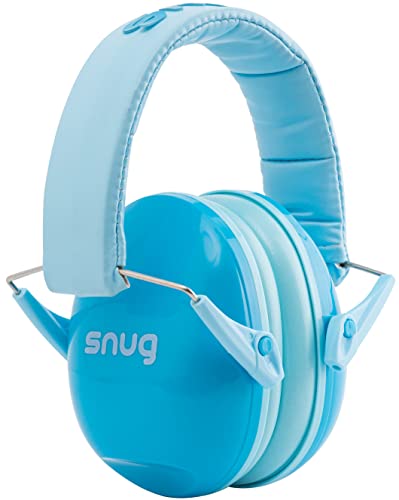
Best all-day comfort for school: Snug Kids Ear Defenders
When your child will be wearing protection on and off through a long school day, comfort beats everything, and Snug is built for it. The plush cushions and light weight mean less of the clamping pressure that makes kids yank muffs off after ten minutes, and the adjustable headband spans a wide age range from young children up. This is the pair for the kid who needs the option available all day but only reaches for it at the loud moments.
Snug Kids Ear Defenders
Best noise-cancelling that also plays calming audio: Puro Sound Labs PuroQuiet Plus
When you want protection plus focus, this is the step up. The PuroQuiet Plus uses active noise cancelling to cut a wide band of background hum, and critically it has a built-in 85 dB volume limit, the widely cited safe ceiling, so adding calming music or audio never pushes the volume somewhere harmful. For a kid who regulates better with their own audio in a noisy classroom or on a flight, these do double duty as hearing protection and a focus tool. (A social story about flying on a plane prepares your child for the security line, the seatbelt, and the engine roar, so the headphones handle the noise while the story handles the uncertainty.) The trade-off is price and a battery to keep charged.

Puro Sound Labs PuroQuiet Plus Noise-Cancelling Headphones
Best discreet option for older kids and teens: Loop Quiet 2 Earplugs
Older kids and teens often flatly refuse over-ear muffs because they feel babyish or draw attention, and that is exactly the gap reusable earplugs fill. Loop Quiet 2 are soft silicone, come with multiple tip sizes for a real fit, take the edge off noise by around 24 dB, and are discreet enough to wear in a classroom or a crowded hallway without a single comment. For a self-conscious older child, the protection they will keep in beats the better-rated muffs they will not wear. Best for kids old enough to insert and manage them responsibly. If earplugs are the direction for your child, our dedicated earplugs guide for kids, teens, and adults covers the full lineup, including adjustable and non-blocking options.

Loop Quiet 2 Reusable Earplugs
Best for babies and toddlers: Baby BanZ Earmuffs
Tiny heads need cups sized for them, not a kid muff jammed down. Baby BanZ are designed for infants and toddlers from about 0 to 2+ years, with a shallow, soft, lightweight build and a gentle headband that protects little ears at fireworks, sporting events, or a loud family gathering without overwhelming them. If your sensory-sensitive child is still very young, start here rather than forcing a too-big pair.

Baby BanZ Infant and Toddler Earmuffs
Fit Beats the Age on the Box
Do not buy by age alone. Kids' heads and ears vary enormously, and a muff that does not seal or an earplug that will not seat does nothing. Check the specific product's size range against your child, look for an adjustable headband with room to grow, and where you can, let your child help pick the color or style, because a pair they feel some ownership of is a pair they will wear. If a muff leaves red pressure marks or your child fights it within minutes, the fit or the clamping force is wrong; try a lighter, softer pair rather than concluding your child "won't wear ear protection."
What This Ear Protection Is Not For
Ear protection is a tool for loud moments, full stop. It becomes a problem when it slides into an all-day habit, for the reason at the top of this page: constant use can slowly worsen the very sensitivity you are trying to help. So use them for the overwhelming situations, take them off in calm ones, and treat a child's wish to wear them constantly as a flag to look wider.
That wider work is where the lasting change happens: understanding your child's specific sound triggers, building predictable calm into the day, and getting an occupational therapy view on the whole sensory picture. Our pieces on sensory-friendly activities, building a sensory diet, and handling public meltdowns are the next step once the right pair of ear defenders is in the bag for the hard moments.
The headphones get a child through the loud moment, and the sensory plan is what changes the pattern over time. (For an older kid or teen, quality noise-cancelling headphones also happen to be one of the best gifts there is; the gift guide for autistic kids covers where they fit.)
One nuance worth naming: ear defenders are for the child who wants less sound. A different child wants more of the right kind, steady and predictable, to mask the unpredictable noise that unsettles them, especially at night. If that sounds like yours, the white noise and sound machine guide is the counterpart to this one.
Products Mentioned in This Article
ProCase Kids Ear Defenders
Snug Kids Ear Defenders
Puro Sound Labs PuroQuiet Plus Noise-Cancelling Headphones
Loop Quiet 2 Reusable Earplugs
Baby BanZ Infant and Toddler Earmuffs
Prices and availability are accurate as of the date/time shown and are subject to change. Any price and availability information displayed on Amazon at the time of purchase will apply to the purchase of this product.
Sensory overwhelm shows up differently in every child.
Beacon learns about YOUR child and gives guidance specific to them.
What Would Beacon Say?
"What sensory strategies actually work for my child?"
Beacon factors in your child's specific sensitivities (sound, light, texture, movement) and current regulation, then builds a sensory plan you can start tonight.
Spectrum Unlocked Editorial Team
Editorial Team
The Spectrum Unlocked editorial team combines lived experience as autism parents with research-backed guidance to create resources families can trust.
Frequently Asked Questions
- What is the best NRR for ear defenders for an autistic child?
- For everyday sensory situations you do not need the highest rating on the shelf. Most children's ear defenders sit around 22 to 27 dB (NRR or SNR), and that is plenty for school assemblies, busy cafeterias, hand dryers, and most events. Very high ratings are built for things like gun ranges and can feel heavy and overly isolating for a child. The goal is to take the edge off overwhelming noise, not to seal your child off from the world.
- Earmuffs, earplugs, or noise-cancelling headphones, which is best?
- It depends on age and tolerance. Passive earmuffs (ear defenders) are the simple, durable everyday choice and need no batteries, best for younger kids and unpredictable loud moments. Reusable earplugs are discreet and the option older kids and teens will keep in, since muffs can feel babyish to them. Active noise-cancelling headphones cost more but reduce a wider band of background hum and can play calming music or audio, which helps some kids focus. Many families end up owning two: muffs or plugs for protection, headphones for focus.
- Is it bad for my autistic child to wear ear defenders all day?
- Yes, all-day everyday use is discouraged, and this is the thing most parents are never told. Audiologists and hyperacusis clinicians warn that wearing ear protection constantly can slowly make sound sensitivity worse over time, because the brain compensates by amplifying quieter sounds, so the world feels even louder once the protection comes off. Use ear defenders for specific loud, unavoidable situations, then take them off in calm environments. If your child wants them on constantly, that is a signal to look at the wider sensory picture with an occupational therapist, not a reason to leave them on.
- What age can a child wear ear defenders or earplugs?
- There are earmuffs designed from birth (infant styles for ages 0 to 2+ have shallow, soft cups sized for tiny heads), through kid sizes with adjustable headbands, up to adult. Reusable earplugs are generally aimed at older kids and teens who can insert and manage them responsibly and who are past the age of putting small items in their mouths; check the specific product's age guidance. For any age, fit matters more than the number on the box.
- Will noise-cancelling headphones help my autistic child focus?
- For many kids, yes. By lowering the background hum of a classroom or home, noise-cancelling headphones reduce the auditory load competing for your child's attention, which can help with homework, instructions, and self-regulation. Look for a kid-specific pair with a volume limit (around 85 dB is the widely cited safe ceiling) so that adding music never pushes the volume into harmful territory. They are a focus and regulation tool, not only hearing protection.
- Do ear defenders help with sensory processing disorder?
- For the sound part of it, yes. Sensory processing disorder covers far more than hearing, but auditory sensitivity is one of its most common and most disabling features, and ear protection is the simplest tool for the moments that overwhelm: assemblies, fire drills, hand dryers, a cafeteria at full volume. What it does not do is treat the underlying sensory processing, and using it that way backfires. The audiology guidance is the same as for any child: reach for protection in the loud, unavoidable situations, then take it off in ordinary environments, because constant use can make sound sensitivity worse over time. If your child wants ear defenders on all day, that is worth raising with an occupational therapist as a sensory-diet question rather than solving with a better pair of muffs.
- Are reusable earplugs safe for kids?
- Reusable silicone earplugs are safe for older children who can insert and remove them properly and will not put them in their mouths, and they are easy to clean. The cautions are the same as for any ear protection: get a size that seats comfortably without being forced in too deep, keep them clean, and do not use them continuously. For younger children or any child who mouths objects, over-ear muffs are the safer choice.