Behavior & Big Feelings
Accepting No Social Story
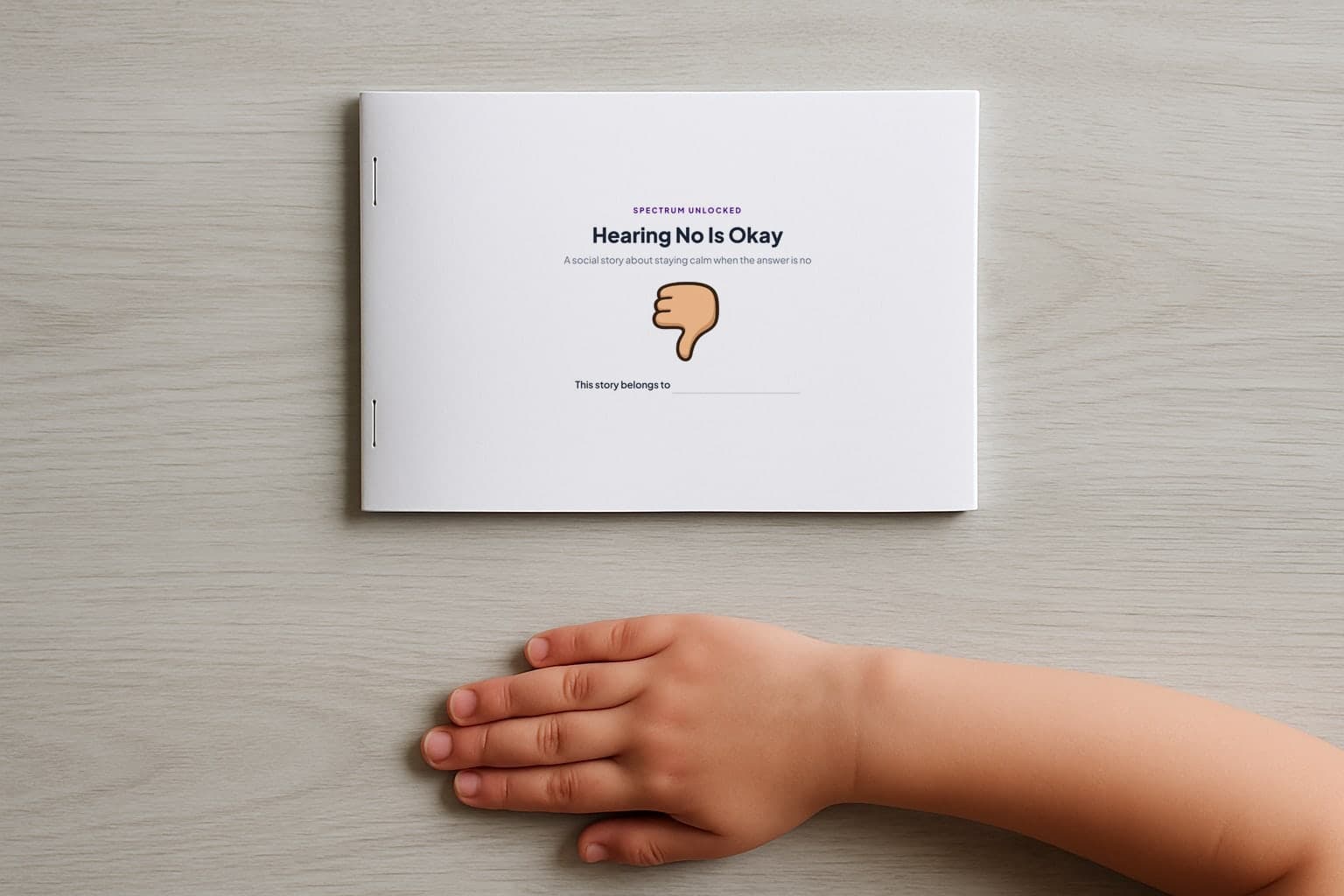
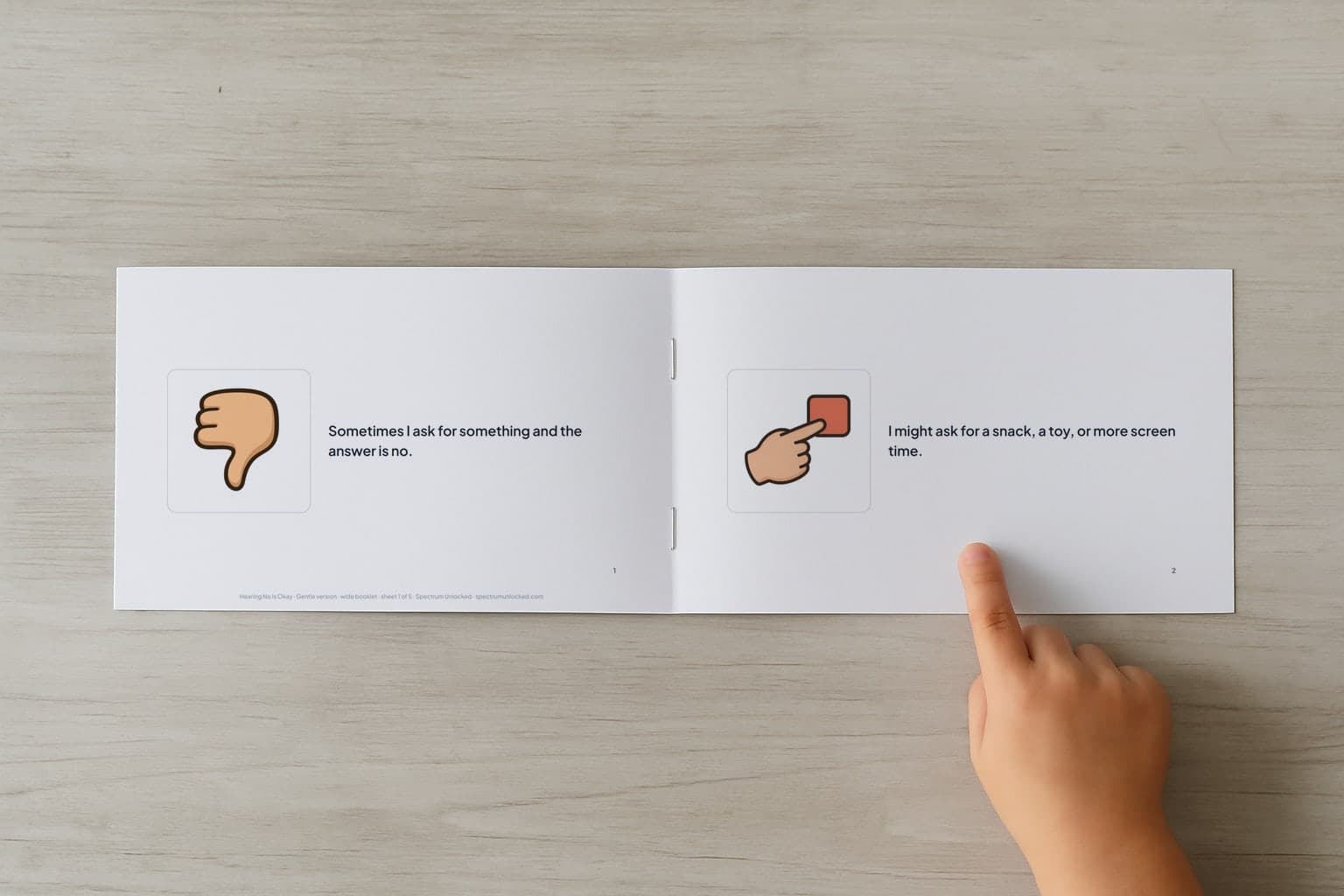
A social story for the hardest word in the house. The gentle version explains why grown-ups say no, validates the disappointment, and reframes no as sometimes meaning not right now. A firmer When I Hear No version rehearses saying okay and asking, can I have it later? Both are below in full.
Download the printable PDF
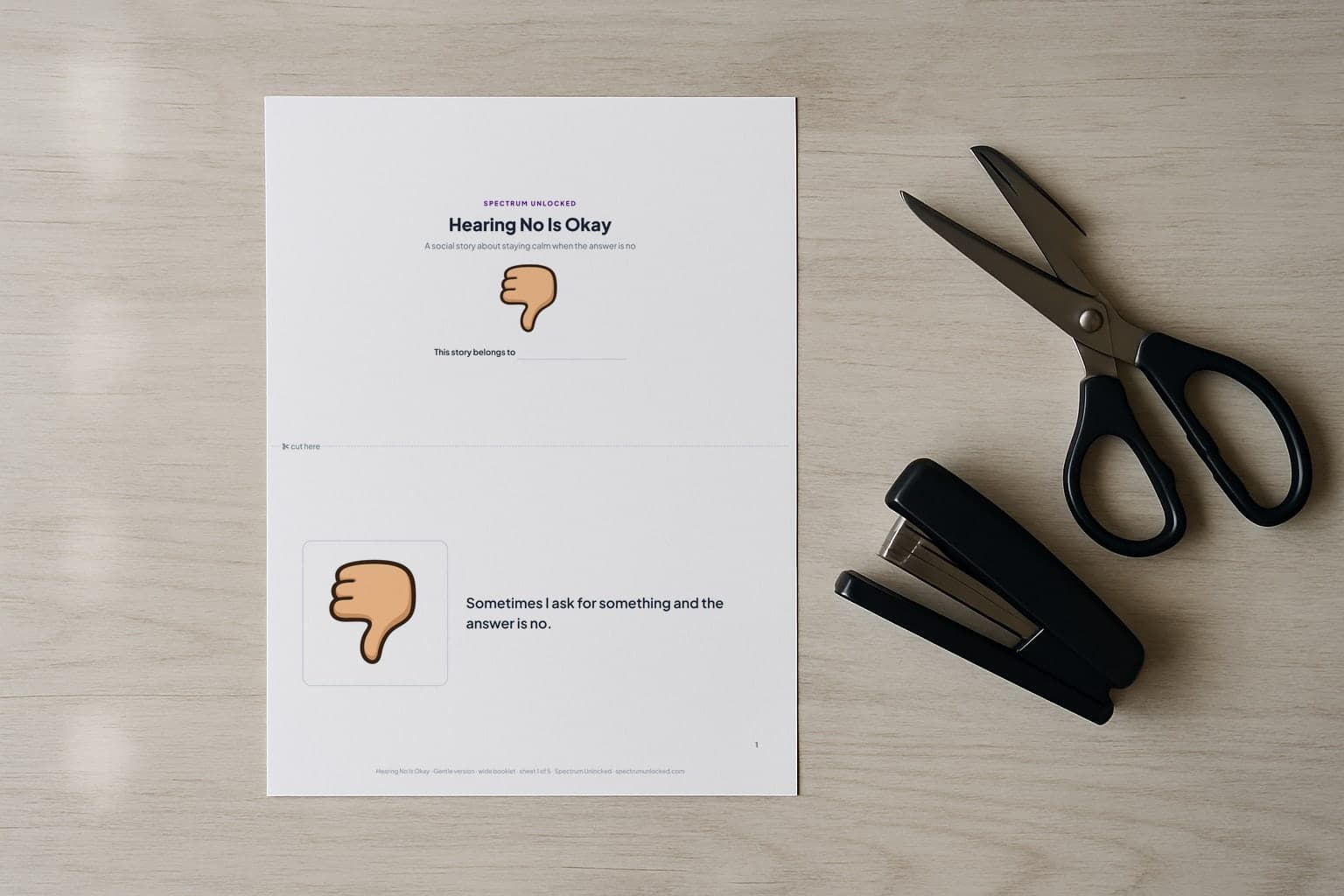
Print the story as-is, no email required. Match the pictures to your child and pick your page layout, then download.

The story
Read the full story below. In the maker you can add your child's name, swap pictures, and print it as a booklet.
Hearing No Is Okay
A social story about staying calm when the answer is no
- 1Sometimes I ask for something and the answer is no.Describes
- 2
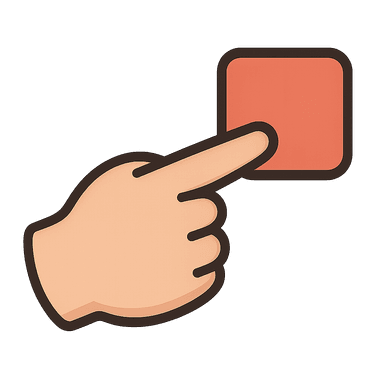 I might ask for a snack, a toy, or more screen time.Describes
 - 3
 Grown-ups say no to keep me safe or because it is not the right time.Describes
 - 4
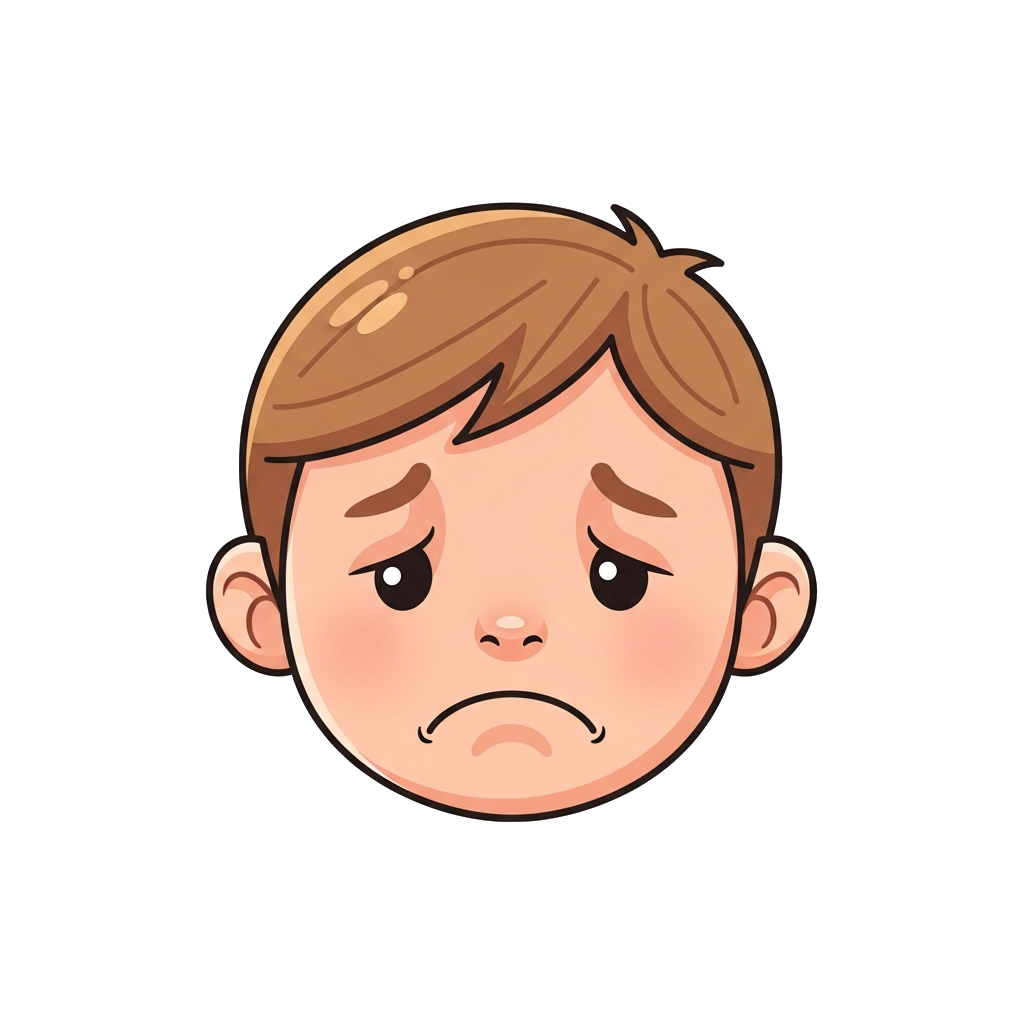 Hearing no can feel disappointing. It is okay to feel disappointed.Describes
 - 5
 No does not always mean never. Sometimes it means not right now.Describes
 - 6
 Everyone hears no sometimes, even grown-ups.Describes
 - 7
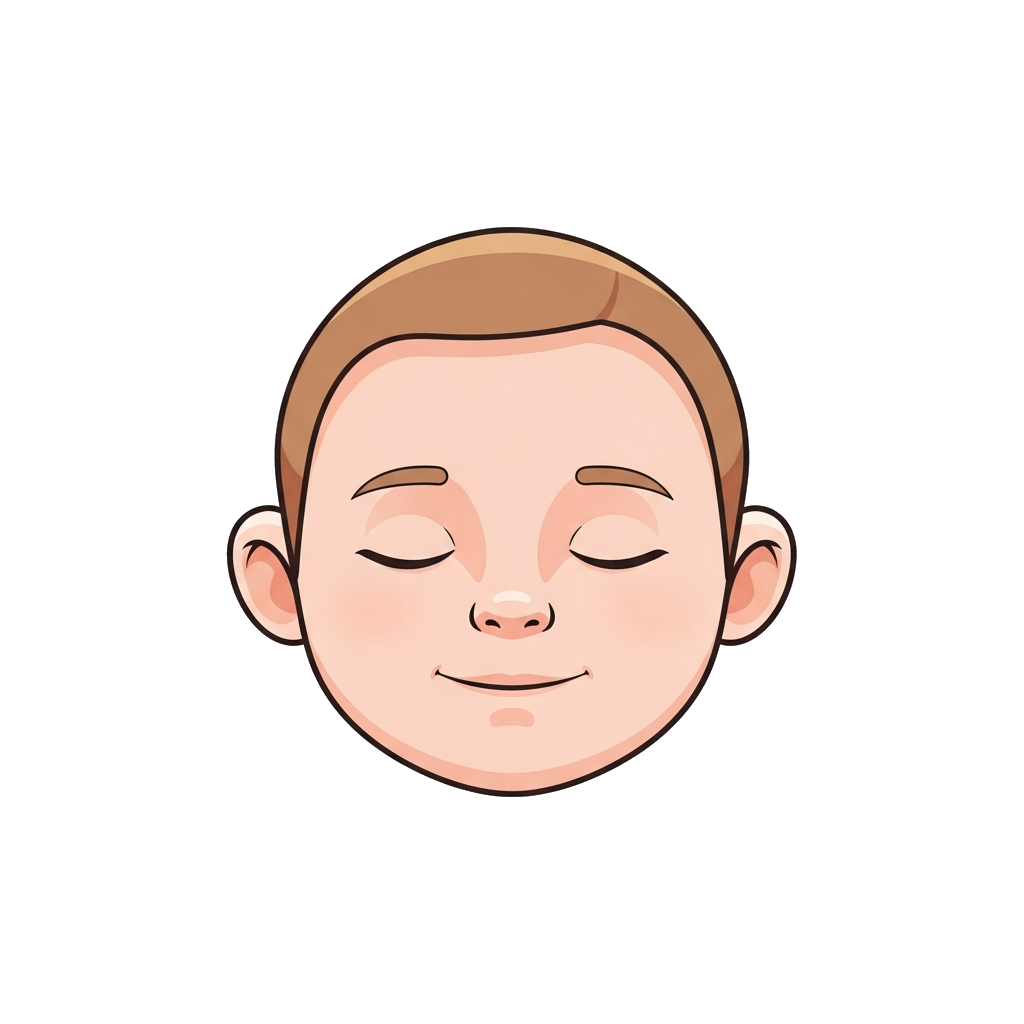 When I hear no, I can stay calm and say, "Okay."Coaches
 - 8If I feel upset, I can take a deep breath or ask, "When can I have it?"Coaches
- 9
 When I accept no calmly, my grown-ups feel happy and proud of me.Describes
When I Hear No: the direct version
When I Hear No
A social story about what to do when the answer is no
- 1Sometimes I hear no when I ask for something.Describes
- 2
 We do not scream, whine, or grab when we hear no.Coaches
 - 3
 Screaming does not change no to yes. The answer stays no.Describes
 - 4Staying calm when I hear no shows I can handle big feelings.Describes
- 5
 When I hear no, I can say, "Okay," and find something else to do.Coaches
 - 6I can take a deep breath and ask, "Can I have it later?"Coaches
The direct version uses firmer wording. Many families start gentle and switch only if the gentle version is not landing.
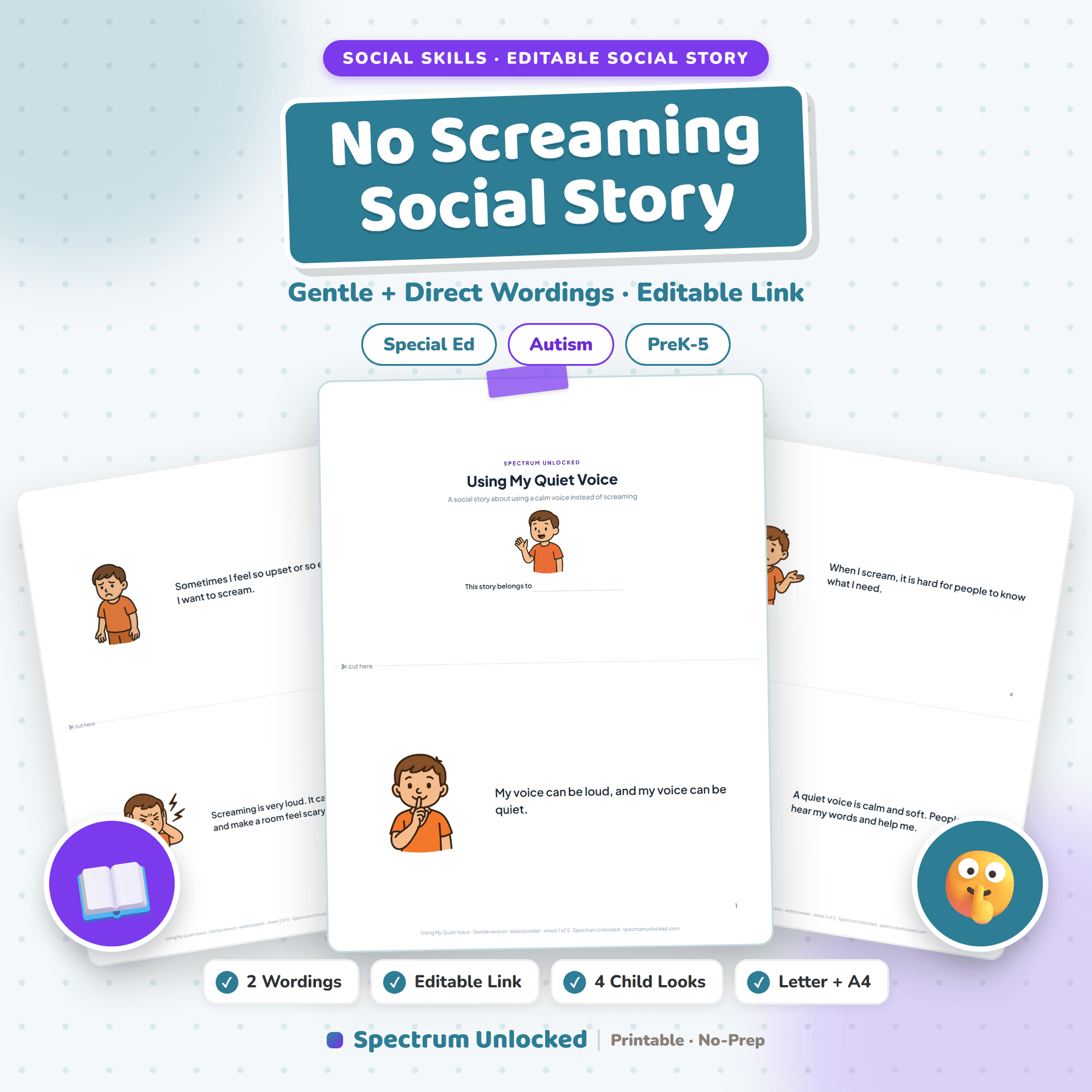
A ready-made story that goes with this one: No Screaming Social Story: Using a Quiet Voice
Using a calm voice instead of screaming, and saying "I need help" or "I feel mad." A gentle and a firmer wording, four child looks, booklet pages in US Letter and A4, and a link to edit it free.
Nothing left to prepare. 25 finished sets, from $3, and every page prints exactly as it is.
When to use this story
Use this story when a denied snack, toy, or extra screen time reliably sets off protests or meltdowns. Read it during peaceful stretches, then again shortly before no-heavy situations like store trips or the end of tablet time. It also helps to read it after a hard no has blown over, once everyone is calm.
The load-bearing page is the one that says no does not always mean never, sometimes it means not right now. For a child who hears no as a permanent loss, that single reframe can shrink the stakes. The follow-up script, asking when can I have it, hands the child a way to get information instead of escalating.
The story validates before it coaches. Hearing no can feel disappointing, and it is okay to feel disappointed, comes before any suggestion about staying calm. Everyone hears no sometimes, even grown-ups, normalizes the experience rather than singling the child out.
The direct version adds one blunt truth the gentle one implies: screaming does not change no to yes, the answer stays no. If your child tests every no with volume, that page may be the one to linger on, paired with the calm scripts around it.
Frequently asked questions
- What is an accepting no social story?
- It is a short story that describes what happens when a child asks for something and the answer is no: why grown-ups say it, how disappointment feels, and what a calm response looks like. This one comes in a gentle version and a more direct version, both on this page.
- What can my child say instead of melting down?
- The story rehearses two scripts. The first is simply saying okay. The second is asking a question, when can I have it, or in the direct version, can I have it later, which turns a shutdown moment into an exchange of information. Rehearsed at calm times, these phrases become easier to reach for in hot moments.
- Why does my child react so strongly to no?
- For many children, no lands as never, with no path back to the wanted thing. The story addresses exactly that misunderstanding by teaching that no is often about safety or timing, and that the answer can change later. Predictability about what no means tends to lower the temperature over time.
- Does it cost anything to print this story?
- No. Downloading either the gentle or the direct version as a printable booklet through the maker does not cost anything, and you can personalize either one with your child's name and pictures first.
- Can I tailor the story to our flashpoints?
- Yes, and you should. The maker lets you edit every page, so swap the examples, a snack, a toy, more screen time, for the exact requests that spark trouble in your house, and put the story in your child's name if that works better.
- Who developed social stories?
- Social Stories were developed by Carol Gray in the early 1990s. The gentle version of this template follows her published guidance, including describing more than coaching, but Spectrum Unlocked is not affiliated with or endorsed by Carol Gray.
Related stories
When I Feel Frustrated Social Story
Frustration hits when the tower falls or the zipper sticks. A free printable social story that names the feeling and walks through calming down, step by step.
When Plans Change Social Story
When rain or a closed store wrecks the plan, this free printable social story helps autistic kids handle the change with a deep breath and one simple question.
Related guides
Social Stories were developed by Carol Gray. Spectrum Unlocked is not affiliated with or endorsed by Carol Gray; the gentle version of this template follows her published describe-more-than-coach guidance.