School & Social Skills
Riding the School Bus Social Story
A step-by-step social story of the whole bus ride: waiting at the stop, the door opening, the handrail and the steps, finding a seat, the bumps and the noise, and the walk into school. It ends with the answer to the question many kids will not say out loud: the bus brings you back home.
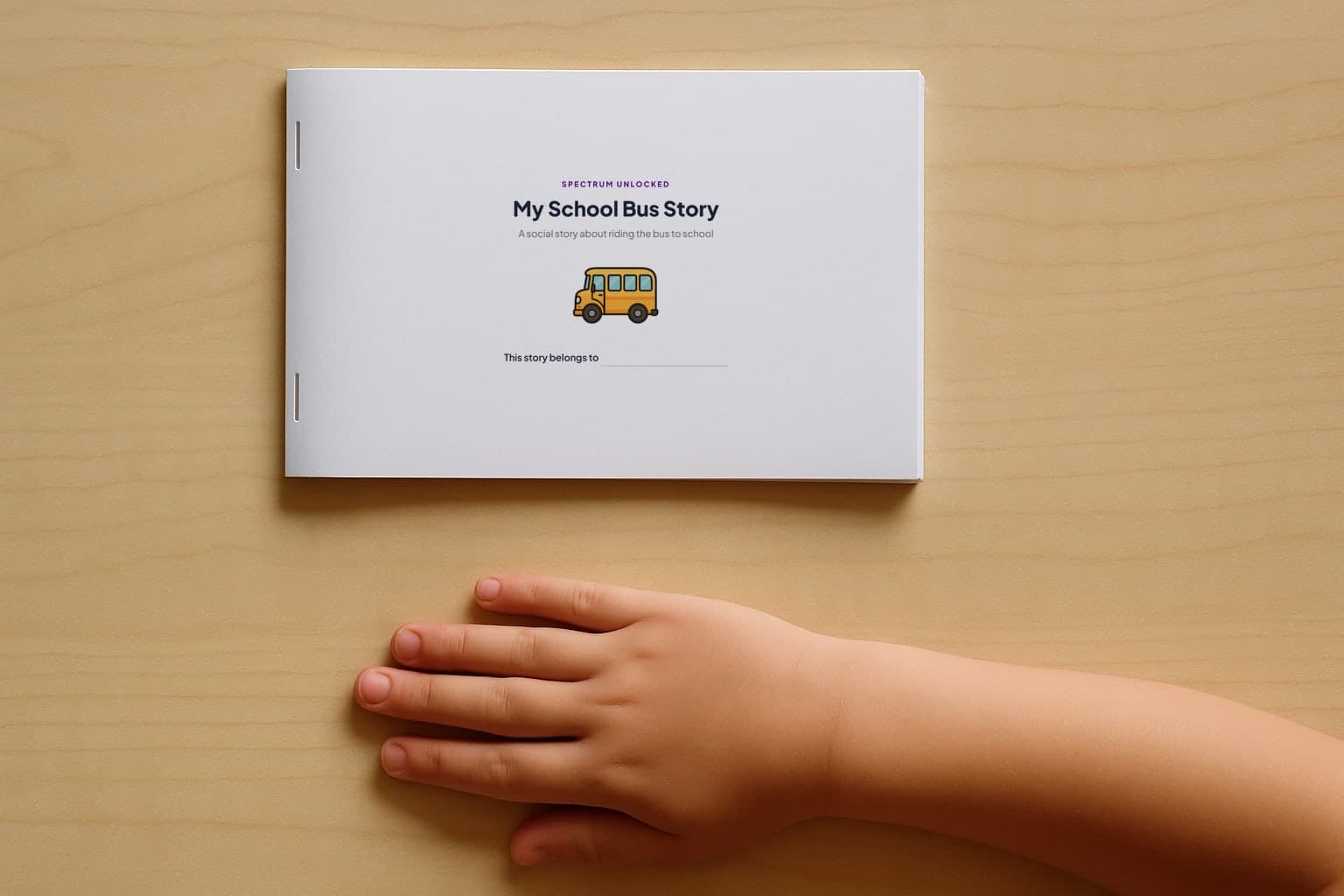
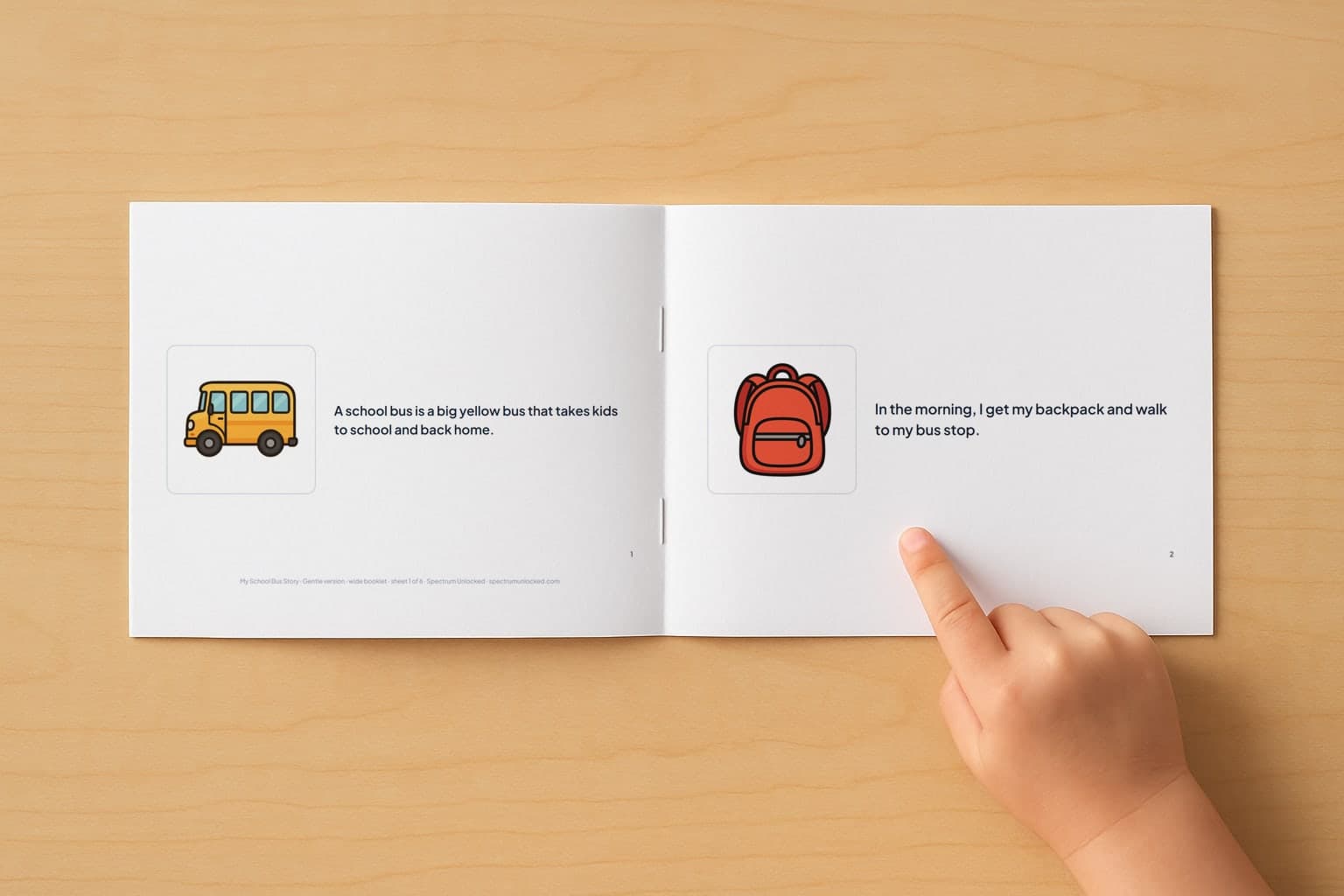
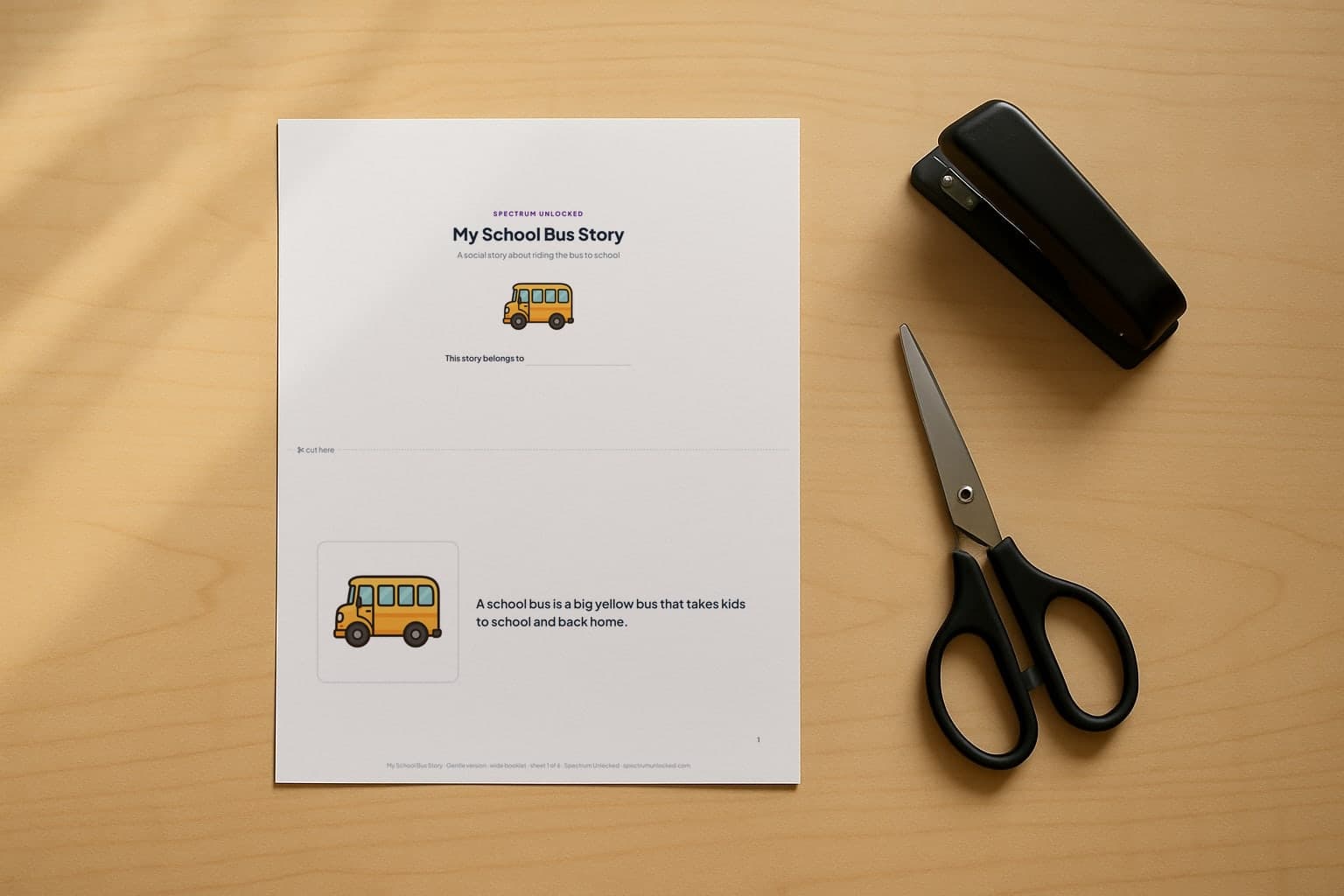
Download the printable PDF
Print the story as-is, no email required. Match the pictures to your child and pick your page layout, then download.

The story
Read the full story below. In the maker you can add your child's name, swap pictures, and print it as a booklet.
My School Bus Story
A social story about riding the bus to school
- 1A school bus is a big yellow bus that takes kids to school and back home.Describes
- 2
 In the morning, I get my backpack and walk to my bus stop.Describes
 - 3
 At the bus stop, I wait for the bus. Sometimes the bus takes a few minutes to come.Describes
 - 4The bus stops, the door opens, and the driver says hello.Describes
- 5
 I can hold the handrail and climb the steps one at a time.Coaches
 - 6
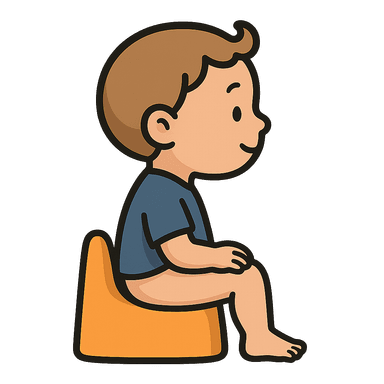 I can find a seat, sit down, and keep my backpack on my lap.Coaches
 - 7
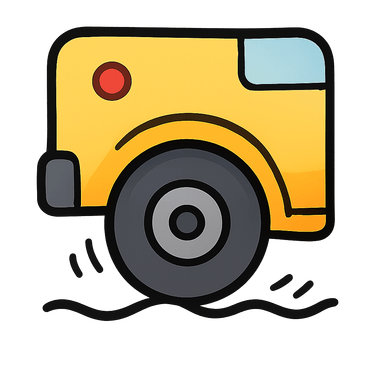 The ride can be bumpy and noisy. Bumps and sounds are a normal part of riding a bus.Describes
 - 8
 If the ride feels loud, I can wear my headphones or look out the window.Coaches
 - 9I stay in my seat until the bus stops. Staying seated helps the driver drive.Describes
- 10
 The bus stops at school. I walk down the steps and into my school.Describes
 - 11
 In the afternoon, the bus brings me back home.Describes
Single stories, $3 each
When one situation is the whole problem, take just that story. A gentle and a firmer wording, four child looks, booklet pages in US Letter and A4, and a link to edit it free.
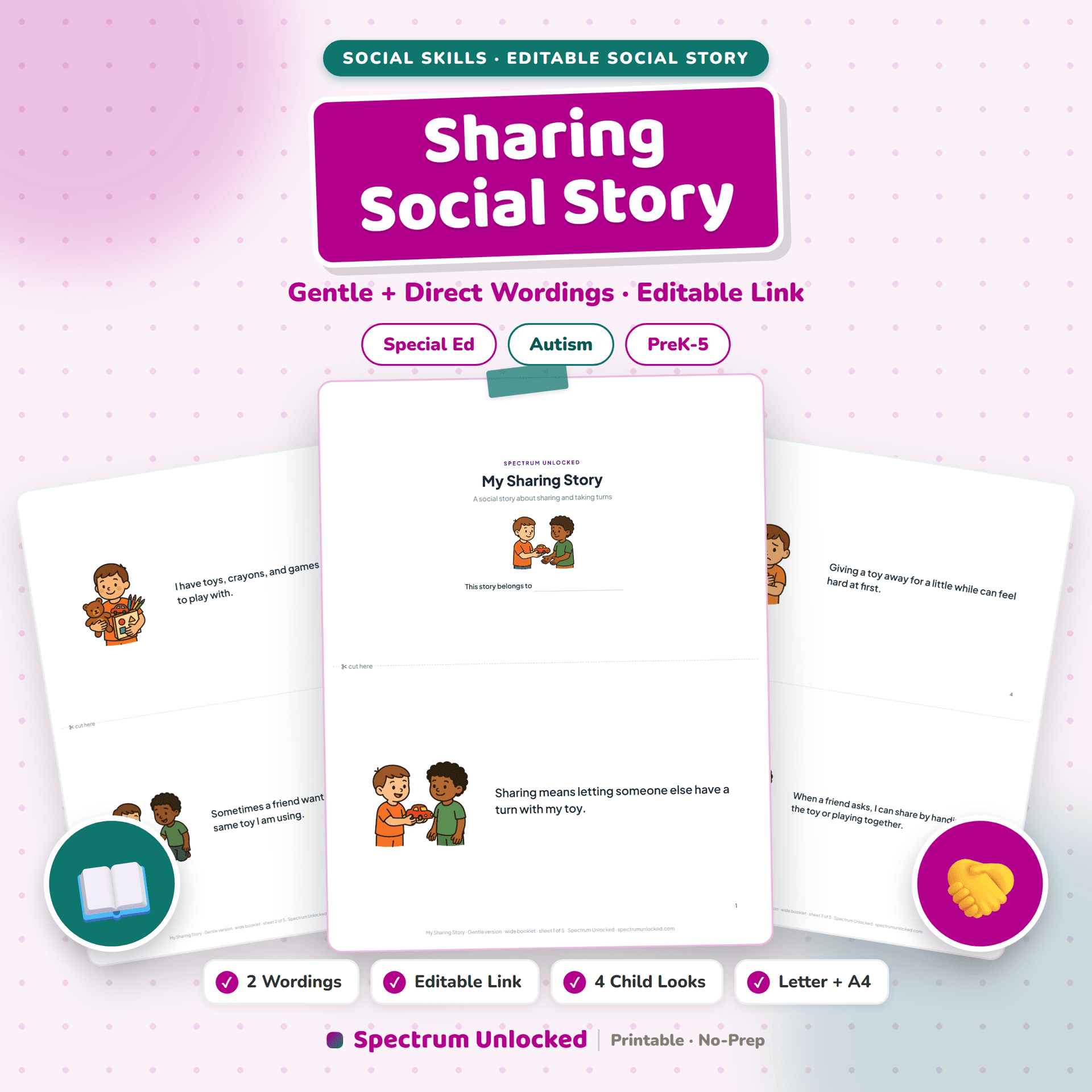
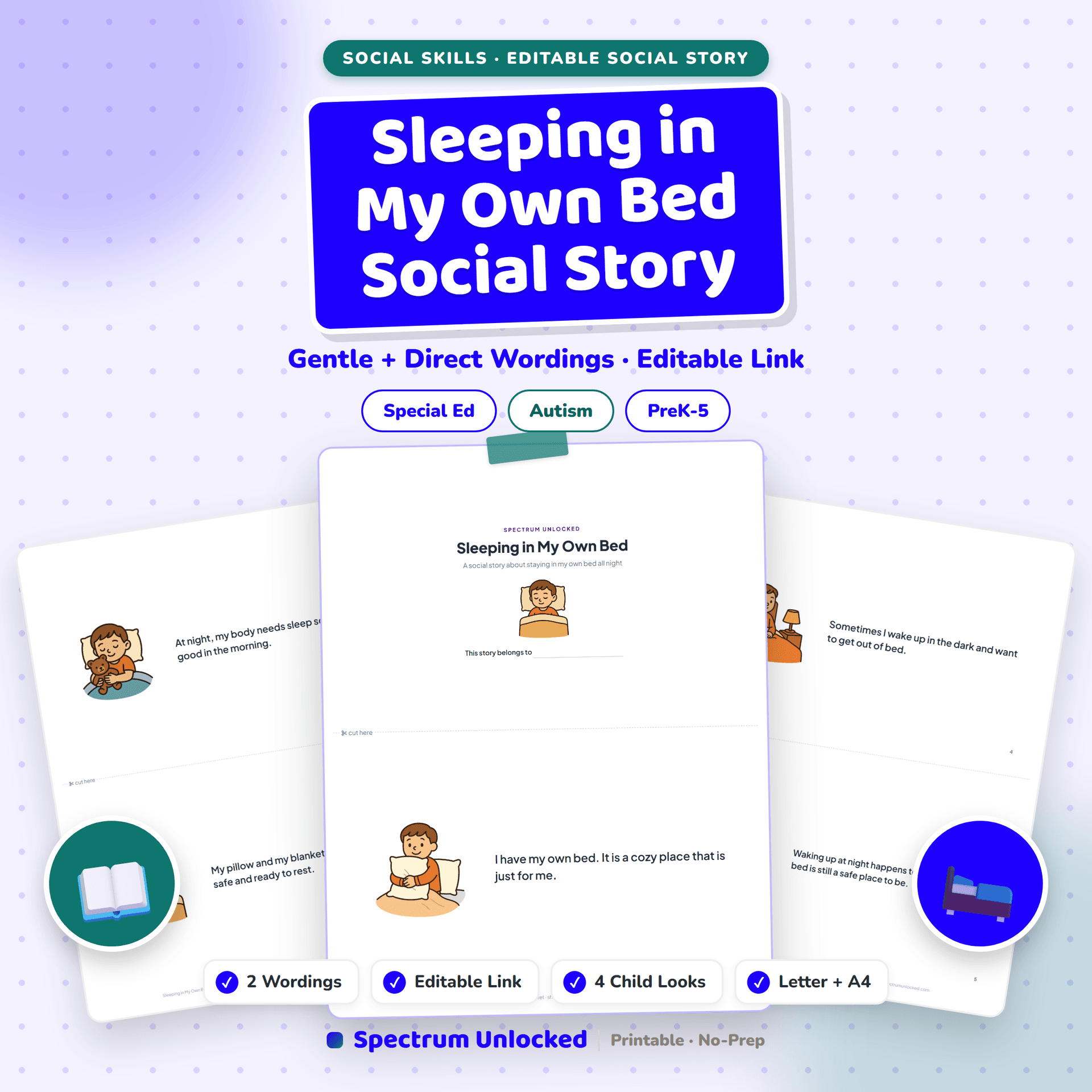

Nothing left to prepare. 25 finished sets, from $3, and every page prints exactly as it is.
When to use this story
Use this story before your child's first bus ride, after a rough one, or during back-to-school weeks when the routine restarts. Read it at calm times in the days beforehand, and consider walking to the real bus stop together once so the story's pages match actual places.
A first bus ride is a chain of unknowns: where to stand, when the bus comes, how to get on, where to sit, when to get off. The story fixes the sequence so each step predicts the next, which is exactly the kind of scaffolding a new routine needs. If your child's ride differs, edit the pages to match.
The story tells the sensory truth instead of promising a smooth ride. Bumps and noise are named as a normal part of riding a bus, and the headphones-or-window page gives your child something to do about it. If your child uses ear defenders or headphones, pack them where small hands can reach them.
The last page does quiet work: in the afternoon, the bus brings me back home. For a child leaving home on a vehicle for the first time, knowing the ride is a loop, not a departure, can be the sentence that matters most.
Frequently asked questions
- How do I prepare my autistic child for riding the school bus?
- Read this story daily in the week before riding starts, visit the bus stop together, and ask the school about a practice ride or meeting the driver; many districts offer both. Keep the morning itself boring and predictable, with the story's steps as the script.
- What steps does the bus story cover?
- Getting a backpack and walking to the stop, waiting for the bus, the door opening and the driver saying hello, holding the handrail up the steps, finding a seat, staying seated while the bus moves, and walking down the steps into school. The final page covers the ride home.
- The bus is too loud for my child. What helps?
- The story names the noise as normal and rehearses two responses: wearing headphones or looking out the window. Ear defenders or noise-reducing headphones in the backpack, plus a seat near the front where the crowd noise is lower, help many riders.
- Why does my child resist getting on the bus?
- Often it is the pile-up of unknowns rather than the bus itself: an unfamiliar adult, an unassigned seat, no certainty about coming home. The story removes the unknowns one page at a time, and the going-home page answers the biggest one directly.
- Is this school bus social story free to print?
- Yes. The full story is on this page, and the maker creates the printable booklet at no cost, with your child's name and photos added if you choose.
- Can I edit the story to match our bus route?
- Yes. Every page is editable in the maker, so you can name the bus stop, the driver, or the seat your child likes, swap the pictures, add photos, and switch the story into your child's name before you print.
- Who developed social stories?
- Social Stories were developed by Carol Gray in the early 1990s. The gentle version of this template follows her published guidance, including describing more than coaching, but Spectrum Unlocked is not affiliated with or endorsed by Carol Gray.
Related stories
Fire Drill and Fire Alarm Social Story for Autism
A free printable social story that explains the school fire drill as practice, not danger: the loud alarm, lining up, waiting outside, and walking back in.
Following Directions Social Story
A free printable social story that breaks listening into steps a child can see: stop, look, listen, and ask for a repeat when the words go by too fast.
Related guides
Social Stories were developed by Carol Gray. Spectrum Unlocked is not affiliated with or endorsed by Carol Gray; the gentle version of this template follows her published describe-more-than-coach guidance.