School & Social Skills
Following Directions Social Story
A social story that makes an invisible skill visible. It breaks following directions into steps, stop, look at the person, listen to all the words, say the direction back in your head, and states one thing plainly: missing a direction happens to everyone, and asking for a repeat is always okay.
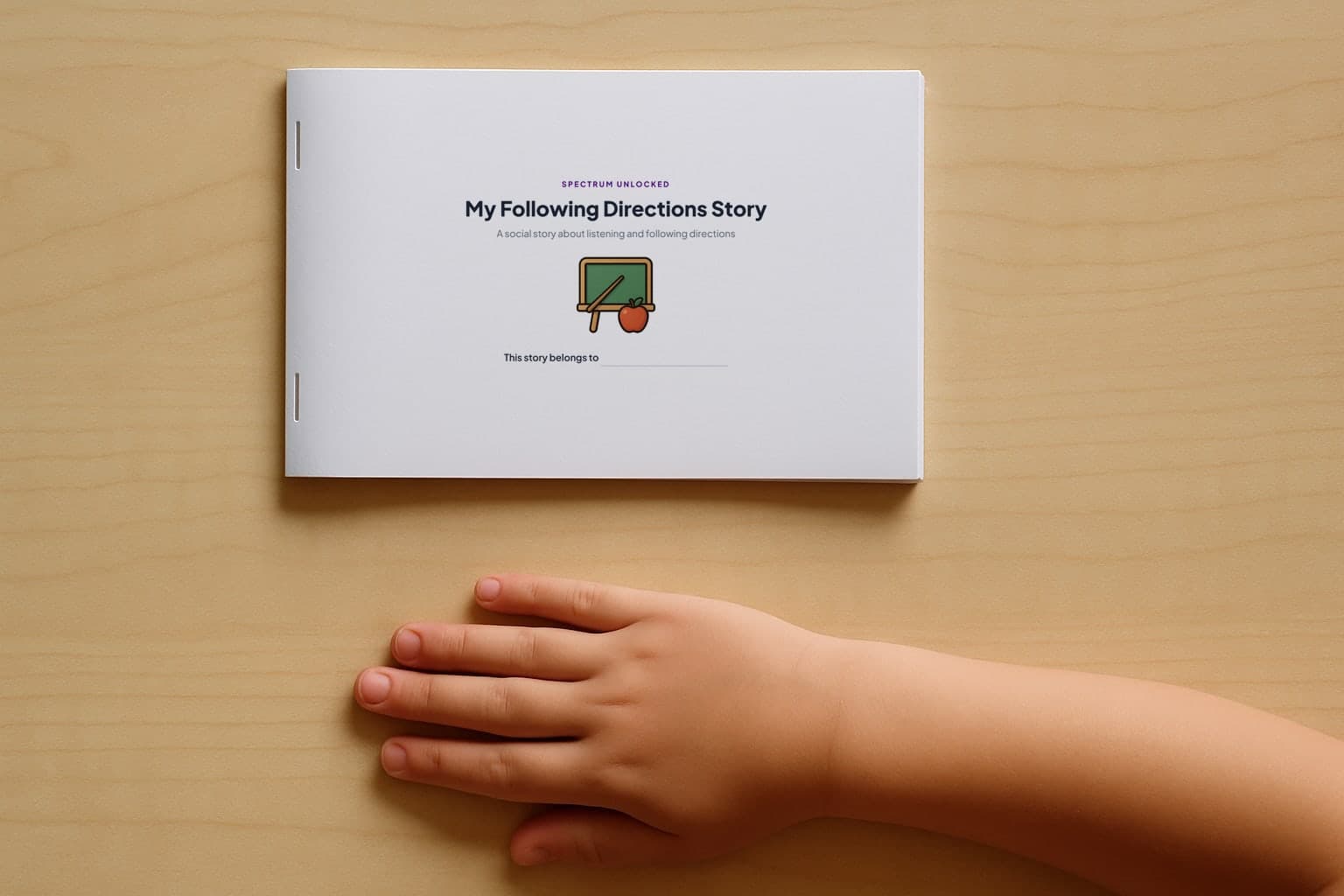
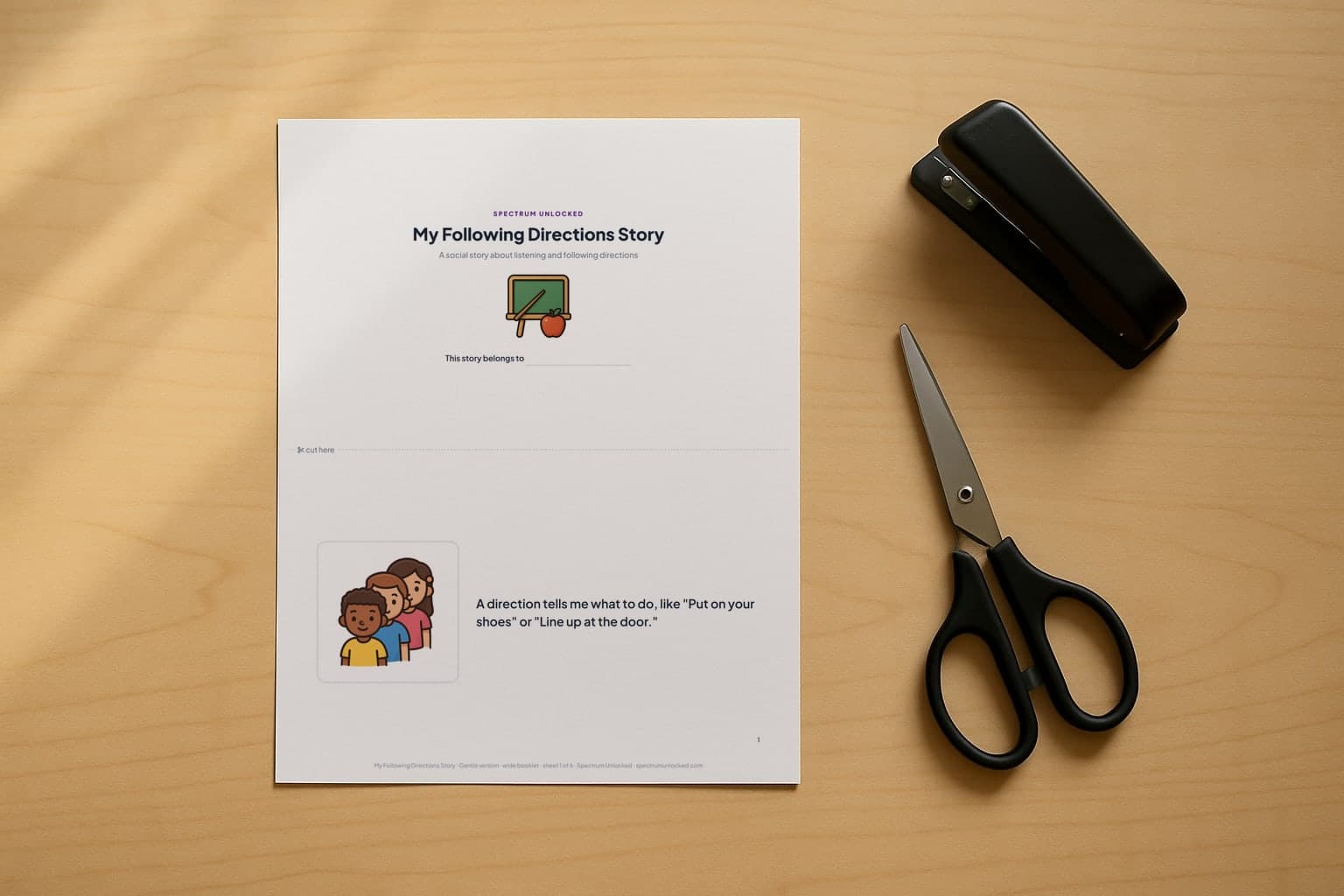
Download the printable PDF
Print the story as-is, no email required. Match the pictures to your child and pick your page layout, then download.

The story
Read the full story below. In the maker you can add your child's name, swap pictures, and print it as a booklet.
My Following Directions Story
A social story about listening and following directions
- 1
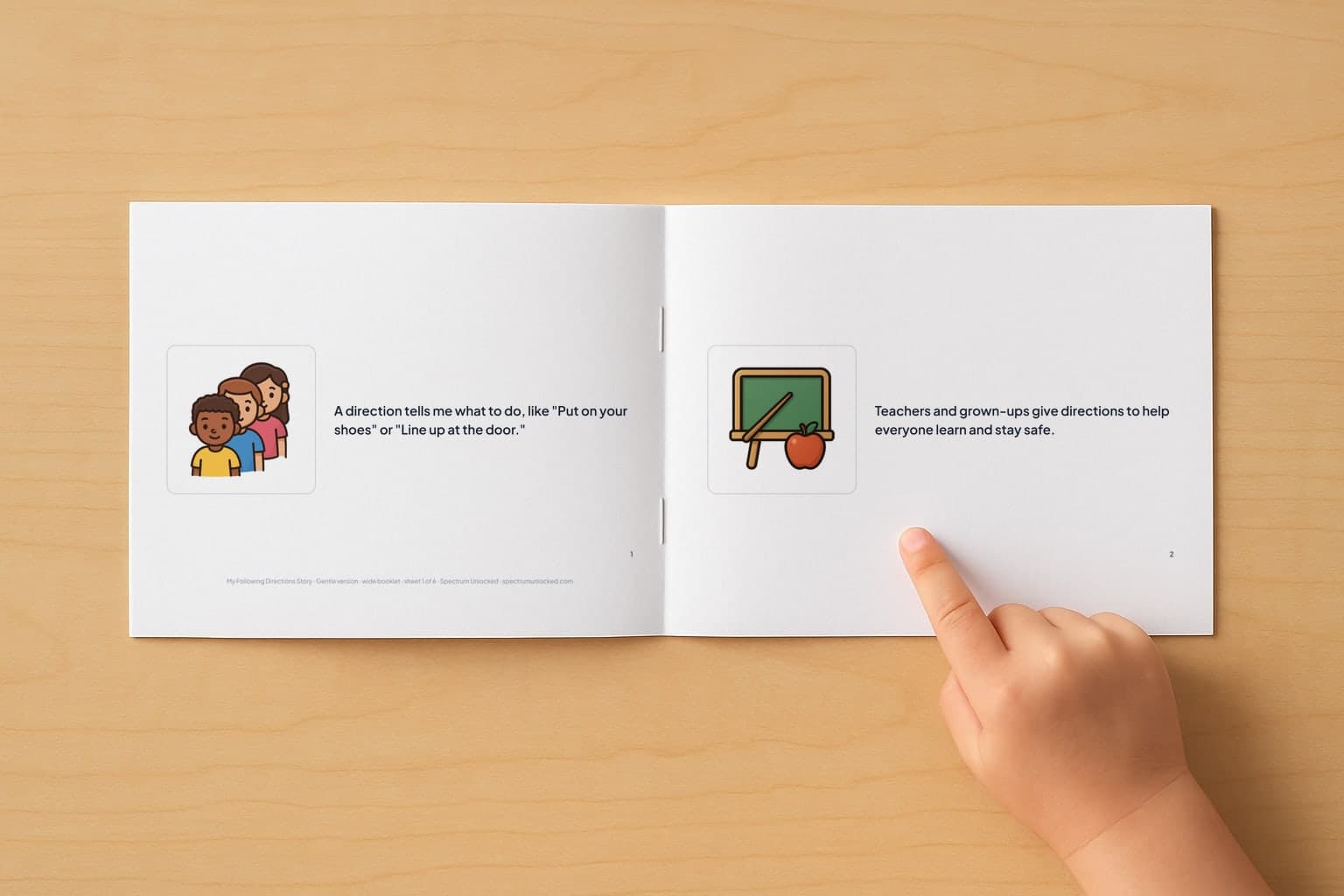
 A direction tells me what to do, like "Put on your shoes" or "Line up at the door."Describes
 - 2Teachers and grown-ups give directions to help everyone learn and stay safe.Describes
- 3
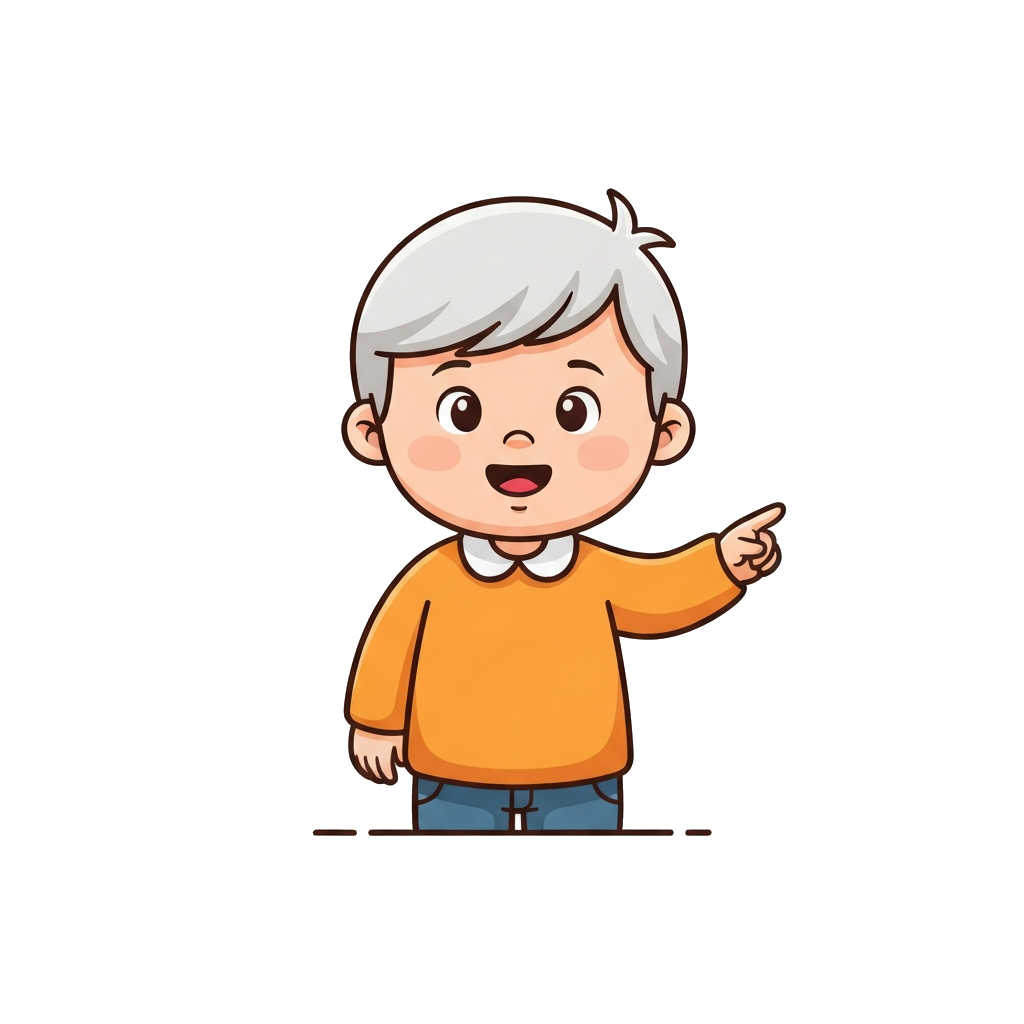 Directions are easier to follow when I hear all the words.Describes
 - 4
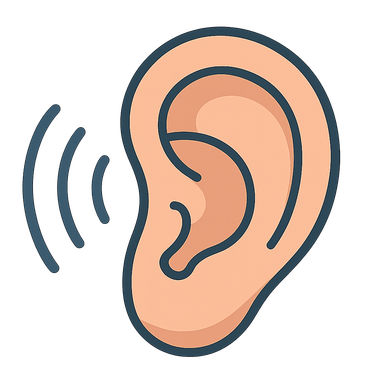 When someone gives a direction, I can stop, look at the person, and listen.Coaches
 - 5
 I can say the direction in my head, like "Shoes first, then backpack."Coaches
 - 6
 Sometimes I miss a direction or do not understand it. That happens to everyone.Describes
 - 7
 Asking for a repeat is okay. I can say, "Can you say it again, please?"Coaches
 - 8
 Grown-ups are usually happy to say a direction again. Asking shows I want to get it right.Describes
 - 9
 When I follow a direction, I know what to do next, and my body feels calm.Describes
 - 10
 Following directions helps me learn new things at school and at home.Describes
Single stories, $3 each
When one situation is the whole problem, take just that story. A gentle and a firmer wording, four child looks, booklet pages in US Letter and A4, and a link to edit it free.
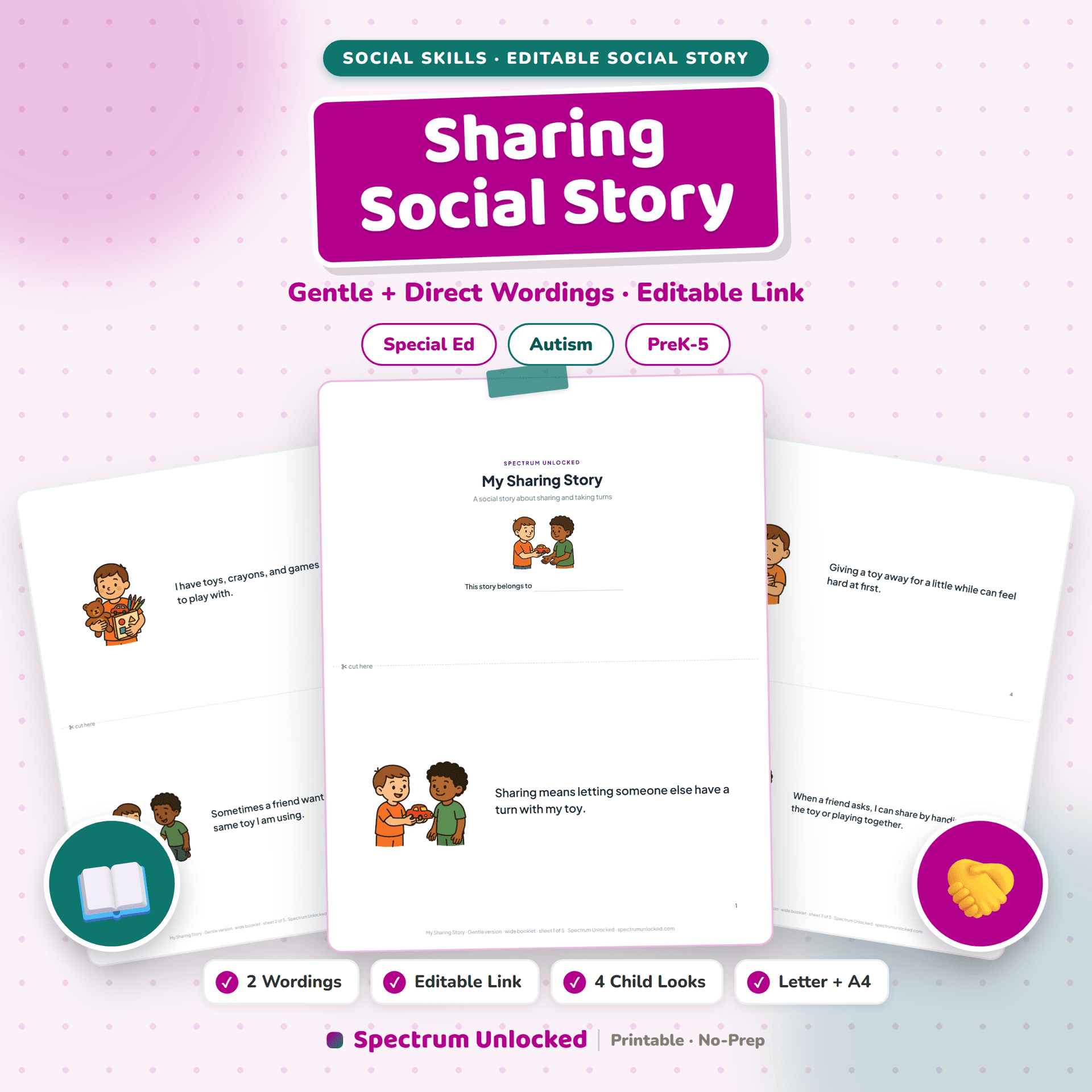
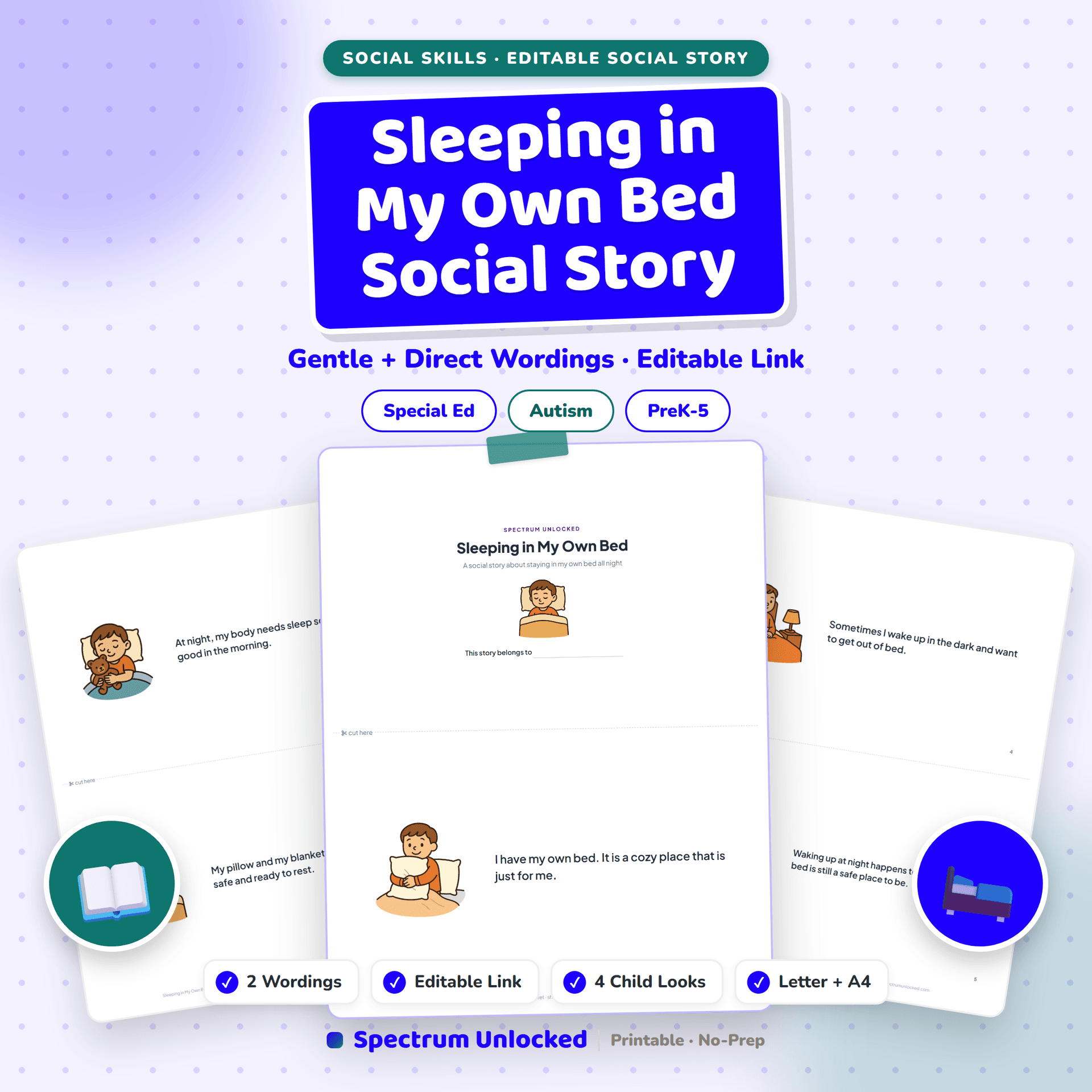
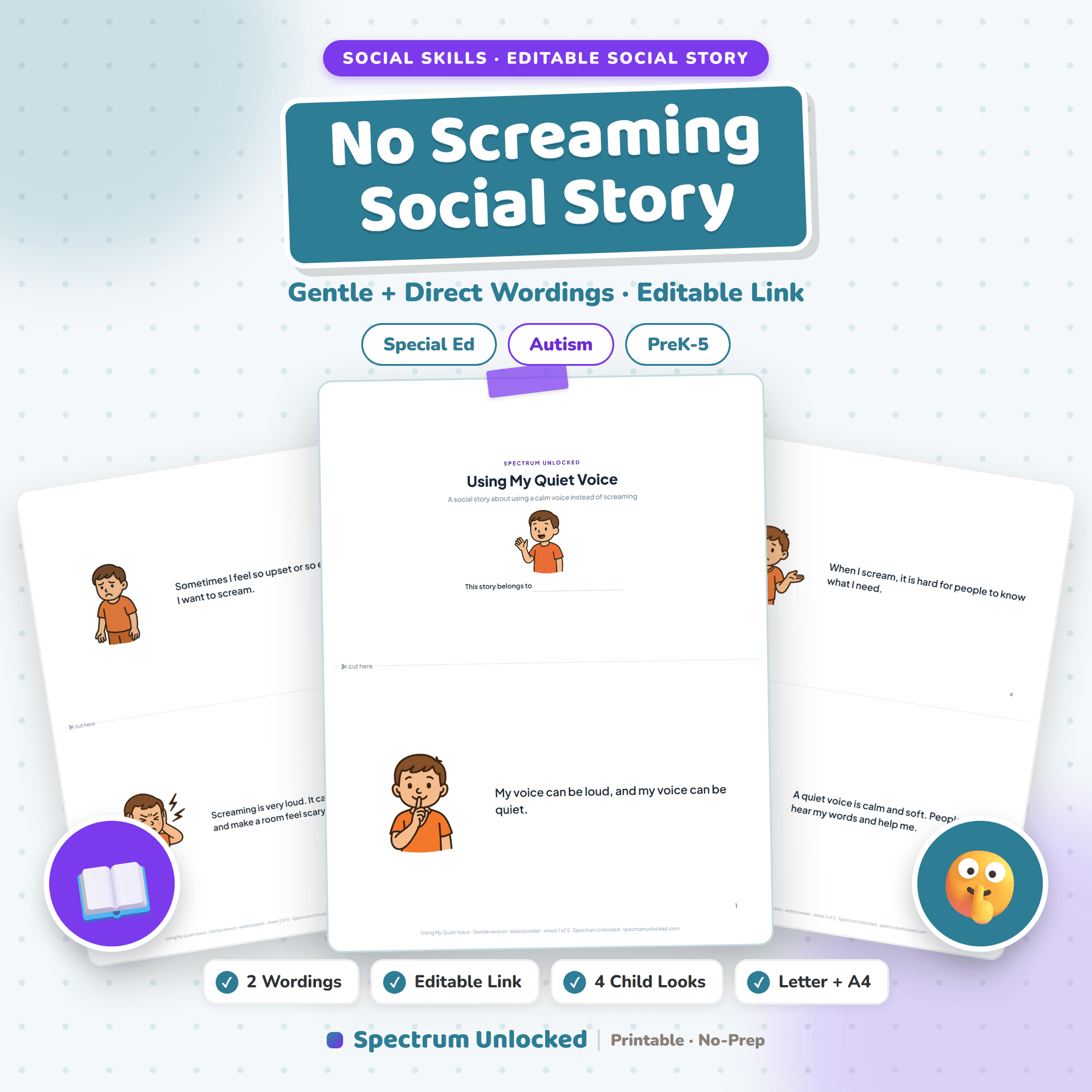
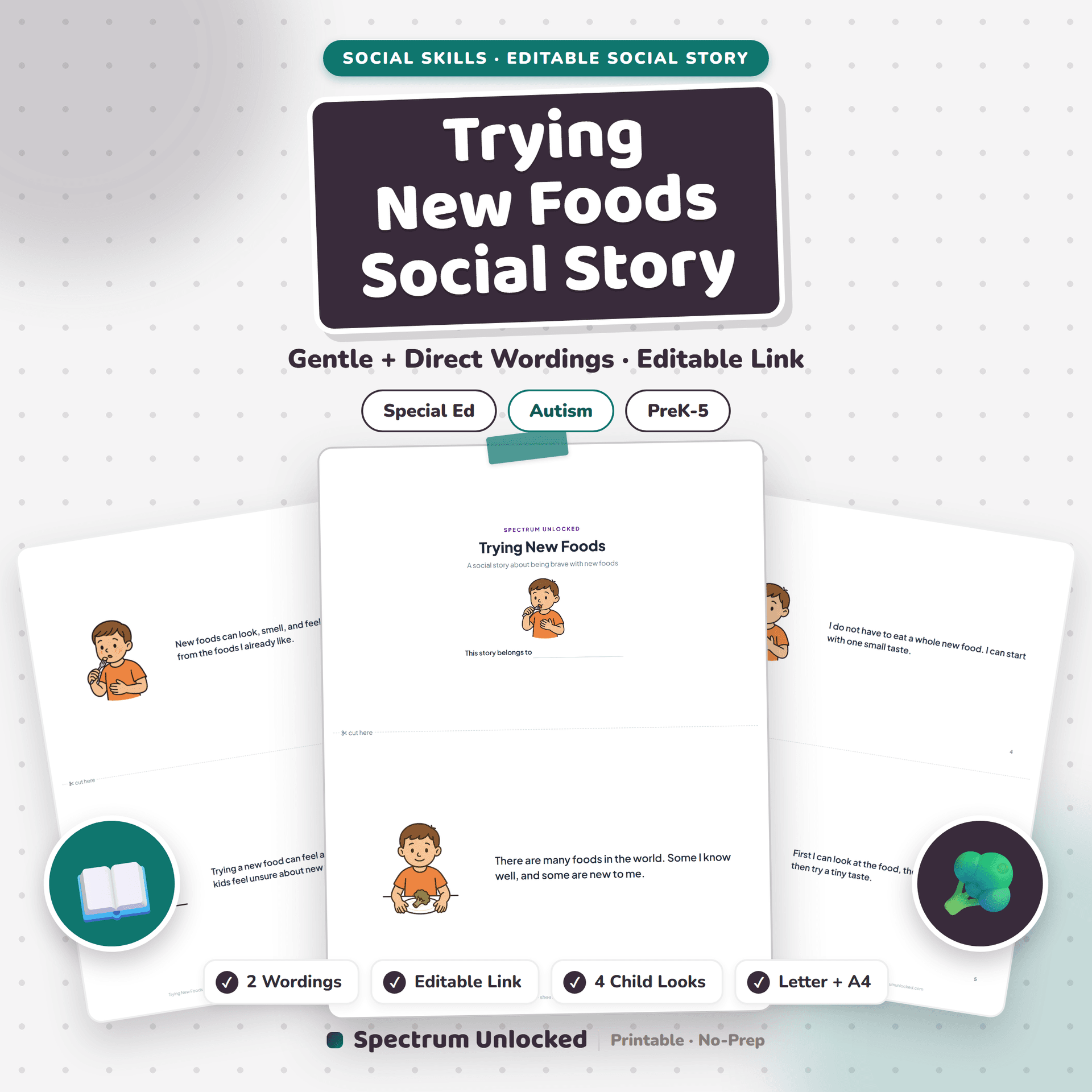
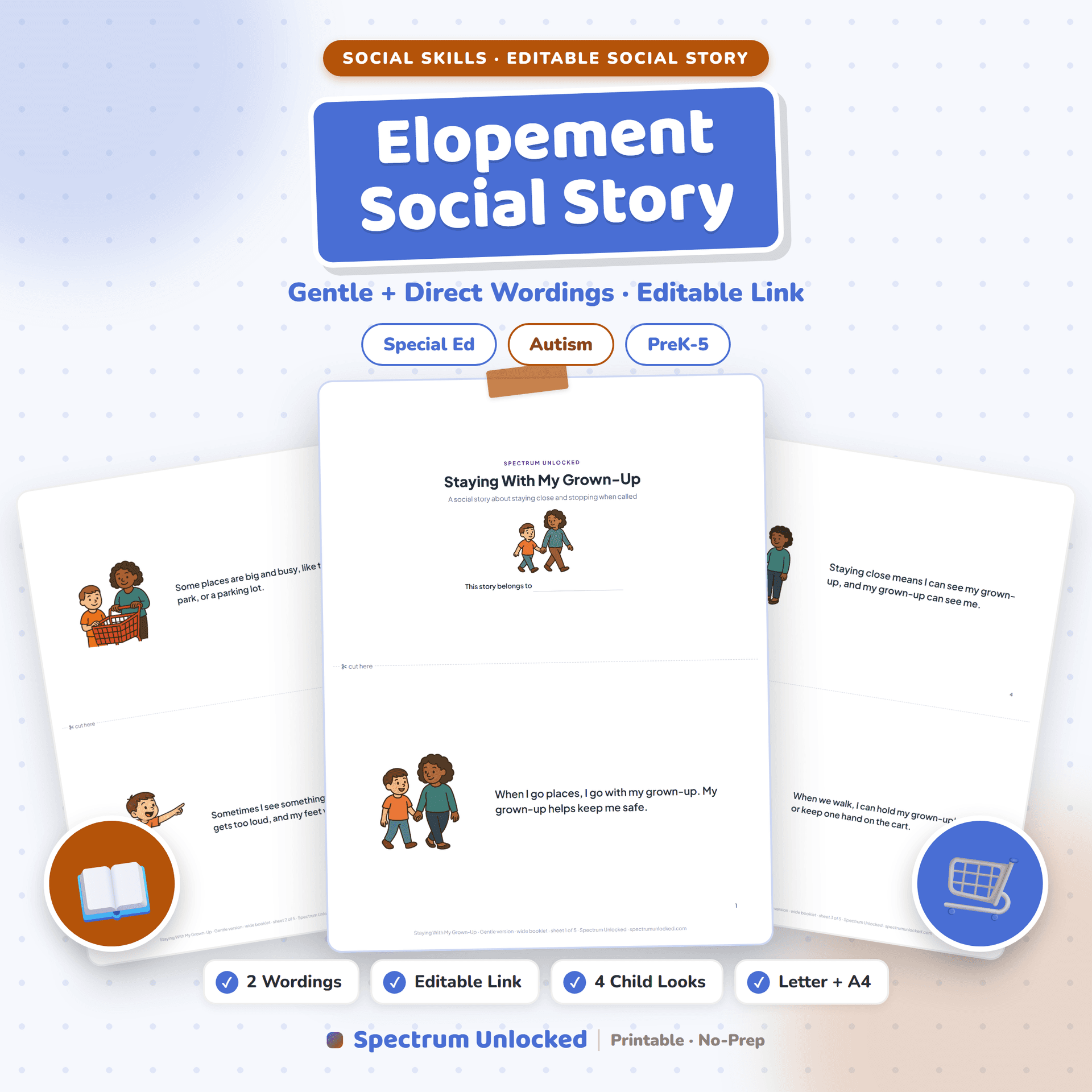
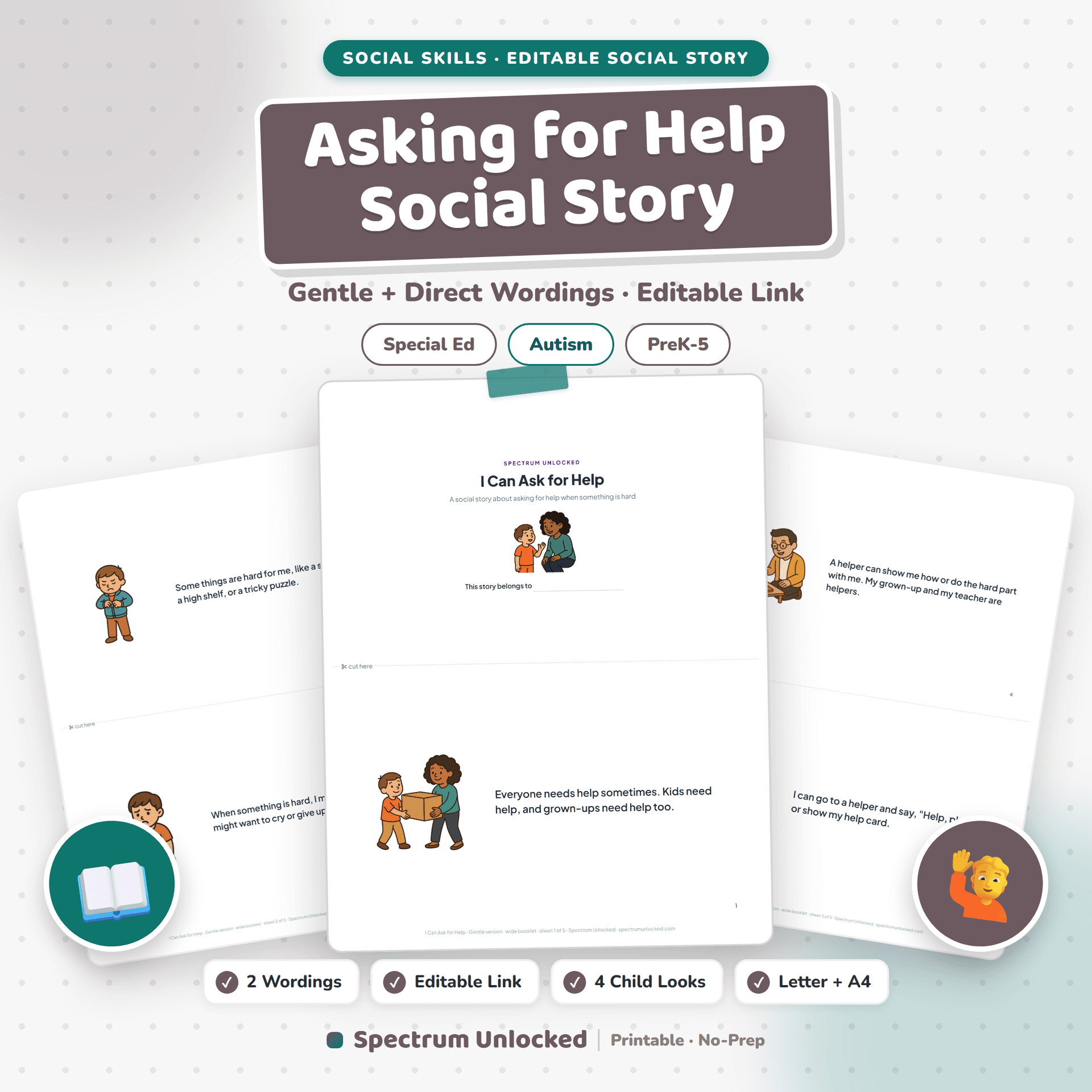
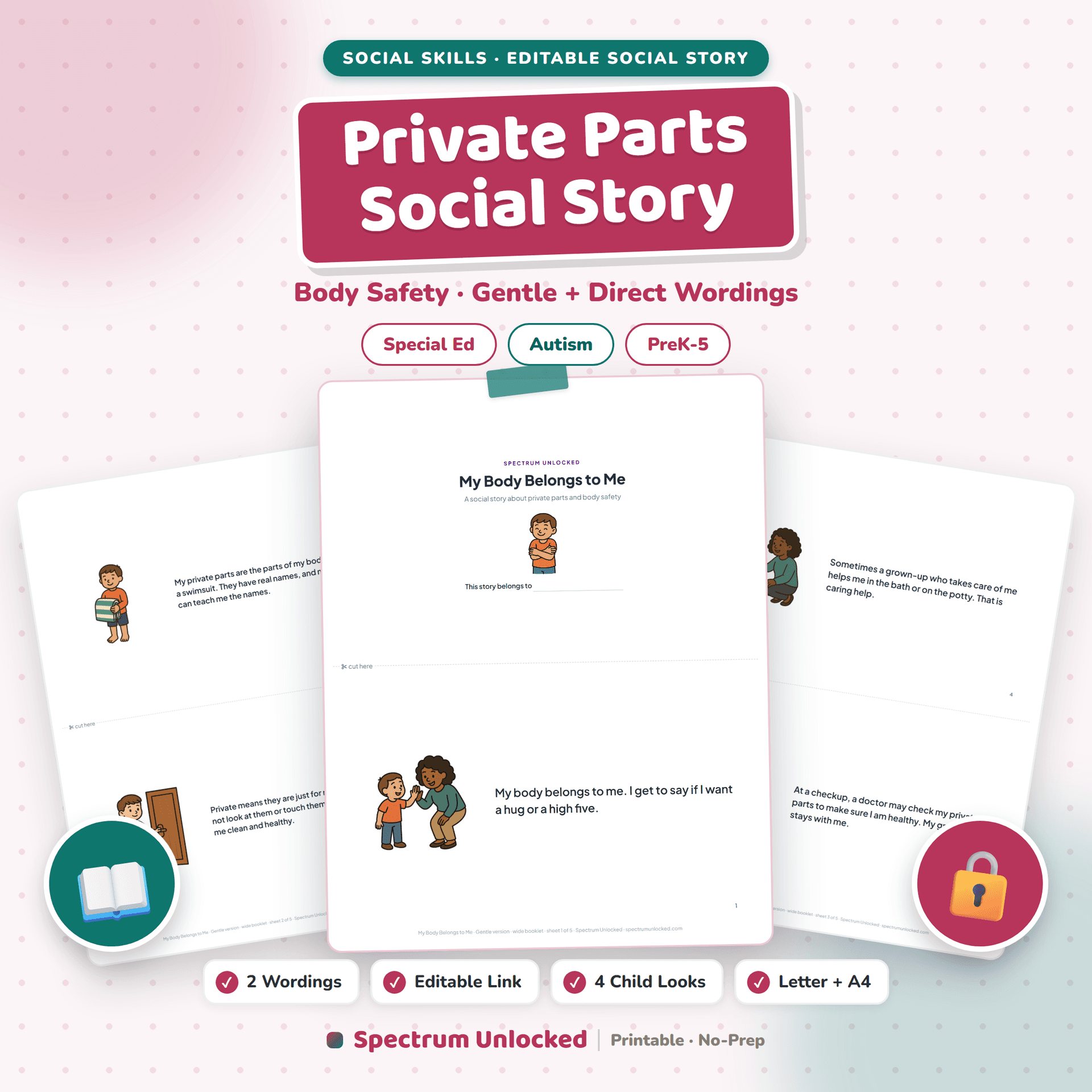
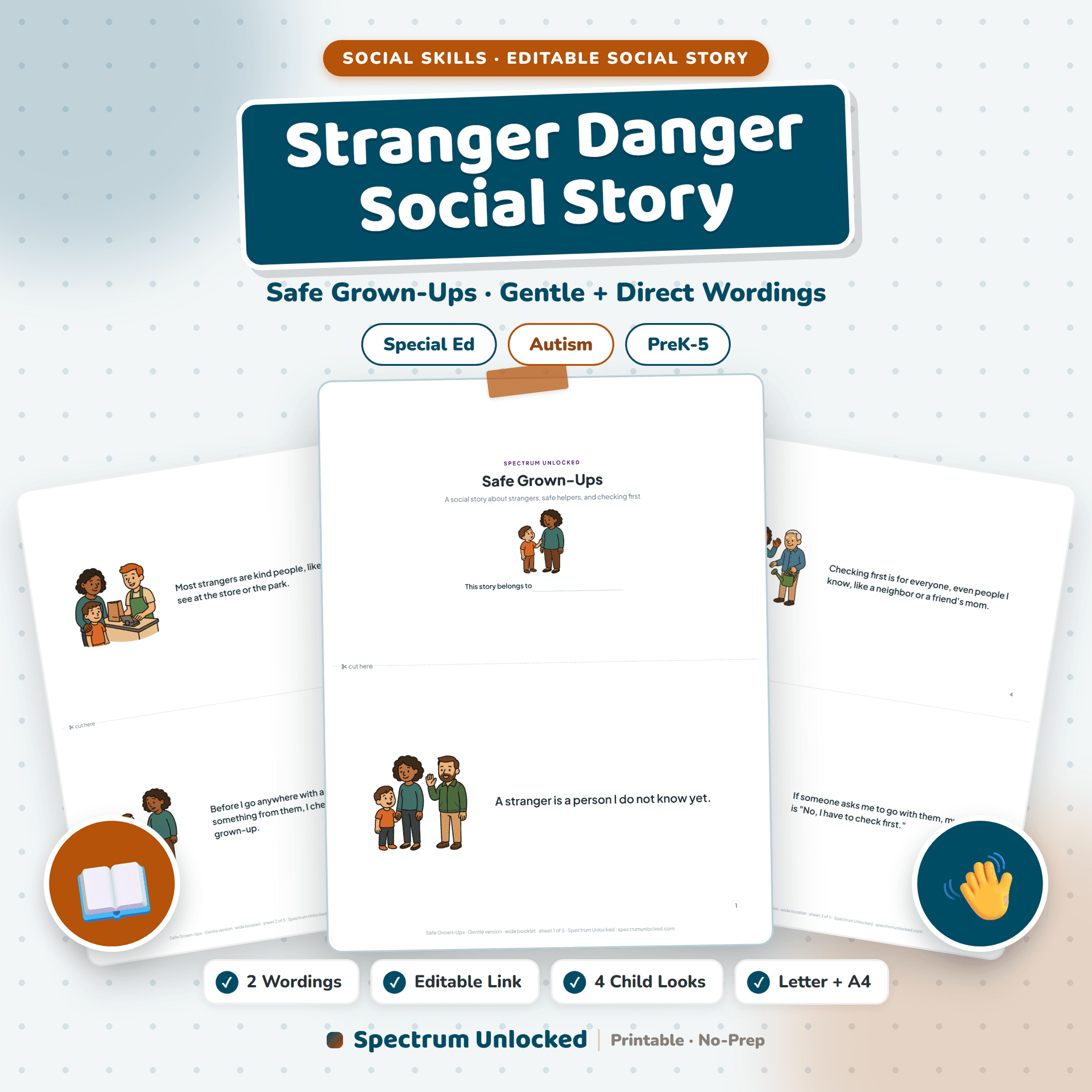
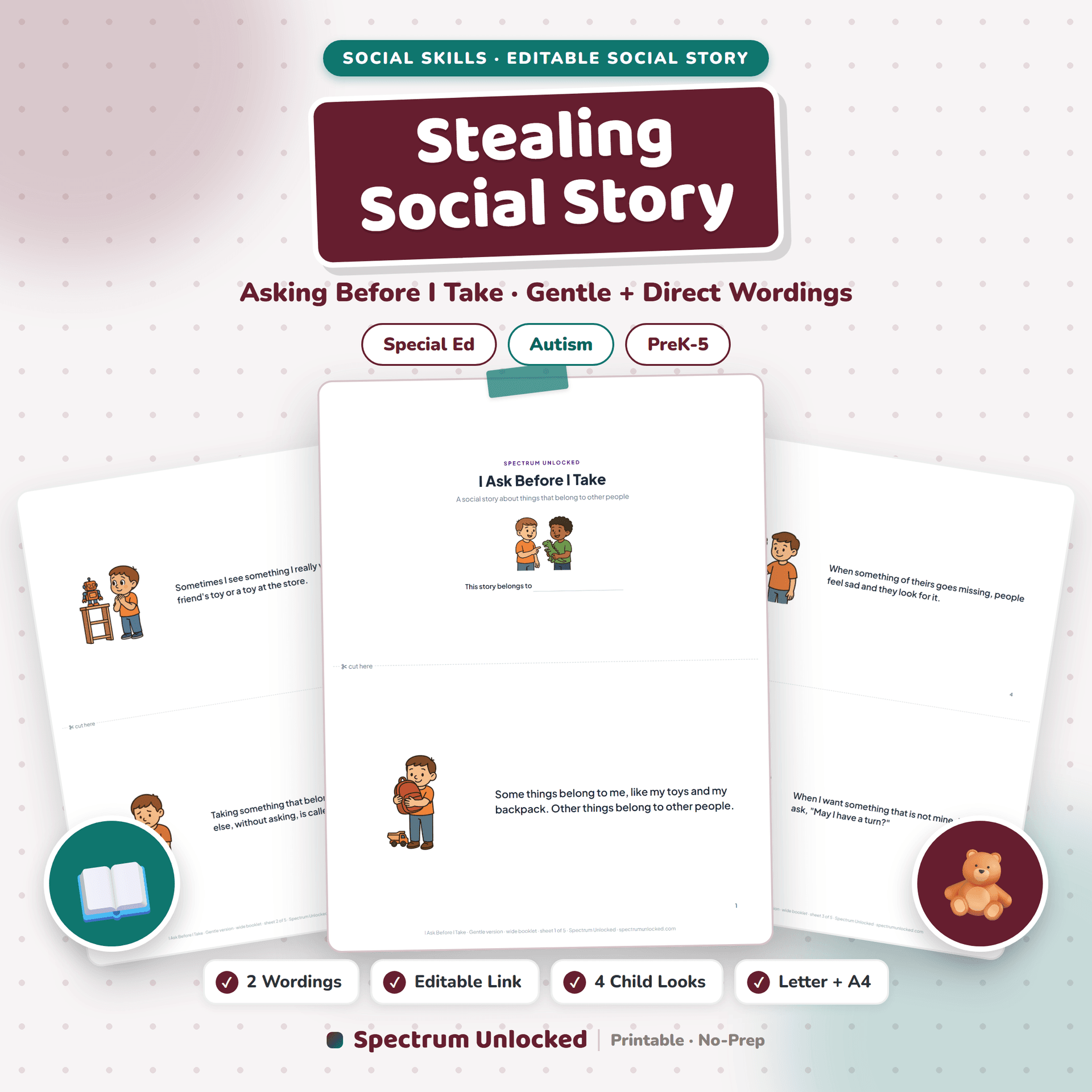
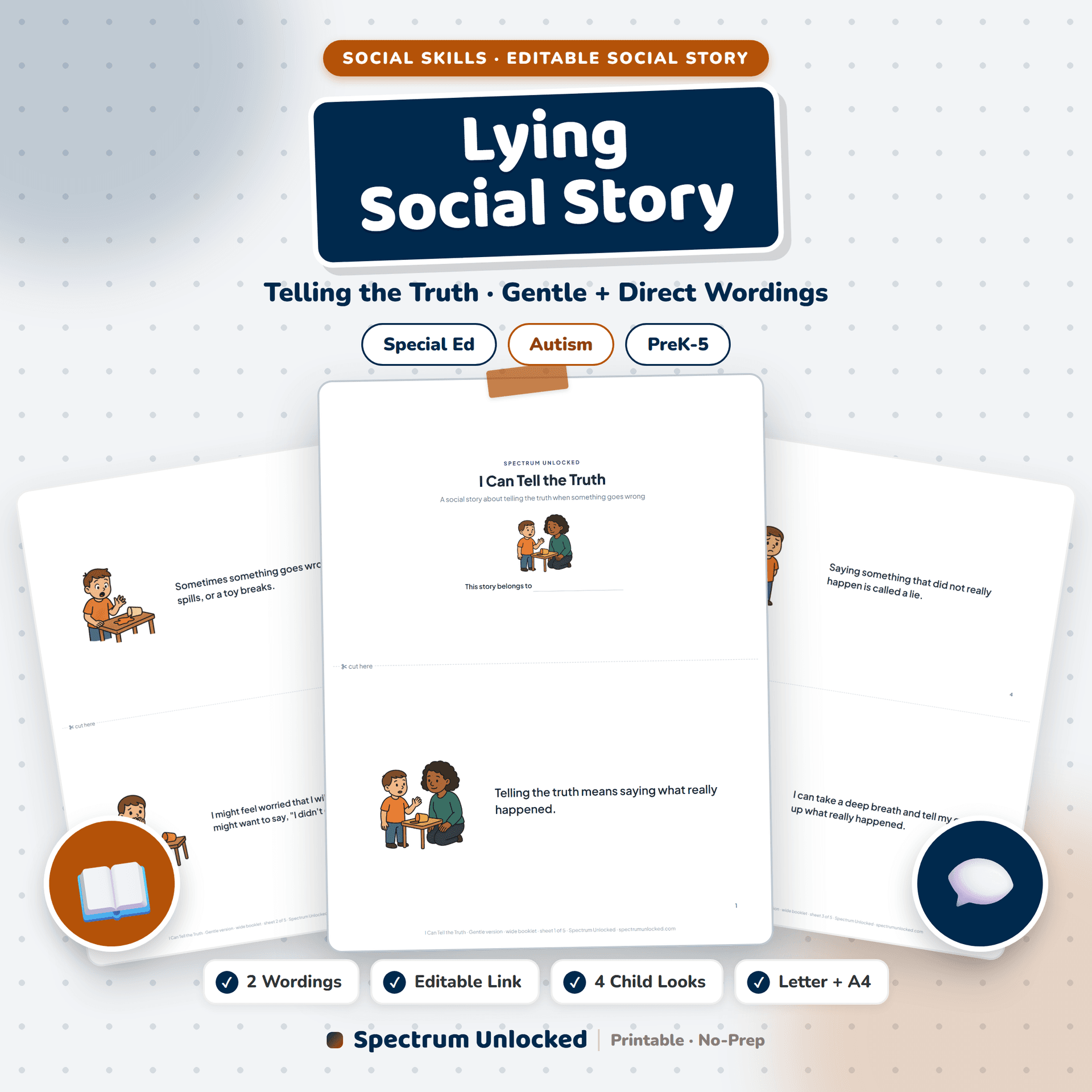
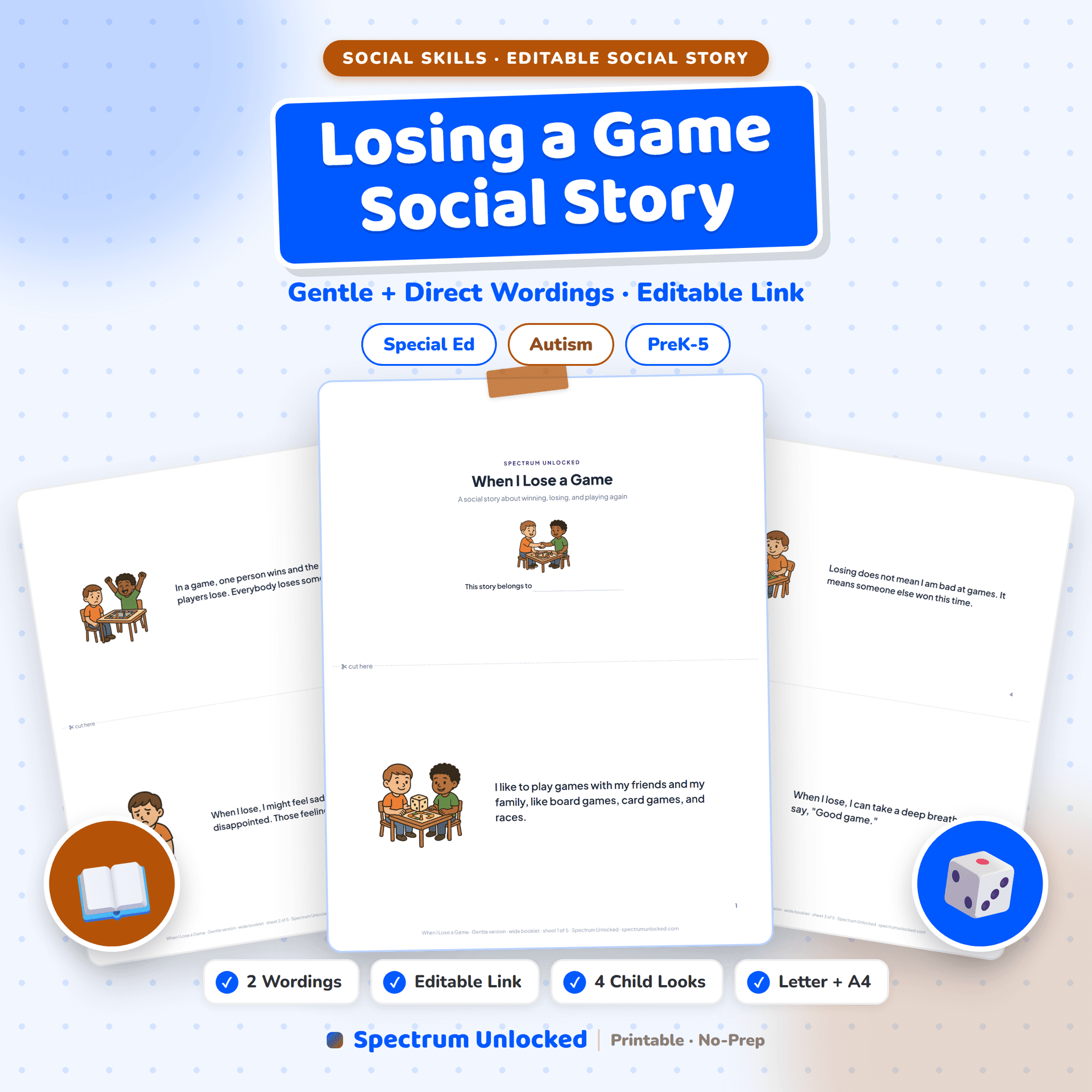
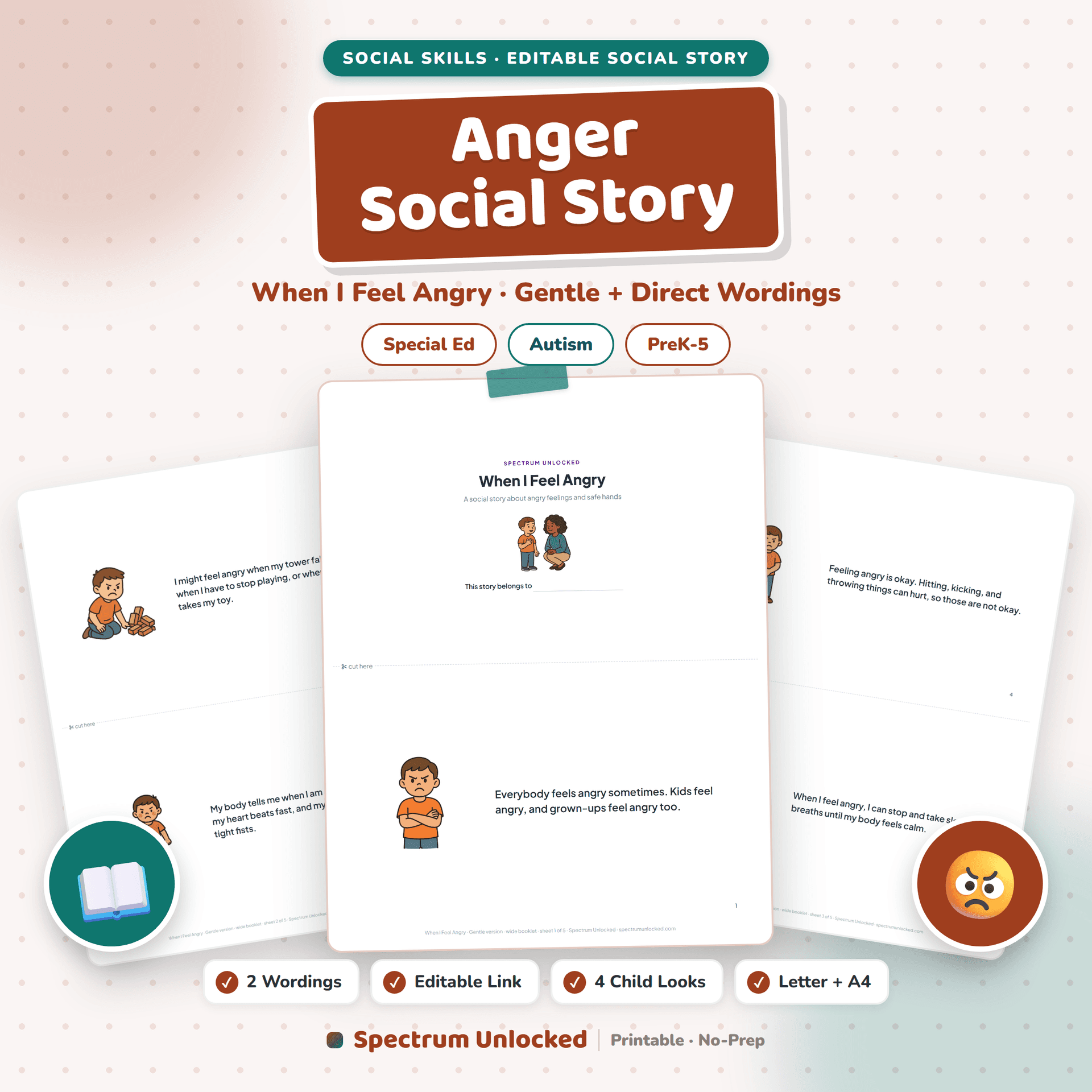
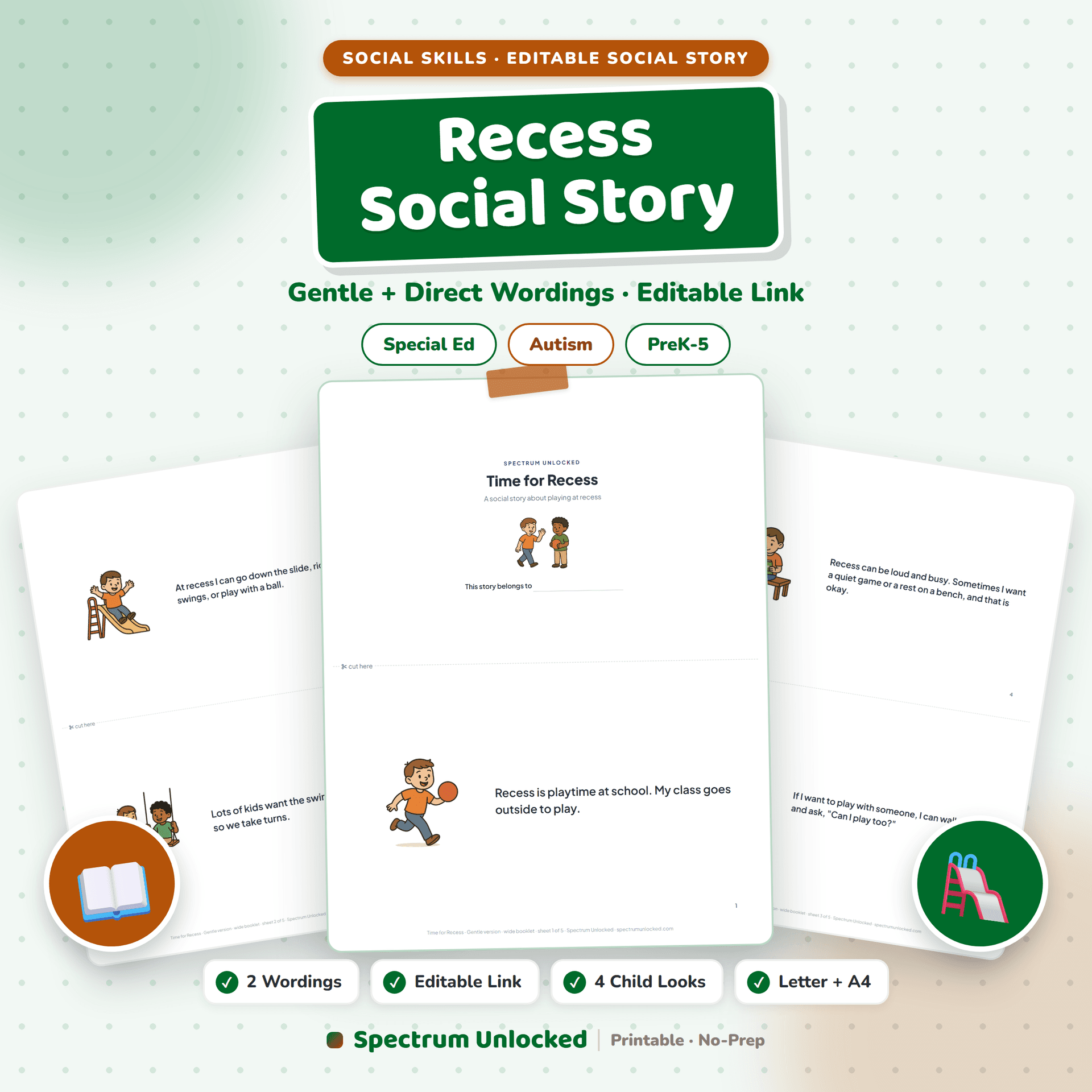
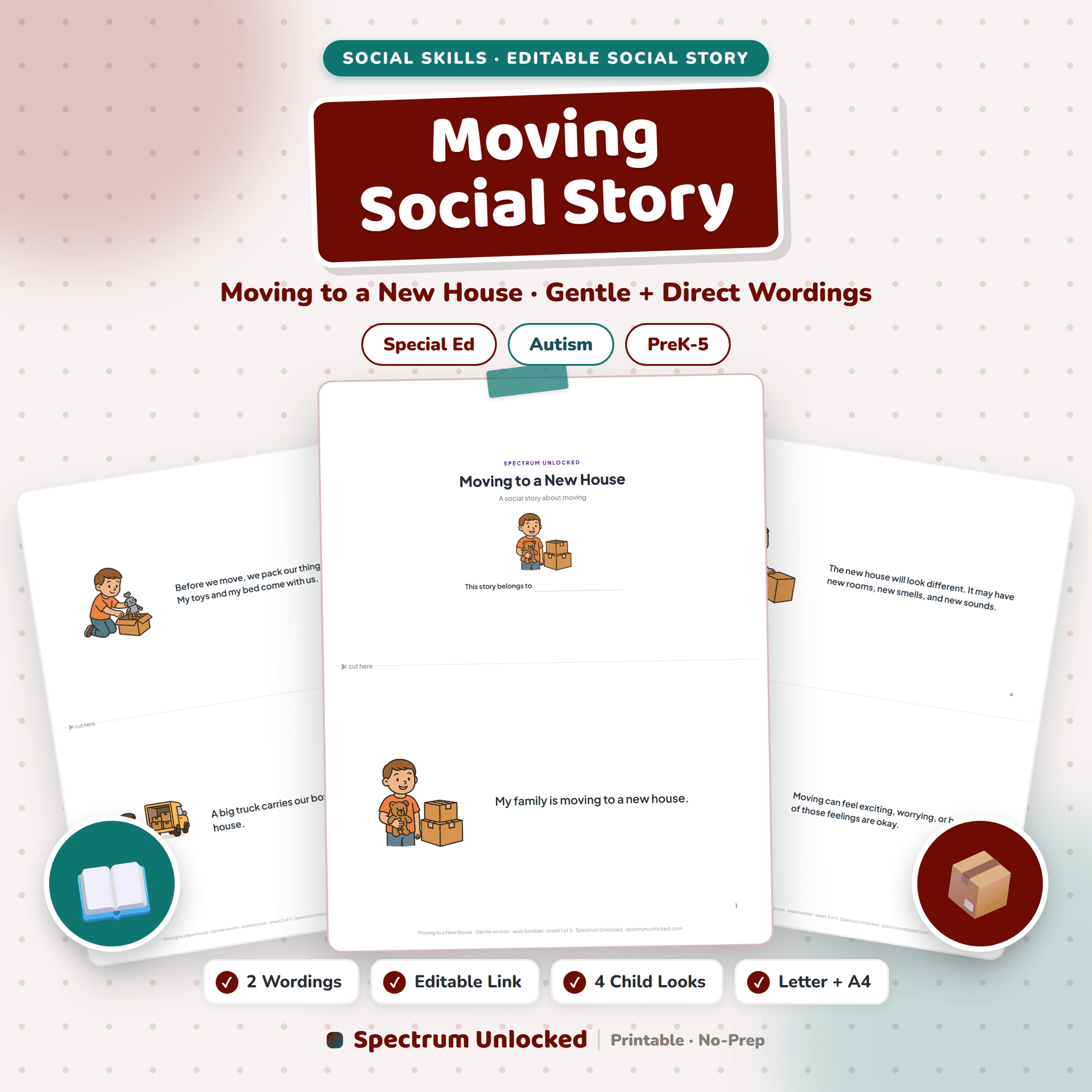
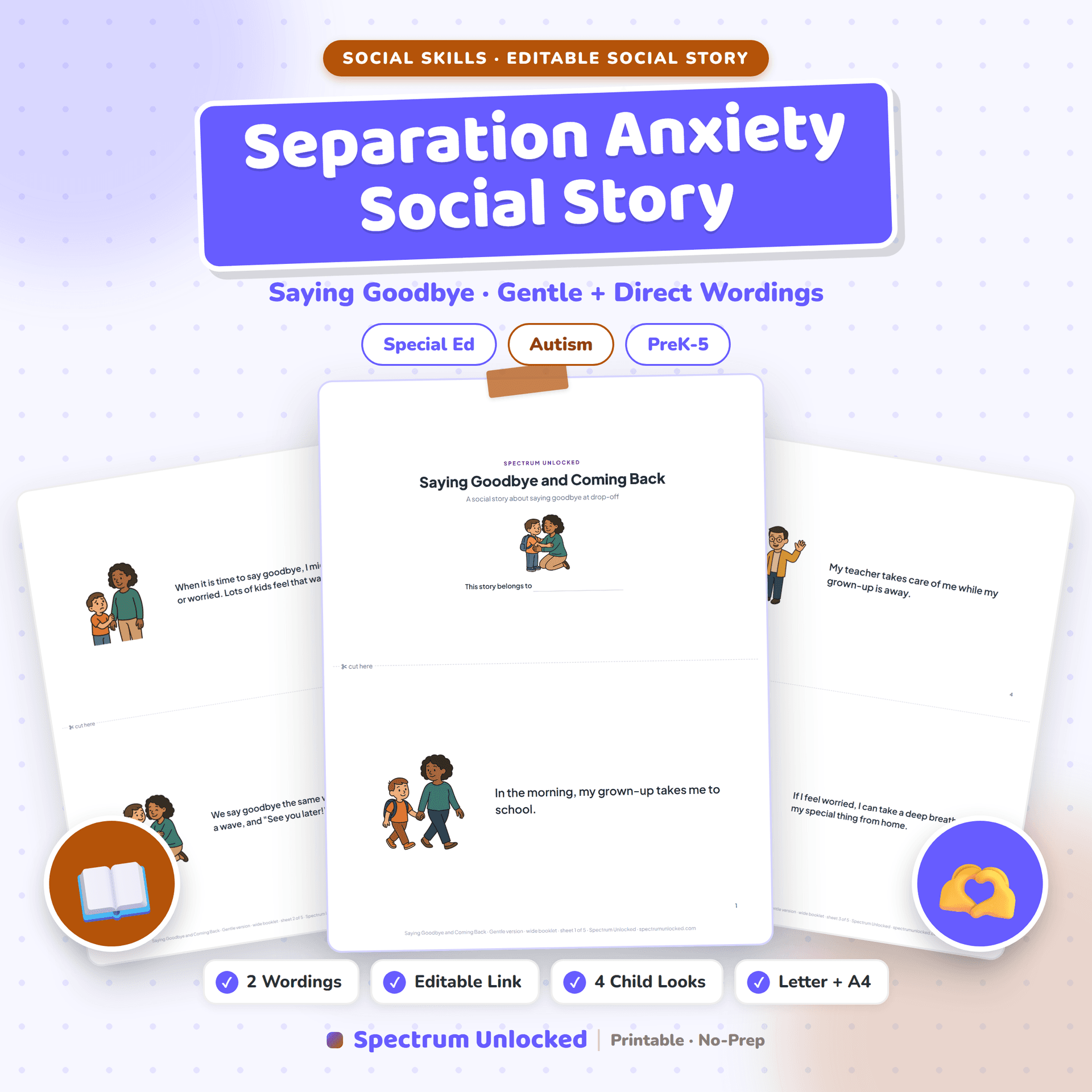
Nothing left to prepare. 25 finished sets, from $3, and every page prints exactly as it is.
When to use this story
Use this story when directions seem to bounce off, when multi-step instructions fall apart after step one, or when a teacher reports that your child needs directions repeated. Read it at calm times, and again before instruction-heavy stretches like the first weeks of school or a new activity.
A missed direction usually looks like defiance and usually is not. The story treats it as a listening mechanics problem: directions are easier to follow when you hear all the words, so the first move is stopping and looking, not obeying faster. That framing keeps the story blame-free.
The repeat pages carry the most weight. The story says, "Sometimes I miss a direction or do not understand it. That happens to everyone," then hands your child the script "Can you say it again, please?" Naming the miss as normal removes the shame that stops many children from asking, and the story adds that grown-ups are usually glad to be asked.
At home, meet the story halfway: give one direction at a time, keep the words short, and pause after speaking. The saying-it-back page, shoes first, then backpack, pairs naturally with first-then language if your family already uses it.
Frequently asked questions
- What does a following directions social story teach?
- It defines what a direction is with concrete examples, explains why grown-ups give them, and walks through the listening steps: stop, look at the person, listen to all the words, and say the direction back in your head. It also rehearses asking for a repeat when something is missed.
- My child ignores instructions. Will this story help?
- It helps when the problem is missing or losing the direction rather than refusing it, which is common. The story gives your child a repeatable way to catch directions and a script for asking again. If refusal is the real pattern, pair it with the accepting no story.
- How should I give directions so my child can follow them?
- One step at a time, short words, and a pause before anything else gets said. Multi-step directions fall apart fastest, so break them up or use first-then phrasing, shoes first, then backpack, which is exactly the self-talk the story rehearses.
- Is it okay that my child asks me to repeat things a lot?
- Yes, and the story says so directly. Asking for a repeat means your child wants to get it right, which is the behavior to protect. If repeats are constant, check whether directions are too long, too fast, or competing with noise before assuming a listening problem.
- Is this story free and printable?
- Yes. The whole story is on this page, and the maker builds the printable booklet at no cost. Add your child's name and photos first if you want a personalized copy.
- Can I change the words in the story?
- Yes. Open it in the maker to edit any page, swap the pictures, and switch between I and your child's name. If certain directions come up every day in your house, like line up at the door or start your homework, write those exact words into the pages.
- Who developed social stories?
- Social Stories were developed by Carol Gray in the early 1990s. The gentle version of this template follows her published guidance, including describing more than coaching, but Spectrum Unlocked is not affiliated with or endorsed by Carol Gray.
Related stories
Taking Turns Social Story
Waiting for a turn can feel like losing the toy forever. This free printable social story explains how turns work and what to do while waiting for yours.
When Plans Change Social Story
When rain or a closed store wrecks the plan, this free printable social story helps autistic kids handle the change with a deep breath and one simple question.
Social Stories were developed by Carol Gray. Spectrum Unlocked is not affiliated with or endorsed by Carol Gray; the gentle version of this template follows her published describe-more-than-coach guidance.