Behavior & Big Feelings
Throwing Things Social Story
A social story that draws a line a child can actually use: some things are for throwing, like balls outside, and most things are not. The gentle version redirects the urge; the firmer We Do Not Throw version spells out what happens when a toy breaks. Both are below, ready to personalize.
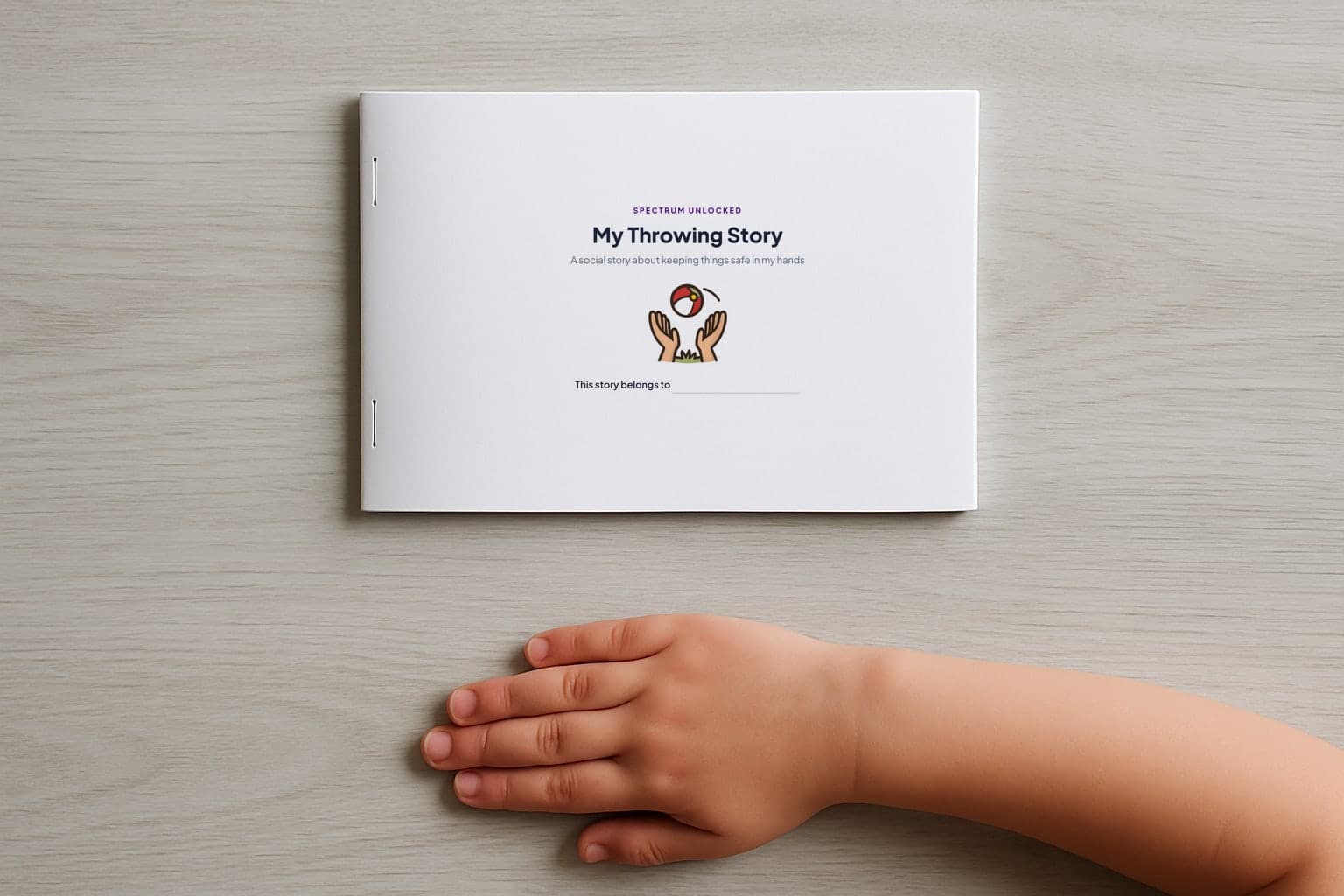
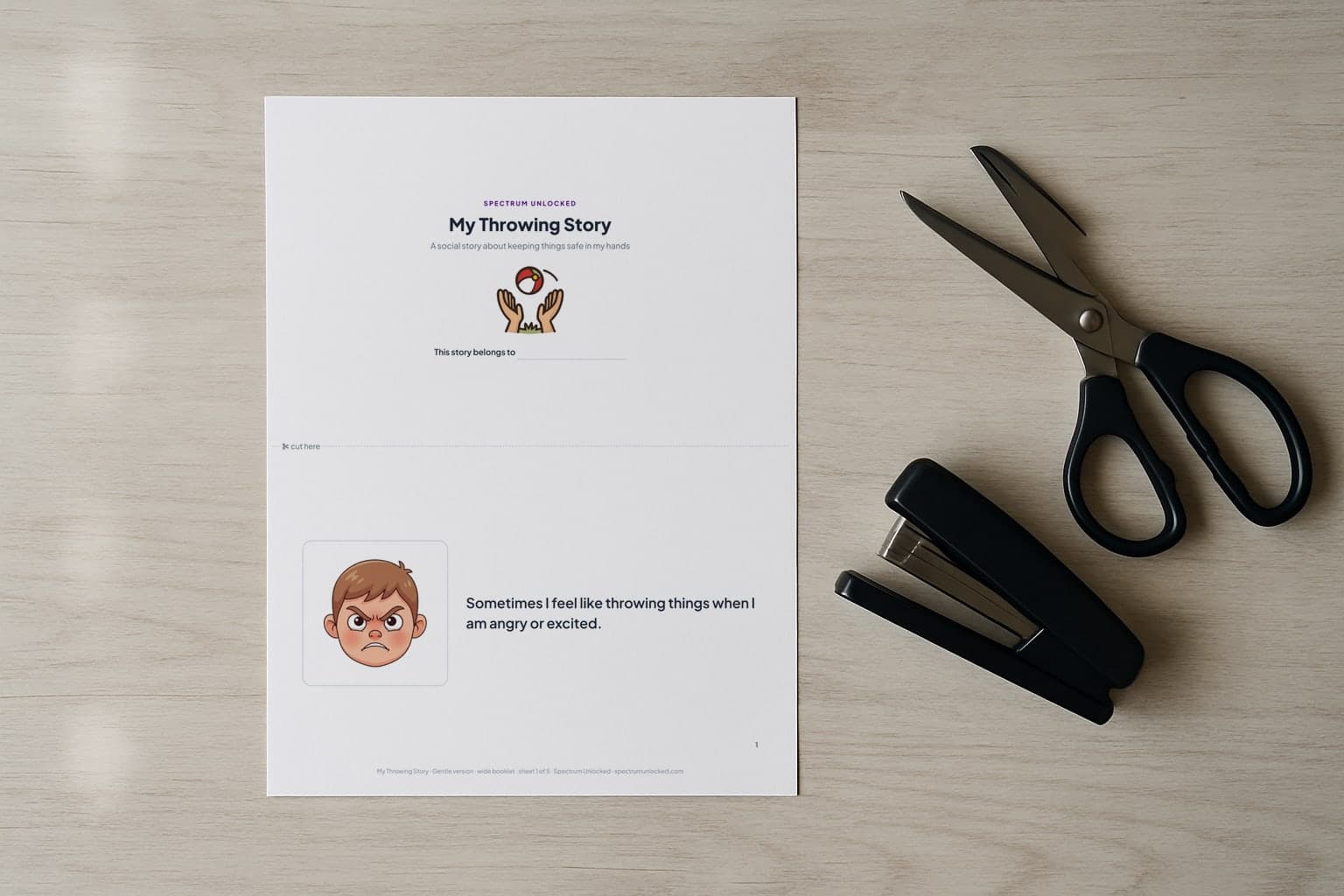
Download the printable PDF
Print the story as-is, no email required. Match the pictures to your child and pick your page layout, then download.
The story
Read the full story below. In the maker you can add your child's name, swap pictures, and print it as a booklet.
My Throwing Story
A social story about keeping things safe in my hands
- 1
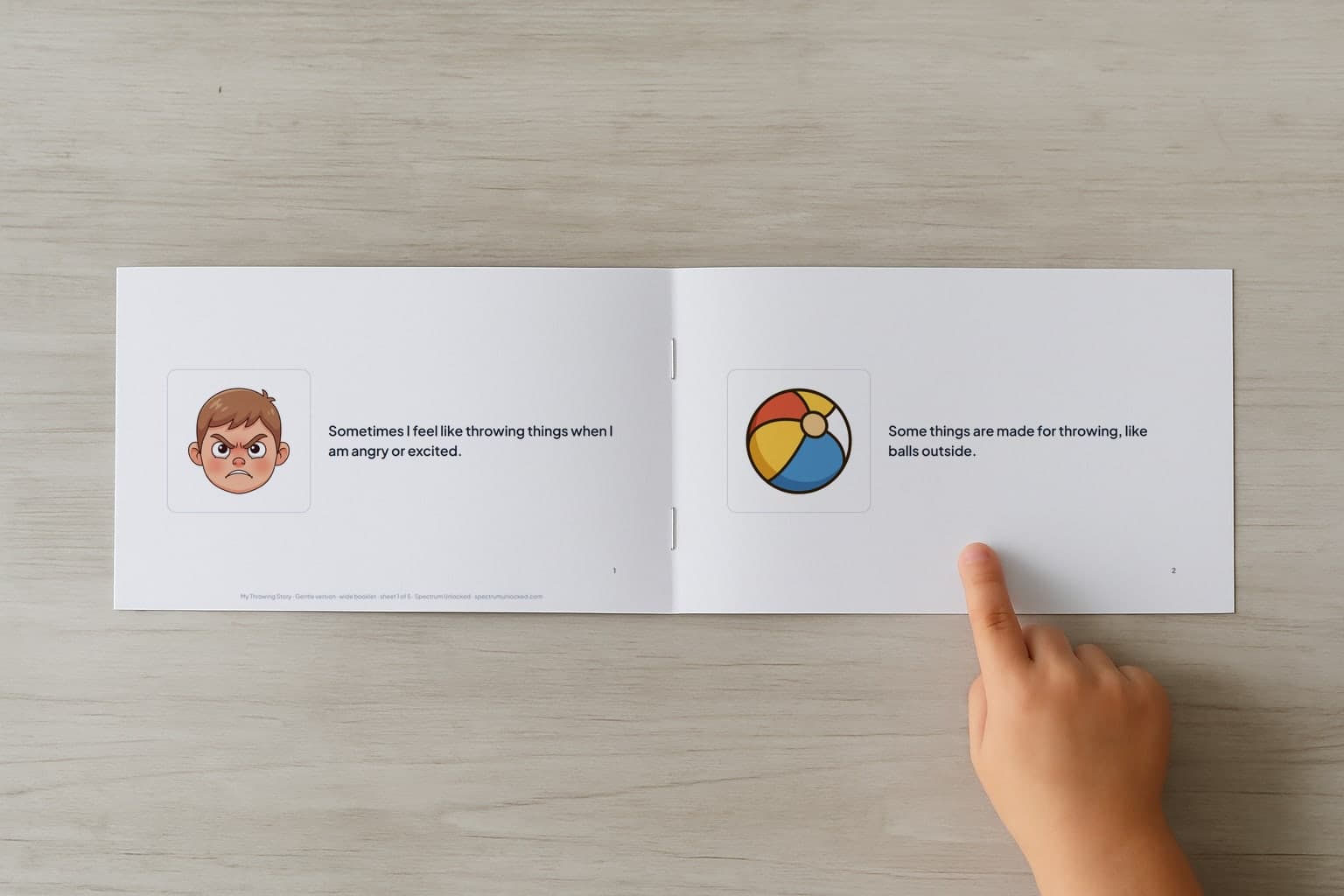
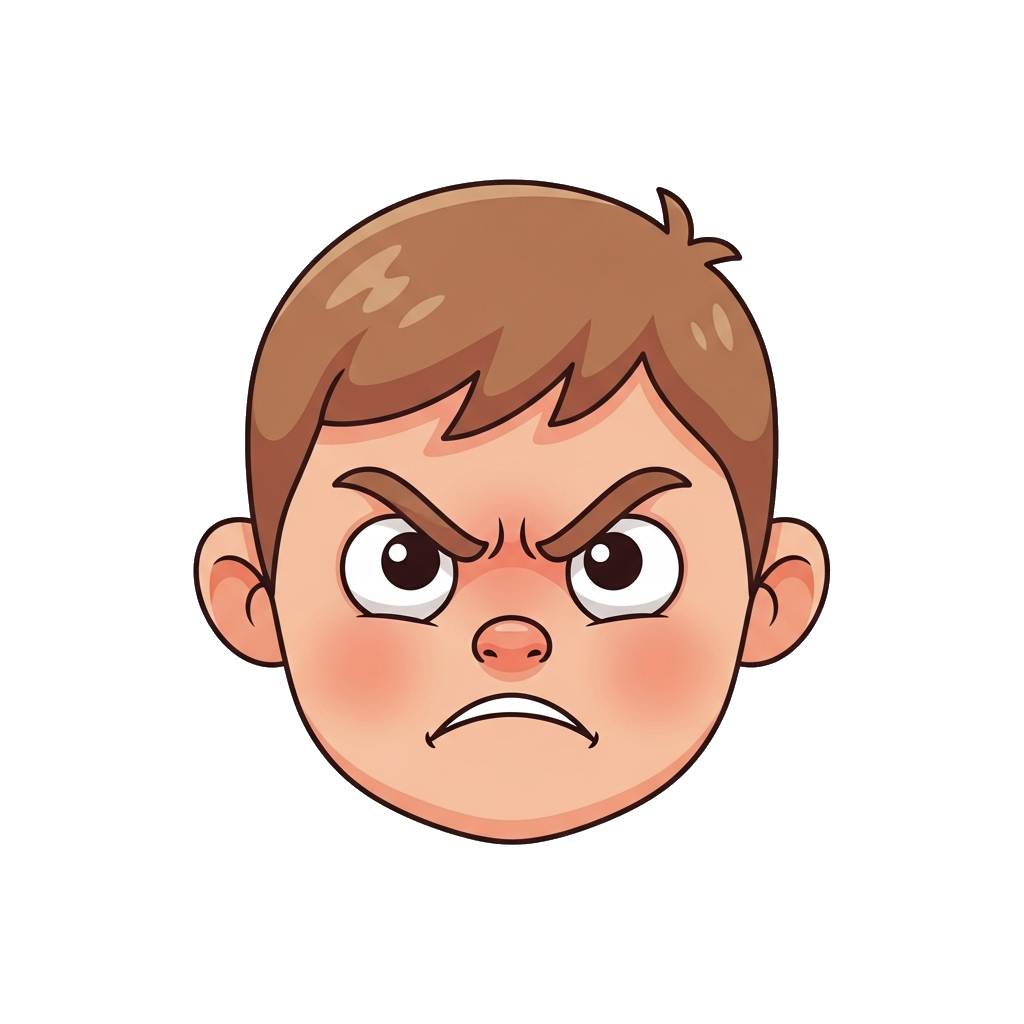 Sometimes I feel like throwing things when I am angry or excited.Describes
 - 2
 Some things are made for throwing, like balls outside.Describes
 - 3
 Other things are not for throwing. Toys, food, and books can break or hit someone.Describes
 - 4
 When something flies across the room, people can get hurt or feel scared.Describes
 - 5
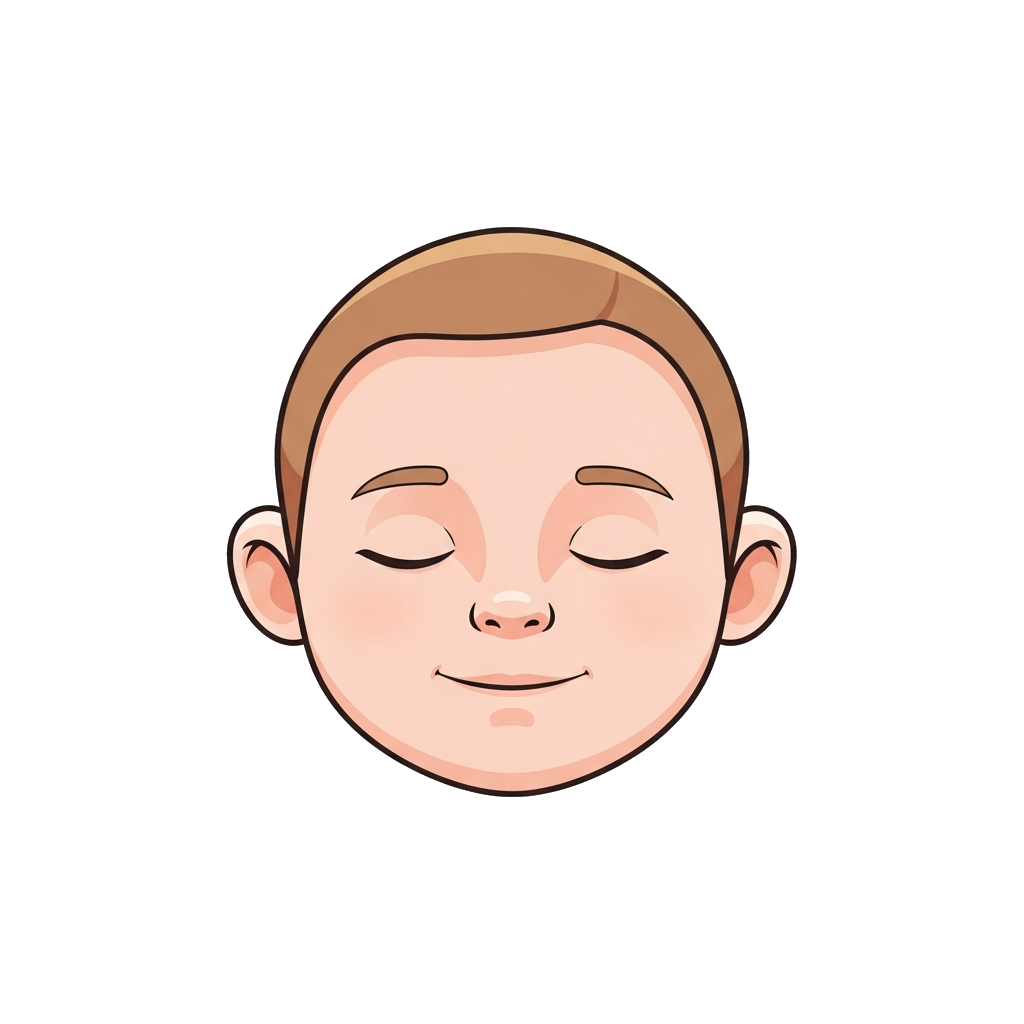 When I feel like throwing, I can stop and take a deep breath.Coaches
 - 6
 I can squeeze a fidget toy or ask for a break instead.Coaches
 - 7If my body really wants to throw, I can ask a grown-up to play catch outside with a soft ball.Coaches
- 8
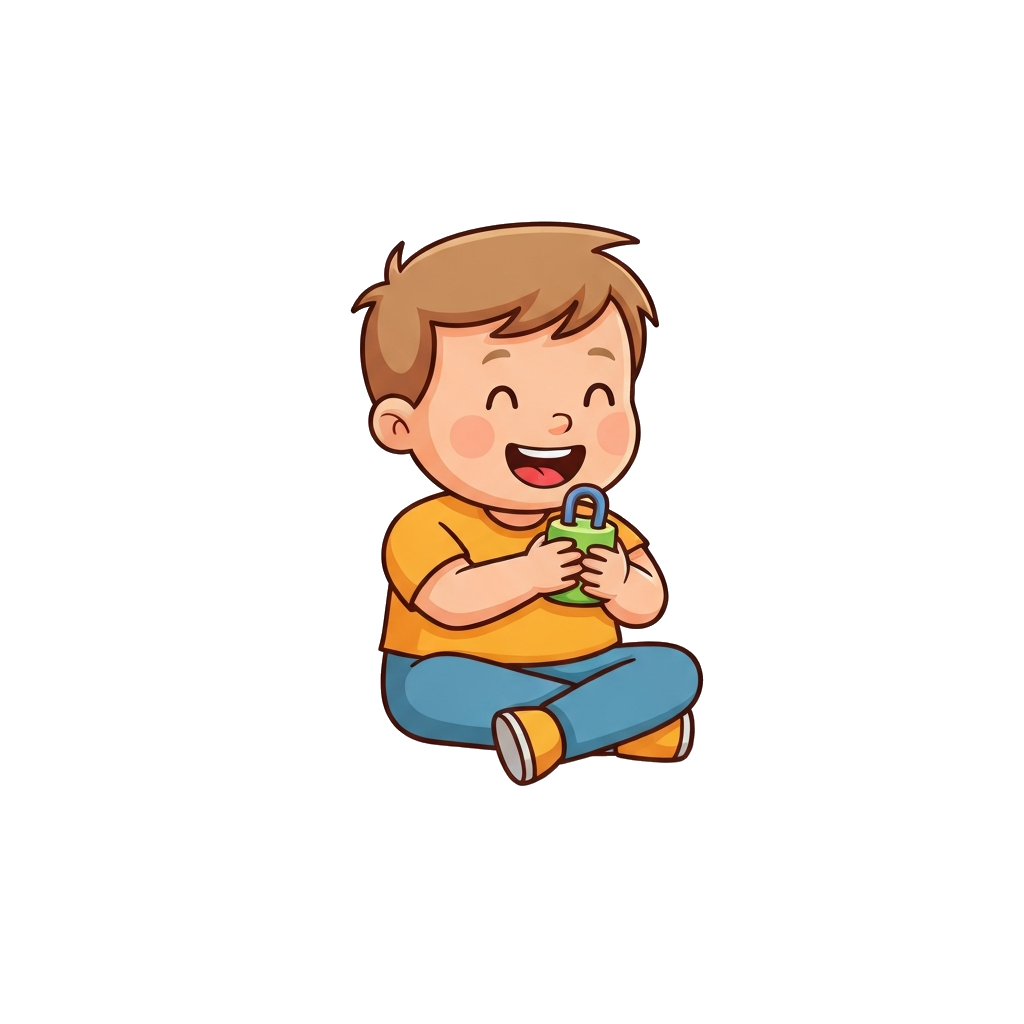 When my toys stay safe, they are ready to play with again tomorrow.Describes
 - 9
 People feel comfortable around me when things stay in my hands or on the table.Describes
We Do Not Throw: the direct version
We Do Not Throw
A social story about why we do not throw things
- 1Sometimes I get angry and want to throw things.Describes
- 2
 We do not throw toys, food, or books. Throwing can hurt people and break things.Coaches
 - 3
 If I throw a toy, it might break and be gone.Describes
 - 4
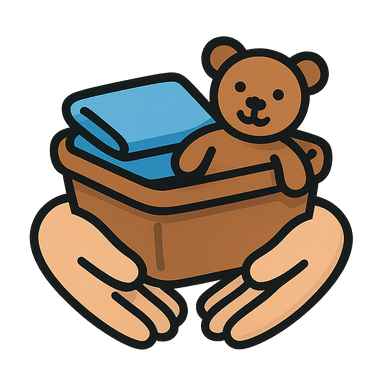 If I throw things, I help pick them up before I can play again.Describes
 - 5Instead, I can put the thing down and take a deep breath.Coaches
- 6
 I can say, "I am angry. I need help."Coaches
The direct version uses firmer wording. Many families start gentle and switch only if the gentle version is not landing.
Single stories, $3 each
When one situation is the whole problem, take just that story. A gentle and a firmer wording, four child looks, booklet pages in US Letter and A4, and a link to edit it free.
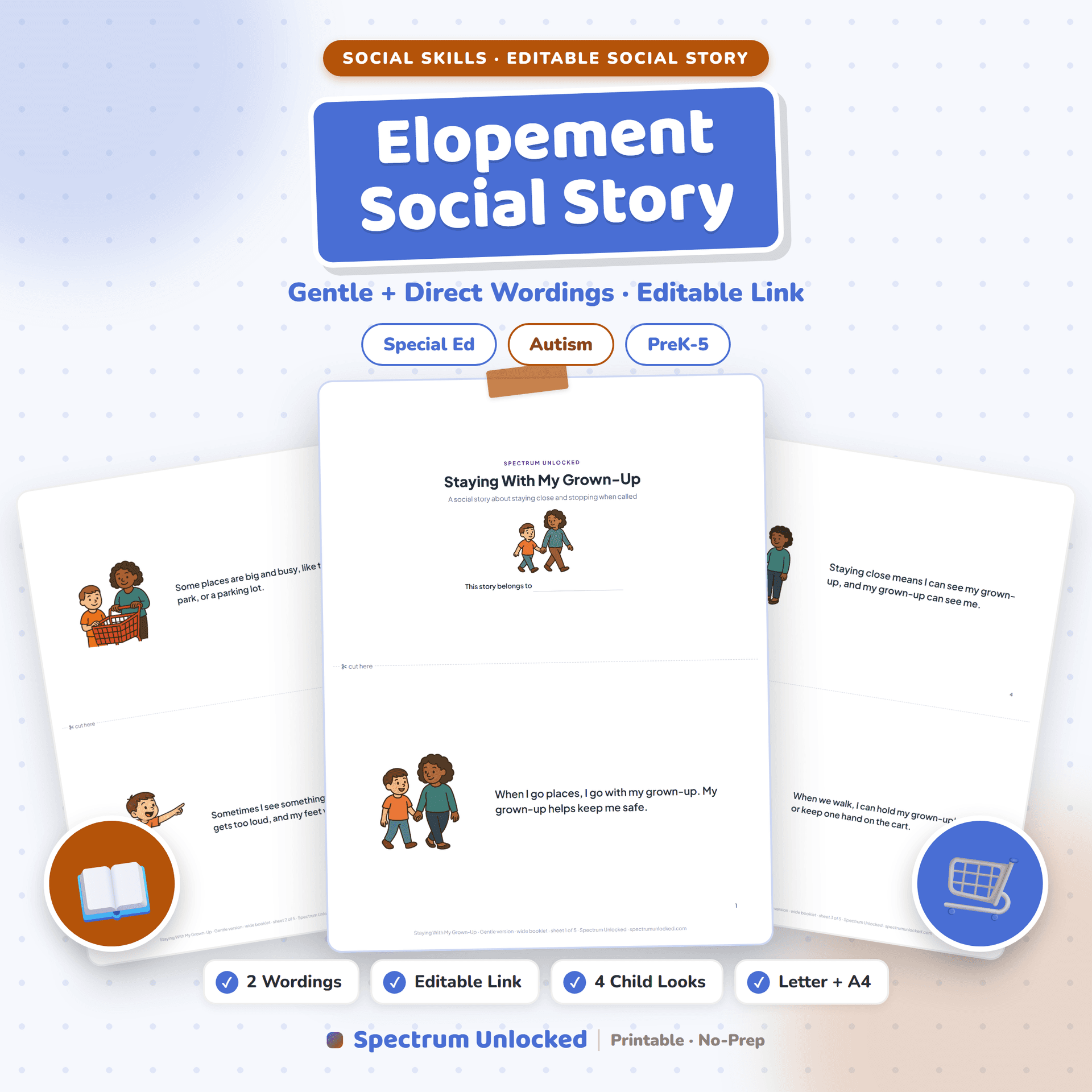
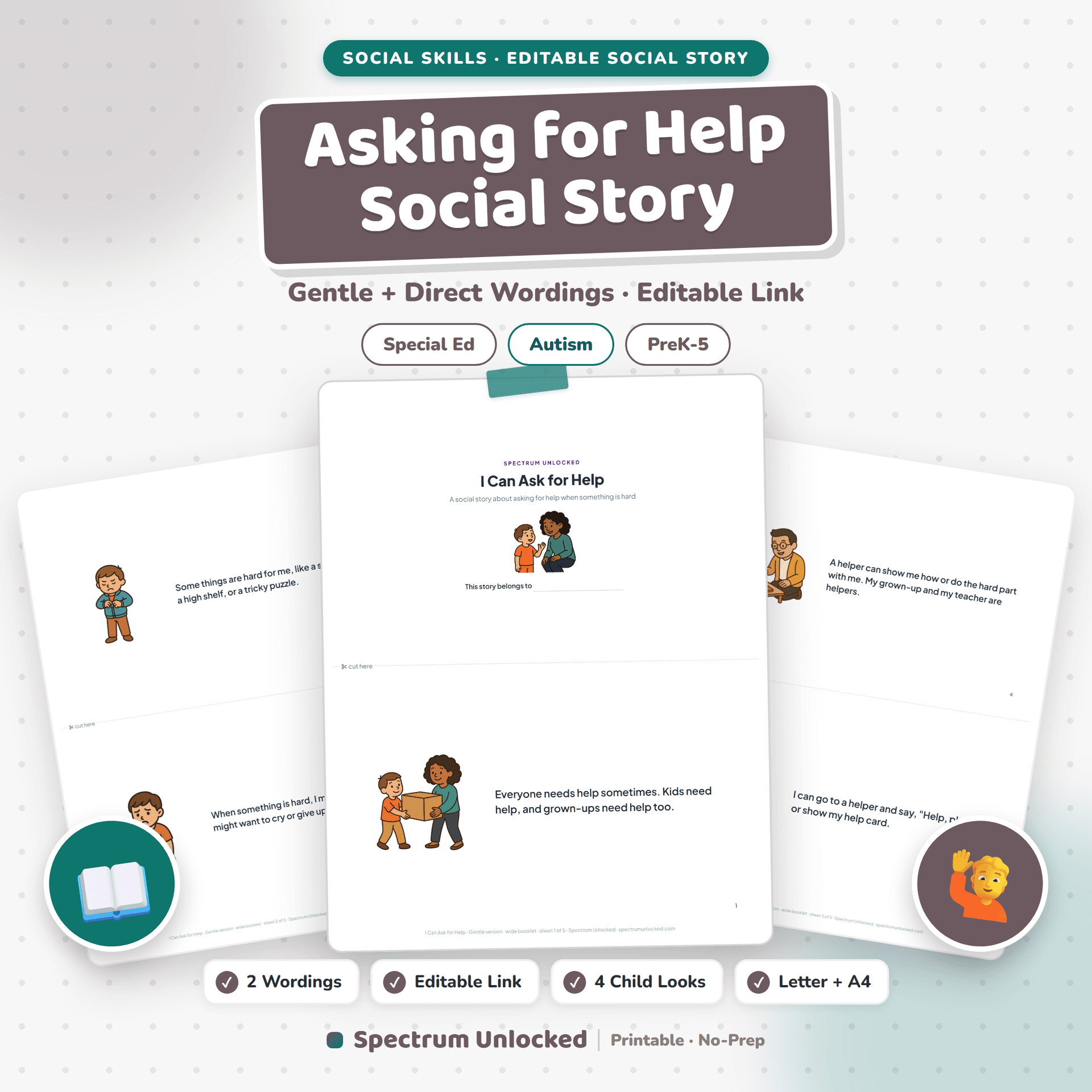
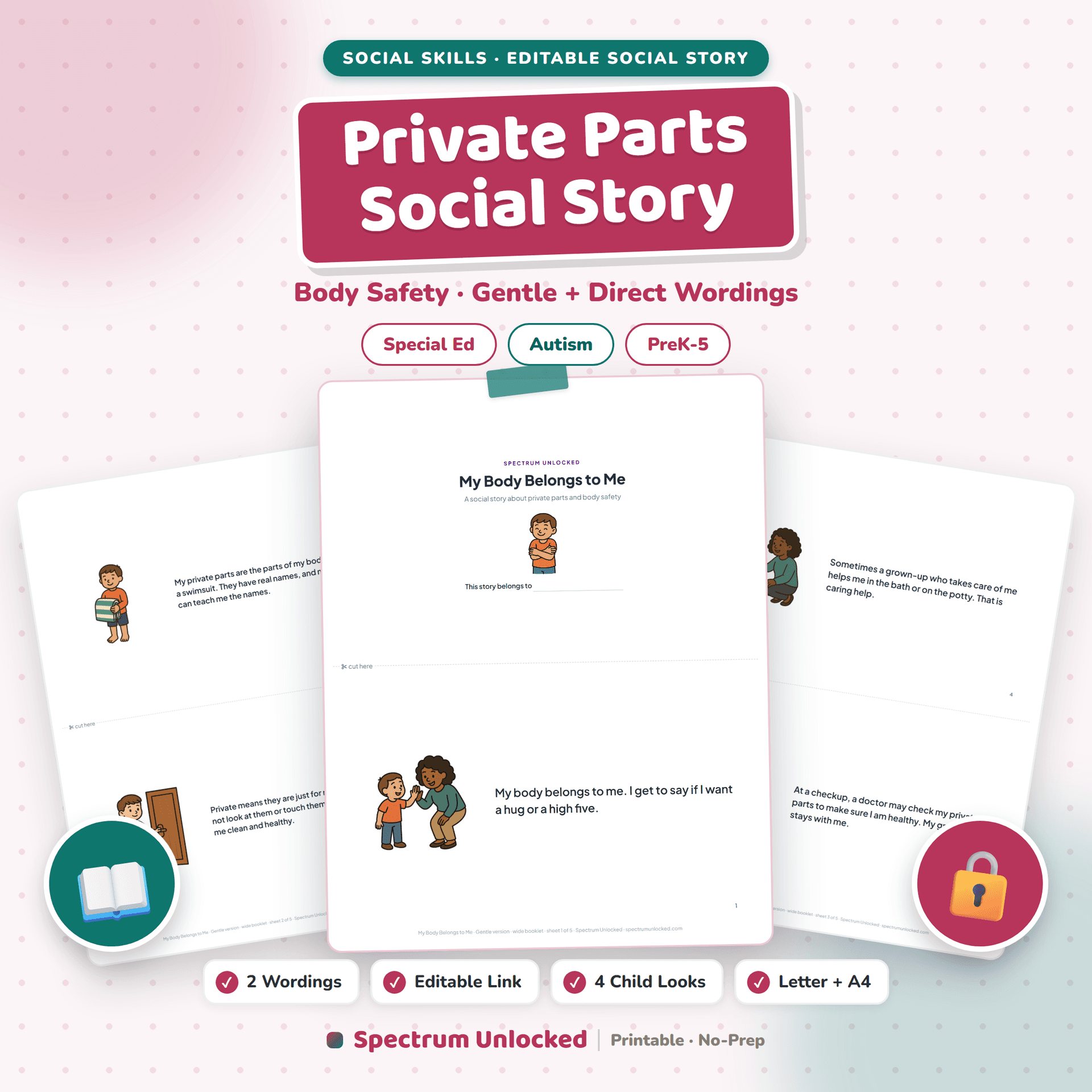
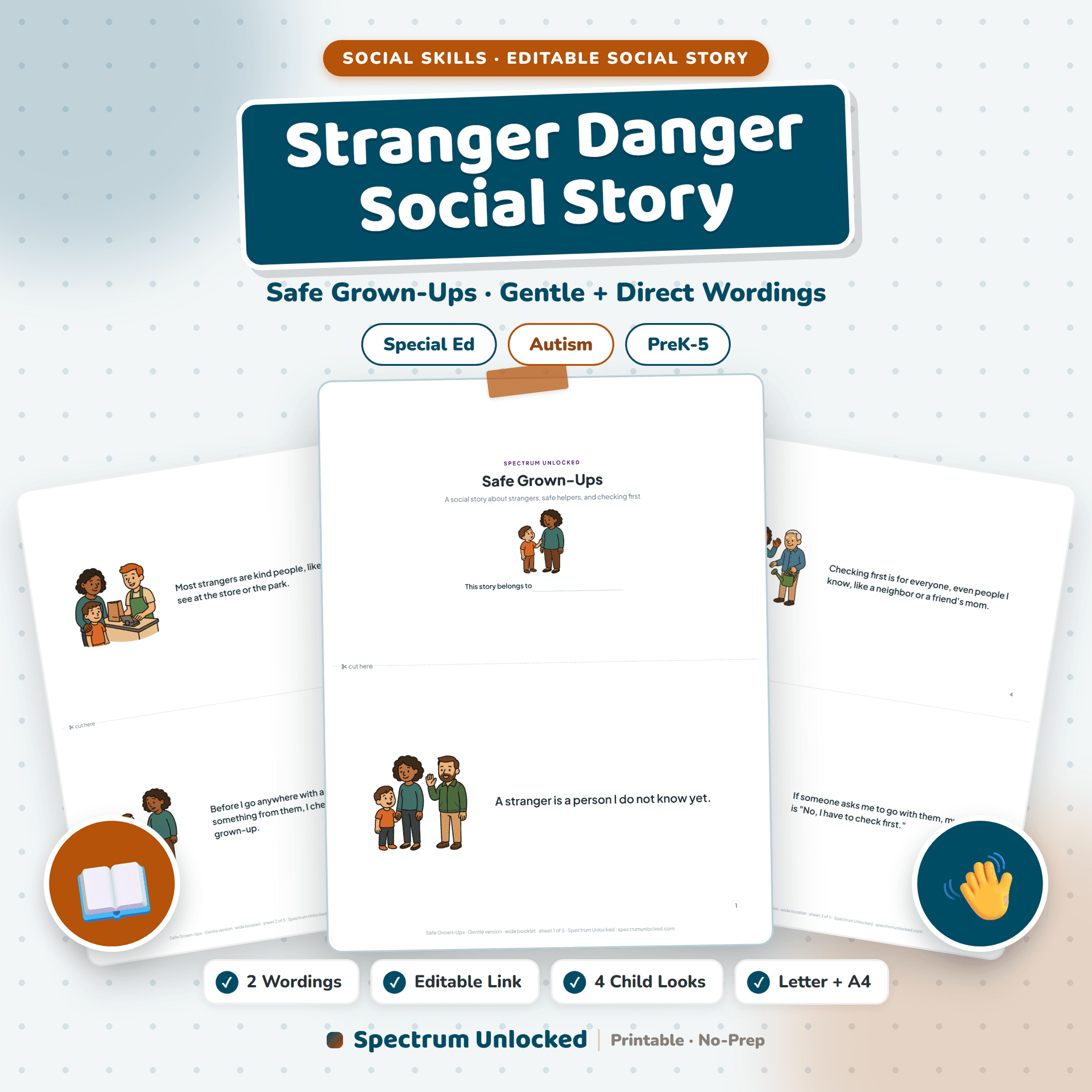
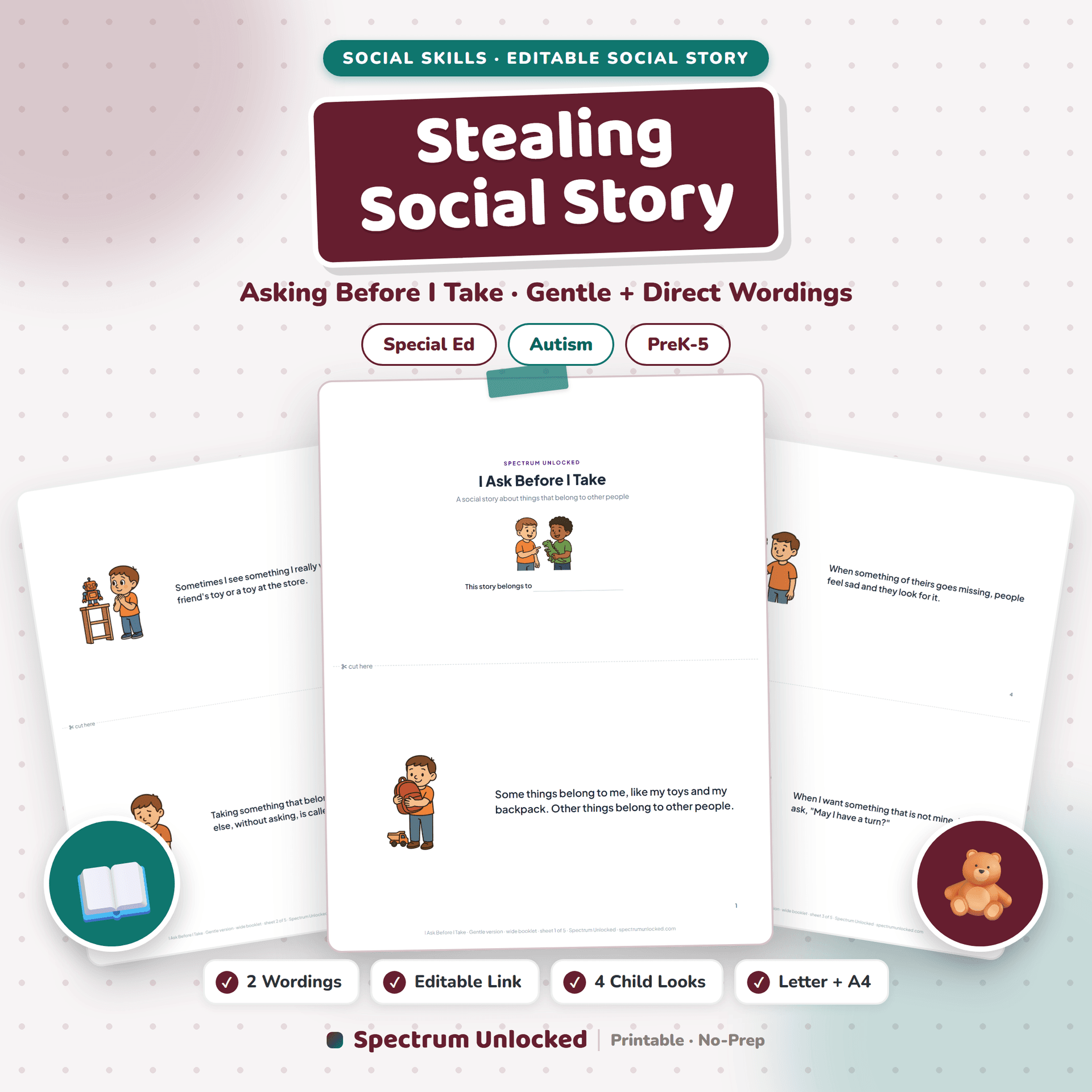
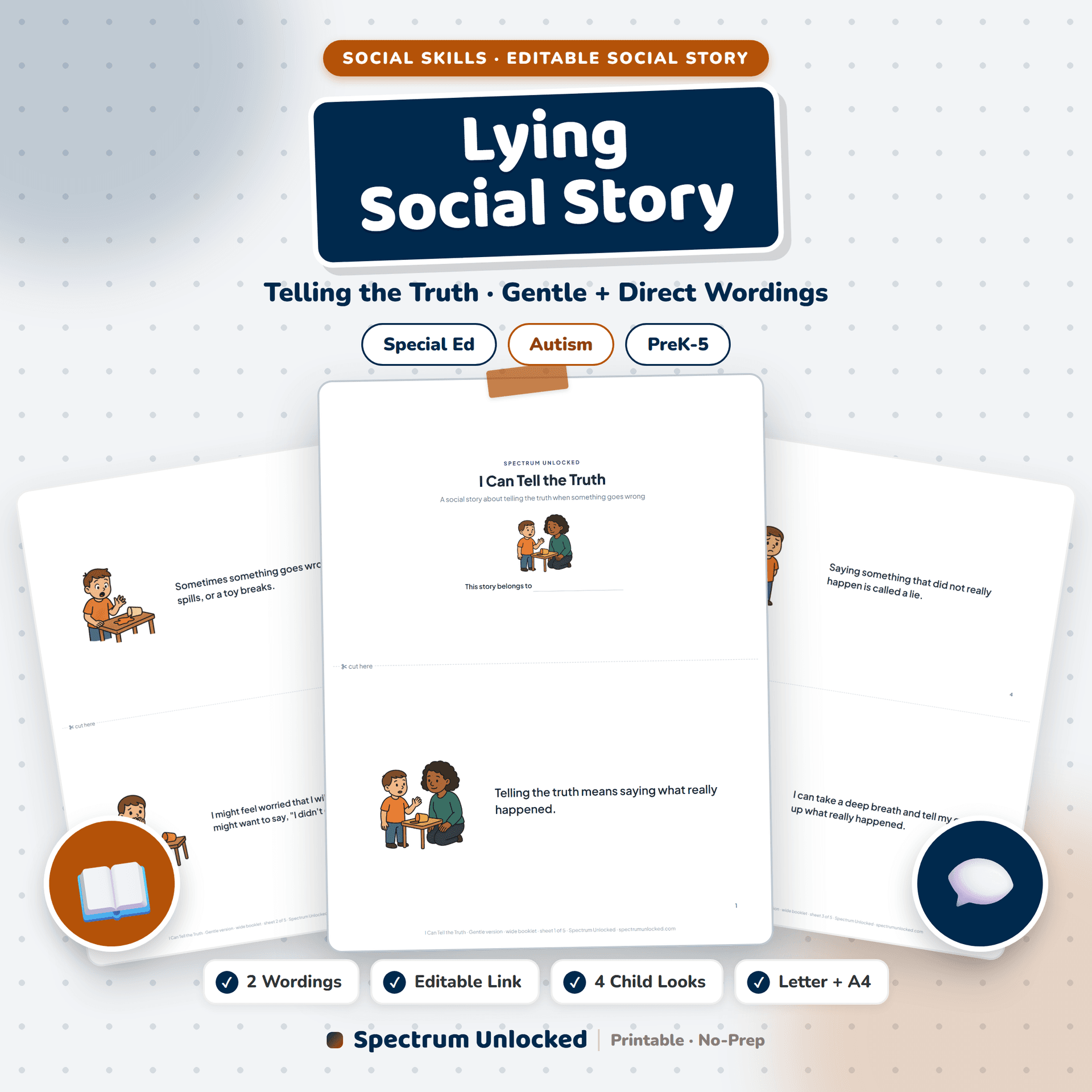
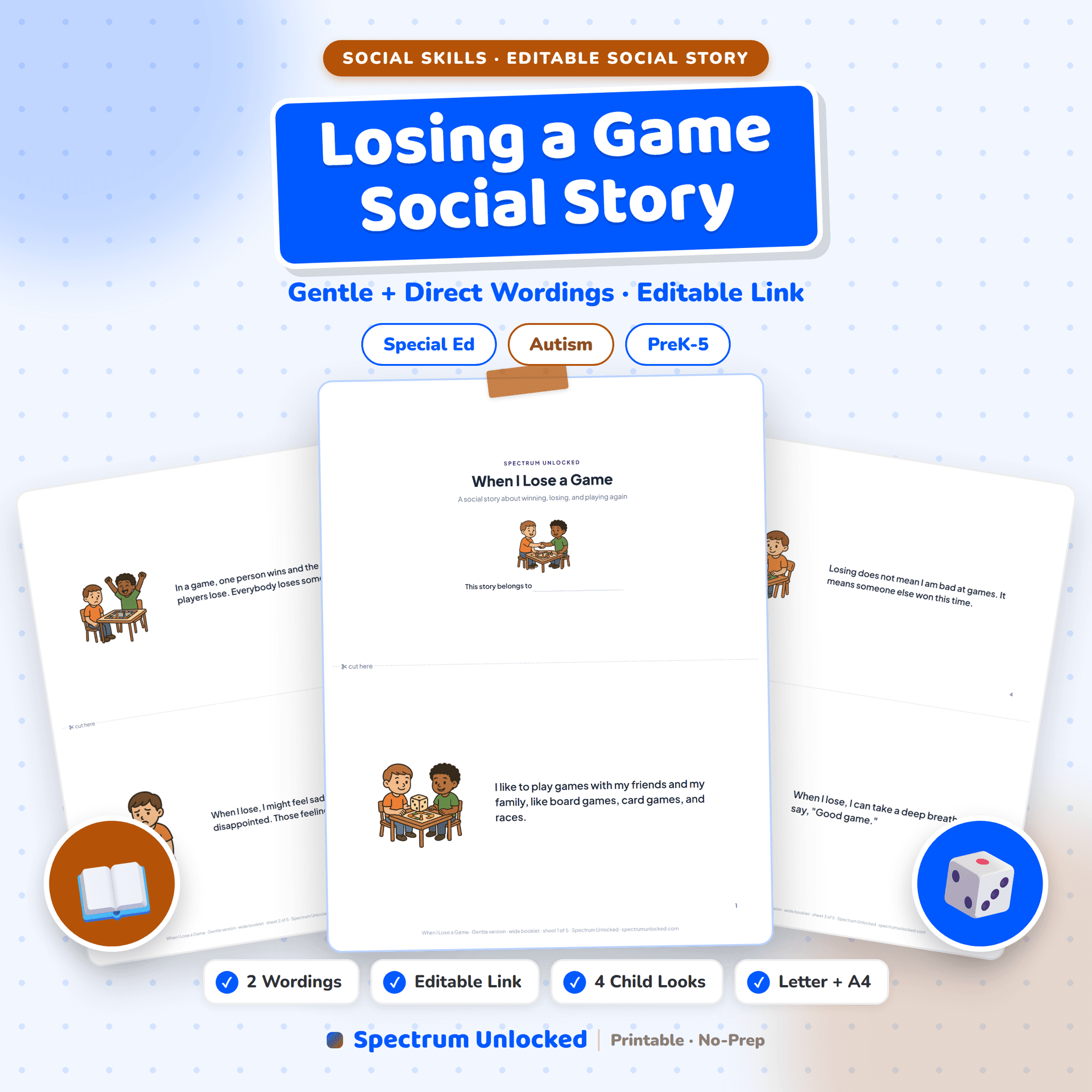
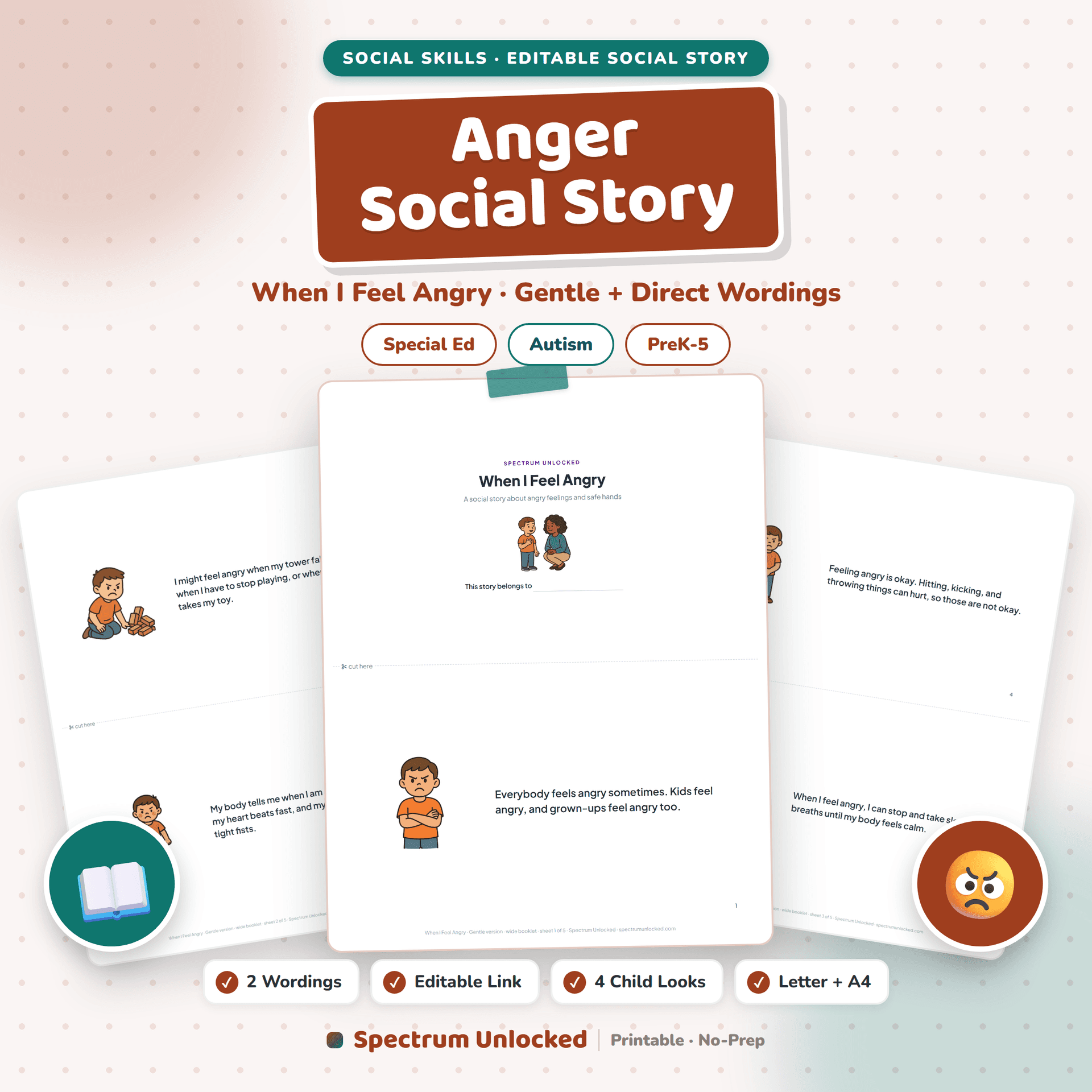
Nothing left to prepare. 25 finished sets, from $3, and every page prints exactly as it is.
When to use this story
Use this story when your child throws toys, food, or books during anger or big excitement. Read it at calm times, and again before the situations where throwing usually starts, like the end of screen time or frustrating homework. If your child throws for the fun of watching things fly, lean on the pages about playing catch outside.
Instead of a blanket rule, the story sorts the world into throwable and not throwable. Balls outside are fine. Toys, food, and books can break or hit someone. That distinction respects how literally many children read rules, and it gives them a category to check before their arm moves.
The story also honors the urge itself. One page suggests asking a grown-up to play catch outside with a soft ball, which gives a body that really wants to throw a legal outlet rather than nothing at all.
The direct version adds natural consequences in concrete terms: a thrown toy might break and be gone, and things that get thrown must be picked up before play continues. It closes with a script, I am angry, I need help, so the feeling gets words instead of a projectile.
Frequently asked questions
- What should a throwing things social story include?
- The parts this one has: a clear sort between things made for throwing and things that are not, honest description of what can go wrong, and rehearsed alternatives, stopping for a deep breath, squeezing a fidget toy, asking for a break, or taking the throwing outside with a soft ball.
- My child throws when excited, not angry. Does this story still fit?
- Yes. The opening page names both feelings: sometimes I feel like throwing things when I am angry or excited. The redirect pages work the same way for either trigger, and the catch-outside page suits excited throwers especially well.
- Should I use the gentle or the direct version?
- Start gentle if your child is new to the topic or shuts down under correction; it describes far more than it instructs. Choose the We Do Not Throw version if your child does better with a plainly stated rule and visible consequences, like helping pick things up before play resumes.
- Can I print this story without paying?
- Yes. Everything you see on this page can become a printable booklet through the maker at no cost, and you can drop in your child's name and photos before downloading.
- Can I adjust the pages?
- Fully. The maker lets you rewrite sentences, choose different pictures, reorder or remove pages, and switch the story into your child's name. Naming your child's actual fidget toy or favorite soft ball makes the alternatives feel real.
- Who developed social stories?
- Social Stories were developed by Carol Gray in the early 1990s. The gentle version of this template follows her published guidance, including describing more than coaching, but Spectrum Unlocked is not affiliated with or endorsed by Carol Gray.
Related stories
Hitting Social Story
A social story for kids who hit when big feelings take over. Choose the gentle version or the firmer We Do Not Hit version, then print either one free.
When I Feel Frustrated Social Story
Frustration hits when the tower falls or the zipper sticks. A free printable social story that names the feeling and walks through calming down, step by step.
Related guides
Social Stories were developed by Carol Gray. Spectrum Unlocked is not affiliated with or endorsed by Carol Gray; the gentle version of this template follows her published describe-more-than-coach guidance.