Behavior & Big Feelings
When I Feel Frustrated Social Story
An eleven-page social story that gives frustration a name and a way through it. It defines the feeling with examples a child recognizes, a fallen block tower, a stuck zipper, describes how it feels in the body, hot and tight, and rehearses a small calming toolkit: breathe, count, take a break, ask for help.
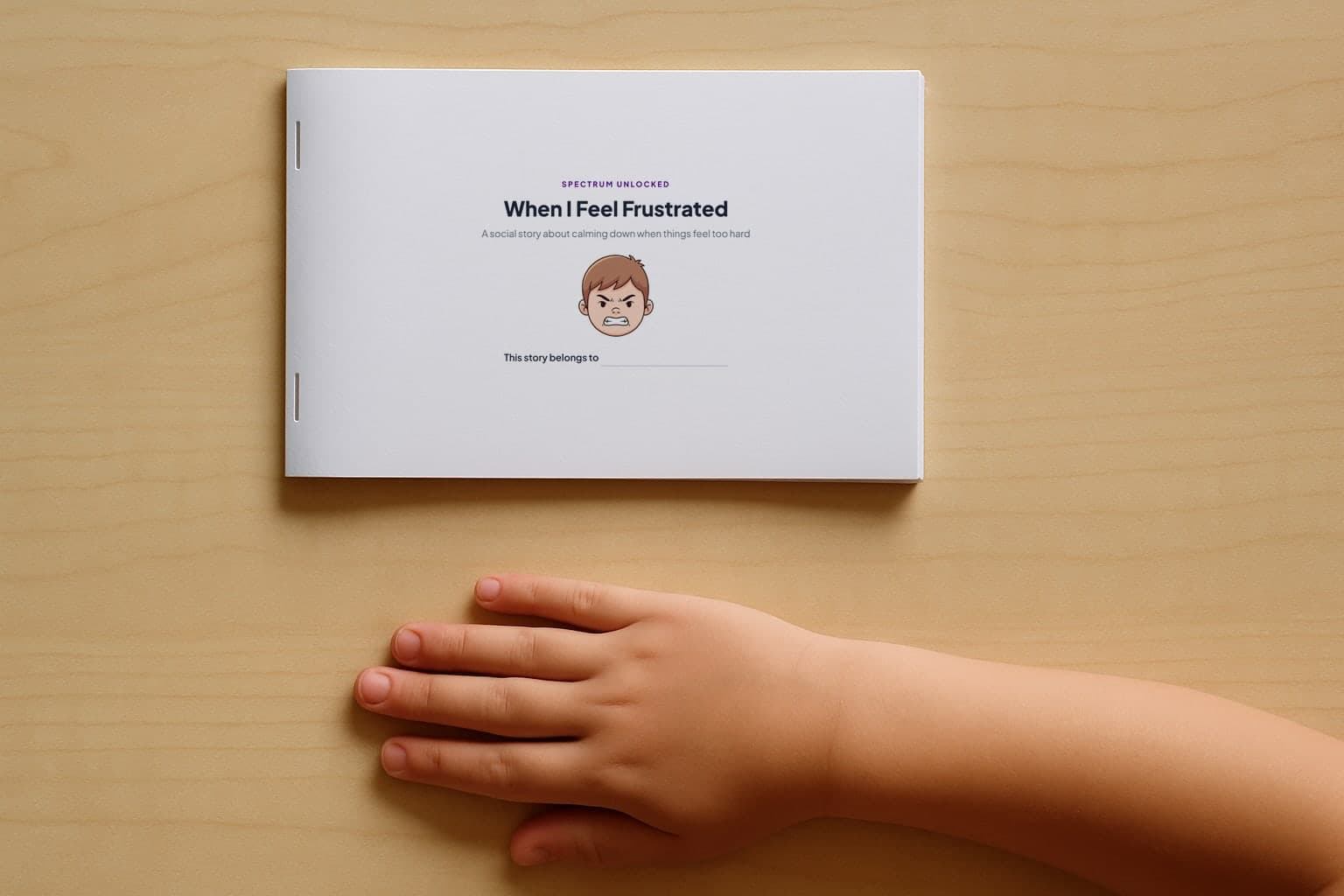
Download the printable PDF
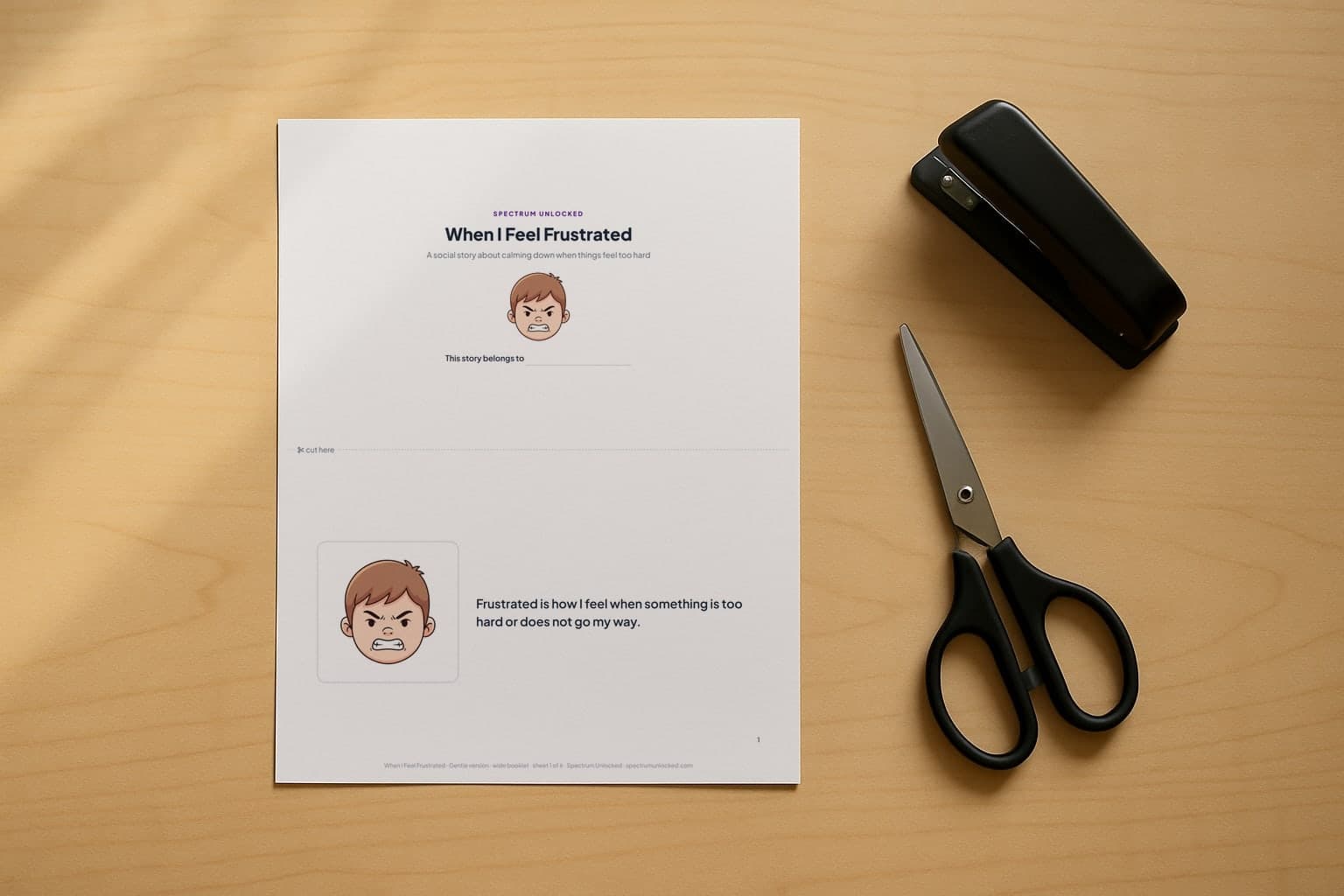
Print the story as-is, no email required. Match the pictures to your child and pick your page layout, then download.
The story
Read the full story below. In the maker you can add your child's name, swap pictures, and print it as a booklet.
When I Feel Frustrated
A social story about calming down when things feel too hard
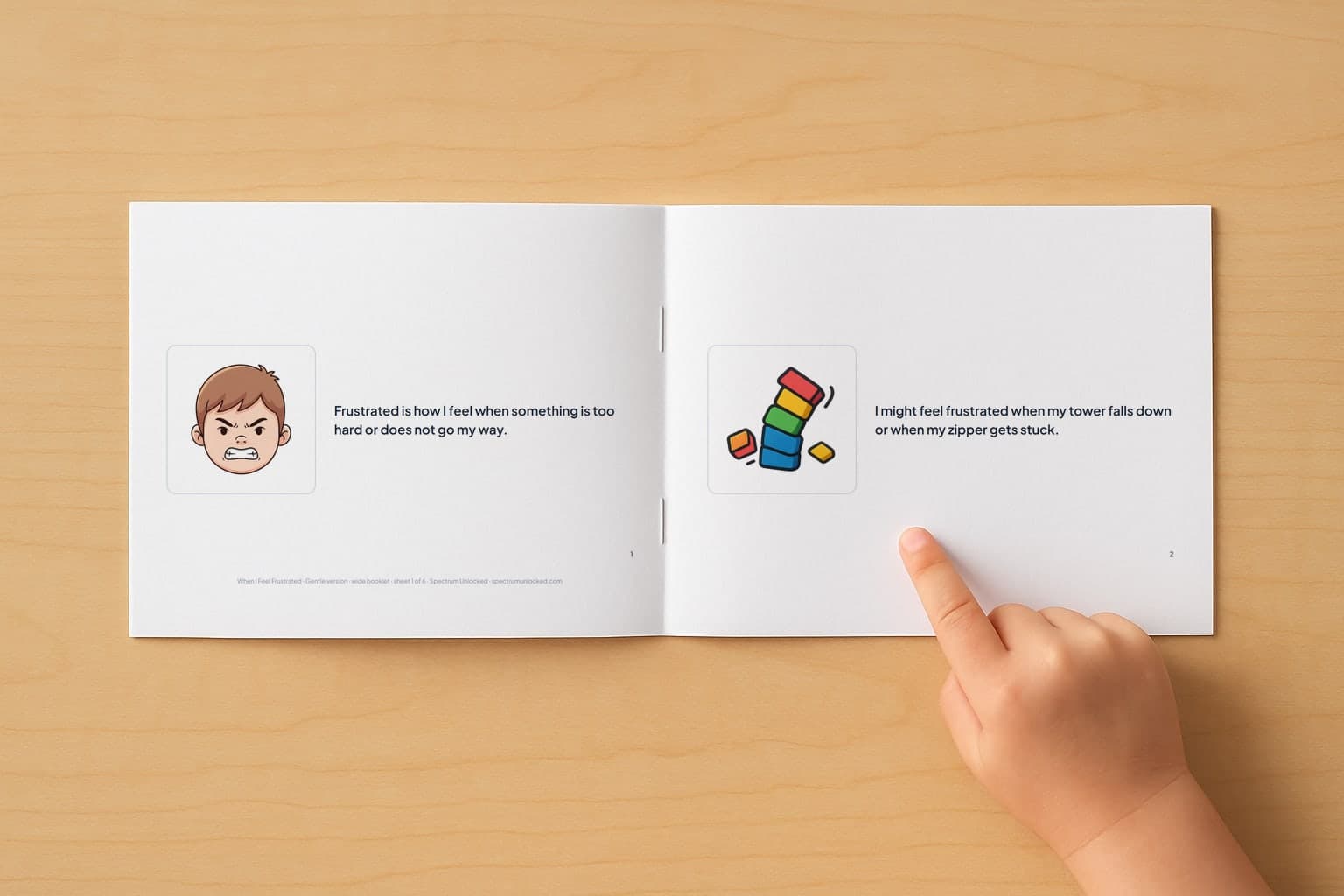
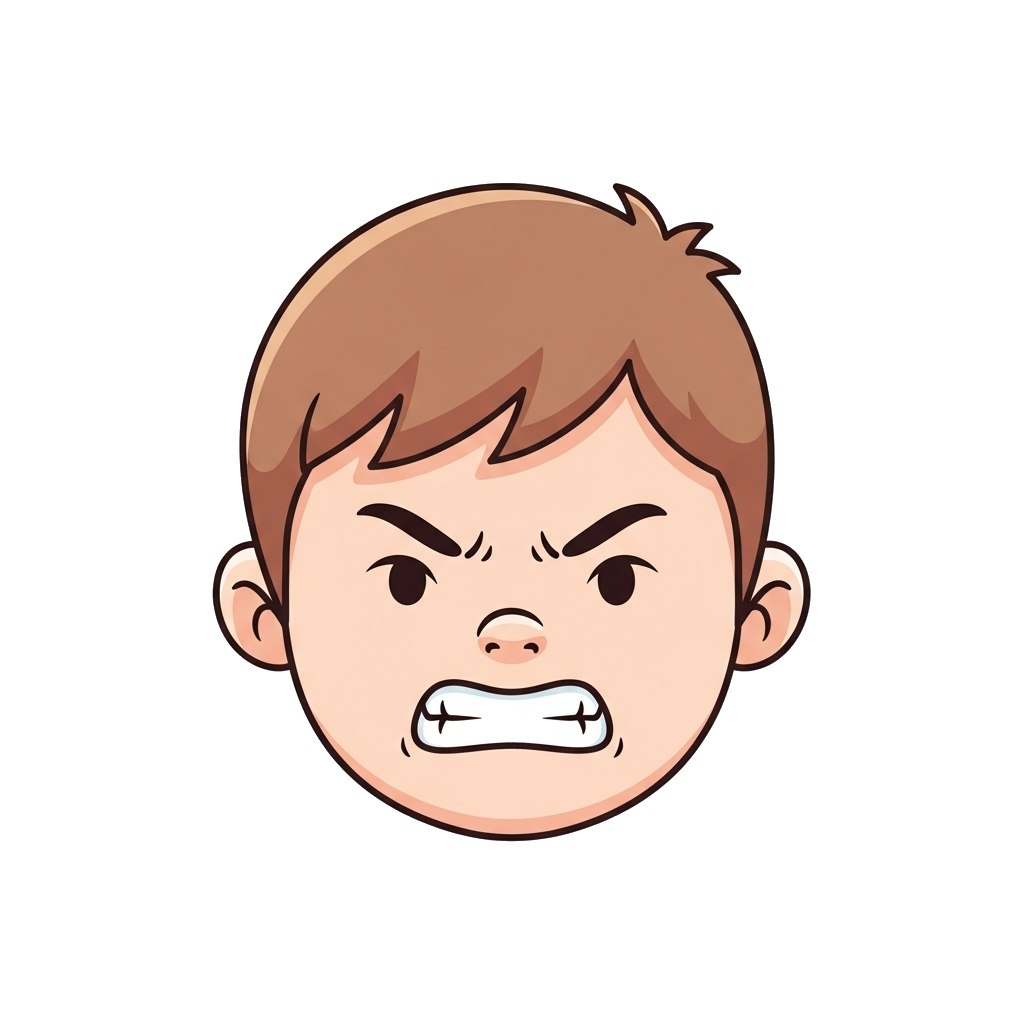
- 1Frustrated is how I feel when something is too hard or does not go my way.Describes
- 2
 I might feel frustrated when my tower falls down or when my zipper gets stuck.Describes
 - 3
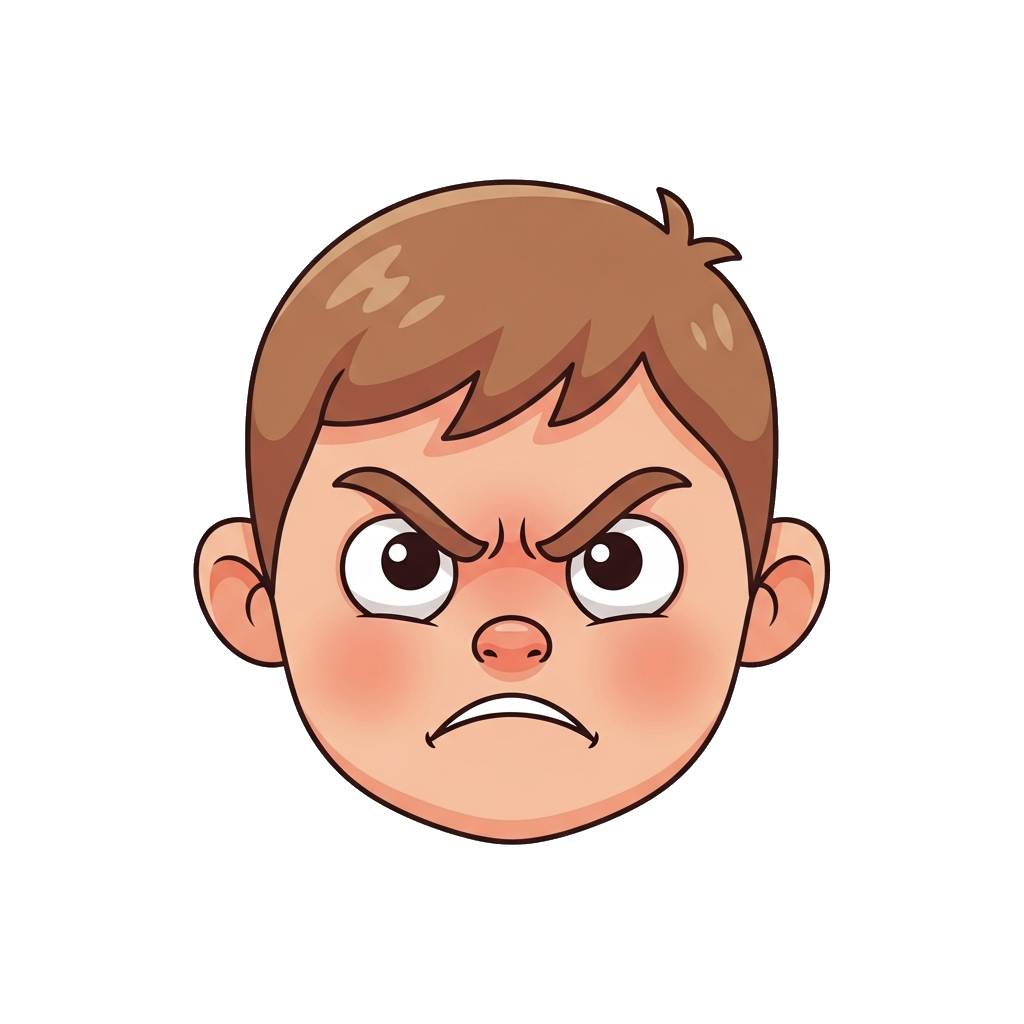 When I feel frustrated, my body might feel hot and tight. I might want to yell or give up.Describes
 - 4
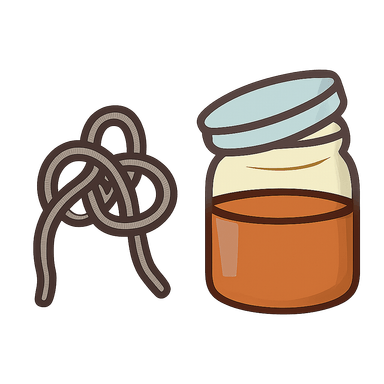 Everyone feels frustrated sometimes. Kids and grown-ups feel it too.Describes
 - 5
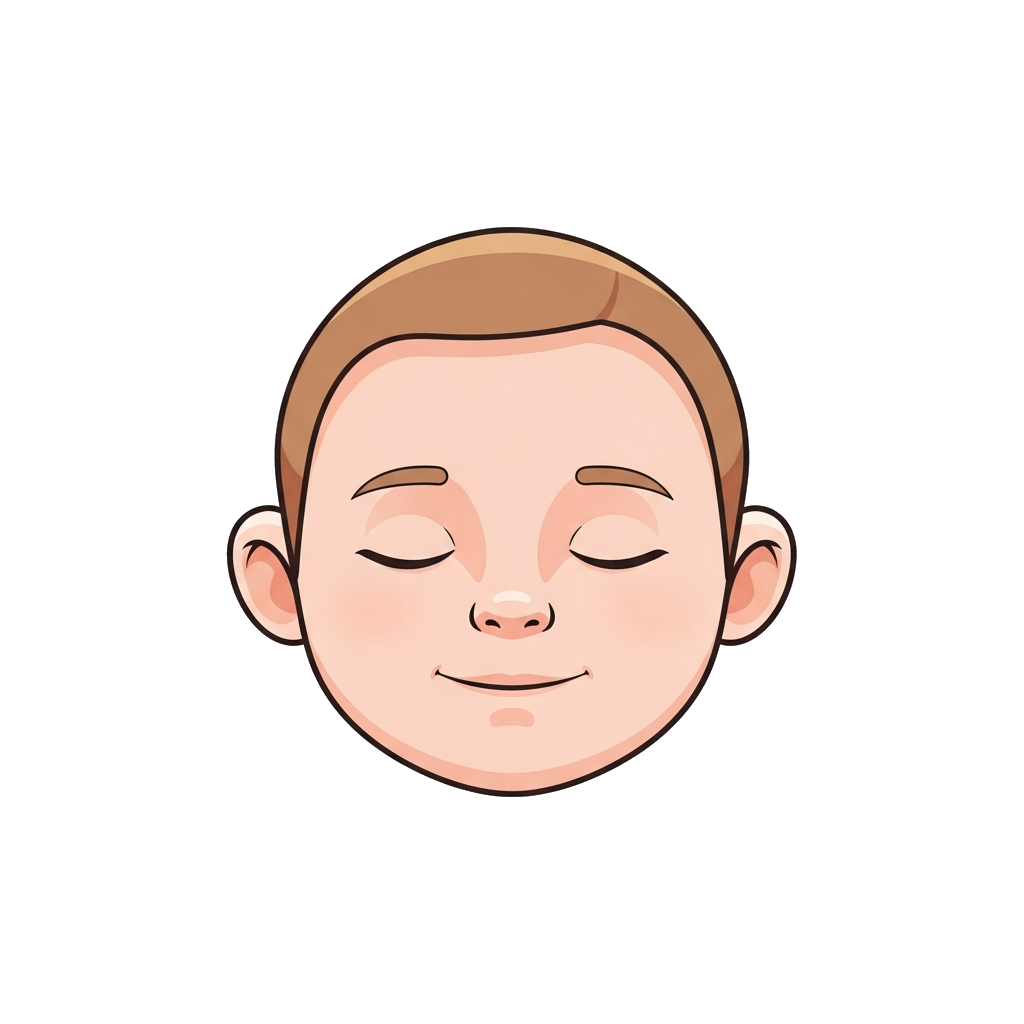 Frustrated is a feeling, and feelings do not last forever.Describes
 - 6
 When I feel frustrated, I can take a deep breath and count to 10.Coaches
 - 7
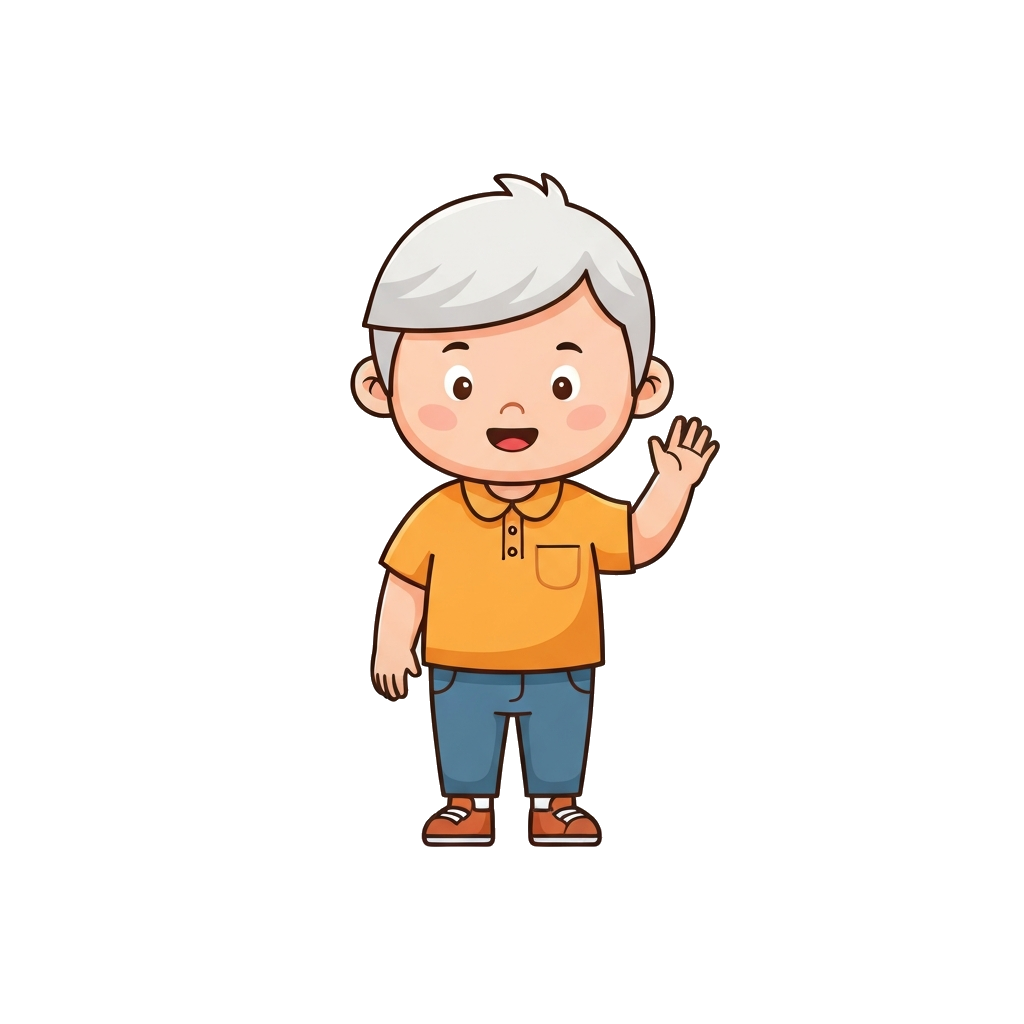 I can ask for help, or I can take a break.Coaches
 - 8
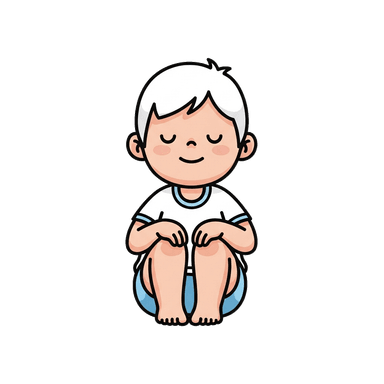 After a break, my body feels calmer. Hard things often feel easier when I am calm.Describes
 - 9
 Trying again after feeling frustrated is called practice. Practice helps me learn.Describes
 - 10
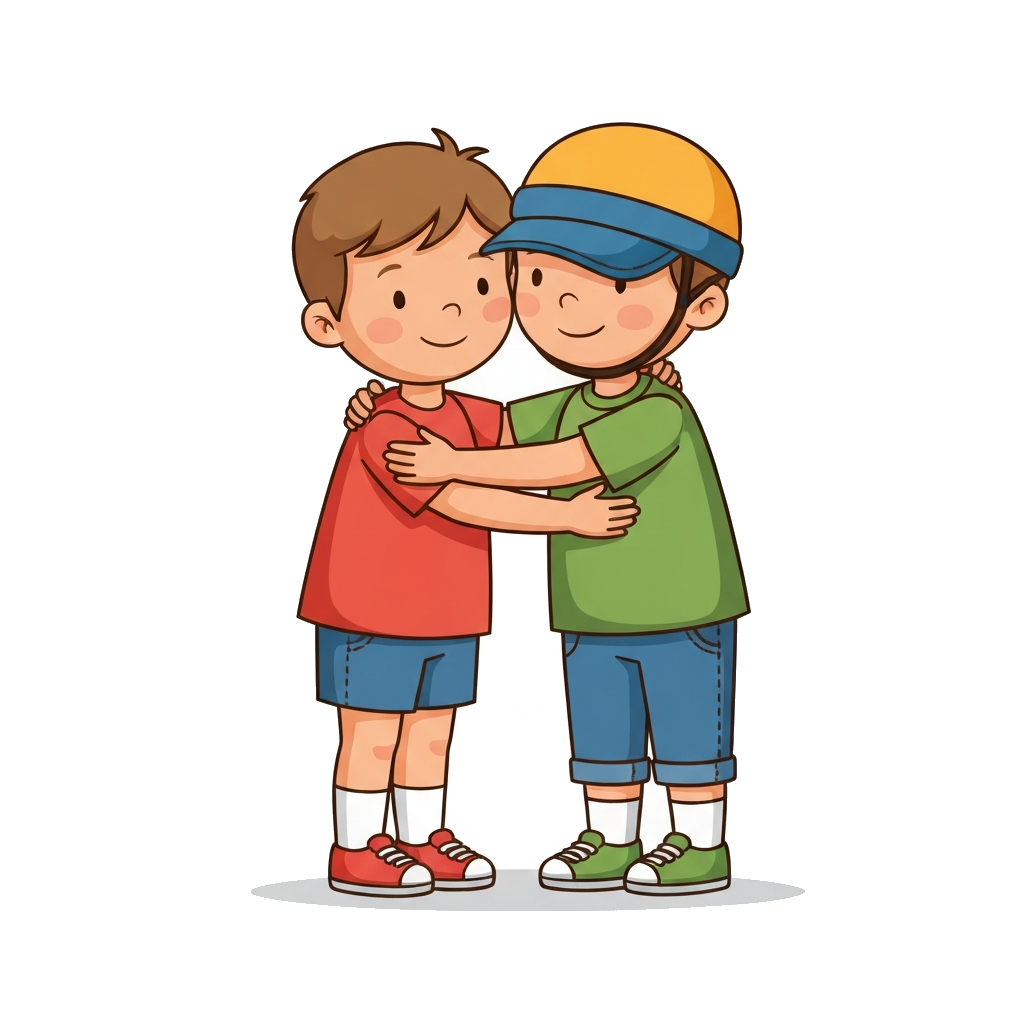 The people who love me want to help when things feel too hard.Describes
 - 11
 I can feel proud of myself when I work through a frustrated feeling.Describes
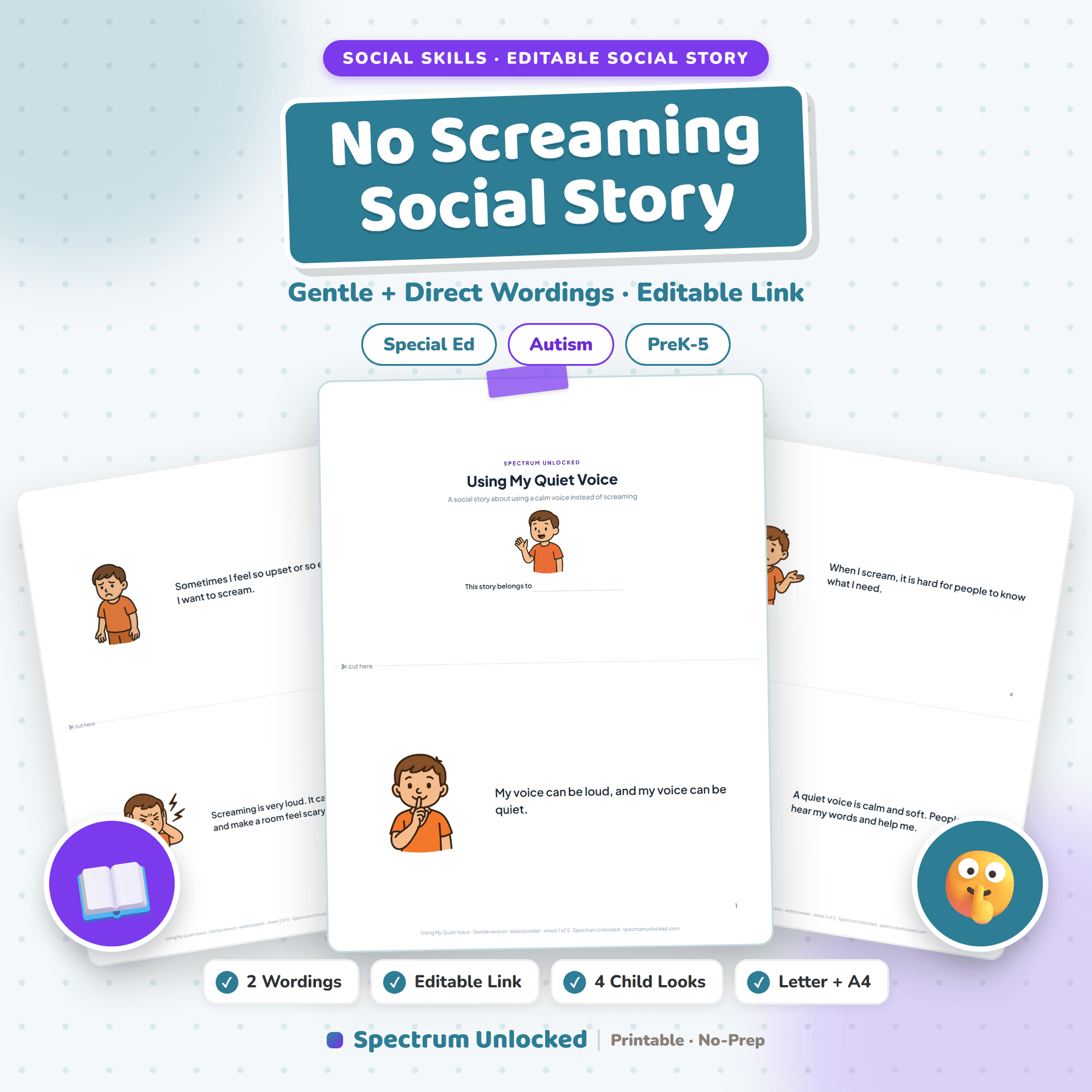
A ready-made story that goes with this one: No Screaming Social Story: Using a Quiet Voice
Using a calm voice instead of screaming, and saying "I need help" or "I feel mad." A gentle and a firmer wording, four child looks, booklet pages in US Letter and A4, and a link to edit it free.
Nothing left to prepare. 25 finished sets, from $3, and every page prints exactly as it is.
When to use this story
Use this story when hard tasks end in yelling, giving up, or tears, whether that is homework, puzzles, zippers, or losing a game. Read it at calm times so the toolkit is rehearsed before it is needed, and revisit it after a rough patch to name what happened without blame.
Naming the feeling is half of this story's work. Many children experience frustration as a hot, tight surge with no label, and a feeling without a name is hard to manage. The story defines frustrated plainly, something is too hard or does not go my way, and describes the body signs so your child can spot it earlier.
The calming toolkit is deliberately small: a deep breath, counting to 10, asking for help, taking a break. Four rehearsable moves beat a long menu. The story then closes the loop, after a break the body feels calmer and hard things often feel easier, so the break reads as part of trying, not quitting.
The final pages reframe the whole cycle as practice. Trying again after feeling frustrated is how learning works, and working through the feeling is something to be proud of. That framing gives you language to use in real moments: you worked through a frustrated feeling.
Frequently asked questions
- What is a frustration social story?
- It is a short story that teaches a child what frustration is, how it feels in the body, and what to do about it. This one describes everyday triggers like a falling tower or a stuck zipper, reassures that everyone feels frustrated sometimes, and rehearses calming steps in order.
- How is frustration different from a meltdown?
- Frustration is a feeling that a child can learn to notice and manage, which is what this story practices. A meltdown is a state of overload where reasoning and stories are out of reach. The story helps most before that point, by catching the hot, tight body signs early. The related reading below goes deeper on the distinction.
- When should we read this story?
- Daily calm reads work better than crisis reads. Before homework, before a challenging activity, or as part of a wind-down routine all work. In the moment itself, keep it to a short cue the story has already taught, like take a deep breath, rather than reading pages aloud.
- Is this story free and printable?
- Yes. The full eleven-page story is on this page, and the maker will generate the printable booklet for free, with your child's name and photos added if you choose.
- Can I edit it for my child's specific triggers?
- Yes. Open the story in the maker and swap the examples for whatever actually frustrates your child, math pages, controller batteries, shoelaces. You can also trim pages for a younger child or switch the story into third person with your child's name.
- Who developed social stories?
- Social Stories were developed by Carol Gray in the early 1990s. The gentle version of this template follows her published guidance, including describing more than coaching, but Spectrum Unlocked is not affiliated with or endorsed by Carol Gray.
Related stories
Accepting No Social Story
Hearing no is hard for many kids. This social story explains why grown-ups say no and rehearses calm responses. Print it free or personalize it first.
When Plans Change Social Story
When rain or a closed store wrecks the plan, this free printable social story helps autistic kids handle the change with a deep breath and one simple question.
Related guides
Social Stories were developed by Carol Gray. Spectrum Unlocked is not affiliated with or endorsed by Carol Gray; the gentle version of this template follows her published describe-more-than-coach guidance.