School & Social Skills
Taking Turns Social Story
A social story that explains how turns actually work: one person goes, then another, and turns come back. It names how hard waiting feels, gives your child small things to do during the wait, and rehearses handing a turn over with words. Read the full story below, then add your child's name.
Download the printable PDF
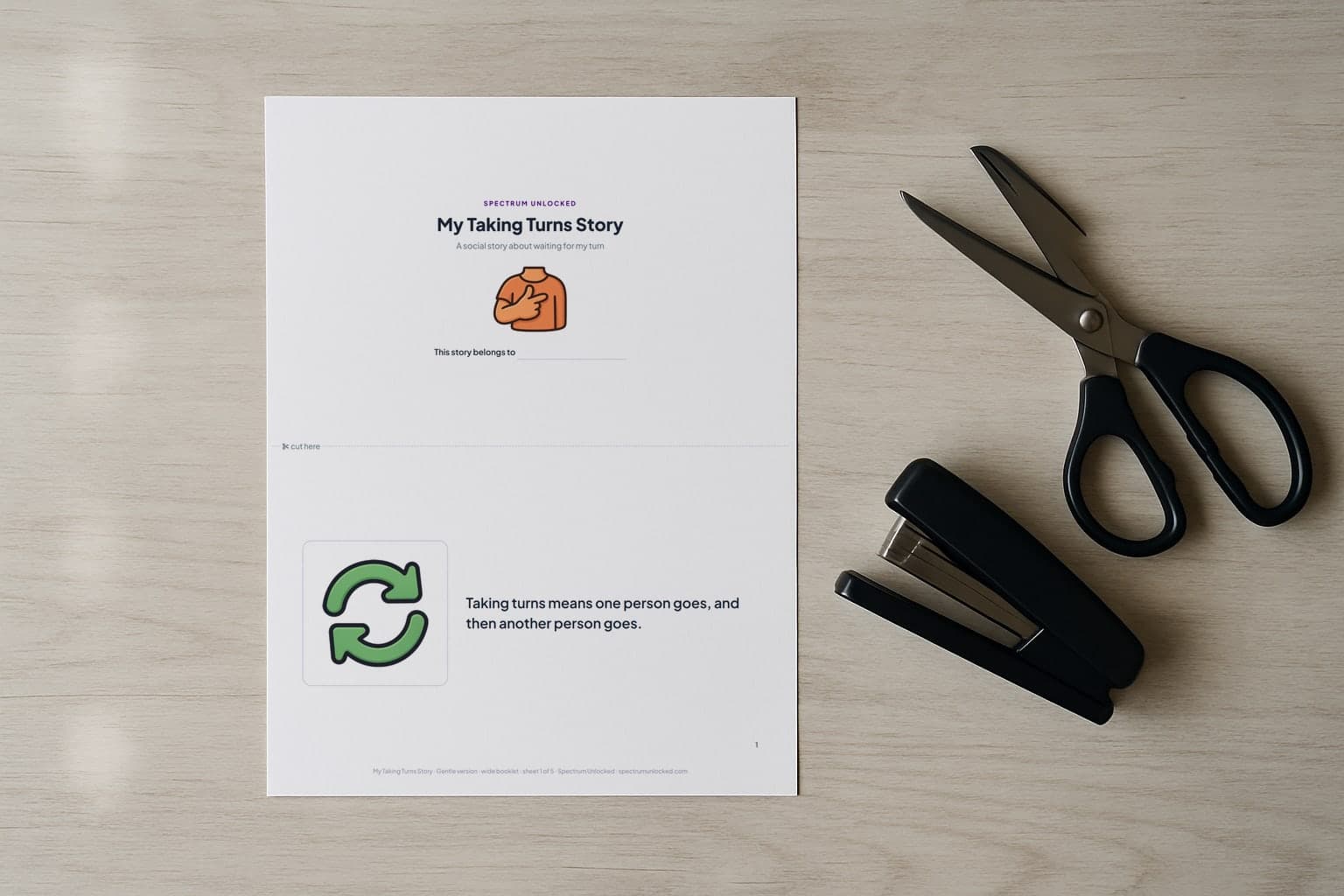
Print the story as-is, no email required. Match the pictures to your child and pick your page layout, then download.

The story
Read the full story below. In the maker you can add your child's name, swap pictures, and print it as a booklet.
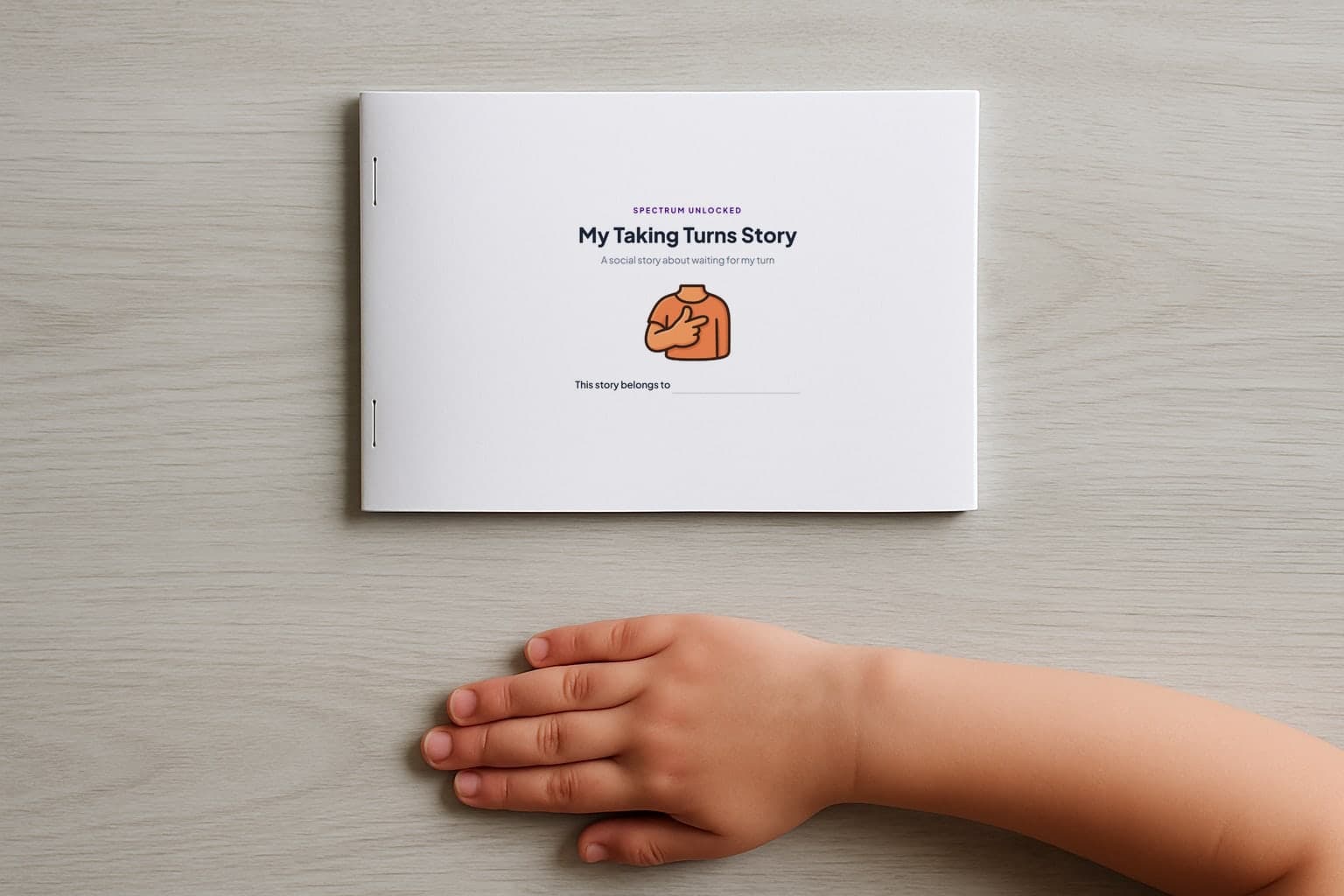
My Taking Turns Story
A social story about waiting for my turn
- 1
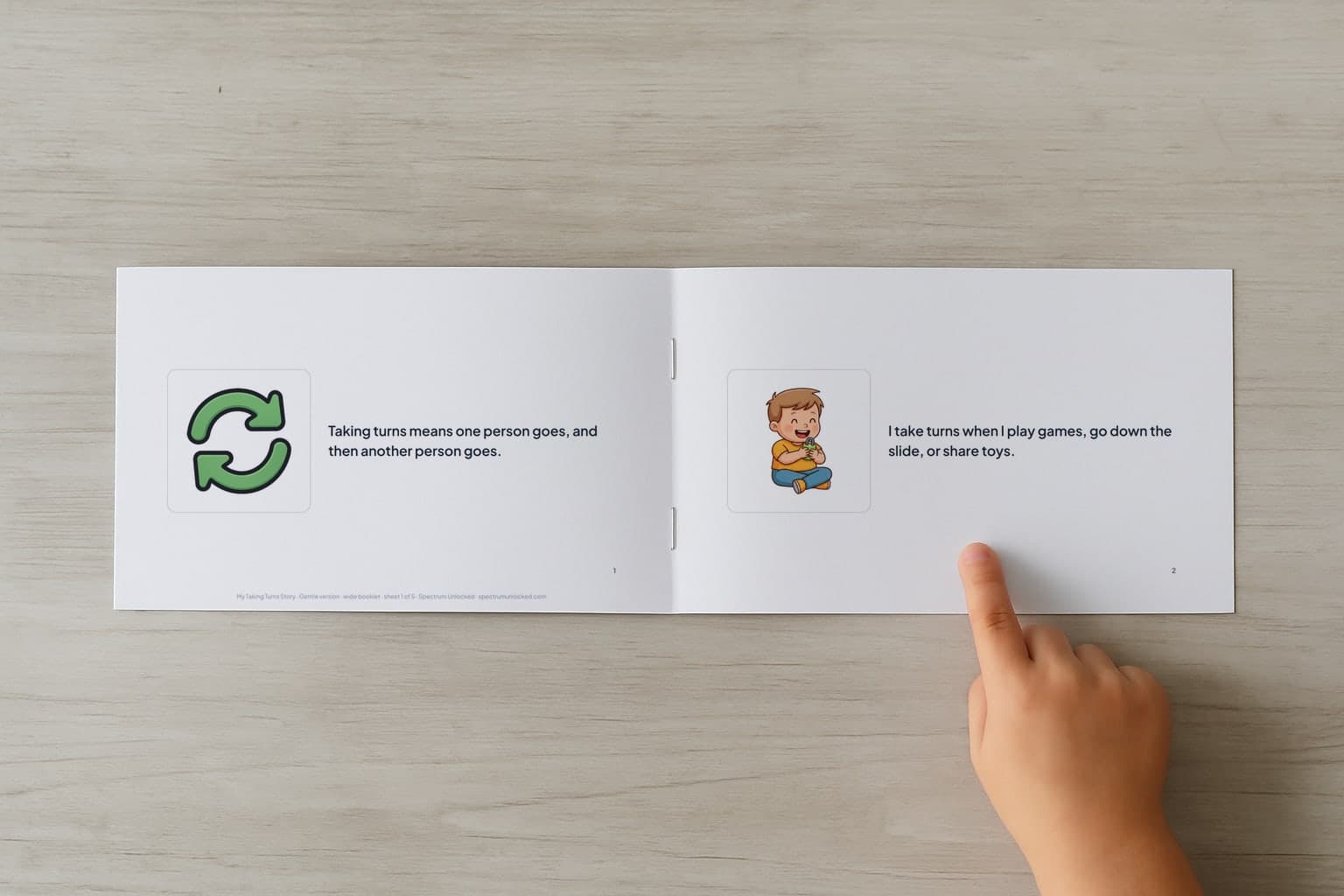
 Taking turns means one person goes, and then another person goes.Describes
 - 2
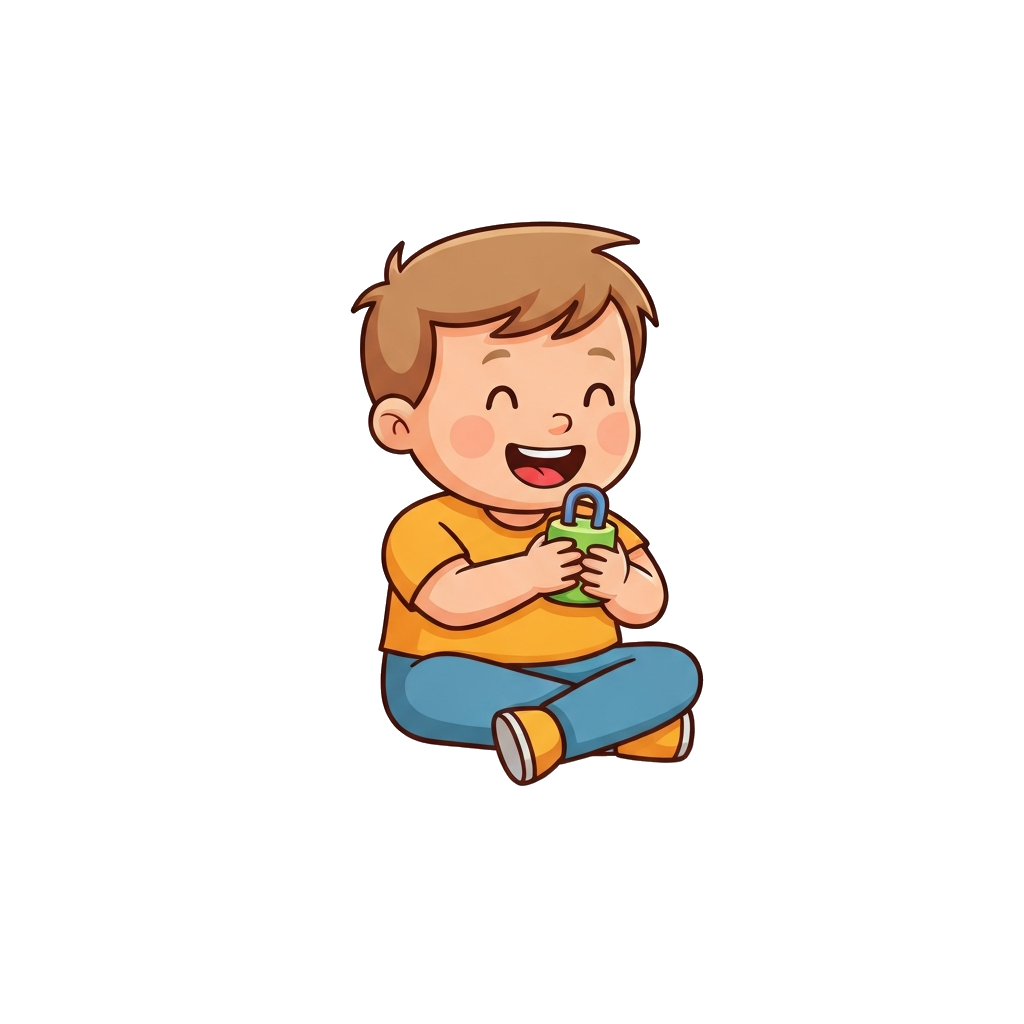 I take turns when I play games, go down the slide, or share toys.Describes
 - 3When it is my turn, I get to go. When it is someone else's turn, I watch and wait.Describes
- 4
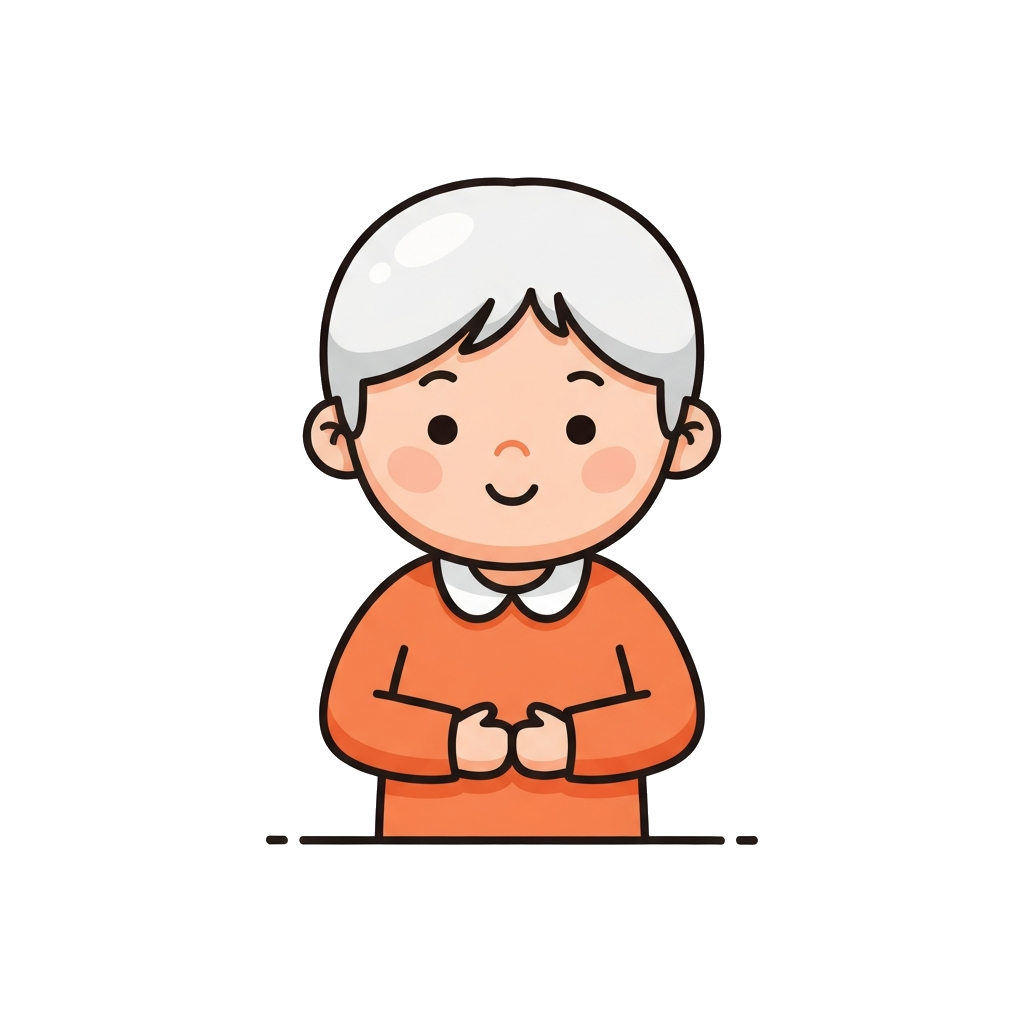 Waiting for my turn can feel hard. Lots of kids feel that way.Describes
 - 5
 Turns come back. After my friend's turn, it will be my turn again.Describes
 - 6
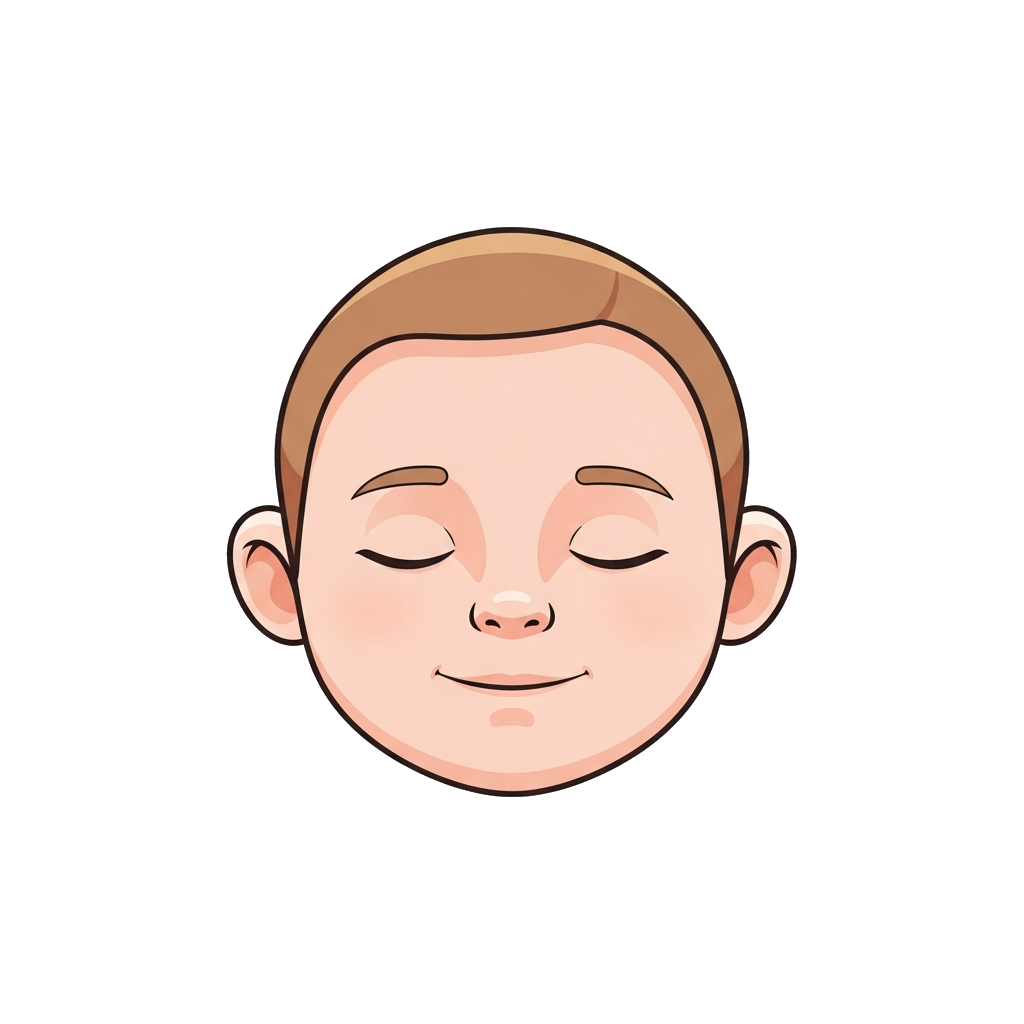 While I wait, I can count, watch the game, or take a slow breath.Coaches
 - 7
 When my turn ends, I can say, "Your turn," and pass the toy to my friend.Coaches
 - 8
 When everyone takes turns, the game is fair, and everyone gets a chance to play.Describes
 - 9
 Taking turns makes games more fun for everyone.Describes
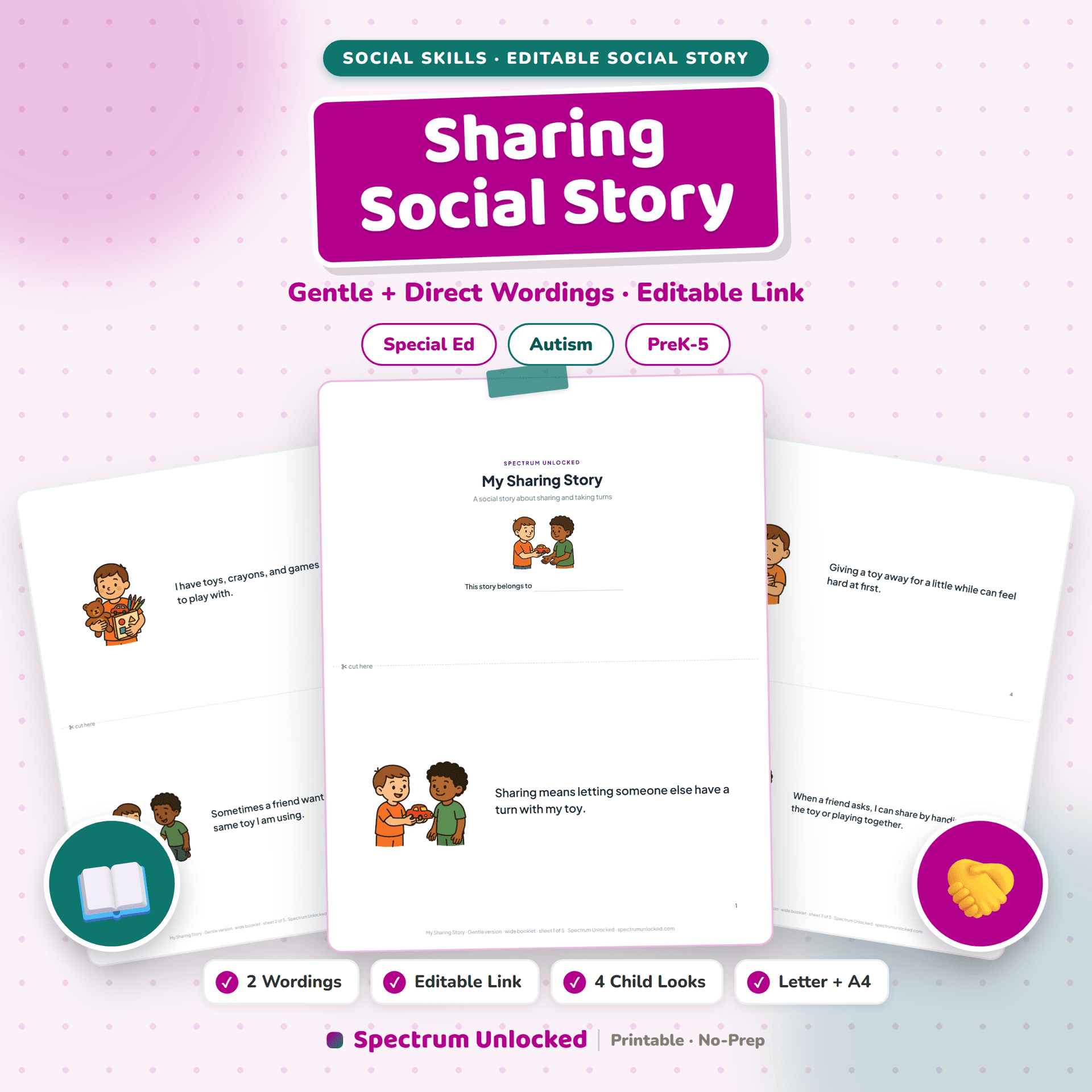
A ready-made story that goes with this one: Sharing Social Story
Handing a toy over, and knowing it comes back after a friend's turn. A gentle and a firmer wording, four child looks, booklet pages in US Letter and A4, and a link to edit it free.
Nothing left to prepare. 25 finished sets, from $3, and every page prints exactly as it is.
When to use this story
Use this story when games collapse over whose turn it is, when your child grabs toys instead of waiting, or before turn-heavy settings like board games, playgrounds, and circle time. Read it at a calm moment, then again shortly before a playdate or family game where turns will matter.
The story leans on one reassurance a child can hold onto: turns come back. For many children the wait feels like losing the toy forever, and learning that the turn returns shrinks the stakes enough to make waiting possible.
The waiting page gives your child something to do, counting, watching the game, taking a slow breath, because waiting well is a skill made of actions, not just the absence of grabbing. Praise the waiting you see, not only the sharing.
If turn battles center on one toy or one sibling, name them when you personalize the story. A page that says the real toy and the real brother reads as instructions for your house, not a lesson about children in general.
Frequently asked questions
- What is a taking turns social story?
- It is a short, first-person story that explains what taking turns means, admits that waiting is hard, and rehearses what to do during the wait. This one follows Carol Gray's describe-first approach, spending most of its pages on how turns work before suggesting anything.
- How do I teach an autistic child to take turns?
- Start with very short turns so the wait is winnable, narrate turns out loud with my turn and your turn language, and read a story like this one at calm times so the idea is rehearsed before it is tested. A sand timer or counting together can make the wait visible and finite.
- Why is waiting for a turn so hard for my child?
- For a literal thinker, a toy handed to someone else can feel gone for good. The story tackles that head-on with the line turns come back, and gives the wait itself a job: count, watch the game, or take a slow breath. Predictability is what makes the wait tolerable.
- Is this story free to print?
- Yes. The full story text is on this page, and the maker turns it into a printable booklet at no cost. You can add your child's name and photos before you download.
- Can I change the words or examples?
- Yes. Open the story in the maker to edit any sentence, swap the pictures, or switch between I and your child's name. Naming the actual game or toy your family fights over makes the story land harder.
- Who developed social stories?
- Social Stories were developed by Carol Gray in the early 1990s. The gentle version of this template follows her published guidance, including describing more than coaching, but Spectrum Unlocked is not affiliated with or endorsed by Carol Gray.
Related stories
Personal Space Social Story
A free printable social story about personal space for autistic kids. Read the full story, then personalize it with your child's name and photos.
Accepting No Social Story
Hearing no is hard for many kids. This social story explains why grown-ups say no and rehearses calm responses. Print it free or personalize it first.
Social Stories were developed by Carol Gray. Spectrum Unlocked is not affiliated with or endorsed by Carol Gray; the gentle version of this template follows her published describe-more-than-coach guidance.