School & Social Skills
Personal Space Social Story
A ready-to-use social story that teaches what personal space is and how to keep a comfortable distance, written to Carol Gray's describe-first guidance. Read the full story below, then customize it with your child's name.
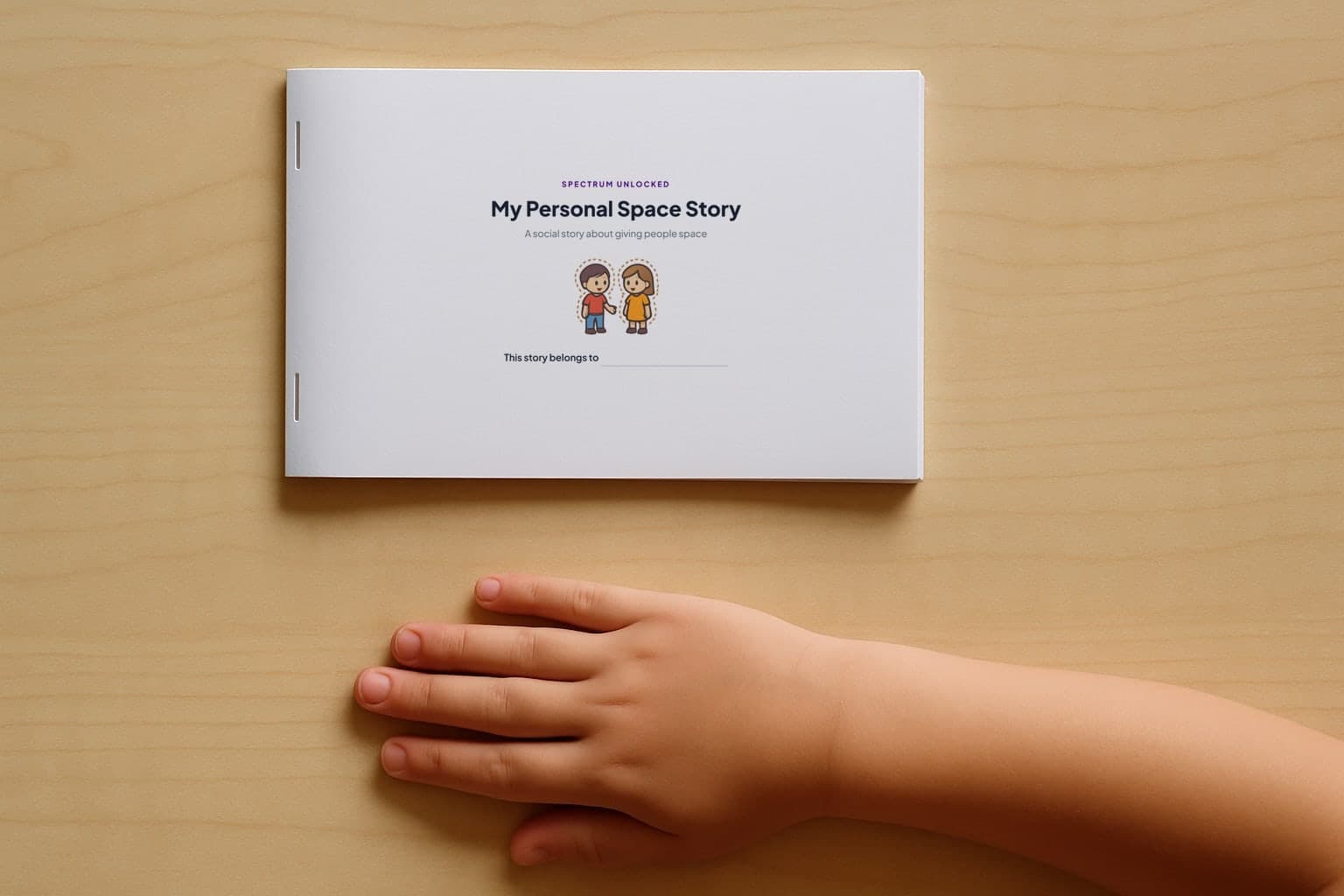
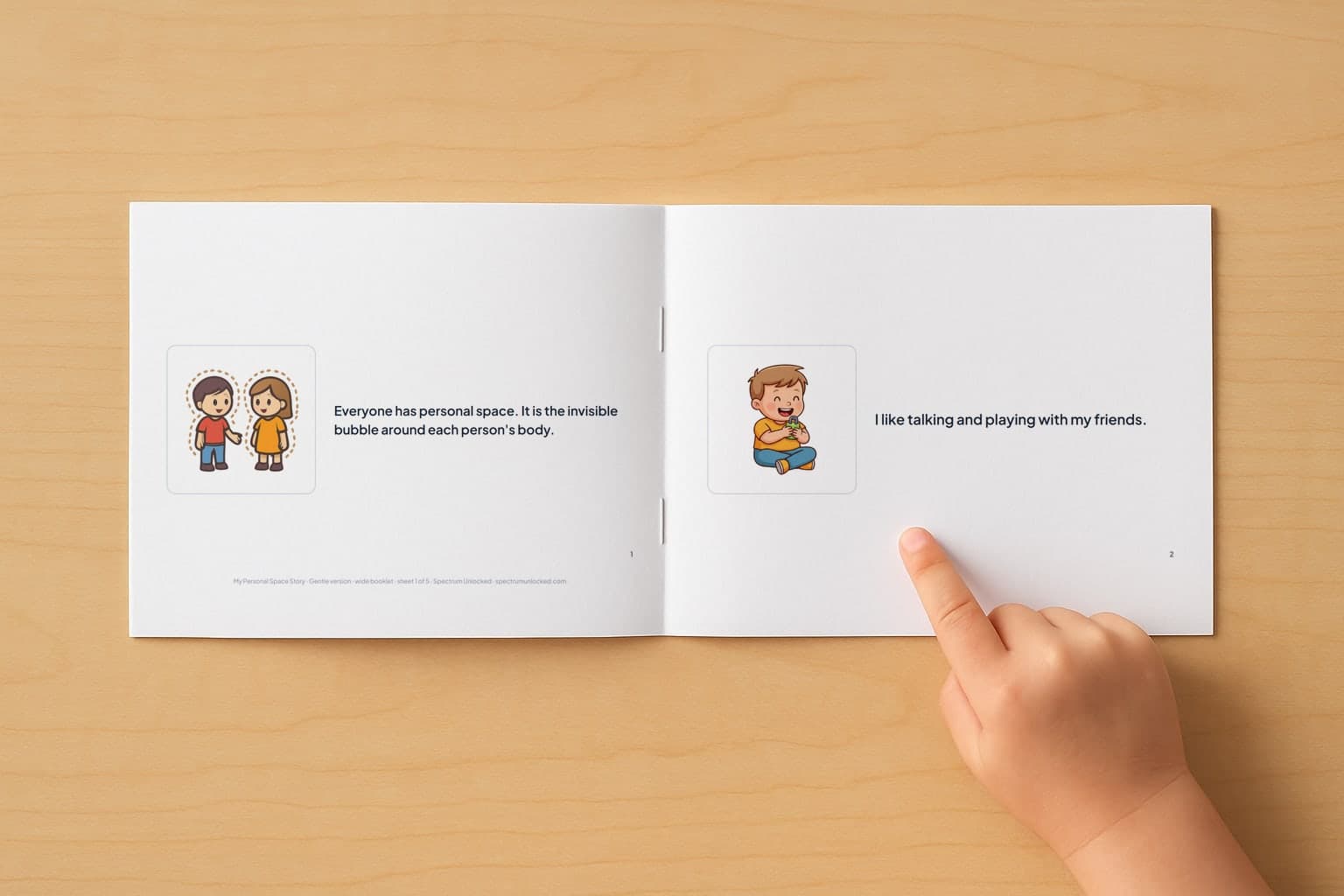
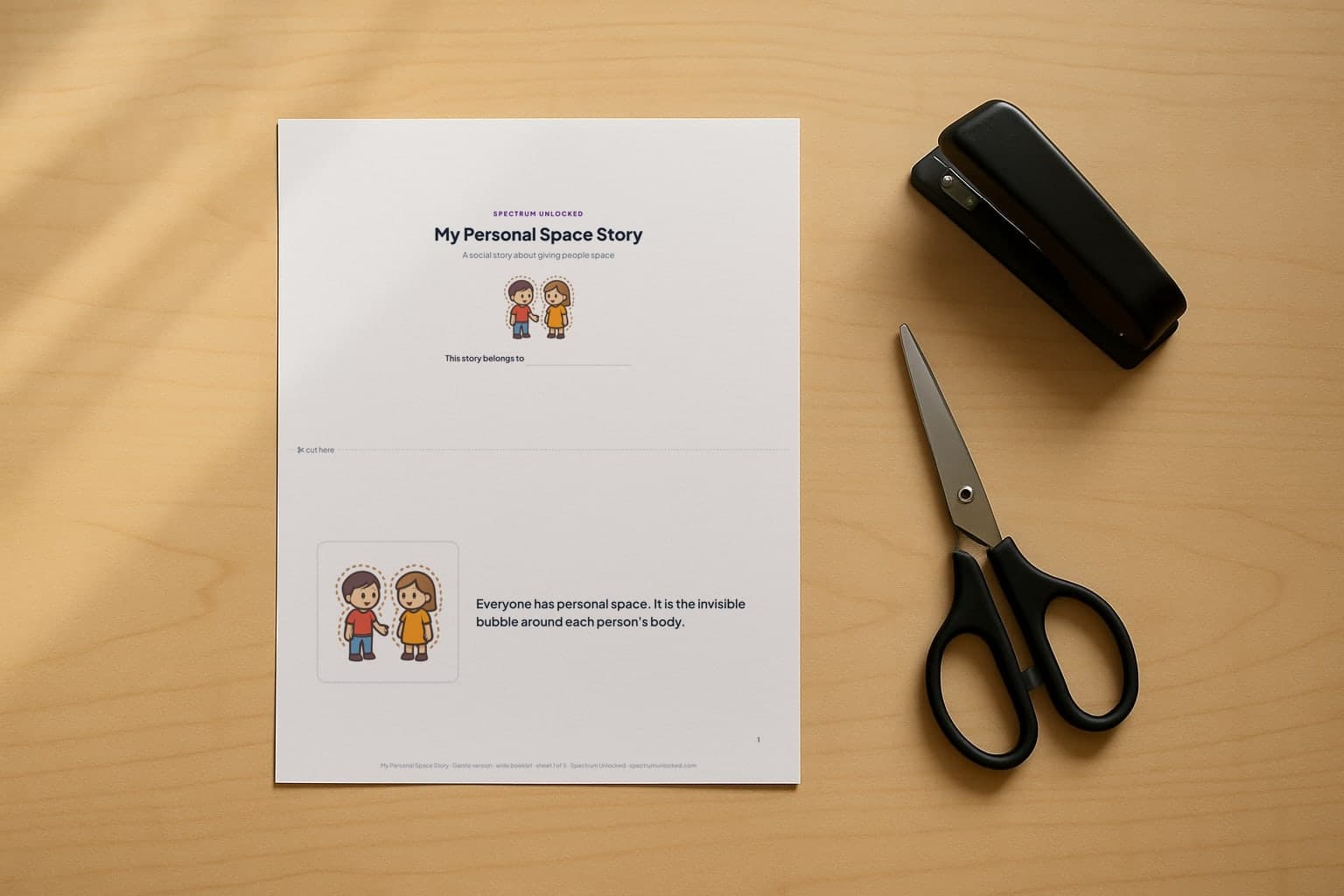
Download the printable PDF
Print the story as-is, no email required. Match the pictures to your child and pick your page layout, then download.
The story
Read the full story below. In the maker you can add your child's name, swap pictures, and print it as a booklet.
My Personal Space Story
A social story about giving people space
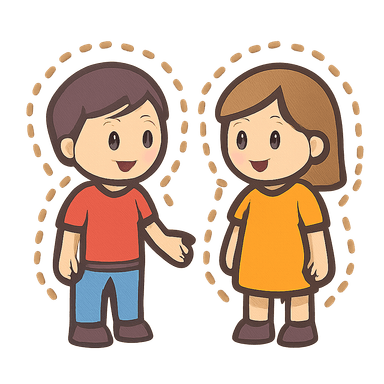
- 1Everyone has personal space. It is the invisible bubble around each person's body.Describes
- 2
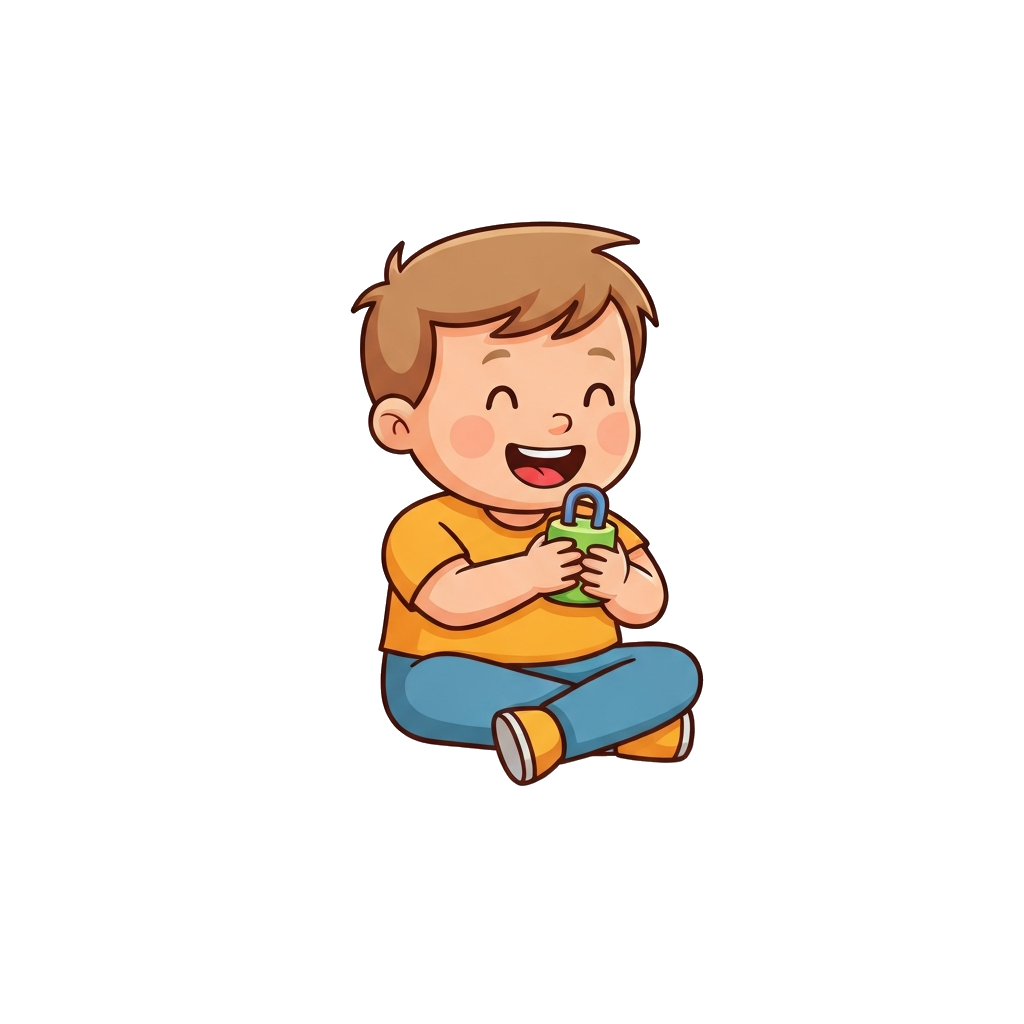 I like talking and playing with my friends.Describes
 - 3
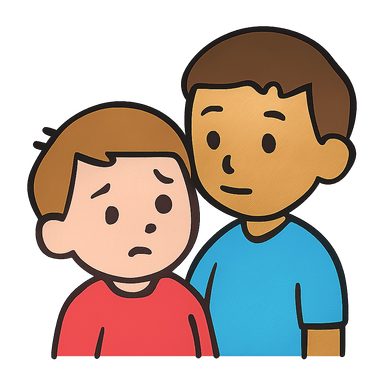 When someone stands very close, people can feel squished or want to move away.Describes
 - 4
 One arm of space is usually just right. I can stretch out my arm to check.Describes
 - 5
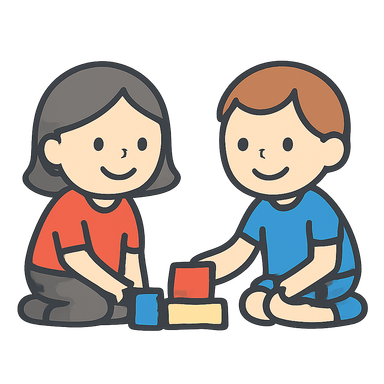 I can try to keep about one arm of space between me and my friends.Coaches
 - 6
 If I forget, a grown-up might remind me. I can take a small step back.Coaches
 - 7When I give people space, they feel comfortable and safe around me.Describes
- 8
 Giving space is one way I can be a good friend.Describes
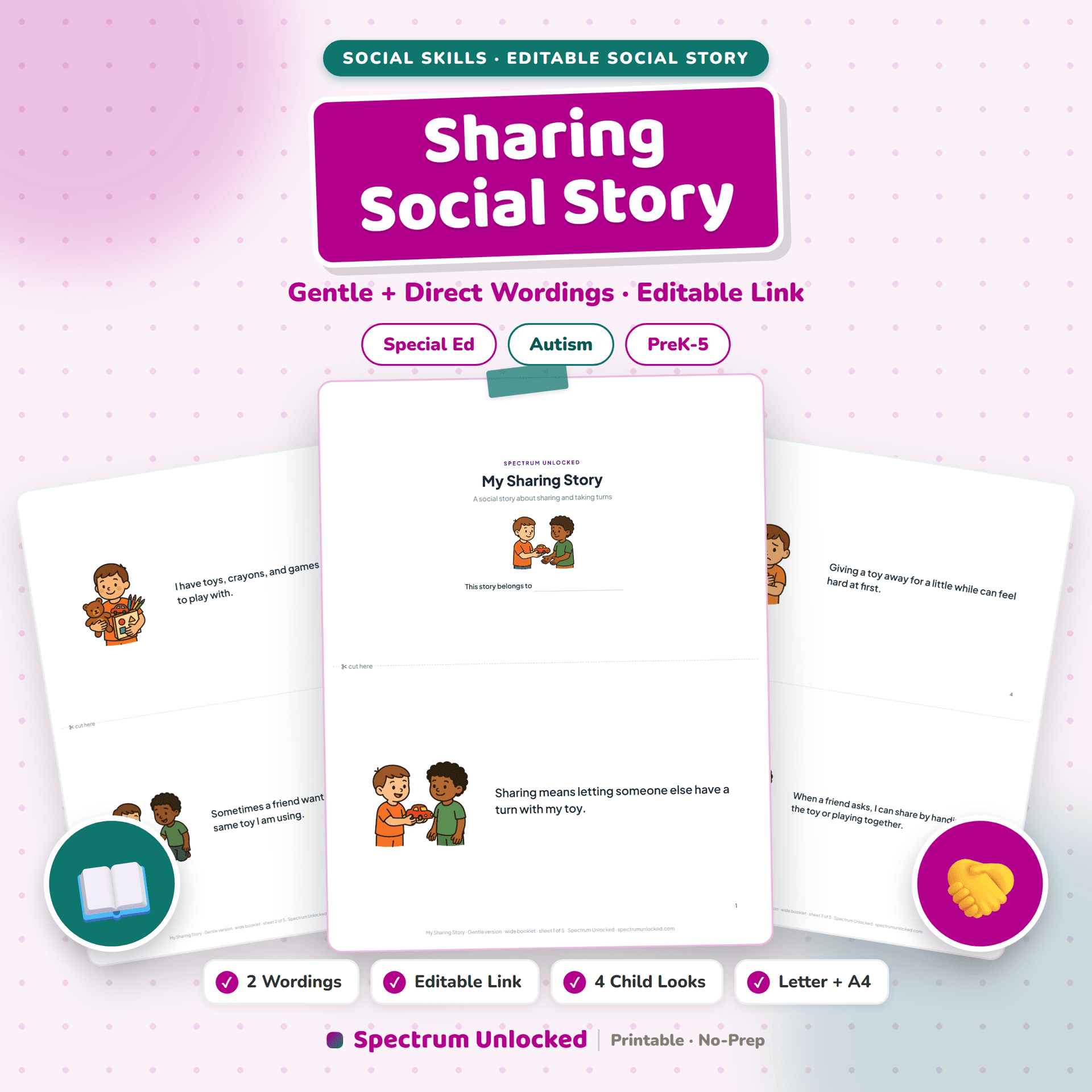
A ready-made story that goes with this one: Sharing Social Story
Handing a toy over, and knowing it comes back after a friend's turn. A gentle and a firmer wording, four child looks, booklet pages in US Letter and A4, and a link to edit it free.
Nothing left to prepare. 25 finished sets, from $3, and every page prints exactly as it is.
When to use this story
Use this story when your child stands very close to people, touches classmates or strangers, or gets upset when others need room. Read it together at a calm time, not in the middle of the moment, and reread it before situations where space is hard, like school lines or playgrounds.
Personal space is an abstract idea, which is exactly what social stories are good at making concrete. The story names the invisible bubble, shows what an arm's length looks like, and gives your child one clear action to try when someone backs away.
Keep the story literal when you personalize it. If your child responds better to specific rules, name the places where space matters most for your family, like the school line or the couch.
Frequently asked questions
- What is a personal space social story?
- It is a short, first-person story that explains what personal space is, why people need it, and what your child can do to keep a comfortable distance. It follows the social story approach developed by Carol Gray, describing the situation far more than it instructs.
- How do I teach an autistic child about personal space?
- Make the idea visible and concrete. An arm's length is a physical measure your child can test, and a social story rehearses the skill calmly before it is needed. Praise the tries you see, and reread the story before high-contact settings like recess or family gatherings.
- Does printing this social story cost anything?
- No. The full story text is on this page, and the maker lets you download the printable booklet free. You can also add your child's name and photos before printing.
- Can I change the words in the story?
- Yes. Open the story in the maker to edit any page, swap pictures, switch between I and third person, and add or remove pages. Editing is encouraged, because the best social story matches your child's real situations.
- Who developed social stories?
- Social Stories were developed by Carol Gray in the early 1990s. The gentle version of this template follows her published guidance, including describing more than coaching, but Spectrum Unlocked is not affiliated with or endorsed by Carol Gray.
Related stories
Taking Turns Social Story
Waiting for a turn can feel like losing the toy forever. This free printable social story explains how turns work and what to do while waiting for yours.
Hitting Social Story
A social story for kids who hit when big feelings take over. Choose the gentle version or the firmer We Do Not Hit version, then print either one free.
Accepting No Social Story
Hearing no is hard for many kids. This social story explains why grown-ups say no and rehearses calm responses. Print it free or personalize it first.
Social Stories were developed by Carol Gray. Spectrum Unlocked is not affiliated with or endorsed by Carol Gray; the gentle version of this template follows her published describe-more-than-coach guidance.