Free Detailed Potty Training Visual Schedule for Girls
Potty training breaks down into way more steps than most schedules show. This template walks autistic girls through all ten: lift the seat, pull down pants, sit, go, use paper, wipe front to back, clean up any spill, flush, pull up pants, wash hands. Every step gets its own picture so your child does not have to hold the order in working memory.
- 10 activities
- Free printable PDF
- Editable in browser
Editor preview
All 10 steps with picture symbols, ready to customize before you print.
- Step 1
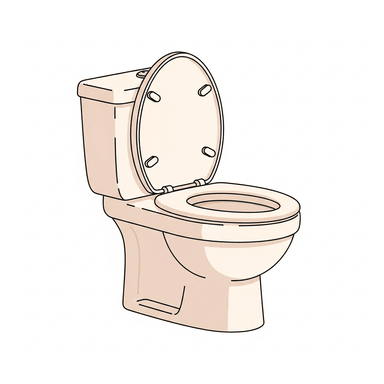 Lift up seat
 - Step 2
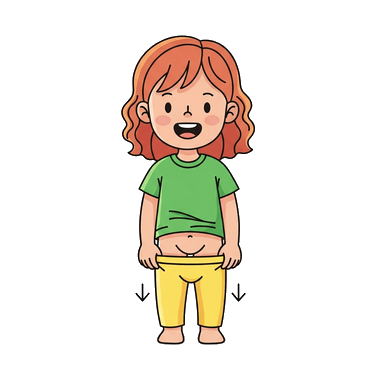 Pull down pants and underwear
 - Step 3
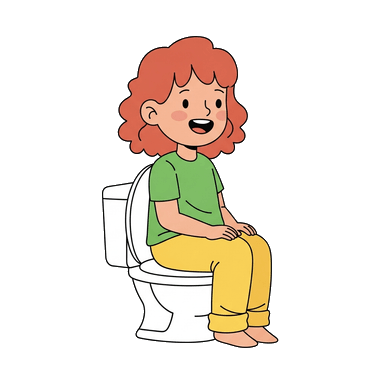 Sit on toilet
 - Step 4
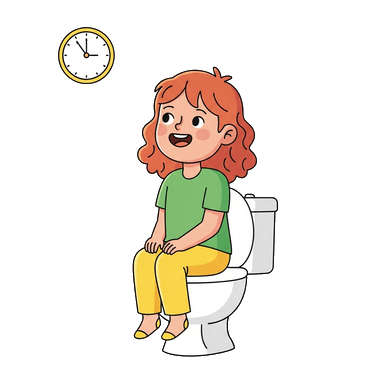 Go potty
 - Step 5
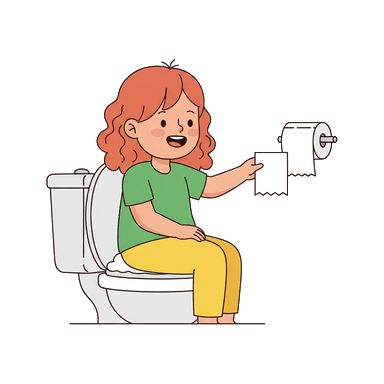 Use toilet paper
 - Step 6
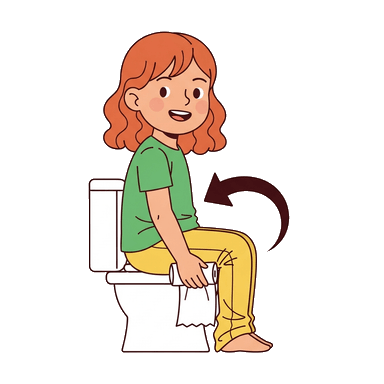 Wipe front to back
 - Step 7
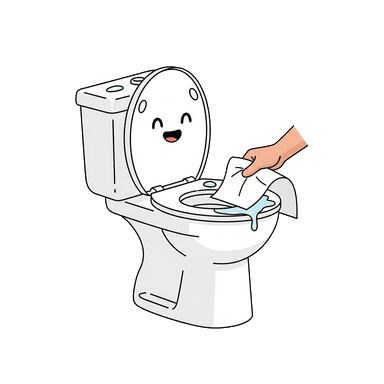 If you spill, wipe it off
 - Step 8
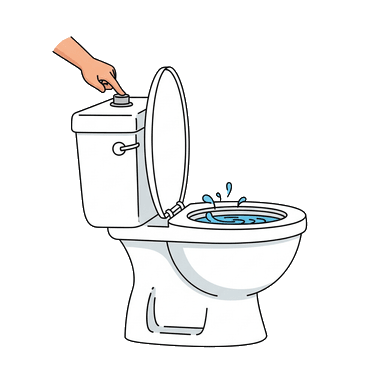 Flush toilet
 - Step 9
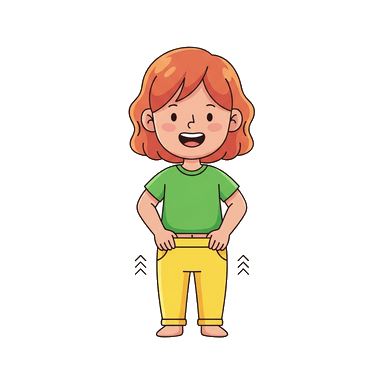 Pull up pants and underwear
 - Step 10
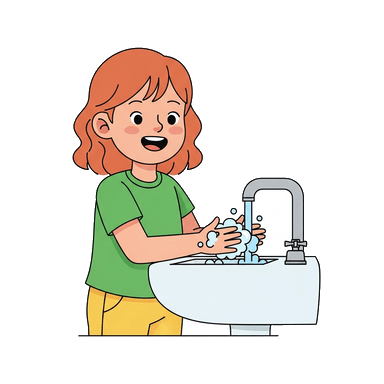 Wash hands
Printable preview
What the free PDF looks like once you download or print it. Every toggle above updates it.
Page 1 of 2. The PDF includes every step.
Pick your layout, card size, page size, and orientation. On the checklist layout you can also turn numbers, times, checkboxes, and icons on or off. The preview and PDF follow your choice.
Most potty schedules collapse ten steps into four or five. That works for some kids, but autistic kids often need the missing steps named explicitly because the missing steps are exactly where they get stuck. Pulling pants down and pulling pants up are not the same skill. Wiping and wiping in the correct direction are not the same skill. Going to the bathroom and remembering to flush are not the same skill. Naming each step gives your child a single thing to focus on at a time, instead of a vague "go to the bathroom" command that bundles ten decisions into one prompt.
Front-to-back wiping matters more for girls than most parents realize. Wiping back-to-front is a leading cause of childhood urinary tract infections in girls, and autistic kids who learn the direction wrong tend to keep doing it wrong because the schedule never told them otherwise. The arrow on the wipe step is small but does the teaching work for you. After two weeks of consistent use, most girls remember the direction on their own.
The spill cleanup step is the one that gets cut from most schedules and the one that causes the most parent frustration. Drops, splashes, and toilet paper on the seat are normal for any kid still learning to aim and clean up. Naming the cleanup as its own step means your child does not have to decide whether the bathroom needs tidying before they leave. The schedule decides. They just do step seven.
Print this schedule and post it inside the bathroom at your child's eye level. Laminate it or slide it into a clear page protector so it survives daily use. The first week, walk through each step with your daughter while she is on the toilet, pointing at the picture as she does the action. After about a week, fade out the pointing. After two to three weeks, the schedule should be doing the prompting on its own and you should only need to step in when a step gets skipped.
Two common variations. If your daughter wears dresses or skirts most days, swap the pants-down and pants-up steps for a lift-dress step at the start. If she is still working on hand strength to flush, the flush step can be a parent-flushes step for a few weeks before you hand it over. The schedule is a scaffold, not a contract. Adapt it as her skills grow.
Ready-made daily and routine visual schedules to print and post, in US Letter and A4 with a setup guide.
When to use this template
Best for girls ages 3 to 8 who can use the toilet but skip steps, forget the front-to-back direction, or have trouble managing the clothing and clean-up around the actual sit. Especially useful if your daughter rushes the routine and ends up with messy underwear, missed wiping, or unflushed toilets.
How to customize this template
- Swap pants for dress or skirt steps if that is what your daughter wears most days. The schedule shortens by one step in that case.
- Add a check-the-floor step after wash hands if your daughter often forgets to look down and notice droplets on the floor.
- Move the flush step to the very end (after wash hands) if the flush noise is overstimulating, so your daughter is on her way out of the bathroom when it happens.
- Add a sticker step at the end during the learning phase and drop it after two to four weeks of independent use.
- If your daughter has trouble reaching back to wipe, use a long-handled wipe tool or teach the side-lean method where she leans to one side and wipes from the front.
Take this further with Beacon
Build, save, and share daily schedules in Beacon. Adjust them as your child's routine changes.
Frequently asked questions
- Why do girls need a ten-step schedule when boys only get six?
- Because the boy version skips the dressing piece (the user starts already pants-down) and the spill cleanup (boys learning to stand at the toilet have different cleanup needs). The girl version is the full sequence for a kid sitting down from start to finish. If your daughter has the dressing and cleanup pieces automatic and only needs the wipe-check, the six-step Detailed Potty Schedule for Boys works for her too. There is no rule that the boy version is only for boys.
- How important is the front-to-back wipe direction really?
- Important enough that pediatricians teach it as standard hygiene for girls. Wiping back-to-front moves bacteria from the rectal area toward the urinary tract and is a leading cause of recurrent urinary tract infections in young girls. Most kids pick up the correct direction in a week or two of pointing at the arrow. If your daughter is older and has been wiping the wrong direction for a while, the schedule fixes it faster than verbal correction alone.
- My daughter rushes through and skips steps. Will this fix it?
- Mostly yes, with one caveat. The schedule slows the routine down by giving each step its own visible panel, which means rushing through becomes visually obvious to your child (they can see they skipped a panel) and to you (you can point at the skipped panel). For most kids this is enough. The caveat is kids who rush because they have an anxiety or sensory reason to want out of the bathroom fast. For those kids, fix the underlying sensory or anxiety issue first, then the schedule helps.
- Do I need to use all ten steps?
- No. The template ships at ten because that is the full routine for kids still learning the whole sequence. If your daughter has the dressing piece automatic, delete steps two and nine in the builder before printing. If she always remembers to flush, drop the flush step. The point is that every step that is currently a sticking point is visible; the rest can come off the schedule once they are automatic.
- When can my daughter stop using this schedule?
- When she walks through the routine independently for seven to ten consecutive bathroom trips without prompting. That usually takes two to four weeks of consistent use. Do not pull the schedule down the day she nails it once. Let it stay on the wall and become invisible to her over a few more weeks. That fade-out is what locks the routine in for the long run.
Related templates
Detailed Potty Training Schedule for Girls (Brown Skin)
Ten-step potty routine for girls that names every micro-step from lifting the seat through washing hands, including front-to-back wiping and the if-you-spill clean-up most schedules skip.
Potty Training Routine
Eight-step bathroom sequence for autistic kids learning to use the potty, with sticker reward at the end.
Detailed Potty Training Schedule for Boys (Light Skin)
Six-step potty routine for boys with an explicit wipe-check loop. The paper-color check (brown means wipe again, white means done) turns wiping into a concrete signal autistic kids can read on their own.