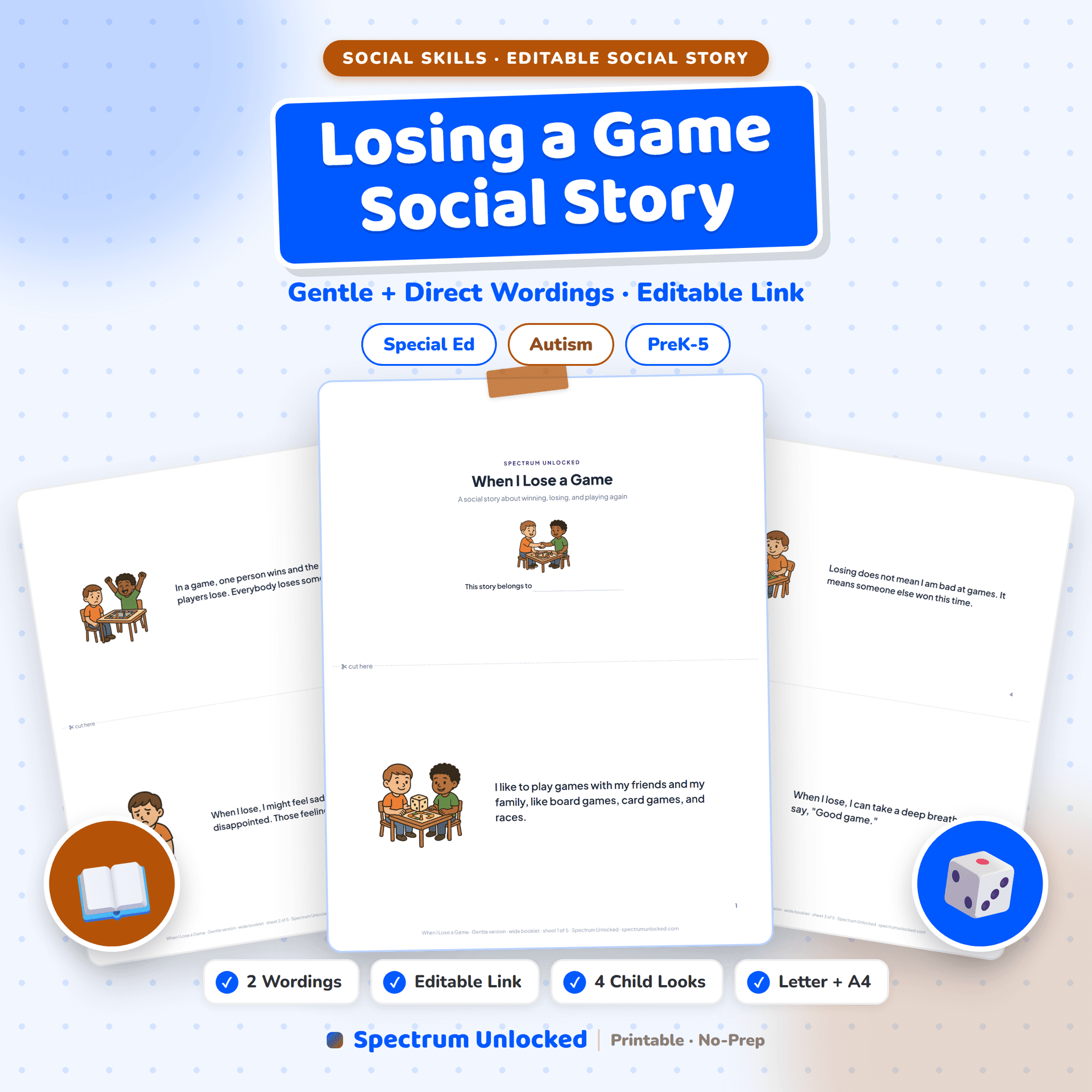
A losing a game social story gets a child ready for the moment a game does not go their way, one page at a time, before the next game night: the sad or mad feeling, a deep breath, "Good game," and playing again. This pack is one illustrated story about winning and losing, ready to print and read. The free taking turns social story pairs well with board games, and the free when I feel frustrated social story covers other hard moments.
What is included
- One illustrated social story about losing a game and playing again
- A gentle wording that describes far more than it instructs, and a firmer direct wording
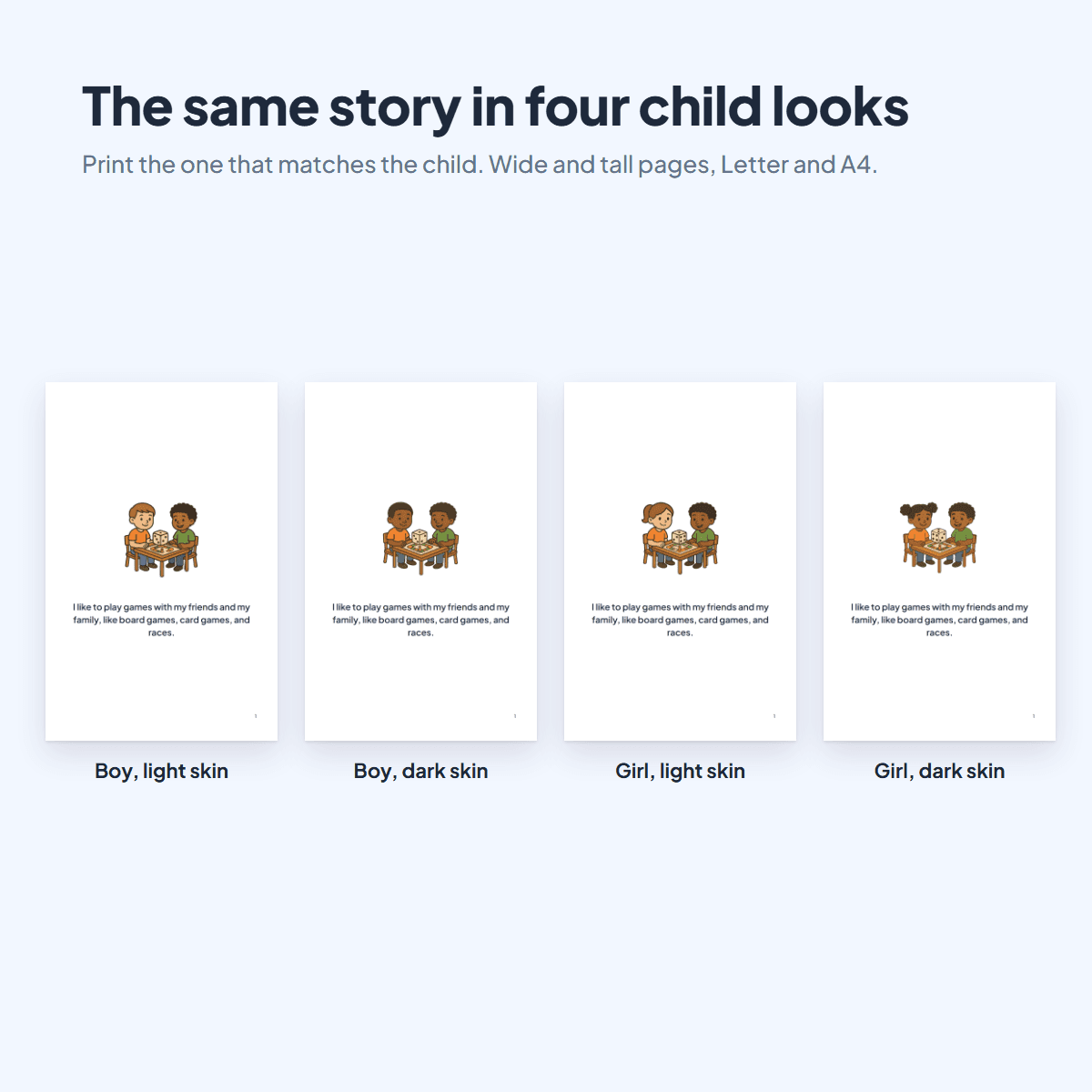
- Four child looks: a boy or a girl, with light or dark skin
- Half-page booklets in wide and tall pages, in US Letter and A4
- Blank write-in booklets in US Letter and A4, for the stories only you can write
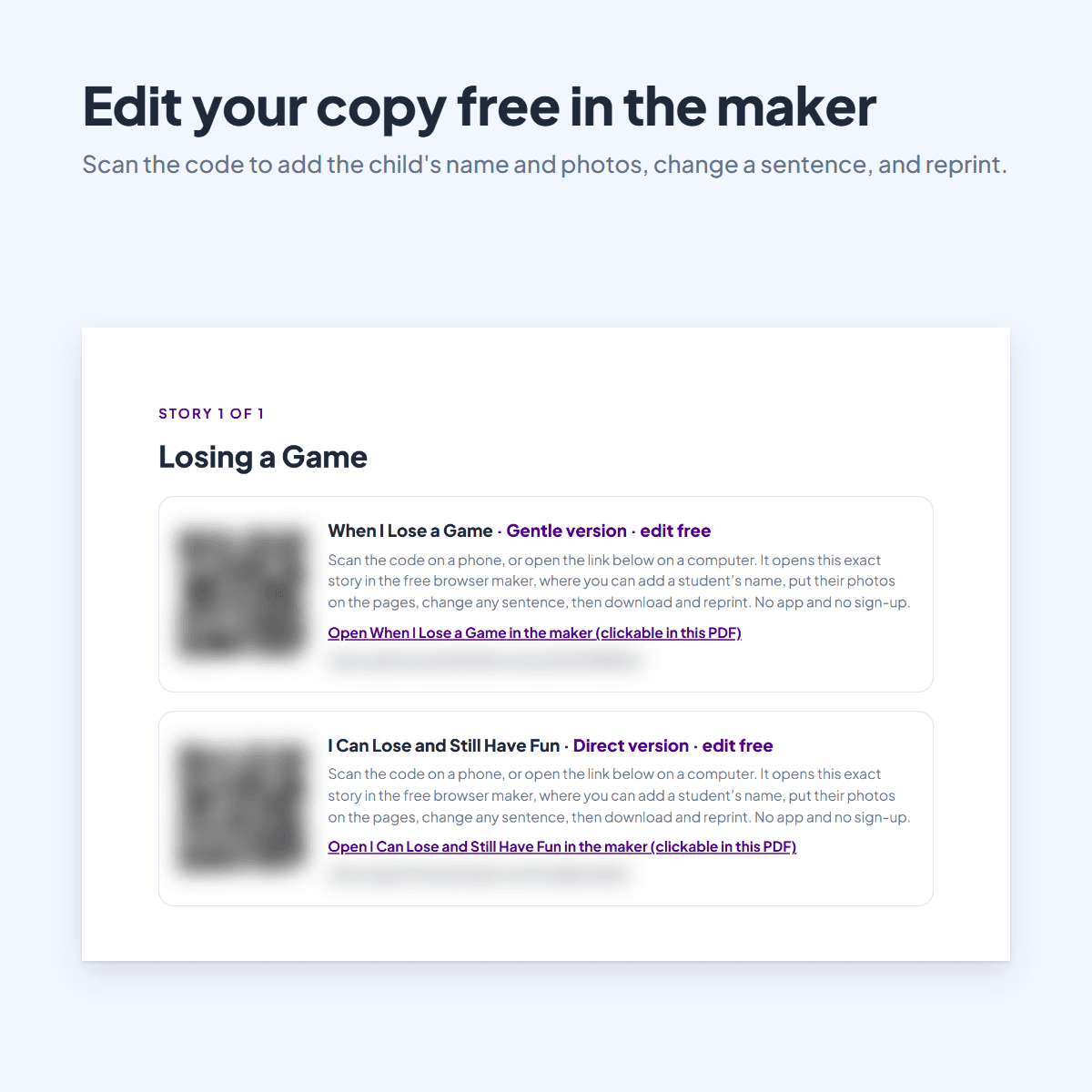
- A guide with a printed link and QR code for each wording that opens your copy in the free Social Story Maker
What the losing a game social story says
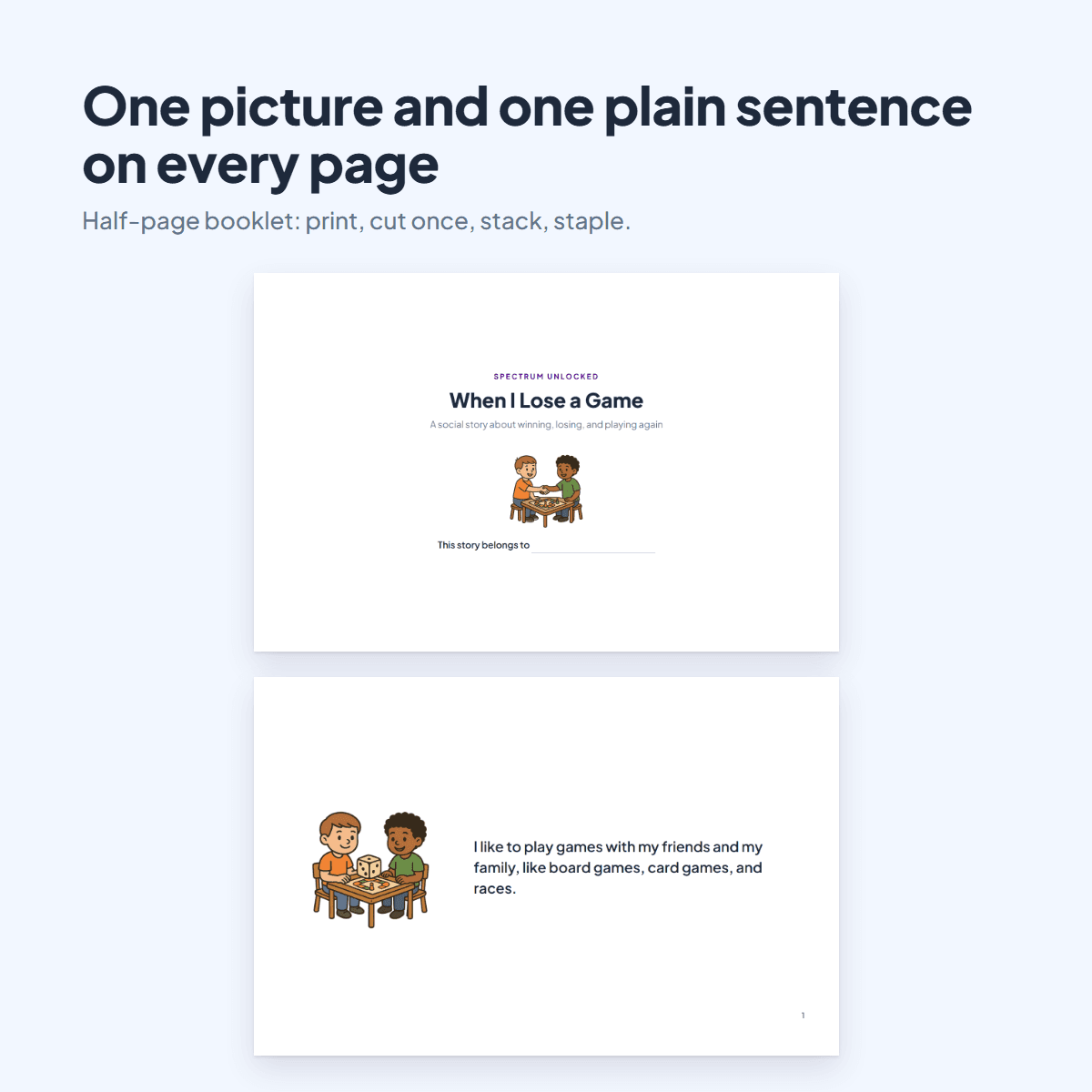
The gentle wording is eight pages long, one picture and one short sentence on each page, told in the child's own voice. The first two pages read:
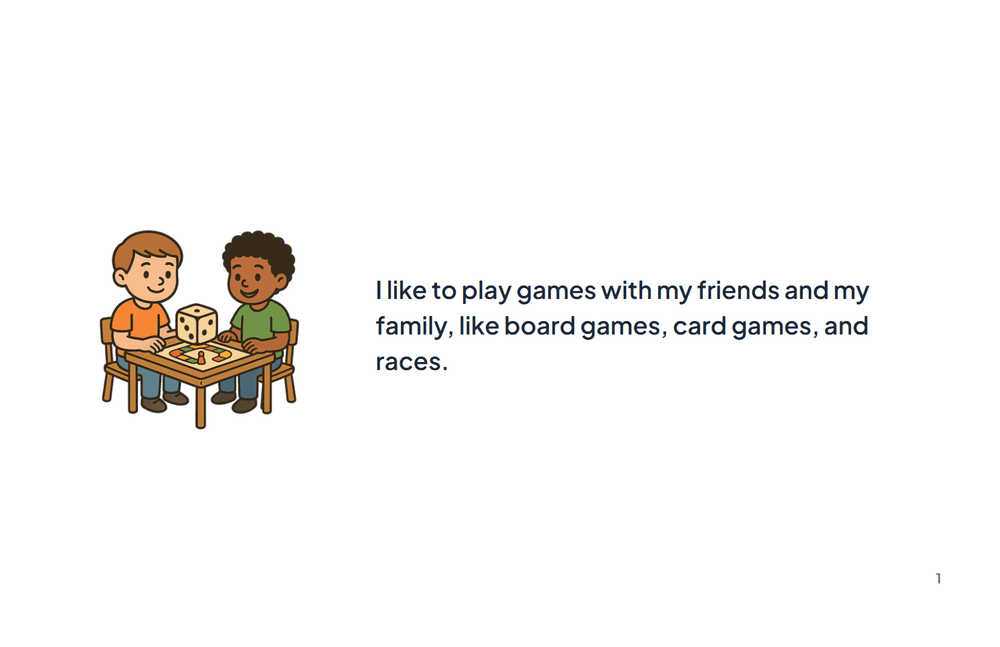
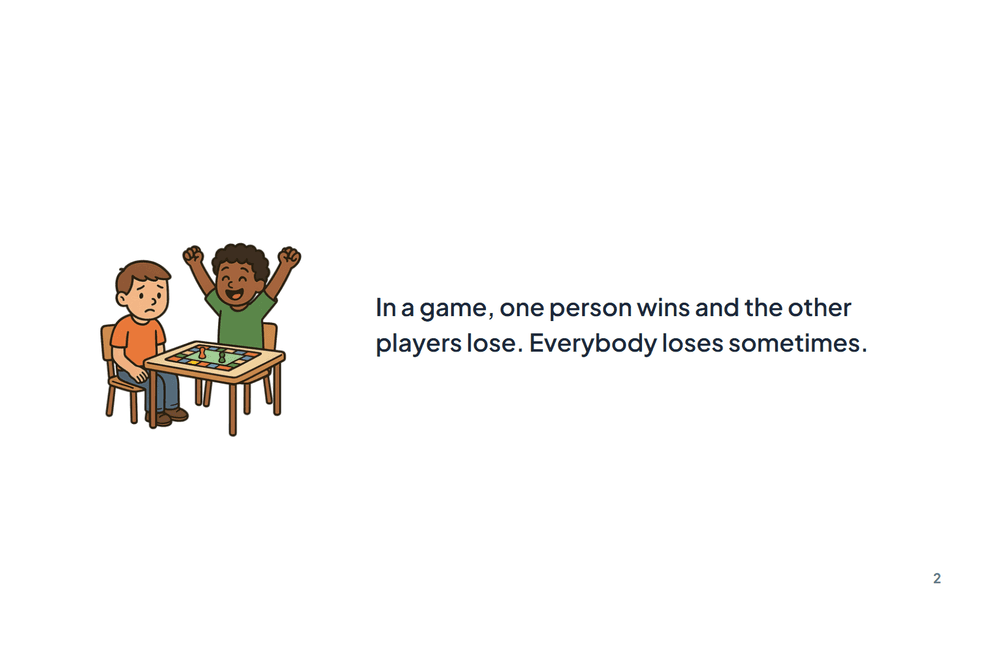
The pages after that cover:
- feeling sad, mad, or disappointed after losing
- why losing does not mean being bad at games
- a deep breath and saying "Good game"
- how kind words keep friends wanting to play
- taking a break when the feeling is too big
- playing again, with a chance to win or lose next time
The direct wording says the same things in seven pages, with the expectation stated plainly.
When to read a losing a game social story
Read it at a calm time, a day or two before a game night, a playdate, sports day, or the first board games at preschool. Read it again just before you set up a game, and once more after a game your child lost calmly, so the story is tied to a real success.
How to read the losing a game social story with your child
- Start with the gentle wording; switch to the direct one if your child does best with a plain rule.
- Print the child look that matches your child, and write their name on the cover.
- Read one page at a time, pointing to the picture before you read the sentence.
- Play short, quick games at home, and let your child practice losing and saying "Good game" with you.
- Lose on purpose sometimes, and say "Good game" yourself, so your child sees it done calmly.
Formats, license and delivery
- Formats
- One kit ZIP with print-ready PDFs in US Letter and A4, plus a setup guide.
- License
- Licensed for personal and single-classroom use by the purchaser. For another classroom or teacher, please add a license for each.
- Delivery
- The download unlocks the moment Stripe checkout completes and the link is emailed to you. The pack also stays in your My Resources library, reachable anytime through a magic link sent to your email.
- Refunds
- Because this is an instant digital download, all sales are final. If a file will not open or you bought the wrong pack, email info@spectrumunlocked.com and Spectrum Unlocked will make it right.
Losing a game social story questions
- What is a losing a game social story?
- A losing a game social story is a short illustrated story, in the approach developed by Carol Gray, about the moment a game does not go a child's way. It names the sad or mad feeling, says it is okay, shows a deep breath and "Good game," and reminds the child that games can be played again.
- Can we practice with a real game?
- Yes, and it helps. Pick a short game that ends quickly, read the story first, then play. When your child loses, point to the "Good game" page and say it together. Short games mean many chances to practice losing calmly in one sitting.
- What is the difference between the gentle and the direct wording?
- The gentle wording mostly describes what happens and how it feels, with two coaching sentences. The direct wording states the expectation plainly: when I lose, I say "Good game." Both wordings come in this losing a game social story, so you can choose the one that fits.
- Can I personalize the story?
- Yes. The guide prints a link and a QR code for each wording that opens the story in the free Social Story Maker. You can add your child's name, change the board game to the game your child plays most, and change any sentence.
- What formats and paper sizes are included?
- One ZIP with print-ready PDFs in US Letter and A4: the story in four child looks, each in wide and tall booklet pages and in both wordings, plus blank write-in booklets and the guide. Print at actual size, cut each sheet in half along the dashed line, stack the pages in order and staple the left edge.
- How do I receive the files, and can I use them with my whole class?
- Delivery is instant: checkout unlocks the download and emails you the link, and the pack stays in your My Resources library. It is licensed for personal and single-classroom use. Because it is a digital download, all sales are final; if a file will not open, email info@spectrumunlocked.com and Spectrum Unlocked will fix it.
Game night ending with pieces on the floor?
Beacon helps you work out what makes losing so hard for your child and how to practice it in small, winnable steps.
What would Beacon say?
"My son flips the board every time he loses at Candy Land. How do I teach him to lose?"
Prefer to build your own for free?
This pack is the finished, done-for-you set. If you would rather make your own from scratch, the free Social Story Maker on Spectrum Unlocked does that at no cost.
Try the Free Social Story MakerPacks that go together
Emotions Social Stories
Four illustrated social stories (angry feelings, losing a game, asking before taking, telling the truth), each in a gentle and a firmer wording, for four child looks, as half-page booklets in US Letter and A4 with a guide.
Anger Social Story: When I Feel Angry
One illustrated social story about angry feelings, slow breaths and safe hands, in a gentle and a firmer wording, for four child looks, as half-page booklets in US Letter and A4 with a short guide.
Stealing Social Story: Asking Before I Take
One illustrated social story about asking before taking and giving things back, in a gentle and a firmer wording, for four child looks, as half-page booklets in US Letter and A4 with a short guide.
Looking for more? Browse all classroom packs.
Reviews
Be the first to review this pack.