Free Dog Walking Visual Schedule for Autism
Walking the family dog is one of the highest-value chores you can teach an autistic kid. It bundles physical movement, executive function (a six-step sequence), social-emotional learning (reading the dog's body), and outdoor sensory regulation into one daily routine. This visual schedule makes the full loop concrete so your child can own it.
Make the schedule look like your child: show a boy or girl in a light or dark skin tone, then print or download the matching PDF.
- 6 activities
- Free printable PDF
- Editable in browser
Editor preview
All 6 steps with picture symbols, ready to customize before you print.
- Step 1
 Clip on the leash
 - Step 2
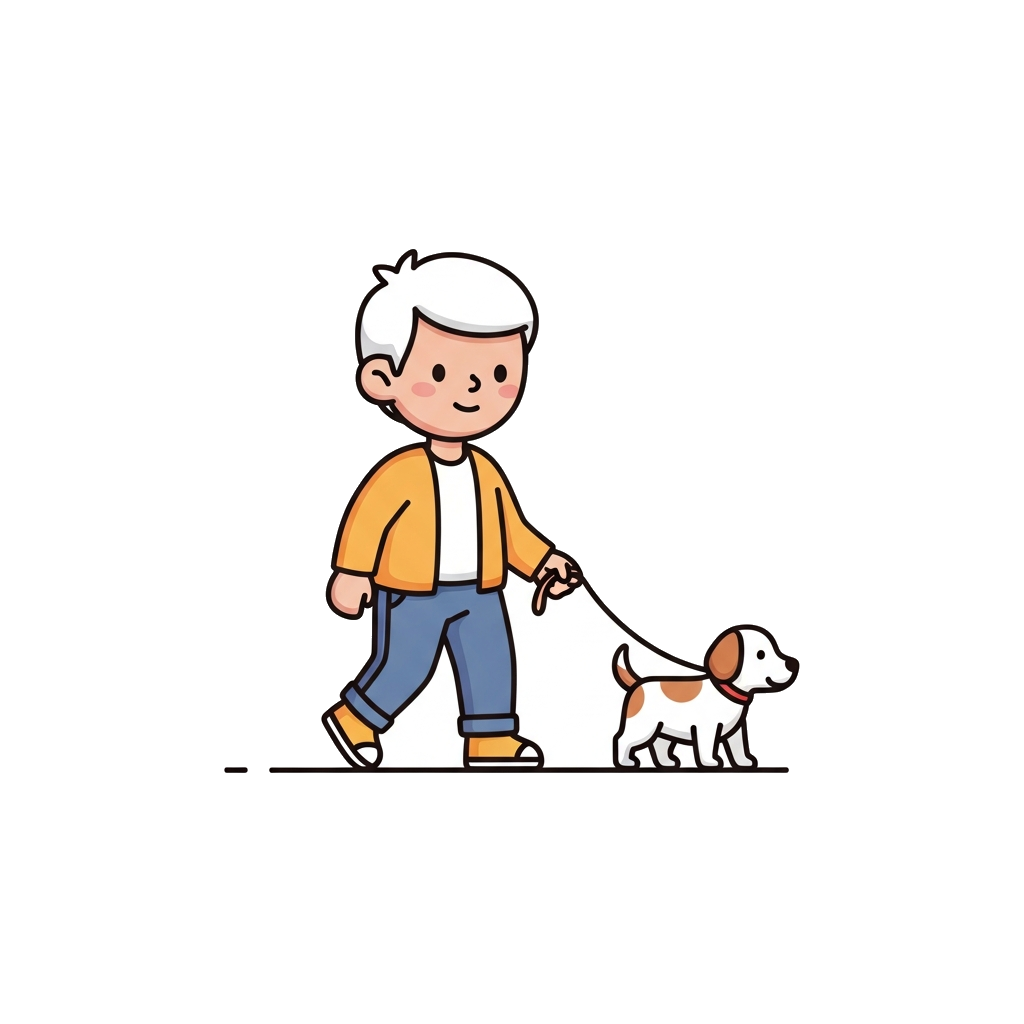 Walk the dog outside
 - Step 3
 Bag the poop
 - Step 4
 Walk home
 - Step 5
 Refill water and food
 - Step 6
 Wash hands
Printable preview
What the free PDF looks like once you download or print it. Every toggle above updates it.
Show a boy or girl in a light or dark skin tone to match your child, and pick your layout, card size, page size, and orientation. On the checklist layout you can also turn numbers, times, checkboxes, and icons on or off. The preview and PDF follow your choice.
Dog walking is a high-skill chore. The autistic child has to remember to take the leash, manage a moving animal, watch traffic, pick up after the dog, and bring everything home in the right order. Most parents underestimate how many micro-steps the routine contains, which is why kids who seem ready often miss steps (forget the bag, forget to refill water at home, forget to wash hands). The visual schedule names every step so nothing falls through.
Start with parent-accompanied walks for the first three to four weeks. Your child holds the leash and follows the schedule; you walk alongside and prompt only on missed steps. By week two most kids handle the leash and the cleanup independently. By week four most kids initiate the walk on their own (find the leash, ask if it is walk time, prompt the parent). That is the point where the schedule has done its job.
If your eventual goal is solo neighborhood walks (typically appropriate around age 10 to 12 depending on the child and the neighborhood), the visual schedule is the bridge. A child who has walked the schedule successfully for three to six months while you watched is much more ready for the solo walk than a child who has been verbally coached the same length of time, because they have internalized the sequence not just the parts.
Two common adjustments. If your dog needs medication during the walk or after, add that step before the wash-hands at the end. If your child is also responsible for poop disposal in the outdoor trash (not just bagging), add a final trash-the-bag step before wash-hands.
Ready-made daily and routine visual schedules to print and post, one folder per routine at Small, Medium and Large card sizes, in US Letter and A4 with a setup guide.
When to use this template
Best for kids ages 7 and up who can hold a leash and follow a parent around the block. Especially useful when your child wants more responsibility with the family dog or when you are building toward letting them walk alone short distances at age 10 to 12.
How to customize this template
- Add a check-the-weather step at the start if your child needs the prompt to grab a coat or rain gear seasonally.
- If your dog uses a harness instead of a collar, upload a photo of the harness for the leash step.
- Add a time-on-the-walk step ("walk for 20 minutes") with a timer if your child tends to cut the walk short or extend it beyond the dog's stamina.
- Move the refill-water step before the walk instead of after if your dog drinks the bowl dry while you are out.
- Print a smaller pocket-size version your child carries on the walk so they can re-check the sequence without going back inside.
Take this further with Beacon
Build, save, and share daily schedules in Beacon. Adjust them as your child's routine changes.
Frequently asked questions
- What if my autistic child is afraid of the dog or other dogs on the walk?
- Don't push the visual schedule on a child who isn't ready to handle the dog. Start with desensitization in the home (sit near the dog, feed treats, brush) until comfort builds. The walk schedule is for kids who are already comfortable with the family dog and now need to learn the sequence. For dog-anxious kids, our autism aggression triggers and sensory regulation guides are the better starting point.
- How young is too young to walk the family dog independently?
- Walking with parent supervision can start around age 7 with this schedule. Solo neighborhood walks depend on the child, the dog, and the neighborhood, but most professionals suggest no younger than 10 for short safe routes and 12 for longer walks. Use the visual schedule to scaffold the parent-supervised version for two to three years before the solo transition.
- What if I have multiple dogs?
- Print one schedule per dog if they walk separately, or use one schedule with a notes line at the top listing both dogs' names if they walk together. The sequence is the same; the only difference is the number of leashes to remember and the number of poops to bag. Add a check-step at the start ("count: one leash per dog") if your child forgets one.
- Can this work for a puppy in training?
- Yes, with one adjustment. Puppies need shorter, more frequent walks (every 1 to 2 hours for potty until age 6 months). Use this schedule for the main longer walks and add a separate quick-potty schedule (leash, outside, potty, treat, inside) for the in-between trips. The full version transfers cleanly once the puppy holds it longer.
- Can I make the visual schedule for a Black boy or girl, or match my child's skin tone?
- Yes. Use the Boy / Girl and Skin tone toggles at the top of the template to switch the whole schedule at once. You can show the schedule with a Black boy or girl, or a white boy or girl, in a light or dark skin tone, and the on-screen preview, the printable, and the downloaded PDF all match. In the editor you can also swap any individual symbol or upload your own photos.
Related templates
Fish Feeding Visual Schedule
Five-step pet fish feeding routine for autistic kids learning a daily chore. The visual schedule prevents overfeeding (a common cause of fish death) and builds executive-function skill on a low-stakes pet care task.
Cat Litter Box Visual Schedule
Five-step cat litter scooping routine for autistic kids learning a daily pet chore. Covers gloves, scoop, bag, tie, wash hands. Designed to remove the gross-out factor that stops most kids from doing this on their own.
Plant Watering Visual Schedule
Five-step plant watering routine for autistic kids learning a low-stakes daily or weekly chore. Builds responsibility on a forgiving subject (most plants survive missed days) before harder pet chores.