Free Plant Watering Visual Schedule for Autism
Plant watering is the gentlest starter chore on the responsibility ladder. Plants are tolerant of missed days, the consequence of forgetting is visible without being catastrophic, and the act itself is sensory-positive for most kids (water, dirt, leaves, color). This visual schedule turns the chore into a five-step routine your child can own from the start.
Make the schedule look like your child: show a boy or girl in a light or dark skin tone, then print or download the matching PDF.
- 5 activities
- Free printable PDF
- Editable in browser
Editor preview
All 5 steps with picture symbols, ready to customize before you print.
- Step 1
 Get the watering can
 - Step 2
 Fill it with water
 - Step 3
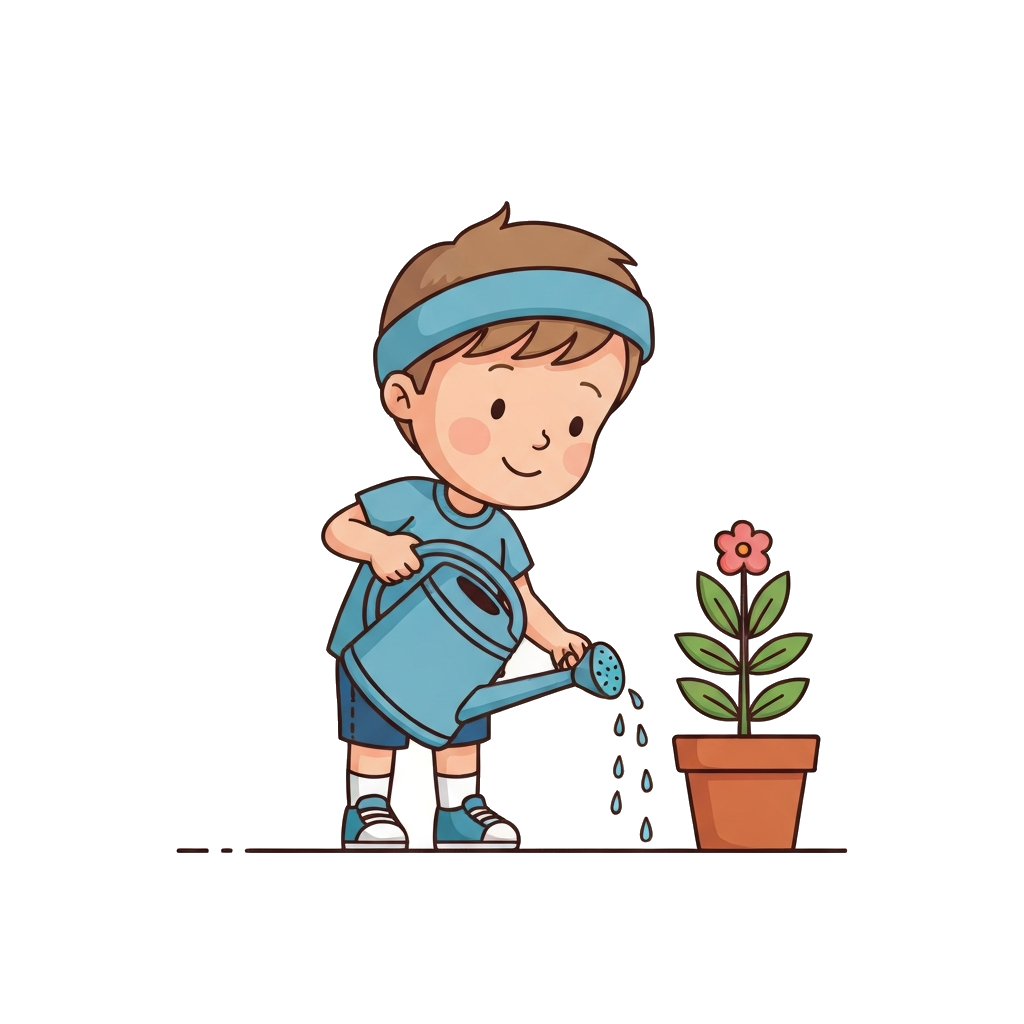 Pour into each plant
 - Step 4
 Look for happy leaves
 - Step 5
 Put the can back
Printable preview
What the free PDF looks like once you download or print it. Every toggle above updates it.
Show a boy or girl in a light or dark skin tone to match your child, and pick your layout, card size, page size, and orientation. On the checklist layout you can also turn numbers, times, checkboxes, and icons on or off. The preview and PDF follow your choice.
Plants are the easiest possible entry point to chore independence. They do not need feeding every day. They tolerate a missed day or two. When they wilt, the visual feedback is clear (drooping leaves) and recoverable (water them and they perk up by the next morning). For an autistic child who needs to practice routine-keeping without the anxiety of a living creature whose life depends on them, plants are the right starting point.
Pair this chore with a calendar grid posted next to the plants so your child marks the days they water. After two weeks of consistent watering, most kids start to notice the plants on their own and remind YOU instead of needing the reminder. That ownership shift is the goal. Once the child has nailed plant watering for three to six months, they are ready to promote to a higher-stakes chore like fish feeding or cat litter scooping.
The amount of water matters more for some plants than others. For starter houseplants (pothos, spider plant, snake plant), "until water comes out the bottom" is the rule. For succulents and cacti, a small amount once a week. For seedlings, a daily mist. Adjust the visual schedule label to match your specific plants, or add a second card showing the right amount per plant if you have a mix.
Two common adjustments. If your child is sensitive to spilled water on the floor, add a wipe-spills step before all-done. If your child loves the chore so much they overwater (a real risk for tropical plants in low light), add a finger-test step ("poke the soil; if it sticks to your finger, skip this plant today") before pour-into-each-plant.
Ready-made daily and routine visual schedules to print and post, one folder per routine at Small, Medium and Large card sizes, in US Letter and A4 with a setup guide.
When to use this template
Best for kids ages 4 and up who are starting their first regular chore. Especially good for kids who are not ready for a pet but want to take care of something living, or for families where the parent wants the child to practice routine-keeping on something forgiving before promoting to a higher-stakes chore.
How to customize this template
- Print one schedule per room if your plants live in different parts of the house and you want a per-room routine.
- Swap the flower icon for a tree icon if your child is helping with outdoor planted trees instead of indoor potted plants.
- Add a remove-dead-leaves step if your child enjoys the tactile reward of cleaning the plants up.
- For seedlings or vegetable starts, add a measuring step ("one cup of water per pot") so your child does not overdo it.
- Pair with a plant-name labeling step so your child learns each plant by name, which deepens engagement.
Take this further with Beacon
Build, save, and share daily schedules in Beacon. Adjust them as your child's routine changes.
Frequently asked questions
- What age can my autistic child start watering plants?
- Most kids can start around age 4 with full parent supervision and a small dedicated watering can they can lift on their own. By age 6 or 7 most kids can do the chore fully independently for indoor potted plants. Outdoor garden watering with a hose or larger can usually waits until age 8 or 9.
- Which plants are best to start with for an autism-friendly chore?
- Pothos, spider plant, snake plant, and ZZ plant are the four most tolerant houseplants and forgive missed days, overwatering, and low light. Start with one of these. Succulents are NOT a good first plant because they need infrequent careful watering and most beginners overwater them to death. Save succulents for after your child has nailed the basic schedule for a few months.
- What if my child overwaters and the plant dies?
- That is the chore working. A dead plant teaches the autistic child that living things have specific care needs and your guesses are not always right. Replace the plant with a more tolerant species (or the same species and try again with a measuring step in the schedule) and move on. Dead plants are recoverable failures, which is exactly the right kind of mistake at this stage of responsibility-building.
- Can plant watering replace a pet for kids who want one but cannot have one?
- Partially. Plants meet the caring-for-something-alive need but they do not meet the social, sensory, or attachment needs a pet provides. For kids who want a pet but cannot have one because of allergies, housing, or family capacity, plants are a meaningful interim responsibility but they are not a full substitute. Consider also pet visits to relatives, a low-maintenance starter pet like fish, or volunteering at an animal rescue if your child is older.
- Can I make the visual schedule for a Black boy or girl, or match my child's skin tone?
- Yes. Use the Boy / Girl and Skin tone toggles at the top of the template to switch the whole schedule at once. You can show the schedule with a Black boy or girl, or a white boy or girl, in a light or dark skin tone, and the on-screen preview, the printable, and the downloaded PDF all match. In the editor you can also swap any individual symbol or upload your own photos.
Related templates
Fish Feeding Visual Schedule
Five-step pet fish feeding routine for autistic kids learning a daily chore. The visual schedule prevents overfeeding (a common cause of fish death) and builds executive-function skill on a low-stakes pet care task.
Dog Walking Visual Schedule
Six-step dog walking and post-walk routine for autistic kids learning pet responsibility. Covers leash on, walk, cleanup, return home, refill bowls, hand washing.
Cat Litter Box Visual Schedule
Five-step cat litter scooping routine for autistic kids learning a daily pet chore. Covers gloves, scoop, bag, tie, wash hands. Designed to remove the gross-out factor that stops most kids from doing this on their own.