Reading Fluency IEP Goals (And Why Rate Alone Is a Trap)
Measurable reading fluency and decoding IEP goals, why a words-per-minute target without an accuracy figure rewards fast guessing, and how to tell a decoding goal from a comprehension goal before you write either.
Key Takeaways
- A words-per-minute target with no accuracy percentage beside it can be met by a student reading the wrong words quickly, which is the single most common defect in this domain
- Decide whether the gap is decoding or comprehension before writing: if the student understands a passage read aloud to them but not one they read themselves, the goal belongs here
- Rate targets should come from curriculum-based measurement of this student, not from a grade-level norms table, because the useful number is the one you can re-measure weekly
- Fluency is the domain where progress is genuinely chartable week to week, so a goal with no charting plan wastes the one domain that makes progress visible
- Prosody and self-correction are part of fluency and are almost never written into goals, even though they are what separates reading aloud from calling words
Reading fluency is the domain where the data is easiest to collect and the goal is easiest to write badly.
The collection is easy because the probe already exists. A one-minute timed reading, scored for words read correctly, run weekly, produces a chart that shows a year of progress at a glance. Almost nothing else in an IEP is that clean.
The goal is easy to write badly because the obvious number, words per minute, can be met without the skill improving at all.
Two decisions carry most of the weight.
- The criterion pairs a rate with an accuracy percentage, so speed cannot be bought with guessing
- The gap is diagnosed as decoding rather than comprehension before the goal is written, because the two need different instruction and a goal in the wrong domain cannot be met by teaching harder
Every goal on this page is also available as a free print: Reading Fluency IEP Goals (PDF), tagged by age band and functional level, with the Goal-Quality Rubric for checking a draft before it goes to the team. No email required.
Rate Without Accuracy Is Not a Goal
"Will read 90 words per minute" is measurable, defensible in a meeting, and can be satisfied by a student who has learned that speed is what gets praised.
Watch what the target rewards. A student reading for rate alone skips the words they are unsure of, substitutes a word with the right first letter, and keeps moving. The count goes up. The reading gets worse. Nothing in the goal notices.
The fix is one clause.
| Instead of | Write |
|---|---|
| Will read 90 words per minute | Will read 90 words per minute with 95% accuracy |
| Will improve reading fluency | Will read grade-level text at 100 words per minute with 97% accuracy |
| Will read grade-level text smoothly | Will read with correct phrasing and end-punctuation intonation, scored on a prosody rubric |
| Will decode unfamiliar words | Will divide multisyllabic words into syllables and read them aloud, 8 of 10 trials |
| Will know sight words | Will read 27 of 30 high-frequency words within 3 seconds each |
The right-hand column is what a second person can score without asking you what you meant.
Accuracy percentages are not interchangeable, either. Ninety-five percent on a hundred-word passage is five errors, which is roughly the ceiling for text a student can learn from without support. Ninety percent is ten errors, which is frustration-level text where the student is decoding rather than reading. If the goal is written at 90% accuracy, it is targeting performance on text that is too hard, and the criterion is doing the opposite of what it looks like.
The Goals
These are the reading fluency and decoding goals in the Spectrum Unlocked IEP goal bank, each tagged with the age band and functional level it was written for. They are starting templates rather than finished goals. Swap in the student's name, and set the criterion and the timeframe from the baseline data you actually have. Copy one directly, or open it in the goal builder to rewrite the criterion against your own numbers.
Given a grade-level reading passage, [student] will read with fluency at 80 words per minute (or grade-appropriate target) with 95% accuracy across 3 consecutive sessions, as measured by curriculum-based reading assessment.
Given a list of grade-level sight words, [student] will read 90% accurately in 3 consecutive sessions, as measured by sight-word fluency probes.
Given a set of 10 alphabet letters in random order, [student] will name each letter and produce its primary sound in 8 out of 10 trials across 3 consecutive sessions, as measured by letter-sound probe.
Given a familiar word at grade-appropriate level, [student] will decode the word using consonant-vowel-consonant blending in 8 out of 10 trials across 3 consecutive sessions, as measured by decoding probe.
Presented with 20 spoken words, [student] will segment each into its individual phonemes in 16 out of 20 trials across 3 consecutive sessions, as measured by phonological awareness probe.
Shown a printed word containing a consonant blend or digraph, [student] will read it aloud correctly in 8 out of 10 trials across 3 consecutive sessions, as measured by decoding probe.
Working from a list of 25 words with silent-e and vowel-team patterns, [student] will read 20 correctly across 3 consecutive sessions, as measured by a scored word-reading inventory.
After hearing a passage modeled once, [student] will reread it aloud raising accuracy to 95% or better in 4 out of 5 opportunities across 4 consecutive weeks, as measured by repeated-reading fluency charts.
During oral reading of connected text, [student] will self-correct meaning-changing errors within 2 words in 7 out of 10 instances across 4 consecutive weeks, as measured by running record.
Reading a passage marked with punctuation, [student] will pause at periods and commas and apply end-punctuation intonation in 4 out of 5 readings across 4 consecutive weeks, as measured by a prosody rubric.
Faced with an unfamiliar multisyllabic word, [student] will divide it into syllables and read it aloud in 8 out of 10 trials across 3 consecutive sessions, as measured by syllable-division probe.
Using a list of 30 high-frequency irregular words, [student] will read 27 within 3 seconds each across 3 consecutive sessions, as measured by timed flashcard probe.
Reading grade-level text aloud, [student] will maintain 100 words per minute at 97% accuracy across 3 consecutive sessions, as measured by curriculum-based measurement probes.
Encountering a word with a common prefix or suffix, [student] will identify the affix and read the whole word in 8 out of 10 trials across 3 consecutive sessions, as measured by morphology probe.
Provided a decodable text at instructional level, [student] will read 3 pages with 4 or fewer uncorrected errors in 4 out of 5 sessions across 4 consecutive weeks, as measured by running record.
Asked to read a short passage in a content-area textbook, [student] will decode subject vocabulary with 90% accuracy across 3 consecutive sessions, as measured by content-vocabulary reading probe.
With access to a text-to-speech tool and a printed passage, [student] will use the tool independently to access assigned text in 4 out of 5 opportunities across 4 consecutive weeks, as measured by a technology-use log.
Reading aloud to an adult for 5 minutes daily, [student] will increase reading rate by 20 words per minute over 9 weeks, as measured by charted weekly fluency probes.
Handed a list of 15 words containing r-controlled vowels, [student] will read 13 correctly across 3 consecutive sessions, as measured by a scored word-pattern probe.
Given a list of 20 new sight words practiced at home, [student] will read 15 independently in 4 out of 5 weekly checks across 4 consecutive weeks, as measured by a caregiver-kept word list.
See all 20 reading fluency & decoding goals in the goal bank
Three notes on reading them.
They run from phonological awareness through content-area decoding on purpose, because this domain has a genuine sequence and a goal written out of order will not move. Segmenting spoken words into phonemes comes before letter-sound correspondence, which comes before blending, which comes before fluent connected text. A student who cannot hear the sounds in a spoken word will not be helped by more sight-word drill.
Several of them name the probe rather than the outcome, which is deliberate. "As measured by running record" and "as measured by decoding probe" describe different instruments that answer different questions, and picking one at goal-writing time saves the argument in January about what counts.
The text-to-speech goal is not a decoding goal and is included anyway. For an older student with a persistent decoding gap, independent access to assigned text is a separate skill worth targeting alongside the remediation, and leaving it out is how a student spends four years unable to read their history assignment while the phonics goal slowly improves.
Diagnosing Decoding Versus Comprehension First
This takes ten minutes and decides which domain the annual goal belongs in.
Read a passage aloud to the student and ask your comprehension questions. Then have them read a comparable passage themselves and ask comparable questions. Compare the two.
| What you see | What it means | Where the goal goes |
|---|---|---|
| Understands when read to, not when reading alone | Decoding is the bottleneck | Reading fluency |
| Struggles equally either way | Comprehension or language | Reading comprehension |
| Reads accurately, slowly, understands little | Rate is consuming the capacity | Fluency, with a rate target |
| Reads fast and accurately, understands little | Genuine comprehension gap | Reading comprehension |
| Understands both, cannot answer in writing | The barrier is expression | Writing |
That last row catches a surprising number of students. A child who can discuss a passage and cannot produce a written answer about it does not have a reading goal problem, and the reading intervention they get instead will not touch it.
Charting, Because This Domain Rewards It
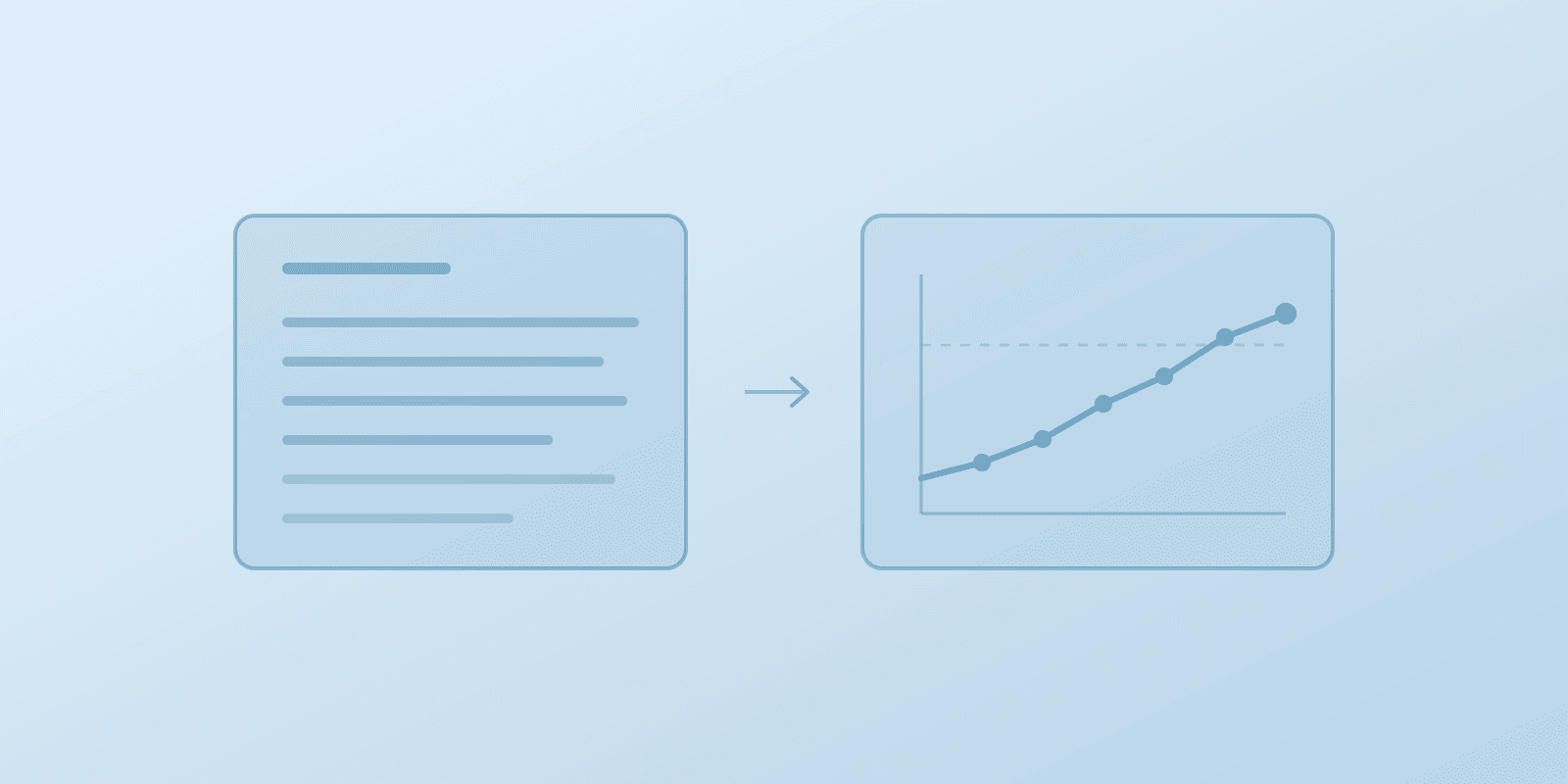
Fluency is the one place in an IEP where weekly measurement is genuinely practical, and where a chart answers a question that prose cannot.
Three probes a month, plotted, will show whether the trajectory reaches the annual target long before the annual review. If the line is flat by December, the instruction needs to change in January rather than at the next meeting. That is the entire argument for charting, and it only works if the probe scores land somewhere they can be plotted.
Keep the passages comparable. Probes drawn from different texts at different difficulty produce a chart that measures the passages rather than the student. Most curriculum-based measurement sets exist precisely to hold difficulty steady across administrations, and a homemade set assembled from whatever was on the shelf will not.
Record the errors, not just the score. A student stuck at 70 words per minute because of vowel teams and a student stuck at 70 because they lose their place need different instruction, and the raw count cannot tell them apart. The error pattern is the part of the data that changes what you do on Monday.
Where the Fluency Goal Meets the Accommodations Page
A decoding gap has an access consequence today and a remediation timeline measured in years, and an IEP that only addresses the second one leaves the student failing science in the meantime.
The goal targets the reading. The accommodations page keeps the curriculum reachable while the goal is being worked: text-to-speech, audio versions, reduced reading load on assessments that are not measuring reading, and extended time where the reading is incidental to the task. These are not a lowering of expectations, they are the difference between a student who has a reading goal and a student who has a reading goal and four failing grades.
The accommodations bank covers the access side, and accommodations versus modifications is the distinction that matters most here, because reading a text aloud to a student is an accommodation on a science test and a modification on a reading test. Getting that wrong in either direction causes trouble.
Keeping the Probe Scores and the Goal in the Same Place
The chart described above is the strongest evidence in this domain, and it is the evidence most likely to be missing when it is needed.
The probes get run. The scores go onto a scoring sheet in a folder, or into a reading program's own dashboard, or onto a sticky note. The IEP with the goal on it sits in the district platform. When the progress report comes due, someone reassembles a year of weekly scores into a sentence, and the chart that would have shown the flat line in December was never drawn.
Beacon's IEP Caseload is built for exactly this shape of data: a repeated numeric measure against a target, taken often, where the trend is the finding. It reads goals, baselines and services off the documents you already have, whether that is a PDF, a spreadsheet or a photo of a data sheet, rather than asking you to retype them, and it flags the student whose trend line has gone flat rather than waiting for the reporting window. Your district's system stays the official record.
Where These Goals Come From
Every goal on this page is drawn from the free IEP goal bank, which covers reading fluency alongside reading comprehension, writing, math, communication, social skills, behavior, adaptive skills, motor skills, executive functioning and self advocacy, and filters by domain, age band and functional level. It is free to browse and free to download, with no email required.
If you are writing the rest of the IEP around these goals, present levels is where the baseline and the error pattern belong, and the guide to IEP goals by skill area covers the other domains. Reading comprehension goals are the next domain up once the decoding is working, and writing goals cover the expression side that the diagnostic table above sends there.
Download the reading fluency goals as a free PDF
All 20 goals on this page, running from phonological awareness through content-area decoding, each tagged with an age band and a functional level, plus the Goal-Quality Rubric. Print it, mark it up, and bring it to the meeting. No email, no sign-up.
Download the PDFFree PDF, US Letter, ready to print.
Writing goals for a caseload, not for one child.
Beacon remembers your students and your setting, so you are not re-explaining them every time.
What would Beacon say?
"Help me write measurable goals from these present levels"
Beacon turns what you have written about a student into goals with baselines and criteria already attached, in the wording your district expects to see.

Spectrum Unlocked Editorial Team
Editorial Team
The Spectrum Unlocked editorial team combines lived experience as autism parents with research-backed guidance to create resources families can trust.
Frequently asked questions
- What is a good reading fluency IEP goal?
- One that pairs a rate with an accuracy figure and names the probe. For example: 'Given a grade-level reading passage, the student will read with fluency at 80 words per minute with 95% accuracy across 3 consecutive sessions, as measured by curriculum-based reading assessment.' Rate alone is not enough, because a student can hit a words-per-minute target by guessing at speed. Accuracy alone is not enough either, since a student who reads every word correctly at 20 words per minute has run out of working memory before the sentence ends.
- How many words per minute should an IEP goal target?
- Take the number from this student's own curriculum-based measurement rather than a published grade-level table. The table tells you the gap; the baseline tells you what next year can realistically look like. A common approach is to set the annual target at the student's current rate plus a weekly growth increment multiplied by the weeks of instruction, which produces a number the team can defend and re-measure. A goal a student meets in November was set from the table, not the baseline.
- Is reading fluency the same as reading comprehension?
- No, and conflating them is why some reading IEPs stall. Fluency is turning print into words accurately and fast enough that meaning survives. Comprehension is what the student does with the meaning afterward. The diagnostic question is simple: read the passage aloud to the student and ask the same questions. If they answer well when someone else reads it and poorly when they read it themselves, the annual goal belongs in fluency, and a comprehension goal written on top of that gap will not move.
- Should a fluency goal include prosody?
- It can, and it is worth considering for a student who decodes accurately and still sounds like they are reading a list. Prosody covers phrasing, pausing at punctuation, and intonation, and it is scored with a rubric rather than a count. It is a reasonable target once accuracy is solid, and a poor one while the student is still working out the words, because you would be scoring expression on text that is taking all of their attention to decode.
- How do you write a decoding goal for an older student?
- Target the pattern rather than the grade level. A high school student who cannot read multisyllabic content vocabulary does not need a primary phonics goal written for a six-year-old; they need syllable division and morphology applied to the words that appear in their actual classes. Write the condition around content-area text, and consider pairing the decoding goal with a text-to-speech access goal so the student is not locked out of the curriculum while the decoding work continues.
- Who collects reading fluency data?
- Usually the special education teacher or reading interventionist running the probes, and this is the domain where naming that person costs the least, because the probes are already scheduled. A one-minute probe once a week produces a chart that answers the annual review before it is asked. The failure mode here is not missing data, it is data that lives in a probe folder and never reaches the progress report.