Free Hand Washing Visual Schedule for Autism
Hand washing looks like one job to an adult, but for an autistic child it is a chain of small steps with water, soap and noise in the middle of it. This visual schedule breaks the routine into seven picture steps, including a full 20-second scrub, so your child can follow along at the sink without a running commentary from you.
Make the schedule look like your child: show a boy or girl in a light or dark skin tone, then print or download the matching PDF.
- 7 activities
- Free printable PDF
- Editable in browser
Editor preview
All 7 steps with picture symbols, ready to customize before you print.
- Step 1
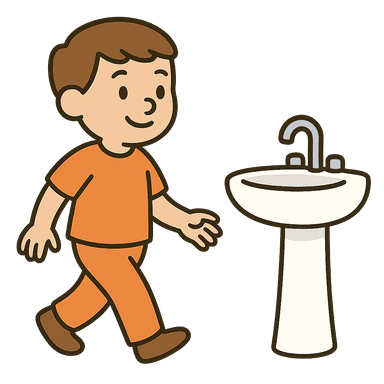 Go to the sink
 - Step 2
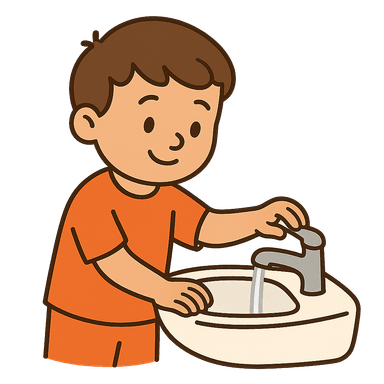 Turn on the water
 - Step 3
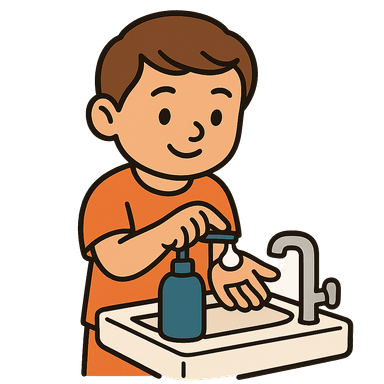 Get soap
 - Step 4
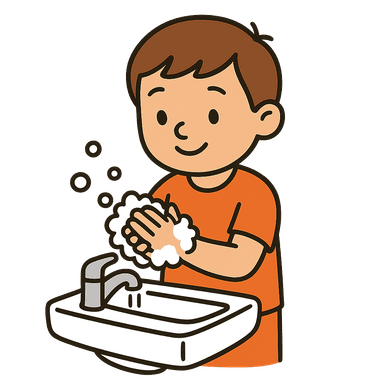 Scrub for 20 seconds
 - Step 5
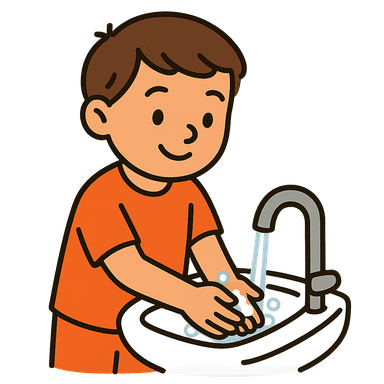 Rinse
Rinse - Step 6
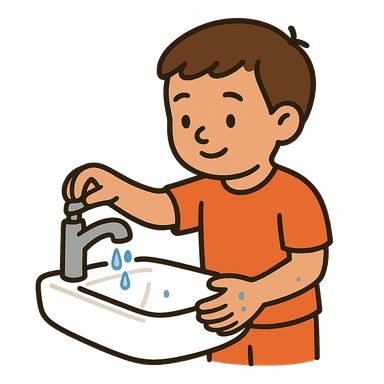 Turn off the water
 - Step 7
 Dry hands
Printable preview
What the free PDF looks like once you download or print it. Every toggle above updates it.
Show a boy or girl in a light or dark skin tone to match your child, and pick your layout, card size, page size, and orientation. On the checklist layout you can also turn numbers, times, checkboxes, and icons on or off. The preview and PDF follow your choice.
Hand washing asks a lot of a child in a short space of time. They have to remember where the routine starts, work a tap, judge how much soap to take, keep scrubbing long enough to matter, and then deal with wet hands. For an autistic child, some of those pieces also come with sensory baggage: the rush of water, the slippery feel of soap, the roar of a hand dryer. When the order lives only in an adult's spoken prompts, the child has to hold the sequence and the sensations at the same time.
A visual schedule takes the sequence off their plate. The seven pictures sit at the sink in the same order every time, so your child can glance up, see what is next, and do it. You stop narrating and start pointing, and over a few weeks the pointing fades too, until your child washes their hands because the routine is familiar rather than because someone is standing next to them saying the next word.
The steps follow the CDC's handwashing method, which is wet, lather, scrub, rinse and dry, with a few extra pictures where kids tend to get stuck. Going to the sink is its own step because starting is often the hardest part. The scrub step names 20 seconds because the CDC says that is how long it takes to remove germs, and that washing for less time removes fewer. The CDC's own suggestion for a timer is to hum the Happy Birthday song from beginning to end twice, which turns an invisible stretch of time into something your child can hear.
Turning off the water and drying hands both get their own pictures because they are the steps most often skipped. The CDC notes that germs spread more easily when hands are wet, so drying completely is part of the job, whether your child uses a towel or an air dryer. Water temperature is a place to give your child a choice: the CDC says warm and cold water remove the same number of germs, so a child who hates warm water can wash in cold.
Print the schedule and tape it at your child's eye level beside the sink, or slip it into a clear sleeve so splashes wipe off. Practice during a calm moment first, walking through each picture and miming the actions with the water off, before you ask for the real thing after the toilet or before a meal. If you also want a matching lesson for school, the hand washing lesson plan linked below teaches the same skill at a classroom sink with prompt data per step.
Ready-made daily and routine visual schedules to print and post, in US Letter and A4 with a setup guide.
When to use this template
Best for kids ages 3 and up who can reach the sink with a stool but still need an adult to talk them through every step, or who rush and skip the soap. Especially helpful after using the toilet and before meals, the two times hand washing comes up every single day.
How to customize this template
- The CDC suggests turning the tap off while you lather and scrub to save water. If your child can manage the extra on and off, add a second Turn on the water step before Rinse.
- If your child cannot reach the tap, add a first step for pulling over the step stool, and a last step for putting it back.
- For a child who dislikes the slippery feel of liquid soap, try foaming soap and keep the picture the same, so only the soap changes.
- If the hand dryer noise is too much, change the Dry hands label to name a towel, and keep a towel within reach of the sink.
- Swap any picture for a photo of your own bathroom tap, soap and towel in the editor. Kids who struggle with drawings often recognize their own sink right away.
Take this further with Beacon
Build, save, and share daily schedules in Beacon. Adjust them as your child's routine changes.
Frequently asked questions
- How long should my child scrub their hands?
- At least 20 seconds. The CDC says scientific studies show it takes 20 seconds of scrubbing to remove harmful germs and chemicals, and that a shorter wash removes fewer germs. Twenty seconds is hard for a child to judge, so give them something to measure it with: the CDC suggests humming Happy Birthday from beginning to end twice. A sand timer stuck beside the schedule works for kids who prefer something they can watch.
- Does the water need to be warm?
- No. The CDC says warm and cold water remove the same number of germs, so use whichever temperature your child tolerates. For a child who finds warm water uncomfortable, or who gets upset waiting for the tap to heat up, cold water is a perfectly good choice and one less thing to fight about.
- When should my child use this routine?
- The two big daily moments are after using the toilet and before eating. The CDC also lists after blowing your nose, coughing or sneezing, after touching an animal or its food, and after touching garbage. Starting with the toilet and mealtimes keeps practice frequent and predictable, and the same pictures work for every other time once the routine is solid.
- What if my child refuses to touch the soap?
- Soap refusal is usually about texture. Foaming soap feels lighter than liquid soap and is easier for many kids to accept. You can also break the Get soap step into smaller pieces, such as hands under the pump, one press, and rub, and practice only that part at first. Keep the rest of the schedule the same so the routine still feels familiar while the hard step gets easier.
- Should I use the hand washing schedule with the potty training schedule?
- Yes, they pair well. The potty training schedule has a single wash hands step near the end. Once your child is following that routine, you can post this seven-step version at the sink so the last step of the bathroom routine gets the same detail as the rest. Some families start with this schedule first, because hand washing comes up many times a day and gives a child lots of easy practice with following pictures.
- Can I make the visual schedule for a Black boy or girl, or match my child's skin tone?
- Yes. Use the Boy / Girl and Skin tone toggles at the top of the template to switch the whole schedule at once. You can show the schedule with a Black boy or girl, or a white boy or girl, in a light or dark skin tone, and the on-screen preview, the printable, and the downloaded PDF all match. In the editor you can also swap any individual symbol or upload your own photos.
Related templates
Potty Training Routine
Eight-step bathroom sequence for autistic kids learning to use the potty, with sticker reward at the end.
Mealtime Routine
Seven steps from washing hands through clearing the plate, built for autistic kids who find mealtimes overwhelming.
Morning Routine
Eight steps from wake-up through walking out the door, designed for autistic kids who melt down during the morning rush.