Best ADHD Planners for Kids, Teens and Adults
Planners, whiteboards and picture schedules matched to how ADHD affects time and memory, for young kids, students and adults, plus how to make one stick.
Key Takeaways
- A planner helps ADHD when it does three jobs: shows time passing, holds the things working memory drops, and breaks a task down to a first step small enough to begin.
- Young children do better with pictures and a board on the wall than with a book they have to remember to open.
- Middle and high school students need a place for every assignment and a habit of checking it, and a school plan can require a teacher to check it.
- Adults with ADHD often stick with undated or discbound planners, because a skipped week does not leave a run of blank, guilt-heavy pages.
- Whichever planner you choose, a short daily check at the same time matters more than the layout.
Most planners are built for people who already plan. They assume you will remember to open the book, sense how long a task will take and get started once it is written down. ADHD makes each of those steps harder, which is why so many planners bought with good intentions end up half full in a drawer by February.
A planner that works with ADHD does three jobs:
- It makes time visible. Hours, days and deadlines show up as space on a page or board, so time stops being something that sneaks up on you.
- It holds what working memory drops. The permission slip, the dentist on Thursday and the library book go somewhere outside the head.
- It turns a task into a first step. "Science project" becomes "find three facts about frogs," which is small enough to begin.
This guide sorts nine planners, boards and picture schedules by who will be using them, from preschoolers who cannot read yet to adults running a household. Every price below was checked on November 10, 2026.
Quick Picks by Age
- Young children who don't read yet: SchKIDules picture schedule magnets
- Kids learning a daily routine: Clever Clean magnetic chore chart
- The whole family's week: MaxGear weekly fridge board
- Middle and high school: Order Out of Chaos Academic Planner
- A student's desk: Laokiiy double-sided weekly whiteboard
- Adults, daily focus: Panda Planner Classic
- Adults who live by the clock: Two Tumbleweeds time-block notepad
- Adults who rearrange everything: Happy Planner discbound
- Adults who want ADHD prompts built in: Templatables daily planner
How These Nine Made the List
We started from what parents, teachers and ADHD coaches describe as the reasons planners get abandoned: too many sections, pages that go stale after a missed week, and books that disappear into a backpack. Then we looked for the opposite. Each pick had to be simple enough to use in a few minutes a day, stay visible or easy to restart, and suit a clear age group. All nine could be ordered on Amazon with delivery to Georgia on November 10, 2026. We left out apps, which change too often to recommend in a list like this, and printable planners that need a printer and a binder before they can be used.
For Young Children: Plans They Can See
Children under about eight rarely use a book planner on their own. What helps at this age is a plan that lives on the wall, uses pictures, and lets the child move or check something off. The adult does the planning; the child sees the plan and takes part in it.
SchKIDules Picture Schedule Magnets
A box of 132 picture magnets for home and school activities, plus 21 heading magnets for setting up a day or a whole week on the fridge or any magnetic board. A child who cannot read yet can still see what comes next and move each picture to "done." The magnets are thick, 2 inches square and take dry-erase marker, so you can add a time or a name. It is the priciest of the kids' picks, and the one that grows with a busy schedule.

SchKIDules 153-Piece Daily Visual Schedule Magnets for Kids
Prefer paper? You can design and print a picture routine with our free Visual Schedule Creator.
Clever Clean Magnetic Chore Chart
A dry-erase chart that sticks to the fridge, with a smaller list board in the same pack. It works for a child who can read a few words and likes checking things off: morning jobs on one side, after-school jobs on the other. The packaging pitches it for teens and adults as well, so it can stay in use as your child grows.

Clever Clean Magnetic Dry Erase Chore Chart, 14.5 x 11 in, for Kids, Teens and Adults
MaxGear Weekly Fridge Board
A plain week-at-a-glance board for the fridge. This one is for the family more than the child: swim on Tuesday, therapy on Thursday, grandma visiting Saturday. Children with ADHD are often surprised by events that everyone else saw coming, and a board in the kitchen gives them a place to look. At under $10, it is the cheapest pick here.

MaxGear Weekly Dry Erase Board for Fridge, 16 x 12 in Magnetic Calendar
For Students in Middle and High School
By middle school the planner has to travel. Assignments come from six teachers, due dates pile up, and a parent can no longer hold the whole plan. The goal at this age is a planner your student keeps in the backpack and a desk board at home that shows the week.
Order Out of Chaos Academic Planner
Leslie Josel started Order Out of Chaos after her son was diagnosed with ADHD, and she created this academic planner for students who struggle with time management. Its weekly pages put homework, tests, activities and free time side by side, so a student sees where the evening actually goes. It runs from July 2026 to June 2027, which leaves most of the school year ahead for a student starting in winter. This listing is the 8.5 x 8.25 inch size; the maker also sells an 8.5 x 11 version with more room to write. Josel sold the planner business in 2024, and it is still sold under the Order Out of Chaos name.
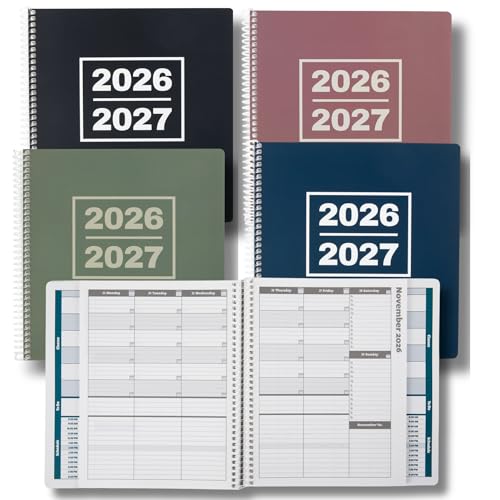
Order Out Of Chaos Academic Planner 2026-2027, 8.5 x 8.25 in
Laokiiy Desktop Weekly Whiteboard
A double-sided whiteboard on a folding stand, with markers and magnets included. It sits on a desk where homework happens, so the week is in front of your student without opening anything. One side can hold this week's assignments and the other the long-term project broken into steps.

Laokiiy Desktop Weekly Whiteboard with Stand, 16 x 12 in, Double Sided
For Adults With ADHD
Adults often have years of abandoned planners behind them. The ones that last tend to share two traits: they are quick to fill in, and they forgive a missed day.
Panda Planner Classic
An undated daily planner that lasts 90 days per book. Undated means a lost week costs nothing: you pick up on the next blank page. The compact A5 size fits in a work bag, so the plan goes where the day does.

Panda Planner Classic A5 Undated 90-Day Daily Planner
Two Tumbleweeds Time-Block Notepad
A tear-off desk pad with an hourly schedule down the side. Time blocking, giving each task its own slot in the day, comes up again and again in ADHD coaching as a fix for time blindness, and a pad sitting on the desk is hard to ignore. Tear off yesterday and start fresh.

Two Tumbleweeds Daily Planner Notepad with Hourly Schedule, Time Block Pad
Happy Planner Discbound 2027
Pages in a discbound planner pop out and go back anywhere, so you can move a project page next to this week, take out sections you never use or add your own inserts. That flexibility suits anyone who has quit planners because the layout never fit. It is a dated January to December planner for 2027.
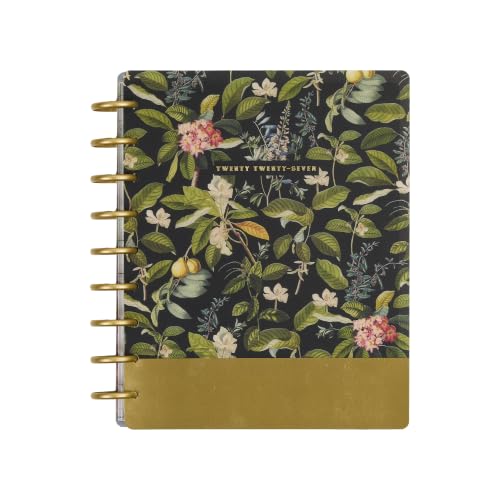
Happy Planner 2027 Disc-Bound Weekly and Monthly Planner, Classic
Templatables ADHD Daily Planner
An undated daily planner written for neurodivergent adults, with prompts for choosing the day's most important tasks and a brain-dump space for the thoughts that pile up. Choose it if you want the prompts on the page instead of having to remember what a good plan looks like.

Templatables ADHD Daily Planner for Neurodivergent Adults
Paper, App or Whiteboard?
- Paper planners suit people who think by writing and want everything in one place they can carry.
- Whiteboards suit plans that change often and need to stay in sight, such as a child's week or a project's steps.
- Apps are best at alarms. A phone reminder at 4 p.m. that says "check your planner" is often the piece that makes the paper version work.
There is no need to pick only one. A common setup for a student is a paper planner in the backpack, a board on the desk and one daily phone alarm.
Making the Planner Stick
Tie it to something that already happens. Check the planner right after snack, before screens or at dinner, not "sometime in the evening."
Sit with your child at first. Early on, the check-in is something you do together. Ask what is due, what is coming up this week and what the first step is. Then step back a little at a time.
Do a five-minute Sunday plan. Look at the week ahead together: tests, practices, appointments. Put each on the board or in the planner.
Praise the habit, not the page. A messy planner that gets opened every day is doing its job.
Bring the school in. A teacher who initials the planner before dismissal, or emails the week's assignments home, is an accommodation you can request in writing. Our guides to executive functioning IEP goals and the 504 plan for ADHD cover how to ask for it.
If time itself is the struggle, a visual timer beside the planner shows a child how long "ten minutes" really is.
Products Mentioned in This Article
SchKIDules 153-Piece Daily Visual Schedule Magnets for Kids
Clever Clean Magnetic Dry Erase Chore Chart, 14.5 x 11 in, for Kids, Teens and Adults
MaxGear Weekly Dry Erase Board for Fridge, 16 x 12 in Magnetic Calendar
Order Out Of Chaos Academic Planner 2026-2027, 8.5 x 8.25 in
Laokiiy Desktop Weekly Whiteboard with Stand, 16 x 12 in, Double Sided
Panda Planner Classic A5 Undated 90-Day Daily Planner
Two Tumbleweeds Daily Planner Notepad with Hourly Schedule, Time Block Pad
Happy Planner 2027 Disc-Bound Weekly and Monthly Planner, Classic
Templatables ADHD Daily Planner for Neurodivergent Adults
Prices and availability are accurate as of the date/time shown and are subject to change. Any price and availability information displayed on Amazon at the time of purchase will apply to the purchase of this product.
Need help preparing for YOUR next IEP meeting?
Beacon learns about YOUR child and gives guidance specific to them.
What Would Beacon Say?
"Help me prep for my IEP meeting"
If you asked Beacon "Help me prep for my IEP meeting" it would pull your child's goals, challenges, and history, and give you the exact questions to ask, red flags to watch for, and what to push back on.

Spectrum Unlocked Editorial Team
Editorial Team
The Spectrum Unlocked editorial team combines lived experience as autism parents with research-backed guidance to create resources families can trust.
Frequently Asked Questions
- What is the best planner for ADHD?
- Whichever planner gets opened every day wins, so match it to the person. Young children usually need a picture schedule or a wall board, students need a school planner with room for every assignment, and adults often do well with an undated daily planner or a time-block pad they keep on the desk.
- Why do people with ADHD struggle to use planners?
- Planning relies on the same skills ADHD makes harder: noticing time passing, remembering to check the planner, and starting a task once it is written down. A planner that is visible, simple and checked at a set time works around those gaps instead of depending on them.
- Should an ADHD planner be dated or undated?
- Undated pages suit anyone who tends to drop a planner for a few weeks, because they can pick up again without skipping blank days. A dated academic planner suits students whose school year has fixed deadlines and who benefit from seeing the real calendar.
- Is a paper planner or an app better for ADHD?
- Paper and whiteboards stay in sight, which helps when out of sight means out of mind. Apps are better for reminders that need to interrupt you. Many people use both: a phone alarm to prompt the check and a paper planner or board to hold the plan.
- How can a parent help a child with ADHD keep using a planner?
- Make it part of an existing routine, such as after snack or before screens, and sit with your child for the first few weeks. Keep the daily check to a few minutes, praise the habit rather than a perfect page, and ask a teacher to look over the planner before dismissal.
- Can a planner be part of an IEP or 504 plan?
- Yes. Teacher checks of a student's planner, a printed copy of assignments and extra time to write homework down are common accommodations for students with ADHD and executive function difficulties.