Best Visual Timers for Autistic Kids (and How to Use Them for Transitions)
The visual timers that actually help autistic kids with transitions and time blindness, plus how to use one so it lowers transition anxiety instead of adding to it.
Key Takeaways
- Time is abstract, and for a lot of autistic kids it is close to invisible. A visual timer turns 'five more minutes' into something they can see shrinking, which is why occupational therapists reach for it so often with transitions and time blindness.
- Predictability does more for your child than the countdown itself. A visual timer works when your child can see what is happening and what comes next, and it backfires when it is used as a surprise clock ticking down to something they dread.
- Match the timer to the use. A big disk timer for a desk or family routine, a small one for homework or travel, a portable one for an older kid who wants independence without a clock on the wall.
- Pick a silent one if beeping or ticking stresses your child. The visual is the support; the alarm is optional and for some kids makes things worse.
- A timer is a tool inside a routine, not a behavior fix. Pair it with a clear 'what happens next,' calm warnings, and a predictable day.
"Five more minutes" means almost nothing to a child who cannot feel time passing. For a lot of autistic kids, time passing simply does not register, which is a big part of why transitions are so hard: the end of one thing and the start of another arrives as a surprise, every time. A visual timer fixes the invisible part. It turns time into a colored disk your child can watch shrink, so "almost done" becomes something they can see instead of something they have to take on faith.
This guide covers five visual timers that work for autistic kids. Which timer you buy matters less than how you use it, though, so the how comes first.
The Thing That Makes a Timer Work (or Backfire)
What a visual timer gives your child is predictability. It works when it makes the day more knowable, and it backfires when it becomes a clock ticking down to something they dread.
Four habits decide which way it goes:
- Use it for what comes next, not just what is ending. Pair the timer with a clear, reliable "when this is done, we do that." The timer answers "how long," and the routine answers "then what." Both have to be there.
- Use it for neutral and fun things too. If the timer only ever appears to end a preferred activity, it becomes a signal that something good is about to be taken away. Set it for "ten minutes until your show," not only "ten minutes until screens are off."
- Keep warnings calm. "Two minutes left" said evenly is reassuring. The same words said urgently turn the timer into an alarm.
- Start small. Short, low-stakes intervals first, so your child learns the tool when nothing much is riding on it.
Used this way, a timer lowers anxiety, because it removes the unknown, which is usually the real source of transition distress. It pairs naturally with a visual schedule for the "then what" (the visual schedule guide covers building one that gets followed), and our piece on meltdowns versus tantrums explains why surprise transitions set kids off in the first place.
Where the Timer Lives, and Whether It Beeps
None of these timers went through a lab, and none gets a star score. Each was compared on how it shows time (a shrinking disk, a light that changes color, or a bar beside numbers), how far away it can be read, whether it runs silently, and whether it suits a desk, a backpack or a classroom wall, alongside what parents and OTs report about using timers well:
- Time you can see without reading. Every pick shows time as a shrinking shape or clear bar, not just numbers.
- Right tool for the place. Desk, backpack, wrist, and classroom call for different sizes, and each pick names its place.
- Quiet when it needs to be. Silent operation or an optional alarm, because beeping helps some kids and overwhelms others.
- Built for real kids. Durable, simple to set, and readable at a glance.
- Fit by age. A take-anywhere timer for older kids, a big bright disk for younger ones.
Visual Timers (Also Called Visual Clocks) for Autism
Best visual timer overall: Time Timer Original 8 inch
This is the one most therapists and classrooms reach for, and the sensible default for home. A bold colored disk shrinks to zero as time runs out, with no numbers to read and silent operation if you want it, so it works for a young child and an adult alike. Big enough to see across a room, it is ideal for family routines, homework, and "how long until we leave." Start here if you buy one timer.

Time Timer Original 8 inch Visual Timer
Best compact for desks and travel: Time Timer MOD (Rainbow Wheel)
Same shrinking-disk idea in a small, individual size that fits a desk, a nightstand, or a bag. The rainbow wheel breaks the hour into colored five-minute segments, which younger kids find easier to read at a glance, and it runs silently. This is the one for homework, a calm-down corner, or taking the routine on the road.

Time Timer MOD Home Edition (Rainbow Wheel)
Best visual timer for older kids: a rugged take-anywhere pick
For an older kid working toward managing their own time, a desk timer cannot follow them to class or a friend's house. Time Timer's wrist watch is discontinued, so the durable stand-in is a portable disk timer that drops into a backpack behind a protective case: the same shrinking-time cue, tough enough to survive a bag and a rougher owner, and silent when you want it. It travels where the routine goes, which is the independence a fixed desk timer cannot offer.

Yunbaoit Portable Visual Timer (Rainbow Disk, with Case)
Best color-cue light timer: Learning Resources Time Tracker
Some kids respond best to traffic-light signals, and this timer is built around them: it glows green when there is plenty of time, yellow as it runs low, and red when time is nearly up, with optional sound. The clear color stages make "almost done" obvious without reading anything, which suits classrooms and kids who track color better than a shrinking disk.
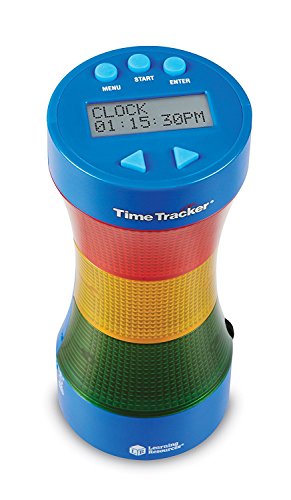
Learning Resources Time Tracker Visual Timer
Best budget visual timer: EooCoo Visual Timer (digital)
If you want a lower-cost option or a child who is learning to read clock time, this digital visual timer shows a shrinking petal-style display alongside the numbers, so it does double duty as a countdown your child can see and a way to build number-and-time skills. A practical, affordable pick, especially as a second timer for another room or the school bag.
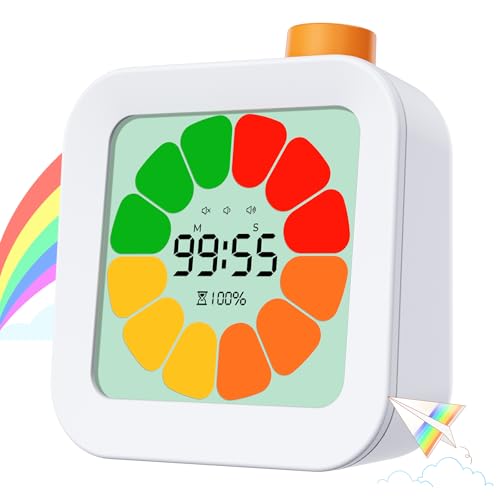
EooCoo Digital Visual Timer for Kids
Keeping the Timer Predictable
Put the timer where the hard moments happen, and use it the same way every time, because sameness is what your child learns to trust. Let your child help set it when you can, since being part of the process lowers resistance. And remember it is one piece of the puzzle, working beside the routine and a calm adult.
What a Timer Does and Does Not Do
A visual timer makes time visible, which removes a real source of transition stress for a lot of autistic kids. It does not, by itself, make hard transitions easy, and it is not a consequence or a threat. The lasting help comes from a predictable, visually supported day, with the timer as one reliable tool inside it. Build the routine with a visual schedule, use the timer for the "how long," and keep the whole thing calm. The same make-time-visible logic has a bedtime sibling: an okay-to-wake clock does for "is it morning?" what these timers do for "how much longer?". And for the one routine where the reminder needs to travel on the child instead of sitting on a shelf, a potty training watch carries the same scheduled-cue job to the wrist.
Let the timer show how long and the routine show what comes next, and transitions stop arriving as surprises.
Products Mentioned in This Article
Time Timer Original 8 inch Visual Timer
Time Timer MOD Home Edition (Rainbow Wheel)
Yunbaoit Portable Visual Timer (Rainbow Disk, with Case)
Learning Resources Time Tracker Visual Timer
EooCoo Digital Visual Timer for Kids
Prices and availability are accurate as of the date/time shown and are subject to change. Any price and availability information displayed on Amazon at the time of purchase will apply to the purchase of this product.
Routines, feeding, sleep, toileting. The stuff that fills every hour of every day.
Beacon learns about YOUR child and gives guidance specific to them.
What Would Beacon Say?
"How do I handle this with my specific child?"
If you asked Beacon "How do I get my child to eat more than 3 foods?" it would consider their sensory preferences and age, then give you a specific food chaining strategy to start this week.

Spectrum Unlocked Editorial Team
Editorial Team
The Spectrum Unlocked editorial team combines lived experience as autism parents with research-backed guidance to create resources families can trust.
Frequently Asked Questions
- Do visual timers actually help autistic kids?
- For many, yes. A visual timer shows time as a shrinking disk or bar instead of numbers a child may not yet read or feel, which gives an external cue for the internal sense of time that many autistic kids do not reliably have. Occupational therapists frequently recommend them for transitions, executive function, and 'time blindness,' and special-education research links them to reduced transition anxiety. They are a support, not a guarantee, and they work best as part of a predictable routine.
- What is the best visual timer for an autistic child?
- For most families the classic disk-style timer, like the Time Timer Original, is the best starting point: it shows a colored disk shrinking to zero, needs no reading or numbers, and can run silently. From there, the right pick depends on use. A smaller portable timer suits homework and travel, a wearable suits an older kid who wants discretion, and a light-cue timer suits a child who responds to green-yellow-red signals. Match it to where and how your child will use it.
- How do I use a visual timer for transitions without making it worse?
- Use it for predictability, not as a threat. Show your child the timer and explain plainly what happens when it ends ('when the red is gone, we put on shoes'). Set it together, give calm warnings as it shrinks ('two minutes left'), and crucially, use it for neutral and fun things too, not only for ending preferred activities, so the timer does not become a signal that something good is always about to be taken away. Start with short, low-stakes intervals and build up.
- Analog disk timer or digital visual timer, which is better?
- Both work; it comes down to your child. Disk timers (the shrinking colored wedge) are intuitive for kids who cannot yet read numbers and feel less 'screen-like,' which some sensory-sensitive kids prefer. Digital visual timers show a shrinking bar or petals plus the numbers, which can suit an older child who is learning to read clock time. If your child finds numbers stressful, lean analog; if they are building number and time skills, a digital visual timer can do double duty.
- Are visual timers good for older kids and teens?
- Yes, but discretion matters at that age. A portable visual timer that travels in a backpack gives an older kid or teen the same shrinking-time cue wherever they are, so they can manage their own time at school or out with friends without a kid-styled clock on the wall. It supports the independence and self-regulation older kids are working toward, which a desk timer at home cannot do everywhere they go.
- Will a timer make my child more anxious about time?
- It can, if it is used only as a countdown to things they do not want to end, because then the timer itself becomes a stressor. The fix is in how you use it: pair it with a clear and reliable 'what comes next,' keep warnings calm rather than urgent, and deliberately use the timer for neutral and enjoyable transitions too. Used that way, it reduces anxiety by removing the unknown, which is usually the real source of transition distress.