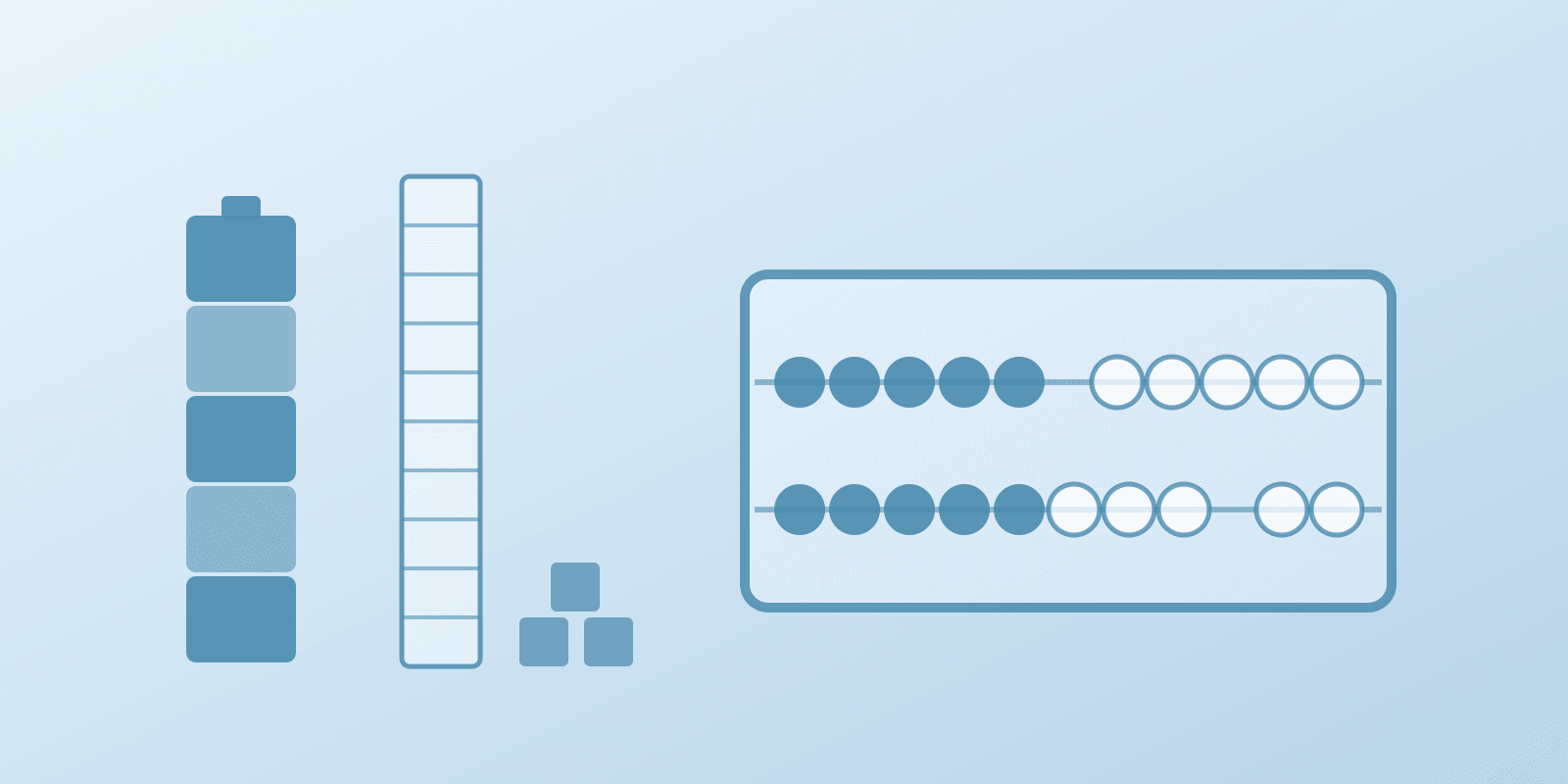
Math Manipulatives for Kids Who Learn Differently
Math manipulatives matched to the skill: counting bears, linking cubes, a rekenrek, base ten blocks, fraction tiles, pattern blocks and a balance.
Key Takeaways
- Match the purchase to this month's math lesson, not a giant kit. One well-chosen tool used daily beats a bin of pieces nobody touches.
- Hands first, then pictures, then numbers. Let your child solve with objects, then draw what they did, then write the number sentence.
- For a child who hates clatter, choose foam. Foam base ten blocks and foam pattern blocks make almost no sound on a table.
- Small pieces and magnets are choking risks. Keep counters, cubes and magnetic tiles away from any child who still mouths objects.
- Ask the school which tools your child uses in class, so practice at home looks the same.
Plenty of children understand math far better with something in their hands than with numbers on a page. Autistic children, kids with ADHD and kids with dyscalculia often fall into that group: a stack of ten cubes makes "ten" real in a way the symbol 10 does not. Those cubes, bears and blocks are called manipulatives.
This guide takes one skill at a time, from first counting to fractions, and names the tools that teach it. Each section notes what matters for a child with sensory needs, such as noise, texture and small parts. The prices shown are from November 12, 2026.
Choosing a Tool by Skill
- Counting and sorting: counting bears or linking cubes.
- Seeing 5s and 10s without counting each one: a rekenrek.
- Place value (ones, tens, hundreds): base ten blocks.
- Fractions: fraction tiles or Cuisenaire rods.
- Shapes and geometry: pattern blocks or a geoboard.
- Equal, more and less: a bucket balance.
For a kindergartner, first grader or second grader with no clear starting point, the hand2mind Take Home kit at the end covers several of these in one box.
How to Use Them: Objects, Then Pictures, Then Numbers
Math teachers often move through three steps, sometimes called concrete, representational and abstract. First your child solves a problem with objects. Next they draw what they did, as circles, tally marks or squares. Last they write the number sentence. Staying on the first step for as long as your child needs is fine; rushing to worksheets is where many children stall.
The approach has research behind it. A review by Spooner and colleagues in Remedial and Special Education (2019) looked at 36 studies of math teaching for students with moderate and severe developmental disabilities and listed manipulatives, along with explicit step-by-step teaching, among the practices with strong evidence.
Counting and Sorting
Learning Resources Three Bear Family Counters
Eighty bears in three sizes and four colors: 20 large, 20 medium and 40 small. Children count them, sort them by color or size, and line them up into patterns. The bears are weighted to match their size, so they work with the balances further down. They come in a storage tub with an activity guide, and the listing says ages 3 and up.

Learning Resources Three Bear Family Counters (Set of 80)
Learning Resources MathLink Cubes
One hundred cubes that snap together on every side. Children build trains of ten, compare lengths, and break a stack apart to subtract. The cubes carry shape cutouts, which adds a matching game for kids who like detail. The listing says ages 5 and up.

Learning Resources MathLink Cubes, Set of 100
Didax Unifix Cubes
Many US classrooms use Unifix cubes, so this set matches what your child may see at school. The pack has 100 lightweight cubes in 10 colors, and the listing describes them as easy for small hands to put together. If you are unsure which cube the class uses, ask the teacher.

Didax Unifix Cubes (Set of 100)
Seeing Groups of Five and Ten
Hand2mind 20-Bead Wooden Rekenrek
Two rows of ten wooden beads in two colors on a sturdy frame. On a rekenrek the colors change every five beads, so to show 8 a child slides one block of five and three more, and starts to see 8 as "5 and 3" without counting. That habit of seeing a quantity at a glance is called subitizing. The beads stay on the frame, so nothing scatters or rolls off the table.

Hand2mind 20-Bead Wooden Rekenrek
Place Value: Ones, Tens and Hundreds
Learning Resources Base Ten Blocks Smart Pack
The low-cost way to start: 121 pieces of unit cubes, tens rods and hundreds flats in a resealable bag, with an activity guide. Your child builds 34 as three rods and four cubes and can see why the 3 means thirty. The listing says ages 6 and up.

Learning Resources Base Ten Blocks Smart Pack (121 Pieces)
Learning Resources Base Ten Starter Set
For a child moving into bigger numbers. This set holds 100 ones, 30 tens, 10 hundreds and a single thousands cube, plus a book of 36 activities aimed at grades 3 to 6. It suits regrouping and multi-digit adding and subtracting.

Learning Resources Base Ten Starter Set
Hand2mind Foam Base Ten Activity Set
The quiet choice. Its 131 foam blocks (100 units, 20 rods, 10 flats and a cube) barely make a sound when they drop, which can matter to a child who flinches at clatter. It adds a double-sided dry-erase mat, whole numbers on one side and decimals on the other, and a marker.

Hand2mind Foam Base Ten Blocks Activity Set (133 Pieces)
Fractions You Can Hold
Learning Resources Magnetic Rainbow Fraction Tiles
Fifty-one soft foam magnetic bars, from one whole down to twelfths, each fraction its own color. Lay two quarters over one half on the fridge and the idea of equal fractions explains itself. The listing gives ages 6 and up. Keep magnets away from young siblings and any child who mouths objects.

Learning Resources Magnetic Rainbow Fraction Tiles (51 Pieces)
Hand2mind Wood Cuisenaire Rods
Seventy-four wooden rods in ten lengths, from a 1 cm white cube to a 10 cm orange rod, each length its own color. Children find which two rods make a ten, or how many reds fit along a brown, and use the same rods later for fractions and measuring. Wood feels warmer and quieter in the hand than plastic.

Hand2mind Wood Cuisenaire Rods (Set of 74)
Shapes and Geometry
Hand2mind Foam Pattern Blocks
Two hundred fifty foam pieces in six shapes: hexagons, trapezoids, rhombuses, triangles, parallelograms and squares. Children copy patterns, fill outlines, and find that three triangles make a trapezoid. The 1 cm foam is soft and quiet, so it suits a sound-sensitive child at the table.

Hand2mind Foam Pattern Blocks (Set of 250)
Coogam Wooden Geoboard
A 7 inch wooden board with 64 pegs, 30 pattern cards to copy and five blank ones, plus a bag of bands. Stretching bands over pegs builds shapes and works small hand muscles too. The bands are latex, so skip it for anyone with a latex allergy, and expect the odd snap if a band slips, which some sound-sensitive children dislike.
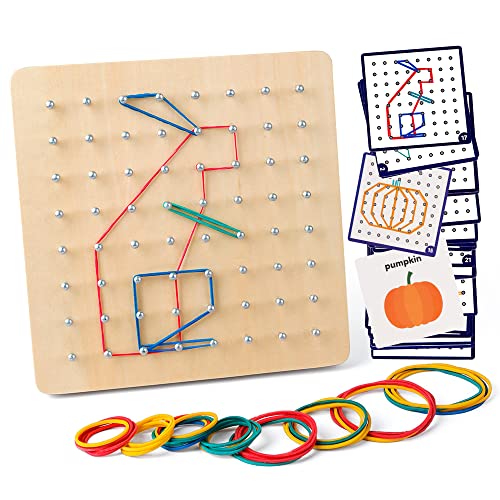
Coogam Wooden Geoboard with Pattern Cards
Learning Resources Classpack Geoboards
Ten plastic 7 inch geoboards with rubber bands, for a homeschool group, siblings or a classroom. The pegs are designed to keep bands from slipping. The listing gives ages 5 and up.

Learning Resources Classpack Geoboards (Set of 10)
Equal, More and Less
Learning Resources Primary Bucket Balance
Two removable buckets, each marked up to 400 ml, so children can compare bears, cubes, sand or water. The lids are dual-purpose and a built-in drawer stores small pieces. Watching one side drop shows "more" and "less" without a single word, which helps children who find spoken directions hard.
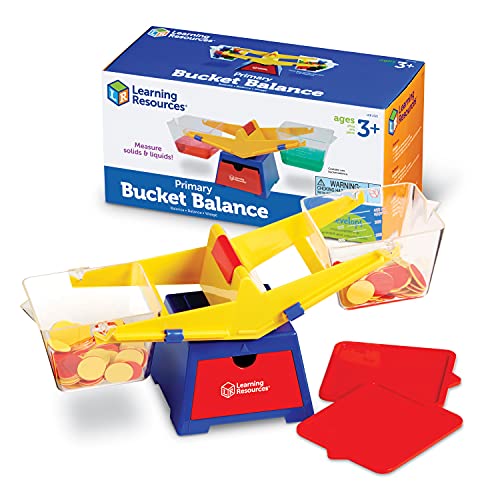
Learning Resources Primary Bucket Balance
Hand2mind Nestable Bucket Balance
The cheaper balance. Its clear buckets let children see what is inside, and its equivalency markings let them place less than, greater than and equal signs on the result. It takes apart for storage in three steps.
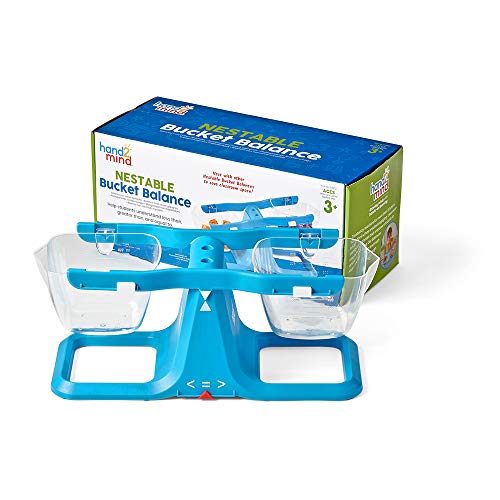
Hand2mind Blue Nestable Bucket Balance
One Box for Grades K to 2
Hand2mind Take Home Math Manipulatives Kit
If you would rather buy once, this kit gathers several tools from this page in 292 pieces: 100 snap cubes, foam base ten blocks (20 units, 20 rods and 10 flats), 40 foam counting tiles, Cuisenaire rods, pattern blocks and a learning clock. It is a sensible start for kindergarten to second grade or for homeschooling.
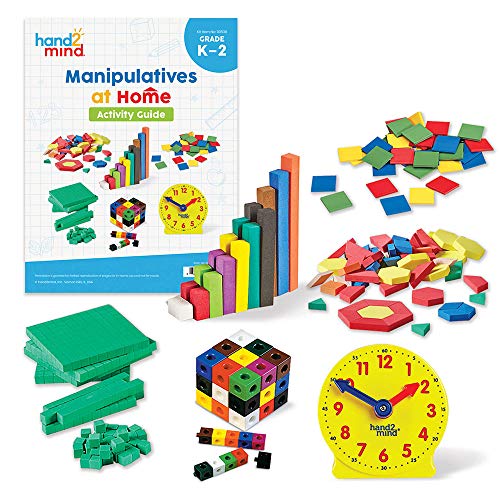
Hand2mind Take Home Math Manipulatives Kit, Grades K to 2 (292 Pieces)
Making Math Time Work at Home
- Keep the same tools as school. Ask your child's teacher which manipulatives they use. Matching them spares your child from juggling one method at home and another in class.
- Short and predictable. Ten minutes with the same routine each day (take out the tub, solve three problems, pack up) usually beats one long sitting. A visual timer shows how long is left.
- Let them explore first. Children who stim with pieces, line them up or sort them by color are often getting comfortable with the tool. Give a few minutes of free play before the task starts.
- Link it to goals. For a child on an IEP, the math IEP goals guide explains how manipulatives can be written into goals and accommodations.
- Get help if numbers stay confusing. Persistent trouble with quantity can be a sign of dyscalculia. Our guide to dyscalculia testing explains how evaluations work, and we also offer one-to-one dyscalculia tutoring.
For the rest of a home learning setup, our homeschool supplies list covers printers, storage and break tools.
How We Picked These Tools
We started from the math skills taught in the early grades and looked for one or two tools that teach each one well, favoring brands schools already use (Learning Resources, hand2mind and Didax) so home practice matches class. Foam and wood versions are included for children bothered by noise. On November 12, 2026, we loaded every listing in Chrome set to a Georgia ZIP code to confirm each one would ship to us and accept an order, and took each detail on this page from the maker's own description.
Many manipulatives contain small parts, magnets or latex bands. Check the age on each listing and supervise young children.
Products Mentioned in This Article
Learning Resources Three Bear Family Counters (Set of 80)
Learning Resources MathLink Cubes, Set of 100
Didax Unifix Cubes (Set of 100)
Hand2mind 20-Bead Wooden Rekenrek
Learning Resources Base Ten Blocks Smart Pack (121 Pieces)
Learning Resources Base Ten Starter Set
Hand2mind Foam Base Ten Blocks Activity Set (133 Pieces)
Learning Resources Magnetic Rainbow Fraction Tiles (51 Pieces)
Hand2mind Wood Cuisenaire Rods (Set of 74)
Hand2mind Foam Pattern Blocks (Set of 250)
Coogam Wooden Geoboard with Pattern Cards
Learning Resources Classpack Geoboards (Set of 10)
Learning Resources Primary Bucket Balance
Hand2mind Blue Nestable Bucket Balance
Hand2mind Take Home Math Manipulatives Kit, Grades K to 2 (292 Pieces)
Prices and availability are accurate as of the date/time shown and are subject to change. Any price and availability information displayed on Amazon at the time of purchase will apply to the purchase of this product.
Need help preparing for YOUR next IEP meeting?
Beacon learns about YOUR child and gives guidance specific to them.
What Would Beacon Say?
"Help me prep for my IEP meeting"
If you asked Beacon "Help me prep for my IEP meeting" it would pull your child's goals, challenges, and history, and give you the exact questions to ask, red flags to watch for, and what to push back on.

Spectrum Unlocked Editorial Team
Editorial Team
The Spectrum Unlocked editorial team combines lived experience as autism parents with research-backed guidance to create resources families can trust.
Frequently Asked Questions
- What are math manipulatives?
- Objects a child can hold and move to work out a math idea, such as counting bears, linking cubes, base ten blocks or fraction tiles. They turn numbers into something a child can see and touch.
- Do manipulatives help autistic kids learn math?
- Research supports them. A 2019 review of math teaching for students with moderate and severe developmental disabilities, by Spooner and colleagues in Remedial and Special Education, counted manipulatives among the practices with strong evidence.
- Which math manipulatives should I buy first?
- Start with the skill your child is learning. Counting bears or linking cubes for counting, a rekenrek for seeing groups of 5 and 10, base ten blocks for place value. The hand2mind Take Home kit bundles several of these for grades K to 2.
- What is a rekenrek?
- A small frame with two rows of 10 beads, colored in groups of five. Children slide beads across to show a number, which helps them see 7 as 5 and 2 instead of counting every bead.
- What are good math tools for a child with dyscalculia?
- Tools that make quantity visible: a rekenrek, base ten blocks, Cuisenaire rods and fraction tiles. A specialist evaluation tells you which skills to target first.
- Are foam or plastic base ten blocks better?
- Foam is quiet and soft, which suits a child bothered by clatter. Plastic is sturdier and often interlocks. Both show the same ones, tens and hundreds.