Dyscalculia Testing: How Kids Are Evaluated
The signs of dyscalculia worth testing for, what a dyscalculia evaluation measures, and how to get one free through school or privately.
Key Takeaways
- Dyscalculia is a learning disability in math: number sense and math facts do not stick despite good teaching and plenty of practice
- There is no single dyscalculia test; an evaluation combines math achievement tests, number sense tasks, a history and ruling out other causes
- Schools evaluate it for free as a specific learning disability in math calculation or math problem solving
- Math anxiety, missed teaching and language problems can all look like dyscalculia, which is why the whole picture matters
- Word problems test language as much as math, so an autistic child's math score needs reading with care
Every child gets stuck on math at some point. Dyscalculia is different: the basics of number do not stick, even with good teaching and plenty of practice, and the gap does not close on its own.
If you are wondering whether your child should be tested, the signs below are a good place to start. Then the rest of this post covers what an evaluation measures and how to get one.
Signs of dyscalculia worth testing for
- Counting is unreliable. Skipping or double-counting objects well past the age most children have it.
- Comparing numbers is hard. Not knowing quickly whether 7 or 4 is bigger, or which of two piles has more.
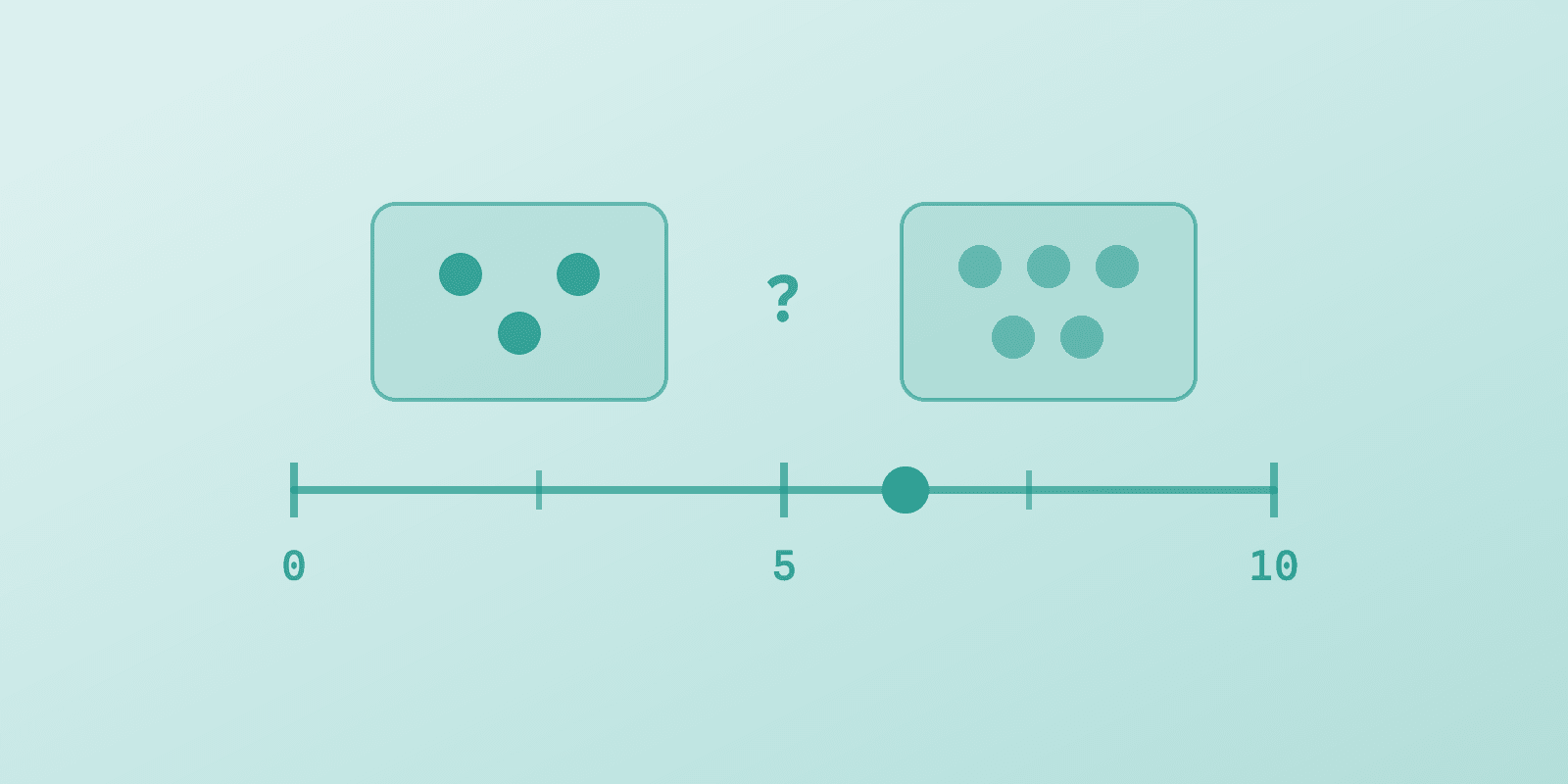
- Small groups are counted one by one. Most children see three dots as "three" without counting. Children with dyscalculia often cannot.
- Facts do not stay. Addition and multiplication facts learned one week are gone the next.
- Fingers stay in use. Counting on fingers for simple facts long after classmates have moved on.
- Place value does not make sense. Writing "one hundred and five" as 1005, or not seeing why the 3 in 30 is worth more than the 3 in 3.
- Time and money are a struggle. Reading a clock, making change and estimating are hard well into the later grades.
- Math brings real distress. Avoidance, tears or shutdown around math in particular.
One or two of these on their own are common. A cluster that has lasted for months, despite help, is the pattern worth testing.
What a dyscalculia evaluation measures
There is no single dyscalculia test. An evaluator builds the picture from several sources:
- Math achievement. Standardized tests of calculation, math fluency and applied problems, such as the math sections of the WIAT-4 or the Woodcock-Johnson IV, or the KeyMath-3. For young children, the TEMA-3 looks at early number skills.
- Number sense. Tasks such as comparing quantities, placing numbers on a line, and recognizing small amounts at a glance.
- Fluency under time. Whether the child knows facts or is working each one out.
- History. How long the difficulty has lasted, what teaching and support have been tried, and how the child responded.
- Ruling out other causes. Vision, hearing, missed schooling, and an intellectual disability that would explain the math scores more broadly.
Many evaluations also test working memory and processing speed. These do not identify dyscalculia on their own, but they help explain why some tasks are harder than others and which accommodations will help.
Getting a free evaluation through school
Under federal law, dyscalculia falls inside a specific learning disability in math calculation or math problem solving. Public schools must evaluate a child they suspect may have a disability, and the testing is free.
Ask in writing. Describe what you see, say you suspect a learning disability in math, and ask for a full evaluation. The IEP advocacy letter builder drafts the request. Once you sign consent, the school has 60 days to finish, unless your state sets a different timeline.
Some schools avoid the word dyscalculia. In October 2015 the Department of Education told states that nothing in IDEA stops a school from using it in an evaluation, an eligibility decision or an IEP. The special education evaluation process explains each step, and an independent educational evaluation is the route if you disagree with the result.
Private evaluation
A licensed psychologist, neuropsychologist or educational psychologist can evaluate privately. It is usually faster, may go deeper into number sense, and will use the word dyscalculia when it applies. Insurance rarely covers it. The school must consider a private report but does not have to adopt it, so ask the evaluator to include specific, practical recommendations.
What can look like dyscalculia
Math anxiety can sink scores on its own, and dyscalculia often causes anxiety too, so the two travel together. Missed teaching, from moves, absences or a gap in the curriculum, can leave holes that close quickly once taught. Language matters as well: a child who struggles with word problems but handles the same math as bare numbers may have a reading or language barrier rather than a math one.
That last point is worth extra care for autistic children. Word problems are full of inference and unstated steps, so a low applied-problems score can be measuring language. Read the problem aloud, or give the same math as a number sentence, and compare.
After the results
Dyscalculia responds to explicit teaching that builds number sense with objects and pictures before moving to symbols, with short daily practice and a lot of review. In school that becomes goals and services in an IEP, and the math IEP goals post shows how to write them so progress can be measured.
Accommodations keep a child moving in grade-level math while the basics are built: a number line, a facts chart, a calculator for multi-step problems, and fewer problems with the same practice value. One-to-one help outside school adds the repetition that makes facts stick. Spectrum Unlocked offers online tutoring for dyscalculia that starts from where your child actually is.
This guide covers the basics. But every child is different.
Beacon learns about YOUR child and gives guidance specific to them.
What Would Beacon Say?
"My child was just diagnosed, what do I do first?"
Beacon looks at your child's age, communication style, and biggest challenges, and gives you a specific starting point instead of a generic checklist.

Spectrum Unlocked Editorial Team
Editorial Team
The Spectrum Unlocked editorial team combines lived experience as autism parents with research-backed guidance to create resources families can trust.
Frequently Asked Questions
- What are the first signs of dyscalculia?
- Early signs include trouble counting objects reliably, difficulty telling which of two numbers is bigger, not recognizing small groups of dots without counting them one by one, and still counting on fingers for simple facts long after classmates have stopped. Later, math facts that are learned one week and gone the next are a common sign.
- Is there a test for dyscalculia?
- There is no single test. An evaluator uses standardized math tests, such as the math sections of the WIAT-4 or the Woodcock-Johnson IV, or the KeyMath-3, along with number sense tasks, a developmental and school history, and checks that rule out other explanations. Online screeners can flag risk but cannot identify dyscalculia.
- Do schools test for dyscalculia?
- Schools evaluate for a specific learning disability in math calculation or math problem solving, which is where dyscalculia sits under federal law. The evaluation is free. Federal guidance from 2015 says nothing in IDEA stops a school team from using the word dyscalculia in the evaluation or the IEP.
- Is dyscalculia the same as being bad at math?
- No. Many children find math hard for ordinary reasons, such as missed lessons, anxiety or a poor fit with how it was taught, and they catch up with good teaching. Dyscalculia is a persistent difficulty with the basics of number that stays in place despite good teaching and practice.
- Can dyscalculia and dyslexia happen together?
- Yes, they often co-occur. A child with both may also struggle with word problems because of the reading load, so an evaluation should separate the math from the reading. Reading the problem aloud is one quick way to see which one is in the way.
- What helps a child with dyscalculia?
- Explicit teaching that builds number sense with objects and pictures before symbols, short daily practice, and accommodations such as a number line, a facts chart or a calculator for tasks where the calculation is not what is being taught. A child should not lose access to grade-level reasoning while the facts are still being built.