
Best Body Socks for Autistic Kids: Deep-Pressure Calm They Can Move In
Body socks give autistic kids calming deep-pressure input. What a sensory sack does, how to size it, the safety and breathing rules, and top picks by need.
Key Takeaways
- A body sock is a stretchy full-body sack the child climbs inside and then pushes against. The resistance gives deep-pressure and proprioceptive input, which is the calming, organizing feedback a lot of autistic kids reach for when they crash into the couch, wrap up tight in blankets, or squeeze into small spaces. It turns that need into safe, active movement play.
- Size is the decision that matters most, and you match it to your child's height. A sock that is close to their height lets them stretch and press against the fabric properly, and one that runs longer than the child does not add benefit and gets in the way. When you are between sizes, size to the height you have now rather than the height they are growing into.
- It is a supervised, awake-time tool and never a sleep product. An adult stays with the child the whole time, the child must be able to get in and out on their own, and the fabric must never cover the face. Stop the moment your child looks distressed.
- Breathing comes first, always. The child has to be able to breathe freely inside the sock, so it is meant for open play in a clear space, not for wrapping the head, not for bedtime, and not for any moment the child is left alone.
- This is one calming tool among several. A body sock delivers movement-based deep pressure, and it sits naturally alongside weighted and compression items that give the same input while a child is still.
If your child is forever crashing into the couch, wrapping up tight in blankets, or wedging into the smallest space they can find, a body sock speaks to exactly that need. A body sock is a stretchy, full-body sensory sack the child climbs inside and then pushes and stretches against. The fabric pushes back, and that resistance delivers deep-pressure and proprioceptive input, which is the calming, organizing feedback a sensory-seeking child is often chasing. Instead of another crash into the furniture, the same drive becomes contained, active movement play.
The whole thing turns on two decisions, and we will keep coming back to both. The first is size, which you match to your child's height so they can actually stretch and press against the fabric. The second is safety, because a body sock is a supervised, awake-time tool with a few firm rules around breathing and getting in and out. Get those two right and the rest is easy. Below are the body socks worth owning, each one tied to the child's height, starting with the safety rules that decide whether it helps at all.
Read This Before You Use One
- An adult supervises every single time. A body sock is awake-time play, never something a child uses alone and never a sleep product. Stay with your child from start to finish.
- Your child must get in and out on their own. If they cannot climb in and out by themselves, the sock is not right for them yet. Never zip, tie, or close them inside.
- Never let the fabric cover the face, and keep breathing free. The child has to breathe easily the entire time. Use the sock in an open, clear space, and stop the moment your child seems distressed or stuck.
- Match the sock height to your child's height, and do not go over. A sock close to their height lets them press against it properly. One that runs longer bunches, trips them up, and adds nothing.
How We Chose
No lab and no invented star ratings. We sorted the market against what actually helps an autistic child get safe, regulating deep-pressure input, using product specs, occupational-therapy guidance on proprioception and sensory diets, and Spectrum Unlocked's own work with sensory-seeking kids. Every pick here was checked as a real, currently available listing before it went on the list. The rubric:
- Real deep-pressure resistance. A four-way stretch fabric that genuinely pushes back, so the child feels the proprioceptive input that does the work.
- A size that fits the child. Options across the height range, from toddlers to teens and adults, so you can match the sock to the body without going over.
- Breathable, honest material. Lycra or a nylon-and-spandex blend a child can see and breathe through, because breathing always comes first.
- Construction that survives heavy play. Reinforced or double-stitched seams that hold up to a kid pushing against them hard, day after day.
- Sensible value. A fair price for the size and quality, since these take real punishment.
Here is which body sock fits which need.
Which Body Sock to Buy for Your Child's Height
Best Overall Breathable Pick, Small Size: Special Supplies Sensory Body Sock
The one to start with for a younger child. This Special Supplies sock runs about forty by twenty-seven inches, sized for a smaller body, and it is built with breathability in mind so a child can see and breathe through it easily, which is exactly the reassurance a first-time buyer wants. It closes with a safety snap rather than Velcro, so there is no scratchy hook-and-loop against skin and nothing to snag, and it is machine washable for the inevitable sweaty sessions. If you want a well-rounded, breathable body sock in a small size to find out whether deep-pressure play helps your child, this is a sensible place to begin.
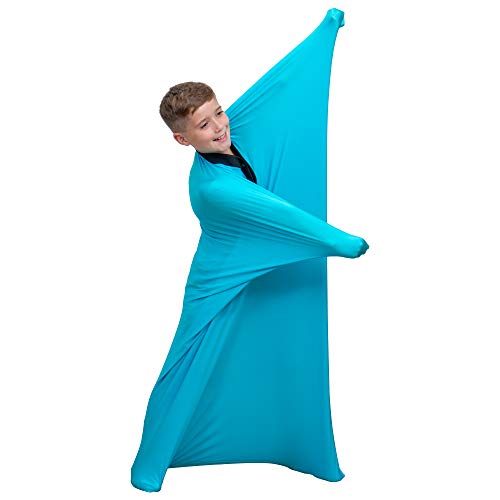
Special Supplies Sensory Body Sock (Small, 40 x 27 in)
Best Construction and Seams, Sizes Small Through XL: Harkla Body Sock
For the family that wants one to last and a size to grow into the range. Harkla makes this sock in small, medium, large, and extra-large, so you can match it to your child's current height today and know the same trusted make covers a bigger kid later, with the XL length fitting up to roughly six feet for a teen or adult. The build is the standout here: double-stitched seams in a nylon-and-spandex fabric, which is what holds up when a kid pushes against the sock with real force session after session. If your child is hard on their gear, the sturdier seams earn their keep.

Harkla Body Sock (Sizes S to XL)
Best Value From a Trusted Sensory Brand, Medium Size: Sensory4u Sensory Sack Body Sock
For the roughly six-to-nine-year-old at a friendly price. This Sensory4u sack comes in a medium size that suits that middle age range, and it carries the name of a sensory brand plenty of families already know, which is a comfortable place to land when you want quality without paying a premium. It uses a snap closure, so there is no rough Velcro against the skin, and it delivers the same four-way stretch and deep-pressure resistance as pricier socks. For a school-age child who is ready to move up from the smallest size, it is a lot of value for the money.
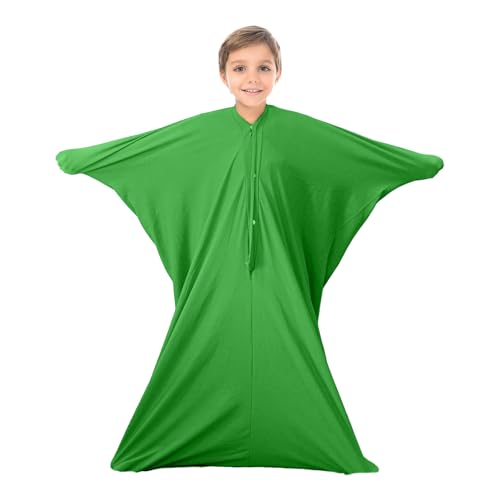
Sensory4u Sensory Sack Body Sock (Medium)
Best for Movement and Heavy-Work Play, Large Size: Sensory Sox Body Sock
For the older kid who wants to really move. This Sensory Sox model measures about fifty-six by twenty-seven inches in a large size, giving a taller child the length to stretch, lunge, and press against the fabric across a full range of heavy-work motion. The breathable spandex gives back strongly in every direction, so animal walks, slow squats, and balance poses all deliver that satisfying proprioceptive push. If your child regulates by working hard against resistance and has the height to match a large, this is the one built for that kind of active play.

Sensory Sox Body Sock (Large, 56 x 27 in)
Best Larger Size for Teens and Adults: Stretchy Sensory Body Sock for Teens and Adults
For the older teen or adult who needs genuine length. This stretchy body sock is made in an XL size specifically for bigger bodies, so a taller teen or a grown adult gets a sock long enough to actually stand up, reach, and press against without running short. Older kids and adults seek deep pressure just as younger ones do, and a sock that fits their height is what makes the input work rather than fight them. If the standard sizes come up short for someone in your house, this is the length to look at.

Stretchy Sensory Body Sock for Teens and Adults (XL)
Best Budget and Smallest Fit for Toddlers: Kids Body Sock, Small
For the littlest sensory seekers. This is a small, height-matched kids body sock sized for ages three to five and a height of about thirty-three to forty-two inches, which is the fit that lets a toddler or preschooler press against the fabric safely rather than swimming in something too long. It is the budget-friendly, smallest option here, which makes it an easy first try for a young child who already loves tight squeezes and heavy blankets. Keep the supervision rules front of mind with the youngest kids especially: stay with them, keep the fabric off the face, and let them climb in and out themselves.

Kids Body Sock (Small, Ages 3-5)
Best Low-Cost Adult-Length Option in Real Lycra: Vobumix Sensory Body Sock
For the adult who wants true Lycra without a high price. This Vobumix sock is made in an adult length from real Lycra, so it gives the strong, springy four-way stretch that many cheaper adult-size socks miss, and it does it at a low cost. That combination is genuinely hard to find, which is why it earns a spot for grown teens and adults who want dependable deep-pressure resistance and full length on a budget. As with every size, match it to the person's height and keep the same supervision and breathing rules in place.
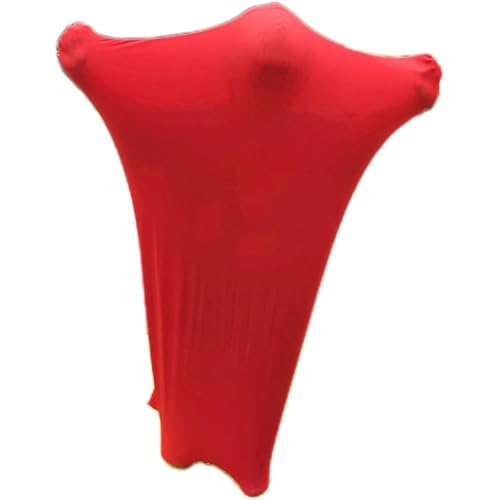
Vobumix Sensory Body Sock (Adult, Lycra)
Getting the Size and Fit Right
A body sock only works when it fits, so height is the check that decides most of it. Stand your child up and picture the sock at close to their own height. That is the length that lets them reach the top, press into it, and feel the resistance wrap around them as they move. A sock that runs longer than the child does not add any extra benefit, it just gathers around the feet, makes movement clumsy, and gets in the way. When your child falls between two sizes, choose for the height they are right now rather than the height you hope they reach next year.
From there, let the play stay light and led by your child. Once they are inside, encourage them to push against the fabric, stretch in different directions, try slow animal walks or careful balance poses, or simply lean and press to feel the deep pressure. Keep sessions on the shorter side, follow how long and how hard your child actually wants to go, and treat it as something they enjoy rather than a task. If an occupational therapist is part of your child's care, ask how to fit these sessions into their specific sensory diet.
Safety, One More Time, Because It Matters Most
A body sock is worth having, and it is only ever safe when the rules travel with it. Keep every one of these in place, every time:
- Always supervised. An adult stays with the child from the first moment to the last. It is an awake-time play tool and nothing else.
- The child gets in and out on their own. Never close, tie, or seal a child inside, and never use it with a child who cannot climb out by themselves.
- The face stays clear and breathing stays free. The fabric never covers the face, and the child must breathe easily the entire time.
- Use it in an open, clear space. Away from stairs, sharp corners, and hard furniture, since kids move and can lose their balance inside the sock.
- Stop at any sign of distress. If your child seems overwhelmed, panicked, or stuck, help them out right away.
- Match the height, and never go over. A sock sized to the child is safer and more useful than one that runs long.
- It is not a sleep product. No bedtime use, no drowsy use, and no unsupervised use, ever.
Where a Body Sock Fits
Movement-based deep pressure is one piece of a bigger calming picture. A body sock gives that input while a child is active and pushing against the fabric, and it works best alongside the tools that meet the same need in other moments. For deep pressure a child feels while sitting or lying still, compression and deep-pressure products cover the wearable, all-day version of the same input, and for nighttime, when a body sock has no place, a properly sized weighted blanket is the tool built for rest. If your child craves bigger vestibular movement than a sock can offer, sensory swings and movement tools reach the input a body sock only starts to touch.
If you are not yet sure whether deep pressure and proprioception are what your child is seeking, the sensory profile quiz is the place to start. Match the tool to the child, keep the supervision rules close, and a simple stretchy sack can turn the constant search for a good squeeze into calm, focused movement your child can move in.
Products mentioned in this article
Special Supplies Sensory Body Sock (Small, 40 x 27 in)
Harkla Body Sock (Sizes S to XL)
Sensory4u Sensory Sack Body Sock (Medium)
Sensory Sox Body Sock (Large, 56 x 27 in)
Stretchy Sensory Body Sock for Teens and Adults (XL)
Kids Body Sock (Small, Ages 3-5)
Vobumix Sensory Body Sock (Adult, Lycra)
Prices and availability are accurate as of the date/time shown and are subject to change. Any price and availability information displayed on Amazon at the time of purchase will apply to the purchase of this product.
Sensory overwhelm shows up differently in every child.
Beacon learns about YOUR child and gives guidance specific to them.
What would Beacon say?
"What sensory strategies actually work for my child?"
Beacon factors in your child's specific sensitivities (sound, light, texture, movement) and current regulation, then builds a sensory plan you can start tonight.

Spectrum Unlocked Editorial Team
Editorial Team
The Spectrum Unlocked editorial team combines lived experience as autism parents with research-backed guidance to create resources families can trust.
Frequently asked questions
- What does a body sock do for an autistic child?
- A body sock is a stretchy, full-body sensory sack that the child climbs into and then presses and stretches against from the inside. That resistance delivers two kinds of input at once: deep pressure, which is the calming, hugging sensation many autistic kids seek, and proprioceptive feedback, which is the signal from muscles and joints that tells the body where it is in space. For a sensory-seeking child, that combination is regulating. It is often the same need behind crashing into cushions, burrowing under heavy blankets, or squeezing into tight spots, channeled into active, contained movement. It will not fix a hard moment on its own, but as one calming tool it helps a lot of kids settle, organize, and get the heavy-work movement their body is asking for.
- What size body sock should I buy for my child?
- Match the sock to your child's height, and do not go over it. The right length lets the child stand, reach, and push against the fabric so they actually feel the resistance that does the work, while a sock that runs longer than the child adds no benefit and simply bunches and gets underfoot. As a rough guide, small sizes suit toddlers and young children, medium fits roughly ages six to nine, large suits older kids, and extra-large covers teens and adults, with some XL lengths reaching about six feet. When your child sits between two sizes, choose for the height they are right now rather than sizing up for growth, because a sock that is too long is harder to move in and less safe.
- Are body socks safe, and does my child need to be supervised?
- Yes to supervision, every single time. A body sock is an awake-time, adult-supervised play tool, not something a child uses alone. A few rules keep it safe. Your child should be able to get into the sock and out of it by themselves, the fabric must never cover their face, and they have to be able to breathe freely the entire time. Use it in an open, clear space away from stairs, sharp corners, and hard furniture, since kids move and can lose their balance inside it. Watch your child the whole time and stop right away if they seem distressed, overwhelmed, or stuck. Used this way, with an adult present and breathing never restricted, a body sock is a safe way to give deep-pressure input.
- What are body socks made of?
- Most are made from a four-way stretch fabric, usually Lycra or a nylon-and-spandex blend, so the material gives in every direction as the child pushes against it. That stretch is what creates the resistance and the deep-pressure feeling. Good ones are breathable enough to see and breathe through, which matters for both comfort and safety. Construction is worth checking too, because a body sock takes real force from an active kid. Double-stitched or reinforced seams hold up far better over months of heavy-work play than thin single seams that can give out.
- Can my child sleep in a body sock?
- No. A body sock is never a sleep product and should not be used at bedtime or for any unsupervised rest. It is designed for supervised, awake movement play, and using it while a child is drowsy or unwatched removes the two things that keep it safe, which are an alert child who can get out on their own and an adult who is watching. If your child seeks deep pressure to fall asleep, a properly sized weighted blanket used according to its safety guidance is the tool built for nighttime, not a body sock.
- How do I use a body sock in play or a sensory diet?
- Think of it as heavy-work movement rather than quiet time. Once your child is inside, encourage them to push against the fabric, reach and stretch in different directions, do slow animal walks, gentle squats, or careful balance poses, or simply lean and press to feel the resistance wrap around them. Many families fold short sessions into a sensory diet before a demanding task or after school as a way to discharge energy and reset. Follow your child's lead on how long and how hard, keep sessions on the shorter side, and let it stay something they enjoy. If an occupational therapist is involved, ask them how to fit it into your child's specific plan.
- Are body socks washable?
- Most are machine washable, which matters because they get plenty of use and plenty of sweat. Check the individual listing, but the common care is a cold, gentle machine wash and air drying so the stretch fibers keep their springiness. High heat in a dryer is the usual thing to avoid, since it can break down the elasticity that gives the sock its resistance over time.