Best Peanut Balls for Autistic Kids: Sized to Your Child
Peanut balls give autistic kids steadier vestibular input than a round ball. How to size one so feet rest flat, plus top picks.
Key Takeaways
- Size is the whole decision. A peanut ball only works when your child can sit astride it with both feet flat on the floor and knees bending at roughly a right angle, so the number on the box has to match the child on the floor. As a rough guide, 40 to 45cm suits small kids, 50 to 60cm fits mid-size children, and 70 to 80cm carries bigger kids, teens, and adults. When you are between sizes, size down so the feet stay on the ground.
- The peanut shape is the point. Because it narrows in the middle, a peanut ball rolls in only two directions instead of every direction at once, which makes it far steadier than a round therapy ball. A child who would slide straight off a round ball can balance, rock, and bounce on a peanut with much less risk of it shooting out from under them.
- It feeds two senses at once. The rocking and bouncing give vestibular input through the inner ear, and the pushing, balancing, and squeezing give proprioceptive input through the muscles and joints. Together that movement helps many autistic kids build core strength and regulate, whether the goal is to wake a sluggish body up or to settle a wound-up one down.
- Buy anti-burst, inflate firm but not rock-hard, and supervise. Anti-burst vinyl deflates slowly instead of popping if it gets nicked, which matters under a bouncing child. Pump it firm enough to hold its shape but with a little give, and stay within arm's reach for young kids and any bouncing.
- Whether movement calms or alerts your child is individual. The same peanut ball can settle one kid and rev up another, so watch your own child and let an occupational therapist help you read which way the input takes them before you build it into a routine.
If your child craves movement, a peanut ball is one of the simplest ways to give it to them at home. It is a therapy ball pinched in at the middle so it looks like a giant peanut, and that shape is what makes it useful. A round exercise ball rolls in every direction and can slide out from under a child, while a peanut rolls only forward and back, so it stays put well enough for a kid to rock, balance, and bounce without it shooting away. Occupational therapists reach for them to build core strength, feed the vestibular and proprioceptive systems, and give a child a movement outlet that also helps them regulate.
The one decision that matters more than any other is size. A peanut ball that fits lets your child sit astride it with both feet flat on the floor, and a peanut ball that is too big lifts their feet off the ground and turns a useful tool into a wobble hazard. So this list is built around sizing. Below are the peanut balls worth owning, grouped by the size of child they fit, with the fit and safety rules that decide whether one helps.
Before You Buy Anything
- Size it so your child's feet stay flat on the floor. Sit them astride the inflated ball like a horse. Their feet should reach the ground and their knees should bend at about a right angle. If their feet dangle, the ball is too big, so size down.
- Buy anti-burst. Anti-burst vinyl sinks slowly instead of popping if it gets nicked, which is the difference that protects a child bouncing on top of it. Check the weight capacity clears your child comfortably.
- Inflate firm, but not rock-hard. The ball should hold its peanut shape and still give a little under the child. Too soft and it sags out of shape; pumped hard as a rock and it stops absorbing the movement.
- Keep it a child-led movement tool. It works when a child rocks and bounces because they want the input, on a clear non-slip floor with an adult nearby. It is not a seat to strap anyone into and not a way to hold a child still.
How We Chose
No lab and no invented star ratings. We sorted the market against what actually helps an autistic child get safe, useful movement, using product specs, occupational-therapy guidance on vestibular and proprioceptive input, and Spectrum Unlocked's own work with sensory-seeking kids. Every pick here was checked as a real, currently available listing before it went on the list. The rubric:
- A size that fits the child. Options across the age and body range so you can keep your kid's feet flat on the floor, which is the fit rule everything else depends on.
- Genuine anti-burst build. Sturdy vinyl that deflates slowly rather than popping, with a weight capacity that clears the child who will use it.
- The steadiness the peanut shape promises. A ball that rolls in two directions and holds its position well enough for a child to balance and rock with confidence.
- Real movement value. Something that delivers the rocking, bouncing, and pushing that feed the vestibular and proprioceptive systems and build core strength.
- Sensible setup and price. A ball that ships ready to inflate, or close to it, at a price that matches how hard an active kid will use it.
Here is which peanut ball fits which child.
Peanut Balls on the Size Ladder
Best for younger and smaller kids: EVERICH TOY Peanut Ball, 18in (45cm)
The place to start for a preschooler or early-elementary child, and for a family new to peanut balls. This EVERICH TOY ball runs 18 inches, right about 45cm, which is the smaller end sized so a little body can sit astride it with their feet flat on the floor, and its anti-slip surface helps it stay where a young child puts it. It is sold as a sensory ball with autism in mind, made from explosion-proof PVC so a hard landing deflates it slowly rather than popping. It does not come with a pump, so add one to the order if you do not already own a ball pump. If your child is small and you want one ball to find out whether the movement helps, this is the sensible size to begin with.

EVERICH TOY Peanut Ball for Kids, 18 in (45 cm)
Best value mid-size: CanDo Peanut Roll, 50cm
For the mid-size child who has outgrown the smallest ball. This CanDo peanut roll is 50cm, which suits a lot of school-age kids, and it is the practical, no-frills value pick of the group. What makes CanDo easy to live with is that it comes in a size ladder, 50, 60, 70, and 80cm, so you can match your child now and step up a size later without switching brands or guessing at fit. Sit your child astride the 50cm first and check the feet-flat rule; if their hips ride high, move up the ladder. For most mid-size kids this is the workhorse.

CanDo Peanut Roll, 50 cm
Best for bigger kids: CanDo Peanut Roll, 70cm
The same dependable roll, scaled up for a taller child. This 70cm CanDo suits a bigger elementary or middle-school kid whose feet would already be flat and knees still bent at a 50 or 60cm ball, which is your signal to go up. Because it sits higher off the floor, it gives a larger child more room to rock and bounce through a full range of movement without their feet catching the ground too early. It is the same rugged CanDo vinyl as the smaller sizes, so a heavier, more active kid gets a ball that can take the daily use.
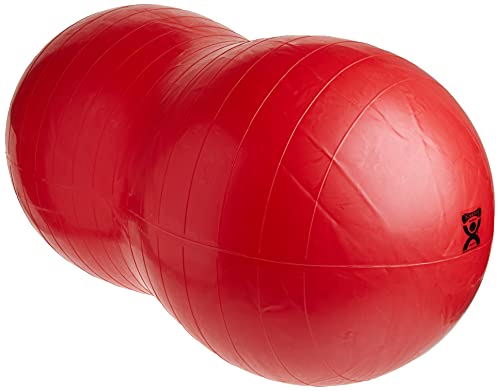
CanDo Peanut Roll, 70 cm
Best for teens and adults: CanDo Peanut Roll, 80cm
For an older teen or an adult who needs the full-height ball. This 80cm CanDo is the top of the size ladder, built with heavy-duty vinyl and a high weight tolerance so it holds up under a bigger, stronger body doing real movement work. At this size the feet-flat test still rules: an adult should be able to straddle it with knees bent and feet planted, and if the ball lifts the heels it is a size too far even here. For a teen who has grown past every smaller ball, or a parent doing exercises alongside their kid, this is the one that fits.

CanDo Peanut Roll, 80 cm
Best premium clinic-grade pick: Gymnic Physio-Roll, 40cm
For the family that wants the ball the therapists use. This Gymnic Physio-Roll is 40cm and is the clinic-grade option, roto-molded in one seamless piece rather than seamed, which is part of why it has long been an occupational-therapy standard. The seamless build and non-slip surface make it steady and durable under repeated use, and at 40cm it suits a younger or smaller child who still needs to sit astride it with feet flat on the floor. It costs more than the value rolls, and what you are paying for is the material and finish that hold up to clinic-level wear. If your child's OT uses a peanut ball you like, there is a good chance it is a Gymnic.

Gymnic Physio-Roll, 40 cm
Best ready-to-inflate pick: bintiva Peanut Ball with Foot Pump, 50cm
For the parent who does not want to hunt for a pump. This bintiva peanut ball is 50cm, a solid mid-size fit, and its selling point is that it ships with a foot pump in the box, so there is no ordering an inflator separately or borrowing one to get started. That matters more than it sounds, because a peanut ball that arrives with no way to inflate it tends to sit in the closet for a week. With the bintiva you unpack it, pump it firm, run the feet-flat check, and your child is moving the same afternoon. A straightforward, ready-to-go choice at a common mid-size.

bintiva Peanut Ball with Foot Pump, 50 cm
Getting the Setup Right
A peanut ball lives or dies on two checks. First, size: sit your child astride the inflated ball and make sure both feet rest flat on the floor with their knees at roughly a right angle. If their feet dangle or their hips sit higher than their knees, the ball is too big, and no amount of care makes a too-big ball safe. Second, inflation: pump it firm enough to hold its peanut shape but with a little give under your child's weight, never rock-hard and never so soft it folds. Anti-burst vinyl and a weight capacity that clears your child are non-negotiable before anyone bounces.
From there, keep it child-led. Use the ball on a non-slip floor with clear space around it, away from table edges and corners, and stay within arm's reach for young kids and any time there is bouncing. Let your child rock and bounce as much or as little as they want, and treat it as movement play rather than an exercise you push. It is a tool your child reaches for, not a seat you fasten anyone into and not a way to keep a child still.
Where a Peanut Ball Fits
A peanut ball covers one slice of the movement a sensory-seeking child looks for, and it works best alongside the other tools that meet the same need in different moments. If your child wants bigger, swinging movement than a floor ball can give, sensory swings and movement tools cover the vestibular input a peanut ball only starts on, and Spectrum Unlocked's guide to building a sensory diet shows how movement, calm, and focus tools get spaced through a day so no single one is doing all the work. The sensory room guide puts seating, movement, and calm-down space together in one place at home.
If you are not yet sure whether movement is what your child is seeking, the sensory profile quiz is a good place to start. Match the size to the child, buy anti-burst, and keep an adult close, and a simple peanut-shaped ball turns into steady, welcome movement that helps a kid feel more settled in their own body.
Products mentioned in this article
EVERICH TOY Peanut Ball for Kids, 18 in (45 cm)
CanDo Peanut Roll, 50 cm
CanDo Peanut Roll, 70 cm
CanDo Peanut Roll, 80 cm
Gymnic Physio-Roll, 40 cm
bintiva Peanut Ball with Foot Pump, 50 cm
Prices and availability are accurate as of the date/time shown and are subject to change. Any price and availability information displayed on Amazon at the time of purchase will apply to the purchase of this product.
Sensory overwhelm shows up differently in every child.
Beacon learns about YOUR child and gives guidance specific to them.
What would Beacon say?
"What sensory strategies actually work for my child?"
Beacon factors in your child's specific sensitivities (sound, light, texture, movement) and current regulation, then builds a sensory plan you can start tonight.

Spectrum Unlocked Editorial Team
Editorial Team
The Spectrum Unlocked editorial team combines lived experience as autism parents with research-backed guidance to create resources families can trust.
Frequently asked questions
- What size peanut ball should I get for my child?
- Size to the child, not to the age on the box, and use one simple test. Sit your child astride the inflated ball as if it were a horse. Their feet should rest flat on the floor and their knees should bend at roughly a right angle. If their feet dangle or their hips ride up above their knees, the ball is too big. As a rough guide, a 40 to 45cm peanut suits younger and smaller children, 50 to 60cm fits mid-size kids, and 70 to 80cm carries bigger kids, teens, and adults. When your child falls between two sizes, size down, because a slightly small ball still keeps the feet grounded while a too-big one does not.
- What does a peanut ball do for an autistic child?
- It delivers movement input that many autistic kids actively seek. Rocking and bouncing on the ball feed the vestibular system, which tracks head position and motion, and pushing, balancing, and squeezing the ball feed the proprioceptive system, which tracks where the body is through the muscles and joints. That combination is often used in occupational therapy to build core and trunk strength, support gross-motor coordination, and help a child regulate. For some kids the rhythmic rocking is calming; for others the bouncing is alerting and helps them wake up and focus. It works as one movement tool inside a wider sensory routine, not as a fix on its own.
- What is the difference between a peanut ball and a round therapy ball?
- The shape changes how it moves. A round exercise ball rolls in every direction, so it takes more balance and can slide out from under a child without warning. A peanut ball narrows in the middle, which limits it to rolling forward and back in two directions and makes it far more stable. For a young child, a child still building core control, or a child who needs to feel secure to relax into the movement, that steadiness is a real advantage. It also cradles the body a little more, so a child can lie over it or straddle it with more support than a round ball gives.
- Are peanut balls anti-burst, and does that matter?
- The good ones are, and yes it matters. Anti-burst means the ball is built so that if the surface is punctured it lets air out slowly and sinks down rather than exploding, which protects a child who is sitting or bouncing on it when it fails. Look for anti-burst vinyl and a stated weight capacity that comfortably clears your child's weight. Keep the ball away from anything sharp, check the surface now and then for nicks, and replace it if the vinyl starts to crack or thin.
- How do I use a peanut ball safely with my child?
- Start with the fit. Sit your child astride it with their feet flat on the floor, and inflate it firm enough to hold its shape but soft enough to give a little under their weight, never pumped rock-hard. Use it on a non-slip floor with clear space around it, away from furniture edges and corners. Stay within arm's reach, especially with young children and any time there is bouncing, and keep the movement child-led rather than pushing a child to bounce harder or longer than they want. Introduce it as play, follow what your child enjoys, and stop when they have had enough.
- Will a peanut ball calm my child down or wind them up?
- It can do either, and which one depends on your child and how the ball is used. Slow, rhythmic rocking tends to be organizing and calming, which can help a child settle before a transition or at the end of a busy day. Faster bouncing tends to be alerting, which can help a sluggish or under-responsive child wake up and get ready to focus. Watch how your own child responds over a few sessions, and if you are working with an occupational therapist, ask them to help you read whether movement calms or alerts your specific child so you can time it well.
- Is a peanut ball better than a peanut ball seat or a wiggle cushion for seated focus?
- They solve different problems. A wiggle cushion or a ball chair is meant to add small movement while a child stays seated and works. A peanut ball is a movement and gross-motor tool for active play, therapy-style exercises, rocking, and bouncing, usually on the floor rather than at a desk. If your goal is help sitting still to focus, active seating is the closer fit; if your goal is bigger vestibular and proprioceptive input, core work, and movement play, the peanut ball is the tool. Plenty of families end up owning both for different moments of the day.