Best Sensory Swings for Autistic Kids: Swing Chairs, Cocoons and Pods
The sensory swings worth buying for an autistic child, from cocoon and pod swings to hanging swing chairs, sorted by the kind of movement each one gives, with the mounting hardware and safety rules these need.
Key Takeaways
- Match the tool to the movement your child seeks: swinging and deep-pressure hugging calm most kids, while bouncing and spinning are alerting and can tip into overstimulation. Watch which direction your child needs.
- Vestibular input (swinging, spinning) is powerful. Start with a few minutes, let your child control it, and stop at the first sign of overstimulation. Never spin a child who cannot tell you to stop.
- These are big-ticket items with real safety requirements. Hanging swings need a proper ceiling mount into a joist or a rated stand, within the weight limit, over a clear floor, always supervised.
- Spinning and bouncing are alerting, so they belong before focus or to discharge energy, not at bedtime. Swinging is calming, so it works for winding down.
- An occupational therapist can tell you whether your child's nervous system is calmed or wound up by movement, which decides what to buy. When in doubt, start with the calming options.
A quick, honest disclosure before anything else. Some of the product links on this page are affiliate links, which means Spectrum Unlocked may earn a small commission if you buy through them, at no extra cost to you. It never changes what we recommend or where a product lands on this list. We point you toward what fits the job. You can read more in Spectrum Unlocked's affiliate disclosure.
If your autistic child is always moving, crashing into the couch, spinning until they're dizzy, bouncing off the walls, or hanging upside down off the furniture, that is not misbehavior. It is your child seeking the movement input their nervous system needs, the vestibular and proprioceptive feedback that helps them feel organized and calm. The right piece of movement equipment gives that need a safe, purpose-built place to land, and the free Beacon activity generator helps you pair the gear with the right activity so the swing becomes part of a routine rather than a one-off.
These are bigger-ticket items than a handful of fidgets, and they come with real safety requirements, so this guide does two things: it sorts the picks by the kind of movement each one provides, and it leads with the rules that keep these tools safe. For the small-scale, hands-and-pockets version of all this, see the sensory and fidget toys roundup; this page is the big-movement side.
For the why behind it, our guide to building a sensory diet explains how movement input regulates the nervous system, and stimming covers why meeting the need beats stopping it.
The One Rule That Comes First: Calming or Alerting, and Safe
Movement is not one thing. The single most important distinction decides whether a tool helps or backfires:
- Calming input organizes and settles: deep-pressure swinging in a cocoon, slow rocking, crashing into a soft landing. Good for winding down and for some meltdowns.
- Alerting input wakes the body up: bouncing, spinning, fast movement. Good before focus or to discharge energy, but it can tip an already over-aroused child further into dysregulation.
Watch which direction your child needs, and when. A child who is wound up needs calming input, not a spin session. A sluggish, under-responsive child may need bouncing to get going. When you are not sure, start with the calming options.
The safety rules come first, because with big equipment they are not optional:
- Hanging swings need a secure mount. Into a structural ceiling joist with rated hardware, or a free-standing frame rated for the weight. Never drywall alone. Check the weight limit and the hardware regularly. Our swing frames and stands roundup covers the free-standing stands, doorway bars, and ceiling mounts, sorted by how you need to hang it.
- Clear the space. Hang or place equipment over a padded floor, away from walls, furniture, and hard edges.
- Spinning is powerful, so keep it short and child-led. Let your child control the spin, limit the bouts, and stop at the first sign of overstimulation. Never spin a child who cannot tell you to stop.
- Supervise, one child at a time on every swing here.
Vestibular input can regulate or dysregulate, and an occupational therapist can tell you which way your child leans, which is the best guide to what to buy. With that settled, here are the picks, by the kind of movement each one gives.
Swing Chairs, Cocoon Swings and Therapy Swings: Which Name Means What
The naming is a mess, and it costs parents money. An autism cocoon swing, a compression swing and a cuddle swing all describe the same enclosed stretchy shape. A pod swing, a swinging chair and a swing chair for autism all mean the open sit-in shape. A therapy swing or a therapeutic swing usually just means any of these sold for autism and ADHD use rather than a different product, and a sensory sack swing is the lycra version your child climbs inside. An indoor swing describes where it hangs, not what shape it is. Autistic children mostly want one specific shape and reject the others, so if swinging has failed before, change the shape before you change the brand. Autism swinging is not a single product, and no autism therapy supplier can tell you which hold your child will accept, which is why this list is organized by the hold each swing gives.
How We Chose
We did not test these in a sensory gym, and we will not pretend otherwise. We sorted the movement-equipment market against what matters for an autistic child, using each product's design, materials, and weight rating, the patterns parents and OTs report, the safety guidance above, and current availability and reviews. The rubric:
- Provides a clear movement input. Every pick names the kind of motion it gives, calming or alerting, so you can match it to your child.
- Built and rated for real use. Sturdy materials, an honest weight limit, and safe to set up at home.
- Worth the footprint and the price. Big equipment has to earn its space and cost by getting used, not sitting in a corner.
- A safe option at different budgets. From a low-cost open swing to a full cocoon, so there is an entry point at any price.
- Honest about safety. Each pick states the setup and supervision it needs.
No invented star ratings. Here is which one fits which kind of mover.
The Best Sensory Swings for Autism, Sorted by Movement Type
Best sensory swing for calming: Harkla Sensory Swing (deep-pressure hug)
For the child who calms by being wrapped tightly, a stretchy cocoon swing is the gold standard. The fabric cradles your child in deep, even pressure while it gently sways, combining the two most calming inputs there are, deep pressure and slow vestibular motion, into one tool. It is the pick most likely to settle an overwhelmed kid, and the one OTs reach for most. It holds up to 300 pounds, so it grows with your child, but it must be mounted into a joist or a rated stand, within the weight limit, over a clear floor, and supervised.

Harkla Sensory Swing for Kids (Holds 300 lbs)
If your child has outgrown a kids' swing. Most sensory swings, the Harkla included, are rated to 300 pounds, which runs out somewhere in the teens. Sensory Harbor makes a cuddle swing sized for teens and adults, which the maker states as a 440-pound working capacity. That figure is the manufacturer's own rating rather than an independent test of the assembled swing, so treat it the way you would any load rating and pay closer attention to what you are hanging it from: the mount and the joist matter more than the swing does.
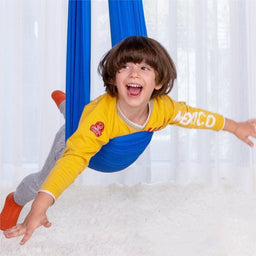
Best budget sensory swing: OUTREE Kids Pod Swing
If you want to start with swinging without the cost or the full-compression wrap of a cocoon, an open pod or nest swing is the easier entry point. It gives gentle, soothing motion with a contained, nest-like feel, less intense than a cocoon, which suits younger kids and children who like movement but not tight compression. Same rules apply: secure mount, weight limit, clear space, supervision. A good way to learn whether swinging helps your child before investing in a larger setup.

OUTREE Kids Pod Swing Seat (Cotton Hammock Swing)
Best sensory swing chair: Aokitec Cuddle Hammock Chair
Plenty of parents searching for this are not picturing a cocoon at all, they are picturing a chair that hangs. This is that: a 59 by 67 inch nylon hammock your child sits in rather than climbs into, with an adjustable drop and a 360-degree swivel hanger in the box. Sitting upright suits the child who wants the motion but finds full enclosure claustrophobic, and it is the easiest of these to get in and out of independently, which matters more than it sounds. It carries by far the most reviews of any swing here.

Aokitec Sensory Swing (Cuddle Hammock Chair, 360 Swivel)
Best double-layer swing for stretch: Yatoco Double Layer Sensory Swing
The double layer is the point. Two fabric layers give a stretchier, more enveloping hold than a single sheet, so a child can sink into it for compression or sit in one layer for a lighter version, which effectively makes it two swings as your child's tolerance changes. Rated to 300 pounds with a 360-degree hanger, and it is the highest-rated swing on this list. A sensible middle if you cannot tell yet whether your child wants to be wrapped or just rocked.

Yatoco Double Layer Sensory Swing (300 lb, 360 Hanger)
Best budget swing and best for spinning seekers: OUTREE 360 Swivel Swing
For the child who spins in circles until they fall over, the swivel is the feature to buy for. This one hangs on a 360-degree swivel hanger, so it turns as well as swings, which delivers rotational input in one controlled spot instead of your child crashing around the room. Spinning is the most powerful and most overstimulating input here, so the rules tighten: keep sessions short, let your child control the speed and the stop, and watch for dizziness or escalation. Never spin a child who cannot signal you to stop. It is also the cheapest way onto this list.

OUTREE Sensory Swing with 360 Swivel Hanger
Sensory Swings With a Stand, If You Cannot Drill
Worth saying plainly, because the listings rarely do: not one swing on this list ships with a frame. Every pick here is the swing alone, and the hardware in the box is a hanger and fixings meant for a structural ceiling joist. So if you rent, or you have no joist where you need it, or you simply will not drill, a sensory swing with a stand is a two-part purchase and you should budget for both. The frame is usually the more expensive half and it is the half that carries your child, so buy it to the swing's weight rating rather than the other way round. Our swing frames and stands roundup covers free-standing frames, doorway bars and ceiling mounts, sorted by how you need to hang it.
What this guide deliberately leaves out. Swinging is one kind of movement input, and the other kinds have their own guides rather than a token pick here. For bouncing energy out, see the indoor trampolines roundup. For the child who throws themselves into furniture, the sensory crash pads comparison covers footprints, foam and placement. For the child who wants to turn rather than swing, the sensory spinning chairs guide covers floor-level rotational seats and the weight limits that decide which ones work past primary age. For staying seated through school work, the full wobble cushion roundup sizes the disc to your child and is the one that fits an IEP or 504 plan as flexible-seating support.
How to Use a Sensory Swing Well
Build movement in before the hard moments, not just after. A swing session in the morning, a few minutes of bouncing before homework, a spin break between tasks, used as prevention, keeps your child regulated far better than reaching for a tool only once a meltdown has started. Match the input to the moment: calming input for winding down, from a cocoon swing here or a crash pad, and alerting input for waking up and focusing, from a spin on the swivel swing above or a mini trampoline. And keep the safety habits, since the setup is the part that makes these big tools safe at all.
What a Sensory Swing Does and Does Not Do
Movement equipment meets a real sensory need and gives your child a safe, regulating outlet for the input their body is seeking. It does not replace the occupational therapist who can tell you whether your child is calmed or alerted by movement, how much they need, and when, which is exactly what decides which of these to buy. Use the equipment as the at-home extension of an OT's plan. Our guides to building a sensory diet and sensory-friendly activities show how movement fits the bigger picture, the peanut balls guide sizes a rolling therapy ball to your child for the same vestibular and core input in a smaller footprint, and for the deep-pressure side of regulation, the weighted blankets and weighted vests roundups cover the still, calming end of the spectrum. And when you are pulling all of this into one space, the sensory room build guide shows how the swing fits alongside the retreat, light, and sound zones.
The equipment meets the need safely. The OT, and a daily routine, make it work. Use both.
Some links on this page are affiliate links. If you buy through them, we may earn a small commission at no extra cost to you.
Products mentioned in this article
Harkla Sensory Swing for Kids (Holds 300 lbs)
OUTREE Kids Pod Swing Seat (Cotton Hammock Swing)
Aokitec Sensory Swing (Cuddle Hammock Chair, 360 Swivel)
Yatoco Double Layer Sensory Swing (300 lb, 360 Hanger)
OUTREE Sensory Swing with 360 Swivel Hanger
Prices and availability are accurate as of the date/time shown and are subject to change. Any price and availability information displayed on Amazon at the time of purchase will apply to the purchase of this product.
Sensory overwhelm shows up differently in every child.
Beacon learns about YOUR child and gives guidance specific to them.
What would Beacon say?
"What sensory strategies actually work for my child?"
Beacon factors in your child's specific sensitivities (sound, light, texture, movement) and current regulation, then builds a sensory plan you can start tonight.

Spectrum Unlocked Editorial Team
Editorial Team
The Spectrum Unlocked editorial team combines lived experience as autism parents with research-backed guidance to create resources families can trust.
Frequently asked questions
- What is the best sensory swing for an autistic child?
- It depends on what calms your child. A stretchy cocoon or cuddle swing wraps the child in deep pressure as it gently sways, which is the most calming option for kids who seek a contained, hugged feeling. An open pod or hammock swing gives gentler movement with less compression and is an easier, lower-cost place to start. Both need a secure ceiling mount or a rated stand, the right weight limit, and supervision. If your child is soothed by being wrapped tightly, choose the cocoon style; if they want gentle motion without compression, choose the pod.
- What is an autism swing?
- An autism swing is an ordinary sensory swing sold with autistic children in mind, not a separate category of product. What people mean by the term is a soft fabric swing, hung from one point, that a child either sits in or is wrapped inside, giving slow vestibular motion and usually some deep pressure at the same time. Those two inputs together are what many autistic kids find organizing. There is no clinical definition and no certification behind the phrase, so an autistic swing, an autism swing and a sensory swing on three different listings are typically the same object at three different prices. Judge one on the hold it gives your child, the weight rating, and what you can hang it from, never on whether the word autism appears in the title.
- How do I safely hang a sensory swing at home?
- Mount it into a structural ceiling joist using hardware rated well above your child's weight, or use a free-standing swing frame rated for the swing and the child. Never anchor a swing into drywall alone. Confirm the swing's stated weight limit, hang it over a clear, padded area away from walls, furniture, and hard edges, check the hardware regularly for wear, and always supervise use. If you are not confident about the ceiling structure, a rated stand removes the guesswork.
- What is the difference between a cocoon swing and a swing chair?
- The hold. A cocoon swing, also sold as a compression or cuddle swing, is an enclosed stretchy pouch your child climbs inside, so the fabric presses in on them from all sides while it sways. A swing chair, sometimes listed as a swinging chair or a pod swing, is an open seat your child sits in upright with their legs out, so they get the motion without the compression. Neither is better. Children who calm by being squeezed usually want the cocoon, and children who find enclosure trapping usually want the chair, which is also far easier to get in and out of alone. If one shape has already failed for your child, try the other shape before you try another brand.
- When should my child use a sensory swing, before or after a meltdown?
- Mostly before. Movement is most useful as prevention: a swing session or a few minutes of bouncing built into the day, before the moments that tend to overwhelm, helps keep your child regulated in the first place. During an active meltdown, calming input like deep pressure from a cuddle swing or crashing into a pad can help some kids, but alerting input like spinning usually makes it worse. The strongest approach is a regular movement routine, not a rescue tool you only reach for in crisis.
- Do these replace occupational therapy?
- No. These tools support the sensory work, they do not replace the professional who designs it. An occupational therapist can assess whether your child is calmed or alerted by different kinds of movement, how much they need, and when, which is exactly what tells you which of these to buy and how to use them. Think of the equipment as the at-home extension of an OT's plan, and use the tools and the therapist together.