Dyslexia Reading Tools: Decodable Books, Rulers and Pens
Decodable books, reading strips and a reading pen for kids with dyslexia, plus what the evidence says about colored overlays and dyslexia fonts.
Key Takeaways
- Dyslexia is a difficulty with the sounds inside words, not with eyesight, so the tools that help most support explicit phonics teaching.
- Decodable books use only the letter patterns a child has been taught, which lets them practice sounding out instead of guessing from pictures.
- Reading strips and finger pointers help a child keep their place on the line. Their color tints are not a treatment for dyslexia.
- Major pediatric and eye-care groups do not support tinted lenses or overlays as a dyslexia treatment, and a controlled study found no benefit from a popular dyslexia font.
- For older students, a reading pen can read printed text aloud through an app, which helps with homework while reading skills catch up.
When a child with dyslexia reads aloud, the stumbles have a pattern. Short, familiar words come out fine, then a longer word stops everything, or the child guesses from the first letter and the picture. That is not carelessness or poor eyesight. Dyslexia makes it hard to connect letters to the sounds they stand for and blend those sounds into words, and that is the skill reading at home needs to practice.
This guide covers tools that support that practice: books built for sounding out, simple aids for keeping your place on the page, and a reading pen for older students. It also answers two questions that come up in almost every search: whether colored overlays and dyslexia fonts help. The prices shown date from November 10, 2026.
Start With How Dyslexia Works
Dyslexia is a language-based learning difficulty. Children with dyslexia see the page as clearly as anyone else; the trouble is in processing the sounds of language. That is why, in a 2009 joint statement, the American Academy of Pediatrics and several eye-care organizations concluded that vision problems do not cause dyslexia and that treatments such as tinted lenses and filters lack scientific support.
What does help is explicit, systematic teaching of how letters and sounds work, often called structured literacy. Many tutors use Orton-Gillingham, one well-known version. At home, the job is to give your child plenty of practice with text they can actually decode, at a pace that keeps them trying.
Reading Tools Compared
- First decodable series: Bob Books Set 1
- Short-vowel practice with a story: Charge into Reading Stage 1
- For a child who prefers facts: Scholastic Nonfiction Phonics Readers
- For an older child still decoding: Kents' Quest Fox Hunt
- Activity ideas for parents: Orton Gillingham Tools for Kids with Dyslexia
- Keeping your place on a line: Zonon guided reading strips
- For young readers who point: hand2mind FingerFocus
- For middle school and up: Scanmarker Air reading pen
How We Chose These Eight
We began with what reading specialists recommend for home practice: decodable text, help staying on the line, and assistive technology for older students. We favored books that follow a clear phonics order, aids that work without a grown-up hovering, and prices that make sense next to the cost of tutoring. Each pick was confirmed on its Amazon page, shipping to a Georgia ZIP code, that same day in November. Colored glasses sold as a dyslexia fix stayed off the list, for the reasons above.
Decodable Books
A decodable book only uses words built from letter patterns your child has learned. "The cat sat on a mat" is decodable for a child who knows short a; "The cat was very excited" is not. Ask your child's teacher or tutor which patterns they are working on, then pick books at that stage.
Bob Books Set 1
The best-known first decodable series: a box of small books that begin with a handful of letters and short, simple words, then add new sounds slowly. Every book can be read cover to cover in a few minutes, and that feeling of finishing a whole book is half the point for a child who has come to dread reading.

Bob Books Set 1: Beginning Readers Box Set
Charge into Reading Stage 1
Five short-vowel readers aimed at kindergarten and first grade. A good next step after the first Bob Books, or a parallel set when your child needs more practice at the same level before moving on.

Charge into Reading Decodable Books, Stage 1: 5 Short Vowel Readers
Scholastic Nonfiction Phonics Readers Set 1
Decodable books about the real world instead of made-up stories, covering short vowels, blends and more. Some children who shrug at a pretend story will happily read something true, and that motivation is worth a lot.

Scholastic Nonfiction Phonics Readers Set 1: Short Vowels, Blends and More
Kents' Quest: Fox Hunt
A decodable chapter book written for children with dyslexia. It is the answer for an eight-, nine- or ten-year-old who still needs decodable text but is embarrassed by books that look like they are for kindergarten. It has chapters and an older look, with words they can actually sound out.

Fox Hunt: Decodable Chapter Book for Kids with Dyslexia (Kents' Quest)
Reading Help Parents Can Use at Home
Orton Gillingham Tools for Kids with Dyslexia
A book of 100 activities that parents can use to practice the sound and letter skills behind reading and spelling. It will not turn you into a trained tutor, but it gives you short, structured games for the days between lessons, so practice is more than "read me this page."

Orton Gillingham Tools for Kids with Dyslexia: 100 Activities
Keeping Your Place
Many readers with dyslexia also lose their place, skip lines or reread the same one. A strip or pointer that holds the eye on one line can reduce that. The colors are a matter of preference; choose a clear one if the tint bothers your child.
Zonon Guided Reading Strips
Six flexible, tinted strips that sit along one line of text. Slide the strip down as you read so the eye has one line to follow. They double as bookmarks, so they live in the book instead of getting lost.

Zonon Guided Reading Strips, 6 Pack
hand2mind FingerFocus Highlighters
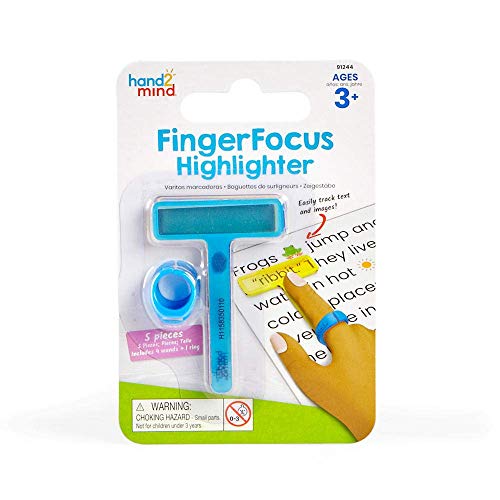
Four colored wands that slip into an adjustable ring worn on the finger. Young readers already point at words; this turns the finger into a highlighter that moves word by word, which helps a child who skips words or whole lines.
hand2mind FingerFocus Highlighters, 4 Wands and Finger Ring
A Reading Pen for Older Students
Scanmarker Air
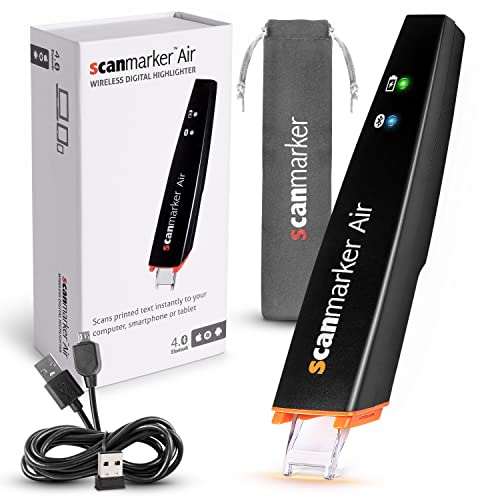
Slide the pen along a line of printed text and it appears on a connected computer, tablet or phone, where the Scanmarker app reads it aloud. That matters for a middle or high school student whose understanding is far ahead of their decoding: they can get through a worksheet or textbook page independently. It needs a device and the app to read aloud, so it is not a standalone gadget. Think of it as a way in to the text, not a way to build reading skill.
Scanmarker Air Reading Pen and Pen Scanner
What About Overlays and Dyslexia Fonts?
Colored overlays. Tinted sheets and glasses are widely sold for dyslexia. The 2009 joint statement from pediatric and eye-care groups found no scientific support for them as a treatment. If your child likes a tinted strip and it helps them track a line, there is no harm in it, but do not let it take the place of reading instruction. If your child complains of headaches, blurry print or eye strain, see an eye doctor to rule out a vision problem that needs its own care.
Dyslexia fonts. Fonts such as OpenDyslexic are free and easy to try, which is why they are searched so often. A controlled study published in Annals of Dyslexia, with students at a school for dyslexia, found no benefit from the font for reading rate or accuracy compared with ordinary fonts. A plain font at a larger size with extra spacing is just as good, and many students prefer it.
Making Practice Stick
- Short and daily. Ten minutes of decodable reading every day does more than an hour on Saturday.
- Reread the same book. Reading a book a second and third time builds speed and confidence; it is not cheating.
- Let your child hear good reading. Audiobooks and reading aloud to your child keep their vocabulary and love of stories growing while decoding catches up.
- Ask the school for the right support. Our guide to dyslexia testing explains how to get an evaluation, and our reading fluency IEP goals show what measurable progress can look like.
If your child needs one-to-one help, our online dyslexia tutoring pairs them with a tutor trained in Orton-Gillingham who teaches reading step by step.
Products Mentioned in This Article
Bob Books Set 1: Beginning Readers Box Set
Charge into Reading Decodable Books, Stage 1: 5 Short Vowel Readers
Scholastic Nonfiction Phonics Readers Set 1: Short Vowels, Blends and More
Fox Hunt: Decodable Chapter Book for Kids with Dyslexia (Kents' Quest)
Orton Gillingham Tools for Kids with Dyslexia: 100 Activities
Zonon Guided Reading Strips, 6 Pack
hand2mind FingerFocus Highlighters, 4 Wands and Finger Ring
Scanmarker Air Reading Pen and Pen Scanner
Prices and availability are accurate as of the date/time shown and are subject to change. Any price and availability information displayed on Amazon at the time of purchase will apply to the purchase of this product.
Need help preparing for YOUR next IEP meeting?
Beacon learns about YOUR child and gives guidance specific to them.
What Would Beacon Say?
"Help me prep for my IEP meeting"
If you asked Beacon "Help me prep for my IEP meeting" it would pull your child's goals, challenges, and history, and give you the exact questions to ask, red flags to watch for, and what to push back on.

Spectrum Unlocked Editorial Team
Editorial Team
The Spectrum Unlocked editorial team combines lived experience as autism parents with research-backed guidance to create resources families can trust.
Frequently Asked Questions
- What are decodable books?
- Books written so that almost every word follows phonics patterns the child has already learned, such as short vowels or consonant blends. They let a beginning or struggling reader practice sounding words out, which is the skill dyslexia makes hard.
- Do colored overlays help with dyslexia?
- Not as a treatment. The American Academy of Pediatrics, together with several eye-care organizations, found no scientific support for tinted lenses or filters in treating dyslexia. Some children simply like a tinted strip, and that is harmless, but it should not replace reading instruction.
- Does a dyslexia font help?
- The research is thin. A controlled study of students at a school for dyslexia found no benefit from the OpenDyslexic font compared with Arial or Times New Roman. A clear, plain font at a comfortable size with generous spacing is a sensible choice for any reader.
- What is the best reading tool for a child with dyslexia?
- A set of decodable books matched to what your child is learning in phonics. Add a reading strip or finger pointer if they lose their place, and a reading pen for older students who need to get through printed text on their own.
- Are Bob Books decodable?
- Yes. Bob Books start with a handful of letters and simple short-vowel words and add new patterns gradually, which is why they are a common first decodable series.
- Can these tools replace tutoring?
- No. They support practice at home. Children with dyslexia usually need structured, explicit reading instruction, often called structured literacy or an Orton-Gillingham approach, from school or a trained tutor.