Harnessed Booster Seats for Autistic Kids Who Unbuckle
Car seats that keep a 5-point harness to 65 lb for older autistic kids who still need one, a rear-zip travel vest, and why to skip aftermarket buckle locks.
Key Takeaways
- Many autistic children are safer in a 5-point harness for longer than their age alone would suggest, because a seat belt only works if the child stays sitting correctly the whole ride.
- A harnessed booster keeps the harness to about 65 lb, then converts to a booster, so one seat can cover several years.
- Locks and covers sold separately to stop unbuckling have no federal standard behind them and were never tested in a crash alongside your seat. Try the safer fixes first.
- A passenger safety technician (CPST), often free through a hospital or fire station, can check the fit and help judge whether a special-needs restraint is needed.
- Vests such as the EZ-On 303Z are for children who cannot ride safely in a regular seat; they need a tether mount in a family car and are best chosen with a CPST.
Many children move out of a harness and into a booster somewhere around age five. A booster works by placing the vehicle's adult seat belt across the strongest parts of the body, and it only protects a child who stays sitting upright with the belt in place for the entire ride. Many autistic children are not there yet. They slump, lean out of the shoulder belt, slip the belt behind their back or unbuckle altogether, and for them a 5-point harness stays the safer choice for longer.
This guide covers seats that keep a harness to about 65 lb, a rear-closing vest for children who cannot ride safely in a regular seat, and what to avoid. Each harness limit below is the maker's own number; the prices are what Amazon showed on November 10, 2026.
Start Here: Safety Before Shopping
Our guide to a child who unbuckles the car seat covers this in depth, and the short version shapes every pick below:
- Fix the fit first. Tighten the harness until no slack strap can be gathered between your fingers at the shoulder, and slide the chest clip up level with the armpits. Snug straps protect better in a crash and leave less room to wriggle free.
- Look for the reason. A strap that rubs, a hot seat or boredom are common triggers, and each has a simple fix.
- Skip add-on buckle locks. Separately sold buckle covers and clip locks meet no federal standard and have not been tested in a crash with your seat. A part made for your exact seat by its own manufacturer is another matter, so check with them first.
- Get a free expert check. A passenger safety technician (CPST) can look over the installation and say whether a special-needs restraint makes sense for your child.
What We Looked For
Every seat here keeps a 5-point harness to 65 lb, so a bigger child can stay harnessed. We favored seats whose makers publish clear harness limits, that convert to a booster for later years, and that are sold widely enough for parents to find replacement parts and manuals. We confirmed each harness range with the maker or the listing, and dropped a budget seat whose limit we could not confirm.
Harnessed Boosters
Graco Tranzitions
A three-mode seat: forward-facing harness, high-back booster and backless booster. Graco lists the harness for children 26.5 to 65 lb and up to 49 inches tall, and the booster modes from 40 lb. It is the lowest-priced seat here, and a sensible first choice when your child has outgrown a convertible seat's harness but is not ready for a belt.

Graco Tranzitions 3-in-1 Harness Booster Car Seat
Chicco MyFit
A harness seat rated for 26.5 to 65 lb and up to 54 inches, then a high-back booster from 40 to 100 lb. The extra harness height suits a tall child who would otherwise outgrow a harness by height before weight, which happens often with older kids.
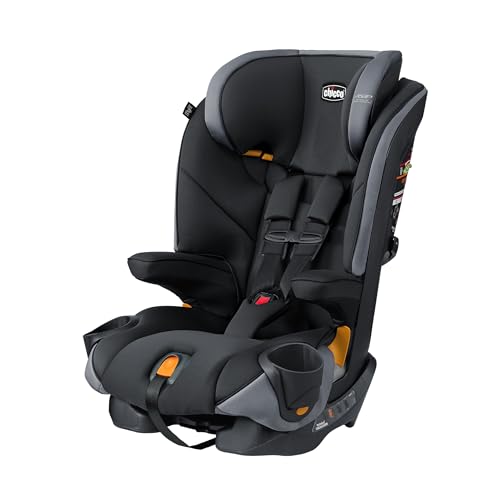
Chicco MyFit 2-in-1 Harness + High Back Booster Car Seat
KidsEmbrace 2-in-1
A forward-facing harness seat for 26.5 to 65 lb and 29 to 49 inches, converting to a booster for 40 to 100 lb, sold in children's character designs. For some kids, a favorite character on the seat is what makes climbing in acceptable at all.

KidsEmbrace 2-in-1 Forward-Facing Harness and Booster Car Seat
Britax Grow With You ClickTight
Britax lists the harness from 25 to 65 lb and the booster up to 120 lb. Its ClickTight system installs with the vehicle seat belt by opening a panel, threading the belt and closing it, which makes a tight installation easier for parents who move the seat between cars. It is the most expensive seat on this list. Booster modes are never allowed in flight, so if you fly, our guide to flying with an autistic child covers car seats certified for aircraft and the CARES harness.

Britax Grow With You ClickTight Harness-2-Booster Car Seat
When a Regular Seat Is Not Enough
EZ-On 303Z Rear Zipper Vest
A vest that zips up the back, where a child cannot reach the closure, and is worn in the vehicle seat. EZ-On rates the 303Z for passengers from 31 to 168 lb and sizes it by chest measurement, so measure your child seated before ordering; this listing is the medium. In a family car the vest attaches with a tether mount that is sold separately, and some vehicles need an anchor installed. That is why it is best chosen with a CPST or your child's therapist.

EZ-ON 303Z Rear Zipper Safety Transportation Vest, Medium
Larger special-needs car seats such as the Merritt Roosevelt exist for children with greater support needs. Families usually get one through a medical equipment supplier, often backed by a doctor's letter, and insurance or Medicaid may pay for it. Bigger strollers come through the same supplier route, and our roundup of adaptive strollers for older kids explains what to ask for.
Making Car Rides Easier
- Same routine every ride. The engine starts only once every buckle has clicked, explained in the same calm words each time.
- Comfort first. Soft clothing under the straps, the cabin at a comfortable temperature and a familiar item in hand.
- Something to do. A small, quiet toy or a favorite song makes the ride a known part of the day.
- A visual for the trip. A short picture sequence of where you are going and what happens there can lower the stress that leads to escaping. The Visual Schedule Creator on our site makes one at no cost.
For a child who also runs off in parking lots or slips out of the house, our elopement safety plan puts the car, the home and outings into one plan.
A roundup like this cannot replace a hands-on check. Car seat rules, ratings and models change, so read both manuals, the seat's and the vehicle's, and have a trained passenger safety technician look at your installation.
Products Mentioned in This Article
Graco Tranzitions 3-in-1 Harness Booster Car Seat
Chicco MyFit 2-in-1 Harness + High Back Booster Car Seat
KidsEmbrace 2-in-1 Forward-Facing Harness and Booster Car Seat
Britax Grow With You ClickTight Harness-2-Booster Car Seat
EZ-ON 303Z Rear Zipper Safety Transportation Vest, Medium
Prices and availability are accurate as of the date/time shown and are subject to change. Any price and availability information displayed on Amazon at the time of purchase will apply to the purchase of this product.
Elopement, wandering, unbuckling in the car. The fears that keep you up at night.
Beacon learns about YOUR child and gives guidance specific to them.
What Would Beacon Say?
"How do I keep my child safe from wandering?"
If you asked Beacon "My child keeps bolting, what do I do?" it would factor in your child's age and triggers, then give you concrete prevention layers to put in place this week, not a lecture.

Spectrum Unlocked Editorial Team
Editorial Team
The Spectrum Unlocked editorial team combines lived experience as autism parents with research-backed guidance to create resources families can trust.
Frequently Asked Questions
- What is a harnessed booster seat?
- A forward-facing car seat that uses its own 5-point harness up to a higher weight, often 65 lb, and then converts to a belt-positioning booster that uses the vehicle seat belt. It lets a child stay in a harness longer before moving to a booster.
- When should an autistic child move from a harness to a booster?
- Only once they have outgrown the harness by weight or height and can sit correctly for the whole ride without slouching, leaning out of the belt or unbuckling. Plenty of autistic children need more time in a harness than the packaging assumes, and that is fine.
- Are buckle guards safe for car seats?
- Seat makers and safety agencies advise caution. Add-on buckle covers meet no federal standard, nobody has crash-tested them with your particular seat, and a cover your child cannot open can also hold you up when you need to get them out fast. Ask a CPST before fitting anything extra.
- What counts as a special-needs car seat?
- A restraint designed for children whose medical, physical or behavioral needs make a standard seat unsafe, such as larger seats with extra support or rear-closing vests. They are often prescribed and may be covered by insurance or Medicaid with a doctor's letter.
- Does the EZ-On vest need special installation?
- In a family car the 303Z vest attaches with a tether mount, sold separately, that connects to a tether anchor point; some vehicles need an anchor installed. Check your vehicle manual and work with a CPST before using it.
- Who offers free car seat checks?
- Hospitals, fire stations, health departments and Safe Kids coalitions often run free checks with a trained passenger safety technician. Some technicians specialize in children with special needs.