Homeschool Supplies List: The Essentials a First-Year Family Actually Uses
A complete homeschool supplies list for your first year: the printer and laminator that anchor the prep station, visual supports for structure, the storage that keeps it sane, and the short list of things you can skip.
Key Takeaways
- You do not need a classroom. A kitchen table, a rolling cart, and a good print setup cover the first year for most families.
- The printer is the one purchase that touches everything else. Homeschool printing is heavy and color-hungry, and refill-tank ink costs a fraction of cartridges.
- Visual structure is the difference between a day that flows and a day that fights you. A schedule chart, velcro dots, and a visual timer earn their spot within a week.
- Buy consumables cheap and boring, but spend the extra few dollars where hands need help: pencil grips and self-opening scissors turn frustration into practice.
- Skip the expensive boxed curriculum, the school-desk replica, and anything sold as a complete classroom in a box until you have taught for a month and know your child's style.
You do not need a classroom, and you do not need the thousand-dollar haul that homeschool influencers unbox in July. What a first-year family actually needs fits on a rolling cart: a way to print, a way to keep materials alive, a visual structure for the day, and tools that fit the hands doing the work. This list comes from the special education side of homeschooling, where visual supports and adaptive tools are standard practice, and where they quietly make the first year easier for every child, diagnosis or not.
Here is the whole list at a glance:
- Print and prep: an ink-tank printer, a 9 inch laminator, 3 mil pouches, 110 lb cardstock, dry-erase pocket sleeves
- Visual structure: a daily schedule pocket chart, velcro dots, a visual timer
- Storage: a 10-drawer rolling cart, one drawer per subject
- Writing and fine motor: primary composition books, pencil grips, self-opening loop scissors, plus the pencils, crayons, and glue sticks you already know
- Learning tools: math linking cubes, magnetic letter tiles, a library card
- Regulation and breaks: a wobble cushion, ear protection, and a plan for breaks
- The parent's desk: a planner, two binders, and a simple record-keeping habit
Read on for why each item earns its place and which versions hold up. Want the list on paper? The free printable supplies checklist has every station as checkboxes, so you can check things off as they arrive.
The kitchen table is fine
Start with the room you have. A kitchen table beats a dedicated schoolroom for most young children, because you are within arm's reach and the day moves with the household instead of against it. What makes a space work is not furniture, it is that lessons have a home base, materials have a home, and the child can see what happens next. A wall whiteboard does the job for demonstrations; a floor easel is a nice-to-have if you have the room. Spend your setup budget on the cart and the print station instead.
The print and prep station
Homeschooling runs on paper, and a special-needs homeschool runs on more of it: visual schedules, picture cards, adapted worksheets, token boards. The print station is where the rest of this site plugs into your home, because every worksheet, visual schedule, and PECS card you generate lands here first.
The printer everyone swears by
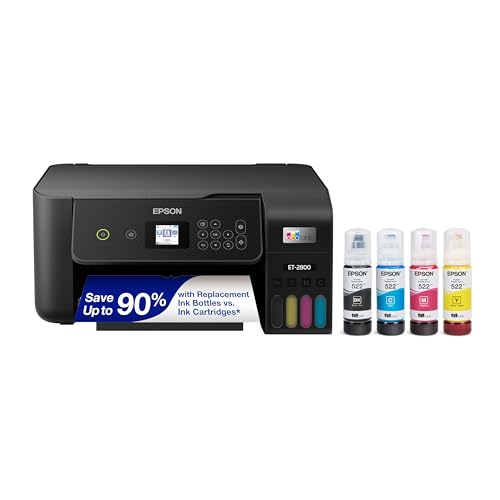
Epson EcoTank ET-2800 Wireless Color All-in-One Supertank Printer
Ask any homeschool group what to buy first and this is the answer you will hear. The reason is the ink: the EcoTank refills from bottles instead of cartridges, and a year of homeschool printing costs more in ink than the printer does. It prints, scans, and copies, which covers curriculum pages, record keeping, and the odd form a charter or umbrella school wants back. The EcoTank line has several tiers, and the step-up models add a document feeder and faster duplex, so if you expect heavy scanning, read our full printer guide for homeschool families before choosing a model.
The laminator that keeps materials alive
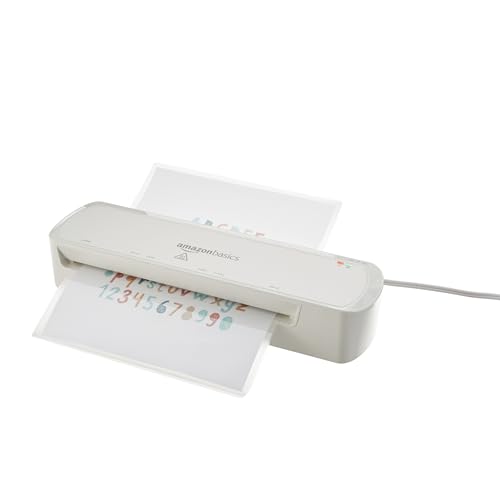
Amazon Basics 9-Inch Thermal Laminator Machine
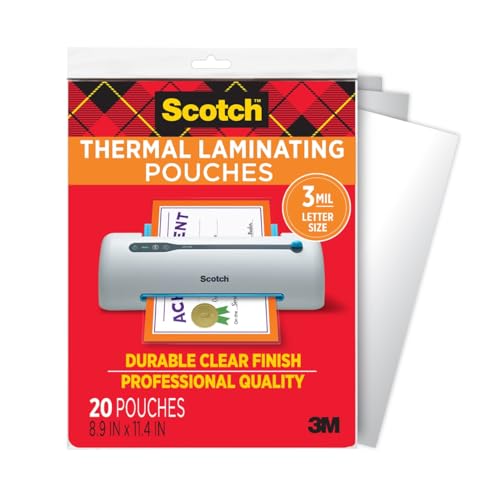
Scotch Thermal Laminating Pouches, Letter Size, 3 Mil
A laminated page survives a five-year-old. That is the entire pitch, and it is enough: schedule cards get handled every day, flashcards get bent, and a laminated worksheet plus a dry-erase marker becomes a page you never reprint. The budget 9 inch machine genuinely does the job, and the pouch thickness matters more than the machine, which is the honest secret of our laminator guide: 3 mil for wall visuals, 5 mil for cards a child will hold.
Cardstock and dry-erase pockets

Neenah Exact Index Card Stock, 110 lb, 8.5 x 11, 250 Sheets

SUNEE Oversized Reusable Dry Erase Pocket Sleeves, 30-Pack
Print visuals on cardstock and they stand up in a pocket chart instead of flopping; 110 lb index is the weight that feeds through a home printer without jamming. Dry-erase pocket sleeves are the lazy version of laminating, and lazy is a compliment here: slide today's practice page in, hand over a marker, wipe it at the end. For handwriting practice a child repeats daily, they are faster than the laminator and just as reusable.
Visual structure for the day
This is the section a special education background insists on, and it is the one that changes the shape of the day fastest. A child who can see the day coming argues with it less. That is true for autistic kids, and it is true for the six-year-old who just asked "what are we doing next" for the ninth time.
A schedule the child can see and touch
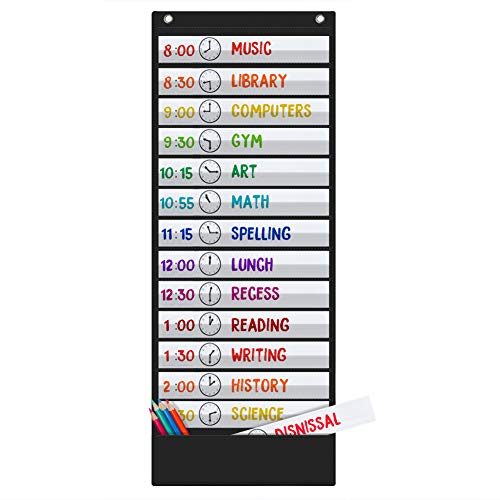
Daily Schedule Pocket Chart, 13+1 Pockets with Dry-Erase Cards

VELCRO Brand Sticky Back Dots, Clear, 200-Pack
A pocket chart by the table holds the day in order: cards go in each morning, and the child pulls each one as it finishes. Pair it with velcro dots and the free visual schedule maker, and you can print, laminate, and re-arrange routine cards endlessly, including First-Then boards for the moments right before a hard transition. The same chart can hold a short sequencing lesson in the fall, and fall sequencing cards for K-2 turn routines like raking leaves into picture cards a child slots into a row in order. The dots are the unglamorous hero of the whole visual system; a 200-pack disappears faster than you would think.
A timer that shows time instead of telling it

Time Timer Original 8 inch Visual Timer
"Five more minutes" means nothing to a child who cannot feel five minutes. A visual timer shows the red wedge shrinking, which turns transitions from a surprise into something the child watched coming. It runs silent, so it will not add noise to a room that already has plenty.
Storage that keeps the year sane

Seville Classics 10-Drawer Multipurpose Rolling Organizer Cart
One rolling cart, one drawer per subject, and the whole school day tidies itself in ninety seconds. This is the workbox system homeschoolers have run for years, and it also builds independence: a child who can pull the math drawer and start is a child who needs one fewer prompt. The Seville Classics cart is the long-standing pick with the review history to trust, and it rolls into a closet when school is done for the day.
Writing tools that fit the hands doing the work
The pencils, crayons, and glue sticks can come from any back-to-school aisle. Spend the extra few dollars where young hands actually struggle.
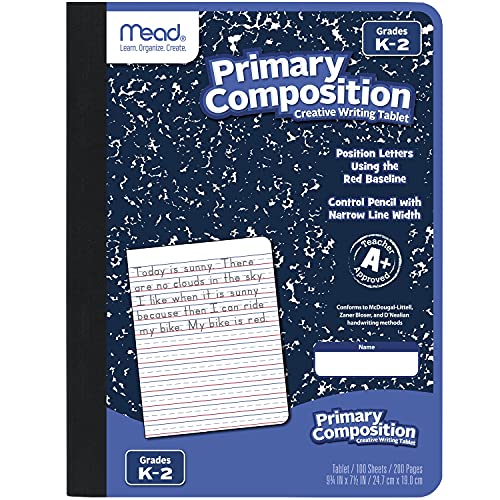
Mead Primary Composition Book, Primary Ruled, Grades K-2

The Pencil Grip Original Ergonomic Pencil Grippers, 6-Pack
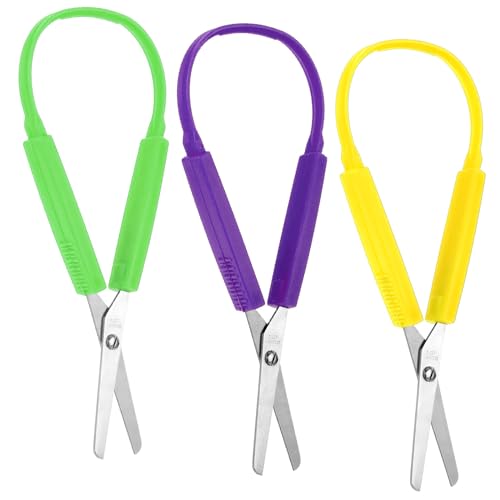
Loop Scissors for Kids, Self-Opening Adaptive Design, 3-Pack
Primary composition books have the dotted midline that beginning handwriting needs, and they double as the portfolio your records will thank you for later. Pencil grips are the classic occupational therapy fix for a fist grip or white-knuckle pressure, and a six-pack lives in every drawer of the cart. Self-opening loop scissors remove the hardest part of cutting, which is re-opening the blades, so cutting practice becomes practice instead of a fight; they pair well with the free line tracing and cutting sheets our worksheet maker generates.
Learning tools worth owning

Learning Resources MathLink Cubes, Set of 100

Gamenote Magnetic Alphabet Letters Kit with Board, 238 Pieces
Linking cubes are the single most used math manipulative in early education: counting, addition, patterns, place value, and a fidget-adjacent build toy at break time. Magnetic letters earn a spot for any pre-reader, and the kit's board gives them a home so they do not migrate to the refrigerator. Beyond these two, resist the manipulative aisle until your curriculum asks for something specific. And the best learning tool on this list is free: a library card, used weekly, outperforms most of what you could buy.
Regulation and breaks
School at home still needs a break plan, and building one into the setup beats improvising one mid-meltdown.

Trideer Wobble Cushion / Wiggle Seat

ProCase Kids Ear Defenders
A wobble cushion lets a child who needs movement wiggle while staying seated, which often buys twenty focused minutes that a hard chair never would. Ear protection gives a noise-sensitive child a way to lower the volume of the house without leaving the lesson. Set up a corner with both plus a beanbag or a pile of cushions, and teach the route to it before it is needed.
The parent's desk
Two purchases and one habit. The purchases: a planner, and two binders with sheet protectors, one for finished work samples and one for anything official. Our autism homeschool planner was built for exactly this desk, with weekly and daily views that assume therapy appointments exist. The habit is record keeping: most states expect some form of attendance or a portfolio, and ten minutes on Friday beats a panicked reconstruction in May. The free data sheet maker generates clean tracking sheets for anything you need to count, from reading minutes to IEP-style goals, and the homeschool hub has state-by-state notes on what records matter.
What you do not need in year one
The confidence to skip things is a supply too:
- Expensive boxed curriculum, sight unseen. Teach for a month first, then read our homeschool curriculum guide when you know how your child learns. Free options cover the trial period.
- A classroom replica. School desks, a teacher desk, a bell schedule. You left that building on purpose.
- Next year's workbooks. Buying ahead assumes a pace you have not seen yet.
- A supply for every subject. Science is a kitchen and a yard for most of elementary school.
How these were chosen
Every product on this page was verified in a real browser before publication: current price read from the live listing, in stock with a working add-to-cart, and no bait listing that redirects to a different variant. Picks favor items with long review histories over new arrivals, and where a whole category deserves a deeper comparison, such as printers and laminators, we link the full guide instead of pretending one card settles it. Prices move; treat the figures here as the neighborhood, not a promise.
Products mentioned in this article
Epson EcoTank ET-2800 Wireless Color All-in-One Supertank Printer
Amazon Basics 9-Inch Thermal Laminator Machine
Scotch Thermal Laminating Pouches, Letter Size, 3 Mil
Neenah Exact Index Card Stock, 110 lb, 8.5 x 11, 250 Sheets
SUNEE Oversized Reusable Dry Erase Pocket Sleeves, 30-Pack
Daily Schedule Pocket Chart, 13+1 Pockets with Dry-Erase Cards
VELCRO Brand Sticky Back Dots, Clear, 200-Pack
Time Timer Original 8 inch Visual Timer
Seville Classics 10-Drawer Multipurpose Rolling Organizer Cart
Mead Primary Composition Book, Primary Ruled, Grades K-2
The Pencil Grip Original Ergonomic Pencil Grippers, 6-Pack
Loop Scissors for Kids, Self-Opening Adaptive Design, 3-Pack
Learning Resources MathLink Cubes, Set of 100
Gamenote Magnetic Alphabet Letters Kit with Board, 238 Pieces
Trideer Wobble Cushion / Wiggle Seat
ProCase Kids Ear Defenders
Prices and availability are accurate as of the date/time shown and are subject to change. Any price and availability information displayed on Amazon at the time of purchase will apply to the purchase of this product.
Need help preparing for YOUR next IEP meeting?
Beacon learns about YOUR child and gives guidance specific to them.
What would Beacon say?
"Help me prep for my IEP meeting"
If you asked Beacon "Help me prep for my IEP meeting" it would pull your child's goals, challenges, and history, and give you the exact questions to ask, red flags to watch for, and what to push back on.
Spectrum Unlocked Editorial Team
Editorial Team
The Spectrum Unlocked editorial team combines lived experience as autism parents with research-backed guidance to create resources families can trust.
Frequently asked questions
- What supplies do I need to start homeschooling?
- The genuine essentials are a reliable printer, basic writing supplies, a way to organize each subject, and a visual structure for the day, such as a schedule chart and a timer. Most families also want a laminator once they see how fast printed materials wear out. Everything else, including curriculum, manipulatives, and furniture, can be added as you learn how your child works best.
- What is the best printer for homeschooling?
- A refillable ink-tank printer, such as the Epson EcoTank ET-2800, is the machine most homeschool families settle on, because early-years curriculum is color-heavy and tank refills cost a fraction of cartridges. A year of homeschool printing usually costs more in ink than the printer itself, which is why the ink system matters more than the sticker price.
- Do I need a laminator to homeschool?
- You do not need one on day one, but most families add one quickly. Laminating turns a printed worksheet into a reusable dry-erase page, keeps schedule cards and flashcards alive through daily handling, and pays for itself in reprints you never make. A budget 9 inch thermal machine does the whole job.
- What homeschool supplies help an autistic child?
- Visual structure helps most: a daily schedule chart the child can see and touch, a visual timer that shows time passing, and picture cards attached with velcro dots so the routine can change without a fight. Regulation tools matter too, such as a wobble cushion for a child who needs movement while seated and ear protection for a child who needs quiet to focus.
- How much does it cost to start homeschooling?
- The setup on this list runs roughly 250 to 300 dollars including the printer, and about 100 dollars without it. That covers printing, laminating, visual supports, storage, and writing tools. Curriculum is the variable on top, and free options exist while you decide what fits, so the first month does not need to be expensive.
- What should I not buy when starting to homeschool?
- Hold off on expensive boxed curriculum until you have taught for a few weeks and know how your child learns, skip furniture that recreates a school classroom at home, and do not buy grade-level workbook bundles in advance. Homeschooling lets you meet your child where they are, and the supplies that support that are cheaper than the ones that imitate school.