Best Sensory Feeding Tools for Autistic Kids (Calmer, More Independent Mealtimes)
The feeding tools that take the friction out of mealtimes for an autistic child: a suction plate that stops throwing and keeps foods apart, beginner self-feeding spoons, easy-grip and weighted utensils, a spill-proof cup, and a full-coverage smock, plus when to call a feeding therapist.
Key Takeaways
- Mealtime is one of the biggest sensory battlegrounds in autism, and the right gear takes friction out of it rather than forcing food in. The plate that stops sliding and keeps foods from touching, the spoon a child can manage, the smock that ends the food-on-me panic, each one removes a specific obstacle so eating can happen more calmly.
- Tools do not fix selective eating. They make the mechanics of eating easier and the sensory environment calmer, which helps a lot of kids eat more willingly, but a restricted diet belongs with a feeding therapist. Use the gear to reduce the daily struggle while you work the bigger picture.
- Match the tool to the specific barrier. A child who throws the plate needs suction; one who cannot scoop needs a pre-spoon; a shaky or low-tone hand needs weight; a kid who melts down over messy hands needs a smock and utensils. Watch where your child's mealtime actually breaks down and buy for that, not for a whole set you do not need.
- Foods touching is a real, common autism dealbreaker. A divided plate that keeps each food in its own compartment can be the difference between a child eating a meal and refusing it on sight, and it is one of the cheapest changes with the biggest payoff.
- Know the red flags for professional help: a diet of only a handful of foods, dropping foods without adding new ones, gagging or choking, or weight and growth concerns. Those point to a feeding evaluation with an occupational therapist or feeding specialist, and no plate or spoon substitutes for that.
Mealtime is one of the hardest hours of the day in a lot of autistic households, and it is not because a child is being difficult. Eating asks a kid to manage taste, smell, texture, the sight of foods touching, the fine-motor work of a utensil, the feel of mess on their hands, and the loss of control a new food represents, all at once. Overwhelm on any one of those channels can end a meal, and what looks like fussiness is usually one of them talking.
The right gear takes the friction out of that, one obstacle at a time: a plate that holds still and keeps foods apart, a spoon a child can manage, weight that steadies a shaky hand, a smock that ends the food-on-me panic. None of it fixes selective eating, and this guide says plainly where a feeding therapist belongs instead. But for the daily struggle of getting a calmer, more independent meal, these are the tools worth owning, starting with the plate.
Four Checks Before the Next Meal
- Find where the meal breaks down. Throwing points to a suction plate; a child who cannot scoop needs a pre-spoon; a shaky hand wants weight; a mess-averse kid needs a smock and utensils. Buy for your child's specific sticking point, not a whole set.
- Separate tools from the eating problem. These make the mechanics and the sensory setup easier. They do not make a child eat new foods, and a restricted diet is a feeding-therapy question, covered at the end of this list. For a child who is simply wary of new foods, the preparation that helps happens away from the table: a social story about trying new foods previews looking, smelling and one tiny taste, with "No, thank you" as an allowed ending.
- Respect foods touching. If your child refuses a plate where foods mix, take that refusal seriously; a divided plate is one of the cheapest, highest-payoff fixes there is.
- Watch for the red flags. A tiny list of accepted foods, lost foods, gagging, or growth worries mean it is time for a professional, not another gadget.
Judging Mealtime Gear for a Sensory Eater
No plate, spoon or cup here was lab-tested or given a score. Each was read against the details that change a sensory eater's meal: whether a plate suctions down and keeps foods in separate compartments, whether it is soft silicone or hard plastic, whether a utensil has a choke guard and a handle a small fist can hold, how much weight sits in a weighted handle, and whether it all survives the dishwasher. Occupational and feeding therapy practice, plus Spectrum Unlocked's own work with sensory-sensitive eaters, set the shortlist.
- One mealtime problem per pick. Throwing, scooping, a shaky hand, spills, mess on skin.
- Materials a sensitive mouth and hand accept. Silicone where it helps, foods kept apart, mess contained.
- Independence. Tools a child can use without an adult's hand over theirs.
- Safe to use and easy to wash. Non-toxic materials, choke guards where relevant, dishwasher-friendly.
- No cure claims. Each pick reduces friction; none is sold as a fix for selective eating.
Adaptive Utensils for Autism, Plus Plates, Cups and Bibs
Best foundation: ezpz Happy Mat Suction Plate
Start here, because it solves two of the biggest problems at once. The Happy Mat is a single piece of silicone that is both plate and placemat, and it suctions firmly to the table so a frustrated child cannot slide, flip, or fling it, which ends the throwing that derails so many meals. Just as importantly, its three separate compartments keep each food in its own space, so foods never touch, the dealbreaker that makes a lot of autistic kids refuse a plate on sight. It wipes clean, goes in the dishwasher, and is the one pick almost every sensory-sensitive eater benefits from. If you buy one thing on this list, buy this.
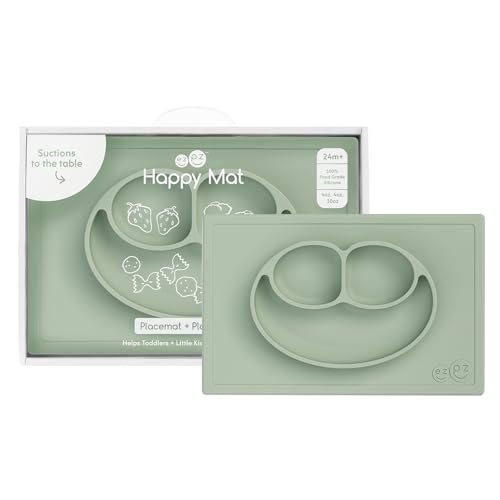
ezpz Happy Mat Suction Plate + Placemat
Best for beginning self-feeders: NumNum Pre-Spoon GOOtensils
For the child who wants to feed themselves but cannot yet scoop. A NumNum pre-spoon is a flat, shallow, gentle-textured tool that holds food on its surface without requiring the precise scoop-and-balance a real spoon demands, so a child gets food to their own mouth and a win long before their motor skills are ready for cutlery. It is a favorite in feeding therapy for exactly that reason, and the soft texture is friendly to a kid who is cautious about a hard spoon in the mouth. For an early or delayed self-feeder, this is the bridge that builds confidence.

NumNum Pre-Spoon GOOtensils (Self-Feed Set)
Best easy-grip utensils: Grabease Toddler Utensils
For the child developing the motor skills to use real cutlery. Grabease utensils have a short, chunky handle built for a small fist to grip and control, and a choke-guard collar that stops a child from pushing the spoon or fork too far back, which makes them a safe, confidence-building step up from a pre-spoon. The stubby handle suits the way little hands hold things, so a child stays in control of the tool instead of fighting it. When your child is ready to graduate to a proper spoon and fork, this is the pair that meets their hands where they are.

Grabease Easy-Grip Toddler Utensils
Best for a shaky or low-tone hand: Weighted Adaptive Utensils
For the child whose feeding struggle is partly motor, or who settles with deep pressure. These stainless utensils have added weight in the handle, which steadies an imprecise, shaky, or low-tone hand so food reaches the mouth instead of the floor, and that same weight delivers organizing proprioceptive input that can calm a child who is dysregulated at the table. They are a common occupational-therapy recommendation for kids who need more stability or more grounding to eat, and they scale up to older children who have outgrown toddler cutlery. If your child's hand is the problem, or heavy input is what settles them, this is the pick.

Special Supplies Weighted Adaptive Utensils (4-Piece)
Best spill-proof cup: Munchkin Miracle 360
For drinking without the spill battle or the spout problem. The Miracle 360 has no spout at all; a child sips from anywhere around the rim like a real cup, and the seal closes automatically so a knocked or thrown cup does not empty across the table. That spoutless design supports the same mouth movements as an open cup, which is better for oral-motor development than a hard spout, while the spill-proof seal saves the meltdown that a soaked shirt or a puddle can trigger. For a child transitioning off bottles or fighting open-cup spills, this is the calm middle path.

Munchkin Miracle 360 Spill-Proof Cup
Best mess containment: Bumkins Long-Sleeve Smock Bib
For the child who cannot stand food on their hands, arms, or clothes. A standard bib leaves sleeves and forearms exposed, and for a tactile-averse autistic kid a single smear on the skin can end the meal in tears, so a full-coverage long-sleeve smock is the better buy: mess lands on wipeable silicone-backed fabric instead of on them. It also frees you from hovering to catch every drip, which lowers the tension at the table for everyone. Pair it with a utensil so hands stay clean in the first place, and a mess-averse child can eat without bracing for the part they hate.
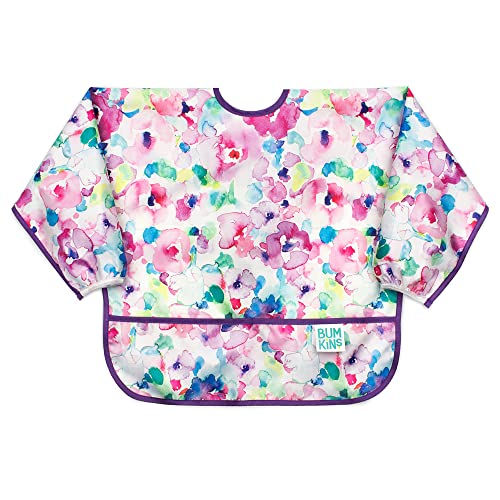
Bumkins Long-Sleeve Smock Bib (Food Catcher)
When a Tool Is Not Enough: Getting Help
The gear on this list eases how a child eats. It does not address what or how much, and there are clear signs it is time to bring in a professional. Watch for a diet that has narrowed to only a handful of accepted foods, foods being dropped without new ones replacing them, frequent gagging, coughing, or choking, meals that are consistently distressing for the whole family, or any worry about weight and growth. Those are feeding-therapy signals, not shopping ones. An occupational therapist or feeding specialist can evaluate oral-motor skills, sensory drivers, and safety in a way no product can, and they will often use tools like these as part of a plan rather than instead of one.
Calmer Meals, One Barrier at a Time
Mealtime gets easier when you stop treating it as a single problem and start removing the specific obstacles in your child's way. Hold the plate still and keep the foods apart, hand them a tool they can manage, steady the hand or contain the mess if that is the sticking point, and the meal has room to go better. None of it forces a bite. It lowers the friction so your child can meet the food with more calm and less fight.
Where this fits into the bigger picture is alongside the rest of your child's sensory world. If oral input is part of the story, a safe chewable meets that need directly, and the sensory issues guide frames how tactile and oral aversions work and how to gently widen them. If you are not sure which sensory channels are driving the mealtime struggle, the sensory profile quiz is a good place to start. Clearing those barriers, and knowing when to call a feeding therapist, does more for a hard mealtime than any single product. For an older child ready to make some of the food rather than only eat it, Visual Recipes: Holiday Edition has eight winter recipes as full-page picture task cards at three levels, so a teen can follow the steps with as much or as little reading as they can manage. When that teen is ready to cook on a burner, Visual Recipes: 8 Stovetop Recipes puts a six-rule stove safety lesson in front of the recipes, and the free stovetop sample is two recipes you can print and run first. A seasonal set can make that first cooking session feel like an activity rather than a demand: Apple and Pumpkin Recipes runs six fall recipes as picture task cards with the oven steps kept as the adult's job, and its free fall recipe sample is one recipe to run first.
Products mentioned in this article
ezpz Happy Mat Suction Plate + Placemat
NumNum Pre-Spoon GOOtensils (Self-Feed Set)
Grabease Easy-Grip Toddler Utensils
Special Supplies Weighted Adaptive Utensils (4-Piece)
Munchkin Miracle 360 Spill-Proof Cup
Bumkins Long-Sleeve Smock Bib (Food Catcher)
Prices and availability are accurate as of the date/time shown and are subject to change. Any price and availability information displayed on Amazon at the time of purchase will apply to the purchase of this product.
Sensory overwhelm shows up differently in every child.
Beacon learns about YOUR child and gives guidance specific to them.
What would Beacon say?
"What sensory strategies actually work for my child?"
Beacon factors in your child's specific sensitivities (sound, light, texture, movement) and current regulation, then builds a sensory plan you can start tonight.

Spectrum Unlocked Editorial Team
Editorial Team
The Spectrum Unlocked editorial team combines lived experience as autism parents with research-backed guidance to create resources families can trust.
Frequently asked questions
- Why is mealtime so hard for so many autistic kids?
- Because eating is one of the most sensory-loaded things we ask a child to do, and it stacks several challenges at once. There is the taste and smell, the texture in the mouth, the look of foods touching on a plate, the fine-motor demand of using a utensil, the feel of mess on hands and face, and the loss of control a new food represents. An autistic child may be overwhelmed on any one of those channels, and the refusal that looks like fussiness is usually one of them talking. The tools here each lower one of those barriers, which is why they help, and our guide to sensory issues covers the wider framework they sit inside.
- Will these tools fix my child's picky or selective eating?
- No, and any product that promises to is overselling. What good feeding tools do is remove the mechanical and sensory friction around eating, the sliding plate, the unmanageable spoon, the mess panic, so that eating is easier and calmer and your child has more capacity left for the food itself. That helps many kids eat more willingly. But a truly restricted diet, where a child eats only a handful of foods or is losing foods over time, is a feeding-therapy matter that a plate cannot solve. Use the gear to ease the daily struggle, and pursue an evaluation for the bigger pattern.
- What is a suction plate and why does it matter for autism?
- A suction plate is a plate or one-piece plate-and-placemat, usually silicone, that grips the table so a child cannot slide, flip, or fling it. For an autistic child that solves two problems at once: it stops the throwing that often comes from frustration or sensory overload, and the divided versions keep each food in its own compartment so foods never touch. Foods touching is a dealbreaker for a lot of autistic kids, so a compartmented plate that holds still can be the difference between a meal eaten and a meal refused before the first bite.
- My child cannot stand food on their hands or clothes. What helps?
- This is a common tactile aversion, and two things help directly. First, give them the tools to keep their hands out of it: a utensil they can manage means fingers stay clean, which removes the trigger entirely for many kids. Second, contain the inevitable mess with a full-coverage long-sleeve smock rather than a small bib, so a stray smear lands on wipeable silicone instead of skin or a favorite shirt, which keeps a small mess from becoming a full meltdown. Over time, gentle exposure can lower the aversion, and Spectrum Unlocked's sensory issues guide covers desensitizing a texture at a child's pace.
- What are weighted utensils for, and does my child need them?
- Weighted utensils have added weight in the handle, and they do two useful things. The weight steadies a shaky, low-tone, or imprecise hand so food makes it to the mouth instead of ending up everywhere, and that same deep-pressure input can be organizing and calming for a child who is dysregulated at the table. They suit a kid whose feeding struggle is partly motor or who settles with proprioceptive input, and they are a common occupational-therapy recommendation. A child with an easy, steady grip may not need them, so match them to the barrier rather than buying by default.
- When should I see a feeding therapist instead of just buying tools?
- When the pattern is about what and how much your child eats, not just how. The red flags worth acting on are a diet narrowed to only a handful of accepted foods, dropping foods without ever adding new ones, frequent gagging, coughing, or choking, mealtimes that are consistently distressing for everyone, or any concern about weight and growth. Those point to a feeding evaluation with an occupational therapist or a feeding specialist, who can assess oral-motor skills, sensory factors, and safety in a way no product can. Tools make daily meals easier; a professional addresses the underlying pattern, and the two work well together.