
Best No-Tie and Sensory-Friendly Shoes for Autistic Kids (Easy On, No Meltdowns)
The no-tie and sensory-friendly shoes that end the daily shoe battle for autistic kids: an adaptive zip-open pair, a Velcro sneaker, no-tie elastic laces for shoes they already own, a seamless knit slip-on, a wide-toe barefoot shoe, and a toddler sock-shoe.
Key Takeaways
- The daily shoe battle is almost never defiance. For an autistic child it is usually a specific physical objection: a seam pressing on a toe, a shoe that feels too tight or too loose, a tag in the sock underneath, or the fine-motor demand of tying that ends in frustration. Find the objection and the fight usually goes with it.
- Easy closures do two jobs at once. A zip, a Velcro strap, or a set of no-tie elastic laces removes the tying frustration entirely and lets a child put their own shoes on, which turns a dependent, tearful task into a small independent win. Independence at the door is worth as much as the sensory fix.
- Snugness is personal, and opposite kids need opposite things. A proprioceptive seeker often wants shoes tight for the reassuring deep-pressure feedback, while a sensory avoider wants them loose, seamless, or barefoot-light with nothing gripping the foot. Watch which way your child leans and match the closure to it rather than guessing.
- Check the sock before you blame the shoe. A single seam across the toes or a bunched heel inside an otherwise perfect shoe will get that shoe thrown across the room, and parents often replace the shoe when the real culprit was the sock. Seamless socks are the cheapest first move in the whole battle.
- No-tie elastic laces are the highest-value fix on this list. They convert a pair your child already accepts and wears into a slip-on for a few dollars, removing the tying struggle without asking your child to break in a whole new shoe, which is often the last thing a sensory-sensitive kid wants to do.
Getting out the door starts with shoes, and for a lot of autistic families that is exactly where the morning falls apart. The shoe goes on, the child pulls it off; a seam presses on a toe, the laces will not cooperate, the whole thing feels wrong, and a two-minute task becomes a twenty-minute standoff. Defiance is rarely the cause. Usually there is a specific physical objection your child may not be able to name, and once you find it, the fight usually goes with it.
This guide covers the best sensory shoes for autism, the no-tie and sensory-friendly pairs that help autistic kids, and each one takes away a specific barrier: the tying frustration, a seam that hurts, a fit that grips too hard or not enough, or the simple need to do it independently. One caveat up front, because these are shoes: sizes and colors sell out and come back on Amazon, so check the current fit and availability on the listing, and buy for your child's actual foot, not the age on the box.
Why Some Autistic Kids Don't Like Shoes (or Want Them Too Tight)
- Find the objection first. Seam, tightness, sock, or tying, each has a different fix. Watch what your child does when a shoe comes off, because that is the clue.
- Check the sock before the shoe. A seam or tag in the sock ruins the best shoe, and parents replace the shoe when the sock was the problem. Seamless socks are the cheapest first move.
- Match the snugness to your child. Proprioceptive seekers want tight and supportive; avoiders want loose, light, and seamless. Buy with the grain, not against it.
- Independence counts. A closure your child can manage alone turns a dependent task into a win, so weigh how easily your child can do it themselves, not just how it feels.
What Makes a Comfortable Shoe for Children With Sensory Issues
None of these shoes was lab-tested, and none carries a star score. Each pair was read for the things that set a sensitive foot off: where the interior seams sit, whether a child can work the closure alone, how wide the toe box runs, and how stiff the upper and sole are, checked against occupational-therapy practice around dressing and what parents of sensory-sensitive kids rely on. Five checks decided the list:
- Removes a real barrier. Each pick solves a specific problem: tying, forcing over the heel, seams, or a squeezed toe.
- Manageable closure. A child can set the fit and, ideally, do it themselves.
- Sensory-smart build. Smooth interiors, soft materials, and a shape that does not fight the foot.
- Fits the two extremes. Options for the child who wants snug support and the child who wants barely-there.
- In stock and real. Available products, with the caveat that footwear stock and sizing shift, so you confirm fit on the listing.
The Best Sensory Shoes for Autism and Sensory Issues
Best adaptive design: BILLY Footwear Kids Zip-Around Shoes
The standout for a truly tactile-defensive child, or any child who fights having a shoe pushed onto their foot. BILLY shoes use a zipper that runs down the side and around the toe, so the entire top of the shoe folds flat open and the foot drops straight down into it, with no forcing the heel through a fixed opening. Zip it closed and the top folds back over. That design removes the shove of a normal shoe for kids who cannot tolerate it, and it is one of the few mainstream options that easily accommodates an orthotic or an ankle brace. If getting the shoe onto the foot is where mornings fall apart, start here.

BILLY Footwear Kids Zip-Around Shoes
Best everyday easy closure: Amazon Essentials Kids' Velcro Sneaker
The simple, affordable default for independence and adjustable fit. A hook-and-loop sneaker skips tying entirely, lets a child fasten and unfasten their own shoes, and, crucially, lets you and them set exactly how snug it sits, cinched down for a child who wants firm pressure or left easier for one who does not. Nothing about it is clever, and a plain, well-fitting Velcro shoe still covers most kids' everyday needs without the daily lace fight. It is the sensible pair to keep in rotation for school and play.

Amazon Essentials Kids' Velcro Sneaker
Best cheapest fix: No-Tie Elastic Shoelaces
The highest-value item on this list, because it upgrades a shoe your child already accepts. These elastic laces replace the regular ones in a pair your child already owns and tolerates, turning it into a stretchy slip-on that never needs tying and that holds a consistent, adjustable tension, so you can loosen a shoe that feels too tight without it flopping off. For a few dollars you remove the tying struggle without asking a sensory-sensitive kid to break in an entirely new shoe, which is often the harder sell. If the current shoes are fine but tying is the war, buy these first.

Stepace No-Tie Elastic Shoelaces (3 Pairs)
Best for seam-averse feet: Kids' Lightweight Knit Sock Sneakers
For the child who objects to how the inside of a shoe feels. A stretch-knit sock sneaker has a smooth, seamless, sock-like interior with no ridges or hard edges pressing on the foot, and it slips on with no closure to fasten, so it suits a touch-defensive kid who finds ordinary shoes stiff or scratchy inside. The soft, flexible build feels closer to wearing a thick sock than a structured shoe, which is the kind of shoe many sensory-avoidant children will keep on. Light, quick to put on, and gentle against the foot.
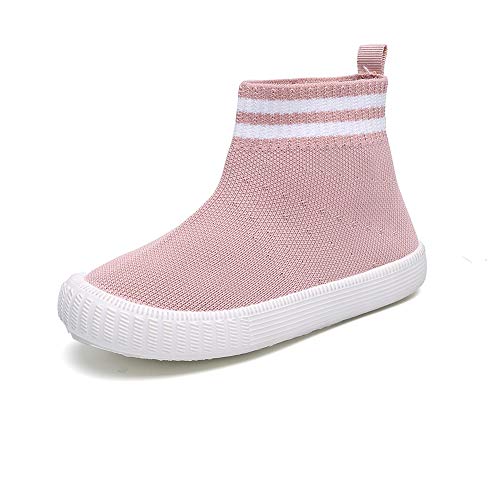
Kids' Lightweight Knit Sock Sneakers
Best for the proprioceptive kid: SAGUARO Kids' Barefoot Wide-Toe Shoes
For the child who wants ground feedback and room for their toes. A barefoot-style shoe has a wide, foot-shaped toe box so nothing squeezes, and a thin, flexible, zero-drop sole that lets a child feel the ground, which many sensory-seeking kids find grounding and organizing rather than overwhelming. It also suits a child who hates a stiff, structured shoe boxing their foot in. The trade-off is less cushioning, so it is best for everyday walking and play rather than heavy impact, but for a kid who craves feedback through their feet it can be the most comfortable thing they own.

SAGUARO Kids' Barefoot Wide-Toe Shoes
Best for toddlers and indoors: Santiro Toddler Knit Sock Shoes
For the littlest feet and the at-home stretch of the day. A soft stretch-knit sock shoe is about as close to barefoot as a shoe gets, with a gentle sole and a sock-like upper that has almost no on-foot presence, which makes it a kind first shoe for a toddler who resists anything firmer and a comfortable indoor option for a child who will not tolerate structured shoes around the house. Easy to slip on, easy to wear, and unlikely to trigger the shove-and-scream that a stiffer shoe does at this age.

Santiro Toddler Knit Sock Shoes
Start With the Sock, Then the Closure
Before you spend on new shoes, run two quick checks that solve most shoe battles for free or cheap. First, the sock: a single seam across the toes or a bunched heel will get even a perfect shoe thrown, so a seamless sock with no toe seam at all is the first thing to try. Second, the closure: if the shoes fit but tying is the fight, no-tie elastic laces fix that for a few dollars without a new pair to break in. Only when the shoe itself is the problem, the wrong fit, a stiff build, a squeezed toe, or the need for a full zip opening, do you move to a new shoe, and then you match it to your child, snug and supportive for a seeker, light and seamless for an avoider.
Out the Door Without the Fight
The shoe standoff ends when you stop treating it as behavior and start treating it as a puzzle with a specific answer. Something about the current setup hurts or frustrates your child, and one of these picks, or a better sock, or a set of stretchy laces, usually names and fixes it. Get the objection right and shoes become a thing your child can put on themselves and forget about.
Shoes are one piece of the wider dressing picture, and the same logic runs through all of it: find the sensory objection, then solve it. Our guide to seamless socks covers the layer right under the shoe, and our broader look at sensory issues frames how tactile defensiveness works and how to widen a child's tolerance gently over time. If your child's shoe question is less about seams and more about a constant tiptoe gait, the toe walking shoes guide covers the heel-squeaker and high-top picks that job needs. If you are not sure which sensory channels are driving your child's clothing and shoe battles, the sensory profile quiz is a good place to start. Solve the feet, and the morning gets a lot shorter.
Products mentioned in this article
BILLY Footwear Kids Zip-Around Shoes
Amazon Essentials Kids' Velcro Sneaker
Stepace No-Tie Elastic Shoelaces (3 Pairs)
Kids' Lightweight Knit Sock Sneakers
SAGUARO Kids' Barefoot Wide-Toe Shoes
Santiro Toddler Knit Sock Shoes
Prices and availability are accurate as of the date/time shown and are subject to change. Any price and availability information displayed on Amazon at the time of purchase will apply to the purchase of this product.
Behavior is communication. The question is what it's telling you.
Beacon learns about YOUR child and gives guidance specific to them.
What would Beacon say?
"Help me understand what's driving this behavior"
Beacon helps you map the trigger and the function, then plan a response that meets the same need, tailored to your specific child instead of a generic chart.

Spectrum Unlocked Editorial Team
Editorial Team
The Spectrum Unlocked editorial team combines lived experience as autism parents with research-backed guidance to create resources families can trust.
Frequently asked questions
- Why do so many autistic kids struggle with shoes?
- Because a shoe stacks several sensory and motor demands into one object. There is the seam or stitching that can press on a sensitive foot, the overall tightness or looseness, the texture of the lining, the sock underneath with its own seams and tags, and for laced shoes the fine-motor challenge of tying, which is hard for many autistic kids and a daily source of frustration. On top of that, putting shoes on is a transition, and transitions are hard on their own. What looks like refusal is usually one of those specific things, and the fix is to find which one and solve it rather than pushing through the meltdown.
- What shoes work for kids with sensory issues who are not autistic?
- The same ones, because the shoe is solving a sensory problem rather than a diagnosis. Sensory issues around footwear turn up in children with SPD, ADHD and dyspraxia, and in plenty of children with no diagnosis at all, and the complaints are identical: the seam across the toes, the tag at the heel, the pressure of laces, the sock bunching. Shop for the specific objection rather than the label. A child who cannot tolerate seams needs a knit sock sneaker whatever their paperwork says, and a child who cannot manage laces needs a zip or a Velcro closure for the same reason.
- What actually makes a shoe sensory-friendly?
- A few concrete things. A smooth, seamless interior with no ridges pressing on the foot; a closure the child can manage and that sets the snugness they need; enough room in the toe box that toes are not squeezed; and a lining and materials that feel good rather than stiff or scratchy. Beyond that it depends on your individual child, because sensory-friendly is not one setting. A child who seeks deep pressure wants a snug, supportive shoe, while a child who is touch-defensive wants something light, soft, and barely-there. Sensory-friendly means matched to your child, not a single universal design.
- Are zip or Velcro shoes better than laces for an autistic child?
- For most kids, yes, and for two reasons. First, they remove tying, which is a real fine-motor barrier and a daily frustration for a lot of autistic children, and they let the child put their own shoes on independently. Second, an adaptive zip shoe like BILLY opens the whole top of the shoe flat so the foot drops straight in without being forced over the heel, which is a big deal for a tactile-defensive child and for anyone wearing an orthotic or brace. Velcro is the simpler everyday version of the same idea. If your child can and wants to tie, laces are fine, but easy closures solve a problem laces create.
- Why do kids with ASD wear shoes too tight, and is it a stim?
- Deliberately tight shoes are usually proprioceptive seeking rather than a fit mistake. Deep pressure through the foot and ankle tells the nervous system where the body is, and for a child whose proprioceptive feedback runs quiet, a tight shoe is steady, predictable input they can carry around all day. It often shows up alongside other seeking behavior: tight sleeves, heavy blankets, crashing into furniture. Treat it as information rather than a habit to correct. The risk is physical, not behavioral, since shoes that really are too small cause blisters, ingrown nails and toe deformity over time, so the move is to give the same input safely. A snug-fitting shoe in the correct size, a slightly firmer sock, or a wide-toe barefoot-style shoe that hugs the midfoot without crushing the toes all deliver pressure without the damage. If your child fights a correctly sized shoe, get the foot measured properly before assuming preference, because outgrown shoes and sought-out tightness look identical from the outside.
- My child constantly pulls their shoes off. What helps?
- Treat it as information and hunt the trigger. The usual culprits are a seam or tag in the sock, a shoe that is too tight or too stiff, a toe box that squeezes, or a lining that feels wrong, and each has a fix. Start by swapping to a fully seamless sock, since that is the cheapest and most common miss; our guide to seamless socks covers that side. Then, if the shoe itself is the problem, move toward something lighter and softer: a seamless knit slip-on or a wide-toe barefoot shoe that does not grip the foot. A child who pulls shoes off is telling you the current pair hurts or feels wrong, not that they refuse to wear shoes at all.
- Should I buy no-tie laces or whole new shoes?
- If your child already has shoes they accept and wear without complaint, start with no-tie elastic laces. They are a few dollars, they convert that already-tolerated pair into a slip-on, and they remove the tying struggle without asking your child to break in and get used to a whole new shoe, which is often the harder ask for a sensory-sensitive kid. Buy new shoes when the current pair itself is the problem, when the fit is wrong, or when you need adaptive features like a full zip opening. For many families the laces alone solve the daily morning fight.
- My child wants shoes either really tight or really loose. Is that normal?
- Yes, and it usually maps to their sensory profile. A child who seeks proprioceptive input often wants shoes snug, even tight, because the firm, even pressure is reassuring and organizing, and a supportive closed shoe or a Velcro pair cinched down gives them that. A child who is touch-avoidant wants the opposite, loose and light with nothing gripping, which is where seamless knit slip-ons and barefoot-style shoes shine. Neither is wrong. The mistake is buying against your child's grain, so read which way they lean and pick the closure and style that lets them set the fit they find comfortable.