Best Potty Training Toilets for Autistic Kids (Sensory-Friendly Potties)
The potty chairs that actually work for autistic kids: quiet one-piece potties, a realistic model that mimics the real toilet, a 3-in-1 that grows with your child, and a travel potty for away from home. Plus the flush-sound trap to avoid.
Key Takeaways
- For an autistic child, the potty is a sensory decision before it is a product decision. Some kids fear the big toilet and settle on a small potty chair on the floor; others fear the standalone potty and do better on a seat reducer over the real toilet. Neither is wrong, and you often have to try one to learn which.
- Skip potties with battery-powered flush sounds, cheering, or music if your child is sound-sensitive. The novelty a marketer added is the exact feature that can turn the potty into a thing your child avoids. A silent, boring potty is the safer default.
- Pick a potty that is stable and easy to empty. A tippy potty scares a child who already feels unsure; a hard-to-clean one gets used less by the exhausted adult. A wide base, a non-slip bottom, and a lift-out bowl matter more than looks.
- A 3-in-1 that converts from potty to seat reducer to step stool lets you follow your child's lead without buying three things, which is useful when you do not yet know whether they will prefer the floor potty or the real toilet.
- Wherever your child first succeeds, add a footstool so their feet are flat and supported. Supported feet relax the muscles that release a bowel movement, which is one of the cheapest fixes for the withholding and constipation that derail so many autistic kids.
Choosing a potty for an autistic child is not like choosing one for a neurotypical toddler, where almost anything with a bowl will do. Here the potty is a sensory object first. The wrong one can become a thing your child fears and refuses, and refusal is far harder to undo than a careful first choice.
So each potty below earns its place for a sensory reason: a quiet, stable chair for the child who is easily overwhelmed, a realistic one for the child who wants to copy grown-ups, and a convertible one for the family that does not yet know which way their child will lean.
Choosing a Potty for a Larger or Older Autistic Child
- Decide floor potty or real toilet, or hedge. A low potty chair suits a child scared of the height and the big bowl. A seat reducer suits a child who wants the real toilet but fears falling in. If your child is scared of the toilet itself, work through the flushing fear guide first.
- Size the potty to the child, not the age. A bigger or older autistic child can outgrow a standard toddler potty, and a chair that is too small makes sitting harder instead of safer. For a larger child, a full-size realistic model or a seat reducer on the real toilet usually fits better than a low floor potty.
- Avoid the flush-sound trap. Battery-powered flush jingles, cheering, and music are marketed as fun, but for a sound-sensitive child they are the reason a potty gets avoided. Default to silent unless your child specifically loves that kind of sound.
- Check readiness before you push. A great potty cannot make an unready child ready. The readiness guide and the free readiness quiz help you tell not-ready-yet from ready-but-scared.
The Potty Features That Mattered Most
None of these potties went through lab testing, and none carries a made-up score. Each one was compared on its spec sheet against the details that decide whether a sensory-sensitive child will sit on it: whether it makes any sound, how wide the base is and whether the feet grip the floor, whether the bowl lifts out in one piece, and whether it converts to a seat reducer later. What parents and OTs report about potty refusal, along with Spectrum Unlocked's own work with potty-averse autistic children, filled in the rest.
- Silence. No sound at all, or sound you can switch off.
- A base that stays put. Wide and non-slip, so a child who already feels unsure never feels it tip.
- A bowl that empties in seconds. A potty that is a chore to clean gets skipped by the tired adult.
- Room to follow the child. At least one pick converts as your child's preference becomes clear.
- Six different picks. Calm default, easy-clean, realistic, convertible, travel and budget, rather than five similar chairs.
The Best Potty Chairs for Autistic Kids
Best overall: BabyBjörn Potty Chair
The calm default. The BabyBjörn Potty Chair is one molded piece with a high, quiet backrest, a generous splash guard, and a lift-out inner bowl that empties and rinses in seconds. There is nothing electronic to startle a sound-sensitive child, the wide base does not tip when a nervous kid shifts their weight, and the ergonomic shape is comfortable enough for the longer, unhurried sits that pooping needs. When you do not know your child's sensory triggers yet, this is the safe place to start.

BabyBjörn Potty Chair
Best for easy cleaning: OXO Tot Potty Chair
Same quiet, no-electronics philosophy, with cleaning as the standout. The OXO Tot Potty Chair has a smooth removable bowl with a rounded interior and no seams for mess to hide in, plus non-slip feet that keep it planted. For the exhausted parent doing five empties a day, a potty that rinses clean without a scrub is the one that keeps getting used, and consistency is what trains a child.
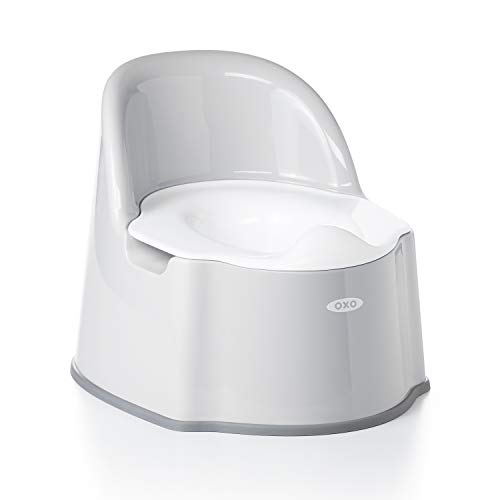
OXO Tot Potty Chair
Best realistic model: Ingenuity My Size Potty Pro
For the child who wants to be like the grown-ups. The Ingenuity My Size Potty Pro looks and works like a scaled-down real toilet, with a lid, a paper holder, and a lever, so a child who is motivated by copying can practice the whole sequence. One caution: realistic potties in this class often include a flush sound. If your child is sound-sensitive, check that any sound can be switched off, or choose one of the silent picks above, because a startling flush is exactly the feature that turns a promising potty into a refused one.

Ingenuity My Size Potty Pro 2-in-1 Potty Training Toilet
Best that grows with your child: Munchkin Arm & Hammer 3-in-1
The hedge, for when you do not yet know which way your child will lean. The Munchkin Arm & Hammer Multi-Stage potty starts as a floor potty chair, then its lid becomes a seat reducer for the real toilet, and the base becomes a step stool. That means you can follow your child from the floor potty to the big toilet without rebuying, and a built-in odor-control layer helps with the poop that so many parents dread emptying. One product that covers all three stations of a full potty setup.
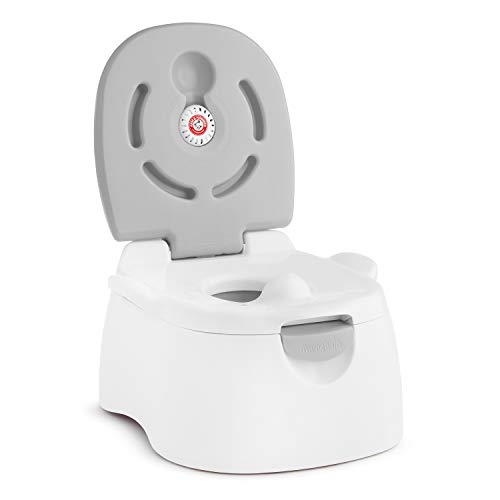
Munchkin Arm & Hammer Multi-Stage 3-in-1 Potty Seat
Best for travel: Kalencom Potette Plus
Away-from-home accidents undo hard-won progress, and unfamiliar public bathrooms are their own sensory gauntlet for an autistic child. The Kalencom Potette Plus folds flat into a bag and works two ways: open on the floor as a standalone travel potty with disposable liners, or unfolded over a public toilet as a familiar seat reducer so your child never has to sit on a strange full-size seat. Keeping the sensory experience the same in every bathroom is what protects your progress on the road.

Kalencom Potette Plus 2-in-1 Travel Potty and Trainer Seat
Best on a budget: Jool Baby Potty Chair
A simple, sturdy, silent potty that does the core job without a premium price. The Jool Baby Potty Chair has a tall splash guard, a supportive backrest, and a removable bowl, with no electronics to trigger anyone. If money is tight or you want a low-stakes potty to test whether your child will take to the floor-potty approach at all before investing more, this is a sensible, no-frills place to start.

Jool Baby Potty Chair (Splash Guard + Backrest)
After You Choose: Support the Feet
Wherever your child first has success, the potty is only half the setup. On a floor potty a child's feet reach the ground, but the moment they move to the real toilet their feet dangle, and dangling feet make a bowel movement harder to release. A footstool that puts the feet flat and slightly raised relaxes the right muscles and is one of the cheapest fixes for the withholding and constipation that stall so many autistic kids. The step stool roundup covers the options.
And remember that the gear is the easy part. The routine around it is what trains a child: the same steps in the same order, calm and predictable, every single time. The complete potty training guide lays out that routine, the free readiness quiz tells you when to start, and the potty tracker helps you see the progress that day-to-day life hides. The right potty removes an obstacle, and the routine does the teaching.
Products mentioned in this article
BabyBjörn Potty Chair
OXO Tot Potty Chair
Ingenuity My Size Potty Pro 2-in-1 Potty Training Toilet
Munchkin Arm & Hammer Multi-Stage 3-in-1 Potty Seat
Kalencom Potette Plus 2-in-1 Travel Potty and Trainer Seat
Jool Baby Potty Chair (Splash Guard + Backrest)
Prices and availability are accurate as of the date/time shown and are subject to change. Any price and availability information displayed on Amazon at the time of purchase will apply to the purchase of this product.
Potty training an autistic child follows a different playbook.
Beacon learns about YOUR child and gives guidance specific to them.
What would Beacon say?
"Help me with potty training my child"
Beacon walks the route with you day by day, factoring in your child's sensory profile, communication, and the readiness signals that actually matter.

Spectrum Unlocked Editorial Team
Editorial Team
The Spectrum Unlocked editorial team combines lived experience as autism parents with research-backed guidance to create resources families can trust.
Frequently asked questions
- What is the best potty for an autistic child?
- There is no single best potty, because the choice is driven by your child's sensory profile, not by a star rating. For most autistic kids the safest starting point is a quiet, sturdy, one-piece potty chair with nothing electronic on it, like the BabyBjörn Potty Chair or the OXO Tot Potty Chair. If your child is drawn to copying grown-ups, a realistic model like the Ingenuity My Size Potty Pro can help. If you are not sure whether they will prefer a floor potty or the real toilet, a 3-in-1 like the Munchkin Arm & Hammer potty lets you switch without rebuying. Match the potty to the child in front of you, and be willing to try a second style if the first one is refused.
- Should I use a potty chair or a seat that goes on the toilet?
- It depends on the fear you are working around. A floor potty chair is lower, more stable, and less intimidating for a child who is scared of the height and the big open bowl of the adult toilet. A seat reducer skips the extra step of transferring from potty to toilet later, and suits a child who wants to use the real toilet like everyone else but is afraid of falling in. Some families keep both for a while. If your child is scared of the toilet specifically, our guide on the fear of toilet flushing walks through desensitizing it, and Spectrum Unlocked's toilet seat reducer roundup covers the seat option.
- Are potty chairs with flushing sounds and music good for autism?
- Usually not, if your child has any sound sensitivity. The flush jingle, applause, or song is added as a selling point, but for a sound-sensitive autistic child it can be the reason the potty gets avoided. If your child loves cause-and-effect sound, a noisy potty can be motivating, so you know your kid best. When in doubt, choose a silent potty. You can always add your own praise, which you can turn down and your child can predict.
- My child will only poop in a pull-up, not the potty. Will a different potty fix that?
- A better potty can help at the edges, but poop refusal is usually about fear and body position, not the potty model. Many autistic kids withhold because pooping feels unpredictable or because their feet dangle, which makes the release harder. A footstool so the feet are flat is often the bigger lever than the potty itself. Our guides on poop withholding and the pull-up-only poop pattern cover the fuller approach.
- What age should I introduce a potty for an autistic child?
- Introduce the potty as a familiar object early, well before you expect it to be used, so it is not a strange thing that appears the day you start training. Actual training depends on readiness signs, not a birthday, and those signs often arrive later for autistic kids. The readiness guide and the free readiness quiz help you tell the difference between not ready yet and ready but scared.
- How do I get my autistic child used to a new potty?
- Bring it in with no pressure. Let it sit in the bathroom, let your child sit on it clothed while you read a book, and keep the first sits short and boring. Pair it with the same predictable routine every time, so the potty becomes one more known step rather than a surprise. Introducing the object calmly in daylight, the same way you would introduce any new sensory experience, is what turns a scary potty into a neutral one. The complete potty training guide lays out the full routine.