Best Step Stools for Potty Training an Autistic Child (The Footstool Fix)
The footstool is the cheapest, most-leveraged fix in potty training, and most parents skip it. The step stools that give autistic kids flat, supported feet for easier pooping, plus taller stools for reaching the sink.
Key Takeaways
- A footstool is the single cheapest, highest-leverage fix in potty training, and it is the one most parents skip. When a child's feet are flat and slightly raised, the muscles that release a bowel movement relax. When their feet dangle off the big toilet, those muscles stay tense and stool is held in.
- This matters even more for autistic kids, who withhold poop and become constipated at far higher rates. A cheap stool that gets the feet supported often does more for stuck poop than any reward chart, because it changes the body mechanics rather than the motivation.
- You usually need the stool for two jobs: feet support while seated, and a boost to climb up and to reach the sink for handwashing. Some children do best with one low stool for the feet and a taller one at the sink; a two-step stool can sometimes cover both.
- Stability is a sensory and a safety feature. A stool that rocks or slides scares a child who is already unsure about the toilet, and one wobble can undo weeks of trust. Look for a wide base, a non-slip top, and grippy feet, and add handrails for a child with balance or motor differences.
- Feet-flat positioning helps most once your child is on the full-size toilet or a seat reducer, where the feet would otherwise dangle. On a low floor potty the feet already reach the ground, so the stool's bigger role there is climbing and handwashing.
Here is the cheapest fix in all of potty training, and the one parents skip most: a footstool. When a child sits on the toilet with their feet flat and slightly raised, the muscles that release a bowel movement relax and the stool passes more easily. When their feet dangle off the edge of the big toilet, those same muscles stay tense and the body holds on.
That single piece of physics matters more for autistic kids, who withhold poop and become constipated at much higher rates than their peers. A stool that costs less than a takeout dinner can do more for stuck poop than a wall full of sticker charts, because it changes the body mechanics instead of trying to motivate around them.
The stools below cover three needs: feet support for pooping, a boost to climb and reach the sink, and extra stability for a child who needs it.
Before You Buy Anything
- Know which job you are solving. Feet support while seated wants a stool of the right height to raise the knees. Climbing and handwashing wants a taller two-step. Many families end up with one of each.
- Stability is not optional. A stool that rocks or slides on tile scares an already-unsure child and can undo weeks of trust in one wobble. Prioritize a wide base, a non-slip top, and grippy feet.
- The stool works hardest on the big toilet. On a low floor potty the feet already reach the ground. The feet-flat benefit kicks in once your child is on the full-size toilet or a seat reducer, where the feet would otherwise dangle.
How We Chose
No lab and no pretending. We sorted the options against what matters for autistic kids, using product specs, the patterns OTs and continence clinics report, and the plumbing of how a bowel movement actually releases. The rubric:
- Posture. Does it raise the knees enough to relax the pelvic floor for pooping.
- Stability. Wide base, non-slip top, grippy feet, so a nervous child feels secure.
- The right height for the job. Low for feet, tall for the sink, or a two-step that bridges both.
- Support options. Handrails for a child with balance or motor differences.
- A distinct job per pick. Pooping posture, brand-matched low stool, toddler all-in-one, sink reach, extra stability, budget. No five of the same.
No invented star ratings. Here is which stool fits which job.
Step Stools for the Toilet and the Sink
Best for the pooping posture: Squatty Potty Original
The stool that made feet-up pooping a household idea, and it earns the spot. The Squatty Potty tucks around the base of the toilet and raises the knees into the position that relaxes the muscles holding stool in. For an older or larger autistic child using the full-size toilet with a seat reducer, this is the most direct way to get the pooping angle right, and it is the pick to reach for first when withholding or constipation is the problem you are actually solving.
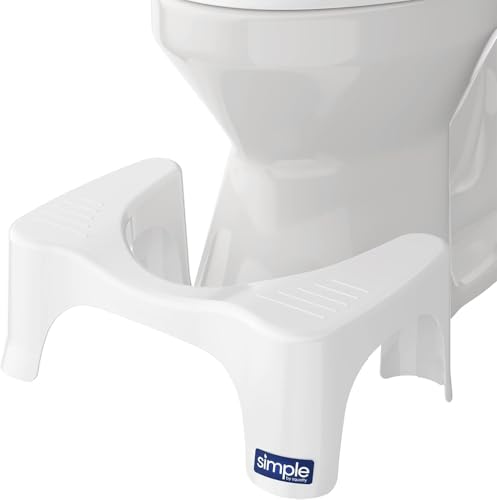
Squatty Potty The Original 7-inch Toilet Stool
Best sturdy low stool: BabyBjörn Step Stool
A simple, heavy-duty, low stool that plants and stays put. The BabyBjörn Step Stool has a wide non-slip base and a grippy top, so a child can brace their feet on it while seated or stand on it at the sink without it sliding. It is understated and boring in the best way, with nothing to fidget with or trip a sensory alarm, and it pairs cleanly with a matching potty or seat reducer for a child who likes their bathroom setup consistent.

BabyBjörn Step Stool
Best for reaching the sink: Forbena 2-Step Stool
Handwashing is part of the routine, and a sink a child cannot reach is a step they cannot own. The Forbena two-step stool gives the extra height to reach the tap independently, with a wide non-slip tread on each step and a stable frame that does not tip when a child leans in to scrub. Independence at the sink closes the loop on the whole toileting sequence, which matters for autistic kids who do best when they can complete a routine themselves.
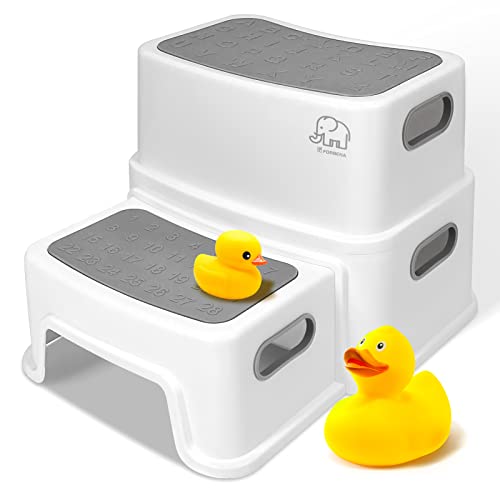
Forbena Toddler 2-Step Stool for Bathroom Sink
Best for extra stability: a two-step stool with handrails
For a child with balance or motor differences, a grip point changes everything. This two-step stool adds handrails your child can hold while climbing up and down, which steadies an unsure kid and takes the fear out of a height that would otherwise be a battle. The handles also give a proprioceptive anchor, something firm to hold, which many autistic kids find calming when they are doing something that makes them nervous.

Toddler 2-Step Stool with Handrails
Best on a budget: Dreambaby Step Stool
A no-frills, non-slip stool that covers the basics for very little. The Dreambaby Step Stool has a contoured grippy top and a stable base, and at its price you can buy two, keeping one at the toilet for feet and one at the sink for handwashing, which is often the tidiest way to solve both jobs at once. When you just need feet supported and a boost to the sink without overthinking it, this does the job.

Dreambaby Step Stool for Kids (Non-Slip)
The Stool Is Half of It
A footstool removes a real physical obstacle, but it works inside a bigger picture. If your child is already withholding or backed up, the stool helps but does not replace the plan in the poop withholding guide and constipation guide, and painful stools that have gone on for weeks deserve a pediatrician's eyes. If your child poops only in a pull-up, the stool is one piece of the approach in the pull-up-only poop guide.
And the stool pairs with the rest of the setup. Whether your child uses a floor potty chair or a seat reducer on the big toilet, the same rule holds: get the feet flat and supported, keep the routine the same every time, and let the potty tracker show you the progress that daily life hides. The cheapest thing in the bathroom is often the one that unsticks everything else.
Products mentioned in this article
Squatty Potty The Original 7-inch Toilet Stool
BabyBjörn Step Stool
Forbena Toddler 2-Step Stool for Bathroom Sink
Toddler 2-Step Stool with Handrails
Dreambaby Step Stool for Kids (Non-Slip)
Prices and availability are accurate as of the date/time shown and are subject to change. Any price and availability information displayed on Amazon at the time of purchase will apply to the purchase of this product.
Potty training an autistic child follows a different playbook.
Beacon learns about YOUR child and gives guidance specific to them.
What would Beacon say?
"Help me with potty training my child"
Beacon walks the route with you day by day, factoring in your child's sensory profile, communication, and the readiness signals that actually matter.

Spectrum Unlocked Editorial Team
Editorial Team
The Spectrum Unlocked editorial team combines lived experience as autism parents with research-backed guidance to create resources families can trust.
Frequently asked questions
- Do step stools really help with potty training?
- Yes, and more than most parents expect. A footstool changes the angle of the hips and lets the child brace their feet, which relaxes the pelvic floor muscles that have to release for a bowel movement. Dangling feet on a big toilet keep those muscles tense, which makes pooping harder and encourages holding it in. A stool is a physical fix for a physical problem, which is why it often outperforms motivation-based approaches for stuck poop. It also lets a child climb up independently and reach the sink to wash their hands.
- Why does foot position matter so much for pooping?
- When your feet are flat and slightly raised, so your knees sit a little above your hips, the muscle that keeps stool in relaxes and the angle of the bowel straightens, so stool passes with less straining. When feet dangle, that muscle stays partly clenched. For a child who already withholds or is prone to constipation, unsupported feet quietly make the problem worse, and a footstool quietly makes it better. Spectrum Unlocked's poop withholding guide and constipation guide explain the cycle in full.
- What kind of stool is best for an autistic child?
- A stable, non-slip one, because stability is what earns a nervous child's trust. Beyond that it depends on the job. For feet support and the pooping posture, a firm stool the right height to raise the knees works well, including the classic Squatty Potty on the adult toilet. For a child who also needs to climb up and reach the sink, a taller two-step stool like the Forbena earns its place. For a child with balance or motor differences, a two-step stool with handrails adds a grip point. Avoid anything that slides on a tile floor or feels tippy.
- My autistic child is constipated. Can a footstool help?
- It can be part of the fix, though not the whole one. Getting the feet supported relaxes the muscles that release stool, so a stool often helps a constipated child pass a movement more easily. But established constipation usually needs a medical plan too, because a backed-up bowel stretches and stops signaling normally. Use the stool alongside, not instead of, the workup in the constipation guide, and loop in your pediatrician if hard or painful stools have been going on for weeks.
- Do I need one stool or two?
- Often two jobs, sometimes two stools. One job is foot support while seated on the toilet, which wants a stool of a height that raises the knees. The other is climbing up and reaching the sink to wash hands, which wants a taller stool or a two-step. A single two-step stool can sometimes serve both if it fits your bathroom, but many families keep a low stool at the toilet and a taller one at the sink. Match the stool to the job rather than assuming one covers everything.
- At what age can a child use a step stool at the toilet?
- As soon as they are climbing and starting to use the toilet or a seat reducer, which is when the feet start to dangle and support starts to matter. Supervise early climbing until it is steady, choose a non-slip stool, and add handrails if your child's balance is still developing. The stool is helpful the moment your child moves from a floor potty to the big toilet, which the complete potty training guide covers in the wider routine.