Fidget Toys for Skin Picking, Nail Biting and Hair Pulling
Picky pads, flippy chains and hair pulling fidgets that give busy fingers a safer target, plus how to use them alongside the treatment that helps most.
Key Takeaways
- Skin picking, nail biting and hair pulling are body-focused repetitive behaviors. They are common, they are not a choice, and they often show up more in autistic and ADHD children, especially under stress or boredom.
- A fidget does not stop the urge. It gives the hands a safer place to go when the urge arrives, which can reduce the damage while other help takes effect.
- Match the fidget to the habit: a picky pad for picking, a pull toy for hair pulling, and a flippy chain for fingers that need constant motion.
- The best-studied help is habit reversal training with a therapist who knows these behaviors. Fidgets fit inside that plan as the replacement action.
- See a doctor if picking causes open wounds, infection or scarring, or if hair pulling leaves bald patches.
If your child picks at the skin around their nails, bites them down to the quick, or pulls at their hair, you have probably said "stop" until the word lost all meaning. It rarely works, because these habits are not about willpower. They are body-focused repetitive behaviors, and for many children, including many autistic and ADHD children, they are how the body handles stress, boredom or too much sensory input.
This guide covers fidgets made for exactly these habits, how to pick the right type, and how to use them alongside the help that works best. Every fidget here was in stock with Amazon at our November 10, 2026 review.
A Fidget Is a Replacement, Not a Cure
A fidget cannot make the urge go away. What it can do is give the fingers somewhere safer to go when the urge arrives, so the skin, nails or hair take less damage.
The most studied help for these behaviors is habit reversal training, usually with a therapist who knows them well. It teaches a child to notice the moments when picking or pulling starts and to swap in another action. A fidget is often that other action. The TLC Foundation for Body-Focused Repetitive Behaviors keeps information and a directory of clinicians.
If picking is causing open wounds, infection or scarring, or hair pulling is leaving bald patches, talk to your child's doctor. When picking sits within broader self-injury, our guide to self-injurious behavior in autism covers next steps.
Matching the Fidget to the Habit
- Picking at skin or scabs: a picky pad, which has raised dots or beads to pick and scrape.
- Nail biting or picking at nails: something to keep the fingers busy, such as a flippy chain or a picky pad, at the times biting usually starts.
- Hair pulling: a pull toy with strands or hair-like pieces to tug.
- Fingers that are always moving: a flippy chain, which can be rolled and flipped silently in a pocket.
Choosing What to Include
We favored fidgets that recreate the actual feel of the habit, fit a pocket or pencil case, and are quiet enough for school. We also looked for pads that hold up to repeated picking, because a pad that tears on day two is one more frustration.
Picky Pads
Easiest to Carry: RadBizz Picky Pad With Case
A single picky pad that comes with its own case, so it lives in a backpack or pocket without collecting lint. A low-cost first pad for testing whether picking at silicone satisfies the urge.

RadBizz Picky Pad, 1 Pack with Carrying Case
Two to Keep Handy: VarietyFidgets Picky Pad, 2 Pack
The VarietyFidgets pack gives you one pad for home and one for school, which matters because picking happens wherever the child is. Having one in each place is often what makes the habit swap stick.

VarietyFidgets Picky Pad Skin Picking Fidget, 2 Pack
For Kids and Adults: MoKo Picky Pad, 2 Pieces
MoKo sells this pair for children and adults alike, which makes it a practical choice for a family where a parent also picks, or for an older teen who does not want something that looks like a toy.

MoKo Picky Pad Skin Picking Fidget, 2 Pieces
Reusable: Sooppervix Picky Pad
The Sooppervix pad is made to be reset and reused many times instead of replaced once the beads are picked out. It costs more up front and saves buying new pads for a child who picks a lot.

Sooppervix Reusable Picky Fidget Pad
For Fingers That Never Stop: Tom's Fidgets Original Flippy Chain
Tom's Fidgets made the flippy chain popular: a short loop of bike-chain links that rolls, flips and folds silently in one hand. It does not copy picking, but it keeps fingers occupied during the long stretches, like class or screen time, when biting and picking tend to creep in.
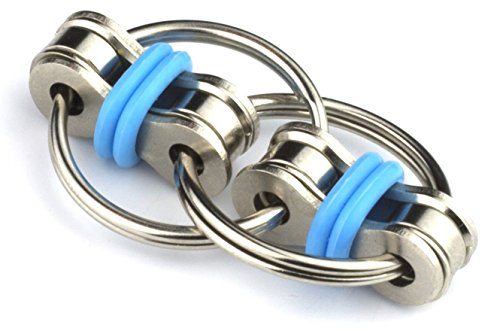
Tom's Fidgets Original Flippy Chain Fidget Toy
For Hair Pulling
Angel's Wonderland Hair Pulling Fidget
A small figure with strands to tug, from Angel's Wonderland, that gives a child who pulls their hair something else to pull. It is sold as a novelty, but the pulling action is what matters here.

Angel's Wonderland Hair Pulling Fidget Toy
JumpJump Hair Pulling Pop Fidget
The JumpJump toy has hair-like pieces to pull out and push back in, so the action can be repeated over and over. It suits a child whose pulling is the plucking kind rather than twirling.

JumpJump Hair Pulling Pop Fidget Toy
Making the Swap Stick
- Find the pattern first. For a week, note when picking, biting or pulling happens: during homework, at bedtime, in the car, while watching a screen.
- Put a fidget where it happens. Keep one at the homework table, one by the bed, one in the car.
- Offer, do not take away. Hand the fidget over calmly when you see the habit start, instead of pulling their hand away.
- Add a barrier for the hardest times. A bandage over a favorite picking spot, gloves at bedtime or a hat during screen time can break the automatic part of the habit.
- Praise the swap, not the stop. Notice when your child reaches for the fidget on their own.
For more ways to keep restless hands busy, our sensory fidget toys roundup covers fidgets matched to different sensory needs, and the fidget rings guide has wearable options a child can turn without anyone noticing.
Products Mentioned in This Article
RadBizz Picky Pad, 1 Pack with Carrying Case
VarietyFidgets Picky Pad Skin Picking Fidget, 2 Pack
MoKo Picky Pad Skin Picking Fidget, 2 Pieces
Sooppervix Reusable Picky Fidget Pad
Tom's Fidgets Original Flippy Chain Fidget Toy
Angel's Wonderland Hair Pulling Fidget Toy
JumpJump Hair Pulling Pop Fidget Toy
Prices and availability are accurate as of the date/time shown and are subject to change. Any price and availability information displayed on Amazon at the time of purchase will apply to the purchase of this product.
Behavior is communication. The question is what it's telling you.
Beacon learns about YOUR child and gives guidance specific to them.
What Would Beacon Say?
"Help me understand what's driving this behavior"
Beacon helps you map the trigger and the function, then plan a response that meets the same need, tailored to your specific child instead of a generic chart.

Spectrum Unlocked Editorial Team
Editorial Team
The Spectrum Unlocked editorial team combines lived experience as autism parents with research-backed guidance to create resources families can trust.
Frequently Asked Questions
- What is a picky pad?
- A picky pad is a small soft pad, usually silicone, with raised bumps or embedded beads that fingers can pick, press and scrape. It copies the feel of picking at skin, so it can absorb the urge without harm.
- Do fidget toys help with skin picking?
- They can help as a replacement for the hands, especially when a child carries one and reaches for it at their usual picking times. They do the most good inside a plan such as habit reversal training, not on their own.
- What helps a child who pulls their hair?
- A pull toy or a fidget with strands to tug gives the hands a safer target. Pair it with noticing when pulling happens, covering hands at those times, and support from a therapist who treats trichotillomania.
- Is skin picking common in autistic children?
- Repetitive behaviors of many kinds are common in autism, and picking or nail biting often increases with stress, sensory overload or boredom. It is worth tracking when it happens, because the pattern points to what will help.
- When should I worry about skin picking?
- Talk to your child's doctor if picking causes bleeding, open sores, infection or scars, if it takes up a lot of the day, or if your child is distressed by it. Those are signs that more support is needed.
- Can adults use picky pads too?
- Yes. Many adults with skin picking or hair pulling use the same pads and chains. Several of the picks below are sold for both children and adults.