Home Sensory Gym for Autistic Kids: Scooter Boards and More
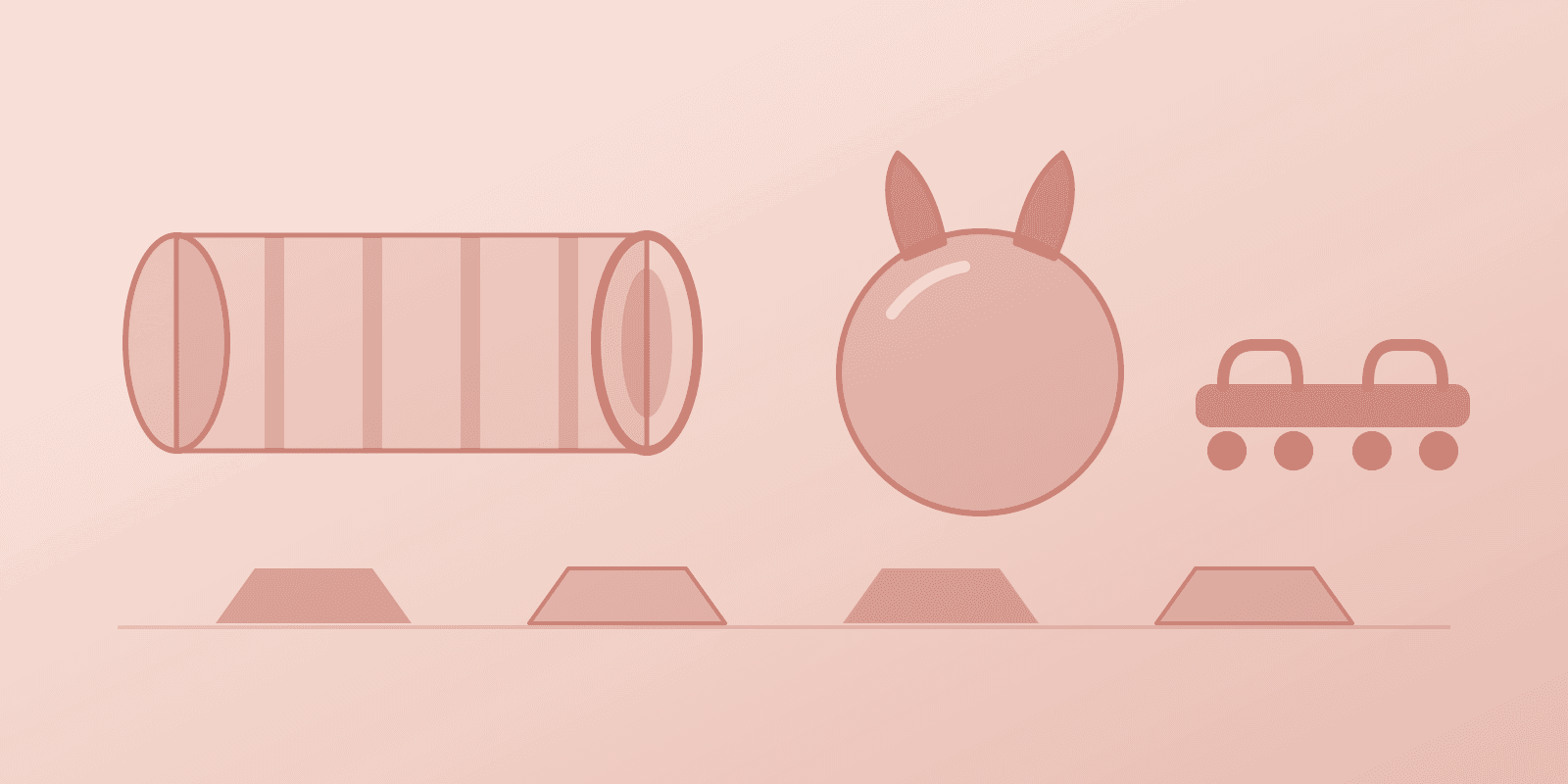
Build a sensory gym at home: scooter boards, hopper balls, play tunnels, stepping stones and balance beams, with each one's weight limit and the space it needs.
Key Takeaways
- A home sensory gym does not need a spare room. A scooter board, a tunnel and a few stepping stones fit in a hallway and pack away in minutes.
- Scooter boards give pushing and pulling work for the arms and core; hopper balls give bouncing; tunnels give crawling; stepping stones and beams train balance.
- Read every weight limit: these run from 150 lb for a small scooter board to 480 lb for a wooden balance board.
- Scooter boards roll best on hard floors, hopper balls need supervision, and some pop-up tunnels carry a small-parts warning for children under 3.
- Whether movement settles your child or revs them up decides what to buy first, and if you can't tell which, ask an occupational therapist.
Some children need to move before they can sit still. They crash into the sofa, jump off the bed, spin, climb and hang off door frames, often more when the day has asked a lot of them. That is not bad behavior. Many autistic children seek the strong body input that big movement gives, and a home sensory gym simply gives it somewhere safer to go.
A sensory gym sounds like a clinic, but a home version can be a scooter board in the hallway, a tunnel in the playroom and a line of stepping stones on the rug. This guide covers the pieces worth buying, grouped by what your child does with them, with the weight limits and floor needs makers list.
Start With How Your Child Moves
- Pushes, pulls and crashes into things. A scooter board, used lying on the tummy, gives heavy work for the arms and shoulders. A crash pad is the landing spot.
- Bounces on everything. A hopper ball, or an indoor trampoline for older children.
- Hides, burrows or crawls under furniture. A play tunnel.
- Climbs and walks along edges. Stepping stones, a balance beam or a wooden balance board.
- Spins, swings or rocks. See our guides to sensory swings, spinning chairs and rocking chairs. For a playset outdoors, an adaptive swing seat lets a child who slips off a strap seat join in.
Gym Equipment at a Glance
| Movement | Pick | Key detail (maker) |
|---|---|---|
| Push and pull | hand2mind Indoor Scooter Board | 175 lb, handles away from the wheels |
| Push and pull, small space | Champion Sports Scooter Board | 12 x 12 in, 150 lb |
| Bounce, ages 3 to 7 | AppleRound Hop Ball | 18 in, 160 lb, pump included |
| Bounce, ages 4 to 8 | Little Tikes Hopper | 18 in, heavy-gauge vinyl |
| Crawl | Moncoland Pop-Up Tunnel | Mesh sides, collapsible |
| Crawl, toddlers | Playz Rainbow Tunnel | 21 in wide, ages 1 to 3 |
| Step and balance | National Geographic Stepping Stones | 10 stones, rubber bases |
| Step, balance and feel | B. toys Balance Beam Set | 10 beams, 6 bumpy stones |
| Rock and balance | Gentle Monster Balance Board | 35 in wood, 480 lb |
| Walk a line | Marfula Folding Floor Beam | 6 ft foam, 4 in top |
Scooter Boards
A scooter board is a low flat board on swivel casters. Lying on their tummy and pulling along with their hands gives a child hard work for the arms, shoulders and core, which is why occupational therapists use them so much. Children can also sit and push with their feet, or be pulled along on a rope. Both boards below need smooth, hard floors.
hand2mind Indoor Scooter Board
A plastic board measuring 16.5 by 11.25 inches, rated to 175 lb, with side handles that keep fingers clear of the wheels. hand2mind says it rolls best on hard floors and may not roll on most carpets. It arrives ready to ride, and it is long enough for a younger child to lie on.

hand2mind Blue Indoor Scooter Board with Handles
Champion Sports Scooter Board, 12 Inch
The classic square gym-class board: 12 by 12 inches, with handles and non-marring casters that will not scratch floors, rated to 150 lb. It comes in blue or yellow, and you cannot pick which. Its smaller size suits sitting rather than lying for an older child.

Champion Sports 12-Inch Scooter Board with Handles
Hopper Balls
A hopper ball is a large inflatable ball with a handle that a child sits on and bounces along. It gives steady up-and-down input and works the legs and core, and most children see it as a toy rather than therapy. Both of these need an adult nearby.
AppleRound Hippity Hop Ball, 18 Inch
Made for children aged 3 to 7 and rated to 160 lb, it comes with a two-way hand pump, and AppleRound says inflating takes about seven minutes. It works indoors or outdoors. The listing asks for direct adult supervision while it is in use.

AppleRound Hippity Hop Ball with Pump, 18 Inch
Little Tikes Hopper, 18 Inch
A heavy-gauge vinyl hopper with a recessed valve that Little Tikes describes as a safety feature, and it deflates for storage. The listing gives ages 4 to 8.

Little Tikes Bouncing Fun! 18-Inch Hopper
Play Tunnels
Tunnels give crawling, which works both sides of the body together, and a small enclosed space many children find calming. A tunnel set up beside a crash pad or the end of a stepping-stone course turns a few pieces into an obstacle course.
Moncoland Pop-Up Play Tunnel
A colorful pop-up tunnel with breathable mesh, so a child inside can see out and you can see in. It collapses for storage. The listing carries a small-parts warning for children under 3, so check it before a toddler uses it.

Moncoland Pop-Up Kids Play Tunnel with Mesh
Playz Rainbow Play Tunnel, 21 Inch
A wider rainbow pop-up tunnel at 21 inches across, listed for toddlers aged 1 to 3. A wider tunnel can suit a child who dislikes tight spaces, and it pops back down when you need the floor.

Playz 21-Inch Rainbow Pop-Up Play Tunnel
Balance Pieces
Stepping stones, beams and boards train balance and body awareness, and they make the easiest obstacle courses: lay them out in a new pattern each day.
National Geographic Balance Stepping Stones, 10 Pieces
Ten hard plastic stones in six colors with non-slip rubber bases, for ages 3 and up. A spinner is included for color games, and the stones stack for storage. They work indoors on a rug or outdoors on grass.

National Geographic Balance Stepping Stones, 10 Pieces
B. toys Balance Beam Set With Sensory Stones
Ten beam sections and six stepping stones that click together into a straight line, a zig-zag or any course you build. The stones have bumpy tops for a child who likes something to feel underfoot, and everything stacks away. A good pick if your child needs touch input as well as balance.

B. toys Balance Beam Set with Sensory Stepping Stones
Gentle Monster Wooden Balance Board
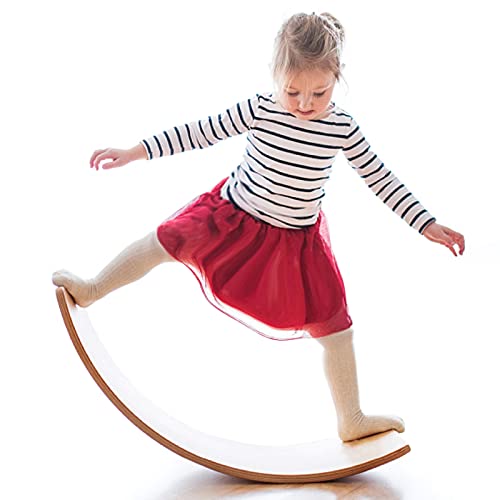
A curved wooden board 35 inches long and about 6 inches high at its peak, rated to 480 lb. Children rock on it, balance on it, flip it into a bridge or tunnel, or lie in it, and adults can use it too. It is the most versatile single piece here.
Gentle Monster Wooden Balance Board, 35 Inch
Marfula Folding Foam Balance Beam, 6 Feet
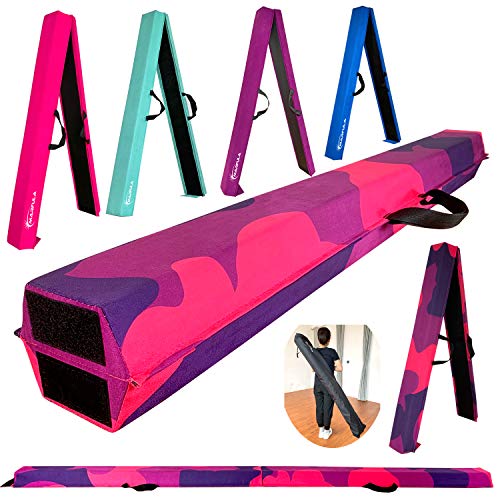
A floor-level beam of firm EVA foam, 6 feet long with a 4-inch top, on a wider 6-inch base with an anti-slip bottom. It folds in half, has a carry handle and bag, and links to more beams with hook and loop to make it longer. Walking a line is harder than it looks, and a beam on the floor makes falling off no big deal.
Marfula 6 ft Folding Foam Balance Beam
Setting It Up
- Find the floor first. Scooter boards need hard floors; stepping stones and beams work best on a low rug; hopper balls need clear space away from furniture corners.
- Plan a route. A simple loop such as tunnel, stepping stones, beam and then a scooter board ride back gives a child a clear start and finish. Liquid floor tiles or textured silicone tiles from our sensory path guide can fill the gaps between pieces.
- Keep it short and predictable. A few minutes before homework or straight after school, on a regular schedule, often works better than an open-ended session.
- Watch the after-effect. If your child is calmer after movement, keep going. If they are more wound up, shorten it and end with slow, heavy work such as pushing the scooter board or a peanut ball.
- Add soft pieces to build with. Foam cushions from one of our play couches for autistic kids become steps, ramps and a soft spot to finish the route.
Spreading movement across the day is the idea behind a sensory diet, and the occupational therapy hub has free activity ideas that use the same equipment.
Why These Gym Pieces
We left out therapy balls and therapy swings, which have their own guides on our site, and adult fitness wobble boards. Prices and stock were checked against a Mableton, Georgia ZIP code before noon on November 11, 2026, and the ages, dimensions and limits come straight from the listings.
Movement equipment always needs supervision. If your child has a medical condition, low muscle tone or poor balance, get a physical or occupational therapist's view on which pieces are safe for them first.
Products Mentioned in This Article
hand2mind Blue Indoor Scooter Board with Handles
Champion Sports 12-Inch Scooter Board with Handles
AppleRound Hippity Hop Ball with Pump, 18 Inch
Little Tikes Bouncing Fun! 18-Inch Hopper
Moncoland Pop-Up Kids Play Tunnel with Mesh
Playz 21-Inch Rainbow Pop-Up Play Tunnel
National Geographic Balance Stepping Stones, 10 Pieces
B. toys Balance Beam Set with Sensory Stepping Stones
Gentle Monster Wooden Balance Board, 35 Inch
Marfula 6 ft Folding Foam Balance Beam
Prices and availability are accurate as of the date/time shown and are subject to change. Any price and availability information displayed on Amazon at the time of purchase will apply to the purchase of this product.
Sensory overwhelm shows up differently in every child.
Beacon learns about YOUR child and gives guidance specific to them.
What Would Beacon Say?
"What sensory strategies actually work for my child?"
Beacon factors in your child's specific sensitivities (sound, light, texture, movement) and current regulation, then builds a sensory plan you can start tonight.

Spectrum Unlocked Editorial Team
Editorial Team
The Spectrum Unlocked editorial team combines lived experience as autism parents with research-backed guidance to create resources families can trust.
Frequently Asked Questions
- What is a sensory gym?
- A space set up for movement that gives the body strong input: rolling, crawling, bouncing, balancing, pushing and pulling. Clinics build big ones, but a home version can be a few pieces of equipment in a hallway, playroom or garage.
- What equipment do I need for a sensory gym at home?
- Start with two or three pieces that match how your child likes to move: a scooter board for pushing and pulling, a hopper ball for bouncing, a tunnel for crawling and stepping stones or a floor beam for balance. Add a crash pad or swing later if space allows.
- What is a scooter board used for in occupational therapy?
- A child lies on their tummy or sits on the board and pulls themselves along with their hands, or is pulled by a rope. It works the arms, shoulders and core and gives plenty of movement input, which is why therapists use it so often.
- What age is a hopper ball for?
- Hopper balls are sold by size. Both 18-inch balls in this guide suit roughly 3 to 8 year olds. Bigger children need a larger ball, and an adult should stay nearby; AppleRound's listing asks for direct supervision.
- How much space does a home sensory gym need?
- Less than most parents expect. A scooter board needs a stretch of hard floor, a tunnel about the length of a sofa, and stepping stones or a folding beam only as much space as you lay them out in. Everything here folds, deflates or stacks.
- Is a sensory gym good for autistic kids?
- Many autistic children seek movement, and giving it a safe outlet at home can help them settle and focus afterward. Not every child responds the same way, so watch whether an activity calms or excites your child, and ask an occupational therapist if you are unsure.