Best Star and Galaxy Projectors for Autistic Kids: Calm at Bedtime
Star and galaxy projectors help autistic kids wind down. Why slow dim light calms, the LED-vs-laser eye-safety question, and top picks by need.
Key Takeaways
- Slow, dim visual input is what calms. A star field or a drifting nebula gives the eyes one gentle thing to rest on while the rest of the room goes quiet, which helps an anxious or dysregulated child come down at the end of the day. The calming part is the softness and the slow drift, not the light show itself.
- Fast, bright color-cycling can do the opposite. A projector flashing through rapid rainbow modes keeps a child alert, so for wind-down you want it turned down: low brightness, slow or paused motion, and warm rather than harsh color. Skip the party settings at bedtime.
- Most of these are soft LED light, one uses a laser element. The realistic-star and night-light units project gentle LED glow that is safe to fall asleep under. A laser-style projector throws sharp green dots and needs to be aimed up at the ceiling and kept out of your child's direct eye line, never stared into.
- It works best as a fixed part of the wind-down routine. Turn it on at the same point every night, keep it dim, and let it run while the room settles, rather than switching it on as a surprise. Predictable and boring is the goal, because the nervous system settles on things it already knows.
- The same projector can do double duty in a sensory room or calming corner. A wide, atmospheric nebula fills a space for daytime regulation, while a smaller star night light suits a single bed. Match the coverage and the brightness to where and when your child needs to settle.
If bedtime is the hardest part of your day, a star projector is worth trying as part of the wind-down. The idea is simple. A slow, dim field of stars or a drifting nebula gives an anxious or dysregulated child one soft thing to rest their eyes on while the rest of the room goes quiet, and that gentle visual focus helps the nervous system shift out of alert and toward sleep. It is the same calming visual input a sensory room leans on, brought down to the size of a single bed.
The important word there is slow. A projector flashing through fast rainbow modes winds a child up, and for a child who over-stimulates easily it can make bedtime worse instead of better. What calms is the opposite of a light show: low brightness, warm or single-color light, and motion set to a slow drift or paused entirely. Below are six star and galaxy projectors, plus the eye-safety and setup rules that decide whether one helps a child settle.
Brightness and Beam Type Come First
- Dim and slow is what calms. Turn the brightness down, keep the color warm or steady rather than fast-cycling, and set the motion to a slow drift or off. A calm scene the eyes can rest on soothes; a rapid rainbow stimulates.
- Know whether it is LED or laser. Soft LED light is safe to fall asleep under and safe if a curious kid looks toward it. A laser-style projector throws sharp green dots that must be aimed at the ceiling and never looked into. Choose with your child's age and habits in mind.
- Make it part of the routine, not a surprise. Turn it on at the same point every night so it becomes a signal that the day is ending. Sameness is what makes it calming, so resist changing modes each evening.
- Match the coverage to the space. A wide, atmospheric nebula suits a sensory room or calming corner; a smaller star night light suits a single bed. Use the timer if your child settles faster in full dark.
The Light Qualities Each Projector Was Checked For
No projector here was lab-tested or given a star score. Each was read from its specs and listing for how low the brightness goes, whether the motion can be slowed or paused, whether it throws soft LED light or a laser element, whether it has a timer, and how wide an area it covers, then weighed against occupational-therapy guidance on calming visual input and Spectrum Unlocked's work with anxious and easily-overwhelmed kids. Every pick was confirmed as a real, currently available listing. Five things decided the list:
- Light that calms. Slow, dim, low-motion visuals that soothe rather than fast color-cycling that stimulates.
- Clear eye safety. Plain about LED soft light versus laser dots, so you can place and use it safely for your child's age.
- A fit for the moment. Options that suit a bedtime wind-down, a whole sensory room, or a simple night light, since a bedside and a whole room need different coverage.
- Controls that let you go gentle. Brightness, motion, timer, and warm color, so you can turn the whole thing down for sleep.
- Value that survives nightly use. Sturdy build and a sensible price, since these run every evening in a kid's room.
Sensory Projectors for Children With Autism
Best overall: Rossetta Dual Lens Galaxy Projector
The one to start with for most families, because it does two calming jobs in one box. This Rossetta projector pairs a drifting nebula with a star field through its dual lens, and it adds fifteen white-noise sounds through a built-in Bluetooth speaker, so the same unit that softens the light also gives you gentle audio to settle a room. A remote and a timer let you dial the brightness and motion down and set it to fade out after your child is asleep. Keep it on a slow, dim setting rather than the fast color modes and it becomes a steady bedtime anchor for visual and sound input at once.

Rossetta Dual Lens Galaxy Projector (Nebula + White Noise + Bluetooth)
Best realistic star field for a premium wind-down: Sega Homestar Flux
For the child, or parent, who finds a true night sky more soothing than a light show. The Sega Homestar Flux is a home planetarium that projects roughly sixty thousand accurate stars through an optical-glass LED lens, and the result is a quiet, realistic sky rather than spinning colors. It runs silently, casts a warm, dim light that is easy to fall asleep under, and it is an LED unit, not a laser, so it is safe to drift off beneath. This is the premium pick for a slow, calm wind-down, and the realism gives an older child or a sensitive sleeper something restful to look up at.
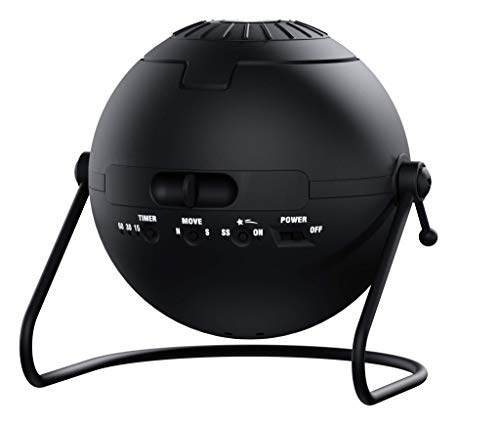
Sega Homestar Flux Home Planetarium
Best for a light-sensitive child: POCOCO Galaxy Star Projector
For the kid who finds most projectors too bright or too busy. The POCOCO galaxy projector uses replaceable optical discs, so you can swap the scene to whatever your child finds calming and keep it simple, and its soft, very low-glare light is gentle enough for a light-sensitive child who flinches at harsher units. It runs on battery or plug and includes a timer, which suits a calming corner as well as a bedside. If your child gets over-stimulated easily and you want the most room to keep the light dim and low-motion, this swappable, soft-glow model gives you that control.

POCOCO Galaxy Star Projector (Replaceable Optical Discs)
Best simple night light for young kids: Kids Star Projector Night Light
For the little one who just needs a gentle glow to fall asleep by. This is a simple kids' night-light projector with a timer and a remote, built around one-button ease so a tired parent is not hunting through menus at bedtime. It casts a soft, slowly rotating scene rather than a busy display, which is exactly the calm, low-motion input a young child settles under. It is the low-cost, no-fuss choice for a toddler or preschooler's room, and the timer means it can fade out on its own once your child is down.
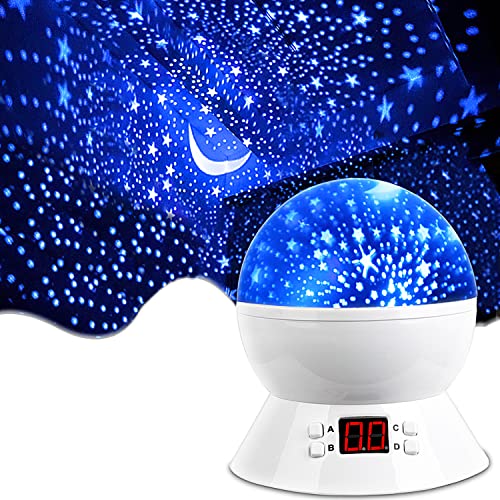
Kids Star Projector Night Light (Timer + Remote)
Best character projector a child bonds with: Astronaut Galaxy Star Projector
For the child who settles more easily with a friend in the room. This astronaut projector is shaped like a little astronaut figure, and for a lot of kids that character becomes something they look forward to and feel comforted by at bedtime. Past the charm, it does the real work: it casts a soft nebula in gentle LED light, which is eye-safe to fall asleep under, and its adjustable head lets you aim the glow onto the ceiling or a wall. Keep it on a slow, dim setting and the astronaut turns a nightly routine into something a child welcomes rather than resists.

Astronaut Galaxy Star Projector Night Light
Best for filling a whole sensory room: encalife Star Galaxy Projector
For a sensory room or calming corner that needs light across the whole space. The encalife projector throws a wide, atmospheric nebula that covers a large area, and it includes a Bluetooth speaker so you can layer calming audio over the visuals, which suits a dedicated regulation space more than a single bedside. One important note: this unit uses laser-style green star dots, which are brighter and sharper than soft LED glow. Aim it up at the ceiling, place it well out of your child's direct eye line, and never let a child look into the lens. Used that way, with the motion slow and the light kept low, it fills a calming room with the kind of drifting, atmospheric light that helps a dysregulated child come down.
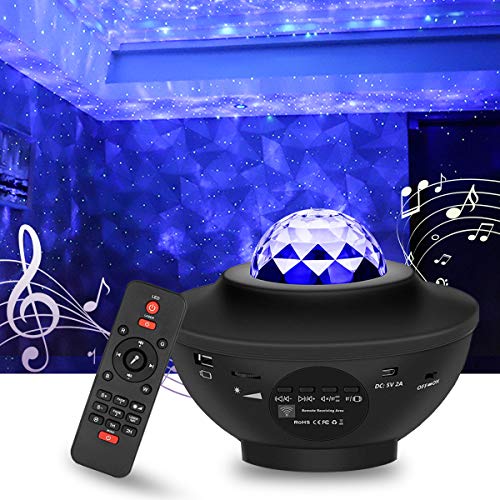
encalife Star Galaxy Projector with Bluetooth Speaker
Dimming, Aiming and Timing the Projector
A star projector helps or hurts depending on two things: how you set the light, and how you place the unit. On the light, dim and slow is the rule. Turn the brightness down, keep the color warm or steady instead of fast-cycling, and set the motion to a gentle drift or off. A calm scene the eyes can rest on soothes an anxious child; a rapid rainbow does the opposite, so leave the party modes for daytime and keep bedtime gentle and unchanging.
On placement, the type of light matters. The Rossetta, Sega Homestar Flux, POCOCO, the simple kids' night light, and the astronaut are all soft LED units, safe to glow while a child falls asleep and safe if a curious kid looks toward them. The encalife is different: it uses a laser-style element, and any laser projector needs to be aimed up at the ceiling, kept out of your child's direct eye line, and never looked into through the aperture. For a young child who might pick the unit up, favor the LED models and keep any laser-style unit up high and out of reach.
From there, make it predictable. Turn the projector on at the same point in the wind-down every night so it becomes a quiet signal that the day is ending, rather than a surprise that pulls a child's attention. Use the timer if your child sleeps better in full dark, keep the light low, and let sameness do the work. A projector used that way settles a room instead of exciting it.
Where a Star Projector Fits
Calming visual light is one piece of a bigger picture. It works best alongside the other tools that meet the same need in different moments, so if your child reaches for soft light and slow motion to settle, the wider set of visual and light sensory toys covers the bubble tubes, fiber optics, and glowing tactile pieces that a projector only starts. When you are building a dedicated space rather than fixing bedtime, Spectrum Unlocked's sensory room guide shows how projected light, calm-down seating, and movement fit together in one calming corner.
If you are not yet sure whether soft visual input is what your child is seeking, the sensory profile quiz is the place to start. Match the tool to the child, keep the light dim and the motion slow, and a small projector can turn the hardest part of the day into a quiet, predictable wind-down that a child looks forward to.
Products mentioned in this article
Rossetta Dual Lens Galaxy Projector (Nebula + White Noise + Bluetooth)
Sega Homestar Flux Home Planetarium
POCOCO Galaxy Star Projector (Replaceable Optical Discs)
Kids Star Projector Night Light (Timer + Remote)
Astronaut Galaxy Star Projector Night Light
encalife Star Galaxy Projector with Bluetooth Speaker
Prices and availability are accurate as of the date/time shown and are subject to change. Any price and availability information displayed on Amazon at the time of purchase will apply to the purchase of this product.
When sleep falls apart, so does everything else.
Beacon learns about YOUR child and gives guidance specific to them.
What would Beacon say?
"Help me fix my child's sleep"
Beacon builds the wind-down routine around your child's sensory needs and age, so bedtime becomes a sequence they can follow instead of a nightly negotiation.
Spectrum Unlocked Editorial Team
Editorial Team
The Spectrum Unlocked editorial team combines lived experience as autism parents with research-backed guidance to create resources families can trust.
Frequently asked questions
- Do star projectors actually help autistic kids sleep or calm down?
- For many kids, yes, as one part of winding down rather than a switch that flips off big feelings. A slow, dim star field or a drifting nebula gives an anxious or dysregulated child a single, gentle thing to look at while the room goes quiet, and that soft visual focus helps the nervous system shift out of alert and toward sleep. It works best when it is predictable: same point in the routine, low brightness, calm motion. It will not force a deeply overwhelmed child to settle, and it is not a substitute for a wind-down routine, but as a soothing anchor at the end of the day it earns its place for a lot of families.
- Which is safer for a child, an LED projector or a laser one?
- LED soft-light projectors are the easier choice for a child's room. They cast a diffuse, warm glow with no sharp beam, so they are safe to leave glowing while a child falls asleep and safe if a curious kid looks toward the unit. Laser-element projectors, which throw crisp green star dots, are brighter and cover more ceiling, but the beam should never be looked into directly. If you use a laser-style projector, aim it up at the ceiling, place it out of your child's direct eye line, and treat the lens as off-limits. For a young child who might pick the unit up and peer into it, an LED model is the safer default.
- Is it safe to leave a star projector on all night?
- For the LED night-light and realistic-star units, leaving a low, warm glow on overnight is generally fine, and many parents do exactly that so a child who wakes in the dark finds the same calm scene waiting. Two things help: keep the brightness low so it does not disturb sleep, and use the built-in timer if your child settles faster in full dark, so the projector fades out after they are asleep. For a laser-style projector, it is better to run it during wind-down and switch it off once your child is down, both to keep the beam out of play and because the sharper light is less restful than a soft LED glow.
- How do I use a star projector in a bedtime routine?
- Give it a fixed spot in the sequence so it becomes a signal, not a surprise. Many families turn it on right after bath and pajamas, dim the other lights, and let the projector run through a story or quiet time so the change of light tells the child that the day is ending. Keep it on the same slow, dim setting each night rather than changing modes, because sameness is what makes it calming. If your child uses a visual schedule, the projector turning on can be one of the pictured steps, which ties it into a routine they already trust.
- How bright and how fast should the projector be for calming?
- Dim and slow. Bright, fast color-cycling is stimulating and works against sleep, so for wind-down you want the projector turned down: low brightness, warm or single-color light rather than a rapid rainbow, and motion set to slow drift or paused entirely. A calm scene the eyes can rest on is the goal. Save the fast multicolor party modes, if the unit has them, for daytime play, and keep bedtime settings gentle and unchanging.
- Can a star projector double as a sensory-room tool?
- Yes, and it is one of the more flexible pieces of sensory equipment because the same unit serves two jobs. In a sensory room or calming corner, a wide, atmospheric nebula projector fills the space with slow-moving light for daytime regulation, giving a dysregulated child somewhere soft to look while they settle. In a bedroom, a smaller star night light does the quieter version of the same job over a single bed. Choose the coverage to match the space, keep the motion slow and the light dim, and the projector works for both winding down at night and calming down during the day.
- My child gets over-stimulated easily. Will a projector help or make it worse?
- It depends entirely on the settings, which is why the how-you-use-it matters more than the model. A projector left on a fast, bright, color-cycling mode can absolutely tip a sensitive child into more stimulation, not less. The same unit set to a single dim color, slow or paused motion, and low brightness gives soft, predictable input that many easily-overwhelmed kids find grounding. Start dim and slow, watch how your child responds, and if a swappable-disc or very low-glare model is available it gives you the most room to keep the light gentle.