
Best Sensory Swing Frames and Stands for Autistic Kids: How to Hang It Safely
Sensory swing frames, stands, and mounts for autistic kids: how to hang a swing safely, the weight and clearance rules, and the picks.
Key Takeaways
- The frame is the safety half of a sensory swing. A swing is only as safe as what holds it up, so how you mount it matters as much as the swing itself. You have three real options: a free-standing stand, a ceiling mount into a structural joist, or a doorway bar. Each suits a different home, and none of them is drywall alone.
- Match the mount to your home, not the other way around. Renters and anyone unsure about their ceiling should choose a free-standing stand or a doorway bar. Homeowners who want the swing tucked out of the way and can find a joist can use a ceiling mount. The right pick is the one your space allows.
- Weight capacity is a hard rule. Add your child's weight to the swing's weight and stay well under the frame's or mount's rated limit, with margin for the extra force of swinging and bouncing. Heavier kids, teens, and adults need a heavy-duty stand rated for them, not a light kids' frame.
- Clearance and supervision come with every setup. Hang the swing over a clear, padded area away from walls, furniture, and hard edges, leave room to swing without hitting anything, check the hardware regularly for wear, and always supervise. Never leave a child alone on a swing.
- You buy the frame and the swing separately unless the set includes both. Some stands come with a pod swing; most frames, doorway bars, and ceiling mounts are the hanging half only, and you add the swing seat that fits your child. Decide which you already have before you buy.
A sensory swing gives an autistic child the deep, calming vestibular input a lot of kids reach for, but the swing is only half the purchase. The other half is what holds it up, and that half is where the safety lives. Pick the wrong mount, or anchor a swing into drywall, and a soothing tool becomes a hazard. So this guide is about the frames, stands, and mounts that hang a sensory swing safely, and how to choose the one that fits your home.
If you already have the swing seat itself, or you are still choosing one, our sensory swings roundup covers the swing seats themselves. This guide is the companion to it: once you know which swing, here is how to hang it. Below are the frames and mounts worth owning, whether your home calls for a free-standing stand, a doorway bar or a ceiling joist, plus the safety rules that decide whether any of it is right for your space.
The Safety Rules That Come First
Before any product, the rules that decide whether a swing is safe at all. These are not fine print.
- Never anchor into drywall alone. A swing mount goes into a structural ceiling joist with rated hardware, or into a free-standing frame built for the load. Drywall or plaster will pull out under a swinging child.
- Respect the weight limit, with margin. Add your child's weight to the swing's weight, then stay well under the frame's or mount's rated capacity. Swinging and bouncing create force beyond a still hanging weight, so leave room and never load a frame to its exact limit.
- Clear the space. Hang the swing over a clear, padded area away from walls, furniture, and hard edges, with room to swing in every direction without hitting anything.
- Check and supervise. Inspect bolts and hardware regularly for wear, and always supervise. A swing is active equipment, not a place to leave a child alone. If your child has any condition affected by movement, ask their OT or pediatrician first, because vestibular input is powerful.
Measure the Room, the Ceiling and the Child
- Match the mount to your home. Renters and anyone unsure about their ceiling want a free-standing stand or a doorway bar. Homeowners who can find a joist can use a ceiling mount. Buy for the space you have.
- Size the capacity to the child. A stand rated around 300 pounds suits most young kids; bigger kids, teens, and adults need a heavy-duty 500-to-600-pound stand.
- Know what comes in the box. Some stands include a pod swing; most frames, doorway bars, and ceiling mounts are the hanging half only. Decide whether you still need a swing seat.
- Measure the room. Check floor footprint and ceiling height against the stand's dimensions and the swing's arc, so the child can move without hitting the legs, the walls, or the ceiling.
Load Ratings Led the Shortlist
Nothing here was load-tested in a lab, and no frame gets a star score. Each stand and mount was read for its stated weight capacity, what it is built from, whether it stands free or needs a joist, whether a swing seat comes in the box, and how much floor and ceiling room it needs. Those specs were then held against the mounting guidance an occupational therapist gives and Spectrum Unlocked's own work with sensory-seeking kids, and every pick was confirmed as a real, currently available listing.
- A stated weight capacity. Enough to hold the swing and the child with margin to spare.
- A route for every home. Free-standing, ceiling and doorway options, whether you own, rent or have little space.
- Capacity bands up to adult weight. A light kids' frame is not safe for a heavier child.
- Steel and rated hardware. Built for repeated swinging, never a decorative hook.
- What is in the box. Whether a swing is included or you add your own, stated plainly.
Therapy Swing Frames, Indoor Stands and Ceiling Mounts
Best overall, all in one: TALECO GEAR X-Shaped Sensory Swing Stand
The one to start with for most families, because it solves the hard part and the swing in a single box. This TALECO GEAR stand is a free-standing X-shaped steel frame that comes with a sensory pod swing and chair, so there is no ceiling work, no joist-hunting, and nothing to buy separately. The X-shape footprint is stable, it works indoors or outdoors, and because it needs no permanent installation, it suits renters and anyone who is not confident drilling into a ceiling. If you want the simplest safe way to give your child a swing at home, an all-in-one stand like this is it.

TALECO GEAR X-Shaped Sensory Swing Stand (with Pod Swing)
Best heavy-duty, for big kids, teens, and adults: HOTJUMP Swing Stand
For the older, heavier child a light kids' frame cannot safely hold. This HOTJUMP stand is rated to 600 pounds, which is the capacity band you need once a child grows into a teenager, or when an adult uses the swing too, and it is built from heavy-gauge steel with anti-collision protection on the frame. Capacity is a hard safety rule, so a bigger body needs a stand designed for the load rather than a frame pushed to its limit. For families whose child has outgrown a standard stand, HOTJUMP is the one that carries the weight.

HOTJUMP Heavy-Duty Swing Stand (600 lb)
Best frame only, if you already have a swing: Lanmun X-Shaped Swing Stand
For the family that already bought the swing and just needs something safe to hang it from. This Lanmun stand is a free-standing X-shaped frame rated to 350 lb, about 60 by 60 inches with a top bar near 74 inches, sold as the frame itself so you attach the pod, cocoon, or hammock swing you already own. It is the natural pairing for a seat chosen from our sensory swings roundup: pick the swing there, hang it here. Buying the frame on its own also lets you swap swings as your child's preferences change without replacing the whole setup.

Lanmun 350 lb X-Shaped Sensory Swing Stand (Frame Only)
Best for renters and no drilling: DreamGYM Doorway Sensory Swing Bar
For the apartment, the rental, or the quick trial before you commit. This DreamGYM support bar braces a steel bar across a standard door frame with brackets, so a child can swing with no permanent installation and nothing screwed into a ceiling. It is the low-commitment way to find out whether swinging helps your child before investing in a full stand, and it packs away when you need the doorway back. The tradeoff is a lower weight limit and less clearance than a stand, so check the rated capacity, make sure the door frame is sound, and supervise closely.

DreamGYM Doorway Sensory Swing Support Bar
Best ceiling mount, for a permanent tidy setup: SELEWARE Silent-Bearing Swing Hanger
For the homeowner who wants the swing hung out of the way and can find a joist. This SELEWARE hanger is a stainless-steel ceiling mount with a silent swivel bearing, so the swing can turn without twisting the rope or squeaking, and the sealed bearing is the detail that separates a real swing mount from a plain hook. Screwed into a structural joist with its rated hardware, it gives the cleanest, most permanent setup of the group. This is hardware only, so add the swing seat that fits your child, and if you are unsure about your ceiling structure, choose one of the free-standing stands above instead.
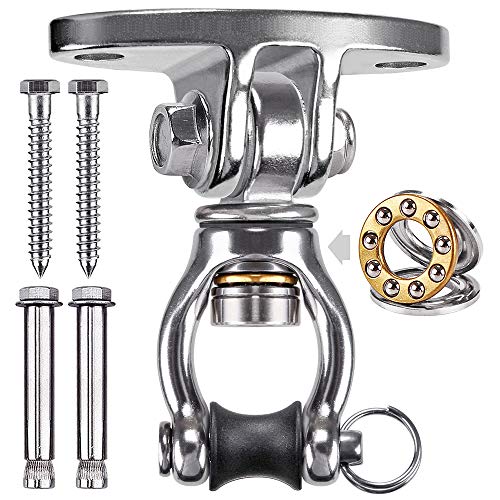
SELEWARE Silent-Bearing Swing Ceiling Hanger
Installing the Frame and Keeping It Sound
A frame is only as safe as the way you install and use it, so two checks decide most of it. First, capacity: add your child's weight to the swing's weight and confirm the frame or mount is rated comfortably above that total, with room for the force of swinging. Second, placement: hang the swing over a clear, padded area with space to move in every direction, away from walls, furniture, and hard edges. For a ceiling mount, find a real structural joist and use the rated hardware, never drywall alone; if that makes you uneasy, a free-standing stand removes the risk.
From there, treat it as active equipment. Inspect the bolts, straps, and hardware regularly for wear, tighten anything that has loosened, and always supervise a child while they swing. Introduce the swing gently, since vestibular input is powerful, and watch how your child responds. Used this way, the right frame turns a sensory swing from a question mark in the ceiling into a safe, everyday tool.
Other Gear for a Movement-Seeking Child
A frame is one piece of a bigger movement and regulation picture. It works best alongside the tools that meet the same sensory needs in other ways. The swing seat itself is the other half of this purchase, and our sensory swings roundup compares the pods, cocoons, and hammocks and the kind of movement each one gives. For the calmer end of the sensory day, the weighted lap pad and therapy putty guides cover grounding deep pressure while a child sits, and the sensory room guide shows how movement equipment, deep pressure, and calm-down space fit together zone by zone at home.
If you are not yet sure whether movement is what your child is seeking, the sensory profile quiz is the place to start, and the beginner's guide to sensory diets shows how a swing slots into a daily rhythm of regulating input. Match the frame to your home and the swing to your child, and a safe setup turns the constant need for movement into calm, regulated play.
Products mentioned in this article
TALECO GEAR X-Shaped Sensory Swing Stand (with Pod Swing)
HOTJUMP Heavy-Duty Swing Stand (600 lb)
Lanmun 350 lb X-Shaped Sensory Swing Stand (Frame Only)
DreamGYM Doorway Sensory Swing Support Bar
SELEWARE Silent-Bearing Swing Ceiling Hanger
Prices and availability are accurate as of the date/time shown and are subject to change. Any price and availability information displayed on Amazon at the time of purchase will apply to the purchase of this product.
Sensory overwhelm shows up differently in every child.
Beacon learns about YOUR child and gives guidance specific to them.
What would Beacon say?
"What sensory strategies actually work for my child?"
Beacon factors in your child's specific sensitivities (sound, light, texture, movement) and current regulation, then builds a sensory plan you can start tonight.

Spectrum Unlocked Editorial Team
Editorial Team
The Spectrum Unlocked editorial team combines lived experience as autism parents with research-backed guidance to create resources families can trust.
Frequently asked questions
- How do I safely hang a sensory swing for my child?
- You have three safe routes, and the wrong route is anchoring into drywall alone, which will fail. First, a free-standing swing stand rated for the swing and the child needs no ceiling work at all and is the safest choice if you are unsure about your structure. Second, a ceiling mount screwed into a structural joist (not just the ceiling surface) using hardware rated well above your child's weight. Third, a doorway swing bar braced in a door frame for lighter, temporary use. Whichever you choose, confirm the weight limit, hang over a clear padded area, check the hardware regularly, and always supervise.
- What weight capacity does a sensory swing frame need?
- More than your child weighs, with real margin. Add your child's body weight to the swing's own weight, then choose a frame or mount rated comfortably above that total, because swinging and bouncing generate force well beyond a still hanging weight. For most young children a stand rated around 300 pounds is plenty; for bigger kids, teens, and adults, step up to a heavy-duty stand rated 500 to 600 pounds. Never load a frame to its exact limit, and never assume a light kids' frame will hold a heavier child.
- Do I need a stand, or can I mount a sensory swing to the ceiling?
- Both work, and the right one depends on your home. A free-standing stand is the safest and simplest if you rent, if you are not confident about your ceiling structure, or if you want to move the swing between rooms. A ceiling mount is the tidier, more permanent option if you own your home and can locate a solid structural joist to screw rated hardware into. What you cannot do is anchor a swing into drywall or a plaster ceiling alone. If finding a joist or drilling into the ceiling makes you uneasy, a rated stand removes the guesswork entirely.
- Can I hang a sensory swing in a doorway without drilling?
- Yes, with a purpose-built doorway swing bar. These brace a steel bar across a standard door frame using brackets, so a child can swing without any permanent installation, which makes them ideal for renters and for testing whether swinging helps before you commit to a stand or ceiling mount. The tradeoffs are a lower weight limit and less clearance than a full stand, so check the rated capacity, make sure the door frame is sound, and supervise closely. For a bigger child or heavy daily use, a free-standing stand is sturdier.
- Will a sensory swing stand fit indoors?
- Most are designed to, but check the footprint before you buy. Free-standing sensory swing stands, often an A-shape or X-shape of steel tubing, need floor space in every direction so the child can swing without hitting the legs, plus ceiling height for the swing to hang and move. Measure your room, including the height, and compare it to the stand's listed dimensions and swing arc. Many stands work indoors or outdoors, so if indoor space is tight, a doorway bar or a ceiling mount may fit a small room better than a large stand.
- Is a sensory swing frame safe for an autistic child?
- It is, when the frame is rated for your child, mounted correctly, and used with supervision. The frame itself is the part that makes swinging safe, since it removes the guesswork of a questionable ceiling. The safety comes from staying within the weight limit, hanging the swing over a clear padded area away from hard edges and walls, checking bolts and hardware regularly for wear, and never leaving a child to swing unsupervised. If your child has any medical condition affected by movement, check with their occupational therapist or pediatrician first, since vestibular input is powerful.