Best White Noise and Sound Machines for Autistic Kids (Better Sleep, Calmer Days)
The white noise and sound machines that help auditory-sensitive autistic kids sleep and stay regulated by masking unpredictable noise with a steady, predictable sound: a real-fan classic, a nursery all-in-one, a non-looping pick, a portable one, and a budget option, plus the volume-safety rules.
Key Takeaways
- A sound machine works for an autistic child by trading unpredictable noise for a predictable one. The sudden dog bark, the sibling down the hall, the car outside, those are the startles that wake a sensitive kid and spike a bedtime; a steady wall of sound covers them with something constant and safe. For an auditory-sensitive child, predictable sound is regulating in a way silence is not.
- Sleep is one of the hardest parts of autism for a lot of families, and a consistent sound cue helps on both ends. The same sound every night becomes part of the wind-down routine that signals sleep is coming, and through the night it masks the noises that would otherwise jolt a light sleeper awake at 2 a.m.
- Volume is the one safety rule that matters most. Keep the machine across the room rather than next to the bed, and set it to a soft, conversational level rather than maxed out, roughly the 50-decibel range pediatric guidance points to, so it soothes without any risk to your child's hearing over a full night.
- Real-fan and non-looping machines avoid a trap some autistic kids fall into: noticing and fixating on a short sound loop. A mechanical fan or a guaranteed non-looping electronic machine gives seamless sound with no repeating seam for a detail-focused brain to catch and be bothered by.
- This is not the right tool for every child. A sound-averse kid who covers their ears and seeks silence may hate a sound machine, and that child needs the opposite support. If added sound makes things worse, quiet and a pair of ear defenders is the answer.
For an auditory-sensitive autistic child, silence offers little peace. It is a background against which every unpredictable sound, the dog two doors down, the sibling in the hall, the car pulling in, lands like a jolt, and any one of them can wreck a bedtime or snap a light sleeper awake at 2 a.m. A sound machine does something simple and powerful about that: it trades all those unpredictable spikes for one steady, predictable sound that the brain can settle under. Predictable is the key word, because predictable is what an autistic nervous system finds safe.
Sleep is one of the hardest parts of autism for a huge number of families, and while a sound machine is not a magic fix, it removes one of the biggest obstacles, both by masking the noises that wake a child and by becoming a reliable cue that sleep is coming. Below are six worth owning, plus the volume rule that keeps them safe and a note about the kid this is not for.
Check Whether Your Child Seeks or Avoids Sound
- Check which way your child leans first. A sound seeker settles under steady noise; a sound avoider covers their ears and wants silence. This whole list is for the seeker. If your child is an avoider, adding sound will backfire, and ear defenders or discreet earplugs plus a quiet room is the real answer.
- Mind the loop. Some autistic kids notice and fixate on a repeating sound clip. A real-fan machine or a guaranteed non-looping one avoids giving a detail-focused brain a seam to catch.
- Set the volume low and far. Place it across the room, not by the pillow, and keep it around a soft conversational level. This is the main safety point, and it is easy to get right.
- Match the extras to the need. A night light and time-to-rise glow help some kids and distract others; a rechargeable battery matters if you travel; a plain machine is plenty if you do not.
What Separates a Good Sound Machine for a Sensitive Sleeper
Nothing here went through lab testing, and no machine gets a score. Each one was compared on how it makes its sound (a real fan, or a recording the maker guarantees never loops), how low and how finely its volume adjusts, whether a light or wake cue is built in, whether it runs on a battery, and how long the model has kept running in real bedrooms. Pediatric guidance on safe volume and what parents of kids with sleep and sensory challenges rely on filled in the rest.
- A full, even sound. Enough to cover household and outside noise.
- No audible loop. Real-fan or non-looping, so a pattern-catching child is not thrown by a repeat.
- Extras only where they earn it. A night light and wake cue, a travel battery, or plain and cheap, depending on the family.
- A soft setting that holds all night. Able to run at a low, safe volume until morning.
- Years of nightly use. Machines that hold up to running every night.
White Noise Machines for Autism at Home and on the Road
Best overall: Yogasleep Dohm Classic
The one most sleep-focused families land on, and for good reason. The Dohm makes its sound the old-fashioned way, with a real fan spinning inside a rounded shell, so the white noise is natural, full, and completely non-looping, with no recorded clip for a pattern-catching child to notice. There are no lights, no screen, and nothing to fiddle with, just a steady wall of sound and a simple twist to adjust the tone and volume. That plainness is a feature: nothing about it invites a wired kid to play with it at bedtime. If you want one reliable machine that has done this job for decades, start here.

Yogasleep Dohm Classic White Noise Machine
Best all-in-one for the nursery: Hatch Rest
For the family who wants the sound, the light, and the morning cue in one device. The Hatch Rest combines a sound machine with a dimmable night light and a time-to-rise glow that turns a set color when it is okay to get up, which makes it the anchor of a whole bedtime-and-morning routine rather than just a noise box. For an autistic child who thrives on a predictable sequence, having the same light-and-sound cue every night and the same color-change every morning is useful, and it pairs naturally with the okay-to-wake clock approach. Keep the light warm and dim so it helps sleep rather than fighting it.
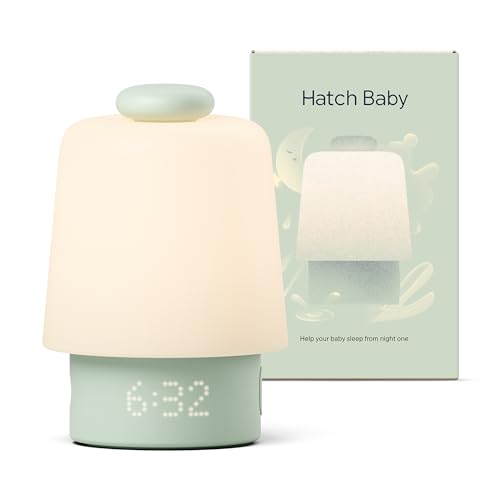
Hatch Rest Sound Machine + Night Light
Best non-looping variety: LectroFan EVO
For the child who needs options but must never hear a repeat. The LectroFan EVO packs more than twenty distinct sounds, from pure white noise through several fan tones to ocean surf, and crucially guarantees that none of them loop, so you can find the exact sound your child settles under without the recorded-clip repeat that throws a detail-focused kid. It is lightweight and USB-powered, so it moves easily between rooms or into a bag. When one fixed sound is not quite right and you want to dial in the perfect one while staying seamless, this is the pick.

LectroFan EVO Non-Looping Sound Machine
Best for strong, adjustable masking: SNOOZ Smart White Noise Machine
For the child who needs more sound to cover a noisy home. Like the Dohm, the SNOOZ uses a real fan for natural, non-looping sound, but it adds real control: ten volume levels that climb to a strong masking level, and a rotating shell that shifts the tone from a soft whoosh to a deeper hum, so you can tune it to what settles your child and drown out a loud household or a thin-walled apartment. It runs from an app too, which lets you adjust or schedule it without opening the door on a sleeping kid. For a home too loud for ordinary machines, the SNOOZ has the headroom.
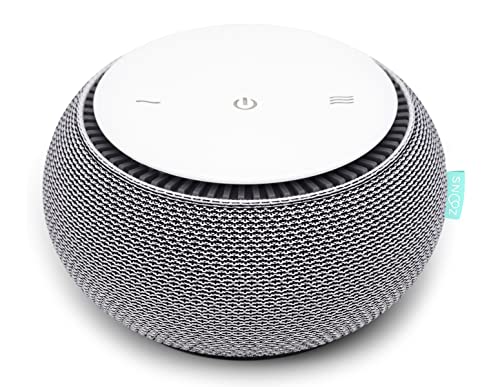
SNOOZ Smart White Noise Machine (Adjustable Fan)
Best for travel: Dreamegg Portable Sound Machine
For protecting sleep away from home, where an autistic child is most likely to lose it. This Dreamegg is small, rechargeable, and runs a long time on a charge, with a good range of soothing sounds, so the exact audio environment your child depends on at home comes along to the hotel, the relative's house, or the new bedroom. Sameness is what makes an unfamiliar room survivable, and a travel machine in the bag can be the difference between a trip that works and several sleepless nights. It doubles as a second machine for a stroller or a second room at home.

Dreamegg Portable Sound Machine
Best on a budget: Magicteam Sound Machine
For the family who wants to try this without spending much. The Magicteam is an inexpensive plug-in machine with around twenty non-looping sounds, adjustable volume, a timer, and a memory function that starts back up on your child's chosen sound, which covers everything most kids need. It is the sensible pick for testing whether a sound machine helps your child before investing in a premium one, or simply for outfitting a second bedroom cheaply. It does the core job, steady maskable sound at a safe volume, for a fraction of the price.
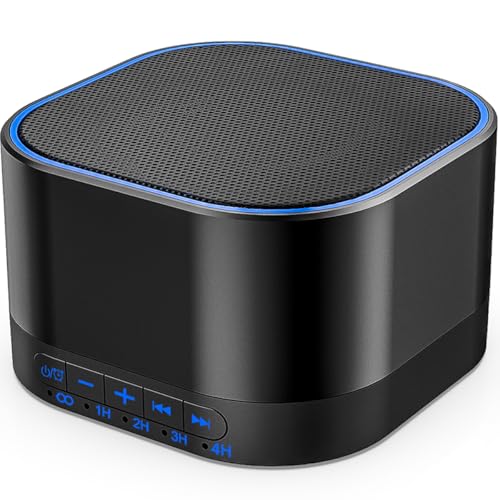
Magicteam White Noise Machine (20 Sounds)
Volume Low, Machine Across the Room
Everything good about a sound machine depends on one habit: soft volume, placed away from the bed. Pediatric guidance points to keeping night-long sound around a soft conversational level, roughly fifty decibels, and the easy way to honor that is to set the machine across the room from your child rather than beside their head and to leave it well short of maximum. Loud sound right next to a pillow all night is the only real risk these devices carry, and it takes ten seconds to avoid. Set it low enough to soothe and cover the startles, no louder.
Sound as One Part of the Sleep Routine
A sound machine earns its place by turning an unpredictable soundscape into a steady, safe one, which is exactly the kind of trade an autistic nervous system rewards. Choose the machine that fits your child, seamless sound for a pattern-catcher, a light-and-wake cue if routine is everything, a travel battery if you go places, and set it soft and far. Then let it cover the jolts that would otherwise wake your kid.
Where it fits best is inside a real sleep routine. A sound machine handles the noise, but the wind-down, the light, and the schedule matter just as much, which our guide to the autism and sleep connection walks through, and a morning okay-to-wake clock closes the loop on the other end of the night. And if it turns out your child is a sound avoider rather than a seeker, trust that, reach for quiet and ear defenders instead, because reading your own child correctly matters more than any machine. Get the match right, keep it soft, and steady sound becomes one of the simplest wins there is for a kid who struggles to sleep.
Products mentioned in this article
Yogasleep Dohm Classic White Noise Machine
Hatch Rest Sound Machine + Night Light
LectroFan EVO Non-Looping Sound Machine
SNOOZ Smart White Noise Machine (Adjustable Fan)
Dreamegg Portable Sound Machine
Magicteam White Noise Machine (20 Sounds)
Prices and availability are accurate as of the date/time shown and are subject to change. Any price and availability information displayed on Amazon at the time of purchase will apply to the purchase of this product.
When sleep falls apart, so does everything else.
Beacon learns about YOUR child and gives guidance specific to them.
What would Beacon say?
"Help me fix my child's sleep"
Beacon builds the wind-down routine around your child's sensory needs and age, so bedtime becomes a sequence they can follow instead of a nightly negotiation.
Spectrum Unlocked Editorial Team
Editorial Team
The Spectrum Unlocked editorial team combines lived experience as autism parents with research-backed guidance to create resources families can trust.
Frequently asked questions
- Can a white noise machine actually help my autistic child sleep?
- For many auditory-sensitive kids, yes, and the reason is masking. An autistic child who startles at every unpredictable sound, the creak, the flush, the car door, gets jolted out of the drowsy state that leads to sleep, and a steady sound covers those spikes with something constant and safe. Used the same way every night, it also becomes a cue that sleep is coming, which helps a child who struggles with transitions wind down. Sleep is one of the most common autism challenges, and while a sound machine is not a cure, it removes one big obstacle. Our guide to the autism and sleep connection covers the wider picture it fits into.
- How loud is safe for a child's sound machine?
- Keep it soft and keep it away from the bed. Pediatric guidance points to roughly a 50-decibel level, about the volume of a quiet conversation or gentle rain, and the simplest way to stay safe is to place the machine across the room rather than right next to your child's head and to avoid running it at maximum. Loud sound directly beside a crib or pillow all night is the one real risk with these devices, and it is entirely avoidable. Set it low enough to soothe and mask, no louder, and check that it sounds gentle from where your child sleeps.
- What is the difference between a real-fan, electronic, and non-looping machine?
- It comes down to whether the sound ever repeats. A real-fan machine like the Yogasleep Dohm or SNOOZ makes sound by moving air, so it never loops and has a natural quality many people prefer. A basic electronic machine plays a recorded clip that repeats on a short loop, and some autistic kids, with their eye and ear for detail, notice that repeat and fixate on it, which defeats the purpose. A guaranteed non-looping electronic machine like the LectroFan avoids that by generating seamless sound. If your child is the type to catch a pattern, lean toward real-fan or explicitly non-looping.
- My child hates noise and covers their ears. Is a sound machine wrong for them?
- Quite possibly. Autistic kids split into sound seekers and sound avoiders, and a machine that soothes one will distress the other. A child who covers their ears, melts down in loud places, and seeks out silence is an avoider, and adding sound to their room is likely to make bedtime worse. That child needs the opposite: a quiet environment and, for the loud world outside the bedroom, a pair of ear defenders. Watch which way your child leans before you add sound, and if a trial makes things worse, trust that and stop.
- Is a sound machine with a night light a good idea or a distraction?
- It depends on the child and the light. A combined unit like the Hatch is convenient and can anchor a whole bedtime routine, and a warm, dim, steady glow is calming and helps a child who fears the dark. The cautions are to keep the light warm and low rather than bright or blue, since cool bright light works against sleep, and to make sure a color-changing light does not become a toy that keeps your child awake. Used as a soft, unchanging night light plus a time-to-rise cue in the morning, it pairs naturally with an okay-to-wake clock approach and can do real double duty.
- Is a portable sound machine worth it for travel?
- For an autistic child, often yes, because sameness is what helps. A hotel room, a relative's house, or a new bedroom is exactly the kind of unfamiliar setting that wrecks sleep, and bringing the same sound your child hears every night at home makes a strange room feel a little less strange. A small rechargeable machine in the bag can protect a trip that would otherwise mean several sleepless nights. If your child relies on sound to sleep at home, a travel version is one of the higher-value things you can pack.