
Best Okay-to-Wake Clocks for Autistic Kids (And the 5 a.m. Problem They Fix)
The okay-to-wake clocks that work for autistic kids: the simplest color-rule clock, a full bedtime system with white noise, the most concrete visual story, a budget classic, and a sunrise light for kids who startle at audio alarms.
Key Takeaways
- A 5 a.m. start is usually a rules problem, not a sleep problem. 'Is it morning?' is an abstract question a young autistic child can't answer from an ordinary clock; an okay-to-wake clock turns it into a concrete visual rule: this color means stay in bed, this color means come get us.
- Pick by what your child needs made visible. A simple color rule, a stars-counting-down story, a whole bedtime routine with sounds, or a gradual sunrise instead of a startling alarm each call for a different clock.
- The clock states the rule; the routine teaches it. Introduce the clock in daylight, practice the green-means-go game before you need it at 5 a.m., and pair it with what your child may do until the light changes (books in bed beats lying in the dark).
- Check the light sensitivity trade-off. For some autistic kids any glow disrupts sleep; every pick here dims, and the rule can run on a barely-visible setting. Test brightness levels the same week you introduce the rule.
- Consistency does the teaching. The clock works because the rule never changes, which is exactly the kind of structure autistic kids run best on. Weekend exceptions undo weekday training.
It's 5:04 a.m. and your child is standing next to your bed, fully awake, ready to start the day, exactly like yesterday. They're not being difficult. They woke up, they had no way to know whether getting up was allowed, and they came to ask the only clock that talks: you.
"Is it morning?" is an abstract question. A young child, and especially a young autistic child, can't answer it from a number clock, the light outside, or how tired they feel (interoception being what it is). An okay-to-wake clock makes the answer concrete: this color means stay in bed, this color means morning. One rule, never changes, readable from across the room at any hour. For kids who run on visual rules, it's one of the highest-leverage twenty-dollar objects in the house. The five clocks below each make a different part of the night visible; for why the wake-ups happen at all, the sleep guides cover the mechanisms.
Three Checks Before a Clock Goes on the Nightstand
- Name the real problem. "Doesn't know if getting up is allowed" is a clock problem. "Wakes at 5 from dawn light or an early bedtime" is a sleep-schedule problem; fix curtains and timing first, the sleep strategies guide covers both.
- Plan the rule, not just the purchase. Decide what's allowed before the light changes (books in bed, quiet toys) and put it on the bedtime visual schedule. The clock states the rule; the routine teaches it.
- Mind the light. For light-sensitive sleepers, dimmest-setting performance matters more than any feature. All five picks dim; test levels the week you introduce the rule.
The Bar Each Clock Had to Clear
These clocks were compared on paper, from each maker's specs and the reports of parents and sleep consultants; none was lab-tested and none gets a star score. The questions asked of every clock were how readable its color change is in the dark, how low the light dims, whether sound can be switched off, and whether it runs from buttons on the device or from an app that can update itself overnight:
- Concreteness of the signal. A rule a 3-year-old can read half-asleep beats a feature list.
- Sameness over cleverness. Routine-dependent kids need the thing to behave identically for years; we flag where apps and updates cut against that.
- Sensory fit. Dimmable light, optional sound, no surprise noises.
- Survives real bedrooms. Buttons a child will mash, power cuts, sleepy parents.
- A distinct job per pick. Simple rule, full system, visual story, budget, gentle waking. No five-of-the-same.
Okay-to-Wake Clocks and a Sunrise Light
Best overall: LittleHippo Mella
The sweet spot for most families: a friendly clock face that sleeps when your child should and turns green when getting up is allowed, with a yellow get-ready-soon stage that works as a built-in countdown for kids who handle transitions better with warning. Everything is set on the device itself (no app, no Wi-Fi, nothing to drift), it dims properly, and it adds a nap timer and soft sounds without making any of them mandatory. It does the one job, the same way, every night.
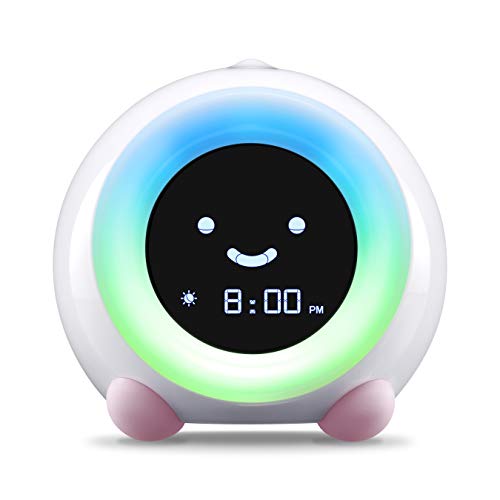
LittleHippo Mella Ready-to-Rise Kids Clock
Best full bedtime system: Hatch Rest (2nd gen)
For the household that wants one device to run the whole night: white noise for falling asleep, a color scheme for staying asleep, and a time-to-rise signal in the morning, all sequenced into routines from a phone app. That's real power, especially when white noise is already part of your child's sleep (it pairs naturally with the wind-down sequences in the sleep strategies guide, and if you want a dedicated machine the white noise and sound machine guide compares the machines themselves). The trade-off for a sameness-dependent child: app control means updates, Wi-Fi, and the occasional surprise, so set it up once, lock the routine, and resist tinkering.
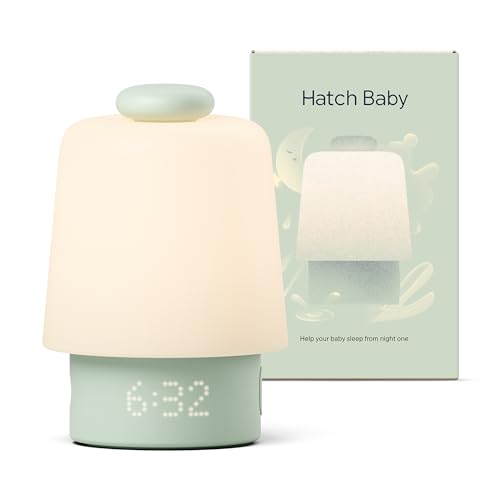
Hatch Rest Sound Machine & Time-to-Rise Light
Best visual story: Tommee Tippee Groclock
The most literal okay-to-wake narrative made: at bedtime the screen shows a blue night sky of stars, the stars disappear one by one through the night, and when wake time arrives a smiling sun comes up. For a child who needs to see time passing rather than just a final color flip, the disappearing stars are the story of the night itself, the same shrinking-visual logic as the visual timers we recommend for daytime transitions. Comes with a storybook that does the teaching for you.

Tommee Tippee Groclock Sleep Trainer (Stars to Sun)
Best budget classic: a plain OK-to-Wake clock
The plainest green-means-go clock, and still the right answer when you want exactly one feature: at the time you set, it glows green, and that's the whole product. No app, no sounds you didn't ask for, just big toddler-proof buttons and a dimmable night-light. For the child who needs maximum predictability at minimum cost, or as a low-risk first test of whether the okay-to-wake rule lands at all before investing in a bigger system.
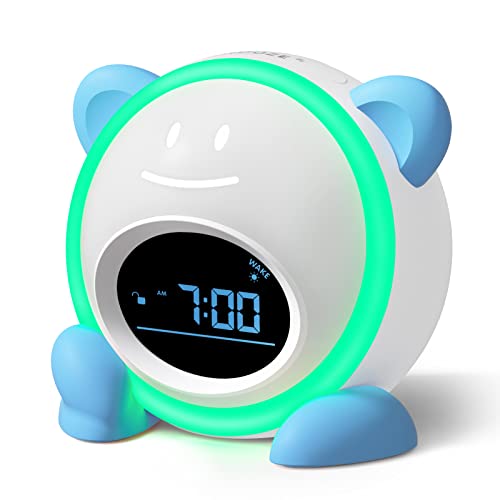
OK to Wake! Clock for Kids (Sleep Trainer & Night-Light)
Best for kids who startle at alarms: JALL kids sunrise clock
This one works the other end of the night, getting a child out of bed gently instead of keeping them in it. For school-age kids who need to wake at a set time but startle badly at audio alarms, a sunrise clock brightens gradually over half an hour so the body surfaces from sleep before any sound plays, and the sound itself is optional and soft. It pairs the wake-up with light the way bodies expect, which for many deep-sleeping or alarm-anxious autistic kids turns the worst moment of the school day into a non-event.

JALL Full-Screen Wake Up Light Sunrise Alarm Clock
Teaching the Green-Light Rule
Teach the rule in daylight as a game: set the light to change in two minutes, practice staying until green, cheer, repeat until boring. Put it on the bedtime visual schedule, read a short social story about staying in their own bed at bedtime so the rule has words as well as a color, define what's allowed before the light changes, and hold the rule with total consistency, weekends included, because a rule that never bends is the reason the clock works. Praise the staying in bed, not just the sleeping; a child reading quietly at 5:40 behind a red light is a win worth naming.
And keep the clock in its lane. It answers "is it morning?", which is one piece of autistic sleep, not all of it. If falling asleep is the war, start with the five mechanisms that keep autistic kids awake; if the bedroom itself is the problem, the sensory and sleep connection walks the sense-by-sense audit; and if nights are wet, the bedwetting guide is the place to begin.
The 5 a.m. visits don't end because your child suddenly needs less sleep. They end because, for the first time, the question they were waking you to ask has an answer they can see from their own bed.
Products Mentioned in This Article
LittleHippo Mella Ready-to-Rise Kids Clock
Hatch Rest Sound Machine & Time-to-Rise Light
Tommee Tippee Groclock Sleep Trainer (Stars to Sun)
OK to Wake! Clock for Kids (Sleep Trainer & Night-Light)
JALL Full-Screen Wake Up Light Sunrise Alarm Clock
Prices and availability are accurate as of the date/time shown and are subject to change. Any price and availability information displayed on Amazon at the time of purchase will apply to the purchase of this product.
When sleep falls apart, so does everything else.
Beacon learns about YOUR child and gives guidance specific to them.
What Would Beacon Say?
"Help me fix my child's sleep"
Beacon builds the wind-down routine around your child's sensory needs and age, so bedtime becomes a sequence they can follow instead of a nightly negotiation.

Spectrum Unlocked Editorial Team
Editorial Team
The Spectrum Unlocked editorial team combines lived experience as autism parents with research-backed guidance to create resources families can trust.
Frequently Asked Questions
- Do okay-to-wake clocks work for autistic kids?
- Often unusually well, because the mechanism plays to autistic strengths. The clock converts an abstract judgment (is it morning enough to get up?) into a concrete, never-changing visual rule (red means stay, green means go), and clear visual rules are exactly the kind of structure many autistic kids thrive on. The catches are the same as any new routine: the rule needs to be taught in daylight rather than announced at 5 a.m., applied with total consistency, and paired with realistic expectations, since a clock states the rule but doesn't make a wide-awake child sleepy.
- My autistic child wakes at 5 a.m. every day. Will a clock fix it?
- It fixes the part that's a rules problem, which for many families is most of it. If your child wakes early and starts the household's day because they don't know whether getting up is allowed, the clock answers that question and buys you the hour back, with the child reading books or playing quietly in bed until the light changes. If your child wakes early because of sleep physiology (early bedtime pushing wake time, room light at dawn, a sleep cycle issue), the clock alone won't fix that; blackout curtains, bedtime timing, and our sleep guides cover that side.
- Which clock is best for a child who needs everything predictable?
- The simplest one you'll never change. The Mella and a plain OK-to-Wake clock do one visual job with no app and nothing to drift; for routine-dependent kids, a clock that behaves identically every single night for years is the feature that matters most. App-driven systems like the Hatch are more capable (whole bedtime routines, sounds, schedules) and many families love them, but every firmware update, Wi-Fi drop, or settings tweak is a potential change to the thing that was supposed to never change. Know your child and pick accordingly.
- My child is scared of alarm sounds. What should we use?
- Light-first waking. A sunrise alarm brightens gradually over 10 to 30 minutes so the wake-up arrives as a slow change instead of a sudden noise, which suits kids who startle badly at audio alarms, and most let you turn the sound off entirely. For wake-up-and-stay-in-bed training (the okay-to-wake job), every pick on this list works silently: the color change is the signal, no sound required. Save audio alarms for older kids who need them for school, introduced at low volume with a sound they chose.
- Won't the light from the clock keep my light-sensitive child awake?
- It can, which is why dimming matters more on this list than features. Every pick here has adjustable brightness, and the okay-to-wake rule works at the lowest visible setting; the child doesn't need a bright green room, just a discernible color change to check when they wake. If your child is very light-sensitive, set the sleep-hours color to off or near-off (the absence of green is also information), position the clock away from the bed's sightline, and pair with blackout curtains so dawn doesn't out-shine the rule.
- How do I actually teach the okay-to-wake rule?
- In daylight, as a game, before you need it. Set the clock to change in two minutes and practice: lie in bed, light is red so we stay, light turns green so up we get, cheer. Run it a few times over a few days until the rule is boring. Put the rule on the bedtime visual schedule, state what's allowed before green (books and quiet toys in bed beat lying in the dark), and when the real 5 a.m. test comes, praise the staying, not just the sleeping. Expect the rule to be tested for a week or two and hold the line; consistency is the entire mechanism.