Best Wobble Cushions for Autistic Kids: Wiggle Seats That Help Focus
A sensory wobble cushion lets an autistic child wiggle without leaving the seat. How to size the disc so it actually helps focus, the bumpy-side-up question answered, and the picks that survive a classroom.
Key Takeaways
- A wobble cushion lets a child move without leaving their seat. The small, constant balancing feeds the vestibular and proprioceptive input a sensory-seeking child is up and out of their chair looking for, so the wiggle turns into quiet movement instead of a trip around the room. For a lot of autistic kids, moving a little is how they pay attention, not the opposite of it.
- Size the disc to the child, not to the deal. The single most important fit rule is that when your child sits on the inflated cushion, their feet still rest flat on the floor. Too big a disc lifts the feet and the seat stops being safe or useful, so a young child needs a smaller disc than a teen.
- The two sides do different jobs. Most discs have gentle bumps on one side and a smooth surface on the other, so a child who craves tactile input can sit on the textured side while a child who finds bumps distracting flips to smooth. Inflate it only part way; a firmer cushion barely moves, and a softer one gives the wobble that does the work.
- This is a focus tool, not a fidget to take away. A wobble cushion earns its place when it helps a child stay seated and attend, at the desk, at the dinner table, or during homework. Introduce it as a normal part of the chair, let the child try both sides and firmness levels, and treat the movement as help rather than misbehavior.
- Not every restless child fidgets in the seat. Some kids carry their movement in their feet, and for them an under-desk foot cushion channels the same energy quietly without an unstable seat. Match the tool to where your child's movement actually lives.
If your child cannot sit still, a wobble cushion is worth trying before another reminder to stop wiggling. The restlessness is rarely defiance. A sensory-seeking child who keeps popping out of their chair is usually looking for movement their body needs to stay alert and regulated, and a rigid seat gives them nowhere to find it. A wobble cushion puts that movement back into the chair, so the child can shift, balance, and wiggle without ever standing up.
The idea behind active seating is simple. The slightly unstable disc asks the body to make constant tiny adjustments, and that steady vestibular and proprioceptive feedback is often exactly the input that helps an autistic child settle enough to focus. For a lot of kids, a little movement is how they pay attention. Below are the wobble cushions worth owning, in sizes from preschool to teen plus a foot cushion for under the desk, with the sizing and setup rules that decide whether it helps.
Before You Buy Anything
- Size the disc so your child's feet stay flat on the floor. When they sit on the inflated cushion, their feet should reach the ground and their knees bend at about a right angle. A too-big disc lifts the feet and stops working, so size down when unsure.
- Inflate it soft, not hard. The cushion should wobble and give under the child. Pump it up like a ball and it turns into a rigid dome that barely moves, which defeats the whole point.
- Let your child choose the side. Most discs have bumps on one face and a smooth surface on the other. A tactile-seeking kid may love the bumps; a kid who finds them distracting flips to smooth. Try both.
- Treat it as a focus tool, not a privilege to remove. It works when it helps a child stay seated and attend. Introduce it as part of the chair, and do not take it away as a consequence.
How We Chose
No lab and no invented star ratings. We sorted the market against what actually helps an autistic child stay seated and regulated, using product specs, occupational-therapy guidance on active seating and sensory input, and Spectrum Unlocked's own work with sensory-seeking kids. Every pick here was checked as a real, currently available listing before it went on the list. The rubric:
- Real active movement. A disc that genuinely wobbles and compresses, giving the vestibular and proprioceptive input that does the work.
- A size that fits the child. Options across the age and body range so you can keep your kid's feet on the floor.
- A choice of input. A textured side and a smooth side so the cushion suits the child's sensory profile instead of fighting it.
- A form that fits real life. Something that slots onto the chair a child already uses, at home and at school, and stores easily.
- Value that survives daily use. Sturdy material and a sensible price, since these live under an active kid.
Here is which wobble cushion fits which need.
Wiggle Seats That Keep a Child's Feet on the Floor
Best overall: Gaiam Balance Disc
The one to start with for most families. This Gaiam disc is the mainstream, widely used pick that works on a desk chair, the dinner chair, or the floor, and Gaiam pitches it at both an adult's office chair and a kid's classroom seat, so one disc covers the whole house. At sixteen inches across and rated to 250 pounds, it fits a bigger kid, a teen, or a parent who wants to try it too, and it inflates soft for real wobble. If you buy one wobble cushion to find out whether active seating helps your child, make it this kind.

Gaiam Balance Disc Wobble Cushion (16 in)
Best for younger and smaller kids: Bouncyband Wiggle Seat, Small
For the preschooler or early-elementary child whose feet would dangle off a bigger disc. This small Bouncyband seat runs about eleven inches across, sized so a little body still keeps its feet flat on the floor, which is the fit rule that makes a wobble cushion safe and useful rather than a perch. It ships with a pump so you can set the softness right the first time, and the smaller platform suits a young child who needs contained, quiet wiggle input to stay in their seat through circle time or a meal. If circle time itself is the battleground, a free printable preschool circle time plan pairs the seating with a routine short enough to win.

Bouncyband Wiggle Seat, Small (10.75 in, Ages 3-7)
Best for older kids and teens: Bouncyband Wiggle Seat, Large
The same idea, scaled up. This larger thirteen-inch Bouncyband seat supports a bigger kid or teenager whose weight and reach a small disc cannot handle, so the focus-through-movement benefit carries into middle-school homework and high-school study without feeling babyish. It comes with a pump for dialing in the wobble, and the wider platform gives an older child room to shift and balance comfortably. For the kid who has outgrown the small disc, this is the one that grows with them.

Bouncyband Wiggle Seat, Large (13 in, Ages 6+)
Best for the classroom: AppleRound Wobble Cushion, 13.5in
For the child who needs to move at their desk without disrupting the room. A disc like this lets an autistic student make small, silent adjustments through a lesson instead of standing up and losing the thread, and at 13.5 inches it sits on an elementary chair without swallowing it. This one is the two-sided pick: large spiky dimples on one face for a child who wants strong tactile input, very fine dimples on the other for a child who does not, so you can turn it over rather than buy twice. A pump comes in the box. If active seating is written into an IEP or 504 plan, a disc like this becomes a documented accommodation the teacher can support. Send it labeled with your child's name.
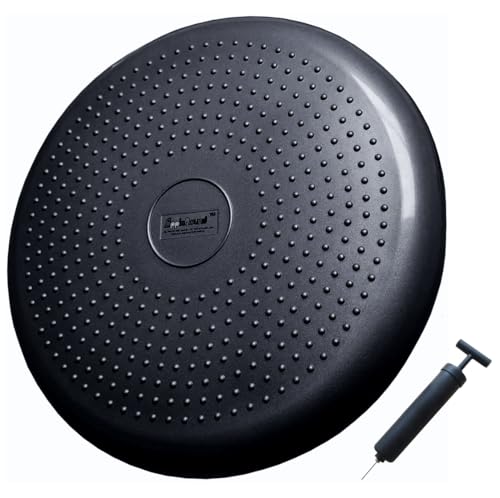
AppleRound Wobble Cushion (13.5 in, Two-Sided, Pump Included)
Best for the kid whose fidget lives in their feet: Bouncyband Wiggle Feet
For the child who is restless from the knees down. Not every kid needs a seat that moves; some carry their energy in their feet, and for them this Bouncyband foot cushion sits under the desk and gives the legs something to press, rock, and push against quietly. It channels lower-body restlessness into silent movement, which suits an autistic child who wants a proprioceptive outlet but finds an unstable seat cushion too much. Pair it with a wobble cushion, or use it on its own for the kid whose wiggle is all in the legs.

Bouncyband Wiggle Feet Sensory Foot Cushion
Getting the Setup Right
A wobble cushion is only as good as its fit, so two quick checks decide most of it. First, size: with the disc inflated on the chair, your child's feet must rest flat on the floor and their knees bend at roughly a right angle. If the disc lifts their feet, it is too big, full stop. Second, firmness: add air a little at a time until the cushion shifts and gives under the child rather than holding them rigid. A cushion pumped up hard barely moves and does nothing; a softer one delivers the gentle instability that provides the input.
From there, let your child lead. Offer both sides, the bumpy and the smooth, and see which helps them settle. Introduce the cushion as a normal part of the chair rather than a special or clinical object, and keep it as a support you leave in place, never a reward you take away when a child struggles. Used that way, a wobble cushion quietly does its job at the desk, the table, and the homework spot.
Where a Wobble Cushion Fits
Active seating is one piece of a bigger picture. Movement is only one of the inputs a sensory-seeking child reaches for, so a wobble cushion works best alongside the other tools that meet the same need in different moments. If your child needs bigger movement than a seat can give, sensory swings and movement equipment cover the vestibular input that a disc only hints at, and a set of sensory and fidget toys handles the busy hands that a wobble cushion leaves free. The sensory room guide shows how seating, movement, and calm-down space fit together at home.
If you are not yet sure whether movement is what your child is seeking, the sensory profile quiz is the place to start, and the sensory-friendly activities guide has the wider menu of movement and calming play a wiggly kid can burn energy on when they are out of the chair. Match the tool to the child, and a simple inflatable disc can turn the constant battle to sit still into the quiet, focused wiggle that helps a kid actually get through the work.
Products mentioned in this article
Gaiam Balance Disc Wobble Cushion (16 in)
Bouncyband Wiggle Seat, Small (10.75 in, Ages 3-7)
Bouncyband Wiggle Seat, Large (13 in, Ages 6+)
AppleRound Wobble Cushion (13.5 in, Two-Sided, Pump Included)
Bouncyband Wiggle Feet Sensory Foot Cushion
Prices and availability are accurate as of the date/time shown and are subject to change. Any price and availability information displayed on Amazon at the time of purchase will apply to the purchase of this product.
Sensory overwhelm shows up differently in every child.
Beacon learns about YOUR child and gives guidance specific to them.
What would Beacon say?
"What sensory strategies actually work for my child?"
Beacon factors in your child's specific sensitivities (sound, light, texture, movement) and current regulation, then builds a sensory plan you can start tonight.
Spectrum Unlocked Editorial Team
Editorial Team
The Spectrum Unlocked editorial team combines lived experience as autism parents with research-backed guidance to create resources families can trust.
Frequently asked questions
- Do wobble cushions actually help autistic kids focus?
- For many kids, yes, and the reason is straightforward. A sensory-seeking child who keeps standing up, rocking, or leaving their chair is usually hunting for movement input their body needs to stay regulated and alert. A wobble cushion gives that input in place: the seat shifts slightly, the child makes tiny balancing adjustments, and the vestibular and proprioceptive feedback helps the nervous system settle enough to attend. It will not make a child who is genuinely overwhelmed suddenly focus, and it is not a cure for attention difficulty, but as one support it often lets a kid stay seated and engaged for longer than a rigid chair allows.
- What size wobble cushion should I get for my child?
- Match it to your child's size, and use one firm test: when they sit on the inflated cushion on their normal chair, their feet should still rest flat on the floor and their knees should sit at roughly a right angle. A disc that is too big lifts the feet off the ground, which is both unsafe and useless for focus. As a rough guide, a smaller 10 to 11 inch disc suits younger and smaller children, and a full-size 13 to 16 inch disc suits bigger kids, teens, and adults. When in doubt, size down; a slightly small disc still works, while a too-big one does not.
- What is the difference between a wobble cushion and a ball chair?
- They deliver similar active-seating movement in very different footprints. A wobble cushion is a flat inflatable disc that sits on any chair the child already uses, so it travels between home, school, and the dinner table and stores in a backpack. A ball chair or therapy ball is larger, rolls away when the child stands up, and needs floor space and more supervision. For most families a wobble cushion is the simpler, more portable place to start, and it slots into a classroom far more easily than a ball.
- Are wobble cushions allowed and useful in the classroom?
- They are one of the most classroom-friendly pieces of sensory equipment, which is exactly why kid-branded flexible-seating discs exist. A wobble cushion lets a student move quietly at their own desk without the noise or disruption of getting up, and it does not distract classmates the way a ball chair can. If your child has an IEP or 504 plan, active seating can be written in as a support, which makes it a documented accommodation rather than a favor. Check with the teacher, and send the disc labeled with your child's name.
- Should my child sit on the bumpy side or the smooth side?
- Let your child decide, because the two sides serve different sensory profiles. The textured, bumpy side adds tactile input, which a sensory-seeking child often likes and finds grounding. The smooth side gives the same balance movement without the extra feeling, which suits a child who finds the bumps distracting or uncomfortable. Try both across a few days and follow what actually helps your child settle. There is no single correct side.
- How much should I inflate a wobble cushion?
- Less than you would think. The cushion should be soft enough to wobble and compress under the child, not pumped hard like a ball. Over-inflate it and it becomes a rigid dome that barely moves, which defeats the purpose; under-inflate it a touch and you get the gentle, active instability that provides the movement input. Add air a little at a time and let your child sit on it until it feels like it shifts with them rather than holding them still.
- Will a wobble cushion help a child with ADHD, or only autism?
- Active seating is not autism-specific. The same movement input that helps a sensory-seeking autistic child stay regulated also helps many children with ADHD channel restlessness into small, quiet motion so they can keep attending. Plenty of kids have both profiles. The tool responds to the need, which is movement to support focus, rather than to a particular diagnosis, so it is worth trying for any child who cannot sit still to work.