Best ADHD Chairs and Wobble Stools for Kids
Wobble stools, ball chairs and chair bands for kids who cannot sit still, matched to age and space, with honest notes on what seating can and cannot fix.
Key Takeaways
- An ADHD chair is any seat that lets a child move while staying in place: a wobble stool tips gently in every direction, a ball chair bounces, and a chair band gives restless feet something to push against.
- Movement while seated helps some children stay at the table longer, but research on it is small and mixed. Judge it by your own child over a couple of weeks.
- Choose by the movement your child already makes. A rocker and leaner suits a wobble stool, a bouncer suits a ball chair, and a foot-kicker may only need a band.
- Get the height right before anything else. Your child's feet need to reach the floor, with knees bent close to 90 degrees.
- None of these has a backrest, so they suit work periods rather than an entire school day, and a ball chair needs closer supervision with young children.
Some children are not choosing to get up every two minutes. Their body is asking for movement, and a still chair gives it nowhere to go, so the movement comes out as tipping the chair back, kneeling on the seat, or wandering off. An ADHD chair gives that movement a home without the child leaving their work.
This guide sorts the options by the kind of movement your child already makes, then covers ten seats and bands, how to size them, and where each one stops being useful. Every seat and band below could be bought on Amazon as of November 10, 2026.
Does Moving While Sitting Help?
For some children it clearly does: they stay at the table longer, and the fidgeting becomes quieter and less disruptive. Many teachers and occupational therapists use active seating for exactly that reason.
The research is thinner than the enthusiasm. A small number of classroom studies have found children staying seated and on task more often with therapy balls or wobble seats, while others found little change. A seat can make focus easier, but it cannot treat ADHD, so count it as one part of your child's wider support.
Match the Seat to the Movement
| If your child... | Try first |
|---|---|
| Rocks, leans and tips the chair back | A wobble stool |
| Bounces, or kneels and stands on the seat | A ball chair with legs or a base |
| Kicks, swings or taps their feet | A chair band on the chair they already have |
| Moves differently every day | A wobble stool plus a band, so they can switch |
A child who slides off or slumps rather than wiggles may need more support, not more movement: a grow-with-me high chair with a harness and footrest, or a cushion insert. Those are in our special needs high chairs guide.
Our Shortlist Criteria
We only kept seats that stay stable under a moving child, come in sizes that fit real ages, and hold up to daily use at home or school. Each one fills a different gap, from a toddler-height pair for siblings to a full-size ball chair for a teen at a desk.
Wobble Stools
Best Overall: ActiveChairs Kids Wobble Stool
A rounded base lets the stool tilt in every direction and return upright, so a child can rock and shift without the stool tipping over. It is a widely used wobble stool for kids, and it suits home desks as well as classrooms.

ActiveChairs Kids Wobble Stool, Flexible Classroom Seating
Grows With Your Child: Storex Wiggle Stool
The Storex stool adjusts from 12 to 18 inches, which makes it the one to buy if you want a single stool to last several years or to move between a play table and a desk. Stock was running low when we checked, so it may come and go.

Storex Wiggle Stool, Adjustable 12 to 18 Inch Height
For Younger Kids and Siblings: Simplay3 Wiggle Chairs, 2 Pack
Two 14-inch wiggle chairs sized for children around 5 to 8. A pair means no fighting over the special seat, and two children at a small table can both move while they color or build.
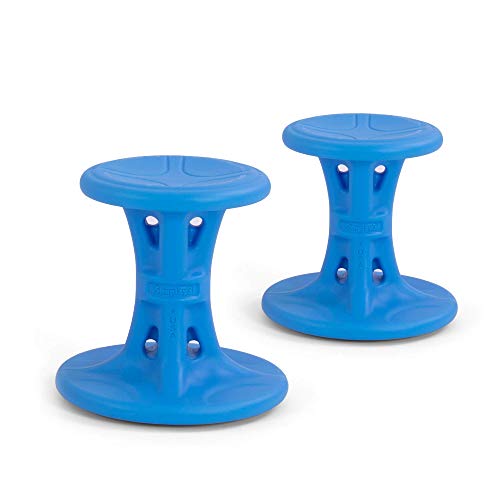
Simplay3 14 Inch Play Around Wiggle Chairs, 2 Pack, Ages 5 to 8
Lowest Price: GoSports Wobble Chair
An 18-inch wobble chair at a lower price than the rest of this group. It makes a low-cost trial for a child who has never had a wobbling seat.

GoSports 18 Inch Wobble Chair for Kids
Sturdiest for Daily Use: ECR4Kids ACE Wobble Stool
The ECR4Kids stool is built for classroom wear, and its 18-inch seat fits older children at a standard table. It is the most expensive stool here and the one to choose for a heavy, everyday user.

ECR4Kids ACE Active Core Engagement Wobble Stool, 18-Inch Seat Height
Ball Chairs
Won't Roll Away: Gaiam Kids Stay-N-Play
A child-size balance ball with short built-in legs, so it stays where you put it instead of rolling across the room. That makes it a safer first ball chair for younger children than a loose exercise ball.
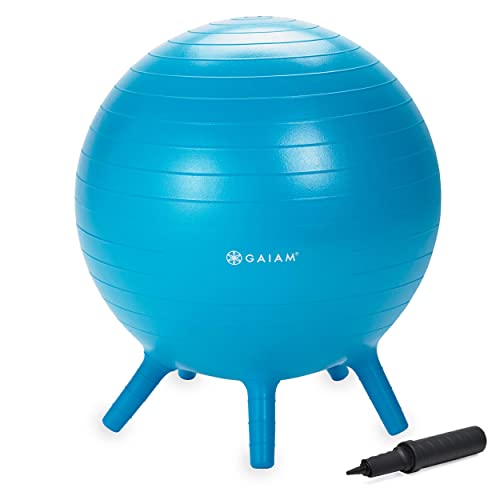
Gaiam Kids Stay-N-Play Balance Ball Chair with Built-In Legs
For Teens and Adults: Gaiam Classic Balance Ball Chair
A full-size ball held in a frame with a backrest and wheels, made for a desk. It suits a teen doing homework or a parent with ADHD who works better when they can bounce.

Gaiam Classic Balance Ball Chair, Stability Seat (Black)
Budget Ball With a Base: Trideer
A balance ball paired with a base that keeps it from rolling, at a low price. A good choice for a classroom corner or a second seat at home.

Trideer Balance Ball Chair, Flexible Seating
Chair Bands for Restless Feet
If most of the movement is in the legs, you may not need a new seat. (A foot roller is another quiet option; it appears with other fidgets for ADHD.) A band stretched between the front legs of an ordinary chair gives feet something to push, bounce and kick against, quietly.
KICK BANDS come in a pack of three for home, school and a spare. The Bouncyband is a sturdier single band on its own support tubes, and it is often what teachers request for a classroom.

KICK BANDS Chair Bands for Kids with Fidgety Feet, 3 Pack

Bouncyband Original Bouncy Bands for Chairs
Sizing and Safety
- Measure before you buy. Seat your child and look down: soles flat, knees close to a right angle.
- No backrest means breaks. Wobble stools and most ball chairs give no back support, so mix them with a regular chair over a long day.
- Supervise ball chairs. Keep them away from stairs and sharp furniture edges, and inflate the ball to the size the maker gives.
- Start with a reason to sit. Introduce the new seat during a favorite activity, not during the hardest homework of the week.
For a lighter option on a chair your child already has, our wobble cushions roundup covers inflatable seat pads, and the spinning chairs guide is for a child who seeks spinning rather than wobbling.
Products Mentioned in This Article
ActiveChairs Kids Wobble Stool, Flexible Classroom Seating
Storex Wiggle Stool, Adjustable 12 to 18 Inch Height
Simplay3 14 Inch Play Around Wiggle Chairs, 2 Pack, Ages 5 to 8
GoSports 18 Inch Wobble Chair for Kids
ECR4Kids ACE Active Core Engagement Wobble Stool, 18-Inch Seat Height
Gaiam Kids Stay-N-Play Balance Ball Chair with Built-In Legs
Gaiam Classic Balance Ball Chair, Stability Seat (Black)
Trideer Balance Ball Chair, Flexible Seating
KICK BANDS Chair Bands for Kids with Fidgety Feet, 3 Pack
Bouncyband Original Bouncy Bands for Chairs
Prices and availability are accurate as of the date/time shown and are subject to change. Any price and availability information displayed on Amazon at the time of purchase will apply to the purchase of this product.
Sensory overwhelm shows up differently in every child.
Beacon learns about YOUR child and gives guidance specific to them.
What Would Beacon Say?
"What sensory strategies actually work for my child?"
Beacon factors in your child's specific sensitivities (sound, light, texture, movement) and current regulation, then builds a sensory plan you can start tonight.

Spectrum Unlocked Editorial Team
Editorial Team
The Spectrum Unlocked editorial team combines lived experience as autism parents with research-backed guidance to create resources families can trust.
Frequently Asked Questions
- What is an ADHD chair?
- It is a seat designed to allow small movements while a child sits, such as a wobble stool, a balance ball chair or a regular chair fitted with a stretchy band for the feet. The idea is that a child who needs to move can do it without leaving their seat.
- Do wobble stools help with ADHD?
- Some children sit longer and fidget less disruptively on one, and many teachers and occupational therapists use them for that reason. Studies are few and small, with mixed results, so the best test is to try one with your child and watch whether they stay at their work longer.
- What size wobble stool does my child need?
- Pick a height where your child's soles meet the floor and the knees bend close to 90 degrees. As a rough guide, 14-inch stools suit many children around ages 5 to 8, and 18-inch stools suit older children at a standard desk. An adjustable stool covers a wider range.
- Are ball chairs safe for kids?
- Ball chairs with a base or built-in legs are far steadier than a loose exercise ball. Young children still need supervision, the ball should be inflated to the maker's size, and it should never be used near stairs or hard furniture edges.
- Are chair bands worth it?
- They are an inexpensive first step for a child whose restlessness is mostly in the legs. A band stretched across the front chair legs lets them push and bounce their feet quietly, which can be enough without changing the seat at all.
- Can an adult or teen use these?
- Yes. Larger wobble stools and the full-size Gaiam Classic ball chair suit teens and adults at a desk, and many adults with ADHD use active seating while they work.