Best Sensory Spinning Chairs for Autistic Kids: Bowl Chairs, Sit-and-Spins, and What Holds a Teen
Sensory spinning chairs for autism compared by seat size, weight limit, and age, plus the safety rules spinning needs, and the honest answer on what holds a teenager.
Key Takeaways
- Spinning is vestibular input, and unlike deep pressure it is alerting rather than calming. It belongs before focus time or to discharge energy, not in the wind-down before bed.
- The one rule that is not negotiable: never spin a child who cannot signal you to stop. A child who cannot say or gesture stop cannot tell you they have had too much, and dizziness escalates fast.
- Let the child drive. Child-led spinning is self-limiting in a way that being spun by an adult is not, which is why a chair a child can turn themselves beats one that needs pushing.
- Almost every bowl-style spinning chair stops at 220 lbs. If your child is a heavier teenager, that ceiling, not the price, is the number that decides what you can buy.
- A spinning chair is not a swing. If what your child wants is to hang and rock, a hanging swing chair does a different job, and the swings guide covers that lane.
There is a particular kind of child who finds the nearest office chair, sits in it, and turns until the room blurs. Then they get off, wobble, laugh, and do it again. Doorways, playground roundabouts, the middle of the kitchen floor: anything that turns will do.
That is not naughtiness and it is usually not aimless. It is a request for vestibular input, and a spinning chair is the piece of equipment that answers it somewhere safer than a chair on castors.
The short answer
- Check the weight limit before anything else. Almost every bowl chair stops at 220 lbs, and for an older or heavier child that decides the whole purchase.
- Match the shape to the age. A bowl seat suits a child who wants to be held while they turn, a flat sit-and-spin suits a toddler, and a wooden seat suits bigger kids.
- Buy one the child can drive themselves. Child-led spinning stops when they have had enough. Being spun by someone else does not.
- Give it clear floor space on every side, away from corners, radiators, glass, and stairs.
- Treat it as alerting, not calming. Use it before focus time or to burn off energy, not as part of a bedtime routine.
- Never spin a child who cannot tell you to stop. This is the one rule with no exceptions.
What spinning actually does
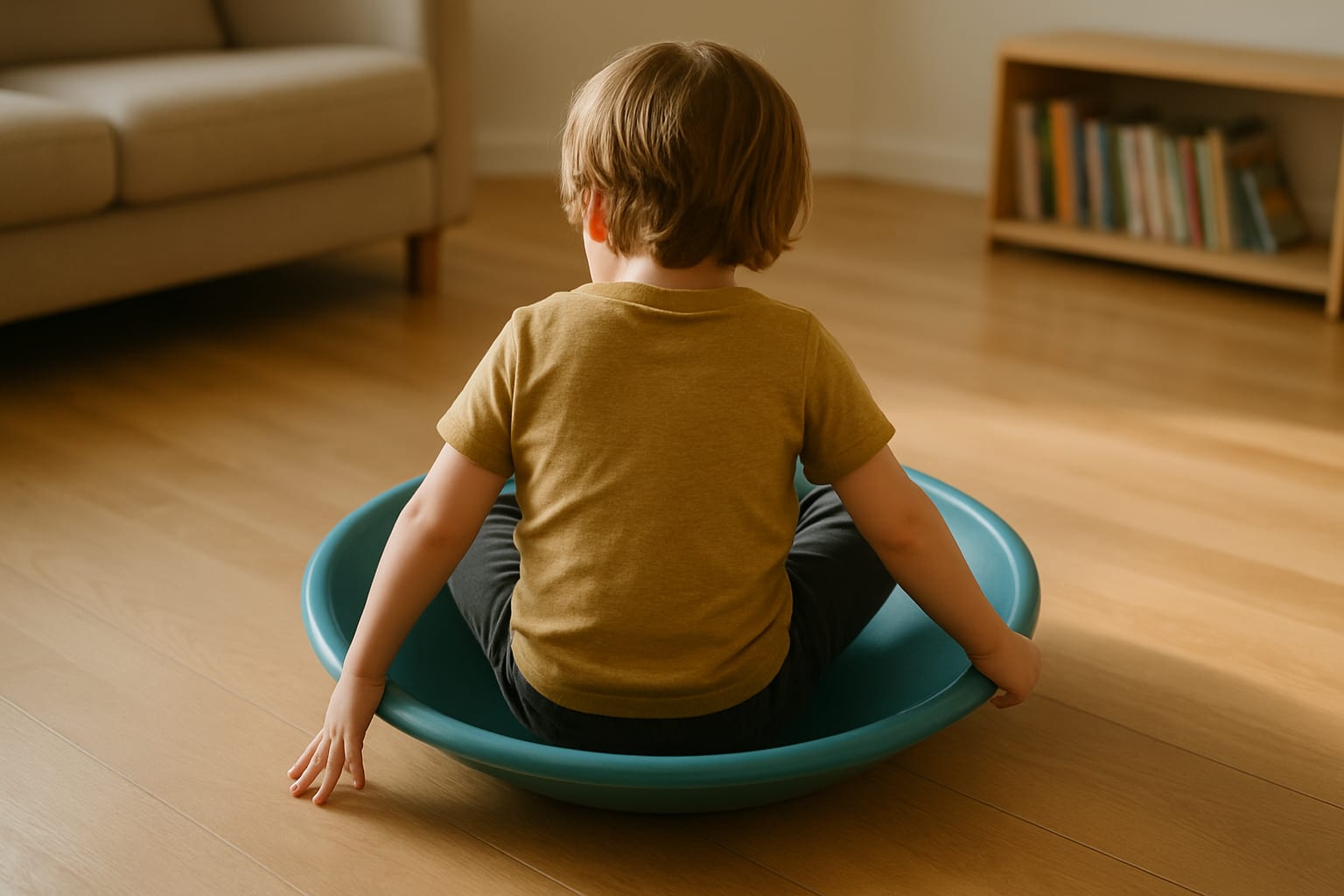
The vestibular system sits in the inner ear and reports on movement, head position, and gravity. It is what tells you that you are turning, tilting, or upside down, and it feeds directly into balance, posture, and how alert the body feels.
Rotational movement is the strongest way to stimulate it. That is what makes spinning useful and what makes it easy to overdo, and the two facts are the same fact.
For a child whose system is under-responsive, spinning wakes things up. They may seem foggy, slow to start, or in need of constant movement to stay switched on, and a few turns can leave them noticeably more available for whatever comes next. For a child who is already over-aroused, the same input adds to a load that is already too heavy.
The thing that makes spinning different from the rest of the sensory toolkit is how long it lingers. Deep pressure from a weighted blanket or a crash pad tends to settle a child fairly predictably. Spinning stirs the system up, and the effects can last well past the point where the child has climbed off, which is why the ten minutes afterward tell you more than the spin itself.
Safety, stated plainly
This is the section the product listings skip, and on this piece of equipment it matters more than which one you buy.
Never spin a child who cannot signal you to stop. A child who is non-speaking and does not yet have a reliable way to say stop, or a child who cannot make themselves heard once they are dizzy, cannot tell you they are past their limit. Let that child spin themselves, at their own speed, or leave this category alone.
Let the child drive. A child turning themselves slows down when their body has had enough. An adult pushing a chair is working from the outside and will almost always overshoot. This is also why a handle, or a seat low enough to push against the floor, is a genuine feature and not a gimmick.
Keep bouts short and spaced out. A few turns, a pause, then let them choose. Open-ended spinning is where the trouble starts.
Watch for the stop signs. Dizziness that does not clear, giddiness sliding into distress, nausea, pale or flushed skin, or a child who cannot walk straight afterward. Rapid eye flicking after they stop is worth noticing too.
Give it clear space. The risk is rarely the chair. It is the coffee table corner, the radiator, the glass door, the stair edge. Look at the room from the height of a dizzy child getting off, not from standing.
Hard floors and bare feet. Most of these chairs need a firm surface to spin properly, which is exactly the surface that hurts on the way down. A low-pile rug under a hard floor mat is a common compromise.
How to choose
Weight limit. The 220 lb figure repeats across nearly every bowl chair on the market. It is generally a static rating, so a child at 200 lbs who spins hard is closer to the edge than the number suggests. This is the first spec to read, not the last.
Seat size. A wider seat lets a child sit cross-legged, kneel, or curl up inside it, and that flexibility is often what makes a chair get used. A narrow seat is a perch, and a child who wants to be contained will not settle in it.
Base and bearing. A wide, non-slip base is what stops the chair walking across the room or tipping when a child leans. A quiet bearing matters more than it sounds if the chair lives in a shared room or a classroom.
Something to hold. Not every chair gives a child a grip, and for some children that is the difference between driving the spin and being at the mercy of it.
Height off the floor. Low is safer. A seat close to the ground gives a shorter fall and lets a child put a foot down to stop themselves.
The budget bowl chair most families start with: HAPPYMATY
The one to look at first if you are not yet sure your child will use it. It is a bowl seat at 23 by 21 inches, wide enough for a child to sit cross-legged inside rather than perch on top, on a non-slip base, rated to 220 lbs.
Buy it if you want to find out whether spinning is a real need or a passing interest without committing much. The trade is that it is the plainest option here, and it gives a child nothing to hold on to.

HAPPYMATY Sensory Spinning Chair (23 x 21 in, 220 lb)
The most-reviewed pick, and the one aimed at older kids: Zhenx
Effectively the same idea with a longer track record behind it, and the listing aims itself at ages 3 to 18 rather than at little ones. The seat is 22 inches square and 10 inches high, again rated to 220 lbs.
It costs meaningfully more than the HAPPYMATY for a similar shape, and what you are buying is the accumulated feedback of a lot of families rather than a different function. Worth it if you already know your child spins and you want the safer bet.

Zhenx Spinning Chair for Autistic Kids, Blue (220 lb)
Best for a child who needs something to grip: KidBloom
The handle is the whole point of this one. A child who can pull against something drives their own spin, controls the speed, and stops when they want to, which is the behavior every safety note above is trying to encourage.
It also suits children who want to kneel or lie across the seat rather than sit in it. The listing does not publish a weight limit, which is worth knowing given that every other pick here does, so if your child is at the heavier end this is not the one to guess with.

KidBloom Spinning Chair with Handle
Best for toddlers: the Classic Sit 'n Spin
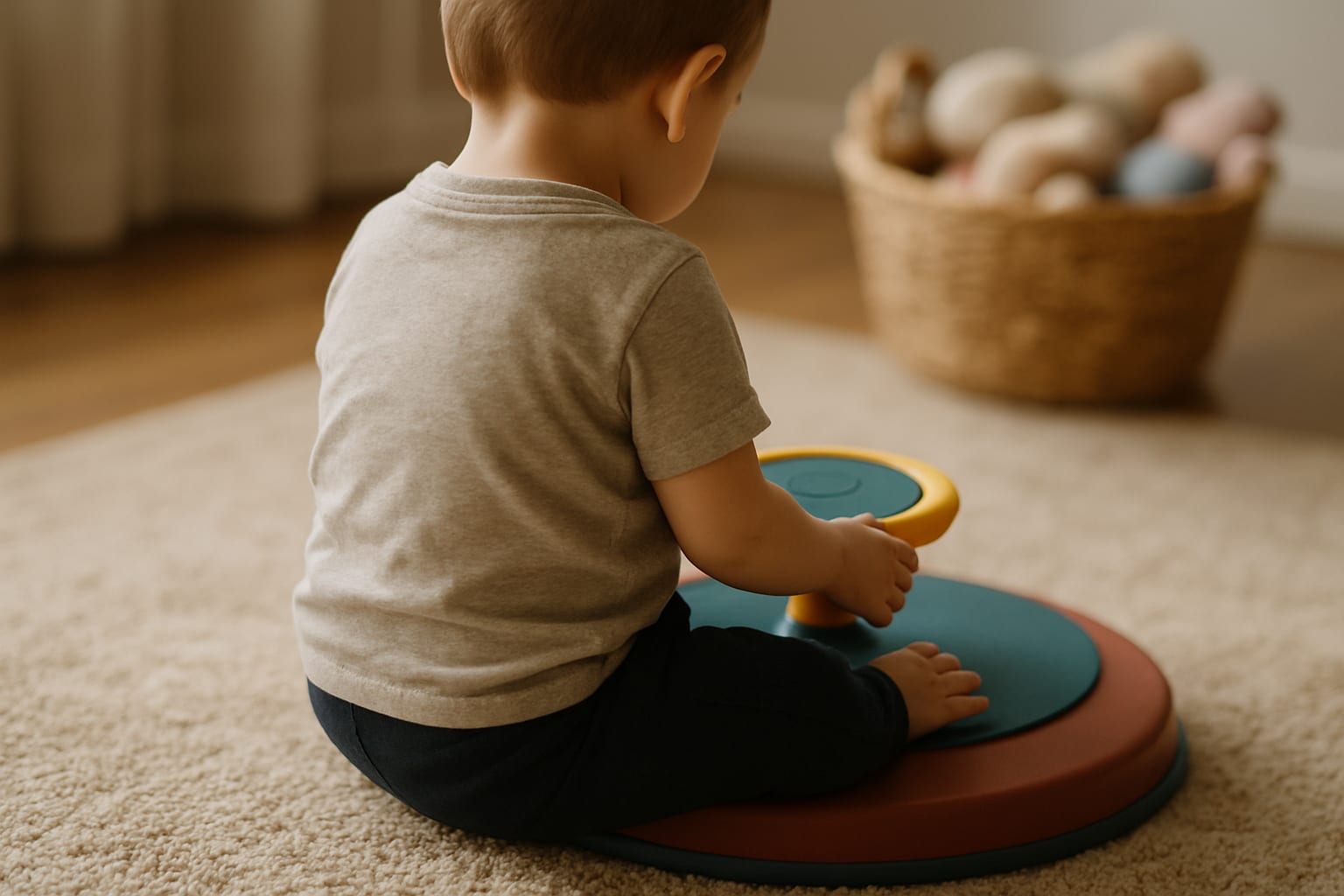
A different product in practice, and the one many parents already remember. The child sits on a low disc and turns the wheel with their hands, so the spin is entirely self-powered and self-limiting, and there is almost nowhere to fall to.
It is rated from 18 months, which fills the gap the bowl chairs leave, since most of those start at three. Small children outgrow it, and that is fine: it is the cheapest way to find out whether the input is wanted at all.

Classic Sit 'n Spin by Just Play
Best for bigger kids and teenagers: Driddle Wooden Spinner Seat
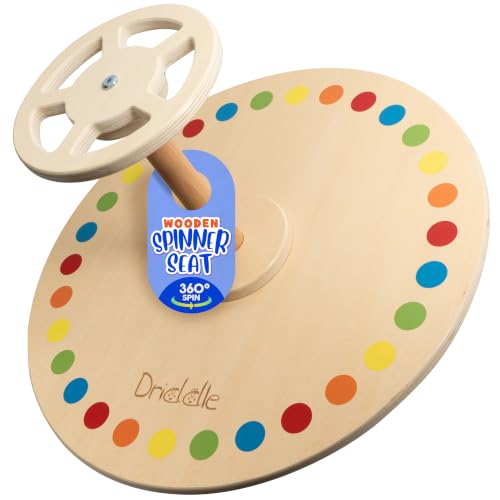
The answer to the ceiling problem. This is a wooden seat on a metal bearing rather than a molded plastic bowl, and it states a 250 lb limit, which is the highest of anything here. The listing says two children fit on it at once.
It is also the most expensive pick and the least soft. There is no bowl to be held by, so a child who wants to be contained will prefer the shapes above. Buy this one for the weight rating, the durability, or an older child who would find a bowl chair babyish.
Driddle Wooden Spinner Seat, Larger Size (250 lb)
If your child is a teenager, read this first
Here is the part the category does not advertise. Nearly every sensory spinning chair sold stops at 220 lbs, and that limit is not really about safety margin so much as about who these products are designed for, which is primary-age children.
For a teenager approaching or past that weight, the honest position is that this category mostly does not serve you. The wooden seat above is the one pick here that publishes a higher figure. Beyond that, the options narrow quickly to therapy equipment sold to clinics at clinic prices.
If the need is rotational input specifically, a hanging swing on a 360 degree swivel hanger is often the better route for an older child, because suspended equipment is routinely built to adult weights. The sensory swings guide covers that lane, including the teens and adults sizing question.
Where a spinning chair fits
A spinning chair works best as a scheduled input rather than a piece of furniture that happens to turn. Built into the day before the moments that tend to go wrong, it does far more good than it does as something a child is sent to when they are already past the point of no return.
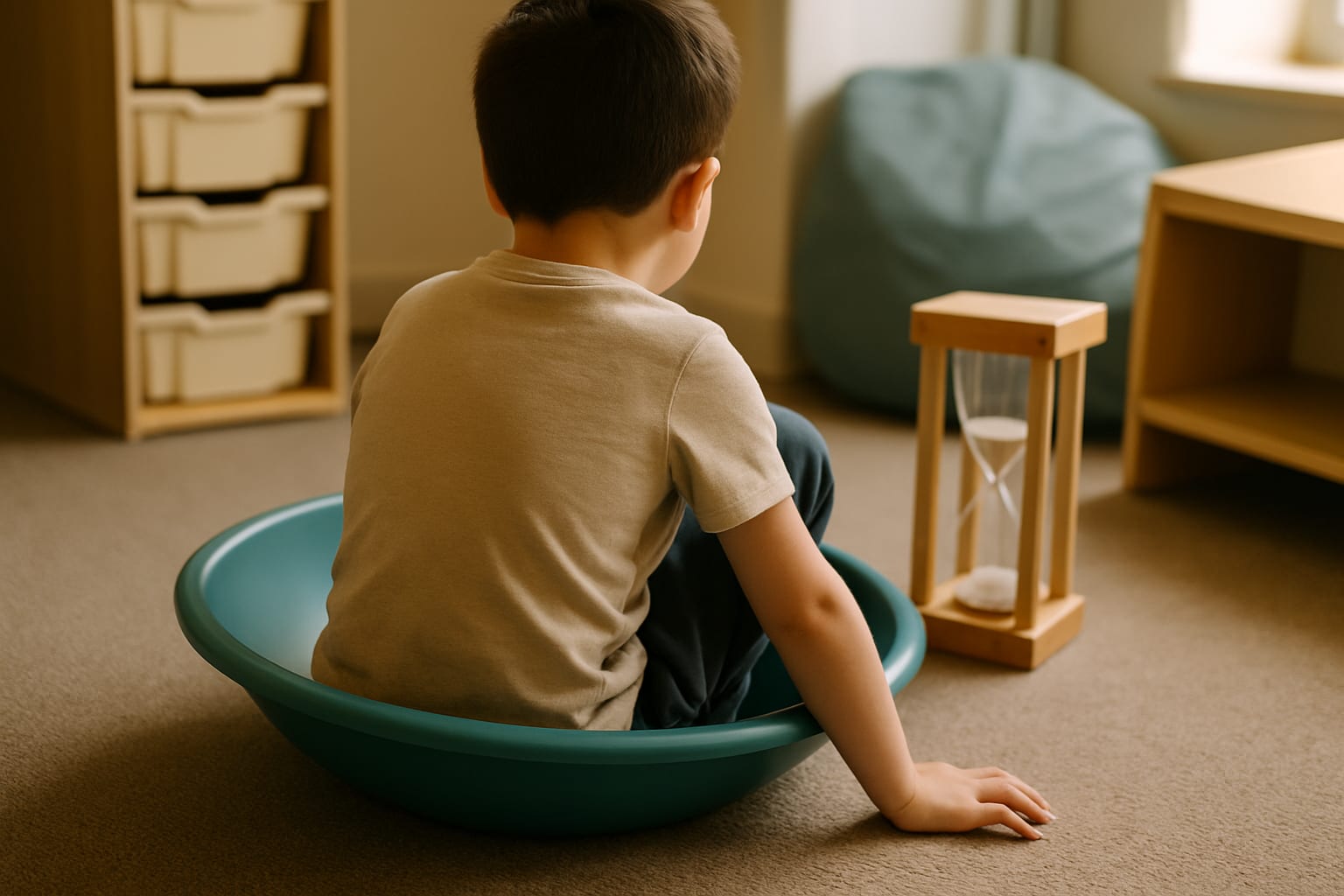
That is the logic behind a sensory diet, which schedules input through the day rather than reacting to dysregulation once it arrives. If you are assembling a corner around it, the sensory room essentials list covers what else earns floor space, and for a classroom the special education classroom must-haves list places a spinning chair among the bigger buys teachers say pay for themselves.
One last thing worth saying to any parent watching their child turn circles for the fourth time today: the spinning itself is very rarely the problem. It is usually stimming doing exactly what stimming does, which is helping a nervous system manage a world that is a lot. Giving it a safe place to happen is a better goal than making it stop.
Some links on this page are affiliate links. If you buy through them, we may earn a small commission at no extra cost to you.
Products mentioned in this article
HAPPYMATY Sensory Spinning Chair (23 x 21 in, 220 lb)
Zhenx Spinning Chair for Autistic Kids, Blue (220 lb)
KidBloom Spinning Chair with Handle
Classic Sit 'n Spin by Just Play
Driddle Wooden Spinner Seat, Larger Size (250 lb)
Prices and availability are accurate as of the date/time shown and are subject to change. Any price and availability information displayed on Amazon at the time of purchase will apply to the purchase of this product.
Sensory overwhelm shows up differently in every child.
Beacon learns about YOUR child and gives guidance specific to them.
What would Beacon say?
"What sensory strategies actually work for my child?"
Beacon factors in your child's specific sensitivities (sound, light, texture, movement) and current regulation, then builds a sensory plan you can start tonight.
Spectrum Unlocked Editorial Team
Editorial Team
The Spectrum Unlocked editorial team combines lived experience as autism parents with research-backed guidance to create resources families can trust.
Frequently asked questions
- What is a sensory spinning chair and what does it do?
- It is a low, stable seat on a bearing that lets a child turn in circles under their own power. The input it delivers is vestibular, sensed by the inner ear, which tells the body where it is in space and whether it is moving. Children who seek that input tend to chase it anyway, by spinning on the spot until they fall over, twirling in doorways, or turning circles on an office chair. A purpose-built chair gives the same input a low, contained place to happen, with a wide base that is much harder to tip than a desk chair and no hard edges to meet on the way down.
- Is spinning good or bad for an autistic child?
- It is genuinely useful for some children and genuinely too much for others, and the difference is not subtle once you watch for it. Spinning is alerting input, so it tends to wake a body up rather than settle it. For a child who is sluggish, under-responsive, or needs to discharge energy before sitting down to work, a short spin can be organizing. For a child who is already wound up or overloaded, the same spin usually pushes them further out. Watch what happens in the ten minutes afterward rather than during, because that is where the answer shows.
- How long should a child spin for?
- Short bouts, and let the child decide when to stop. Occupational therapists generally treat spinning as the most powerful vestibular input available and dose it carefully rather than leaving it open-ended. A practical approach at home is a few turns, then a pause, then let your child choose whether they want more. Stop at the first sign of overstimulation: dizziness that does not settle, giddiness that tips into distress, pale or flushed skin, nausea, or a child who cannot get their balance back. If your child asks for more and more, that is a reason to schedule it into the day rather than to extend the session.
- What weight limit do sensory spinning chairs have?
- Most bowl-style chairs state 220 lbs, and that figure is remarkably consistent across brands. It is usually a static limit rather than one measured with a child in motion, so treat it as a ceiling and not a target. If your child is close to it, or is a teenager who will keep growing, look at a wooden spinner seat instead, because those are built around a metal bearing and tend to publish a higher figure. Weight is the constraint that quietly rules out most of this category for older children, and it is worth checking before anything else.
- Is a spinning chair the same as a swing chair?
- No, and searching for one often turns up the other. A spinning chair sits on the floor and rotates in place, giving rotational input with the child's weight supported underneath them. A hanging swing chair is suspended from a ceiling hook or a frame, and it gives swinging and rocking input, usually with the calming quality that spinning does not have. Some hanging swings add a swivel hanger so they do both. If your child wants to be enclosed and rocked, a swing is the better answer; if they want to turn, a floor chair is safer and far easier to install, because there is nothing to drill.
- Can a spinning chair go in a classroom?
- Yes, and it is one of the few pieces of vestibular equipment that realistically can. It needs no ceiling anchor, it occupies a defined patch of floor, and a bowl-style chair keeps a spinning child inside its own footprint rather than traveling across the room. The practical issues are the ones any shared equipment has: it needs a turn-taking system, it works best on a timer so it does not become a negotiation, and it should sit away from traffic paths and hard corners. Many teachers put it on the sensory-break rotation rather than leaving it open all day.
- My child spins constantly. Should I stop them?
- Usually not, unless it is unsafe. Spinning is a common form of stimming and it is very often doing a job: regulating arousal, blocking out an overwhelming room, or simply feeling good. Removing a behavior without replacing the input it provides tends to fail, and the child goes looking for it somewhere less safe, like a desk chair on castors or the top of the stairs. Giving the input a designated place is the approach that usually works. Where spinning is worth a conversation with your pediatrician or occupational therapist is if it is brand new, escalating sharply, causing injury, or a child seems dizzy and unsteady long after they stop.