Best Bedwetting Alarms for Autistic Kids (Sound-Sensitive Options Included)
The bedwetting alarms that work for autistic kids: vibration-only and volume-controlled options for sound-sensitive kids, a pad system that puts nothing on the body, and how to run alarm training without making nights worse.
Key Takeaways
- Bedwetting alarms are the most-studied, most effective behavioral treatment for nighttime wetting, with success rates around 60 to 80 percent over 8 to 12 consistent weeks. They are a conditioning program, not a gadget: the first weeks are work, and the parent does most of the waking.
- For an autistic child, pick the alarm by sensory profile, not by stars. A sound-sensitive child needs volume control or a vibration-only mode; a tactile-sensitive child may need a tape-style sensor or a pad system that puts nothing on the body at all.
- Before any alarm, rule out constipation. A backed-up bowel presses on the bladder and drives a large share of nighttime wetting; treating it can resolve bedwetting on its own within weeks, which is faster than alarm training.
- Introduce the alarm in daylight. Let your child pick the tone, feel the vibration on their hand, and run a practice drill, so the first 2 a.m. activation is a known quantity instead of a sensory ambush.
- Most kids who quit alarm training quit in the first two weeks, when wake-ups are frequent and nobody is dry yet. Plan for that window: parent sleeps light, child practices the routine, and the log shows progress before the dry nights do.
A bedwetting alarm is the single best-evidenced tool for ending nighttime wetting: around 60 to 80 percent of kids get dry with 8 to 12 weeks of consistent use. But every alarm works by startling a sleeping child, and if your child is autistic, the wrong alert is not a small problem. A blaring siren at the shoulder of a sound-sensitive kid at 2 a.m. doesn't condition dryness, it conditions dread.
So this list starts from what the alert feels like and what has to touch your child's body, because in an autism household the buying decision is the sensory decision.
Before You Buy Anything
- Rule out constipation first. A backed-up bowel presses on the bladder and drives a surprising share of bedwetting; treating it can resolve nights in weeks, faster than any alarm. The bedwetting guide covers the full checklist, and the constipation guide covers the workup.
- Alarms are a program, not a purchase. The parent responds to most alarms for the first weeks, because many kids sleep through them at first. If this season of life can't absorb two weeks of broken sleep, run absorbent protection now (the bigger-size training pants guide) and do alarm training when it can. And if your child is young and daytime training is recent, wet nights may just be normal development; the night-training guide covers when dryness typically arrives and how to test readiness.
- Introduce everything in daylight. Tone chosen by the child. Vibration felt on the hand. A practice drill: alarm goes off, walk to the bathroom, done. First nighttime activation should be a rehearsed event.
How We Chose
No lab, no pretending. We sorted the market against what matters for autistic kids, using product specs, the patterns parents and continence clinics report, and the published evidence on alarm training. The rubric:
- Alert control. Volume that adjusts down, tones the child can choose, vibration-only modes. The more control, the more sensory profiles it fits.
- What touches the body. Tape and soft sensors over metal clips; one pick touches the child not at all.
- Proven conditioning design. Established brands with clinic track records over novelty gadgets.
- Survives real nights. Cords and sensors that handle a thrashing sleeper and weekly washing.
- A distinct job per pick. Sound-sensitive, deep sleeper, no-contact, bedside. No five-of-the-same.
No invented star ratings. Here is which one fits which child.
Bedwetting Alarms an Autistic Child Can Tolerate
Best overall: Malem Ultimate Selectable
The clinic-standard wearable, in the version worth buying for an autistic child: the Selectable, which offers eight tones your child can choose from, or vibration-only, or both together. That choice is the whole game for a kid who needs predictability; the tone they picked at the kitchen table is far less alarming at 2 a.m. than one they've never heard. Loud enough for parents to hear down the hall, strong vibration, decades of track record.

Malem Ultimate Selectable Bedwetting Alarm (8 Tones + Vibration)
Best for sound-sensitive kids on a budget: DryEasy
The control panel is the pick: four volume levels, six sounds, and three modes (sound, vibration, or both), at a fraction of the price of the clinic brands. Start at vibration-only with the volume off, get tolerance, then add the quietest sound if the vibration alone isn't waking anyone. For a child who startles at the hand dryer, this is the gentlest wearable entry point.
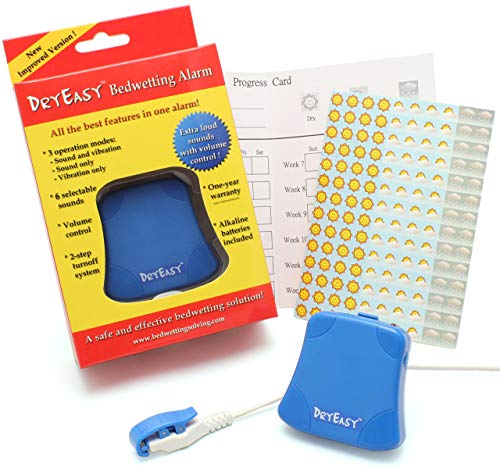
DryEasy Bedwetting Alarm (Volume Control + Vibration)
Best for deep sleepers: Chummie Premium
Many autistic kids sleep like the dead, and a quiet alarm that wakes nobody trains nobody. Chummie throws everything at the problem: loud multi-tone sound, bright light, and strong vibration, plus a soft flexible tape sensor that lies flatter against underwear than the traditional metal clips, which matters for tactile-sensitive kids. The parent will hear this one. That's the point.

Chummie Premium Bedwetting Alarm (Light + Sound + Vibration)
Best with nothing on the body: Wet Detective pad system
For the child who will not tolerate a sensor in their underwear or a unit clipped to their pajamas, full stop. The sensor pad goes under the fitted sheet, the alarm sits on the nightstand, and your child wears exactly what they always wear. The honest trade-off: detection happens a beat later, since urine has to reach the pad, so conditioning is a little less precise. For tactile-defensive kids, that trade is worth it, because this is the version that actually gets used.

Wet Detective Bed Pad Alarm System (Nothing Worn on the Body)
Best across-the-room unit: a wireless alarm
A middle path, and a wireless one: a small transmitter clips to underwear, but the alarm receiver lives on the nightstand, so the sound comes from across the room instead of at the shoulder, with no cord running up the pajamas. Good for kids who tolerate the sensor but panic at close-range noise, and for households where the parent wants to hear the alarm clearly and respond first.

Eclipse Wireless Bedwetting Alarm (Nightstand Receiver)
Running the Program Without Wrecking Your Nights
Pick a calm season, not the week school starts. Expect weeks one and two to be the hardest, with the parent doing the waking; most families who quit, quit here, one week before it starts working. Keep a simple log (wet, dry, woke before alarm), because the log shows progress before the dry nights do. Stack the bed for easy 3 a.m. resets: a washable waterproof pad over the sheet means you swap a pad, not a bed. And stop after fourteen consecutive dry nights, mission complete.
If nights stay wet after 6 to 8 honest weeks, pause and go back to the bedwetting guide for the medical checklist, starting with constipation. An alarm conditions a healthy system; it cannot out-train a full bowel pressing on the bladder.
The alarm teaches the brain to listen to the bladder. Your job is just to make the messenger one your child can stand.
Products Mentioned in This Article
Malem Ultimate Selectable Bedwetting Alarm (8 Tones + Vibration)
DryEasy Bedwetting Alarm (Volume Control + Vibration)
Chummie Premium Bedwetting Alarm (Light + Sound + Vibration)
Wet Detective Bed Pad Alarm System (Nothing Worn on the Body)
Eclipse Wireless Bedwetting Alarm (Nightstand Receiver)
Prices and availability are accurate as of the date/time shown and are subject to change. Any price and availability information displayed on Amazon at the time of purchase will apply to the purchase of this product.
Potty training an autistic child follows a different playbook.
Beacon learns about YOUR child and gives guidance specific to them.
What Would Beacon Say?
"Help me with potty training my child"
Beacon walks the route with you day by day, factoring in your child's sensory profile, communication, and the readiness signals that actually matter.
Spectrum Unlocked Editorial Team
Editorial Team
The Spectrum Unlocked editorial team combines lived experience as autism parents with research-backed guidance to create resources families can trust.
Frequently Asked Questions
- Do bedwetting alarms work for autistic kids?
- Yes, with the same evidence-backed mechanics as for any child: the alarm wakes the brain at the moment of release until the brain learns to wake on the full-bladder signal by itself. Success rates run 60 to 80 percent with consistent use over 8 to 12 weeks. The autism-specific part is the setup: choose the alert type your child's sensory system can tolerate, introduce everything in daylight first, and expect the parent to do the responding for the first weeks, since many autistic kids sleep through the first alarm activations.
- What's the best bedwetting alarm for a sound-sensitive child?
- One where you control the alert. The DryEasy lets you turn the volume down through four levels or switch to vibration-only, and the Malem Selectable lets your child choose one tone out of eight or run pure vibration. For a child who startles badly even at low volume, a vibration-only setup or a bedside unit across the room (so the sound is distant rather than at the shoulder) is the difference between training and trauma. Let the child pick the tone in the daytime; chosen sounds startle less than imposed ones.
- My child won't tolerate anything clipped to their pajamas. Are there options?
- Yes, two. Pad systems like the Wet Detective put the sensor under the fitted sheet, so nothing touches your child's body at all; the trade-off is slightly later detection, since urine has to reach the pad. Alternatively, tape-style sensors (like Chummie's) lie flatter and softer against underwear than the traditional metal clip styles, which some tactile-sensitive kids accept after a daytime introduction period.
- At what age should we try a bedwetting alarm?
- Most pediatric guidance says not before age 6 or 7, because younger bedwetting is overwhelmingly developmental and resolves on its own. For autistic kids the same number applies, with one addition: the child also needs to tolerate the routine. If wearing the sensor or hearing the alert is a nightly battle, you're conditioning fear, not dryness. Work on tolerance in the daytime first, or choose a no-contact pad system, and start the actual program when the child can be a willing participant.
- How long does alarm training take?
- Plan on 8 to 12 weeks of consistent nightly use. The typical arc: weeks 1 to 2 are the hardest, with frequent wake-ups and the parent doing most of the work; weeks 3 to 6 show the child waking faster and wet patches shrinking; weeks 6 to 12 bring first dry nights, then streaks. Stop after 14 consecutive dry nights. If there's been no change at all by week 6 to 8, pause and revisit with your pediatrician rather than grinding on.
- What should we rule out before buying an alarm?
- Constipation, first and specifically. A loaded bowel presses on the bladder and is one of the most common, most missed drivers of nighttime wetting, especially in autistic kids, where constipation is dramatically underdiagnosed. Treating it can clear up bedwetting within a few weeks with no alarm at all. Also worth a pediatrician conversation: daytime symptoms, snoring or very disrupted sleep, and any new-onset wetting after months of dryness, which has its own checklist.