Best Bigger-Size Training Pants for Older Autistic Kids (Who Outgrew Pull-Ups)
Pull-Ups stop at 4T-5T, but plenty of autistic kids aren't dry by then. Quiet, discreet overnight training pants and underwear that fit a 6, 8 or 10 year old.
Key Takeaways
- Regular Pull-Ups stop at 4T-5T (about 38 to 50 lbs), and even the extended Pull-Ups Plus line tops out at 6T-7T (about 75 lbs). Many older or larger kids outgrow all of them. That is a gap in the products' sizing, and it says nothing bad about your child.
- The right product depends on what you need it for: daytime light protection, heavy overnight wetting, or an older kid who refuses anything that feels like a diaper. Each pick below covers one of those, and there is no single best.
- Pull-on absorbent underwear protects skin and dignity and buys you calm while you work the real drivers. It is a bridge. The plan is ruling out constipation, sorting the sensory barriers, and building a way to communicate the need.
- For an older child, fit and dignity matter as much as absorbency. A product that fits a teen body, pulls on like real underwear, and does not crinkle under clothes is what keeps a kid willing to wear it to school.
- Reusable absorbent underwear can be cheaper over a year and feels more like real underwear, which matters a lot to a kid who is self-conscious. Disposables win on convenience and on the very heaviest overnight wetting.
If your autistic child is 6, 8, or 10 and still needs protection, you have probably had the same frustrating afternoon in the store that a lot of parents have: the regular Pull-Ups stop at a size 4T-5T, and your kid stopped fitting those a year or two ago. The packaging stops where your child's body kept going.
One thing worth knowing first, because most parents are never told it: Pull-Ups now makes an extended line, Pull-Ups Plus, that runs up through 6T-7T and fits to around 75 lbs. If you did not know those existed, they may buy you some time tonight. But plenty of older or larger kids outgrow even those, and that is where this guide picks up. The gap is in the sizing. Plenty of kids, autistic kids especially, are not reliably dry by the time they outgrow standard training pants, and there is good clinical reason for it. So this guide does the boring, useful thing: it tells you which bigger-size training pants and absorbent underwear fit an older, larger child, and which one to reach for given how heavily your child wets and what they will tolerate wearing.
If your child is a toddler in the standard training window rather than an older kid who outgrew the sizes, this is the wrong list for you: start with the best training pants for potty training an autistic toddler guide, which covers the cloth and disposable picks for that stage. This guide is specifically for the kid who has outgrown what the regular brands make.
One thing up front, because it is the most important sentence here. These products are a bridge, not the plan. They keep your child's skin healthy and their dignity intact and they let your whole household stop bracing for the next accident. They do not, by themselves, get a child toilet trained. If training has stalled, the thing that moves the needle is figuring out why, and at older ages that is almost always some mix of unrecognized constipation, a bathroom that is too sensory-aversive to use calmly, and a missing way to communicate the need. We wrote a whole companion piece on that: Autistic Older Child Still Not Potty Trained: What's Actually Going On. Read it alongside this one. The product buys you calm; that post is the actual work.
One more thing worth knowing before you spend a cent: if your child is on Medicaid, you may not have to pay for these at all. Many families get bigger-size pull-ups and briefs covered in full and shipped to the door every month, and Spectrum Unlocked's guide to getting diapers covered by Medicaid walks through exactly who qualifies and how to set it up. The picks below are for buying out of pocket, or for bridging the few weeks while that coverage is approved.
The Test for Quiet, Discreet Overnight Protection
None of these were lab-tested, and none gets a score. Each product was read against its own size chart for the weight and waist range it covers, its stated absorbency, whether it pulls on or uses tabs, what the outer layer feels like and whether it crinkles, and what it costs across a year. Parent reports and what the continence and occupational-therapy literature says about fit, skin and dignity at older ages shaped the rest. Six things every pick had to clear:
- Fit past the toddler sizes. Standard sizes quit, which is why you are here. Every pick fits well past 50 lbs, and most go into teen and adult sizing.
- A stated absorbency level. Light daytime backup, heavy overnight, and "the heaviest wetter you have ever met" are three different products, and each pick says which it is.
- A true pull-on design. Tabs and stickers read as "diaper" and they fight a kid's growing need for autonomy. Pull-on underwear supports a child dressing themselves and preserves dignity at school.
- Sensory-friendly construction. Soft cloth-like outer over plasticky, quiet over crinkly, breathable sides. For a tactile-sensitive kid this is often the difference between "wears it" and "tears it off."
- Discreet under clothes. An older kid will not wear something that announces itself at school or a sleepover. Slim profile and no noise made the cut.
- Cost across a year. Disposables are convenient but add up. Reusables cost more on day one and less by month three, and each pick is flagged so you can choose with your real budget.
Overnight Pull-Ups for Big Kids With Autism, and Washable Options
Best widely-available first step: GoodNites NightTime Underwear
If you want something you can buy tonight at a regular store, this is it. GoodNites is the one bigger-size product most parents already know. It is sized XS through XXL, fitting from about 28 lbs all the way up to roughly 165 lbs at the largest size, and it pulls on like underwear. It is a sensible, low-friction starting point while you figure out what your child needs, and it is discreet enough for a sleepover bag. It is built for overnight, so for very heavy daytime use you may want one of the higher-capacity options below.

GoodNites NightTime Underwear
Best for heavy overnight wetting: NorthShore GoSupreme
When GoodNites is not keeping up with a heavy overnight wetter, this is the usual next step. NorthShore GoSupreme carries a lot more capacity than drugstore brands, with a soft pull-on fit. It is an adult-incontinence line, so the size that fits a larger or older child is the smallest one, around a 22 to 32 inch waist; check the chart against your child's measurements. Parents reach for it when they are tired of double layering or changing sheets at 3 a.m. The trade-off is that moving to an incontinence brand can feel like a big step, but for a heavy overnight wetter it is often the thing that finally works.

NorthShore GoSupreme Pull-On Underwear
Best for protecting the bed: Gorilla Grip Washable Bed Pads
Not everything that helps is worn. For overnight wetting, a washable waterproof bed pad laid over the sheet saves the 3 a.m. full-bed strip-down, because the pad catches the leak and you swap just the pad, not the whole bed. Gorilla Grip's reusable pads are absorbent, slip-resistant, and machine-washable hundreds of times, which makes them far cheaper over a year than disposable protectors. Pair one with whichever pants your child wears overnight and you are protecting both the child and the mattress; it is the same layered setup the night-training guide recommends for the trial weeks without pull-ups. The trade-off is laundry, but it is a sheet-sized pad instead of a whole bed.

Gorilla Grip Washable Waterproof Bed Pads
Best maximum absorbency: Tranquility Premium OverNight
When you have the heaviest wetter and nothing else lasts the night, this is the high-capacity option. Tranquility's Premium OverNight pull-on is built for volume, with skin-protective wicking, and it is the one to choose when the priority is no leaks over slimness. Like NorthShore, it is an adult-incontinence line, so the smallest sizes (roughly a 17 to 36 inch waist) are the ones that fit older and larger kids. It is bulkier than the others by design. For a kid whose sleep and skin are getting wrecked by 2 a.m. saturation, that is a fair trade.
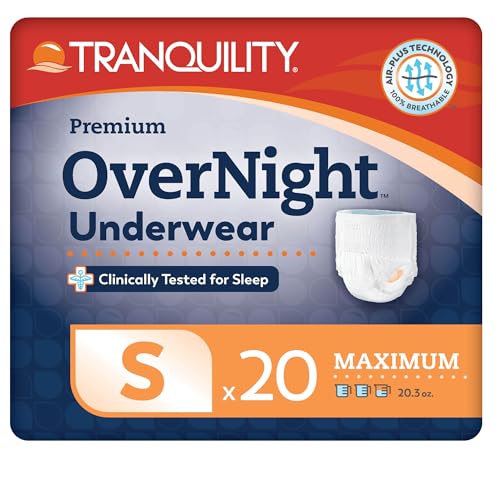
Tranquility Premium OverNight Disposable Underwear
Best for the kid who refuses anything diaper-like: washable reusable underwear
Some older autistic kids will flatly refuse any product that registers as a diaper, and pushing it just adds a fight to an already hard situation. Washable reusable underwear is built exactly for that child: cotton briefs with a built-in absorbent layer that look and feel like the underwear they already wear, not like a pull-up. It respects an older kid's dignity in a way nothing disposable quite does, which for the right child decides whether it gets worn at all. This is a smaller, less-established category than the disposables, so brands come and go, but the tradeoff is consistent: it means laundry, and it is aimed at manageable rather than maximum volumes. When you are ready to actively work on night dryness, pair it with the right tool from the bedwetting alarm guide.

Washable Reusable Absorbent Underwear (Kids)
Weigh and Measure Before You Order
Do not buy by age. Autistic kids vary enormously in build, and these products size by weight and waist for a reason. Weigh your child, measure the waist, and match the size chart on the specific product. A snug-but-not-tight fit is what prevents leaks; a too-big pull-on gaps at the legs and fails no matter how absorbent it is. If your child is between sizes, size up for overnight and down for daytime discretion.
When Absorbent Underwear Becomes the Whole Plan
Reaching for a bigger absorbent product is the kind, sensible move while you sort things out. It becomes a problem only if it turns into the entire plan and the underlying drivers never get addressed. (The pull-ups vs underwear decision explains why staying in absorbent products full-time works against training, and which slots they still belong in.) At older ages, the three that hide under a stalled training story are almost always:
- Constipation, often the kind with small liquid leaks (encopresis) that look exactly like accidents and get treated as behavior. This is the single most common hidden driver, and treating it resolves a startling share of "accidents." If you have ever seen those leaks, talk to a pediatric GI.
- A bathroom that is too sensory-aversive to use calmly, from the flush, the echo, the cold seat, or the lighting. Our piece on autism sensory issues and potty training walks through fixing that. And if the aversive thing is the garment itself rather than the bathroom, the sensory-friendly training pants and underwear guide covers the cotton and seamless options kids tolerate.
- No reliable, low-effort way for your child to communicate the need across every caregiver and setting.
If training was going fine and then fell apart, that is a different pattern worth understanding on its own, which we cover in autism potty training regression.
The product keeps everyone comfortable and calm. The dignity-first plan in the companion guide for older kids is what moves your child forward.
Build the Plan That Goes With the Product
A bigger-size training pant solves tonight, but the pattern needs a plan. If you want a step-by-step, sensory-aware plan built around your specific child, including the medical screen most parents are never told to ask for, that is exactly what the Autism Potty Training Playbook is for. Start there, keep the right product in the drawer for the in-between, and stop bracing for accidents. And when the in-between includes swim lessons or the pool, a properly sized swim diaper is its own must-have, since the largest baby size rarely fits an older child.
Products Mentioned in This Article
GoodNites NightTime Underwear
NorthShore GoSupreme Pull-On Underwear
Gorilla Grip Washable Waterproof Bed Pads
Tranquility Premium OverNight Disposable Underwear
Washable Reusable Absorbent Underwear (Kids)
Prices and availability are accurate as of the date/time shown and are subject to change. Any price and availability information displayed on Amazon at the time of purchase will apply to the purchase of this product.
Potty training an autistic child follows a different playbook.
Beacon learns about YOUR child and gives guidance specific to them.
What Would Beacon Say?
"Help me with potty training my child"
Beacon walks the route with you day by day, factoring in your child's sensory profile, communication, and the readiness signals that actually matter.
Spectrum Unlocked Editorial Team
Editorial Team
The Spectrum Unlocked editorial team combines lived experience as autism parents with research-backed guidance to create resources families can trust.
Frequently Asked Questions
- What size training pants does an older autistic child need?
- Regular training pants (Pull-Ups, Huggies) stop at size 4T-5T, about 38 to 50 lbs. Pull-Ups also makes an extended line, Pull-Ups Plus, that runs to 6T-7T, roughly 75 lbs, which many parents do not know exists. Past that, you are looking at youth incontinence products, which are sized by weight or waist and commonly fit from the 60s of pounds up through teen and adult sizes. Measure your child's weight and waist and match the product's size chart rather than guessing by age, because autistic kids vary widely in build.
- Are there bigger Pull-Ups for older kids?
- Sort of. The standard Pull-Ups line ends at 4T-5T, but the extended Pull-Ups Plus line goes up to 6T-7T, about 75 lbs. Beyond that, the bigger-size equivalents come from youth and teen incontinence brands: GoodNites runs up to about 165 lbs at its largest size, and brands like NorthShore and Tranquility make pull-on styles whose smaller sizes fit larger and heavier kids. They work the same way, pull on like underwear, but are sized and absorbent for older bodies.
- Is it bad to keep an older autistic child in pull-ups or absorbent underwear?
- No. Keeping skin dry and protecting your child's dignity is not giving up, and shame does not speed up training. Absorbent underwear is the calm baseline that lets everyone stop white-knuckling accidents while you address the actual reasons training has stalled. The thing to avoid is treating the product as the whole answer. Pair it with a workup for constipation, a look at the sensory barriers in the bathroom, and a reliable way for your child to communicate the need.
- Disposable or reusable absorbent underwear, which is better for an older kid?
- Reusable absorbent underwear like Pjama looks and feels the most like real underwear, which matters enormously to a self-conscious older kid, and it is usually cheaper across a year. The trade-offs are laundry and a lower ceiling on absorbency, so reusables shine for kids who refuse anything diaper-like. Disposables (GoodNites, NorthShore, Tranquility) win on convenience, on travel, and on very heavy overnight wetting where you need maximum capacity. Whatever your child wears, a washable bed pad under the sheet protects the mattress on the nights it leaks, and you swap a pad instead of stripping the whole bed.
- Will my autistic child tolerate the texture of these?
- Sensory tolerance is individual, so you may need to try two or three. The features that tend to help: a soft cloth-like outer instead of a plasticky one, a quiet material that does not crinkle under clothes, breathable sides, and a true pull-on design so there is no tab or sticker against the skin. Reusable cotton styles are often the most tolerable for kids with tactile sensitivity, while the heaviest disposables can feel bulkier. Introduce a new product when your child is calm, not mid-accident.
- Do bigger training pants help with night-time wetting?
- They manage it, which is not the same as treating it. Night-time dryness is developmentally separate from daytime training and commonly comes later, especially for autistic kids, so a high-absorbency overnight product is a reasonable and kind way to protect sleep and skin in the meantime. If bedwetting persists well past the age daytime training succeeded, mention it to your pediatrician, since constipation and a few other treatable causes sit underneath a lot of stubborn night wetting.