Best Potty Training Watches for Autistic Kids (And When a Timer Beats a Watch)
The potty training watches that work for autistic kids: the most sensory-flexible overall pick, a silent vibration watch for school, a discreet option for older kids, a zero-buttons toddler watch, and a lights-and-music motivator. Plus when a watch is the wrong tool.
Key Takeaways
- A potty watch solves one specific problem: a child who doesn't yet feel the urge reliably (interoception) needs the schedule to come from somewhere, and a watch on the wrist moves the reminder from the parent's nagging voice to a neutral object. Kids argue with parents; they rarely argue with a watch.
- Pick by reminder style and setting. Music and lights motivate toddlers at home; vibration-only survives school, sensory sensitivity, and older kids' dignity. The best watches let you switch modes instead of locking you into one.
- A watch is mid-training equipment, not a forever tool. It bridges the months between scheduled sits and body-signal awareness; plan to stretch intervals and fade it, or it becomes the bladder's replacement instead of its teacher.
- Sometimes the right tool isn't wearable: a visual timer the child can watch counting down beats a wrist buzz for kids who need to see time, and a parent-held phone timer is the zero-cost answer for kids who'd chew, lose, or refuse the watch.
- Readiness still comes first. A reminder schedule helps a child who is ready and signal-blind; it cannot create readiness, and strapping a timer on a child with no readiness signs just schedules the frustration.
"Do you need to go potty?" "No." Accident four minutes later. If that loop sounds like your kitchen, your child is usually telling the truth. The body's full-bladder signal just isn't arriving in time. Many autistic kids run on muted interoception, which means the standard wait-until-they-feel-it advice fails, and timed bathroom visits have to carry the routine while body awareness builds.
A potty watch does one job in that picture: it moves the schedule from your voice to a neutral object on the wrist. Kids argue with parents; they rarely argue with a watch. The five watches below differ mostly in how they remind (song, lights or a silent buzz) and how much a child can fiddle with them, and the list ends with the cases where the right answer isn't a watch at all.
Check Readiness and Sound Sensitivity Before Strapping One On
- Verify readiness first. A reminder schedule helps a ready child who is signal-blind; it cannot create readiness. The free readiness quiz settles that in five minutes.
- Know your child's sound profile. A singing watch on a sound-sensitive child teaches avoidance of the watch. Vibration-only modes exist for exactly this reason.
- Have a fading plan. Decide now that intervals stretch as dry stretches lengthen. The watch is mid-training scaffolding, not furniture.
How the Watches Were Compared
No watch here was lab-tested or given a star score. They were compared on listed specs against how interoception-led potty training runs day to day:
- A silent vibration mode. A watch that can only sing is a problem for a sound-sensitive child, so vibrate-only settings counted heavily.
- Settings a toddler cannot change. A set-once interval with no reachable buttons beats one a child can switch off mid-afternoon.
- Water resistance and power. Hand washing and bath time happen, and a battery or charge has to last the week.
- How it looks on an older wrist. For school-age kids and teens, a plain band that reads as a fitness tracker keeps the reminder private.
Potty Watches That Remind Autistic Kids to Pee
Best overall for autistic kids: SKYROKU Potty Training Watch
The mode flexibility is the feature: music plus flashing lights when fun helps at home, and a silent vibration mode for sensory-sensitive kids and quiet settings, on one watch with a big, readable dial and a kid-friendly design. That range matters because the right reminder style often changes between settings and as training progresses, and this is the pick that doesn't make you rebuy when it does. It is the most-reviewed watch on this list by a wide margin, which is its own kind of reassurance.
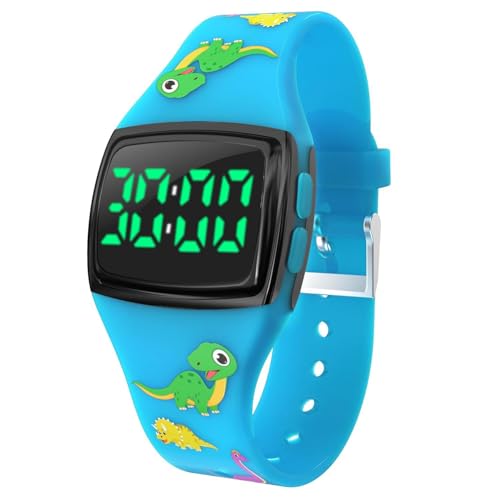
SKYROKU Potty Training Watch (Music + Vibration)
Best silent vibration for school and sound-sensitive kids: WobL
The classic small vibrating reminder watch: 8 individual alarms plus a repeating countdown timer, completely silent on vibrate-only, and small enough for young wrists. This is the watch for the child whose reminder must not announce itself, whether that's a classroom dignity issue or a sound-sensitivity one, and teachers won't even know it's running.

WobL Vibrating 8-Alarm + Countdown Timer Watch
Best potty watch for older kids and teens: e-vibra
Looks like a plain black fitness band rather than a toddler product, which is exactly the point for an older child or teen still building bathroom routines. Up to 15 daily alarms plus a countdown timer, silent vibration, rechargeable, and water resistant. For the older-kid path, where dignity drives everything, the disguise is the feature; pair it with the approach in the older child guide.

e-vibra Vibrating Potty Training Watch (15 Alarms, Rechargeable)
Best zero-buttons toddler watch: Potty Time Original Potty Watch
The simplest possible deal: set 30, 60, or 90 minutes once, and the watch plays a short song with flashing lights, then automatically resets and counts down again, forever. Nothing for small fingers to un-set, nothing for the parent to remember. For a toddler who finds the music exciting rather than overwhelming, this is the gentlest entry into the scheduled-sit routine.

Potty Time: The Original Potty Watch (30/60/90 Auto Timer)
Best lights-and-music motivator with an off switch: Kidnovations Premium
For the child motivated by the watch itself: tunes, flashing lights, and interval options, but with the discreet vibration mode the all-singing watches lack, plus recharging instead of battery swaps. The trade-off versus the SKYROKU is a smaller mode range; the advantage is that the fun modes are more of an event, which is worth real money for a kid who needs the bathroom trip sold to them. Pair it with the reward logic in the potty reward ideas guide so the watch's novelty feeds the routine instead of replacing it.

Kidnovations USA Premium Potty Training Watch (Discreet Mode)
When a Watch Is the Wrong Tool
Three situations call for something else. If your child needs to see time passing to handle the transition to the bathroom, a visual timer beats a wrist buzz; the shrinking disk does the countdown work a watch hides. If your child won't tolerate anything on the wrist (or treats it as a chew object), run the same schedule from a shelf timer, a parent's phone, or picture-schedule bathroom slots anchored to meals and transitions; the schedule is the intervention, the wrist is just one delivery route. And if accidents keep happening despite the schedule running well, stop adding reminders and look underneath: the sensory side of toileting and the medical rule-outs in the pillar guide catch the blockers a louder timer can't fix.
Setting the First Interval, Then Stretching It
Set the first interval from your child's actual data (track a few days; if accidents arrive two hours apart, remind at 90 minutes), treat the buzz as non-negotiable but boring (the watch says bathroom, we go, no discussion), and start stretching intervals as soon as dry stretches lengthen. The fading is the training: automatic repeating reminders become a few fixed daily alarms, then habit takes over, then the watch retires. A watch still buzzing at the same interval six months later is standing in for progress that has stalled.
The loop from the kitchen ends the same way it started, but with the argument removed. When the watch buzzes and nobody negotiates, the visit simply happens, and somewhere in those weeks of automatic practice, the body's own signal starts arriving on time.
Products Mentioned in This Article
SKYROKU Potty Training Watch (Music + Vibration)
WobL Vibrating 8-Alarm + Countdown Timer Watch
e-vibra Vibrating Potty Training Watch (15 Alarms, Rechargeable)
Potty Time: The Original Potty Watch (30/60/90 Auto Timer)
Kidnovations USA Premium Potty Training Watch (Discreet Mode)
Prices and availability are accurate as of the date/time shown and are subject to change. Any price and availability information displayed on Amazon at the time of purchase will apply to the purchase of this product.
Potty training an autistic child follows a different playbook.
Beacon learns about YOUR child and gives guidance specific to them.
What Would Beacon Say?
"Help me with potty training my child"
Beacon walks the route with you day by day, factoring in your child's sensory profile, communication, and the readiness signals that actually matter.

Spectrum Unlocked Editorial Team
Editorial Team
The Spectrum Unlocked editorial team combines lived experience as autism parents with research-backed guidance to create resources families can trust.
Frequently Asked Questions
- Do potty training watches work for autistic kids?
- They solve a specific, common problem well: many autistic kids have muted interoception, meaning the body's full-bladder signal arrives late, faintly, or not yet, so timed bathroom visits have to carry the routine while body awareness builds. A watch makes those timed visits automatic and depersonalized; the reminder comes from a neutral object instead of a parent's voice, which removes the demand-and-refusal dynamic many families are stuck in. What a watch cannot do is create readiness that isn't there, or teach the body signal by itself; it buys structured practice time while that connection develops.
- Which potty training watch is best for a child with sound sensitivities?
- Vibration-first models. The WobL is the classic: small, silent when set to vibrate-only, with 8 alarms plus a repeating countdown timer, and it doubles for school where a singing watch is a nonstarter. The SKYROKU offers a silent vibration mode alongside its music mode, which makes it a flexible pick when you want fun reminders at home but quiet ones out. Avoid music-only models for sound-sensitive kids; a reminder that triggers covering ears teaches avoidance of the reminder, not toileting.
- What interval should I set on a potty watch?
- Start where your child's data says, not where the default sits. If you've tracked for a few days and accidents cluster about every two hours, set reminders at 90 minutes so the visit beats the accident. Most families start somewhere between 60 and 120 minutes, then stretch the interval as dry stretches lengthen. The stretching is the actual training: the watch's job is to make practice automatic at first, then progressively hand the job back to the body.
- Potty watch or visual timer: which does my child need?
- They do different jobs. A watch travels on the wrist and interrupts play wherever the child is, which suits the just-go-on-schedule phase. A visual timer (the shrinking-disk kind) sits in view and shows time passing, which suits kids who need to see how long until the next sit, or who handle transitions better when the countdown is visible ahead of time. Sound-sensitive, watch-refusing, or chew-prone kids often do better with the visual timer plus a parent cue. Plenty of families run both: timer at home, watch for outings.
- Will my child just become dependent on the watch?
- Only if the interval never moves. The watch is scaffolding: at the start it carries the whole schedule, and the plan should explicitly include stretching intervals as dry stretches lengthen, switching from automatic repeating reminders to a few fixed daily alarms, and eventually retiring it once self-initiation appears. If months pass with the same 60-minute buzz and no stretching, the watch has become the bladder's replacement rather than its teacher; that's a plan problem, not a product problem.
- My child won't wear a watch at all. What now?
- Don't fight the wrist. The same scheduled-reminder job can run from a visual timer on the shelf, a phone or smart-speaker timer the parent owns, or picture-schedule bathroom slots anchored to routines (after meals, before leaving, after school). For some kids the watch becomes wearable later once it's been around as a neutral object; for others it never does, and that's fine. The schedule is the intervention; the wrist is just one delivery route.