Speech Therapy Toys and Social Skills Games for Kids
Speech therapy toys and social skills games that give kids a reason to talk and take turns: talking cards, recordable buttons, Zingo and Guess Who.
Key Takeaways
- The toy matters less than what it makes your child want to say. Pieces they have to ask for, turns they have to wait for and guesses they have to make are what build language.
- Hold back a little. Keep the pieces in your hand so your child has to request each one, by word, sign, picture or device.
- For a child who speaks very little, recordable buttons let them 'say' a word in play. A child who needs a full voice should be assessed for an AAC system.
- Games with a sudden pop or a spinning motor can startle a sound-sensitive child. Show the surprise first, outside the game.
- These toys support speech therapy at home. They do not replace an evaluation or a speech-language pathologist.
Children talk when they have something to say and a reason to say it. Toys and games can supply both. A Potato Head with one ear missing gives a child a reason to ask. A guessing game turns questions into the whole point. A recordable button gives a child who says few words a way to take a turn anyway.
The picks below are grouped by what they get a child doing: requesting, naming, making sounds, naming feelings and playing games with turns. Prices are from November 12, 2026.
What Each Group Practices
- Asking for things: recordable buttons and Potato Head sets.
- Naming words: talking flash cards.
- Making speech sounds: a mirror with sound cards.
- Naming feelings: a face-changing toy.
- Waiting, matching and questions: Zingo, Guess Who, Hedbanz, Pop Up Pirate and Let's Go Fishin'.
Getting the Most From Any Toy
- Be the keeper of the pieces. Hold the Potato Head parts or game tokens so your child has a reason to ask for each one. Any way of asking counts, whether spoken, signed, pointed at on a picture or pressed on a device.
- Say less, wait longer. Give a short model ("ear!"), then pause for several seconds. Many children need extra time to answer.
- Follow their lead. If your child invents a new way to play, join in and talk about what they are doing.
- Keep the same words. Using one phrase for each step ("my turn", "your turn") makes it easier to learn.
- Show surprises first. For a game that pops or moves on its own, let your child watch it happen once before playing.
Asking for Things
Honoson Recordable Buttons, 8 Pack
Eight big buttons in four colors. You record up to 30 seconds on each using the control underneath, and your child presses the top to play it back. Record "more", "my turn", "help" or a favorite phrase, and the button becomes a way to join in. Each takes two AAA batteries, not included. Once a few buttons stop being enough words, our AAC apps and devices guide explains the next step.

Honoson Recordable Answer Buzzers (8 Pack)
Potato Head Create Your Family Set
Three potato bodies (two large, one small) and 41 accessories make 44 pieces, so a child has many chances to ask for "eyes", "hat" or "shoes" by name. Building a face also teaches body-part words. Pieces store inside the larger bodies. The listing says ages 2 and up.

Potato Head Create Your Family Set, 44 Pieces
Mr. Potato Head Classic Set
One body and 12 accessories at a lower price, for a first try or a travel bag. The 5 inch body is shaped for small hands, and the pieces fit most other Potato Head sets if you want to add more later.

Mr. Potato Head Classic Set (13 Pieces)
Naming Words
Aullsaty Talking Flash Cards
A handheld reader that says the word when a card slides in. It comes with 112 double-sided cards, 224 words across 12 everyday themes such as animals, food, vehicles and colors, plus three nursery rhymes. It charges by USB, so it travels well. The listing gives ages 1 to 3. Sit with your child, repeat each word and point to the real thing when you can.

Aullsaty Talking Flash Cards (224 Words, Ages 1 to 3)
Airbition Talking Flash Cards
A bigger vocabulary for a child ready for more: 510 words across 31 themes, read in an American accent. Cards go in the same way, so a child can use it alone. The title says ages 1 to 4.

Airbition Talking Flash Cards (510 Words, Ages 1 to 4)
Making Speech Sounds
Hand2mind Mirror My Sounds Phoneme Set
A built-in mirror, sound cards and a booklet showing the mouth position for 44 English sounds. Your child looks at the picture of the lips and tongue, then copies it while watching their own face. It suits home practice between speech sessions; your child's speech-language pathologist can tell you which sounds to start with. Hand2mind lists it from age 3.
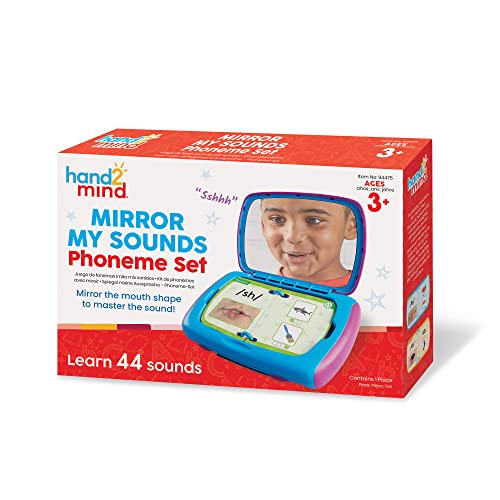
Hand2mind Mirror My Sounds Phoneme Set
Naming Feelings
Learning Resources Big Feelings Pineapple
A soft plastic pineapple with mix-and-match face pieces on both sides, so a child can build two expressions and compare them. The pieces store inside under the green crown, and a poster shows example expressions. To go further, our free feelings cards can be printed and used beside it.

Learning Resources Big Feelings Pineapple
Games for Waiting, Matching and Asking
A 2024 review in the journal Autism by Walsh, Linehan and Ryan looked at 17 studies of games used to build social skills with autistic children and young people. All reported benefits, but every study used a digital game, few defined which social skills they meant, and there is no agreement yet on how such games should be designed. Board games have less research behind them, so treat the picks below as good practice for turns and questions rather than a treatment.
ThinkFun Zingo
Bingo with pictures and words for children who are not yet reading. The Zinger dispenser hands out picture tiles, and players name what they see and claim the ones that match their cards. It plays up to seven children with the extra card in the box. The listing says ages 4 and up.

ThinkFun Zingo Bingo Game
Hasbro Guess Who? Original
Each player asks yes or no questions ("Does your person wear glasses?") to find the other's hidden character. It practices asking clear questions and listening to the answer. This edition has two double-sided character sheets, classic people and superheroes, and folds into a case. Two players, ages 6 and up.

Hasbro Guess Who? Original
Spin Master Hedbanz
Players wear a headband with a picture card they cannot see and ask yes or no questions to work out what it is. Three sample question cards help a child who is not sure what to ask. It comes with six headbands, 69 picture cards and a timer, for 2 to 6 players ages 6 and up. The timer can be left out for a child who finds countdowns stressful.

Spin Master Hedbanz Picture Guessing Game
TOMY Pop Up Pirate
Players take turns pushing a sword into the barrel until the pirate springs out. Waiting for each turn is the lesson, and the suspense keeps children watching. The pop is sudden, so show it to a sound-sensitive child first and let them decide whether to play. For 2 to 4 players, ages 4 and up.
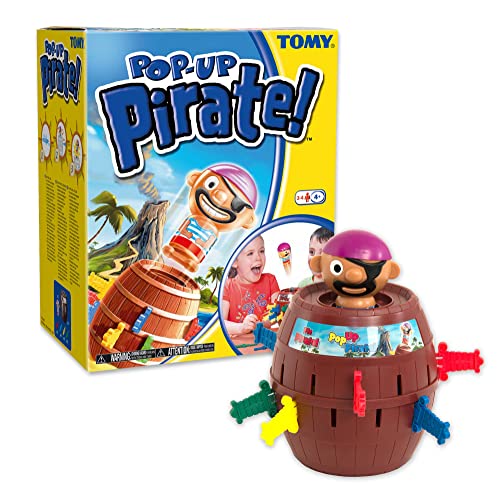
TOMY Pop Up Pirate Game
Pressman Let's Go Fishin'
A rotating pond with 21 fish that open and close their mouths, caught with small fishing poles. Taking turns, counting fish and naming colors all come up naturally. For 1 to 4 players, ages 4 and up. Our free taking-turns printable can be read together before game time.

Pressman Let's Go Fishin' Game
When to Get More Help
Toys and games make practice fun, but they are not therapy. If your child's speech is behind, if they have stopped using words they had, or if others often cannot understand them, raise a speech-language evaluation with your pediatrician; public schools also evaluate speech at no cost. Children who echo whole phrases may be gestalt language processors, which our gestalt language processing guide explains, and our free speech therapy printables cover articulation practice at home. For more ideas by play style, see our toys for autistic kids.
Why These Twelve Picks
We grouped toys by the communication skill they invite rather than by age or price, and we included two simple turn-taking classics because the waiting is easy for a child to see in them. On November 12, 2026, each listing was opened in Chrome for delivery to Georgia to confirm it could be ordered, and the product details above come straight from those listings.
Several of these toys have small pieces. Follow each listing's age guidance and supervise children who still put objects in their mouths.
Products Mentioned in This Article
Honoson Recordable Answer Buzzers (8 Pack)
Aullsaty Talking Flash Cards (224 Words, Ages 1 to 3)
Airbition Talking Flash Cards (510 Words, Ages 1 to 4)
Potato Head Create Your Family Set, 44 Pieces
Mr. Potato Head Classic Set (13 Pieces)
Hand2mind Mirror My Sounds Phoneme Set
Learning Resources Big Feelings Pineapple
ThinkFun Zingo Bingo Game
Hasbro Guess Who? Original
Spin Master Hedbanz Picture Guessing Game
TOMY Pop Up Pirate Game
Pressman Let's Go Fishin' Game
Prices and availability are accurate as of the date/time shown and are subject to change. Any price and availability information displayed on Amazon at the time of purchase will apply to the purchase of this product.
Hard situations get easier when your child knows what's coming.
Beacon learns about YOUR child and gives guidance specific to them.
What Would Beacon Say?
"Help me prepare my child for this situation"
Beacon talks through the exact situation your child is facing and helps you set expectations in a way that matches how they process the world.

Spectrum Unlocked Editorial Team
Editorial Team
The Spectrum Unlocked editorial team combines lived experience as autism parents with research-backed guidance to create resources families can trust.
Frequently Asked Questions
- What toys help with speech delay?
- Toys with many small parts to ask for, like a Potato Head set; picture cards your child can name; and simple games that need a word each turn, like Zingo. Talking flash card readers add a model of each word.
- Are talking flash cards good for speech?
- They give a clear spoken model of each word and let a child practice alone. They work best when an adult sits alongside, repeats the word and links it to the real object.
- What games teach social skills?
- Games built on turns and questions: Guess Who and Hedbanz practice asking yes or no questions, and Zingo practices waiting and matching. A 2024 review in Autism found games can support social skills, though the studies it covered were digital games.
- How do recordable buttons help a child who doesn't talk?
- You record a word such as 'more' or 'my turn', and your child presses the button to say it. The Honoson buttons each hold up to 30 seconds and can be re-recorded.
- Can a mirror help with speech sounds?
- Yes. Watching their own mouth helps children copy the lip and tongue position for a sound. The hand2mind set pairs a mirror with cards and a booklet for 44 English sounds.
- When is it time for a speech evaluation?
- If your child is not meeting speech milestones, or you are worried, your pediatrician can refer you to a speech-language pathologist. Public schools also evaluate speech for free.